People
Seth Bullock
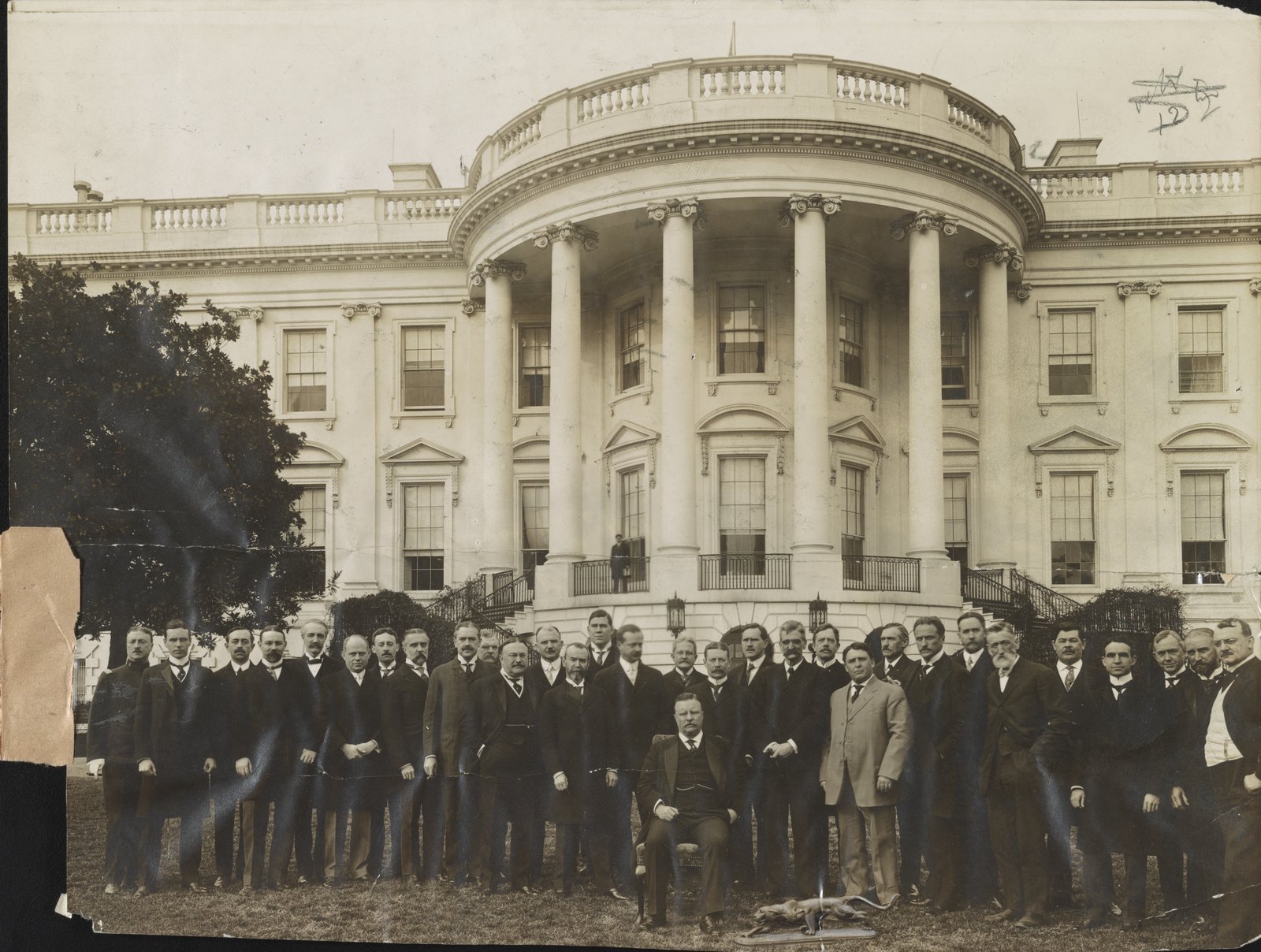
Three days before he left the White House in March 1909, Theodore Roosevelt held a farewell lunch for the friends he called his Tennis Cabinet. As it ended, Roosevelt wrote, a guest pushed the flowers on the table aside to uncover the group’s parting gift, a bronze cougar by Alexander Phimster Proctor. The guest was Seth Bullock of Deadwood: hardware merchant, sheriff, rancher, town builder, forest supervisor and United States marshal. His Black Hills years ran from the gold camp of 1876 to his death in 1919, and several of the titles attached to his name need a closer look.
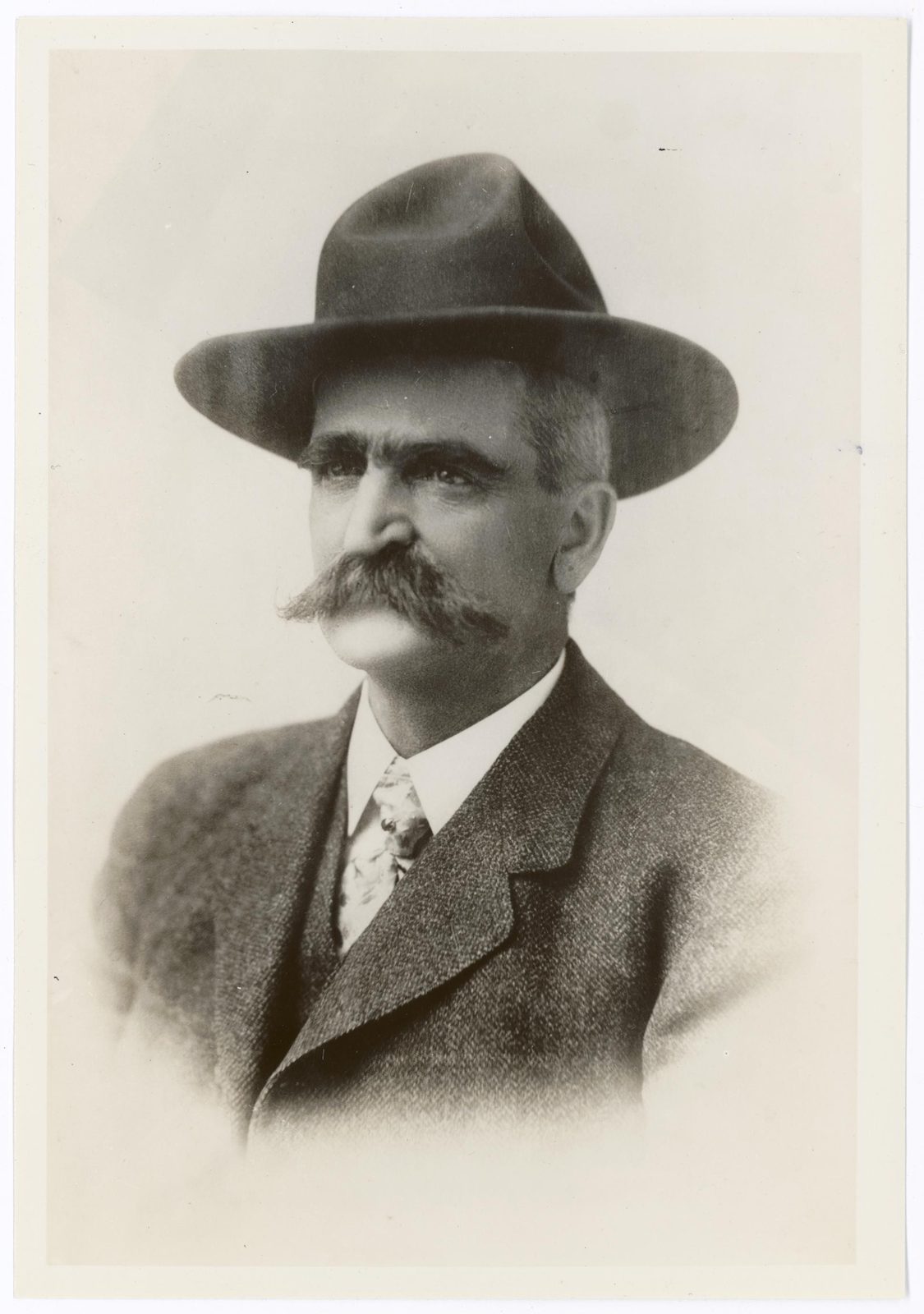
Bullock was born in Ontario, Canada, and went to the Montana gold country as a young man. In Helena he was an auctioneer and grocer, sheriff of Lewis and Clark County and a territorial legislator. The South Dakota State Historical Society’s journal credits him with a leading role in winning Congress over to Yellowstone National Park, created in 1872.
A Wagonload of Hardware
The Black Hills rush drew Bullock away from Montana, where the placer diggings were giving out. He and his partner, Sol Star, came with a wagonload of hardware: Dutch ovens, frying pans, chamber pots, dynamite, axes, picks and shovels, by the City of Deadwood’s list. They reached Deadwood in August 1876, on August 1 by the city’s date, the day before Jack McCall shot Wild Bill Hickok; other accounts differ on the day.
The camp had no lawful footing. It stood on the Great Sioux Reservation, which the 1868 Fort Laramie Treaty had closed to settlers, and in 1877 the Hills were taken from the tribes in violation of that treaty, as told on The 1876 War and the Taking of the Hills. With no organized county there could be no sheriff in law, so after Hickok’s killing the miners chose Bullock to act as one, Prairie Public says; that informal role is what the City of Deadwood means in calling him the town’s “first sheriff.” The legal office came in 1877, when Governor John L. Pennington of Dakota Territory appointed him sheriff of Lawrence County.
That November, the city says, he ended a standoff at the Keets mine, which miners had seized in a wage dispute, by lowering burning sulphur into the workings; no shot was fired. He lost the county election the same month, as told on Deadwood’s Wild Years, 1876 to 1879. The story that he ran Wyatt Earp out of town comes from his grandson, Ken Kellar; the city, retelling it, cites no record of the time.
Cattle, Rails and a Hotel
Bullock was a businessman too, with interests in ranching, mining and milling as well as hardware and liquor. With Star he ran the S-B ranch on the Belle Fourche and Redwater rivers. The Fremont, Elkhorn and Missouri Valley Railroad got 100-foot easements across S-B land from Bullock, who had a mortgage partly released in return, and under the contract its station went to the forks of the Belle Fourche, not to Minnesela, a rival town, the downtown’s National Register nomination says. The station opened on December 28, 1890, and a 2016 SDPB history credits Bullock and Star with founding Belle Fourche. In 1904 he predicted a sugar beet factory with a weekly payroll above $25,000, SDPB reports; one came only in the late 1920s, after his death (The Belle Fourche Irrigation Project).
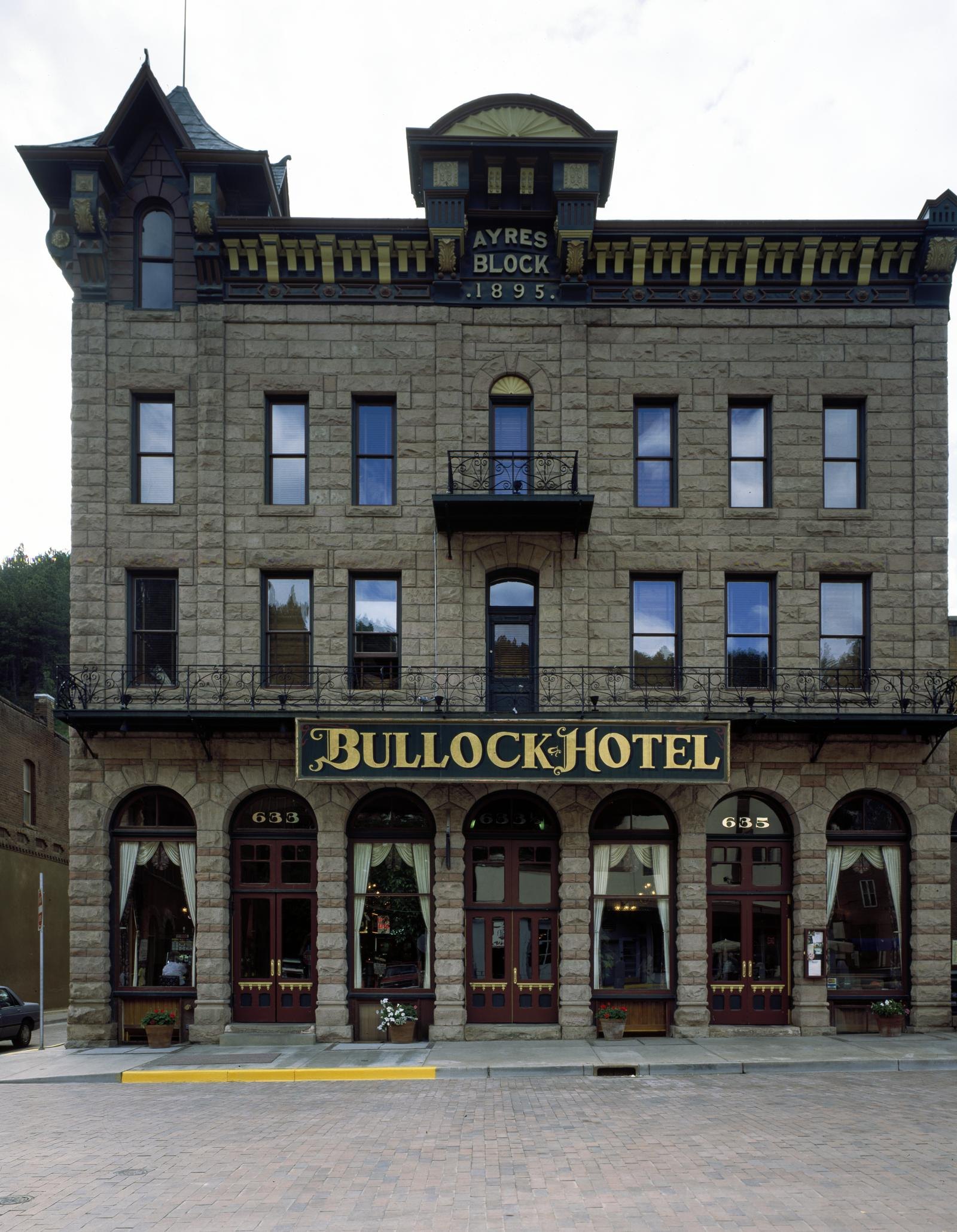
In Deadwood, the stone hotel that bears his name still stands on Main Street. Prairie Public says he built it, though its cornice carries another name and a date: “Ayres Block 1895.” The hotel’s own website says guests report his presence in its upper hallways. That is lore, not record.
How Did Bullock Meet Theodore Roosevelt?
By Roosevelt’s own account, through a horse thief. In his 1913 autobiography he wrote that, as a deputy sheriff two or three hundred miles to the north, he caught a man Bullock also wanted, whom he called Crazy Steve. Later, riding to Deadwood on business, he met Bullock in a small town he thought was Spearfish, and Bullock took his trail-worn party for “some kind of a tin-horn gambling outfit.” Roosevelt gave no year. The City of Deadwood gives two: 1884 in its Bullock brochure, and August 26, 1892, in its timeline.
In the war with Spain in 1898, Bullock was captain of Troop A of the Third U.S. Volunteer Cavalry, a cowboy regiment. He is often called one of Roosevelt’s Rough Riders, but the Rough Riders were Roosevelt’s own First Volunteer Cavalry, and Bullock’s men were still training at Chickamauga, Georgia, when the war ended. In 1905 Bullock brought cowboy riders to Roosevelt’s inaugural parade in Washington. Roosevelt made him United States marshal for South Dakota, and he was reappointed in December 1909, Prairie Public reports. In June 1910, at Roosevelt’s request, the Bullocks met him in London on his way home from Africa.
Supervisor of the Forest Reserve
Bullock ran the Black Hills Forest Reserve, set aside in 1897, in the first years of the 1900s; its later story is on The National Forest and the CCC. Accounts disagree on when he started and on whether he was the reserve’s first supervisor. Two letters of the time are firmer. In January 1902 Roosevelt told Ethan Allen Hitchcock, at the Interior Department, that reserve supervisors should pick their own employees, and named Bullock’s reserve as the place to try it. On February 1, 1905, when the reserves moved to the Agriculture Department, Gifford Pinchot wrote to “Seth Bullock, Forest Supervisor” at Deadwood that he would now report to Pinchot.
Walter A. Donaldson, who fought fires on the reserve in its early years, later told how Bullock left the job. A Washington letter thick with technical terms asked for a report on the insects then infesting the Hills’ ponderosa pines (see The Ponderosa Forest, Fire and the Pine Beetle). Bullock, as Donaldson remembered it, wrote back to Pinchot that out here “we call a tree a tree and a bug a bug,” and resigned; J. Freeman Smith, the head ranger at Custer, took over as acting supervisor. Donaldson’s dates are loose: he put Bullock’s appointment in early 1905, three years after Roosevelt’s letter named him.
A Tower on Sheep Mountain
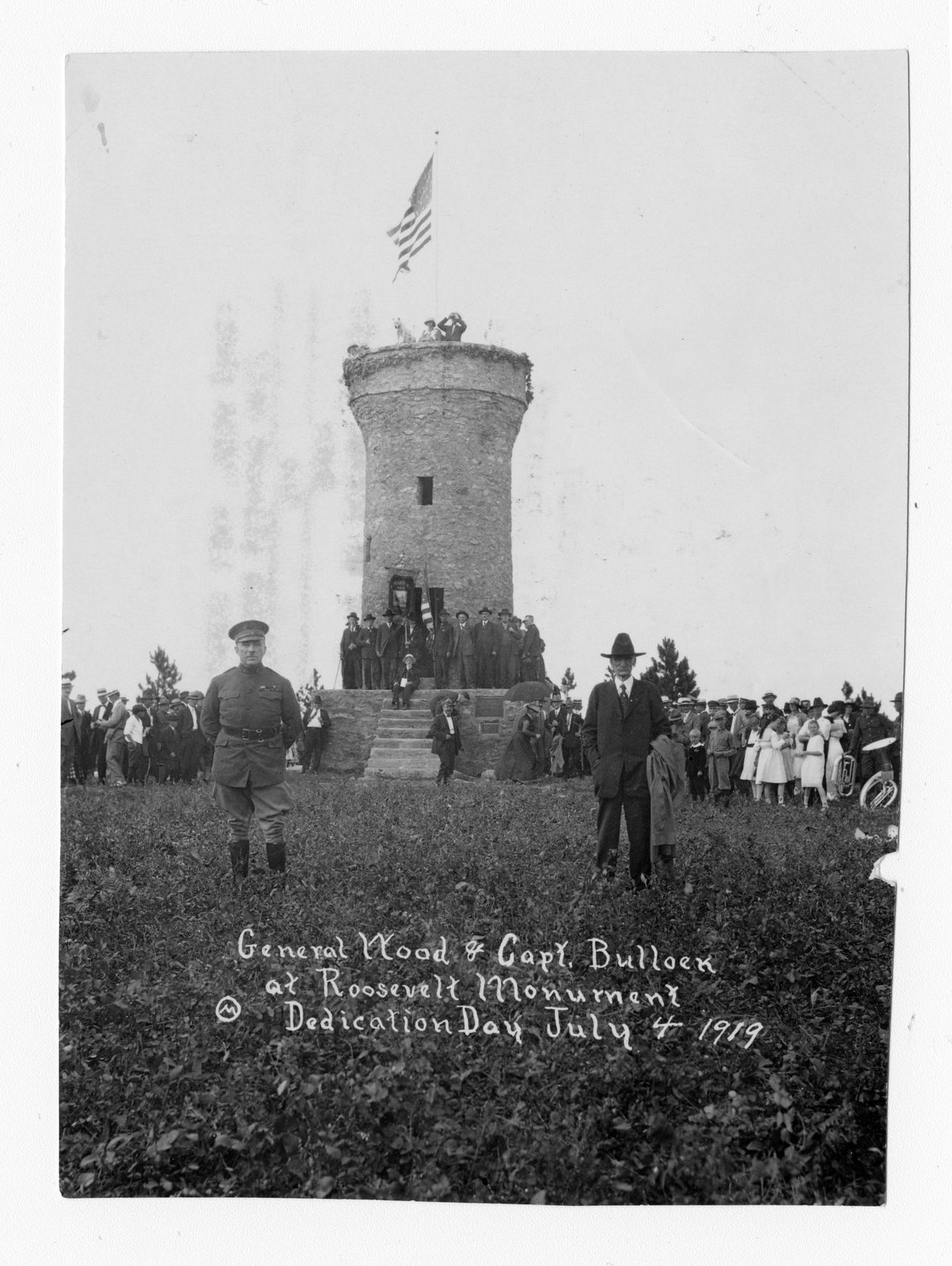
Roosevelt died on January 6, 1919. At the Society of Black Hills Pioneers’ annual meeting, Bullock proposed renaming Sheep Mountain, near Deadwood, for him and building a memorial on top. The pioneers approved a tower of Black Hills stone in April, and on July 4, 1919, an overcast, showery day, crowds came up the mountain to dedicate it; the City of Deadwood calls it the first monument to Roosevelt. The Forest Service took over the tower in the 1960s.
Bullock died in Deadwood on September 23, 1919. The city says he died at home; Prairie Public places his death in Room 211 of his hotel. He was buried at White Rocks, on high ground above Mount Moriah Cemetery, where his grave faces the tower on Mount Roosevelt from the far side of the gulch.
Connected
- Deadwood’s Wild Years, 1876 to 1879The gold camp Bullock came to in 1876, and his time as sheriff.
- Deadwood, South DakotaDeadwood now, with his hotel on Main Street and his grave at White Rocks above Mount Moriah.
- Belle Fourche, South DakotaThe railroad town that grew on his ranch land at the forks of the river.
- The National Forest and the CCCThe forest reserve he supervised, and what it became.
- Wild Bill HickokShot in Deadwood within days of Bullock’s arrival in August 1876.
- Rails, Cattle and Belle FourcheHow the railroad, the cattle trade and Bullock’s land made a town.
- The Belle Fourche Irrigation ProjectThe dam, the canals and the sugar beets he promised in 1904.
- The 1876 War and the Taking of the HillsThe war over the Hills, and the 1877 Act that took Deadwood’s ground from the tribes.
Sources
- Dakota Images: Seth Bullock. South Dakota History 20, no. 1, South Dakota State Historical Society, 1990.
- Seth Bullock: Black Hills Lawman. City of Deadwood Historic Preservation Office, 2013.
- Mt. Roosevelt Tower: A Brief History. City of Deadwood Historic Preservation Office, 2019.
- Timeline of Deadwood, South Dakota. City of Deadwood.
- Theodore Roosevelt: An Autobiography. Theodore Roosevelt, 1913; Project Gutenberg.
- Letter from Theodore Roosevelt to Ethan Allen Hitchcock, January 25, 1902. Library of Congress Manuscript Division, via the Theodore Roosevelt Center, Dickinson State University.
- Letter from Forest Service Chief Gifford Pinchot to Forest Supervisor Seth Bullock. Forest History Society; letter of 1905.
- Early Days in the Forest Service, Volume 3. Walter A. Donaldson, USDA Forest Service, Northern Region; via NPS History.
- Seth Bullock’s Arrival. Jayme L. Job, Dakota Datebook, Prairie Public, 2022.
- Seth Bullock Reappointed. Jayme L. Job, Dakota Datebook, Prairie Public, 2022.
- Belle Fourche Commercial Historic District, National Register of Historic Places nomination. National Park Service, 1982.
- A Brief History of Belle Fourche. Brian Gevik, Images of the Past, SDPB, 2016.
- The Belle Fourche Sugar Plant. Brian Gevik, SDPB, 2016.
- The Legend and Restoration of Historic Bullock Properties. Historic Bullock Hotel (the hotel’s own account).
- Treaty of Fort Laramie (1868), transcript. National Archives.
- President Roosevelt and his Tennis Cabinet. Barnett McFee Clinedinst, 1909; Library of Congress Prints and Photographs Division.
- The Bullock Hotel (photograph), Deadwood, South Dakota. Carol M. Highsmith, between 1980 and 2006; Carol M. Highsmith Archive, Library of Congress Prints and Photographs Division.
Last reviewed: