People
Badger Clark
Badger Clark’s cabin in Custer State Park had no electricity and no running water. In the stone-and-shingle house near Legion Lake that he called the Badger Hole, he wrote by kerosene lamp, cooked on a wood range and carried water from a spring, and the park still shows it much as he left it in 1957. Clark (1883 to 1957) was South Dakota’s first poet laureate and a cowboy poet whose verse traveled the country, often without his name. His Black Hills life ran from a Deadwood boyhood to three decades alone in the pines.
Charles Badger Clark Jr. was born in Albia, Iowa, on January 1, 1883. His father, a Methodist minister, moved the family to a homestead in Aurora County, Dakota Territory, when the boy was three months old, and later served churches in Mitchell and Huron. In 1898 the family came to Deadwood, and Clark remembered that in the Hills he “stepped straight into the land of my dreams.” His mother died of tuberculosis that year, and in 1903 his father conducted the funeral of Calamity Jane in Deadwood. Badger finished high school there and spent a year at Dakota University in Mitchell, now Dakota Wesleyan University.
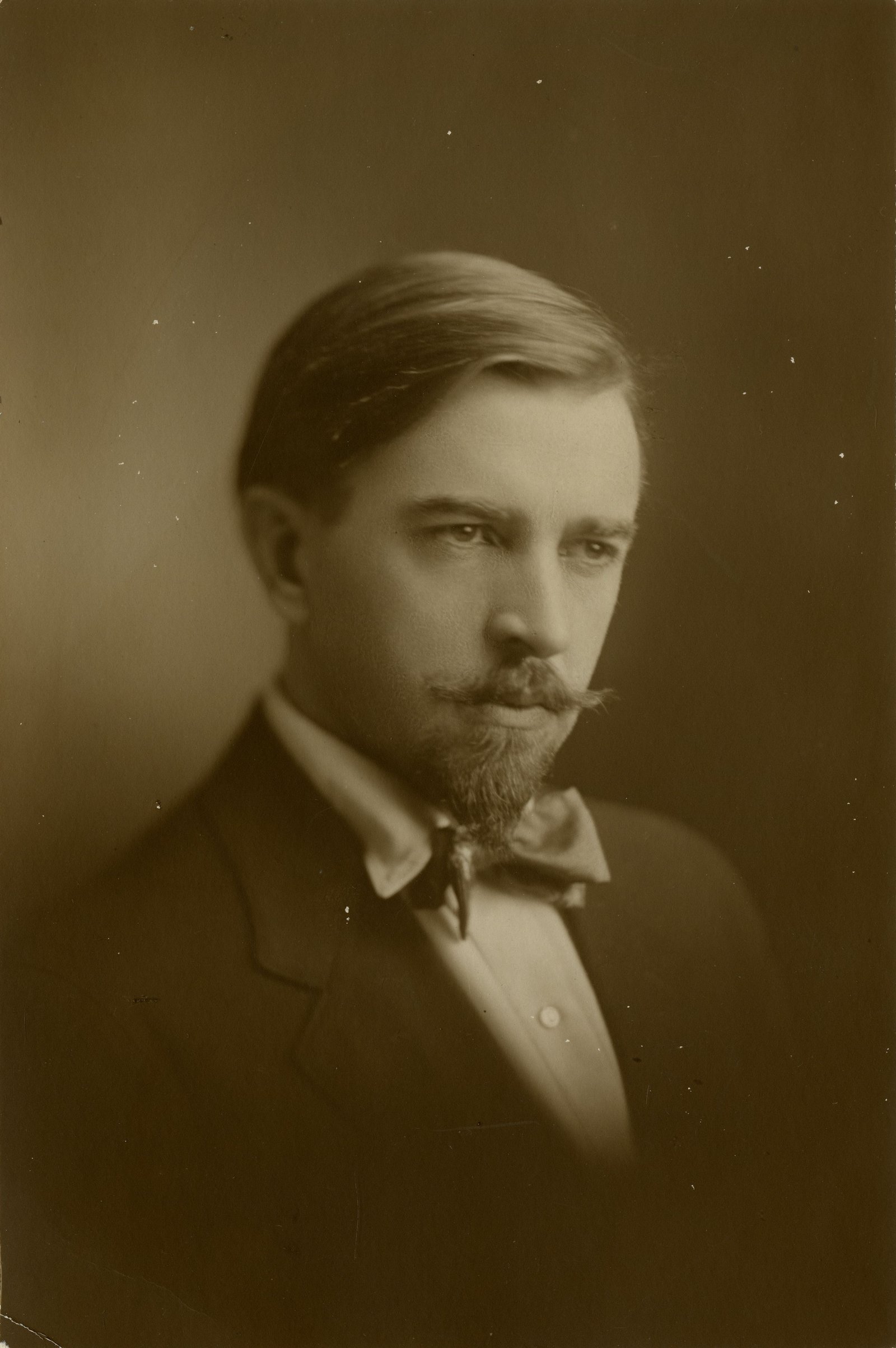
Cuba, Arizona and the First Check
At 19 he left for Cuba with a party that meant to plant a colony there. In 1905, after a couple of years there, he spent time in a Cuban jail and was acquitted of carrying a gun and taking coconuts, the State Historical Society Press recounts. In 1906, back in South Dakota, he learned he had tuberculosis, which had already killed his mother and a brother, and he went to Arizona for the dry air.
He spent four years on a ranch near Tombstone. In his first year there he sent his stepmother, Anna Morris Clark, some verses about how content he was, and she passed them on to the Pacific Monthly, which printed them in August 1906 and sent a check. Writing, he decided, was a job with no boss and no fixed hours. He returned to the Black Hills in 1910.
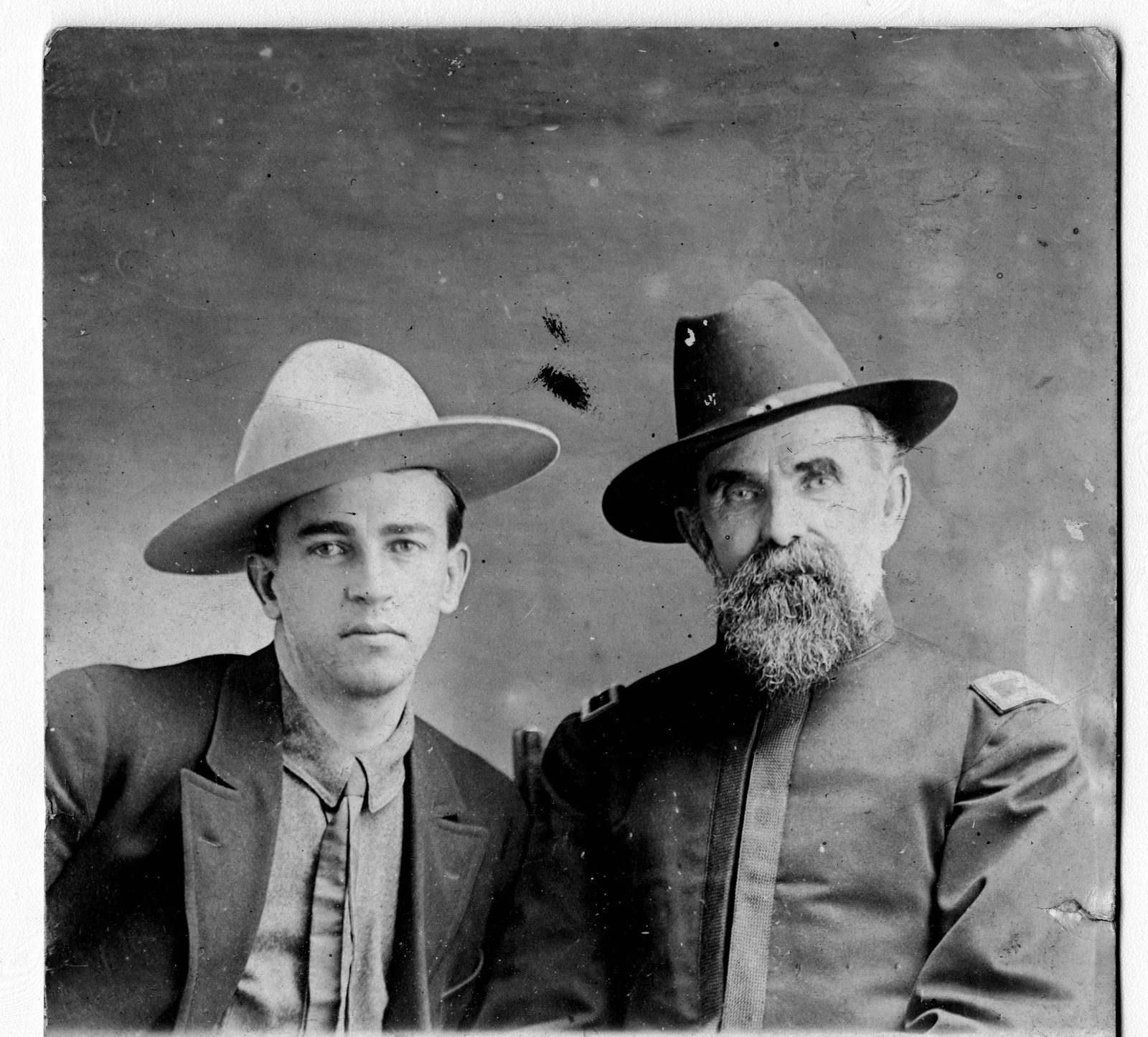
His first book, Sun and Saddle Leather, appeared in 1915. By his own account his stepmother urged him to publish it and put up the money, and the royalties repaid her within a year. Grass Grown Trails (1917), Spike (1925) and Sky Lines and Wood Smoke (1935) followed. His best-known poem, “A Cowboy’s Prayer,” was already being recited without his name by 1909, when the Bismarck Tribune printed it and credited a woman in Seattle, Prairie Public’s Tom Isern found. The rest of that story is on The Black Hills in Films and Books.
From Hot Springs to a Cabin in the Park
From 1911 until his ailing father died in 1921, Clark looked after him in Hot Springs, and he stayed on with his stepmother until 1924. His living came from the lecture platform; in 1935 he told a friend he had filled 59 speaking dates in six weeks, some paid in little more than handshakes.
In the mid-1920s he moved into Custer State Park; sources date the move from 1924 to 1927. The state’s park timeline says he completed his cabin, the Badger Hole, in 1925. The historian James D. McLaird, editing Clark’s letters in 1984, and South Dakota Magazine tell it differently: Clark first lived in a one-room cabin at the American Legion’s camp, which the magazine says he neither built nor owned, and the Badger Hole came later. He went into Custer, the nearest town, seldom; in March 1938 he noticed that a haircut there had been his first trip to town in two months.
Building the Badger Hole
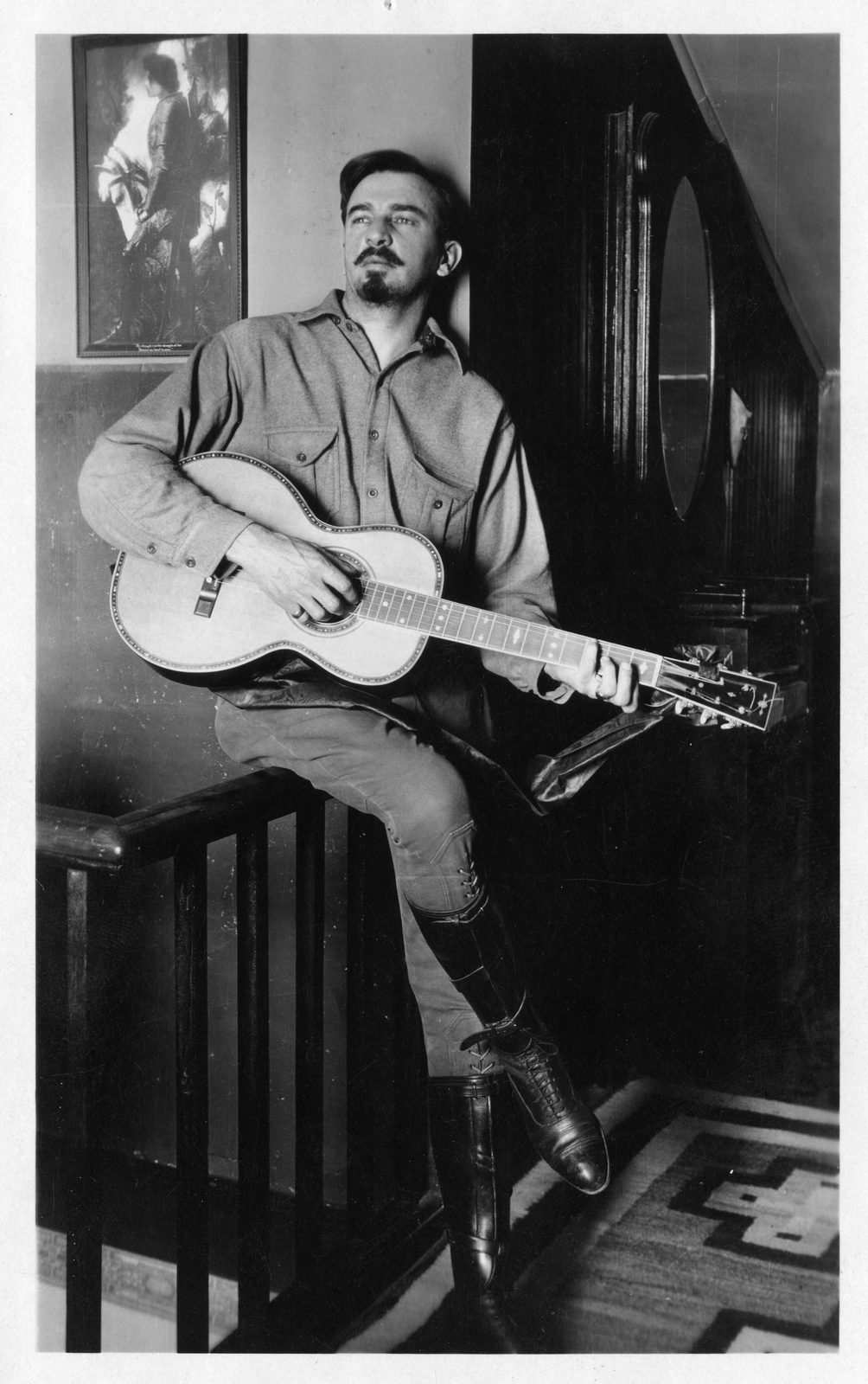
On June 1, 1936, Clark wrote a friend that he was about to order the first truckload of lumber for a new cabin. His stepmother had sold the house the family once lived in and was giving him the money. The cabin would be stone and shingle; he could lay the stone, he wrote, but the doors and windows needed a more skillful hand, and one carpenter would help that summer. Helen Morganti’s 1960 book dates the building from 1932 to 1937, the Historical Society Foundation says it took five years, and by 1937 he had left the one-room cabin for the new one.
Much of what is known of Clark’s early life rests on his own telling, chiefly a sketch printed in the state’s historical collections in 1946, and the cabin shows how the story grew after him. A state marker put up in 1958 and the State Historical Society’s journal in 1971 both say he built it with his own hands; his letter of 1936 planned on a carpenter. The 1972 nomination to the National Register of Historic Places describes a building 30 feet square, local stone below and stained shingles above, with a porch roof built around a large pine and a fireplace of white feldspar. The Foundation counts four rooms, heated by the fireplace and kitchen stove; the bedrooms had none.
When Did Badger Clark Become Poet Laureate?
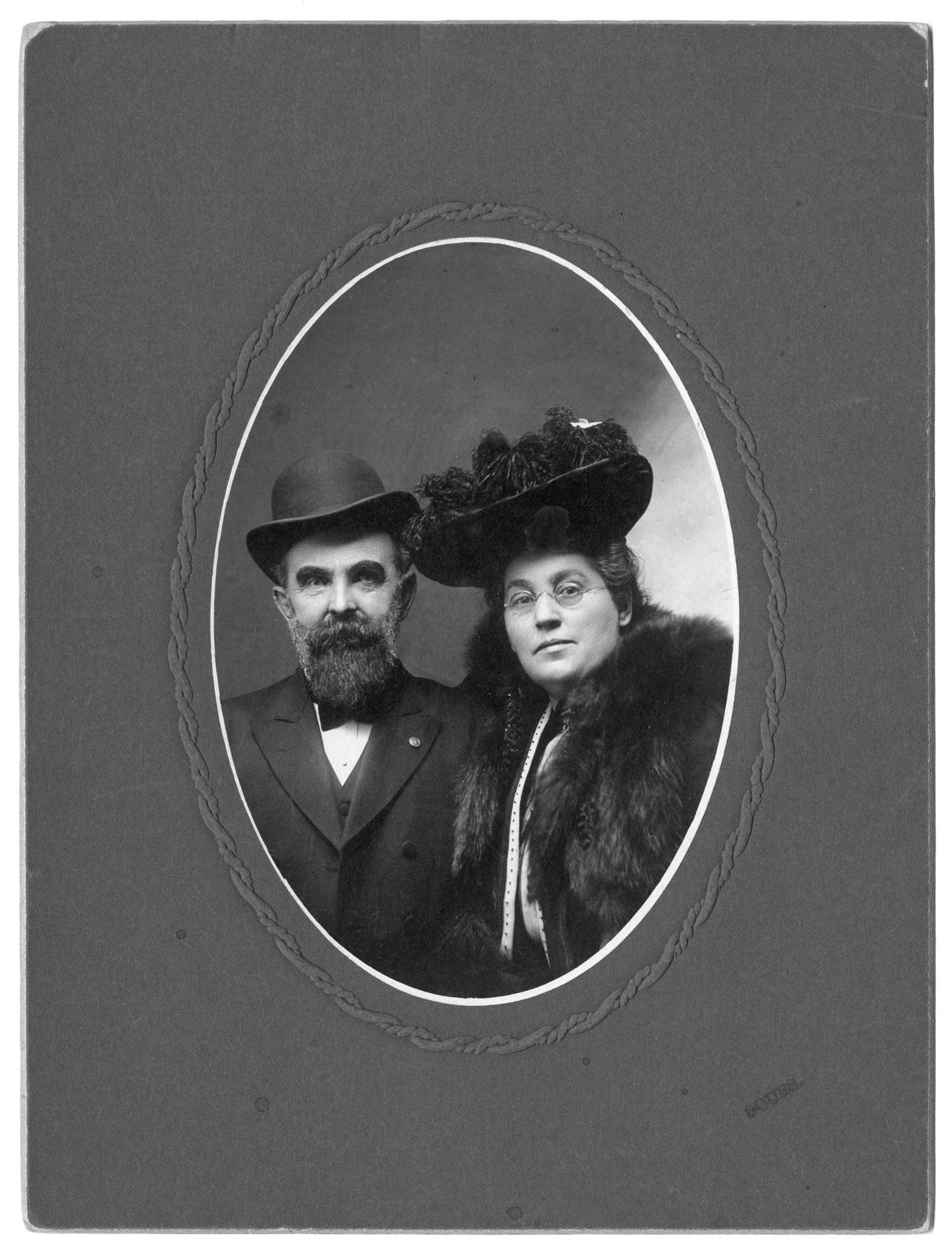
The usual answer is 1937. The Historical Society Foundation, SDPB and the Black Hills State University archive all give that year, and the State Historical Society’s journal places the appointment in the term of Governor Leslie Jensen, whom Clark had known since Jensen was a high school boy in Hot Springs. McLaird wrote that the title became official only in 1939, and noted that a Who’s Who in South Dakota had called Clark the state’s poet laureate more than a decade before. He held the title until his death.
Schoolchildren wrote asking for his life story, and in 1938 he reported that his Christmas mail had taken a month to answer. The state’s 1958 marker says thousands of visitors, many of them children, wore a path to the cabin. One short poem of his honored Peter Norbeck, the governor behind the park, casting him as a poet whose work was written on the land itself.
The Cabin After Clark
In September 1957 Clark left the Badger Hole for the hospital. He died of cancer in Rapid City on September 26, 1957, and was buried in Evergreen Cemetery in Hot Springs, the Black Hills State University archive records. His heirs gave the cabin to the state on condition that it be kept as a museum, and it was added to the National Register in 1973.
The Badger Clark Memorial Society, formed in 1984 to keep his books in print and look after the cabin, later merged into the South Dakota Historical Society Foundation, which now reprints his five books and helps Custer State Park run the Badger Hole. The first cabin left the park. After it came to the society, it was moved to a ranch half a mile from Hill City’s Main Street, beside the Mickelson Trail, South Dakota Magazine reported.
Visitors can walk the Badger Clark Historic Trail by the cabin. Down Badger Clark Road, south of Highway 16A, the Badger Hole Trailhead puts hikers on the Centennial Trail, which soon makes its steep, rocky descent toward French Creek.
Connected
- Custer State ParkThe park where Clark lived for some 30 years and where the Badger Hole stands.
- The Black Hills in Films and BooksHis books among the others written here, and how his verse traveled without his name.
- Custer, South DakotaThe town nearest the cabin, where his mail went.
- The Centennial TrailThe long trail with a trailhead named for the Badger Hole.
- Peter NorbeckThe park’s founder, honored in one of Clark’s poems.
- Hot Springs, South DakotaWhere Clark cared for his father for ten years and where he is buried.
- Calamity JaneClark’s father conducted her funeral in Deadwood in 1903.
- Deadwood, South DakotaWhere the Clarks settled in 1898 and Badger finished high school.
Sources
- Dakota Images: Badger Clark. South Dakota History 1, no. 2, South Dakota State Historical Society, 1971.
- Of Preachers, Poets, and Pines: Badger Clark Writes to Ralph Shearer, 1929–1941, edited by James D. McLaird. South Dakota History 13, no. 4, South Dakota State Historical Society, 1984.
- Badger Clark Collection (MSS003), biographical note. Leland D. Case Library for Western Historical Studies, Black Hills State University.
- The Pacific Monthly, vol. 16, July to December 1906 (August 1906 contents, p. 212, “In Arizony,” by C. B. Clark, Jr.). Internet Archive.
- Badger Clark. South Dakota Historical Society Foundation.
- Badger Clark Biography. South Dakota Historical Society Foundation.
- Flashback Friday: The Outlaw Poet, by Amy C. Kucera. South Dakota Historical Society Press, 2018.
- The Cowboy’s Prayer (Tom Isern, Plains Folk). Prairie Public, 2025.
- Dakota Midday: 100 Years of “Sun and Saddle Leather” (Karl Gehrke). SDPB, 2015.
- On Prairie Poems, the Politics of Choosing a State Poet Laureate and Relishing a Simple Lunch at a Wild Place, by Kevin Woster. SDPB, 2023.
- Badger Hole, National Register of Historic Places Inventory–Nomination Form (prepared by the Custer County Historical Society, 1972; listed 1973; NRIS 73001740). National Park Service, NPGallery.
- South Dakota Historical Markers (markers 236, The Badger Hole, 1958, and 339, Badger Clark Dakota Home, 1961). South Dakota State Historical Society.
- Custer State Park History. South Dakota Game, Fish and Parks, 2026.
- Historical Sights throughout Custer State Park. South Dakota Game, Fish and Parks, 2026.
- Hiking, Biking, and Horse Trails (Custer State Park). South Dakota Game, Fish and Parks, 2026.
- The Original Badger Hole, by Shebby Lee. South Dakota Magazine, 2011.
- Dakota Images: Peter Norbeck. South Dakota History 2, no. 2, South Dakota State Historical Society, 1971.
- Badger Clark, about 1915. Joyce Wilson Photograph Collection on Badger Clark, Leland D. Case Library for Western Historical Studies, Black Hills State University; Digital Library of South Dakota.
Last reviewed: