History
The Black Hills in Films and Books
Cary Grant, playing dead, was loaded into a station wagon by rangers in the parking lot at Mount Rushmore on September 16, 1958. It was one of three scenes Alfred Hitchcock shot at the memorial for North by Northwest (1959), and the chase across the presidents’ faces was not among them. Of the best-known films and books about the Black Hills, some were really made there and some only borrow the name, and tribal members have weighed in on the films that show the tribes.
What Hitchcock Filmed at Mount Rushmore
Only the quieter scenes were filmed at the memorial; the chase over the carving was made in California. Hitchcock had talked of it for years, Todd David Epp found in a 1993 article for South Dakota History. Before filming, the National Park Service and Metro-Goldwyn-Mayer signed an agreement barring scenes of violence on the sculpture, on the talus slope below it, or on any studio mock-up of them, according to the Park Service’s file at the National Archives.
Planned for two days, shooting at the memorial took one, September 16, and ended a day ahead of schedule, the superintendent logged. Besides the parking lot, the crew filmed the cafeteria scene in which Eva Marie Saint’s character fakes shooting Grant’s, and views of the carving from the memorial’s terraces, and it made still photographs of the faces. The chase was then shot on a studio mock-up or against a background made from those stills, and the final struggle on a full-size replica built in Culver City, California.
The government felt misled. On July 28, 1959, Acting Interior Secretary Elmer F. Bennett wrote to MGM’s president that the “phony studio shots” would leave moviegoers believing the violence took place on the memorial itself, and he asked the studio to remove a screen credit thanking the Interior Department and the Park Service. By August 20 the credit was out, the Park Service director told Senator Karl E. Mundt. In the years after the film, rangers removed more visitors from the memorial’s restricted areas than in any earlier years, its chief interpreter told Epp in 1991.
The carving stands in Hé Sápa, which the 1868 Fort Laramie Treaty placed inside the Great Sioux Reservation, and tribal members see it in different ways, as Mount Rushmore and Crazy Horse Memorial tells.
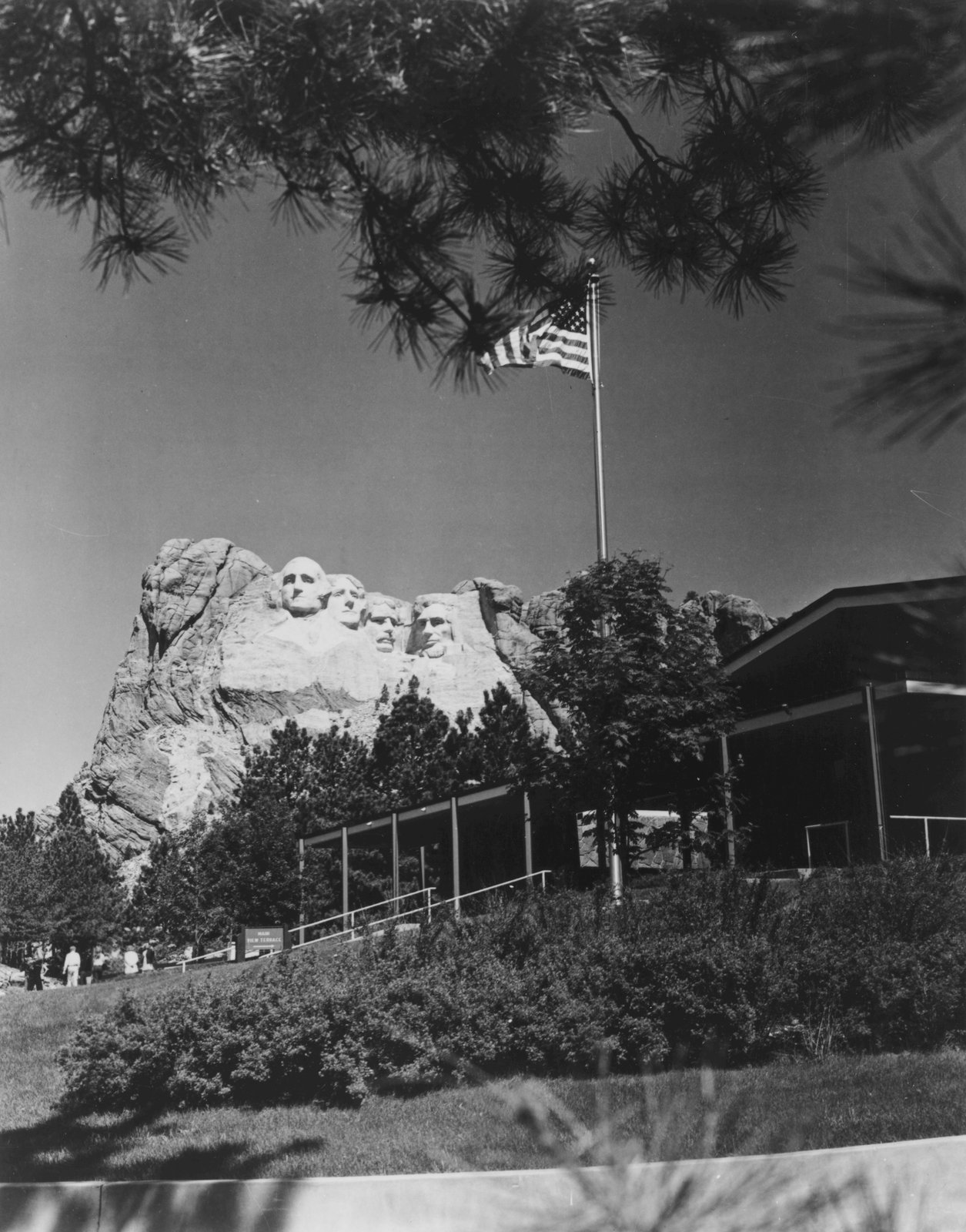
Was Dances with Wolves Filmed in the Black Hills?
In part. Kevin Costner’s Dances with Wolves (1990) was filmed in South Dakota in the summer and fall of 1989 at 16 location sites, the South Dakota Legislature noted in a 2014 commemoration. Its list runs from Pierre and Fort Pierre to the Badlands, the Belle Fourche River, and Spearfish and Vanocker canyons. KOTA reported in 2024 that it was shot in Spearfish Canyon, inside the Hills, and on the film’s Fort Hays set near Caputa.
Tribal accounts of the film dwell on its language. Doris Leader Charge, who taught Lakota at Sinte Gleska University on the Rosebud Reservation, translated the script into Lakota, coached the cast and played Pretty Shield, the Oglala Lakota columnist Tim Giago wrote in 2012. Many actors and extras spoke little or no Lakota, the producer found. When Leader Charge died in 2001, after 27 years of teaching at Sinte Gleska, its president, Lionel Bordeaux, called her a driving force behind the university’s Lakota Studies degrees, Tribal College Journal reported.
The story did not begin in Lakota country. The novel behind the film was set on the southern plains, and Ten Bears, a Lakota chief in the film, was in history a Comanche leader. The producers could film a big buffalo herd in South Dakota, so the story moved north and its tribe changed, Edward Castillo pointed out in an article on the film, as Robert Appleford summed it up in the American Indian Culture and Research Journal in 1995.
Other judgments were harsher. Castillo faulted the film for making the Pawnee simple villains, which hid how the need to survive led other bands to work with federal authorities, and Appleford noted wide objection to what sat at the film’s heart: a romance between two white characters, in a film billed as giving tribal experience its due.
Deadwood on Paper and on Screen
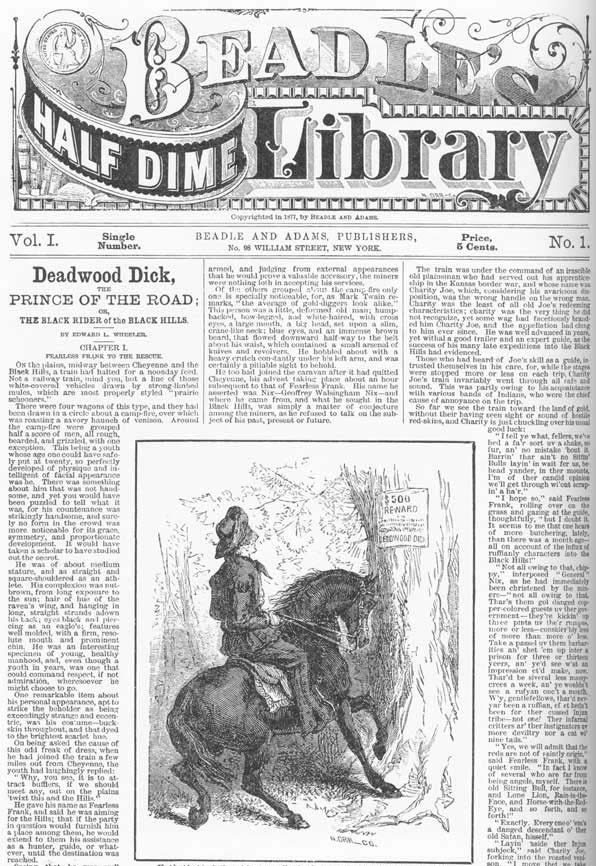
Deadwood’s fame in fiction began in print in 1877 and moved to a California movie ranch in 2004. Edward L. Wheeler’s Deadwood Dick, the Prince of the Road; or, The Black Rider of the Black Hills opened Beadle and Adams’s Half-Dime Library on October 15, 1877, and 33 Deadwood Dick stories had appeared by Wheeler’s death in late 1885 or early 1886, by the count of Northern Illinois University’s dime novel project. His Hills were partly invented; his Cheyenne lay east of them. Wheeler took Calamity Jane from a promotional booklet and made her a heroine known across the country, the historian James D. McLaird writes; her real life is on Calamity Jane.
Writers made Wild Bill Hickok, too. George Ward Nichols’s article in Harper’s New Monthly Magazine for February 1867 first made him nationally famous, and the tale that he died holding aces and eights first appeared in Frank J. Wilstach’s 1926 biography, some 50 years after the shooting, McLaird showed in South Dakota History in 2019. Hickok’s few weeks in the gold camp are on Wild Bill Hickok.
HBO’s Deadwood, which began in 2004 and was abruptly canceled in 2006, NPR noted in reviewing its 2019 film, took real people of the camp, such as Seth Bullock and Calamity Jane, for its characters. The series and the film were both made at Melody Ranch, a movie ranch in Newhall, California, the Signal of Santa Clarita reported in 2019, and Cowboys & Indians also placed the film there. The camp it portrayed is on Deadwood’s Wild Years, 1876 to 1879.
Books With Roots in the Hills
Black Elk Speaks (1932) was told at Manderson, but it closes on the highest peak in the Hills. In May 1931 the Oglala holy man Black Elk told his life to the poet John G. Neihardt, with Black Elk’s son Ben interpreting, JSTOR Daily recounts. When the telling was done, the party climbed Black Elk Peak (called Harney Peak until 2016), which Neihardt called “the center of the world” of Black Elk’s boyhood vision, and Black Elk prayed there for his people, Neihardt wrote on June 3, 1931. The interview transcripts later showed how much Neihardt shaped the book, and how well it carries Black Elk’s own words is still argued, as told on Black Elk.
Badger Clark’s best-known verse began outside the Hills. Charles Badger Clark, born on January 1, 1883, grew up in Dakota Territory. Tuberculosis sent him to Arizona, where he looked after a horse ranch and began selling verse to magazines, Tom Isern wrote for Prairie Public in 2025, and his first collection, Sun and Saddle Leather, came out in 1915. The poems traveled without their author: Clark collected more than 40 postcards that credited his stanzas to “Anonymous” or “Author Unknown,” Isern found.
Clark came home to South Dakota after four years on the Arizona range, SDPB reported in 2015. In the mid-1920s he moved into a one-room cabin in Custer State Park (sources date the move from 1924 to 1927), and in the 1930s he built the larger cabin nearby that the park keeps as the Badger Hole. South Dakota named him its first poet laureate in 1937, a title he liked to call “poet lariat.” He died in 1957, and the South Dakota Historical Society Foundation now helps Custer State Park look after his cabin.
Connected
- Mount Rushmore and Crazy Horse MemorialWhy the carving Hitchcock filmed was made, and how tribes and tribal members see it.
- Deadwood’s Wild Years, 1876 to 1879The real camp behind the dime novels and the HBO series.
- Calamity JaneMartha Canary’s life set against the Deadwood Dick stories.
- Wild Bill HickokHis weeks in Deadwood, and how the aces-and-eights tale grew.
- Black ElkThe holy man behind Black Elk Speaks, and the argument over Neihardt’s book.
- Hiking Black Elk PeakThe summit where Black Elk prayed in 1931.
- Spearfish CanyonA canyon in the Hills where Dances with Wolves was filmed.
- Custer State ParkThe park that holds Badger Clark’s cabin, the Badger Hole.
Further reading
- When Leader Charge spoke, Kevin Costner listened, Tim Giago, Indianz.com
- Friends Remember Lakota Studies Instructor, Tribal College Journal
- The Associated Tribal Nations of Mount Rushmore National Memorial, National Park Service
- Alfred Hitchcock’s “Expedient Exaggerations” and the Filming of North by Northwest at Mount Rushmore (Todd David Epp), South Dakota State Historical Society
Sources
- Alfred Hitchcock’s “Expedient Exaggerations” and the Filming of North by Northwest at Mount Rushmore (Todd David Epp). South Dakota History 23, no. 3, South Dakota State Historical Society, 1993.
- “North by Northwest” Starring…Mount Rushmore? (Cody White). The Text Message, National Archives, 2014.
- Treaty of Fort Laramie (1868). National Archives.
- Old Visitor Center at Mount Rushmore (photograph record). National Park Service, NPGallery.
- House Commemoration 1056: Recognizing the commemoration of the 25th anniversary of the location filming of Dances With Wolves in South Dakota. South Dakota Legislature, 2014.
- “Dances With Wolves” 25th Anniversary Celebration in Rapid City (Jim Kent). SDPB, 2015.
- Revisiting the legacy of “Dances With Wolves” in South Dakota (Bryan Savic). KOTA, 2024.
- Coming out from behind the Rocks: Constructs of the Indian in Recent U.S and Canadian Cinema (Robert Appleford). American Indian Culture and Research Journal 19, no. 1, University of California, Los Angeles, 1995.
- Tim Giago: When Leader Charge spoke, Kevin Costner listened. Indianz.com, 2012.
- Friends Remember Lakota Studies Instructor. Tribal College Journal 12, no. 4, 2001.
- Wheeler, Edward L. Beadle and Adams Dime Novel Digitization Project, Northern Illinois University Libraries.
- Calamity Jane (1856–1903) (James D. McLaird). Encyclopedia of the Great Plains, University of Nebraska–Lincoln.
- Wild Bill Hickok, Man and Myth (James D. McLaird). South Dakota History 49, nos. 2 and 3, South Dakota State Historical Society, 2019.
- “Deadwood” TV Movie Offers a Fitting Conclusion After the Series Was Canceled (Eric Deggans). NPR, 2019.
- Once Upon a Time … in Santa Clarita: Tarantino movie opens Thursday (Caleb Lunetta). The Signal, Santa Clarita, 2019.
- Behind the Scenes of Deadwood: The Movie (Wendy Wilkinson). Cowboys & Indians, 2019.
- Letter from John G. Neihardt to Julius T. House, June 3, 1931. University of Nebraska–Lincoln (digital edition).
- A Tale of Two Visionaries (Gus Mitchell). JSTOR Daily, 2023.
- The Cowboy’s Prayer (Tom Isern, Plains Folk). Prairie Public, 2025.
- Dakota Midday: 100 Years of “Sun and Saddle Leather” (Karl Gehrke). SDPB, 2015.
- Badger Clark. South Dakota Historical Society Foundation.
- Custer State Park History. South Dakota Game, Fish and Parks, 2026.
Last reviewed: