History
The Sturgis Motorcycle Rally
Road-tube counters at the nine places where traffic enters Sturgis, South Dakota, recorded 448,166 vehicles during the ten days of the 2026 rally. Sturgis had 7,020 residents at the 2020 Census. The Sturgis Motorcycle Rally began far smaller, on August 14, 1938, as a race on a dirt track at the town's fairgrounds, put on by the local Indian Motorcycle dealer and his riding club. Now it is among the world's largest motorcycle rallies, and each August it brings the northern Black Hills traffic, money, crashes, arrests and argument.
A Dealer, a Club and the 1938 Races
The rally's founder, J.C. "Pappy" Hoel, appears as Clarence Hoel in some accounts. Born in Sturgis in 1904, he worked in his family's ice business until home refrigerators cut into that trade in the 1930s, according to the Sturgis Motorcycle Museum. His Indian Motorcycle dealership, which he started in 1936, sat on Junction Avenue. He and his friends formed a riding club, the Jackpine Gypsies. Sources disagree on whether the club began in 1936 or 1937.
The club's first race, on August 14, 1938, ran on a quarter-mile dirt track at the fairgrounds. Its size depends on who tells it. SDPB counts nine racers. The Encyclopedia of the Great Plains has 19 racers watched by about 80 people, while the museum's director put the crowd near 200. Even the event's first name comes down two ways, the Black Hills Classic or the Black Hills Motor Classic. Johnny Spiegelhoff of Milwaukee won the day, a fellow racer later told SDPB. The museum calls him a rider backed by Indian; Carl Edeburn, citing the Sturgis Tribune, says he rode a Harley-Davidson. Edeburn, who read the Tribune of 1937 and 1938, found that a merchants’ group, the Black Hills Motor Classic, ran the 1938 races and held the money, while the club did most of the work. The museum says the visiting riders slept in the Hoels' backyard and ate meals cooked by Pearl Hoel and other members' wives.
How Did a Small Race Get So Big?
The rally grew by word of mouth. The museum counts 800 riders the next year, four times its 1938 figure. World War II stopped it for a time. SDPB names the years, 1942 and 1943, when gasoline was rationed; other accounts say only that it missed two years. Scenic rides through the Hills joined the program in the 1940s, and a 1953 photograph shows the Jackpine Gypsies on Main Street, about to guide riders to Mount Rushmore. Main Street closed to traffic for the first time in 1949, for an awards ceremony. The club staged its first hill climbs and motocross races in 1961, and soon the event stretched to five days.
Hoel's own brand didn't last: the original Indian Motorcycle company closed in 1953. Harley-Davidsons had outnumbered the other makes at Sturgis since the 1960s, the historian Carlton Bonilla wrote in the journal South Dakota History in 1998. Crowds reached about 30,000 by the late 1970s, SDPB says, and the city had begun licensing vendors. Motorcycling's rising popularity in the 1980s brought a new generation of riders.
Pappy Hoel died in 1989. The next year, the 50th rally drew a crowd estimated at 300,000 to 400,000. Bonilla himself gave the low figure in his journal article and the high one in his encyclopedia entry. The state Department of Transportation began counting traffic at that 50th rally. From 1991 a local company, Sturgis Rally and Races, Inc., handled planning and promotion, and the event took that name in 1992; it became the Sturgis Motorcycle Rally in 2003.
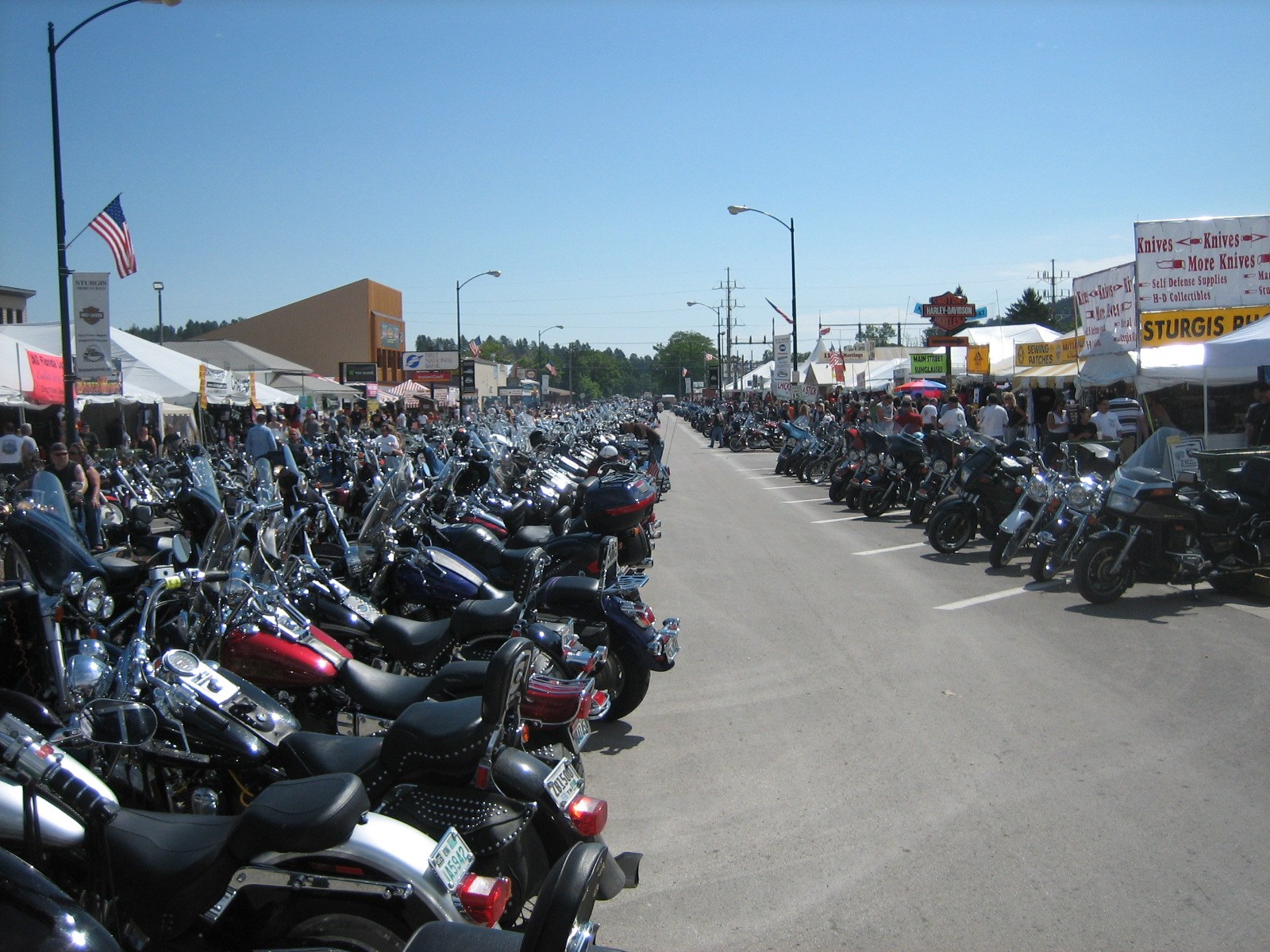
The high-water mark came in 2015, at the 75th rally. The Department of Transportation counted 747,032 vehicles entering Sturgis over ten days, far above any other year in its published table for 2011 through 2026. SDPB later called that year's crowd a record of about 750,000 people. In 2017 the official rally grew from seven days to ten.
The 2020 Rally and COVID-19
The 80th rally ran from August 7 to 16, 2020, in the first summer of the pandemic, in a state with no mask requirement and no limits on public gatherings. A poll found that 60 percent of Sturgis residents wanted it postponed. With no owner to cancel it, and riders likely to come anyway, city leaders let it proceed and dropped only the city's own events, SDPB reported. Officials had expected about 250,000 people. The Department of Transportation counted 462,182 vehicles.
How much disease followed is still disputed. Minnesota found 51 residents whose infections were tied to the rally, and 86 cases in all once their contacts were counted; four people were hospitalized and one died, the CDC's weekly report said in November 2020. A 2021 study by CDC scientists and South Dakota's state epidemiologist found at least 649 cases linked to the rally in 30 U.S. jurisdictions, counting spread to close contacts.
Economists took a different approach. In September 2020 a working paper by Dhaval Dave, Andrew Friedson, Drew McNichols and Joseph Sabia used cell phone and case data to link the rally to more than 250,000 cases nationwide and public health costs of up to $12.2 billion. South Dakota's state epidemiologist, Josh Clayton, answered that the paper had not been peer reviewed and did not account for cases already rising in the state, which then knew of 124 rally-linked cases among its own residents. A revised version passed peer review and appeared in the Southern Economic Journal in 2021. It found that case rates rose in Meade County and across South Dakota in the month after the rally, and that counties outside the state that sent the most riders saw cases climb 6.4 to 12.5 percent compared with counties that sent none. The health departments counted the cases they could trace; the economists estimated the rally's effect on case rates from county data.
Ten Days in August
No one counts the rally crowd directly. The Department of Transportation's road tubes register one vehicle per pair of axles, so they measure vehicles, not people. The city also estimates attendance from cell phone data, among other measures. That method showed about 617,000 visitors in 2023, SDPB reported, against 458,000 vehicles on the state's counters. For 2022 the city put the crowd at 505,000.
A Texas A&M University study, paid for by the city and built on that crowd figure, estimated that the 2022 rally added $784.1 million to South Dakota's economy, counting ripple effects; direct spending in the state came to about $643 million. The Department of Revenue estimated $1.4 million in state sales and tourism taxes and city taxes from 822 temporary vendors at the 2026 rally, 11 percent less money and 30 percent fewer vendors than in 2025. The city itself netted about $1.06 million from the 2022 rally, sales tax included, its financial report shows.
In the 1990s, Bonilla found, most Sturgis merchants packed away their own goods and leased their stores, at high rents, to some 700 vendors from out of town. Restaurants, bars, drugstores and hardware stores kept their own doors open. One druggist told him the week was worth an extra month of sales. Most rally-goers camped, the Encyclopedia of the Great Plains noted. The Sturgis Buffalo Chip, a large biker campground, lies on Highway 34 east of town; in 2016 Meade County built a road, Fort Meade Way, linking that stretch of highway to Interstate 90.
Bonilla wrote in 1998 that the rally had outgrown the town, and that by the end of each August most people in Sturgis were "ready to vote it permanently into history."
Crashes, Arrests and the Rally Now
The 2026 rally, August 7 to 16, was quieter than the one before. The Department of Transportation counted 10 percent fewer vehicles than the average of the previous five years, and 89,293 fewer than the 537,459 of 2025. Three people died in three fatal crashes, the Highway Patrol reported, compared with four deaths in 2025, and troopers made 105 drunken-driving arrests through August 15, by the patrol's count, down from 112 the year before. Sturgis police logged 482 arrests, citations and parking tickets, 37 of them for drunken driving, and Meade County deputies answered about 1,200 calls.
The Highway Patrol's rally tally is narrower than it looks. It covers only crashes in western South Dakota, so riders killed elsewhere in the state, or in other states on the way to or from Sturgis, are left out. During the 2024 rally the official figures listed three motorcycle deaths, while state data showed 12 people killed in motorcycle crashes across South Dakota from late July to August 12, South Dakota News Watch found.
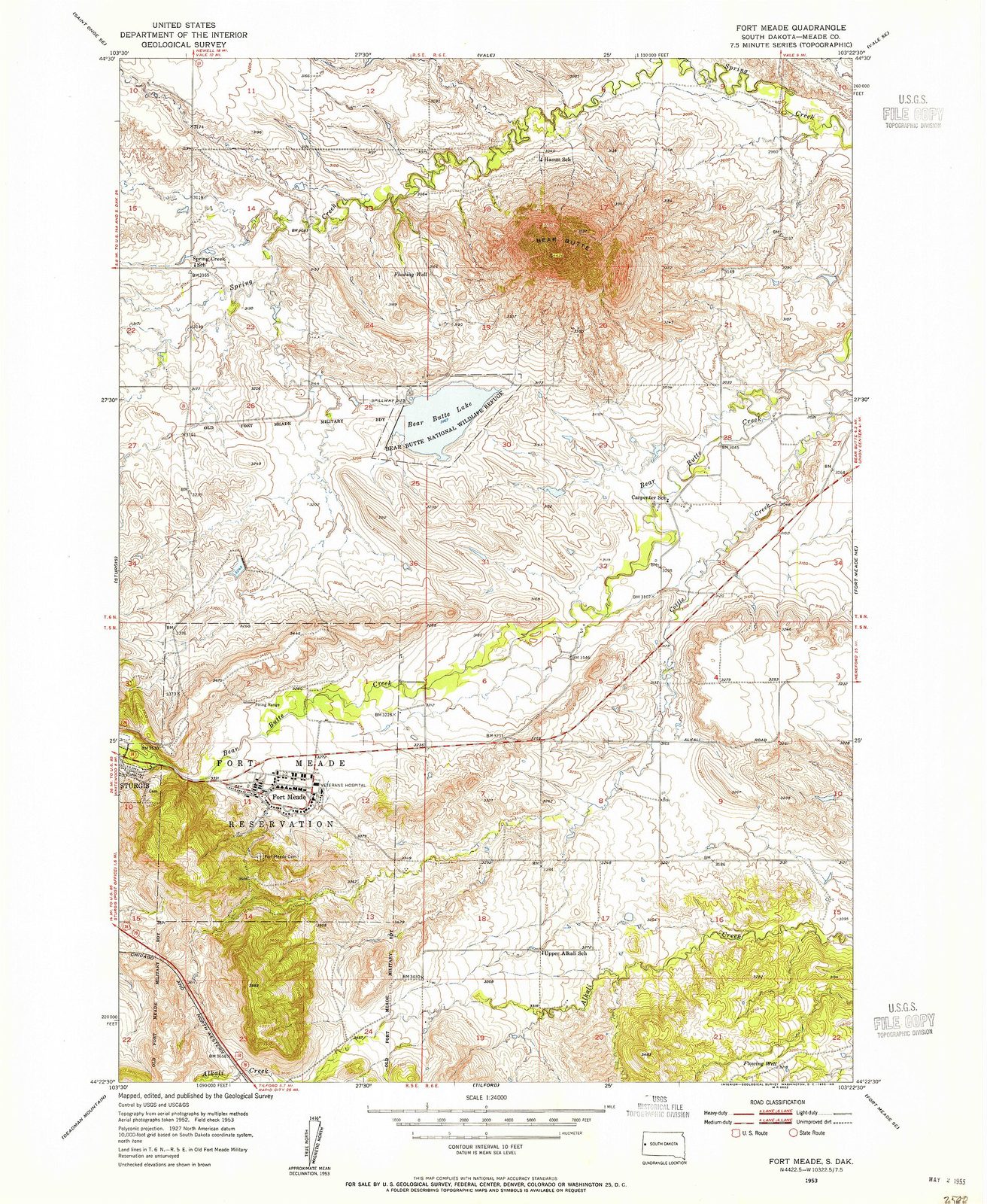
Bear Butte, Mahto Paha (or Paha Mahto) in Lakota, rises about 6 miles northeast of Sturgis. In 2003 Charmaine White Face, an Oglala Lakota who led the group Defenders of the Black Hills, told a U.S. Senate committee that Lakota, Cheyenne and Arapaho people, and people of more than 30 other nations, had prayed there for thousands of years, and that "biker bars" opened around the town each summer and closed as soon as the rally was over. Tribal objections to bars and development near the butte are told on The Rally and Bear Butte.
Connected
- Sturgis, South DakotaThe town the rally is named for, and its life the rest of the year.
- The Northern HillsThe region the rally fills each August.
- The Rally and Bear ButteBars and development near the butte, and the tribes' objections.
- Bear Butte and the Plains EdgeThe butte and the prairie ring around the Hills.
- Sacred Sites: Bear Butte, Devils Tower and Wind CaveWhat Bear Butte means to the tribes who pray there.
- Mount Rushmore and Crazy Horse MemorialThe carving early rally tours rode out to see.
Sources
- The Early Days of the Jackpine Gypsies in the Northern Black Hills, by Carl Edeburn. West River History Conference proceedings, 2004, pp. 272–286; Leland D. Case Library for Western Historical Studies, Black Hills State University.
- A South Dakota Rendezvous: The Sturgis Motorcycle Rally and Races (Carlton L. Bonilla). South Dakota History 28, no. 3, South Dakota State Historical Society, 1998.
- Sturgis Motorcycle Rally (Carlton L. Bonilla). Encyclopedia of the Great Plains, University of Nebraska–Lincoln.
- Black Hills Motor Classic Begins (South Dakota History series). South Dakota Public Broadcasting, 2023.
- The Humble Beginnings of a Mega Bike Rally (Charles Michael Ray). South Dakota Public Broadcasting, 2015.
- J.C. "Pappy" Hoel. Sturgis Motorcycle Museum & Hall of Fame.
- Sturgis Rally Traffic Counts 2017–2026. South Dakota Department of Transportation, 2026.
- 2026 Sturgis Motorcycle Rally Vehicle Count: Through Day Ten. South Dakota Department of Transportation, 2026.
- 2025 Sturgis Motorcycle Rally Final Vehicle Counts. South Dakota Department of Transportation, 2025.
- TIGERweb, Census 2020: Incorporated Places (Sturgis city, South Dakota). U.S. Census Bureau, 2020 Census.
- Sturgis Rally Vehicle Count Hits 537,000. KELOLAND News, reposted by the South Dakota Department of Transportation, 2025.
- South Dakota Motorcycle Rally to Take Place Despite Local Opposition (Lee Strubinger, South Dakota Public Broadcasting). NPR, All Things Considered, 2020.
- COVID-19 Outbreak Associated with a 10-Day Motorcycle Rally in a Neighboring State, Minnesota, August–September 2020 (Melanie J. Firestone and others). Morbidity and Mortality Weekly Report, Centers for Disease Control and Prevention, 2020.
- Widespread SARS-CoV-2 Transmission Among Attendees at a Large Motorcycle Rally and Their Contacts, 30 US Jurisdictions, August–September, 2020 (Rosalind J. Carter and others, with the CDC COVID-19 Response Team). Clinical Infectious Diseases, 2021.
- The Contagion Externality of a Superspreading Event: The Sturgis Motorcycle Rally and COVID-19 (Dhaval M. Dave, Andrew I. Friedson, Drew McNichols and Joseph J. Sabia). Working Paper 27813, National Bureau of Economic Research, 2020.
- The Contagion Externality of a Superspreading Event: The Sturgis Motorcycle Rally and COVID-19 (Dhaval Dave, Drew McNichols and Joseph J. Sabia). Southern Economic Journal 87, no. 3, 2021.
- Lawmaker: Sturgis COVID Study Kicks Off Important Line of Questioning (Lee Strubinger). South Dakota Public Broadcasting, 2020.
- 2023 Sturgis Rally Data Points to Average Attendance (C.J. Keene). South Dakota Public Broadcasting, 2023.
- City of Sturgis Motorcycle Rally Provides Significant Economic Boost to State. City of Sturgis, 2022.
- Financial Report, 2022 City of Sturgis Motorcycle Rally. City of Sturgis, 2022.
- Tourism Targets Next Generation of Sturgis Rally-Goers (Jackie Hendry). South Dakota News Watch, 2024.
- $1.4 Million in Tax Collections from 2026 Sturgis Motorcycle Rally. South Dakota Department of Revenue, 2026.
- Sturgis Rally Was Quieter This Year. Here's What the Numbers Show (Tamara Chibe). KOTA Territory News, 2026.
- Final Stats: Sturgis Police Report Fewer Total Arrests but More Jail Bookings During 2026 Rally (KOTA Territory News). Dakota News Now, 2026.
- SD Highway Patrol Reports Rise in Citations, Felony Drug Arrests During Sturgis Rally, by Tamara Chibe. KOTA Territory News, 2026.
- Fact Brief: Does the Sturgis Rally Tally Offer a Complete View of Motorcycle Fatalities During the Event? (Michael Klinski, South Dakota News Watch). Dakota News Now, 2025.
- Testimony of Charmaine White Face, Coordinator, Defenders of the Black Hills, on the protection of Bear Butte. U.S. Senate Committee on Indian Affairs, 2003.
- Defenders of the Black Hills Disbands (Jim Kent). South Dakota Public Broadcasting, 2016.
- Bear Butte State Park. South Dakota Game, Fish and Parks.
Last reviewed: