History
Black Hills Place Names and Where They Came From
Deadwood, in the northern Black Hills, is named for its gulch, and the gulch for trees killed by a fire no one remembered, the 1938 state guide by the Federal Writers’ Project said. The first miners worked atop a layer of that dead timber, the town’s landmark nomination records. In November 1875 two prospecting parties staked claims there a day apart, about 2 miles from each other, and neither knew of the other, a state historical marker says, because dead trees blocked the ground between them. Below are the stories behind about 20 names of the Black Hills and the country around them, with tribal names first, the pronunciations visitors get wrong, and the places where an origin is disputed or unrecorded.
Why Are They Called the Black Hills?
In Lakota the Black Hills are Hé Sápa. The English name is a translation: the Forest Service traces it to Lakota words meaning “hills that are black,” and says the pine forest covering the Hills makes them look black from far away. What the Hills mean to the Lakota is told on Hé Sápa: Why the Hills Matter.
The Badlands came into English the same way. The Lakota name for the area, in use for centuries by the National Park Service’s account, means “bad lands” word for word. French fur trappers spoke of bad lands to travel across, a name the agency thinks likely came from the Lakota one. When a park there was first proposed, in 1922, the suggested name was Wonderland National Park (see Badlands National Park).
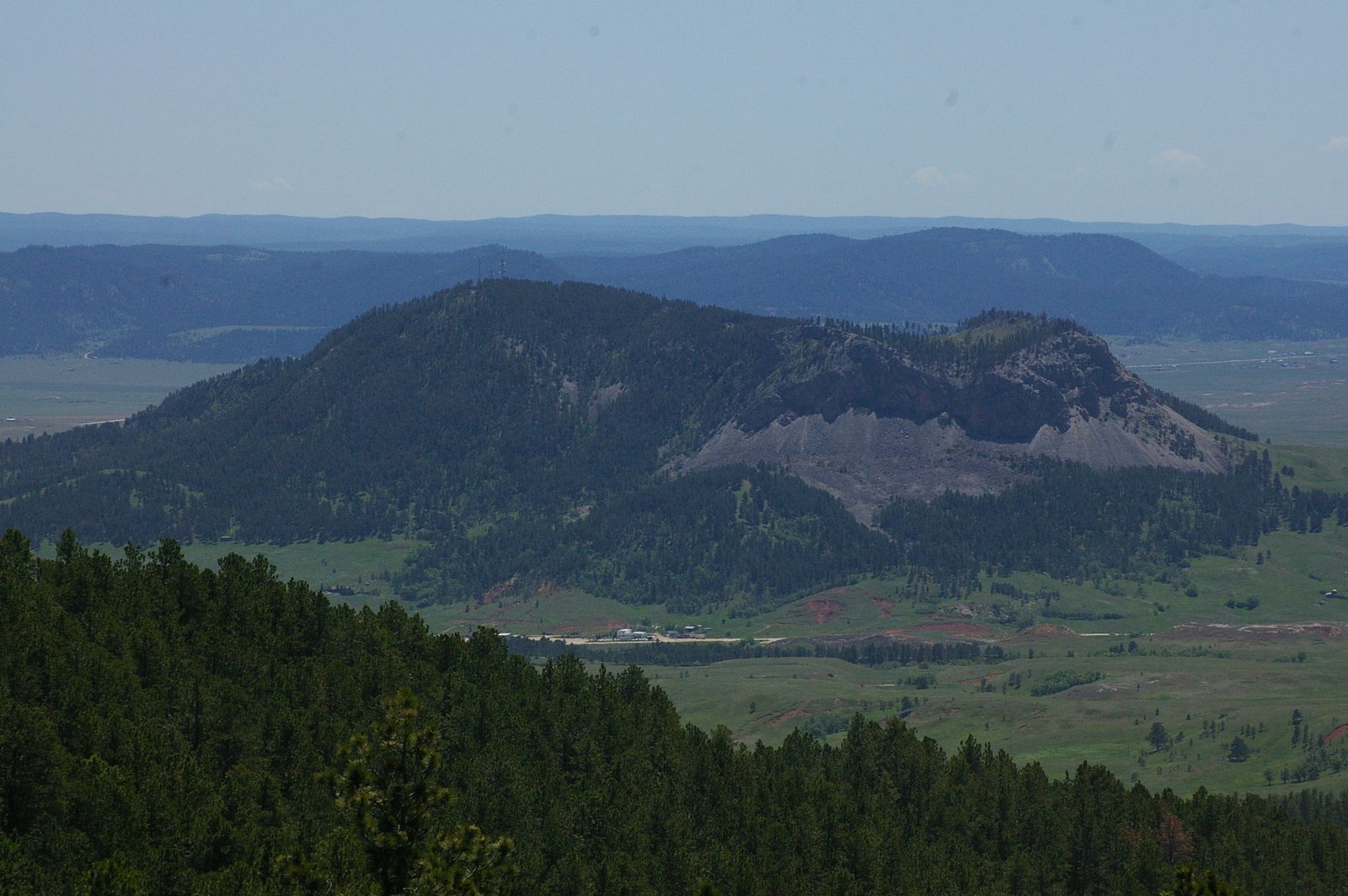
On the plains northeast of Sturgis, Bear Butte is Mahto Paha (or Paha Mahto) in Lakota, a name South Dakota Game, Fish and Parks translates as Bear Mountain. Many tribes hold the mountain sacred and come there for ceremonies, the department says (see Sacred Sites: Bear Butte, Devils Tower and Wind Cave).
How Do You Say Lead and Belle Fourche?
Lead is said “leed.” A lead is a miners’ word for a ledge of ore, the Advisory Council on Historic Preservation notes. The 1938 guide traced the name to the Homestake lode, the vein the Homestake Mine worked until 2001, while the city’s 2004 plan credits the many leads of ore around the town (see Lead, South Dakota).
Belle Fourche is said “bell foosh,” as the 1938 guide spelled it out. To the Lakota the river was the Sun Dance River, the Park Service says; Nicholas Black Elk, the Oglala Lakota holy man, said it had that name in olden times because it ran near the old Sun Dance grounds, a Wyoming State Library place-name entry records. The French name, “beautiful fork,” apparently came from early voyageurs, another State Library entry says, adding that the U.S. Board on Geographic Names made Belle Fourche River official in 1893. The 1938 guide tied the town’s name to the fork where the Redwater meets the river (see Belle Fourche, South Dakota).
Named for Soldiers, Creeks and Trees
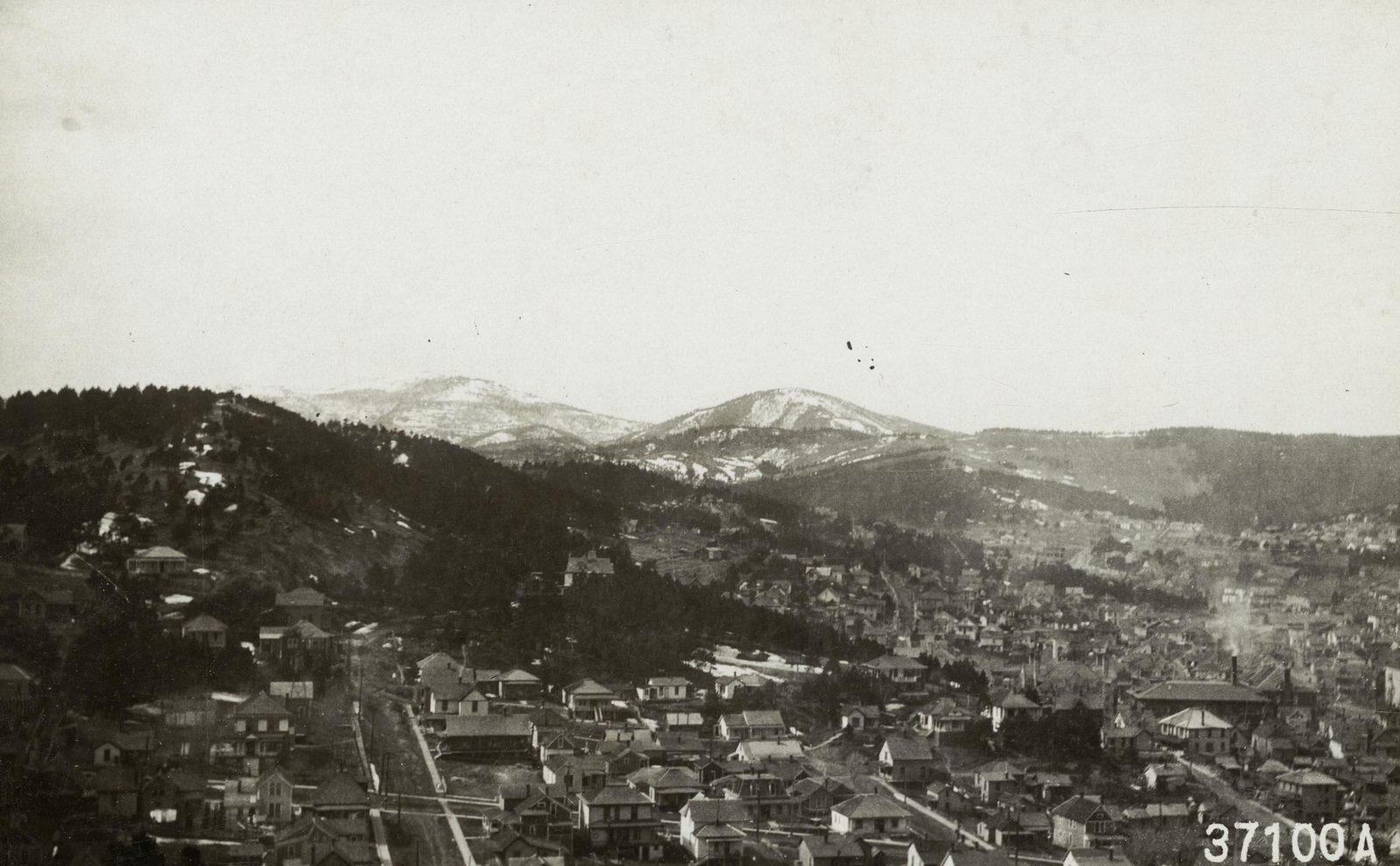
Custer began as Stonewall. Miners staked out the town in 1875 and named it for the Confederate general Stonewall Jackson, the 1938 guide says, and a miners’ meeting later renamed it for Lt. Col. George Armstrong Custer, whose 1874 expedition had reported gold on French Creek close by (see Custer, South Dakota).
Sturgis grew beside an Army post. Camp J.G. Sturgis, set up on July 1, 1878, was named for Lt. J.G. Sturgis, killed on June 25, 1876, at the Battle of the Little Bighorn, which the Lakota call the Battle of the Greasy Grass, a 1954 state marker says. Accounts of the town’s namesake differ: the Census Bureau wrote in 2023 that it was renamed for both Fort Meade’s first commander, Samuel D. Sturgis, and his son. For a time soldiers called the place Scooptown, for the way its traders scooped up their pay.
Rapid City took its name from Rapid Creek, the 1938 guide says, though it was first called Hay Camp, a name a 1976 state marker also uses (see Rapid City, South Dakota). Whitewood was named for the aspen and birch growing around it, by the guide’s account, and Wall for its place at the edge of the Badlands. Edgemont, begun as a Burlington railroad terminal in the summer of 1890, means “edge of the mountains,” a 1989 state marker explains; the guide put the name down to the town’s nearness to the Hills.
Where Did Spearfish Get Its Name?
Spearfish took its name from Spearfish Creek, and how the creek got its name is uncertain. The 1938 guide told of an old-timer on the bank whose remark, that this would be a good place to spear fish, named the creek and the future town, and then called its own tale “rather apocryphal” (see Spearfish, South Dakota).
Battle Mountain, east of Hot Springs, has a naming story that rests on tradition. A 1990 state marker says the name recalls a fierce fight over the warm springs, about 1869, in which the Lakota took them from the Cheyenne; it credits tradition and cites no record, and a 2015 Native Sun News column said the battle never took place (see Hot Springs, South Dakota).
Why Was Harney Peak Renamed?
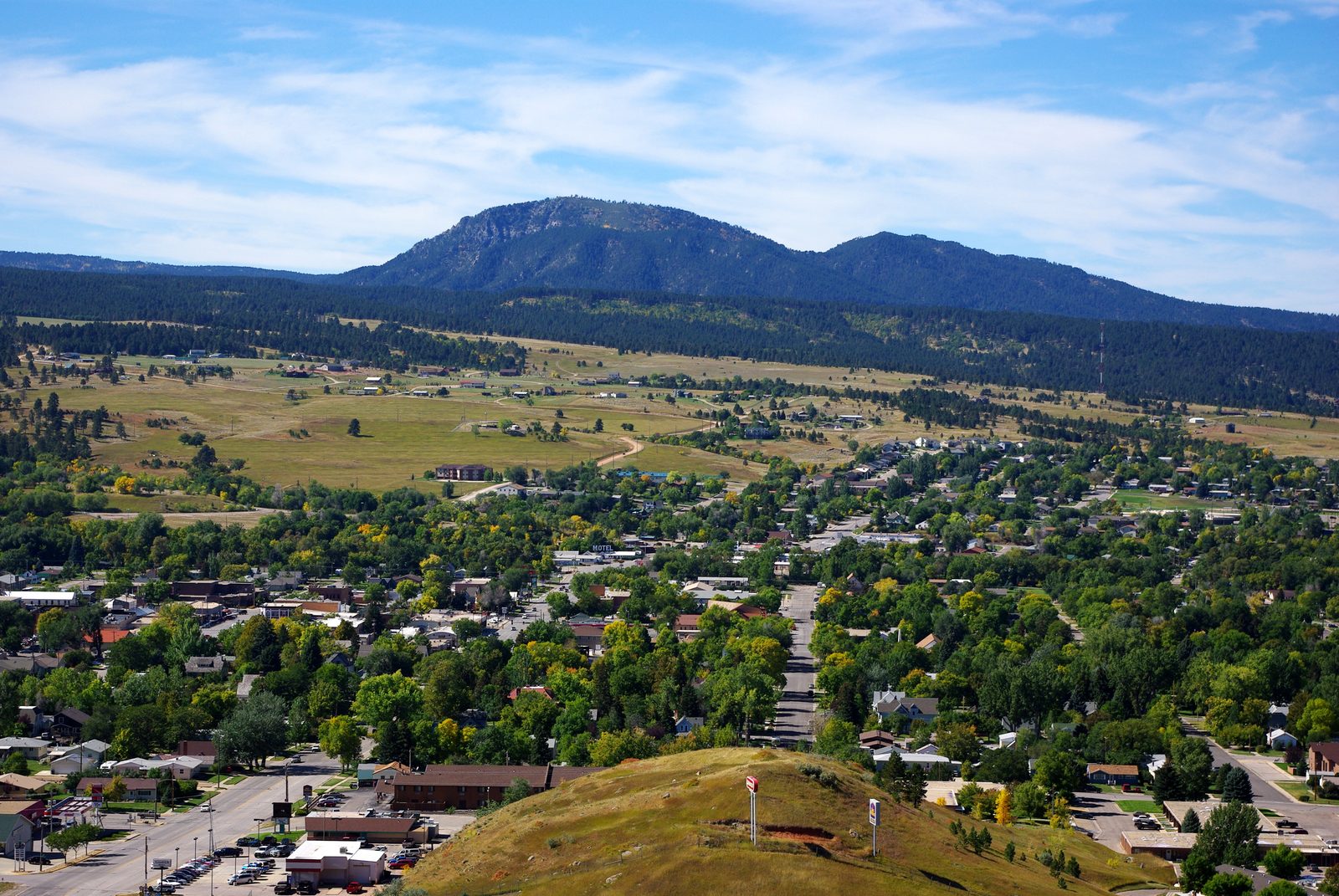
Black Elk Peak (called Harney Peak until 2016), the highest point in South Dakota, has an older Lakota name meaning the place of owls, the Lakota writer Delphine Red Shirt wrote in 2015. In 2014 Basil Brave Heart, a Lakota elder, began asking that the peak stop honoring Gen. William S. Harney, whose soldiers killed men, women and children in a Lakota camp at Blue Water Creek, Nebraska, in 1855, and honor Black Elk, who as a boy had a vision of being carried to its summit, SDPB recounted. The U.S. Board on Geographic Names made the change on August 11, 2016, though South Dakota’s governor objected and many of the tribes had preferred the traditional Lakota name, SDPB reported (see Hiking Black Elk Peak).
Mount Rushmore got its English name in passing. Lakota people called the mountain the Six Grandfathers, according to the news organization ICT. Charles E. Rushmore, a New York lawyer securing mining options in the Hills in 1884 and 1885, asked the men with him what the peak was called; it had no name, they said, and one proposed Rushmore Peak, by Rushmore’s own account, which the Park Service publishes. The 1938 guide made the answer a joke.
Bear Lodge, Breathing Earth and the Sun Dance
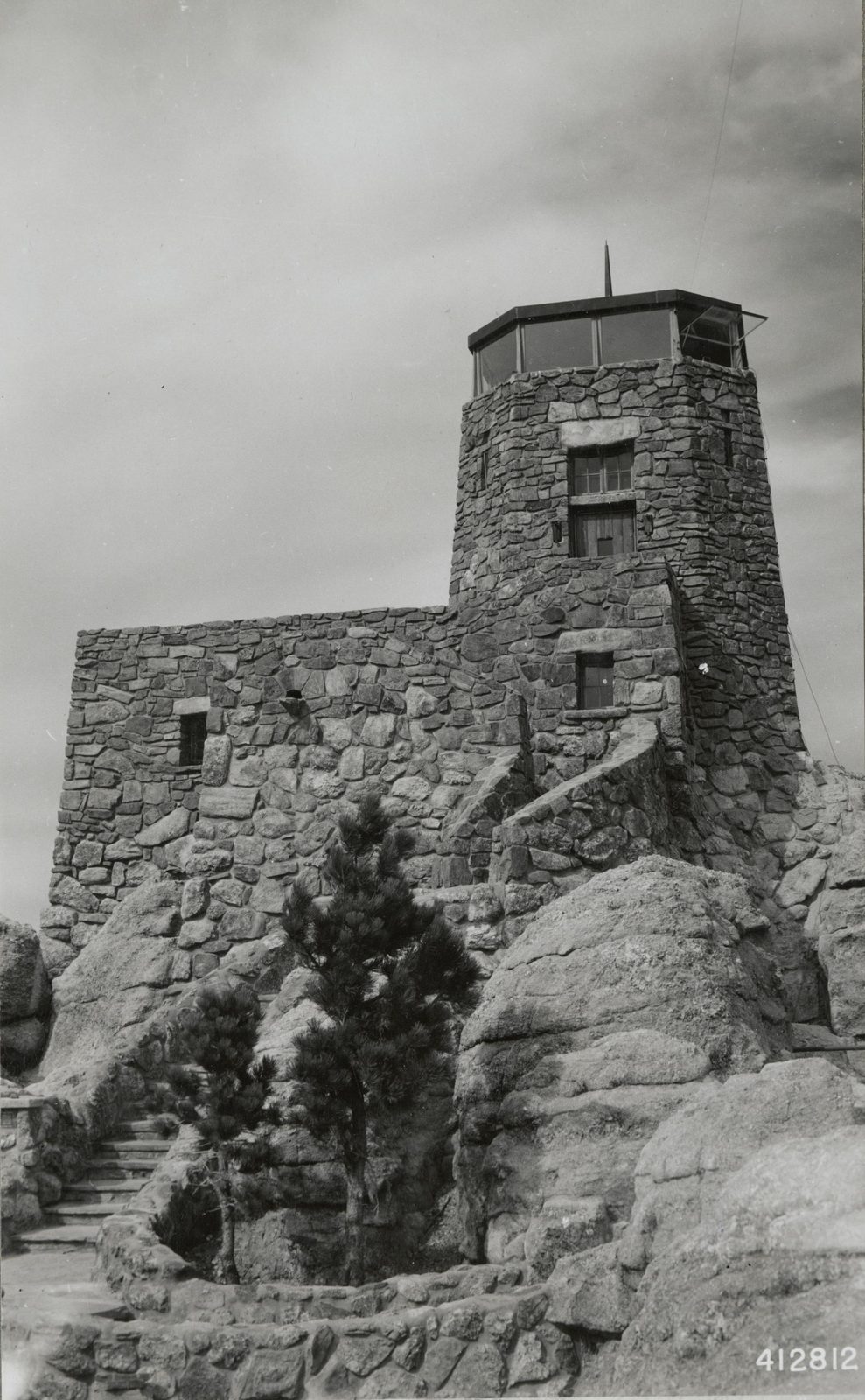
Many tribes call Devils Tower Bear Lodge, a translation of its Lakota name, and the Park Service finds that name, or Bears Lodge, on most maps of 1857 to 1901. The present name goes back to Lt. Col. Richard Dodge, whose 1875 journal said the tribes called the shaft the Bad God’s Tower, possibly a misreading of Bear Lodge; in 2015 the National Congress of American Indians, an organization of tribal governments, called the 1906 name “based on faulty translation.” As of April 2025 neither the federal nor the Wyoming naming board was taking comment on a 2014 proposal, made for a Lakota spiritual leader, to rename it Bear Lodge, and bills to keep the name Devils Tower have come before several Congresses (see Devils Tower National Monument).
Wind Cave’s names come from its air. In the Oglala account told by Wilmer Mesteth, a tribal historian and spiritual leader, and published by the Park Service, the ancestors called the cave the place where the earth “breathes inside”; its modern Lakota name means breathing earth, and the people came up into the world through it. The English name comes from the wind at the natural entrance, driven by unequal air pressure inside and outside the cave (see Wind Cave National Park).
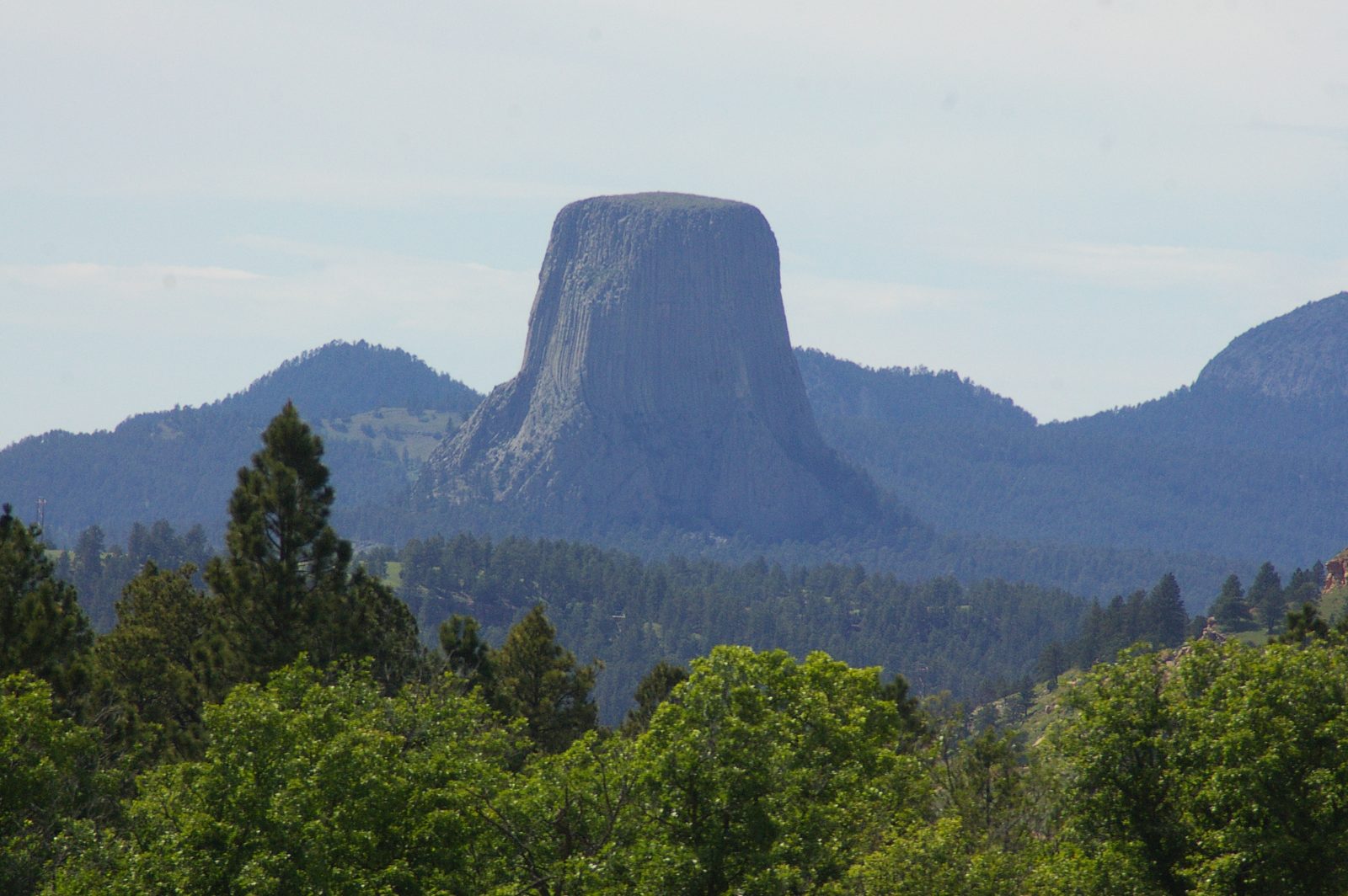
In Wyoming, Sundance, the Crook County seat, takes its name from Sundance Mountain beside the town, and the mountain, says the Wyoming State Historical Society’s encyclopedia, from ceremonies held at that sacred place. A Wyoming State Library entry, drawing on a Works Progress Administration source, names the Sun Dance among them. Neither cites a tribal source.
Inyan Kara Mountain, also in Crook County, carries an English spelling of a Lakota name, Red Shirt explained in the same 2015 piece: its “r” once stood for a throaty Lakota g. She gives the meaning as the place where stones are made. The state historical society’s encyclopedia gives it as Rock Gatherer.
Connected
- Hé Sápa: Why the Hills MatterWhat the Black Hills mean to the Lakota, in their own words.
- Hiking Black Elk PeakThe trail up the peak renamed for Black Elk in 2016.
- Devils Tower National MonumentThe Tower many tribes call Bear Lodge, and the long dispute over its name.
- Deadwood, South DakotaThe gulch town named for its dead timber.
- Lead, South DakotaThe Homestake town, said “leed,” named for a vein of ore.
- Belle Fourche, South DakotaThe town on the river the Lakota knew as the Sun Dance River.
- Spearfish, South DakotaThe town that took its creek’s name.
- Custer, South DakotaThe gold-rush town that began as Stonewall.
Further reading
- Restoring Our Sacred Peak to Its Original Name (Delphine Red Shirt), Native Sun News, via Indianz
- In Support of the Name Bear Lodge National Monument (Currently “Devils Tower”), Resolution SD-15-001, National Congress of American Indians (an organization of tribal governments)
- The Lakota Emergence Story (the Oglala account of Wilmer Mesteth, retold by Sina Bear Eagle), National Park Service
- Mako Sica: Naming the Badlands, National Park Service
Sources
- Delphine Red Shirt: Restoring Our Sacred Peak to Its Original Name. Native Sun News, via Indianz (Ho-Chunk, Inc.), 2015.
- The Lakota Emergence Story. National Park Service, Wind Cave National Park, 2024.
- In Support of the Name Bear Lodge National Monument (Currently “Devils Tower”), Resolution SD-15-001. National Congress of American Indians, 2015.
- Native History: Construction of Mount Rushmore Begins (Christina Rose). ICT, 2013.
- Frequently Asked Questions. USDA Forest Service, Black Hills National Forest.
- Mako Sica: Naming the Badlands. National Park Service, Badlands National Park, 2021.
- Bear Butte State Park. South Dakota Game, Fish and Parks.
- Lead, South Dakota (Preserve America community). Advisory Council on Historic Preservation.
- Lead Comprehensive Plan, 2004–2014 (draft of June 23, 2004). City of Lead, 2004.
- A South Dakota Guide (the Deadwood, Lead and Rapid City chapters and the western tours). Federal Writers’ Project, State Publishing Company, Pierre, 1938 (Internet Archive text).
- A Place of Reverence for Native Americans. National Park Service, Devils Tower National Monument, 2025.
- Belle Fourche River (Wyoming Places). Wyoming State Library.
- Sundance (Wyoming Places). Wyoming State Library.
- South Dakota State Historical Society Markers (markers 33, 470, 473, 505 and 509). South Dakota State Historical Society, revised 2020.
- Deadwood Historic District, National Historic Landmark nomination. National Park Service, 1976, amended 1989.
- 83rd Sturgis Motorcycle Rally: August 4-13, 2023. U.S. Census Bureau, 2023.
- Harney Peak name changed, governor responds. SDPB, 2016.
- “In Sacred Motion”: Five Years Ago, a Lakota Elder Beat the Establishment and Renamed Harney Peak (Seth Tupper). SDPB, 2021.
- Charles E. Rushmore. National Park Service, Mount Rushmore National Memorial, 2023.
- About the Name. National Park Service, Devils Tower National Monument, 2025.
- Devils Tower: Proposals to Change the Name. National Park Service, Devils Tower National Monument, 2025.
- Wind Cave Natural Entrance. National Park Service, Wind Cave National Park, 2024.
- Crook County, Wyoming (Nicole Lebsack). Wyoming State Historical Society, 2014.
Last reviewed: