History
Outlaws and the Sundance Kid
In 1877 the stage company that carried gold out of Deadwood put an iron safe in its treasure coach. In September 1878, at a small log stage station called Canyon Springs on the Wyoming side of the Black Hills, outlaws ambushed that coach, killed a passenger and broke the safe open anyway. Stage robberies like that one, the armed guards hired to stop them, and a young horse thief who walked out of the Sundance jail with a new name make up the outlaw history of the Black Hills. A good deal of it is legend. The record is thinner, and in places it tells a different story.
Road Agents on the Deadwood Roads
Road agents, as the stage robbers were called, followed the gold into the Black Hills. The stage line north from Cheyenne was running by March 1, 1876, and its run to Deadwood measured 266 miles, according to a National Park Service history of Fort Laramie, the Army post the road passed on its way. Going the other direction, gold bound for Cheyenne traveled in armored coaches with treasure boxes, and a single shipment was sometimes worth $30,000.
Merrill J. Mattes, who wrote that history for the Park Service in 1980, argues that robberies and killings on the Cheyenne–Deadwood road shaped much of how Americans picture the Wild West. Around Fort Laramie, Mattes lists stage holdups along the Laramie River and several killings at a road ranch just below the post. Troopers from the post often stood watch on risky stretches or rode after the robbers. Still, by his account, most travelers finished the trip unhurt, and the gold usually arrived as well. The routes are covered in Stagecoaches and Railroads.
What Happened at Canyon Springs?
At Canyon Springs, a stage station near present-day Four Corners in Weston County, Wyoming, outlaws ambushed the Deadwood treasure coach while its horses were being changed, and robbed its safe. The Wyoming State Historic Preservation Office’s marker near the site gives the outline and dates the holdup September 26, 1878; WyoHistory, the Wyoming State Historical Society’s online encyclopedia, gives September 29. The safe, an iron “salamander,” rode in a coach that carried gold south to Cheyenne once a week.
A 1991 account in the Lusk Herald, which draws on Agnes Wright Spring’s history of the stage line, names the coach the Monitor and calls it ironclad. Robbers had gone after it several times in its first year and failed each time. The line kept six regular guards, or shotgun messengers, on the run. Three rode out of Deadwood with the coach that day, Scott Davis among them, and three more waited at Beaver Station, about 10 miles past Canyon Springs, to join it.
The robbers opened fire from the station’s stable. A passenger, Hugh Campbell, was killed. The state marker says two guards and two outlaws were wounded. An older marker at the site, since taken down, told it differently: Davis killed one robber and fatally wounded another. The gang drove the coach into the trees and broke into the safe. The state marker puts the haul at more than $27,000 in gold, currency and jewelry, while the older marker said the coach was carrying $20,000 to $140,000, depending on the report.
Part of the loot was recovered, the older marker says, but 40 percent of the gold never was, according to the state marker. It passes on a local legend that the missing gold lies buried nearby, and it offers that only as legend.
Rope Justice and Lame Johnny
Some accused men never reached a courtroom. Masked men hanged horse thieves just north of the iron bridge over the North Platte at Fort Laramie, the Park Service history records. In Rapid City, South Dakota Magazine reports, three accused horse thieves were hanged from a tree on Skyline Drive; one was a teenager whose companions insisted he was innocent.
The outlaw known as Lame Johnny was riding a stagecoach in shackles when vigilantes stopped it and hanged him, the magazine reports. His shackles outlasted him. One is at the State Historical Society in Pierre, and the other is at the 1881 Courthouse Museum in Custer.
How Harry Longabaugh Became the Sundance Kid
The Sundance Kid took his nickname from the jail in Sundance, Wyoming. Harry Alonzo Longabaugh was held in the Crook County jail there from about 1887 to 1889 for stealing a horse, a saddle and a gun. WyoHistory puts his age then at about 20 and his time behind bars in Sundance at 18 months. The town had taken its own name from Sundance Mountain, which was named for ceremonies held there, WyoHistory says (a Wyoming State Library entry names the Sun Dance), and From the Sun Dance to the Sundance Kid follows that chain of names.
Longabaugh was born in Phoenixville, Pennsylvania, in 1867. At 14 he went west to a cousin’s ranch in Colorado, and he later worked on ranches in Wyoming and Montana, PBS’s American Experience reports. He was out of a job after the hard winter of 1886 to 1887. Riding along Cow Creek north of Sundance, he took the horse, the saddle and a revolver, according to Lucas Keeler, a Newcastle historian quoted by Cowboy State Daily.
He was caught in Miles City, Montana, and Crook County’s sheriff, Jim Ryan, set out to bring him back by train. Near Duluth, Minnesota, Longabaugh unlocked his shackles and leaped off the train while it was under way. He was caught again in Montana, and the last leg to Sundance, the city’s police department history says, was by buckboard over the Deadwood stage route. Convicted at Sundance, he drew 18 months at hard labor and served them in the county jail.
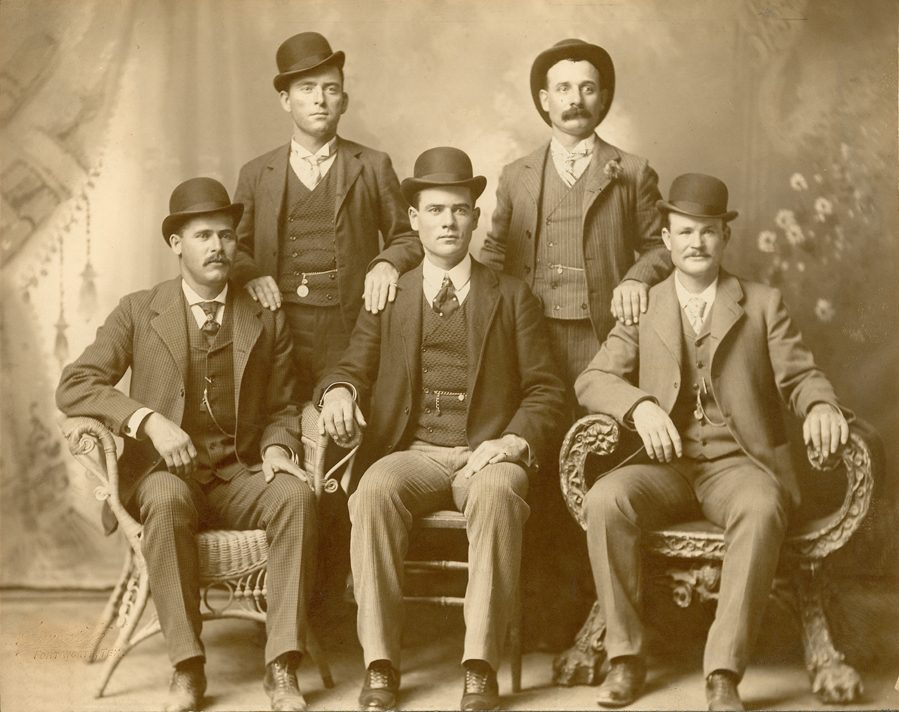
Wyoming’s territorial governor, Thomas Moonlight, pardoned him in 1889, a Wyoming newspaper’s history column reports; the city’s account says the pardon came as his sentence ended. The Crook County Museum in Sundance displays legal papers about the Kid, according to the city, and has a diorama of the trial. A statue of the Kid stands beside the museum. Its plaque says only that Longabaugh served time in the local jail and took his name from the town.
Did the Sundance Kid Rob the Belle Fourche Bank?
Possibly not. On June 28, 1897, robbers hit the Butte County Bank in Belle Fourche, South Dakota, and the PBS timeline counts the Sundance Kid among the six men who did it. Others doubt he was there. Mary Kopco, executive director of Deadwood History, told SDPB in 2013 that he “wasn’t actually involved” and had been working on a ranch. Kristi Thielen, director of the Tri-State Museum in Belle Fourche, doubts it too, and notes that more than one man called himself Sundance. Longabaugh himself maintained that he was working in Colorado at the time, Cowboy State Daily reported in 2023, citing a letter and a rifle kept at a museum in Savery, Wyoming.
The robbery went badly. The lookout, Tom O’Day, was drunk, Thielen says, and when his horse ran off he hid in an outhouse and was arrested. The gang reportedly got away with $97 from a bank thought to hold about $30,000. O’Day was later found not guilty.
Whatever his part in it, Longabaugh was jailed with men accused in the robbery in September 1897 and ended up in the Lawrence County jail in Deadwood. On Halloween night that year, Kopco told SDPB, the prisoners jumped the deputy, locked his wife in a cell and fled, and the Sundance Kid went with them.
South America and an End No One Can Prove
From there the Kid’s story leaves the Hills. WyoHistory blames Longabaugh, Robert Leroy Parker (better known as Butch Cassidy) and Cassidy’s Wild Bunch for train and bank holdups from 1889 until 1901. On February 20, 1901, Longabaugh, Cassidy and Longabaugh’s companion, Etta Place, sailed from New York for Argentina and settled on a homestead in Patagonia, PBS reports. The two men spent about five years in Argentina and Chile, Time magazine reported in 2009.
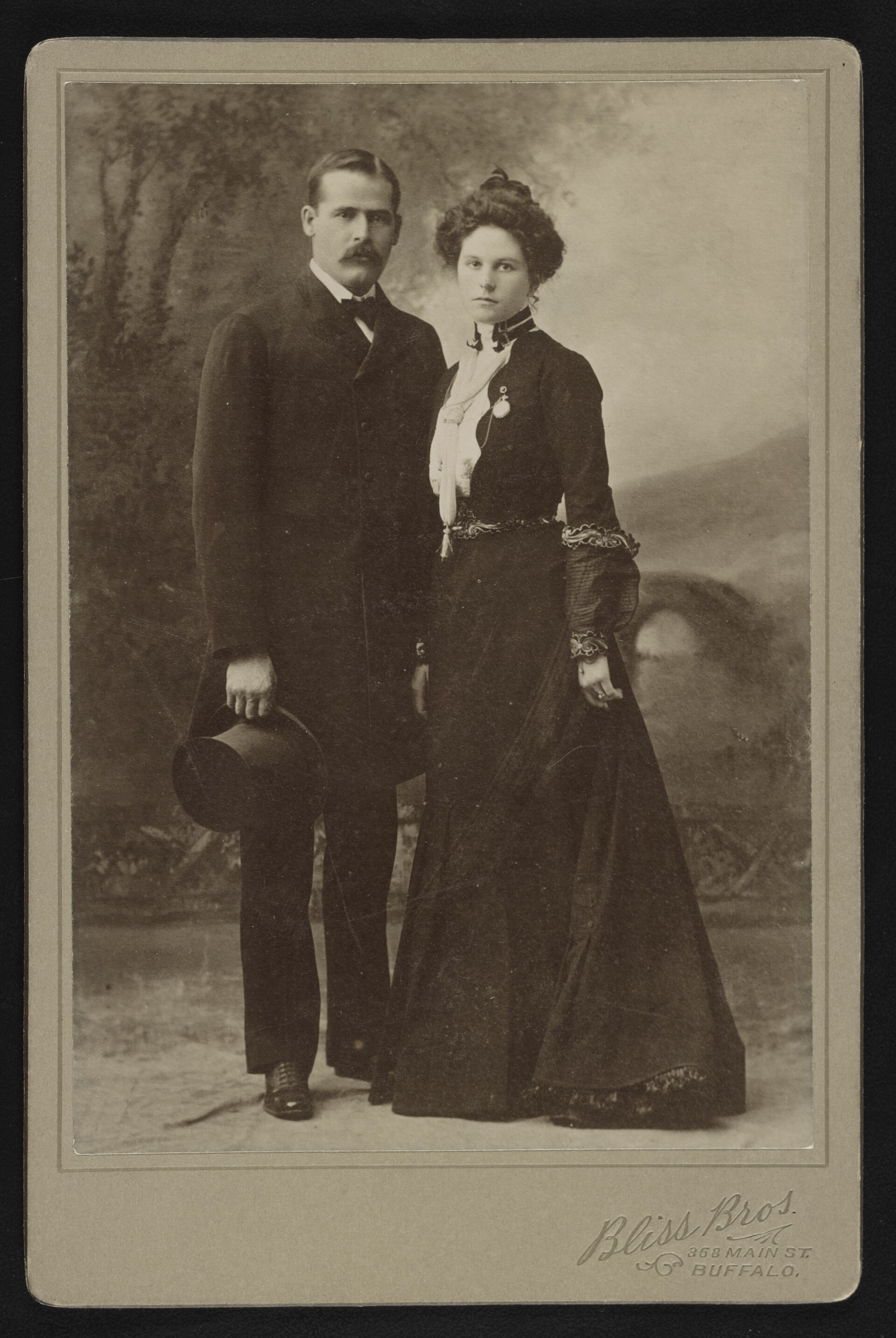
In November 1908 they robbed a payroll of the Aramayo silver mine in Bolivia. The usual ending, which PBS gives as fact, comes a few days later at San Vicente, Bolivia: the two men were trapped in a house, a gunfight followed, and both were found dead and buried in unmarked graves. Those graves have never been confirmed. In 1991, Dan Buck, an authority on the pair, coordinated an exhumation in San Vicente at the spot where a local man said his father had helped bury the Sundance Kid. The bones turned out to be those of a German man, Gustav Zimmer. Buck thinks the outlaws probably did die in San Vicente, but he told Time, “We aren’t going to ever find out what really happened to them.”
Connected
- Sundance, WyomingThe town whose jail gave Harry Longabaugh his nickname.
- From the Sun Dance to the Sundance KidHow a ceremony’s name passed to a mountain, a town and an outlaw.
- Stagecoaches and RailroadsThe stage and freight routes the road agents preyed on.
- Deadwood’s Wild Years, 1876 to 1879The gold camp the treasure coaches ran from.
- Belle Fourche, South DakotaWhere the Butte County Bank was robbed in 1897.
- The Wyoming Side of the HillsThe country around Sundance and Canyon Springs.
- The Sun DanceThe ceremony behind the names of Sundance Mountain and the town.
Sources
- Fort Laramie Park History, 1834–1977, Chapter XIII: The Cheyenne-Deadwood Stage Road. Merrill J. Mattes, National Park Service, Rocky Mountain Regional Office, 1980 (online edition, NPS History).
- Canyon Springs Station: Site of the “Treasure Run” Stage Robbery (marker text). Wyoming State Historic Preservation Office; transcribed by the Historical Marker Database.
- Canyon Springs Stage Station (earlier marker text, marker since removed). Transcribed by the Historical Marker Database.
- Canyon Springs Stage Station Marker. WyoHistory.org (Wyoming State Historical Society).
- Stage robbed, guards killed in Canyon Springs shootout. Ed Cook, Lusk Herald, 1991; reproduced by the Niobrara County Library.
- Reminders of Our Outlaw Days. South Dakota Magazine, 2018.
- Crook County, Wyoming. Nicole Lebsack, WyoHistory.org (Wyoming State Historical Society), 2014.
- Crook County Museum and Art Gallery. WyoHistory.org (Wyoming State Historical Society).
- Butch Cassidy and the Sundance Kid: Timeline. American Experience, PBS.
- Wyoming History: How The Sundance Kid Earned His Infamous Nickname. Jackie Dorothy, Cowboy State Daily, 2026.
- Police Department History. City of Sundance, Wyoming.
- Wyoming History. Douglas Budget, 2026.
- The “Sundance Kid” (plaque text). Sundance Chamber of Commerce; transcribed by the Historical Marker Database.
- Searching For The Sundance Kid’s Spirit. Jim Kent, SDPB, 2013.
- Comedy of errors marked 1897 Belle Fourche bank robbery. Erik Kaufman, Mitchell Republic, republished by Sioux Falls Live, 2022.
- Rifle In Wyoming Museum May Show Outlaw Sundance Kid Didn’t Rob Bank. Renée Jean, Cowboy State Daily, 2023.
- On the Trail of Butch Cassidy, in Bolivia. Jean Friedman-Rudovsky, Time, 2009.
- Sundance (Wyoming place names). Wyoming State Library, Digital Collection Suite.
Last reviewed: