Section
Ghost Towns
- Galena, South DakotaSilver and lead ore near Deadwood, a court fight over who owned it, and a schoolhouse, residents and a Superfund cleanup today.
- Rockerville, South DakotaGold in a near-waterless gulch near Keystone, the wooden flume that brought water, and the trail along its old bed.
- Scenic, South DakotaRailroad town on the Badlands' edge, boarded up by 2011 and sold to a church; a foundation now holds 58 parcels there.
- Cambria, WyomingA company town north of Newcastle that mined locomotive coal for the Burlington, and the lodge that outlasted it.
- Tinton, South DakotaTin near the Wyoming line that cost more to mine than it sold for, and a 2025 plan to drill there.
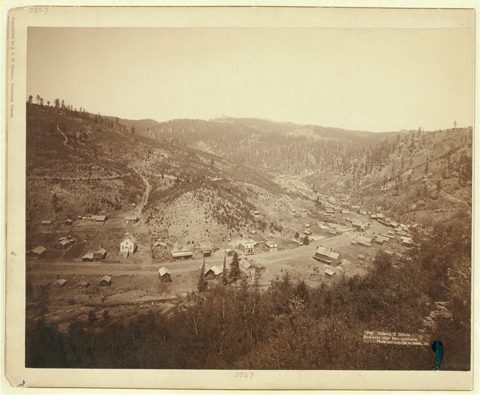
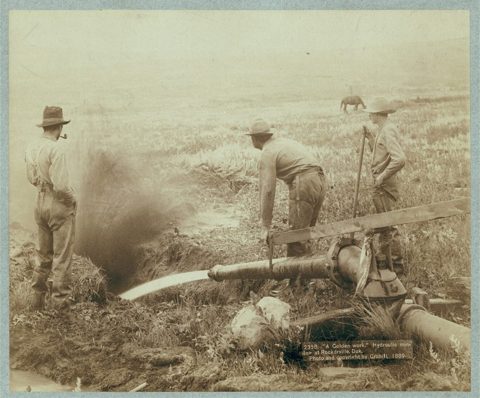
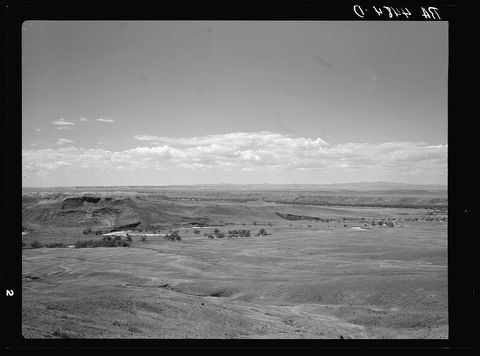
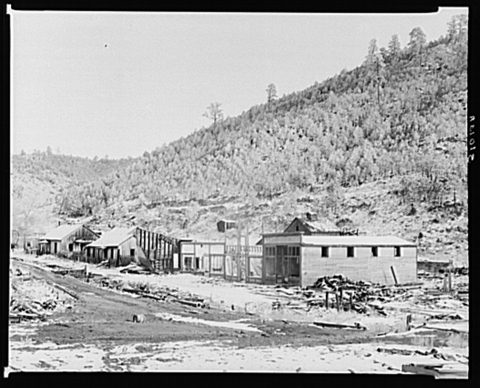
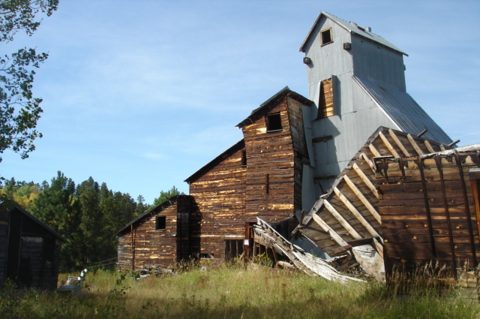
Silver-bearing lead ore, gold in a dry gulch, tin, and coal for locomotives: four of the five places in this section grew up around one of them. Galena, Rockerville and Tinton are on the South Dakota side of the Black Hills, and Cambria is on the Wyoming side. The fifth, Scenic, is a plains town at the western edge of the Badlands. Each page tells what drew people there, what is known of why they left, and what is on the ground now.
Places like these are common in the Hills. In a 1972 article for South Dakota History, the historian Watson Parker put the number of ghost towns there at "well over six hundred." His idea of one was broad: a mining camp, a stage station, a post office or a railroad siding that had been abandoned, or had changed so much that it no longer did the job it was built for. The five pages here rest on a paper trail of geologists' reports, National Register files, land records and news stories, and where local tradition parts ways with that record, they say so.
Galena, in Lawrence County, shares its name with its ore, a lead sulfide that carried good silver, as the National Register nomination for its schoolhouse describes it. The town never emptied entirely, and the old schoolhouse belongs to the Galena Historical Society, which looks after it. Rockerville started out as Captain Jack's Dry Diggins, and its page follows the long wooden flume built to bring the camp water. Tinton lies in South Dakota's northern Hills, close enough to the state line that one road in loops briefly through Wyoming. Parker wrote of tin as a prize Black Hills miners had chased for a long time without ever quite catching it.
Cambria, Wyoming, lay at the head of a short branch line running north from Newcastle, and its coal fueled the Burlington's locomotives. In 1980 its lodge, the Cambria Casino, went on the National Register; locals know it as the Flying V. An Associated Press reporter who came to Scenic in 2011 found one business still open, the post office, and the rest of the town shut behind padlocks and plywood. By then Scenic had a new owner, the Iglesia ni Cristo, a church from the Philippines.
Sources
- Some Black Hills Ghost Towns and Their Origins. Watson Parker, South Dakota History 2, no. 2, South Dakota State Historical Society, 1972; reprinted by SDPB, 2023.
- National Register of Historic Places Registration Form: Galena School. Ross Wright, South Dakota State Historical Society, for the National Park Service, 1999.
- Ghost Towns of South Dakota: Tinton. Michael Zimny, SDPB, 2018.
- Newcastle, Wyoming. Nicole Lebsack, WyoHistory.org, Wyoming State Historical Society, 2014.
- Church won't say boo on plans for ghost town. Amber Hunt, Associated Press, in the Honolulu Star-Advertiser, 2011.
Last reviewed: