Section
History
- The Custer Expedition of 1874Who marched into the Hills in 1874 and why, what they reported from French Creek, and how the Lakota saw it.
- The Black Hills Gold RushMiners crowded onto treaty land from 1874: the Gordon Party, the placer camps, and the Army's failed attempts to keep them out.
- Deadwood's Wild Years, 1876 to 1879A camp on treaty land in a rich placer gulch: Hickok's killing, Calamity Jane, Seth Bullock, Chinatown and the 1879 fire.
- The Homestake Mine and Sanford LabLead's gold mine, from the 1876 claim through the company town, a lockout and the Open Cut to a physics lab.
- Stagecoaches and RailroadsCoaches, bull trains and mule teams on the roads from Cheyenne, Sidney, Bismarck and Fort Pierre, then the railroads that replaced them.
- Outlaws and the Sundance KidRoad agents, the Canyon Springs treasure-coach robbery, and the horse thief who left the Sundance jail with a nickname.
- The National Forest and the CCCThe 1897 forest reserve, Case No. 1, the first regulated timber sale, and the dams, lakes and stone buildings the CCC left.
- Mount Rushmore and Crazy Horse MemorialTwo carvings on treaty land, why each was begun, and the range of tribal views on both, disagreements included.
- The Sturgis Motorcycle RallyFrom a 1938 dirt-track race to ten days each August: how the rally grew, and the traffic, money and arrests it brings.
- Ellsworth and the Minuteman MissilesBombers from World War II to the B-21, and the Minuteman missiles on alert across western South Dakota from 1963 to 1991.
- A Black Hills TimelineThe dates in order, from the rise of the dome to today, each linked to the page that tells it in full.
- Black Hills Place Names and Where They Came FromHow the towns, peaks and caves got their names, the tribes’ names for them, and how to say Lead and Belle Fourche.
- People of the Black HillsTwenty-two short lives, among them Crazy Horse, Red Cloud, Sitting Bull, Wild Bill Hickok, Calamity Jane and Gutzon Borglum.
- Old Maps of the Black HillsHow the Hills were drawn before and after 1874: the expedition map, the 1879 atlas, the bird’s-eye view and the first contour maps.
- The Black Hills in Films and BooksWhat was really filmed or written here and what only borrows the name, from a 1959 thriller on Mount Rushmore to the dime novels.
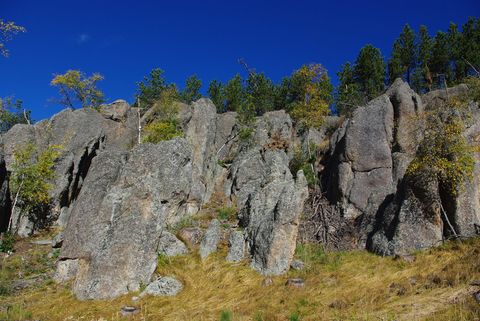
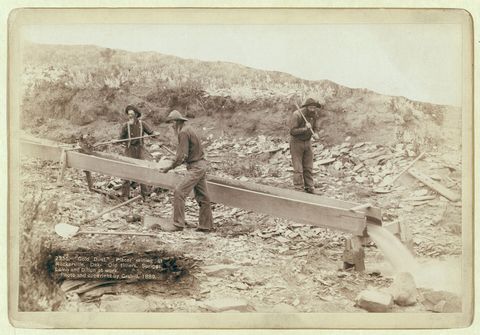
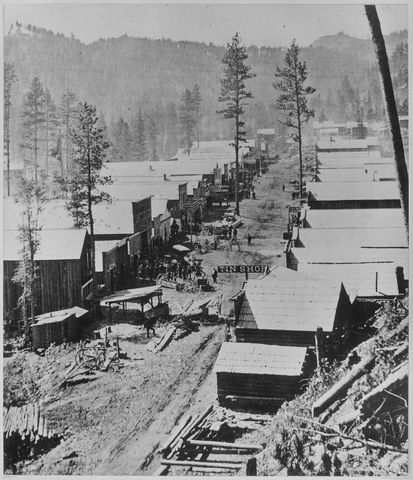
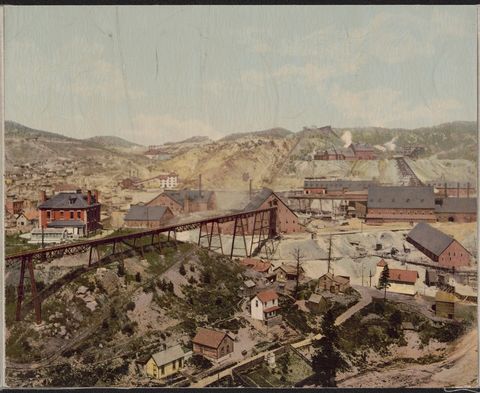
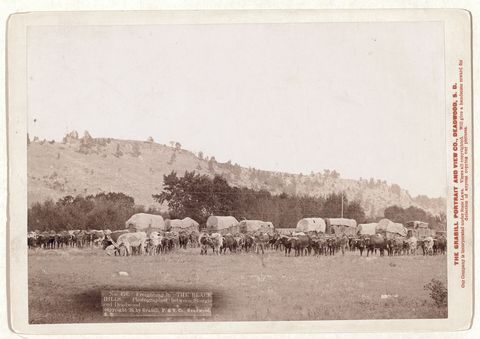
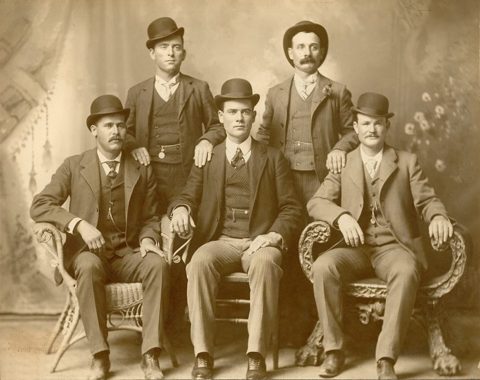
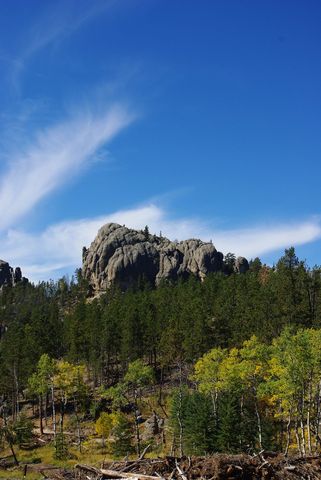
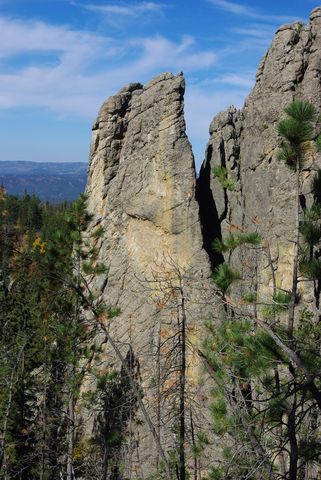

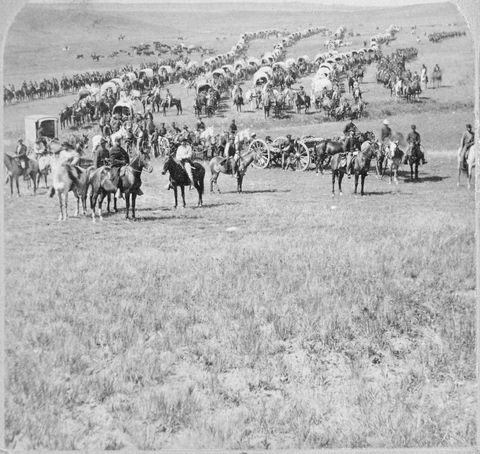
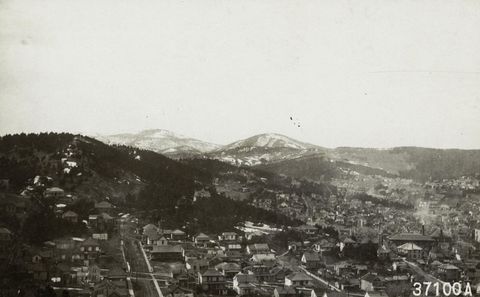
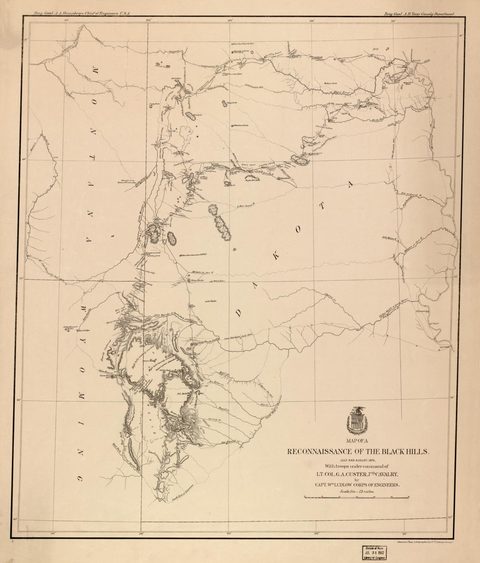
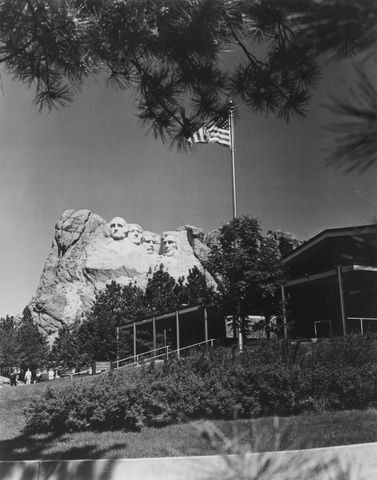
Sixty-seven years separate the summer of 1874, when an Army column under Lt. Col. George Armstrong Custer marched from Fort Abraham Lincoln into the Black Hills and reported gold, from October 31, 1941, when Mount Rushmore was declared complete. Those years and the decades after them fill this section. Ten of its pages cover the gold rush and the towns and the mine it made, the roads and rails that served them, the outlaws who worked those roads, the national forest, the two mountain carvings, the Sturgis rally, and an air base and its missile field. Four more are for looking things up: A Black Hills Timeline puts the dates in order, and Black Hills Place Names tells where the names came from and how to say them. Old Maps of the Black Hills shows how the country was drawn, and The Black Hills in Films and Books sorts what was made here from what only uses the name.
Twenty-two short lives sit beside these pages under People of the Black Hills, from Crazy Horse, Red Cloud and Sitting Bull to Wild Bill Hickok, Gutzon Borglum and Badger Clark.
The story begins on treaty land. The Rosebud Sioux Tribe's own history says the 1868 Fort Laramie Treaty "was not honored by the United States." That treaty had put the Black Hills within the Great Sioux Reservation and reserved that land for the tribes' "absolute and undisturbed use and occupation." The 1877 Act then took the Hills from the tribes without the consent the treaty required; The 1876 War and the Taking of the Hills gives the full account.
The first four pages follow the gold. The Custer Expedition of 1874 tracks the march and the reports from French Creek, and The Black Hills Gold Rush picks up the miners who came after it, from the Gordon Party's winter stockade to the placer camps. Deadwood's first wild years have a page of their own. Claimed in 1876, the Homestake Mine at Lead ran for 125 years and yielded nearly 40 million ounces of gold; its last ton of ore came up on December 14, 2001.
Gold had to be carried out and supplies brought in. Stagecoaches and Railroads follows the coaches, the ox and mule teams and the rail lines that replaced them, and Outlaws and the Sundance Kid sorts the road agents of record from the legends. The Black Hills National Forest, so named since 1907, goes back to a forest reserve that President Grover Cleveland proclaimed on February 22, 1897; The National Forest and the CCC carries its story into the work camps of the 1930s.
Mount Rushmore, dedicated in 1927, was carved on that same treaty land. Mount Rushmore and Crazy Horse Memorial gives the views of tribes and tribal members on both monuments, including where they disagree with one another. On August 14, 1938, a race in Sturgis started what became The Sturgis Motorcycle Rally, and its page traces how that race grew into the rally of every August. The last page follows Ellsworth Air Force Base and the missiles its crews ran. An act of Congress on November 29, 1999, made two Minuteman II sites, the Delta-01 launch control facility and the Delta-09 launch facility, into the Minuteman Missile National Historic Site.
Sources
- United States v. Sioux Nation of Indians, 448 U.S. 371. Supreme Court of the United States, 1980 (Legal Information Institute, Cornell Law School).
- Memorial History. National Park Service, Mount Rushmore National Memorial.
- Treaty of Fort Laramie (1868). National Archives, Milestone Documents, 2025.
- History and Culture. Rosebud Sioux Tribe.
- Summary of the Mining Industry in South Dakota, 2001. South Dakota Department of Environment and Natural Resources, 2002.
- FAQs. USDA Forest Service, Black Hills National Forest, 2025.
- Black Hills Motor Classic Begins (South Dakota History). South Dakota Public Broadcasting, 2023.
- Public Law 106-115, Minuteman Missile National Historic Site Establishment Act of 1999. U.S. Government Publishing Office, 1999.
Last reviewed: