The Tribes and Hé Sápa
The 1876 War and the Taking of the Hills
In September 1876 a federal commission reached Red Cloud Agency in Nebraska with an agreement written before it arrived. Its first article gave up the Black Hills, Hé Sápa. Chiefs and headmen signed it there, and by October 27 at six more agencies. Congress made the agreement law in February 1877. It was the last step in the taking of the Black Hills from the tribes, which began with miners on treaty land in 1874 and ran through the 1876 war and the Little Bighorn.
Gold Reports and Miners on Treaty Land
Under the Fort Laramie Treaty of 1868, the Great Sioux Reservation, which took in the Black Hills, was set apart for the tribes’ “absolute and undisturbed use and occupation,” and the United States “solemnly agrees” that no outsiders but authorized officials would ever pass over, settle on or live in it.
In testimony to a Senate committee in 2023, Ryman LeBeau, chairman of the Cheyenne River Sioux Tribe, said Lt. Col. George Armstrong Custer invited newspaper reporters along on the Army’s 1874 expedition into the Hills, setting off a gold rush. The Army engineer’s report records gold-seekers reporting gold in the Custer Park valley on French Creek, near present-day Custer, on July 30, and tiny flakes shown in Custer’s tent on August 2.
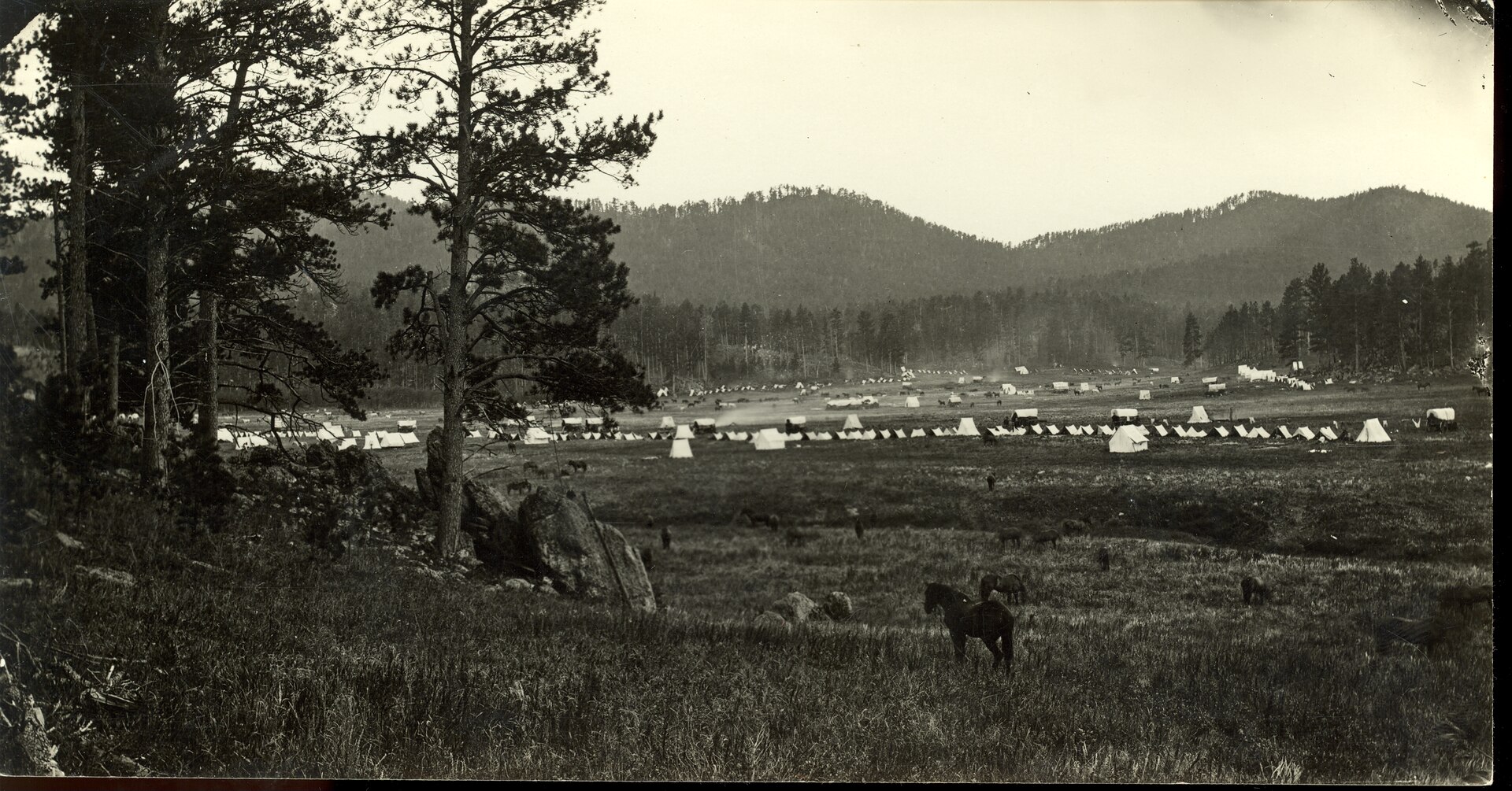
Miners came within months. The Gordon Party, from Sioux City, reached French Creek on December 23, 1874, and built a stockade. The Army had orders to keep them out, and in April 1875 soldiers under Capt. John Mix led the party out of the Hills. Others came anyway.
That year a commission headed by William B. Allison offered $6 million for the Hills, or $400,000 a year in rent. Tribal leaders would not sell for less than $70 million, and LeBeau’s testimony says the tribes refused, as was their right under the treaty.
The government stopped keeping miners out. In a letter dated November 9, 1875, Gen. Philip Sheridan reported that President Ulysses S. Grant had decided the Army would make no further resistance to miners occupying the Black Hills, an order to be carried out “quietly,” as the Supreme Court recounted the letter in 1980.
Why Did War Come in 1876?
LeBeau named the purpose of the war: President Grant began it in January 1876 “to take the Black Hills without our consent or compensation.” War came after the government ordered the bands living off the reservation to come in to the agencies by January 31, 1876, or be treated as “hostiles.” Many Lakota were wintering in the unceded territory north of the North Platte River, where the 1868 treaty kept their right to hunt. The order went out on December 6, 1875, “for reasons that are not entirely clear,” the Supreme Court wrote, adding that obeying it in so severe a winter was impossible. On February 1 the Interior Department turned those bands over to the War Department.
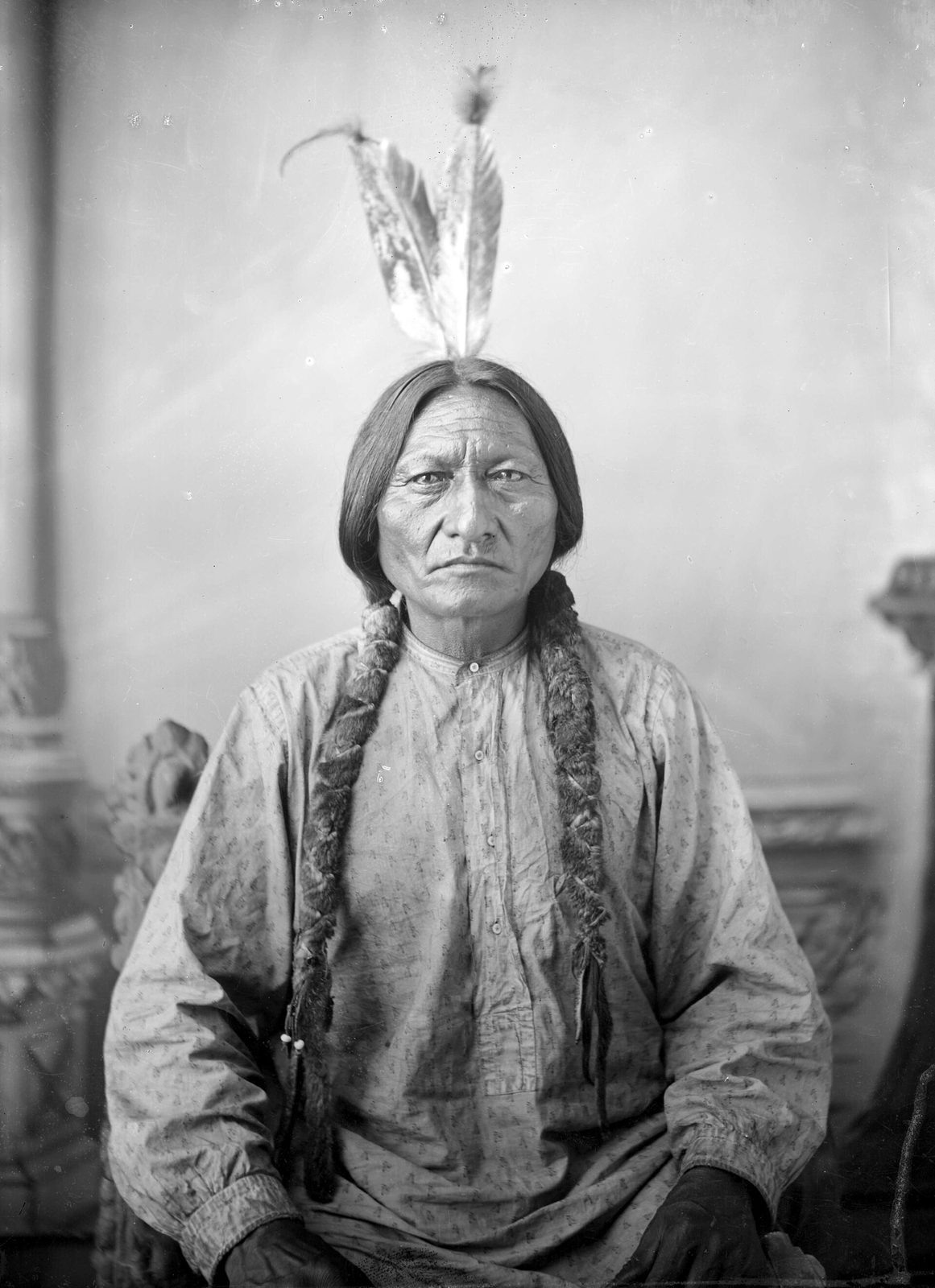
The bands that stayed out had gathered around Sitting Bull, the Hunkpapa Lakota leader, and Crazy Horse (Tȟašúŋke Witkó) of the Oglala. Sitting Bull College writes that for most of his life Sitting Bull “strongly protested against any cessions” of land. The campaign against these bands is what the Army called the Great Sioux War.
The Battle of the Greasy Grass
The Battle of the Little Bighorn, which the Lakota call the Battle of the Greasy Grass, was fought on June 25 and 26, 1876, along the Little Bighorn River in what is now Montana. Lakota, Cheyenne and Arapaho warriors met the 7th Cavalry there. In the National Park Service’s words, the warriors were fighting off “a deliberate attack” by the cavalry under Custer, who was killed on the first day.
The Standing Rock Sioux Tribe held its 2024 anniversary gathering at Fort Yates under the Greasy Grass name. At the 150th anniversary in June 2026, Jon Eagle Sr., a Hunkpapa Lakota and former Standing Rock tribal historic preservation officer whose great-great-grandfather fought there, told the Associated Press the day was a chance to teach younger generations that they come from a powerful and ancient nation, one “still here despite everything that was done to us.”
The victory did not end the war. As the Supreme Court later recounted, the bands that gave up lost their guns and horses, and once back on the reservation they had nothing to live on but government rations. Crazy Horse surrendered with his Oglala people at Camp Robinson, Nebraska, in May 1877.
On September 5, 1877, a soldier at Camp Robinson bayoneted Crazy Horse, and he died that night. George Kills in Sight, whose father’s mother was Crazy Horse’s cousin, was in his 70s when he gave his account in a 1967 interview: Crazy Horse was brought to a cell, and a soldier ran a bayonet through him. The Army’s account was that he was killed while trying to escape. In 1890 the same 7th Cavalry carried out the Wounded Knee Massacre.
The 1877 Act and the Pressure to Sign
The Act of February 28, 1877, turned the 1876 agreement into law and took the Black Hills from the tribes. Much of the pressure came from Congress. The Act of August 15, 1876, paid for that year’s food for the bands but withheld the money from any band “engaged in hostilities against the white people.” It barred all future money for their food unless the bands first did three things: gave up all their land and claims outside the reservation and every part of the reservation west of the 103rd meridian, which held the Black Hills; allowed up to three roads across the reservation; and agreed to take their supplies near the Missouri River.
The treaty’s own ration guarantee had expired in 1872, the Supreme Court noted, but Congress had kept paying for the bands’ food, and many depended on it. George Manypenny’s commission took the agreement to the agencies in September and October 1876 and told the chiefs the United States no longer owed them rations. Only chiefs and headmen were asked to sign. The Northern Arapaho and Northern Cheyenne were parties too. Spotted Tail and his people took no part in the 1876 fighting, the Rosebud Sioux Tribe’s history says, yet before the year was out he was “forced to sign” away the Black Hills.
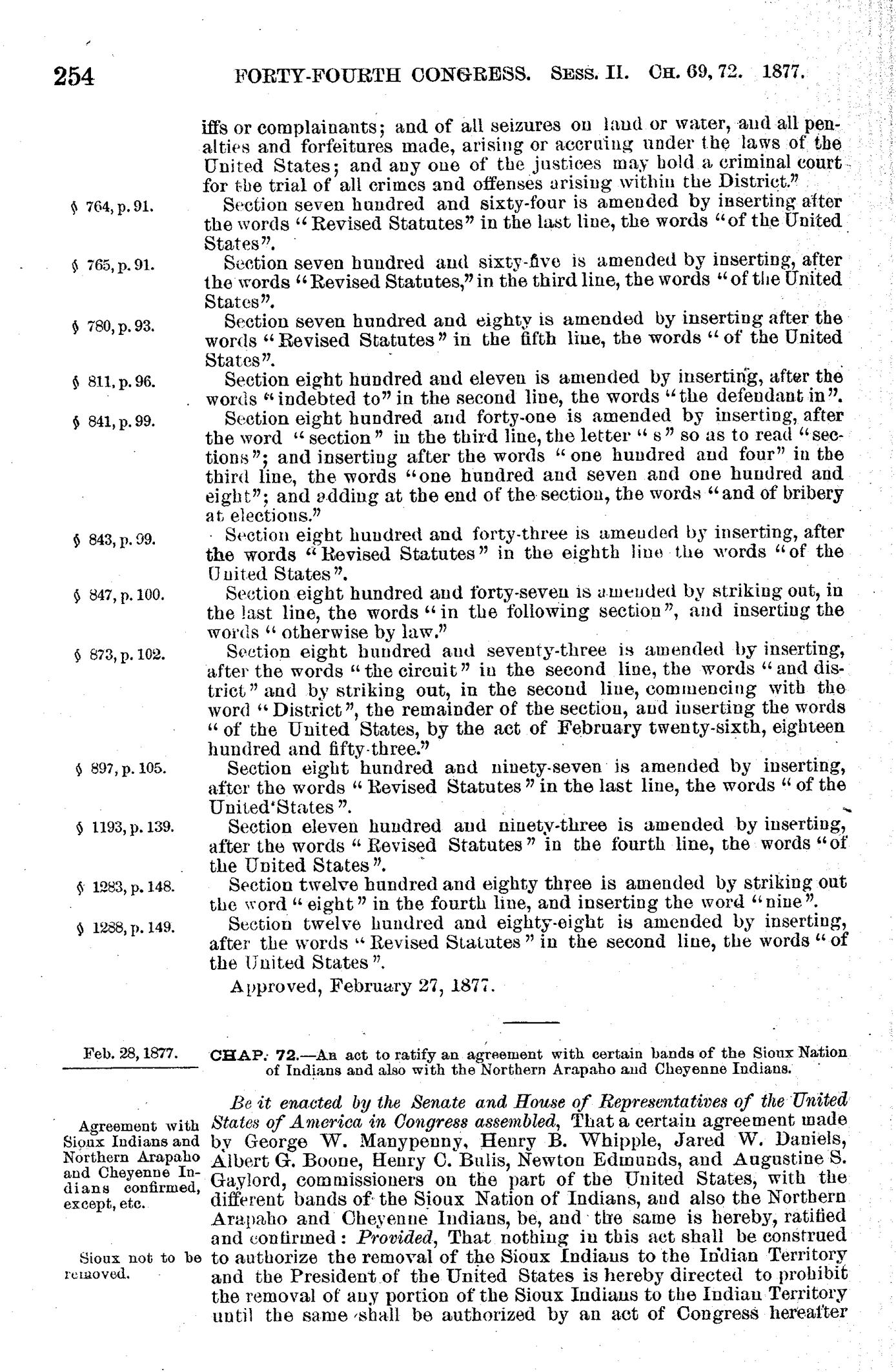
Article 12 of the 1868 treaty said no cession of reservation land would have “any validity or force” unless signed by at least three-fourths of the adult men. The 1876 agreement was signed by only 10 percent of the adult men, as the Supreme Court found in 1980. The Standing Rock Sioux Tribe’s history says Congress passed the 1877 Act “without obtaining the required consent of the Sioux.”
What Was Taken, and Where
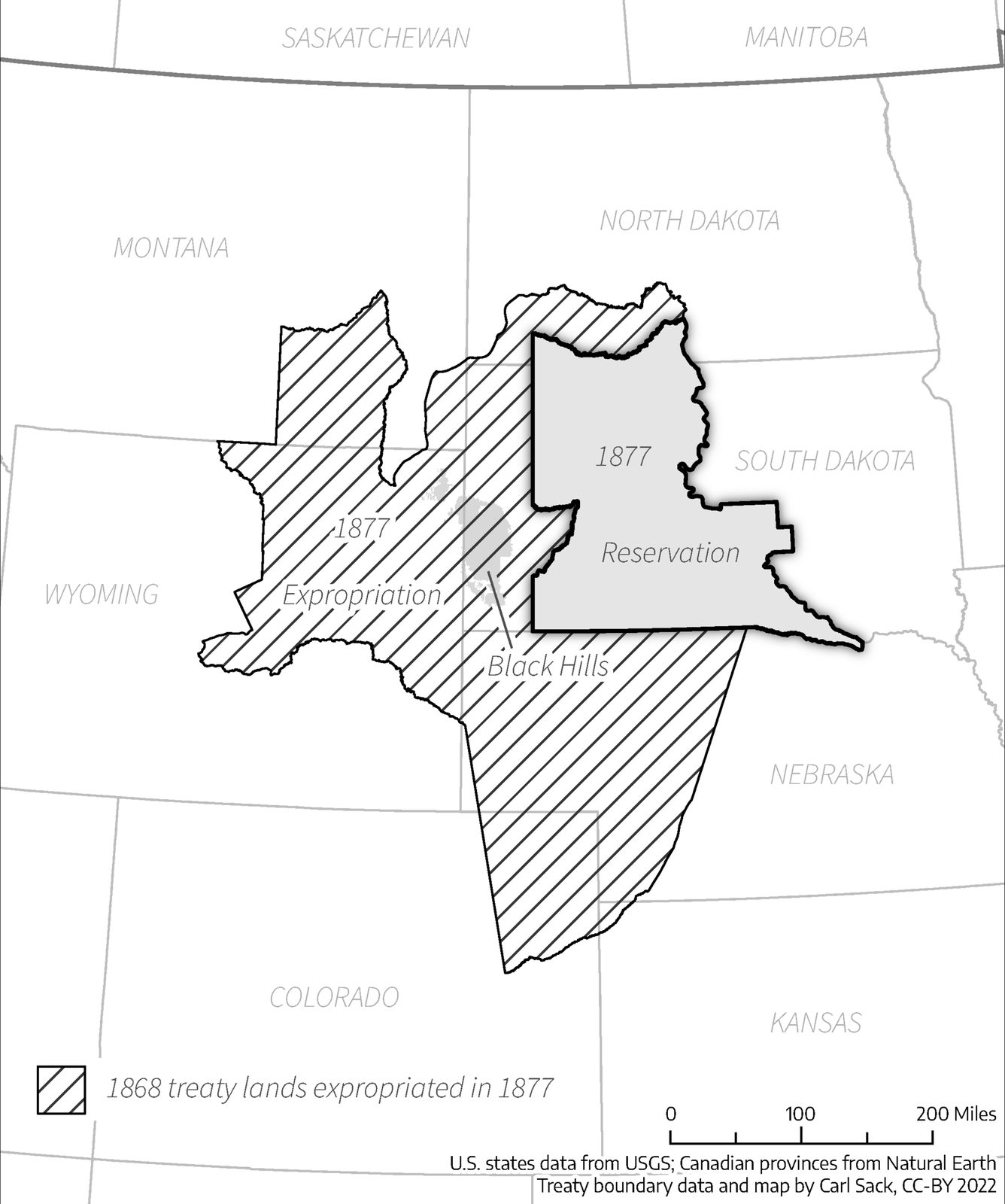
The 1877 Act moved the reservation’s western line east to the 103rd meridian, with one stretch following the forks of the Cheyenne River instead. The land cut off, with the Black Hills in it, came to well over 7 million acres by the Supreme Court’s count.
West of the 104th meridian, where the 1868 reservation ended, lay the Wyoming side of the Hills, around Devils Tower, Inyan Kara Mountain and the Bear Lodge Mountains. That country was not reservation land but part of what Article 16 of the treaty called “unceded Indian Territory,” where no white person could settle, or pass through without the tribes’ consent. Article 11 kept the tribes’ right to hunt north of the North Platte as long as the buffalo ranged there in numbers enough to justify the hunt. The 1876 agreement ceded “all the territory lying outside the said reservation,” including “all privileges of hunting,” and declared Article 16 abrogated. There, what was taken was unceded territory and hunting rights.
The treaty reserved the Hills to the tribes and required three-fourths of the adult men to agree to any cession. The government stopped keeping miners out, sent the Army against the bands that would not come in, barred all future money for the tribes’ food until they gave up the land, and then obtained the signatures of only 10 percent of the adult men. Congress made that law. The land was stolen.
In 1975 the Court of Claims wrote that “a more ripe and rank case of dishonorable dealings will never, in all probability, be found in our history,” and the Supreme Court quoted the line in 1980. The Supreme Court held that the 1877 Act was a taking of tribal property that had to be paid for, with interest; it did not order the land returned. The ruling and what followed are told on The 1980 Ruling and Land Back; Gold, a Broken Treaty and Land Back traces the whole chain.
The Lakota never treated the matter as settled. A 1917 book, The Taming of the Sioux, in a passage the Supreme Court later quoted, told of a Black Hills Treaty Association whose members gathered yearly at the agencies to go over the treaty and build a claim for more payment.
Connected
- The Fort Laramie Treaties of 1851 and 1868The treaty that reserved the Hills and required three-fourths consent for any cession.
- The Custer Expedition of 1874The Army expedition whose gold reports set off the rush.
- The Black Hills Gold RushThe miners who came onto treaty land from 1875 on.
- The 1980 Ruling and Land BackWhat the courts decided a century later, and the money the tribes refuse.
- Gold, a Broken Treaty and Land BackThe chain from French Creek gold to Land Back, step by step.
- Wounded KneeThe 1890 massacre, told from Lakota accounts.
- Hé Sápa: Why the Hills MatterWhat the Hills mean in Lakota understanding.
Further reading
- History and Culture, Rosebud Sioux Tribe
- Who Was Sitting Bull?, Sitting Bull College
- Agreement with the Sioux, Arapaho, and Northern Cheyenne, 1876, Tribal Treaties Database, Oklahoma State University Libraries
- Little Bighorn Battlefield National Monument, National Park Service
Sources
- Testimony of Ryman LeBeau, Chairman, Cheyenne River Sioux Tribe, on S. 2088, the Wounded Knee Memorial and Sacred Site Act. U.S. Senate Committee on Indian Affairs, 2023.
- History and Culture. Rosebud Sioux Tribe.
- Battle of the Greasy Grass Anniversary June 24th-25th. Standing Rock Sioux Tribe, 2024.
- About. Standing Rock Sioux Tribe, updated 2026.
- Who Was Sitting Bull?. Sitting Bull College.
- Native History: Crazy Horse Killed by US Soldier While in Custody. ICT, 2013 (updated 2025).
- Native Americans commemorate victory at Little Bighorn with horse races, dance and song. Associated Press (published by KTAR), 2026.
- Treaty of Fort Laramie (1868), transcript. National Archives.
- Act of August 15, 1876, ch. 289, 19 Stat. 176 (Sioux subsistence provisions at p. 192). U.S. Statutes at Large, U.S. Government Publishing Office, 1876.
- Act of February 28, 1877, ch. 72, 19 Stat. 254. U.S. Statutes at Large, U.S. Government Publishing Office, 1877.
- United States v. Sioux Nation of Indians, 448 U.S. 371. Supreme Court of the United States, 1980 (Legal Information Institute, Cornell Law School).
- Report of a Reconnaissance of the Black Hills of Dakota, Made in the Summer of 1874. William Ludlow, Engineer Department, U.S. Army, 1875 (Internet Archive).
- Gordon Stockade (The Wi-Iyohi 15, no. 11). South Dakota State Historical Society, 1962.
- The Report of Captain John Mix of a Scout to the Black Hills, March–April 1875. Watson Parker, editor, South Dakota History 7, no. 4, South Dakota State Historical Society, 1977.
- Fort Robinson and Red Cloud Agency, National Register nomination. National Park Service.
- Little Bighorn Battlefield National Monument. National Park Service.
- Lieutenant Colonel George A. Custer (1839–1876). National Park Service, Washita Battlefield National Historic Site, 2020.
- 1890: U.S. Cavalry massacres Lakota at Wounded Knee. Native Voices, National Library of Medicine.
Last reviewed: