The Tribes and Hé Sápa
Wounded Knee
At about 9:15 on the morning of December 29, 1890, soldiers of the 7th Cavalry opened fire on Spotted Elk’s camp on Wounded Knee Creek. Joseph Horn Cloud was in the camp, and his parents, two brothers and a sister were killed. He survived, listed 186 of the dead by name, and in May 1903, with family and friends, raised a granite monument beside their mass grave. Accounts like his, and memories survivors passed to their grandchildren, make up the Lakota record of the Wounded Knee Massacre: the U.S. Army’s killing of Lakota men, women and children on the Pine Ridge Reservation in South Dakota. The story runs from the Ghost Dance to the land the tribes own there now.
Why Did the Government Fear the Ghost Dance?
Federal officials saw the Ghost Dance as an obstacle to assimilating the Lakota, and settlers took it for a sign of war. It came in hard years. The Black Hills had been taken in 1877 without the consent the 1868 treaty required, and in 1889 a federal commission secured the cession of more than nine million acres more. Rations were cut soon after, in a drought.
The religion began with Wovoka, a Paiute holy man in Nevada, after a vision in January 1889; Lakota delegations traveled to Nevada to see him. James Mooney, a Smithsonian ethnologist who studied it then, wrote that believers looked for a world made new, with their dead returned to them, and recorded Wovoka’s instruction not to fight. Many Lakota believers wore painted ghost shirts they trusted to stop bullets, though Wovoka disowned the shirts. Leonard Little Finger, a grandson of two survivors, told National Park Service interviewers in 1990 that the English name misleads: the dance was a connection with the spirit world through prayer. Not every Lakota leader embraced it: Turning Hawk, a delegate to Washington in 1891, told the Commissioner of Indian Affairs that he and others had opposed it.
Agents sent reservation police to stop the dancing, and the police could not. Newspapers fed settlers’ alarm with unconfirmed stories, though the Park Service’s 1990 landmark nomination for the site judges the fear of an outbreak unjustified. The Pine Ridge agent called for troops, who arrived in November 1890.
Spotted Elk’s Band on the Road to Pine Ridge
Spotted Elk led a Minneconjou band on the Cheyenne River Reservation. Army records and most English accounts call him Big Foot. The Cheyenne River Sioux Tribe, which also gives the name in Lakota, says he was called that just before the 1890 massacre, and that his family always knew him as Spotted Elk.
On December 15, 1890, agency police came at daybreak to arrest Sitting Bull, the Hunkpapa leader, at his home at Standing Rock. Sitting Bull College notes he was believed to back the Ghost Dance. Sitting Bull, seven of his followers and six of the police were killed, and the college ties his killing directly to what followed at Wounded Knee. About 40 of his people took refuge with Spotted Elk’s band.
The Army, under General Nelson Miles, ordered Spotted Elk’s arrest. Red Cloud and other Pine Ridge chiefs had invited him there to help make peace, and after dark on December 23 the band set out south. Spotted Elk had pneumonia and rode in a wagon. Dewey Beard, Joseph Horn Cloud’s brother, told his granddaughter Celane Not Help Him that the people were cold, tired and half-starved. On December 28 a 7th Cavalry column met them near Porcupine Butte. Spotted Elk carried a white flag and agreed to camp on Wounded Knee Creek. By morning about 470 soldiers, with four Hotchkiss rapid-fire cannons on a hill, surrounded a camp of about 120 men and 230 women and children.
What Happened at Wounded Knee Creek
On December 29 an attempt to disarm the band ended with soldiers shooting into the camp and chasing those who fled. Colonel James Forsyth, now in command, ordered the men in council to give up their guns, and soldiers searched the tents. One man sang and tossed dirt toward the soldiers; most officers read it as a signal to attack. Dewey Beard said it was done “as they did in the ghost dance when they call for the Messiah.” The Park Service nomination reads it as a prayer.
Then soldiers grabbed for a rifle held by a man the records call Black Coyote. In Dewey Beard’s account, as his granddaughter retold it, the man held the rifle up, saying he had used it only to hunt for his family, and was about to set it down as ordered when soldiers seized it and it went off by itself. Turning Hawk said in 1891 that a young man fired. Soldiers fired into the council circle, and some Lakota men fought back with weapons they had hidden. Spotted Elk, shot as the firing began, died a few yards from his tent.
Survivors ran for a dry ravine south of the camp, and soldiers fired into it from both sides. Women and children also fled across open ground; the Commissioner of Indian Affairs reported their bodies scattered over two miles. American Horse, a Pine Ridge leader who walked the ground afterward, told the Commissioner that the Hotchkiss guns were turned on lodges where women stood under a flag of truce. “I have come to Washington with a very great blame on my heart,” he said.
The Army’s account differed: the War Department’s records of its inquiry call it the Battle at Wounded Knee. General Miles ordered an investigation after learning how many noncombatants had died. The Army lost 25 soldiers by the National Library of Medicine’s count; Mooney, citing the Adjutant-General, gave 31.
The record supports the Lakota name. Men ordered to give up their guns were shot in council, and soldiers kept firing on women and children as they ran. It was a massacre, the word Mooney used in 1896 for the pursuit.
How Many People Were Killed at Wounded Knee?
No exact count exists; estimates of the Lakota dead run from more than 153 to more than 300, and the Rosebud Sioux Tribe’s own history gives about 150 to 370. In early January 1891 a civilian burial party under Army escort put 146 people in a mass grave on the hill where the Hotchkiss guns had stood, but families had carried off some dead, and some wounded died later. The National Library of Medicine gives more than 153; Joseph Horn Cloud named 186. Mooney, in 1896, cited estimates of at least 250 deaths from the shooting, wounds or exposure and thought the true number probably close to 300; the Park Service nomination judged at least 250 nearly certain. In 2023 the Interior Department told a Senate committee that more than 300 Lakota people were lost there; its witness was Wizipan Little Elk Garriott, a member of the Rosebud Sioux Tribe.
Medals of Honor for the Soldiers
Soldiers who were at Wounded Knee received the Medal of Honor: about 20, by the Defense Department’s count, though records are incomplete; the 1990 nomination gave 28. After a review begun in 2024, Defense Secretary Pete Hegseth announced in September 2025 that the medals would stand, calling Wounded Knee a battle. “There was nothing honorable about that day,” said Violet Catches, a Cheyenne River tribal member descended from survivors, in June 2026. As of September 2026 the medals stand, South Dakota Searchlight reported, and a Senate Armed Services Committee report directs the Pentagon to turn over the panel’s full report.
The Grave, the Monument and the Land
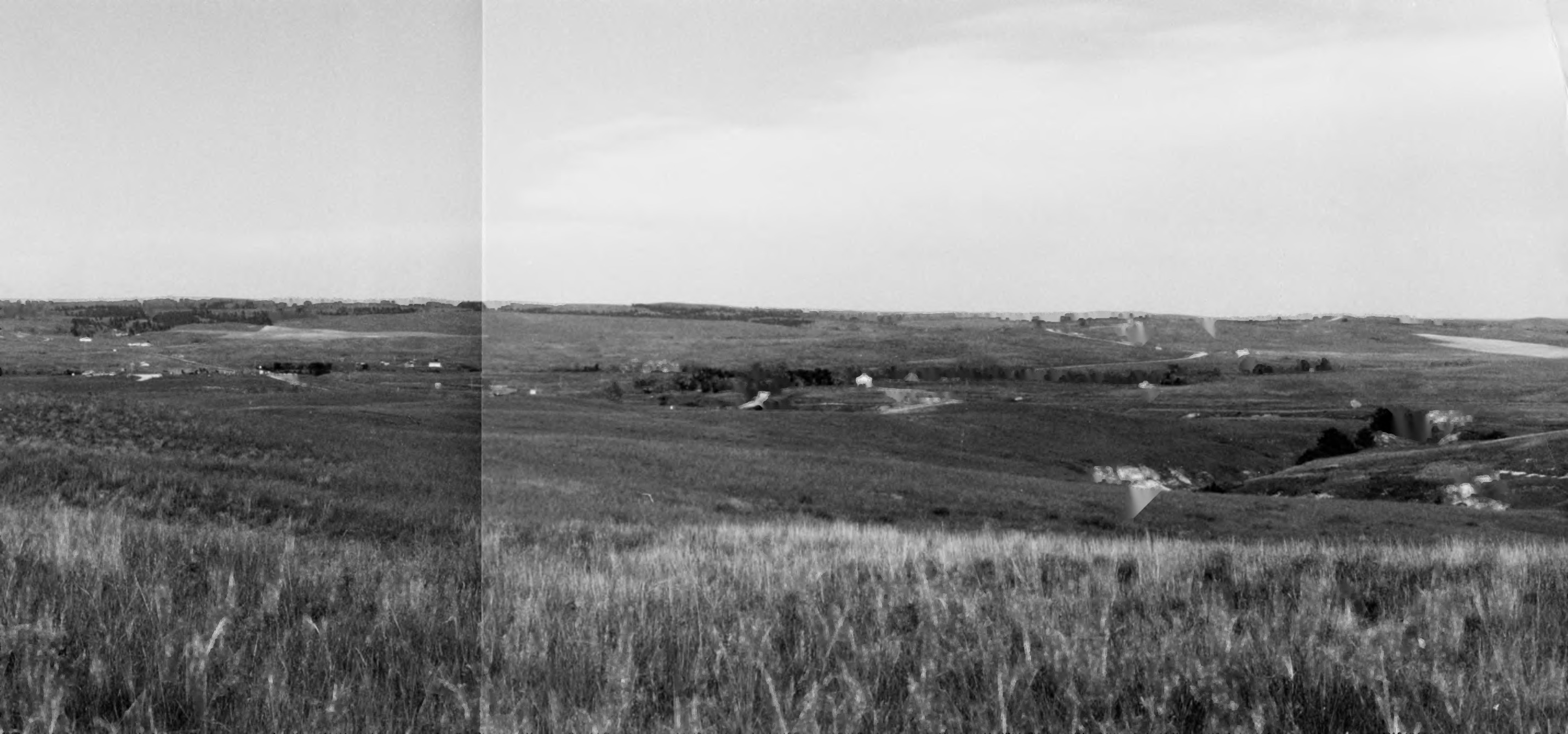
The mass grave lies on the hill where the guns stood, in a Catholic cemetery begun in the early 1900s. Beside it stands the 1903 monument, carved with many of the victims’ names; Horn Cloud raised the money for it on trips east, his grandson Leonard Little Finger said. The 870-acre site is a National Historic Landmark. In 1990 Congress passed a resolution expressing deep regret, on behalf of the United States, to the descendants of the victims and survivors and their tribal communities. In 1986 Lakota elders Curtis Kills Ree and Birgil Kills Straight began a memorial ride of about 300 miles along the band’s route; it continues as the Future Generations Ride.
On February 27, 1973, Oglala Lakota people led by members of the American Indian Movement occupied the village of Wounded Knee, protesting corruption in the tribal government and broken treaties. Federal forces killed two men, Frank Clearwater and Lawrence “Buddy” Lamont, an Oglala, NPR reported, and the trading post burned. The occupation ended on May 8, 1973, after 71 days.
In September 2022 the Oglala Sioux Tribe and the Cheyenne River Sioux Tribe bought about 40 acres of the massacre ground from a private owner to keep as a memorial and sacred site without commercial development. A federal law signed on December 19, 2025, the Wounded Knee Massacre Memorial and Sacred Site Act, provides that the 40 acres stay in the tribes’ ownership as part of the Pine Ridge Reservation, bars gaming, and forbids any transfer without the consent of Congress and both tribes. The far larger Lakota claim, to the Black Hills themselves, is followed on The 1980 Ruling and Land Back.
Connected
- The 1876 War and the Taking of the HillsHow the Black Hills were taken from the tribes, 1874 to 1877.
- The 1980 Ruling and Land BackThe Lakota claim to the Black Hills, and tribal land returned since.
- The Fort Laramie Treaties of 1851 and 1868The 1868 treaty, which required the consent of three-fourths of the adult men for any cession.
- Hé Sápa: Why the Hills MatterThe Black Hills in Lakota understanding.
- The Badlands and WallThe Badlands, where Ghost Dancers gathered at the Stronghold in late 1890.
Further reading
- Cheyenne River Sioux History, Cheyenne River Sioux Tribe
- The Ride to Wounded Knee, National Museum of the American Indian, Smithsonian Institution
- Eli Ricker Wounded Knee Interviews, History Nebraska
- The Ghost-Dance Religion and the Sioux Outbreak of 1890, James Mooney, Bureau of Ethnology, 1896 (Project Gutenberg edition)
Sources
- Cheyenne River Sioux History. Cheyenne River Sioux Tribe, undated (drawing on Donovin Sprague, Cheyenne River Sioux, Arcadia Publishing, 2003).
- Who Was Sitting Bull? Sitting Bull College.
- Wounded Knee National Historic Landmark: National Register of Historic Places Registration Form. Richard E. Jensen and Eli Paul, Nebraska State Historical Society, for the National Park Service, 1990; includes National Park Service interviews with Celane Not Help Him, Leonard Little Finger, Birgil Kills Straight and Leona Broken Nose.
- The Ghost-Dance Religion and the Sioux Outbreak of 1890. James Mooney, Fourteenth Annual Report of the Bureau of Ethnology, Smithsonian Institution, 1896, including the statements of Lakota delegates to the Commissioner of Indian Affairs, February 11, 1891 (Project Gutenberg edition).
- Eli Ricker Wounded Knee Interviews. History Nebraska (Nebraska State Historical Society).
- 1890: U.S. Cavalry massacres Lakota at Wounded Knee. Native Voices timeline, National Library of Medicine.
- United States v. Sioux Nation of Indians, 448 U.S. 371. U.S. Supreme Court, 1980 (Legal Information Institute, Cornell Law School).
- Wounded Knee descendants vow to keep pressing for medal revocations as Senate committee seeks info. Joshua Haiar, South Dakota Searchlight, republished by Dakota News Now, 2026.
- US Senate challenger says Wounded Knee medals ‘should not stand’; incumbent says more info needed. Meghan O’Brien, South Dakota Searchlight, 2026.
- Wounded Knee Massacre Memorial and Sacred Site Act (Senate Report 119-72). Senate Committee on Indian Affairs, 2025.
- Fact Brief: Has any president apologized for the Wounded Knee massacre? Michael Klinski, South Dakota News Watch, republished by KOTA, 2025.
- Wounded Knee Massacre Memorial and Sacred Site Act (Public Law 119-61). U.S. Congress, 2025.
- Wounded Knee land comes home at last. Mary Annette Pember, ICT, 2022.
- The Ride to Wounded Knee. National Museum of the American Indian, Smithsonian Institution.
- Native Americans seized Wounded Knee 50 years ago. Here’s what 1 reporter remembers. Morning Edition, NPR, 2023.
- Peaceful End to the Siege at Wounded Knee. Community Relations Service, U.S. Department of Justice.
- History & Culture. Rosebud Sioux Tribe.
Last reviewed: