The Tribes and Hé Sápa
Sacred Sites: Bear Butte, Devils Tower and Wind Cave
On Bear Butte, strips of colored cloth and small tied bundles hang from the trees. Each stands for someone's prayers. Bear Butte, Devils Tower and Wind Cave are sacred places: all three to the Lakota and to many other tribes; at Wind Cave, the Park Service names the Cheyenne among them. Here is what each place means, as tribes have shared it; what the offerings are; why Devils Tower closes to climbing in June; and how visitors are asked to behave.
Bear Butte: A Mountain of Prayer for Many Nations
Bear Butte rises alone from the plains off the northeast edge of the Black Hills, and many tribes hold it sacred. The Northern Cheyenne Tribe calls it "our most precious sacred site." In a 2014 statement to a House committee, the tribe's president, Llevando Fisher, likened the butte to Mount Sinai. On it, he said, the Sacred Arrows were given to the prophet Sweet Medicine, and the tribe's traditional leaders still guard them. In Cheyenne the butte is Nóávóse. In Lakota it is Mahto Paha (or Paha Mahto).
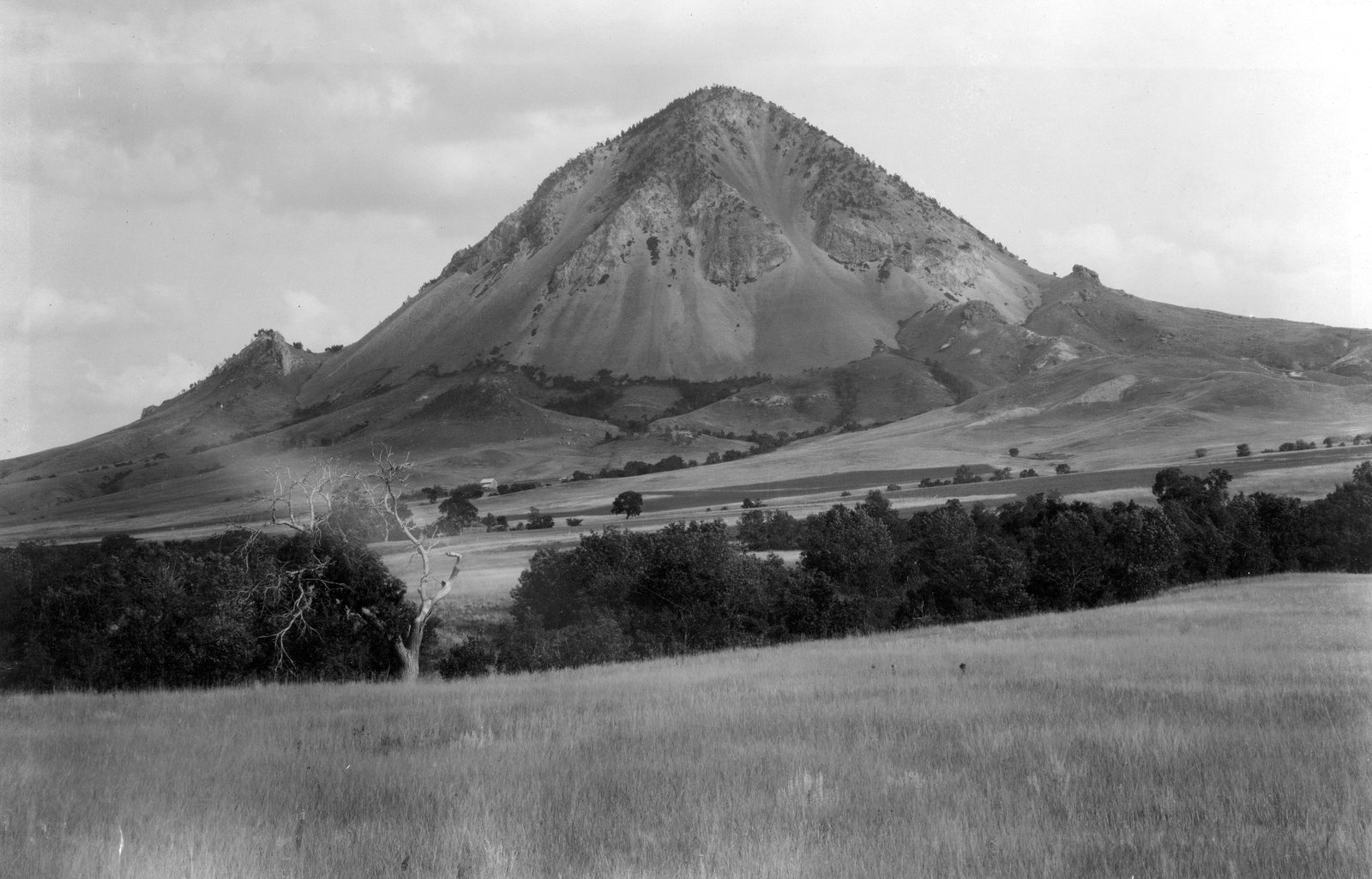
Besides the Lakota, Cheyenne and Arapaho, people of more than 30 nations have come to pray at the butte, Charmaine White Face, an Oglala Lakota, told the Senate Committee on Indian Affairs in 2003. Lakota people pray there in every season, she wrote, and their usual ceremony is the vision quest: fasting and solitude in silence, sometimes for days and nights. She described prayer as "a private conversation between a person and the Creator."
Bear Butte is a National Historic Landmark and a South Dakota state park. Bars, campgrounds and a shooting range planned nearby since 2003 have drawn objections from tribes and others; that dispute, and the Sturgis Motorcycle Rally's part in it, is told on The Rally and Bear Butte, and the butte's setting on Bear Butte and the Plains Edge.
Prayer Cloths, Tobacco Ties and How Visitors Are Asked to Behave
A prayer cloth is a strip of colored fabric, and a tobacco tie a small pouch or bundle; people tie them to branches as offerings at sacred places. At Devils Tower, the National Park Service says, such offerings are the most common ritual. Each stands for the giver's own bond with the place, and may also be a gift, a request or a remembrance; its meaning is private to whoever left it.
Both agencies ask visitors not to disturb or photograph them, and the Park Service asks that they not be touched or removed. Bill Tall Bull, of the Northern Cheyenne, told researchers for a Park Service study of Devils Tower in the early 1990s that people who don't understand such places are more likely to desecrate them. Ceremonies can take place at the Tower in any season, the Park Service notes, and visitors may not see them.
Bear Butte's rules go further: respect people at prayer, stay on the trail, and leave no ashes, because the butte is not a burial site. White Face also described what people praying there had faced: tourists snapping pictures of them, pointing and talking loudly, so that someone at prayer might turn away or hide.
Why Is Devils Tower Closed to Climbing in June?
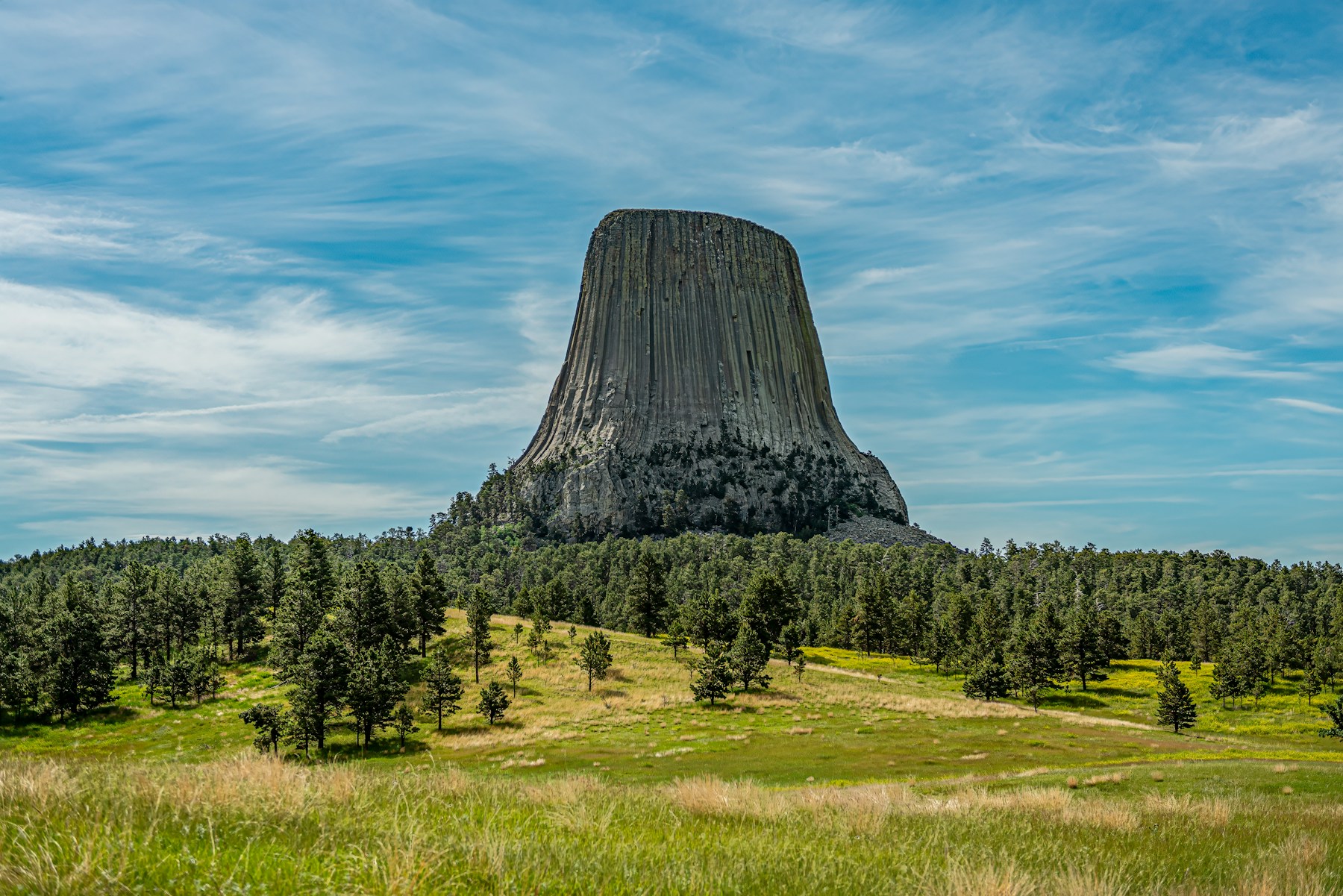
Since 1995 the National Park Service has asked climbers to stay off Devils Tower for the whole month of June, out of respect for the tribes who hold it sacred. The Park Service ties the month to the tribes' ceremonies: many, though not all, take place in June. The closure is voluntary.
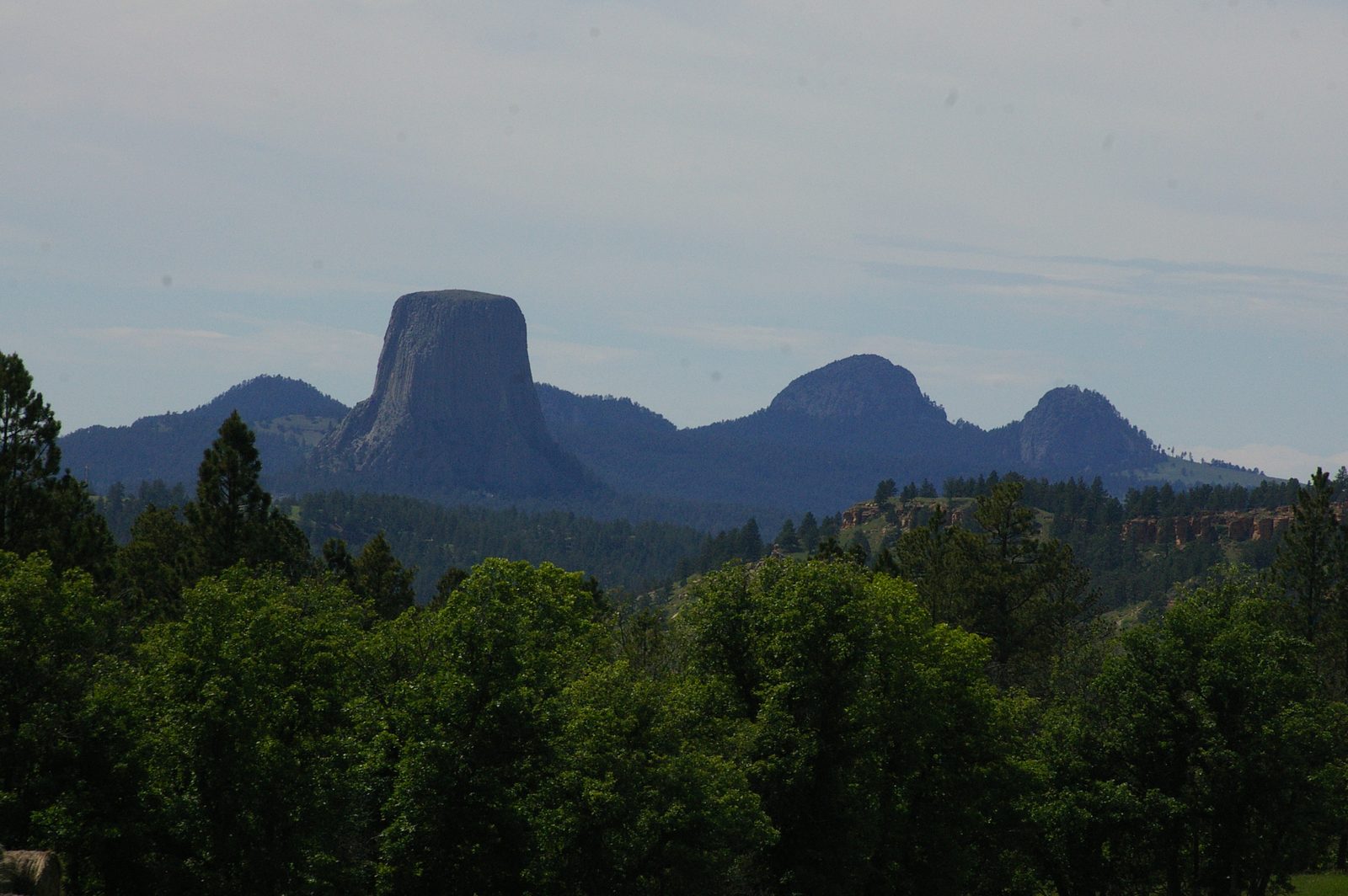
More than 20 tribes hold the Tower sacred, the Park Service says, and many have their own names for it. The Lakota names it records include, in English, Bear Lodge and Grizzly Bear's Lodge; the Cheyenne name, Náhkȯheome, also means Bear Lodge. Accounts the Park Service has published from Arapaho, Cheyenne, Crow, Kiowa and Lakota tellers all tie the Tower to bears, and in most a bear's claws marked the rock; that thread is followed on Rock, Bear and Rope: Devils Tower.
The summer solstice was traditionally the Lakota's time for the Sun Dance at the Tower, the Park Service says, and its records show Sun Dances there in some years since the early 1980s (more on the Sun Dance).
When researchers working for the Park Service interviewed tribal members in 1990 and 1991, several complained about climbing. To the Shoshone people they spoke with, the Tower was a place of great power, where climbing offended the sacred and put careless climbers in danger. The researchers recommended ending climbing altogether. In June 1993 the Dakota, Lakota and Nakota Nations put their own objection on record, in a resolution the Park Service later quoted: it named Devils Tower and Bear Butte among the primary sites of their religion and opposed any federal move to let tourists, hikers or climbers damage them further.
The Park Service's Climbing Management Plan, final in February 1995, took a middle course, shaped with an advisory work group that included tribal and climbing organizations. It asks climbers each June not to climb the Tower or scramble inside the Tower Trail loop. The plan says the closure is "not tied directly to religious ceremonies" at the Tower. It points to the summer solstice, traditionally the season of Sun Dances and other ceremonies, and to a practical point: a calendar month is easier to explain than dates that move with the moon. The Park Service doesn't enforce the closure, though the plan said it could become mandatory if it failed.
Tim Reid, then the monument's superintendent, told Wyoming Public Radio in 2017 that the tribal representatives hadn't wanted the closure forced on anyone; they hoped climbers would choose to stay off out of respect. Climbers wanted to show they could regulate themselves.
More than 1,200 people climbed the Tower in June 1994. After the closure began, the June count fell to 167, but by June 2016 it had risen to 373. Waylon Black Crow Sr., a chaperone on a yearly run by Lakota young people from Pine Ridge that circles the Black Hills, with a stop at the Tower, told the station it hurts to see climbers ignore the closure at a sacred site: "And all we can do is watch."
Climbers and a commercial guide sued in 1996, arguing that the plan favored religion, and the Cheyenne River Sioux Tribe joined the case to defend it. A federal judge blocked the plan's ban on guided climbs in June, which the Interior Department then dropped, and in 1998 upheld the rest. In 1999 the appeals court ruled only that the climbers, still free to climb, had no standing to sue; it never reached the religion question.
The Park Service also says the tribes find the word Devils offensive. In 2014 a request made for a Lakota spiritual leader asked the federal Board on Geographic Names to rename the Tower Bear Lodge, and the Oglala Sioux Tribe's president asked the same for the monument.
Wind Cave and the Lakota Emergence Story
In Lakota tradition, Wind Cave is where the people first came up into this world. The National Park Service shares one telling, from the Cheyenne Creek community on the Pine Ridge Reservation: Wilmer Mesteth, a tribal historian and spiritual leader, told it to Sina Bear Eagle, who retells it. Each band and family tells the story its own way, the Park Service notes.
In Mesteth's telling, the people once lived underground in a spirit lodge while the world above was made ready. Two beings banished to the surface for their pride, a trickster spider and the double face woman, sent her wolf down the cave with meat and buckskin clothing to tempt them. The people's leader, whose name means the First One, refused to go, because the Creator had told them to stay; those who had tasted the meat followed the wolf up. Winter came before they could feed and clothe themselves, the woman laughed at their pleas, and when they fled back to the cave they found the way in covered. The Creator heard them weeping. Angry that they had disobeyed him, he punished them by turning them into great wild beasts, the first bison herd. Later, when the earth was ready, the leader brought the rest of the people up through the cave, praying as they went. At the surface they found bison tracks and were told to follow them, for the bison would feed, clothe and shelter them and lead them to water.
In the story, the passage is the place where the earth breathes, known today as Wind Cave. Where the cave's rock and the story meet is the subject of Limestone, Caves and the Emergence Story, and visiting is covered on Wind Cave National Park. Other tribes' ties to the Hills are traced on Who Lived in the Hills First.
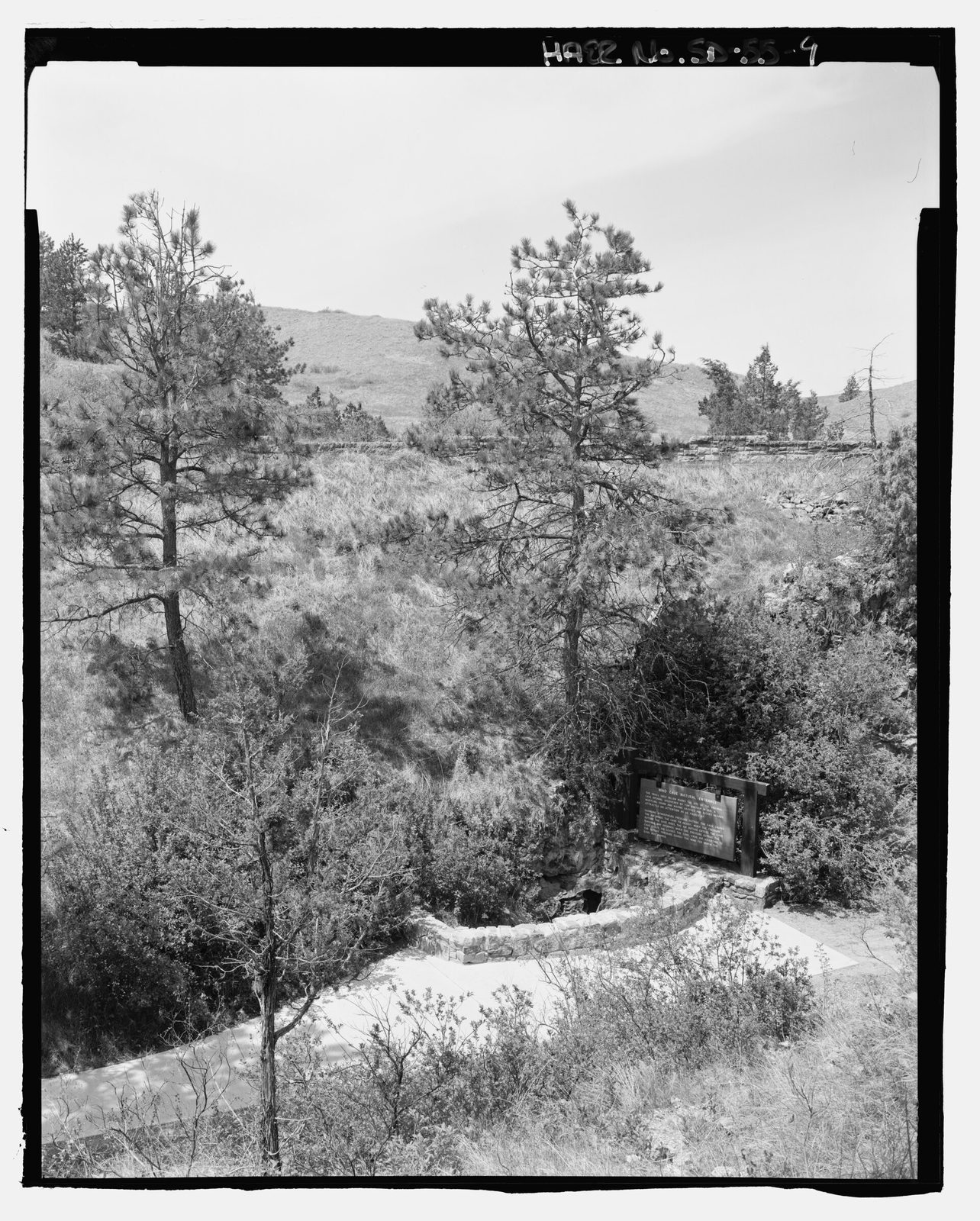
Mesteth's account closes at the cave mouth, which the Creator then made small, the narrow opening it is today, so the people would always remember their beginning.
Connected
- Devils Tower National MonumentVisiting the Tower: its trails, and climbing outside June.
- Wind Cave National ParkVisiting the cave the emergence story is tied to.
- Bear Butte and the Plains EdgeThe butte and the prairie ring around the Hills.
- Limestone, Caves and the Emergence StoryWhere Wind Cave's rock and the emergence story meet.
- Rock, Bear and Rope: Devils TowerThe Tower's rock, the bear story and the June closure as one thread.
- The Rally and Bear ButteDevelopment near the butte and the tribes' objections.
- Who Lived in the Hills FirstThe other tribes tied to the Hills, and the archaeological record.
- The Sun DanceThe ceremony held at Devils Tower near the summer solstice.
Further reading
- Devils Tower: Name Is "Offensive, Disrespectful, Repugnant" to Tribes, ICT (Lakota, Northern Cheyenne and Northern Arapaho leaders on the name, 2017)
- The Wind Cave Emergence Story, SDPB (Sina Bear Eagle, Oglala Lakota, tells the account Wilmer Mesteth passed to him, 2022)
Sources
- Cheyenne Dictionary. Chief Dull Knife College.
- The Lakota Emergence Story, as told by Wilmer Mesteth and retold by Sina Bear Eagle. National Park Service, Wind Cave National Park, 2024.
- The Home of the Bison: An Ethnographic and Ethnohistorical Study of Traditional Cultural Affiliations to Wind Cave National Park, vol. 1, by Patricia C. Albers. University of Minnesota, for the National Park Service, 2003.
- Statement of Llevando "Cowboy" Fisher, President, Northern Cheyenne Tribe, on H.R. 4350. Northern Cheyenne Tribe, before the House Committee on Natural Resources, 2014.
- Testimony of Charmaine White Face, Coordinator, Defenders of the Black Hills, on the protection of Bear Butte. U.S. Senate Committee on Indian Affairs, 2003.
- Defenders of the Black Hills disbands, by Jim Kent. SDPB, 2016.
- Bear Butte State Park. South Dakota Game, Fish and Parks.
- Bear Butte State Park trails. South Dakota Game, Fish and Parks.
- A Place of Reverence for Native Americans. National Park Service, Devils Tower National Monument.
- American Indians. National Park Service, Devils Tower National Monument.
- First Stories. National Park Service, Devils Tower National Monument.
- Climbing Information. National Park Service, Devils Tower National Monument.
- Final Climbing Management Plan / Finding of No Significant Impact. National Park Service, Devils Tower National Monument, 1995.
- Voluntary Climbing Closure at Devils Tower. National Park Service, 2017.
- Ethnographic Overview and Assessment of Devils Tower National Monument, Wyoming, by Jeffery R. Hanson and Sally Chirinos. National Park Service, Intermountain Region, 1997.
- Devils Tower: Proposals to Change the Name. National Park Service, Devils Tower National Monument, 2025.
- Climbers Ignore Native Americans' Request At Devils Tower, by Maggie Mullen. Wyoming Public Media, 2017.
- Bear Lodge Multiple Use Association v. Babbitt: Brief for the Respondents in Opposition. Office of the Solicitor General, U.S. Department of Justice, 2000.
- Bear Lodge Multiple Use Association v. Babbitt, 175 F.3d 814. U.S. Court of Appeals, Tenth Circuit, 1999.
Last reviewed: