The Outdoors
Wind Cave National Park
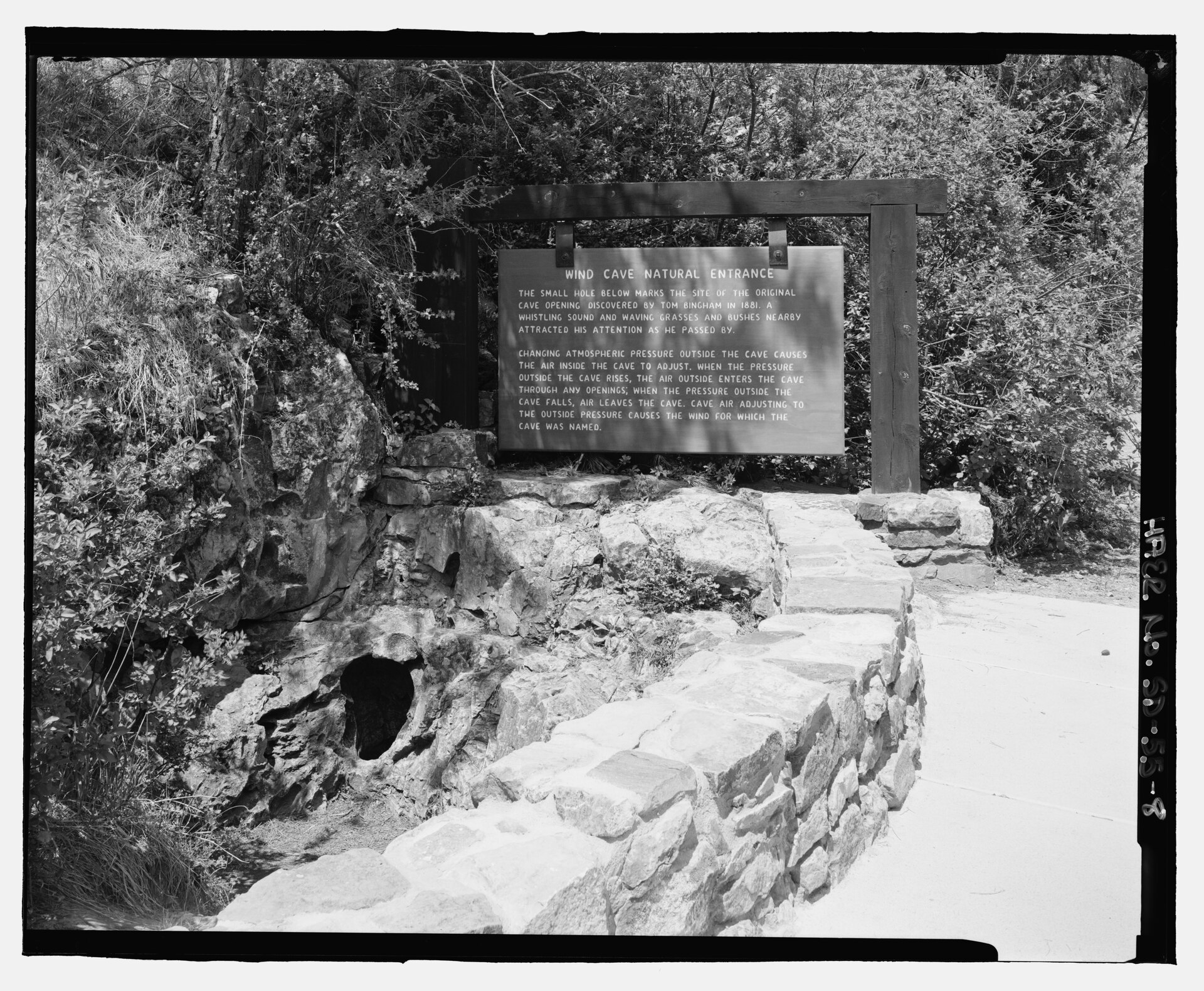
In a canyon bottom in the southern Black Hills, air moves through a 10-by-16-inch opening in the limestone. When the barometer falls, the cave below breathes out; when it rises, the cave draws air back in. That moving air gave Wind Cave its name. Wind Cave National Park, its visitor center 11 miles north of Hot Springs, protects the cave and the grassland and pine above it. Visitors come for ranger-led tours past boxwork, for bison and prairie dog towns and for more than 30 miles of trails. For the Lakota, the cave is where the people came up into the world.
Where the Earth Breathes: The Lakota Emergence Story
The Lakota account of the people’s beginning passes through this cave. One Oglala telling, from the Cheyenne Creek community on the Pine Ridge Reservation, comes from Wilmer Mesteth, a spiritual leader and tribal historian who died in 2015. He passed it to Sina Bear Eagle, a member of the Oglala Lakota tribe, whose retelling the Park Service shares on a page last updated in September 2024. Versions differ among bands and families, the park notes.
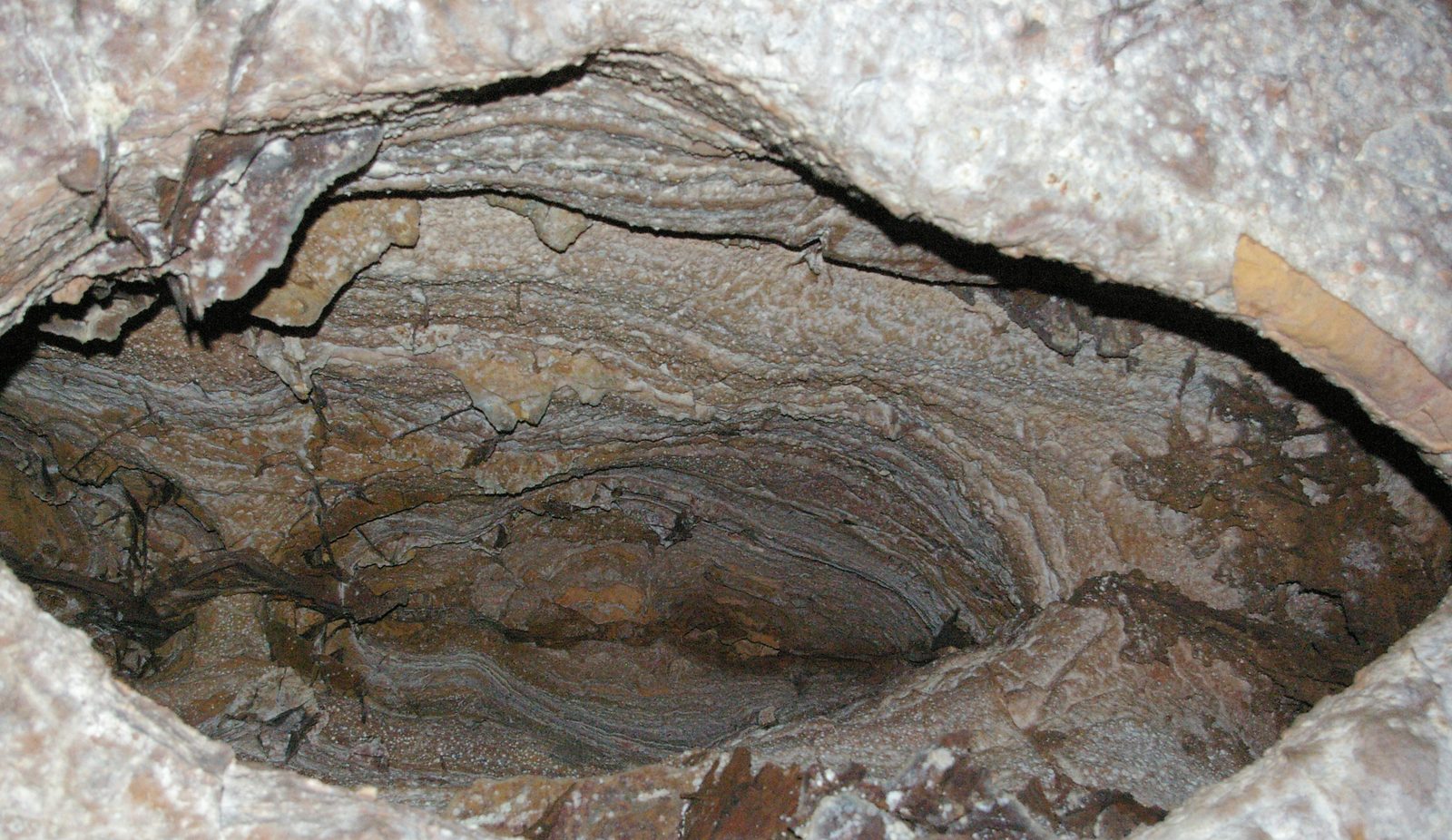
In Mesteth’s account the people lived underground in a spirit lodge until the world above was ready, and those who came up too soon, against the Creator’s word, became the first bison. In the story the cave’s Lakota names describe the earth breathing, and the Creator later shrank its entrance so the people would remember where they began.
In a 2022 SDPB segment, Bear Eagle said the cave matters to the Lakota because “this is the site of our Emergence Story.” The Park Service calls the cave sacred to the Cheyenne and many other tribes as well, and the park consults 20 tribal governments. The full story is on Sacred Sites: Bear Butte, Devils Tower and Wind Cave, and Limestone, Caves and the Emergence Story follows how the rock and the story meet.
Who Found the Natural Entrance in 1881?
Tribes knew of the entrance before settlers came, the Park Service says, though no record shows anyone going inside before 1881. The settlers’ record begins that year with two brothers, Tom and Jesse Bingham, drawn to the hole by the noise of the moving air.
Beyond that, the stories split. Local tales have named various cowboys, outlaws and explorers as the finders, Kathy S. Mason wrote in 2002 in South Dakota History, the state historical society’s journal. A memoir by Emma McDonald has one Bingham out hunting horses, and a 2015 SDPB history piece has the brothers chasing a wounded deer. Katie Stabler’s memoir tells of a hat: the wind snatches one brother’s, and the next morning sucks the other’s into the hole. Mason has both hats blowing off at once. The two that tell of hats disagree, and the other two leave hats out; what all four share is the Bingham name and the rushing air.
Alvin McDonald was 16 when he arrived in 1890 with his father, Jesse D. McDonald, hired by the South Dakota Mining Company to oversee its claim. No valuable minerals turned up. Alvin, carrying candles and paying out string to trace his way back, explored some 8 to 10 miles of passage, by the Park Service’s estimate, naming rooms as he went. His journal records that he had “given up the idea of finding the end of Wind Cave.” He died of typhoid fever on December 15, 1893, at 20.
After years of ownership disputes, the Interior secretary ruled in December 1900 that no claimant was entitled to the land. On January 9, 1903, President Theodore Roosevelt signed the act making Wind Cave the first national park in the world created to protect a cave. Many critics and historians have since rated it an “inferior” park, Mason writes. What kept its status, she argues, was the prairie above and the game preserve added in 1912, stocked with bison and elk.
Boxwork and About 170 Miles of Passage
Wind Cave had about 170 miles of mapped passage as of September 2026, when park staff reported 170.34 miles to the world long-cave list kept for the National Speleological Society. That makes it the sixth-longest known cave in the world and the third-longest in the United States, after Mammoth Cave and Jewel Cave. Air-pressure testing suggests only about 5 to 10 percent of the cave has been mapped, park officials said in 2024, SDPB reported.
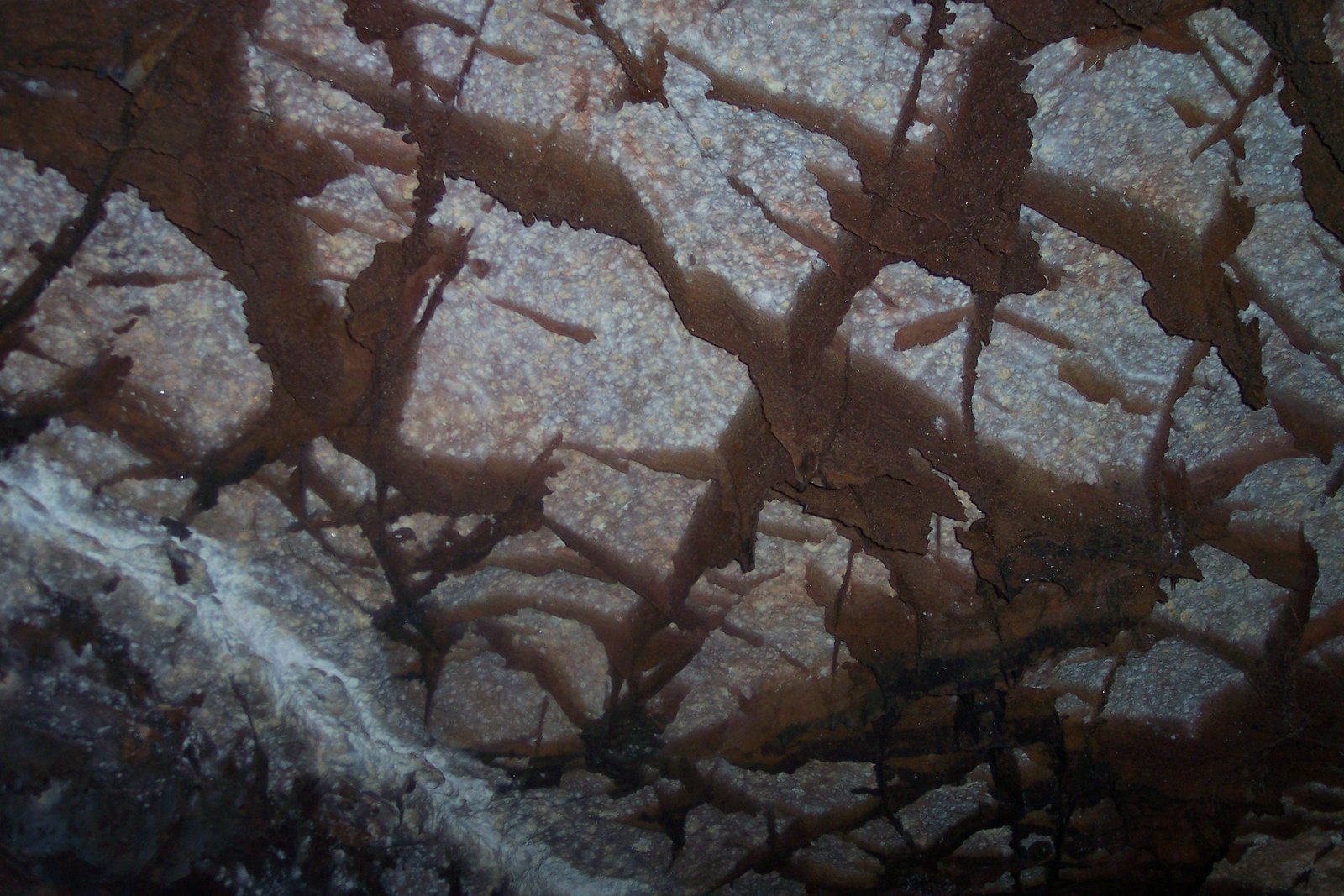
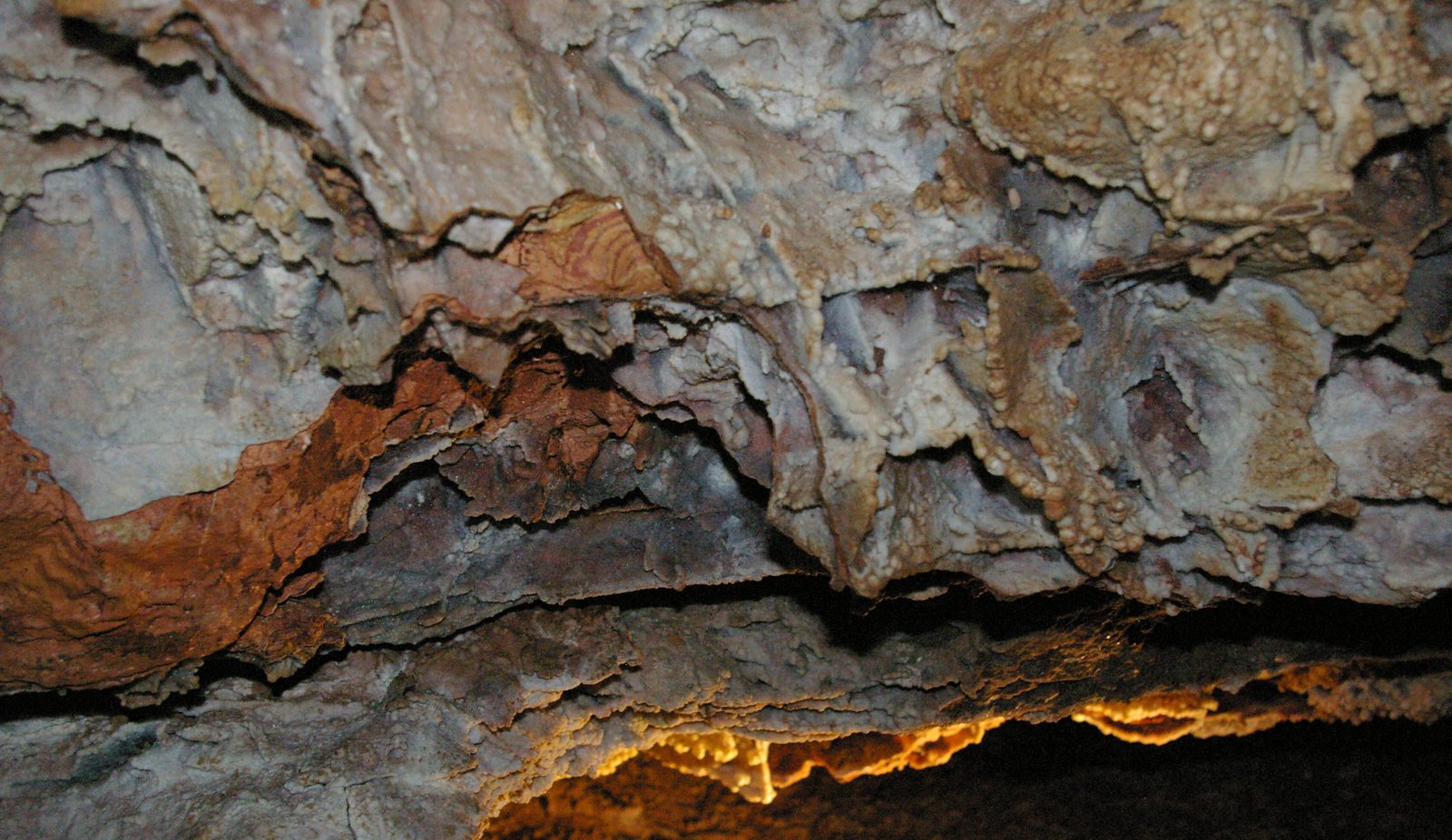
Boxwork is the cave’s signature: thin calcite blades crossing like the walls of a honeycomb, which the Park Service describes as old crack fillings that outlasted the rock around them. The agency says Wind Cave holds “more boxwork than is found in all other caves on Earth put together.” The cave dissolved out of the Madison Limestone, laid down by an ancient sea, its earliest passages about 320 million years old; The Limestone Plateau and the Caves tells how.
All cave visits are ranger-led tours from the visitor center. The Garden of Eden Tour covers a quarter mile and 150 stairs. The Natural Entrance and Fairgrounds tours each run about two-thirds of a mile, with 300 and 450 stairs, and both pass boxwork. The Natural Entrance route goes almost entirely downhill and ends with an elevator ride up. The Candlelight and Wild Cave tours run in summer only. Expect low light, narrow passages and slippery spots.
Prairie, Pine and Bison Above the Cave
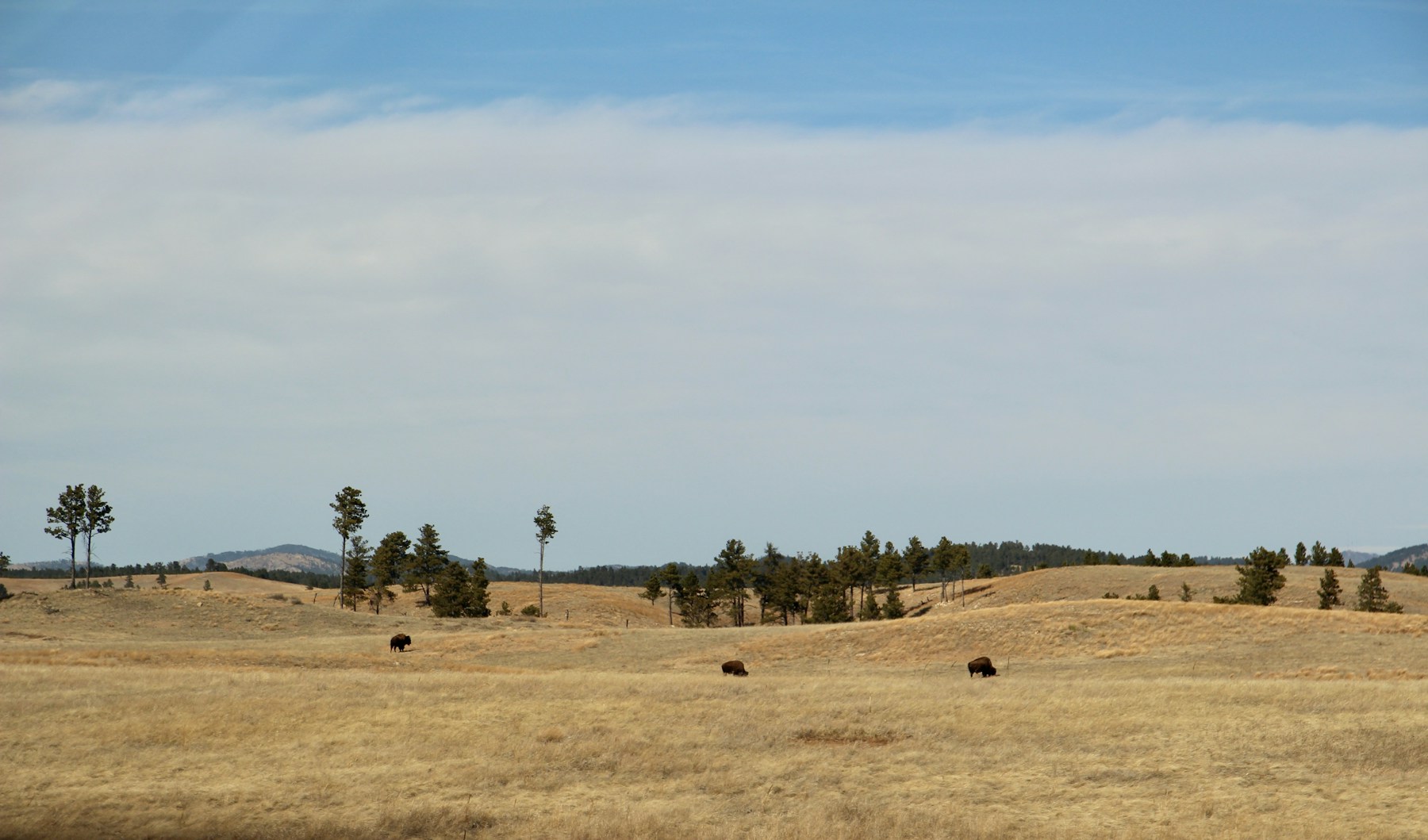
The park’s 33,851 acres sit on the southern edge of the Black Hills, with ponderosa pine on the higher ground and mixed-grass prairie, the transition between eastern tallgrass and western shortgrass, across much of the rest. The Park Service calls the park “one of the best places on the continent to experience the mixed-grass prairie,” and it has set controlled burns since 1972 to keep pine from spreading onto the grass.
The park’s plains bison (Bison bison bison) descend from 14 animals that the New York Zoological Society and the American Bison Society sent from New York in 1913, plus six that came from Yellowstone in 1916. In July 2024 the Park Service was managing the herd at 350 to 500. Extra bison go live, when possible, to reservations, other parks and refuges, after disease tests at roundups held every few years. Stay at least 25 yards from all wildlife, the park says, and farther from bison, which can charge without warning.
Black-tailed prairie dogs (Cynomys ludovicianus) keep towns along the Cold Brook Canyon and Sanctuary trails, and black-footed ferrets (Mustela nigripes), which hunt them, were returned to the park in 2007 (see Prairie Dogs and Black-Footed Ferrets). Bull elk (Cervus canadensis) bugle at dawn and dusk in September and October (see Elk, Bighorn Sheep and Mountain Goats). Pronghorn, coyotes and mountain lions live here too, with nearly 200 kinds of birds.
Hiking More Than 30 Miles of Trail
Wind Cave is an open hike park: you may walk off the trails, and the Park Service asks that you carry a map and plenty of water if you do. Three easy loops run about a mile each: Prairie Vista from the visitor center, Elk Mountain at the campground, and Rankin Ridge, off SD 87, to the park’s highest point. On a clear day, the park says, the Badlands may show from the ridge’s east side.
Wind Cave Canyon, an easy 1.8 miles one way, passes limestone cliffs where great horned owls, canyon wrens and cliff swallows nest. Cold Brook Canyon (1.4 miles one way, moderate) runs from pine woods out onto open grass, crossing a prairie dog town. Boland Ridge (2.6 miles one way, strenuous) climbs in stages to wide views over the Red Valley, the Hills and the plains, and elk are often out there early and late in the day. Highland Creek, also strenuous, is the longest at 8.6 miles one way, crossing prairie, pine forest and creek bottoms.
Water is scarce, and any you find needs treating before you drink it. Summer afternoons often top 80°F, with strong thunderstorms and large hail.
- Distance
- Trails from 1-mile loops to 8.6 miles one way (Highland Creek); more than 30 miles in all
- Elevation gain
- Not published by the Park Service; Boland Ridge is a series of climbs, and East Bison Flats has one short, steep climb
- Difficulty
- Easy to strenuous, by the Park Service’s ratings; the three main cave tours have 150 to 450 stairs
- Trailhead
- Visitor center, off US 385 about 11 miles north of Hot Springs; other trailheads on US 385, SD 87 and park roads NPS 5 and 6
- Season
- Cave tours all year, with the Candlelight and Wild Cave tours in summer only; summer brings heat above 80°F and hailstorms
The southern end of the Centennial Trail, built for the 1989 centennial, crosses the park for 6 miles, winding along Beaver Creek. Its other end, about 111 trail miles north through the Hills, is at Bear Butte State Park.
Connected
- The Limestone Plateau and the CavesHow the Madison Limestone dissolved into Wind Cave and its boxwork.
- Sacred Sites: Bear Butte, Devils Tower and Wind CaveThe Lakota emergence story, told in full.
- Limestone, Caves and the Emergence StoryWhere the cave’s rock and the emergence story meet.
- BisonThe animal behind the herd that began here in 1913.
- Prairie Dogs and Black-Footed FerretsThe towns beside the park’s trails, and the ferrets returned in 2007.
- Elk, Bighorn Sheep and Mountain GoatsThe elk that bugle along the forest edge each fall.
- Hot Springs, South DakotaThe town 11 miles south of the visitor center.
- The Centennial TrailThe trail, about 111 miles long, whose southern end crosses the park.
Further reading
- The Lakota Emergence Story, National Park Service (the Oglala account told by Wilmer Mesteth and retold by Sina Bear Eagle, last updated 2024)
- The Wind Cave Emergence Story, SDPB (Sina Bear Eagle, Oglala Lakota, on the story and what the cave means, 2022)
- The Associated Tribes of Wind Cave National Park, National Park Service (the tribal governments the park consults)
- Adapting to Endure: The Early History of Wind Cave National Park, 1903–1916, by Kathy S. Mason, South Dakota History (South Dakota State Historical Society, 2002)
Sources
- The Lakota Emergence Story, as told by Wilmer Mesteth and retold by Sina Bear Eagle. National Park Service, Wind Cave National Park, 2024.
- The Wind Cave Emergence Story (Dakota Life), by Heather Benson. SDPB, 2022.
- The Associated Tribes of Wind Cave National Park. National Park Service, Wind Cave National Park, 2024.
- Early Cave Explorers (1881–1903). National Park Service, Wind Cave National Park, 2024.
- Adapting to Endure: The Early History of Wind Cave National Park, 1903–1916, by Kathy S. Mason. South Dakota History 32, no. 2. South Dakota State Historical Society, 2002.
- Exploration of Wind Cave (Images of the Past), by Brian Gevik. SDPB, 2015.
- Dakota Images: Alvin F. McDonald. South Dakota History 52, no. 3. South Dakota Historical Society Press, 2022.
- Birth of a National Park: A National Park Is Created. National Park Service, Wind Cave National Park, 2023.
- 16 U.S.C. § 141, Establishment; Boundaries (Act of January 9, 1903, ch. 63, 32 Stat. 765). Legal Information Institute, Cornell Law School.
- World Long Caves, compiled by Paul Burger for the National Speleological Society’s Geology and Geography Section. Cave-Exploring.com, updated October 18, 2026.
- Cave Geology. National Park Service, Wind Cave National Park, 2024.
- Wind Cave National Park now ranks sixth longest in the world, by Ryan Bozer. SDPB, 2024.
- Take a Cave Tour. National Park Service, Wind Cave National Park, 2024.
- Guided Cave Tours. National Park Service, Wind Cave National Park, 2026.
- Natural Entrance Tour for the Hearing Impaired. National Park Service, Wind Cave National Park, 2022.
- Prairies and Grasslands. National Park Service, Wind Cave National Park, 2024.
- Ecosystems. National Park Service, Wind Cave National Park, 2023.
- Wildlife Management. National Park Service, Wind Cave National Park, 2026.
- Wind Cave Bison Genetics. National Park Service, 2024.
- Counting Bison...And New Experiences in the Latino Heritage Internship Program, by Nicole Segnini. National Park Service, 2025.
- Hiking. National Park Service, Wind Cave National Park, 2026.
- Cold Brook Canyon Trail. National Park Service, 2024.
- Directions. National Park Service, Wind Cave National Park, 2026.
- Centennial Trailheads, Trail 89: Central Hills. USDA Forest Service, Black Hills National Forest.
- Natural Entrance for Wind Cave (photograph and description). U.S. Geological Survey, 2015.
Last reviewed: