Wildlife and Plants
Bison
In 1913, 14 bison traveled by train from New York City to Hot Springs, South Dakota, and made the last leg to Wind Cave National Park in wagons. The New York Zoological Society and the American Bison Society sent them to stock a federal game preserve set up there the year before, when bison no longer ran free on the plains. The animal is the plains bison (Bison bison bison), and what follows covers how it lives in and around the Black Hills, how it nearly died out in the 1870s and 1880s, and the small herds that carried it through.
How Does a Bison Live on the Plains?
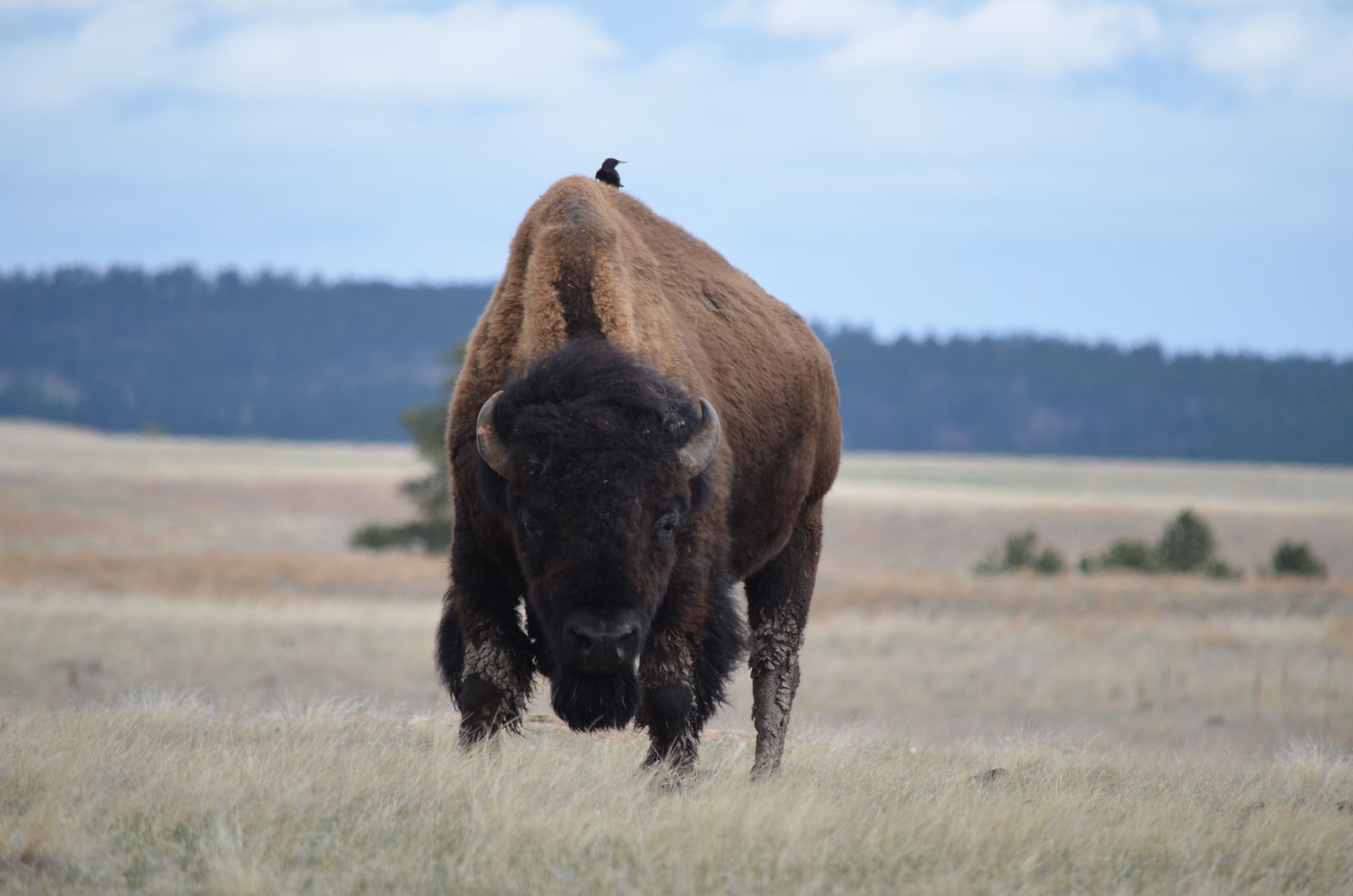
Mostly by grazing, even in winter. A bison sweeps its big head back and forth to push snow off buried grass, a motion its shoulder hump makes possible, the National Park Service explains. Its food is grasses, weeds and leafy plants, and a bison typically spends 9 to 11 hours a day feeding. Under the National Bison Legacy Act, signed on May 9, 2016, the North American bison became the national mammal of the United States.
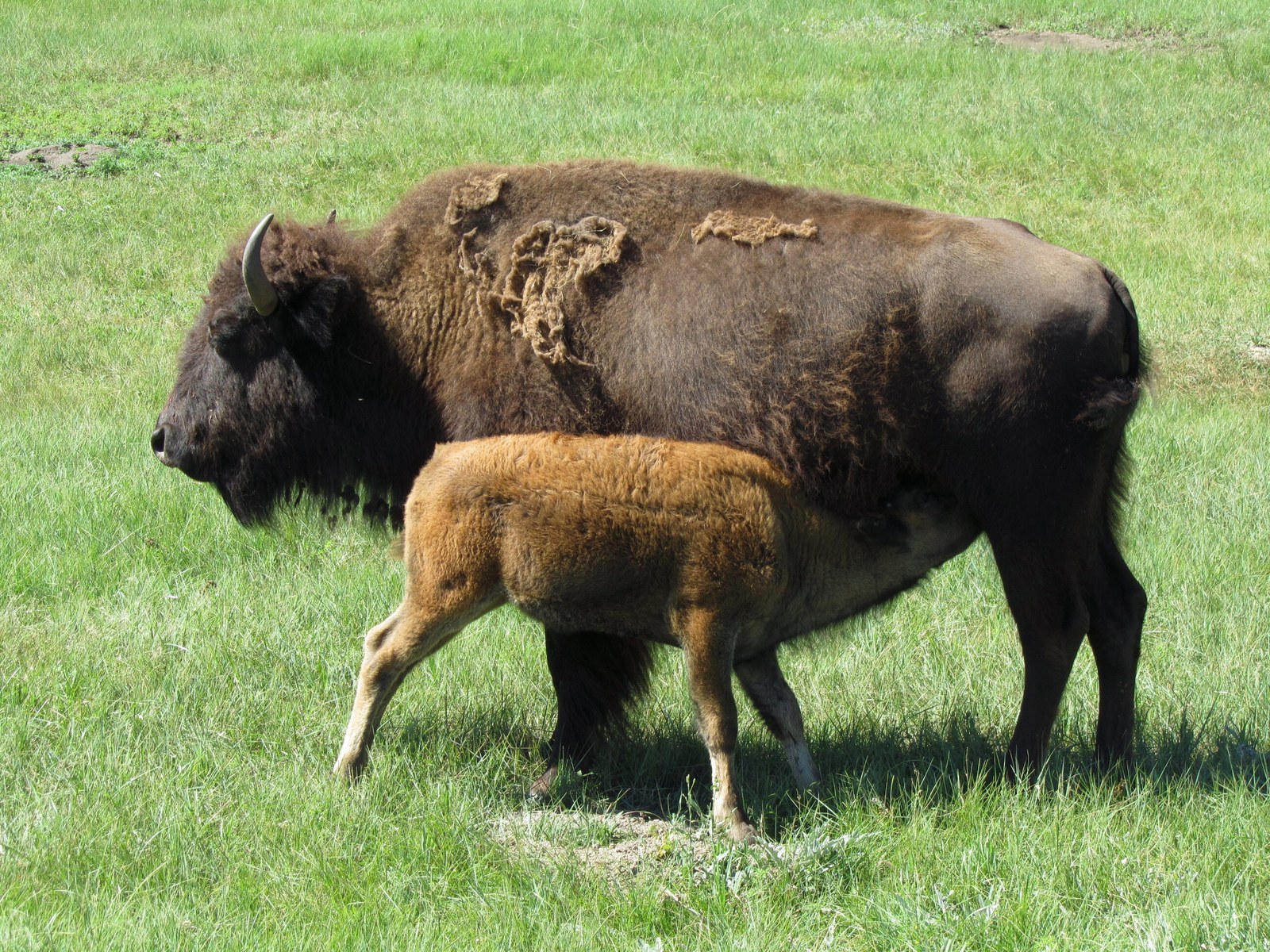
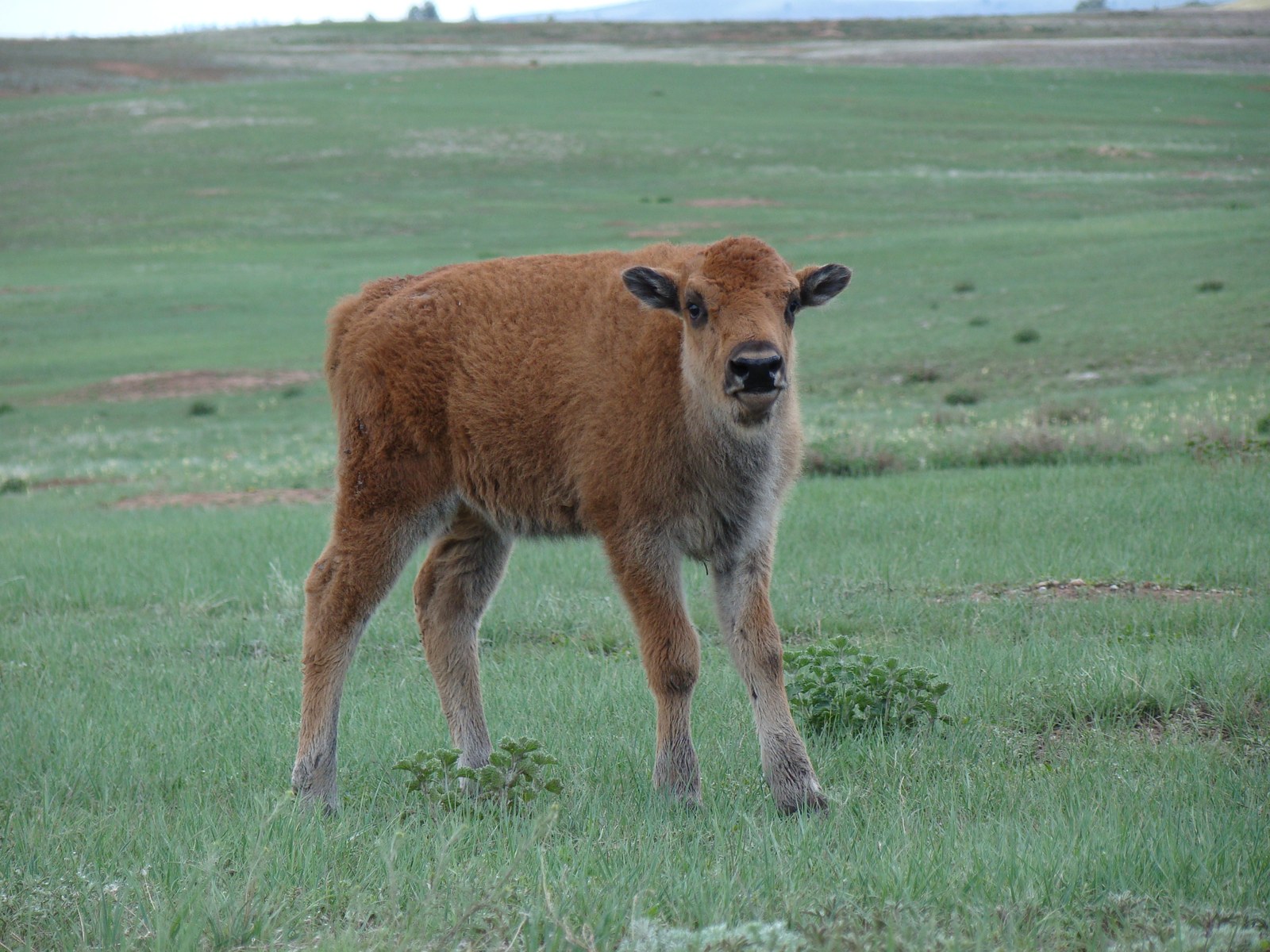
Bulls can top out at 2,000 pounds and 6 feet tall, cows at 1,000 pounds and 4 to 5 feet. For all that weight, bison can run 35 miles per hour and swim well. Most calves are born between late March and the end of May. Their orange-red coats, the reason they’re called “red dogs,” begin to turn dark brown after a few months. Rolling on bare ground, called wallowing, loosens shedding hair and fends off biting flies, and in the breeding season bulls wallow to show off and leave their scent behind.
Prairie Dog Towns and Buffalo Gap
On the grassland at Wind Cave, researchers in 1979 watched bison seek out the colonies of black-tailed prairie dogs (Cynomys ludovicianus). D. Layne Coppock and three colleagues reported what they saw in two 1983 papers in the journal Oecologia: across the park in midsummer, few habitats drew bison more often than prairie dog towns. Pringle Valley showed it most sharply. The town there took up 39 percent of the valley, yet the bison spent nearly 90 percent of their time in the valley on it. They fed where prairie dogs had altered the plants moderately and lay down to rest on the oldest ground, occupied for more than 26 years. The prairie dogs, the researchers concluded, had changed which plants grew on the town, how tall and dense they stood and how nourishing they were, holding it at the shortgrass stage bison favored. The colonies are the subject of Prairie Dogs and Black-Footed Ferrets.
Bison also moved between the Hills and the plains. The town of Buffalo Gap takes its name from the gap itself, the opening Beaver Creek follows out of the Hills, Kay Streeter of Buffalo Gap told South Dakota Magazine in 2023. Bison had used the gap for centuries, the magazine added. Luther Standing Bear, a Lakota writer, recorded that the Lakota called the pass the Gate of the Buffalo. His memory of game and his own people coming into the Hills through the gap for winter is told on Hé Sápa: Why the Hills Matter.
Bison in an Oglala Account and a Council’s Testimony
In an Oglala Lakota account, the bison’s tie to the Hills begins underground. In the version told by Wilmer Mesteth, a tribal historian and spiritual leader from the Pine Ridge Reservation, and retold by Sina Bear Eagle on a Wind Cave National Park page last updated in 2024, people who disobeyed and went up to the surface too early were turned into the first bison herd. When the rest of the people emerged through the cave, they were told to follow bison tracks. “Everything they needed to survive on the earth could come from the bison,” the retelling says. The park notes that versions vary by band and by family; the fuller story is on Sacred Sites: Bear Butte, Devils Tower and Wind Cave.
The InterTribal Buffalo Council, with 90 member tribes in 22 states by its own count in March 2026, described the wider bond in Senate testimony in June 2024, when it had 83, given by its president, Ervin Carlson of the Blackfeet Nation. For thousands of years, the council said, buffalo gave tribal people food, clothing, shelter and tools, and the two came to share a relationship it described as sacred and spiritual. The end of the herds, together with confinement to reservations, cost tribal people their main food, their way of life and their independence, the council added. Tribal restoration is told on The Return of the Bison.
How Did Bison Nearly Disappear?
Mostly through commercial hide hunting, which wiped out the Great Plains herds in little more than a decade. That is the economist M. Scott Taylor’s argument, in a 2007 National Bureau of Economic Research paper published in the American Economic Review in 2011. In 1870 or 1871, he writes, German and English tanners found a way to turn bison hides into industrial leather, and foreign demand for it drove the killing. The southern herd was gone by 1879. In the north, hide hunting peaked in 1881 or 1882, and the last hides went east in 1884. Taylor estimates that about 6 million hides were exported from 1871 to 1883.
How many bison there were before the slaughter can only be estimated. In 1889 the Smithsonian’s William Hornaday wrote that the number alive at any time before 1870 could never have been worked out. The Park Service now gives about 30 million. Taylor gives 25 to 30 million in the 1500s, and 10 to 15 million on the Great Plains before the slaughter there. At the low point, the Park Service says, fewer than 1,000 were left; Taylor says fewer than 100 remained by the late 1800s.
Who bears the blame is still argued. The InterTribal Buffalo Council told the Senate in 2024 that “the federal government played a key role in the near extinction of the buffalo.” Hornaday also faulted the national government, and the western states and territories, for doing nothing to protect the herds. He named the westward advance of settlement as the main cause, with human greed and waste and modern breech-loading rifles among the others. Congress did pass a bill to protect bison in 1874, Taylor notes, but it was vetoed. Taylor argues that the usual suspects, the railroads and the Army among them, weren’t to blame for the slaughter.
The Herds That Carried Bison Through
The species held on in a few places. Yellowstone National Park kept the one unbroken line: bison have lived there since prehistoric times, the Park Service says, and nowhere else in the United States can claim that. Elsewhere they lasted in small herds kept by ranchers and zoos. In the 1880s Fred Dupree caught bison calves, and in 1899 Scotty Philip (James Philip) bought a small herd begun from them. On his Missouri River pasture near Fort Pierre it grew to about 300 head by his death in 1911, by the American Bison Society’s counts of the time (later accounts say up to 1,000), one of the herds that helped save the bison.
Custer State Park’s herd began in 1914 with 36 bison bought from Scotty Philip’s herd. The herd numbered about 1,300 at the park’s roundup on September 25, 2026, and runs 1,300 to 1,500 in the warm months (as of October 2026). The roundup, the sale and bison ranching are on Bison Herds, Bison Ranching and the Buffalo Roundup, and the park itself on Custer State Park.
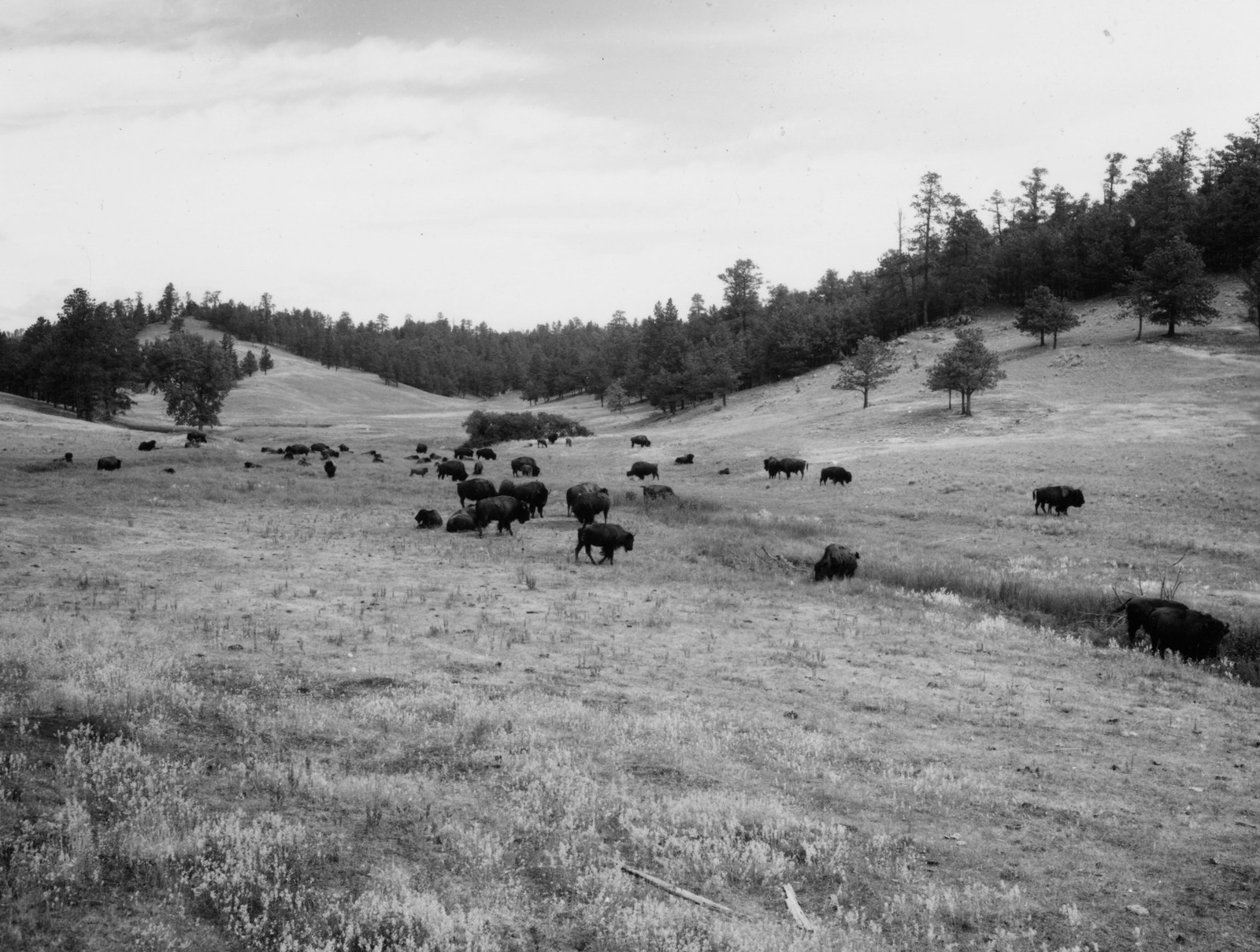
Wind Cave’s herd began instead with those 14 bison from New York, joined in 1916 by six from Yellowstone, and it reached 100 by 1920. It stood at about 400 after an October 2019 roundup. As of July 2024, the Park Service’s target for the herd was 350 to 500 bison, the number it says the park can sustain. Badlands National Park’s bison were reintroduced in 1963, when two trucks brought 50 animals from Theodore Roosevelt National Park. About 1,000 remained after a roundup in the fall of 2022, the park reported that November, when it sent about 655 young bison to four tribes in South Dakota and Wisconsin.
Most federal herds tested show evidence of cattle genes. They date from the years when bison were scarcest, the Park Service explains, when private owners crossed bison with cattle to build up their herds. Of the Interior Department’s herds, NPS reports, only Wind Cave’s and Yellowstone’s show no evidence of cattle ancestry in testing, though it cautions that small herds make firm results hard to get and that some federal herds need more testing. Park releases have claimed more, calling the Wind Cave herd “genetically pure” in 2005 and free of cattle genes in 2019. The 2024 wording, no evidence found, is the more careful claim. Wind Cave bison, the Park Service notes, have been used to restore herds elsewhere in the country and in Mexico.
Connected
- Bison Herds, Bison Ranching and the Buffalo RoundupThe Custer State Park herd’s management, the fall roundup and auction, and bison ranching.
- The Return of the BisonTribal bison restoration, told in full.
- Custer State ParkThe park whose herd began in 1914 with 36 bison from Scotty Philip’s herd.
- Buffalo Gap, South DakotaThe town named for the gap where bison crossed between the Hills and the plains.
- Prairie Dogs and Black-Footed FerretsThe colonies that draw grazing bison at Wind Cave.
- Sacred Sites: Bear Butte, Devils Tower and Wind CaveWind Cave and the emergence story in which the first bison appear.
- Wind Cave National ParkThe park that took in the 14 bison from New York in 1913.
- Badlands National ParkWhere bison were brought back in 1963.
Sources
- Report of the American Bison Society, 1911–1912 (J. Alden Loring’s report on James Philip’s herd; census of January 1, 1912). American Bison Society, 1912; Internet Archive.
- Bison Bellows (article on the 1913 shipment of bison to Wind Cave). National Park Service, 2017.
- Wildlife Management (Wind Cave National Park). National Park Service, 2026.
- Counting Bison...And New Experiences in the Latino Heritage Internship Program, by Nicole Segnini. National Park Service, 2025.
- 15 Facts About Bison. National Park Service, 2016.
- National Bison Legacy Act, Pub. L. 114-152, section 3 (in the notes to 36 U.S. Code, chapter 3). Legal Information Institute, Cornell Law School; the law dates from 2016.
- Bison (subject page). National Park Service, 2023.
- Explore the Taxonomic Tree: Bison bison bison (ITIS TSN 202412). U.S. Fish and Wildlife Service.
- Explore the Taxonomic Tree: Cynomys ludovicianus (ITIS TSN 180186). U.S. Fish and Wildlife Service.
- William T. Hornaday on the Extermination of the American Bison (1889) (excerpt). The American Yawp Reader.
- Plant-Herbivore Interactions in a North American Mixed-Grass Prairie. I. Effects of Black-Tailed Prairie Dogs, by D. Layne Coppock, J. K. Detling, J. E. Ellis and M. I. Dyer. Oecologia 56, 1983.
- Plant-Herbivore Interactions in a North American Mixed-Grass Prairie. II. Responses of Bison to Modification of Vegetation by Prairie Dogs, by D. L. Coppock, J. E. Ellis, J. K. Detling and M. I. Dyer. Oecologia 56, 1983.
- Life in the Gap, by Bernie Hunhoff. South Dakota Magazine, 2023.
- The Lakota Emergence Story, told by Wilmer Mesteth, retold by Sina Bear Eagle. Wind Cave National Park, National Park Service, 2024.
- Testimony of Ervin Carlson, President, InterTribal Buffalo Council. U.S. Senate Committee on Indian Affairs, 2024.
- Testimony of Ervin Carlson, President, InterTribal Buffalo Council, to the Subcommittee on Interior, Environment and Related Agencies. U.S. House Committee on Appropriations, March 18, 2026.
- Buffalo Hunt: International Trade and the Virtual Extinction of the North American Bison, by M. Scott Taylor. National Bureau of Economic Research, Working Paper 12969, 2007 (published in the American Economic Review, 2011).
- Custer State Park History. South Dakota Game, Fish and Parks.
- The Man Who Saved the Bison, by Carole Butcher (Dakota Datebook). Prairie Public, 2021.
- Buffalo Roundup. South Dakota Game, Fish and Parks, 2026.
- Drought Forcing Custer State Park To Auction Off At Least 600 South Dakota Bison, by Kate Meadows. Cowboy State Daily, 2026.
- News release on the 2019 Wind Cave bison roundup (October 25, 2019). National Park Service, 2019.
- Wind Cave Bison Genetics. National Park Service, 2024.
- Park Helps with Bison Restoration Efforts (news release). National Park Service, 2005.
- Bison Bellows (article on the Badlands National Park herd). National Park Service, 2016.
- News release on bison distributed to tribes (November 7, 2022). Badlands National Park, National Park Service, 2022.
- Land of the Spotted Eagle. Luther Standing Bear; as quoted in The Home of the Bison, vol. 1, p. 484 (Patricia C. Albers and others, University of Minnesota for the National Park Service, 2003; online edition, NPS History).
Last reviewed: