Wildlife and Plants
Trout in the Black Hills
On August 10, 1874, the Army engineer William Ludlow followed a rapid creek down a broad meadow in the Black Hills, watching the water for trout. He was riding with Custer’s expedition into the Hills, which the 1868 treaty had made part of the Great Sioux Reservation. There “could be no finer trout-streams in the world than these were they once stocked,” he wrote, but he found only small chub and a kind of sucker. No trout is native to the Black Hills. This page covers who brought them, the federal hatchery at Spearfish, which trout live where now, and the native fish that were here first.
Why Weren’t There Trout in the Black Hills?
The streams were cold enough, but they were cut off. Barton W. Evermann, an ichthyologist (fish scientist) for the U.S. Fish Commission, surveyed them in 1892 and 1893 and counted 15 native fish species, none of them trout, John R. Henris writes in South Dakota History (2015). The lower Missouri River and most of the Cheyenne River, which drains the Hills, were too warm and alkaline for trout to swim up, Evermann judged. His 1896 report with Ulysses O. Cox confirmed that trout were not native.
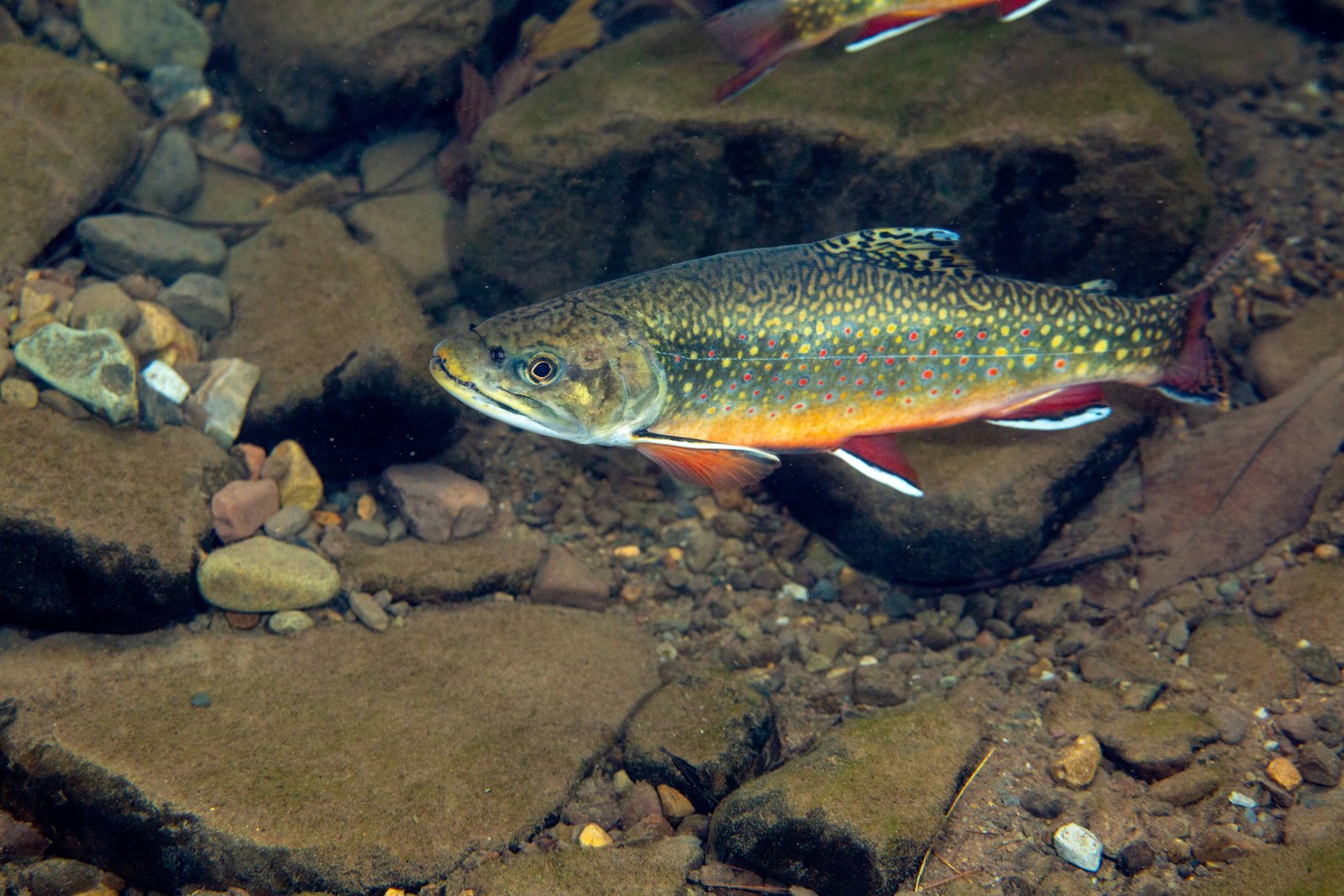
South Dakota Game, Fish and Parks (GFP) agrees. Its 2020–2024 Black Hills plan says the original fish community was a simple one of suckers, chubs and dace, and calls every sport fishery in the Hills a product of stocking. By the department’s 2022 fish guide, the brook trout (Salvelinus fontinalis) comes from northeastern North America, the brown trout (Salmo trutta) from Europe, the Middle East and northern Africa, and the rainbow trout (Oncorhynchus mykiss) from rivers draining to the northern Pacific.
Settlers, Fish Cars and Milk Cans
Brook trout arrived in the 1880s, and people near Rapid City had put trout into Cleghorn Springs by 1886 or earlier, Henris found. Around Spearfish, he adds, residents kept trout in springs and ice ponds, and flooding in 1890 or 1891 let some loose in the lower creek. In Wyoming, territorial officials stocked brook trout in Sand Creek in 1889, which Henris counts as the region’s first successful trout fishery.
Federal trout came by rail, Henris writes. A fish car, a railroad car built to carry live fish, reached Deadwood in November 1891 with about 10,000 trout. In June 1895 another arrived with 200,000 young black-spotted trout, as cutthroat were then called, from Lake Tahoe; more than 100,000 had died on the five-day trip. Congress paid for a hatchery at Spearfish in 1896, and by July 1899 it had trout eggs incubating.
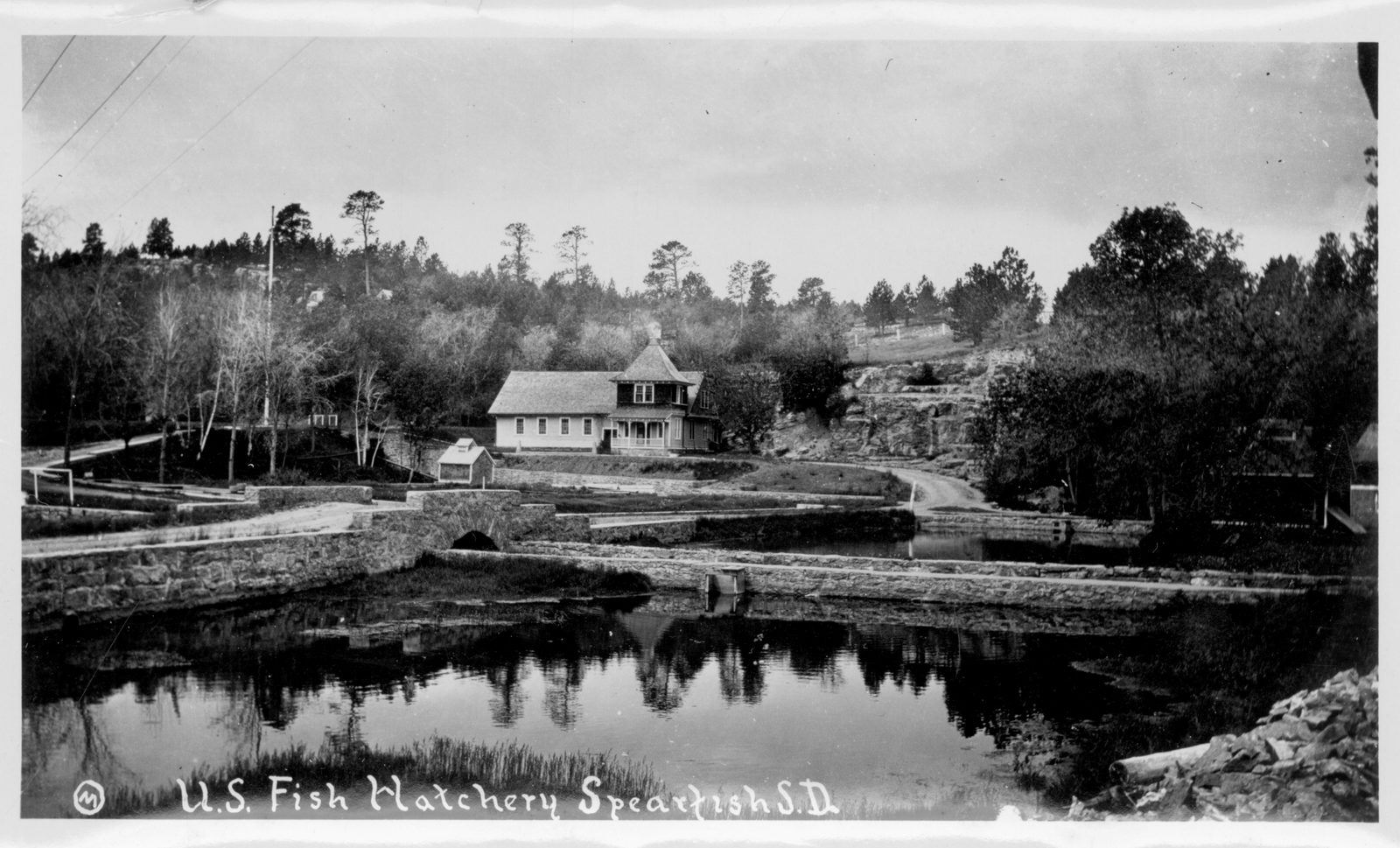
Under DeWitt Clinton Booth, its first superintendent, the hatchery became a shipping center. From 1901 to 1911 a substation on Yellowstone Lake gathered black-spotted trout eggs for it, the U.S. Fish and Wildlife Service says. By Booth’s count, cited by Henris, it had sent out about 30.7 million fish by May 1, 1915, including 19 million black-spotted, 9.4 million brook and 1.3 million rainbow trout. Most went by train to residents who had applied for them. In May 1904, 40,000 brook trout rode in milk cans to Nemo and Roubaix for the Box Elder and Elk Creek country.
Cyanide wastewater from a mill killed thousands of trout in Spearfish Creek in 1901, Henris writes, and Homestake’s power plants later drew water out of stretches of the creek.
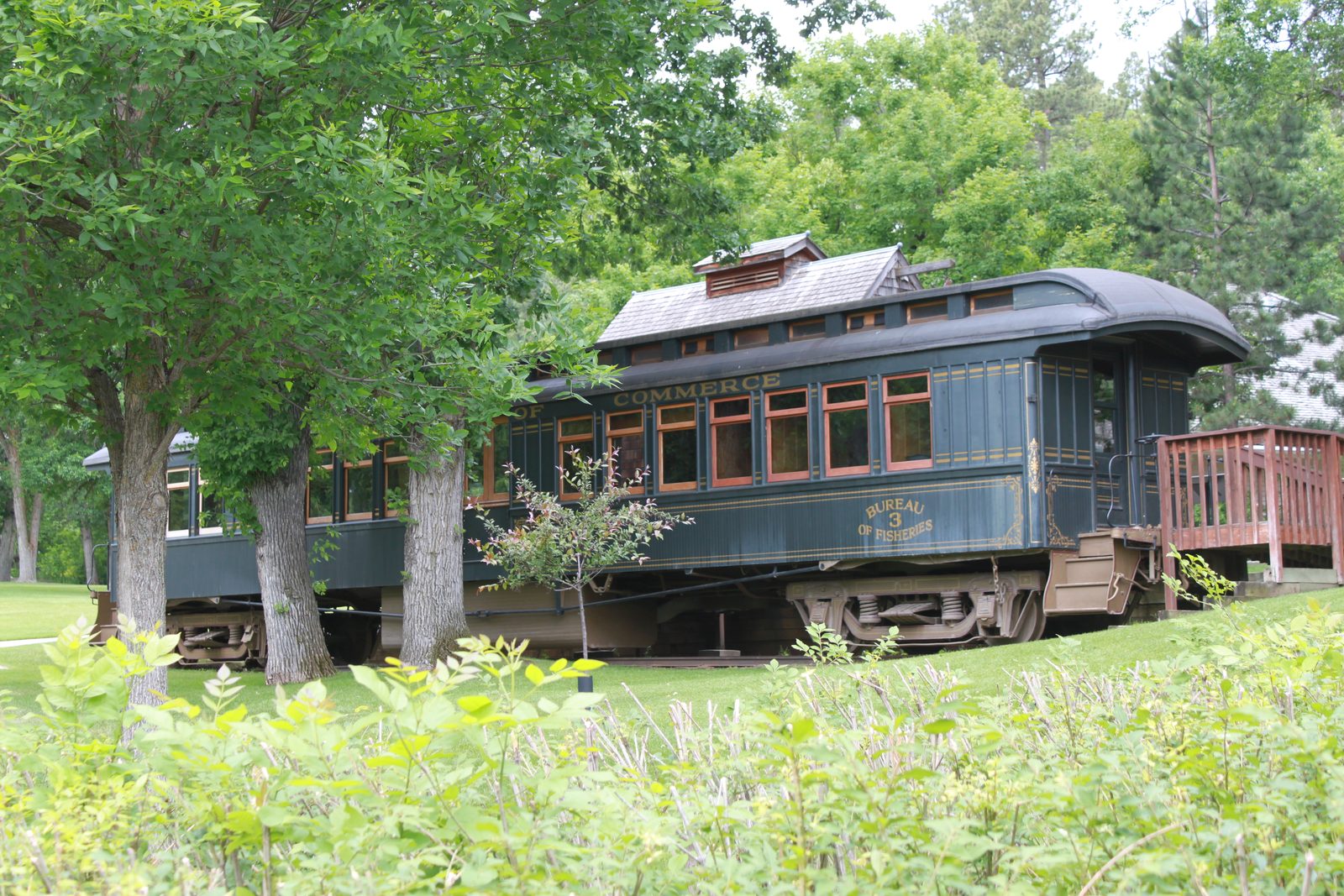
A second federal hatchery, McNenny, was built about 12 miles west in 1949. Budget cuts in the early 1980s gave McNenny to the state and closed the Spearfish station; it reopened in 1984 and now carries Booth’s name. It still raises about 60,000 catchable trout a year for lakes and reservoirs on tribal and military lands in South Dakota and eastern Montana, the Fish and Wildlife Service says.
Which Trout Live Where Now?
Seven kinds of trout live in Black Hills streams and reservoirs, GFP’s plan says: brown, brook, rainbow, cutthroat and lake trout, plus two hatchery-made crosses, tiger trout and splake. The Hills hold about 800 miles of streams, nearly all of South Dakota’s cold-water streams, and the main trout streams, Rapid, Castle, Spearfish, Whitewood, Spring and Crow creeks, offer about 240 fishable miles in most years.
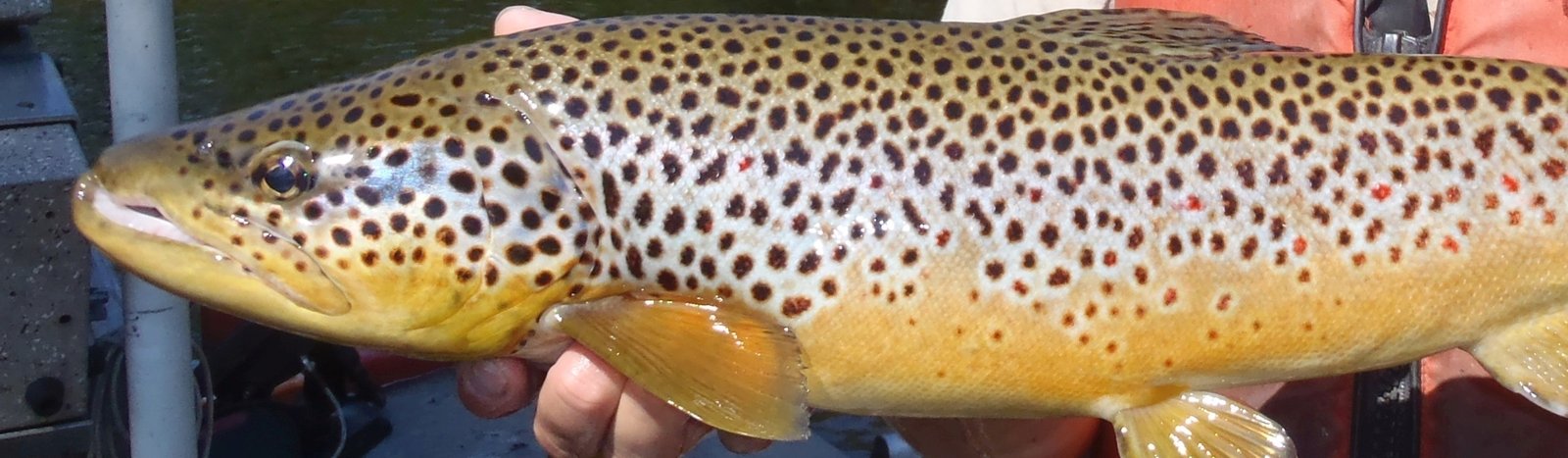
Brook trout keep mostly to small headwater streams, partly because they like colder water, and they sustain themselves by spawning, the 2022 guide says. Brown trout are largely wild too. On average they eat more fish than other trout, and in a 2014 GFP survey they were the stream anglers’ favorite. Rainbow trout reproduce so little in South Dakota that most are kept up by stocking, though one mile of Spearfish Creek holds the only known wild rainbow population in the Hills that GFP’s 2015 stream plan rates as a top-class fishery. The cutthroat, the hatchery’s mainstay more than a century ago, is also kept up mostly by stocking.
Lake trout were brought into Deerfield and Pactola reservoirs. Splake, a brook and lake trout cross, are stocked in Deerfield, and tiger trout, brown crossed with brook, in Center Lake in Custer State Park. Across the Hills, 47 small lakes and ponds get catchable trout about 11 inches long, the plan says. Two state hatcheries in the Hills raise trout and salmon for waters across South Dakota. Cleghorn Springs in Rapid City has run since 1928 and produces more than 100,000 pounds of fish a year; McNenny, near Spearfish, produces about 90,000 pounds.
Wild Trout or Hatchery Trout?
Stream reaches with many wild adult trout now normally go unstocked. Hatchery fish go where conditions keep wild trout too few for anglers, as on sections of Castle and Rapid creeks, or where heavy fishing could take too many. Black Hills streams hold the only naturally reproducing trout in South Dakota, GFP says, and drought and summer heat cut into them. Where creeks cross the Madison Limestone and Minnelusa Formation, water sinks into the rock, often leaving dry beds below.
It was not always so. A 1965 state policy stocked streams without regard to the wild trout already in them, GFP’s 2015–2019 stream plan says. Crews surveyed 220 stations on 65 streams in 1984 and 1985 and classed them by their wild trout, yet large numbers of hatchery trout still went into streams with wild populations in the early 1990s. The 1993 plan called for fewer stockings or none, so wild fish could carry the load.
The Fish That Were Here First
Settlers valued the chubs, suckers and dace little, Henris writes, and began displacing them with brook trout in the 1880s and 1890s. GFP counts sport fish introductions, with habitat loss, among the harms to native fish in the Hills.
The mountain sucker lives in South Dakota only in the Hills. GFP lists it as a species of greatest conservation need and noted some decline there in 2020. A 2003 Forest Service assessment had found it widespread and at little risk, but judged predation by brown trout, a heavy eater of other fish, a plausible threat.
Lake chub once lived in creeks across the Hills; Evermann and Cox recorded them in Rapid, Spring, French and Beaver creeks. By 2003 the Forest Service found the only population left on national forest land in Deerfield Reservoir, where, GFP says, numbers have fallen since 1994. In 2019 GFP found some in Box Elder Creek. The finescale dace, endangered in South Dakota, lived in the Redwater Creek drainage and by 2003 had vanished from four of the six South Dakota sites where it was once collected; introduced sunfish probably wiped out two populations, the assessment says. The longnose sucker is listed as threatened.
In Deerfield the lake chub now share the water with stocked trout and with rock bass, a fish the state did not stock that breeds there on its own.
Connected
- Lakes of the Black HillsThe reservoirs that take many of the stocked rainbows, from Pactola to Deerfield.
- Spearfish, South DakotaHome of the federal trout hatchery Congress funded in 1896.
- Spearfish CanyonThe canyon of Spearfish Creek, one of the main trout streams of the Hills.
- Spearfish Creek: Power, Rails and the 1933 FloodHow Homestake’s power plants and a railroad reshaped the creek.
- The Custer Expedition of 1874The expedition whose engineer looked for trout and found chub and suckers.
- Custer State ParkWhere Center Lake is stocked with tiger trout.
- The Limestone Plateau and the CavesWhy creeks sink into the limestone and leave dry stretches below.
Sources
- Report of a Reconnaissance of the Black Hills of Dakota, Made in the Summer of 1874, by William Ludlow. Government Printing Office, 1875 (Internet Archive text).
- “No finer trout-streams in the world than these”: The Making of a Recreational Fishery in the Black Hills Forest Reserve, by John R. Henris. South Dakota History 45, no. 4, South Dakota State Historical Society, 2015.
- D.C. Booth Historic National Fish Hatchery: Our History. U.S. Fish and Wildlife Service, viewed 2026.
- D.C. Booth Historic National Fish Hatchery. U.S. Fish and Wildlife Service, viewed 2026.
- Fisheries and Aquatic Resources Adaptive Management System, 2020–2024: Black Hills Fish Management Area. South Dakota Department of Game, Fish and Parks, 2020.
- Fisheries and Aquatic Resources Adaptive Management System, 2014–2018: Black Hills Fisheries Management Area Strategic Plan. South Dakota Department of Game, Fish and Parks, 2014.
- Fisheries Management Plan for Black Hills Streams, 2015–2019. South Dakota Department of Game, Fish and Parks, 2015.
- Fisheries Management Plan, Black Hills Streams, 2015–2019 (summary). South Dakota Department of Game, Fish and Parks, 2015.
- Guide to the Fishes of South Dakota (second edition), by Chelsey A. Pasbrig, Matthew D. Wagner, Christopher W. Hoagstrom, Geno Adams and Robert M. Neumann. South Dakota Department of Game, Fish and Parks, 2022.
- Cleghorn Springs State Fish Hatchery. South Dakota Department of Game, Fish and Parks, viewed 2026.
- McNenny State Fish Hatchery. South Dakota Department of Game, Fish and Parks, viewed 2026.
- Conservation Assessment for Lake Chub, Mountain Sucker, and Finescale Dace in the Black Hills National Forest, South Dakota and Wyoming, by Daniel J. Isaak, Wayne A. Hubert and Charles R. Berry Jr. USDA Forest Service, Black Hills National Forest, 2003.
Last reviewed: