Wildlife and Plants
The Begging Burros of Custer State Park
On the Wildlife Loop Road in Custer State Park, a small band of burros walks up to stopped cars. Of all the park’s animals, they are among the few that visitors actually get close to, Kobee Stalder, the park’s visitor services manager, told KOTA in 2022, and SDPB has called them the park’s famous Begging Burros. They are donkeys, and none is native to the Black Hills. This page covers where the burros came from, why they count as feral rather than wild, how the park keeps the band small, what the Legion Lake Fire of December 2017 did to them, and the park’s rule on feeding.
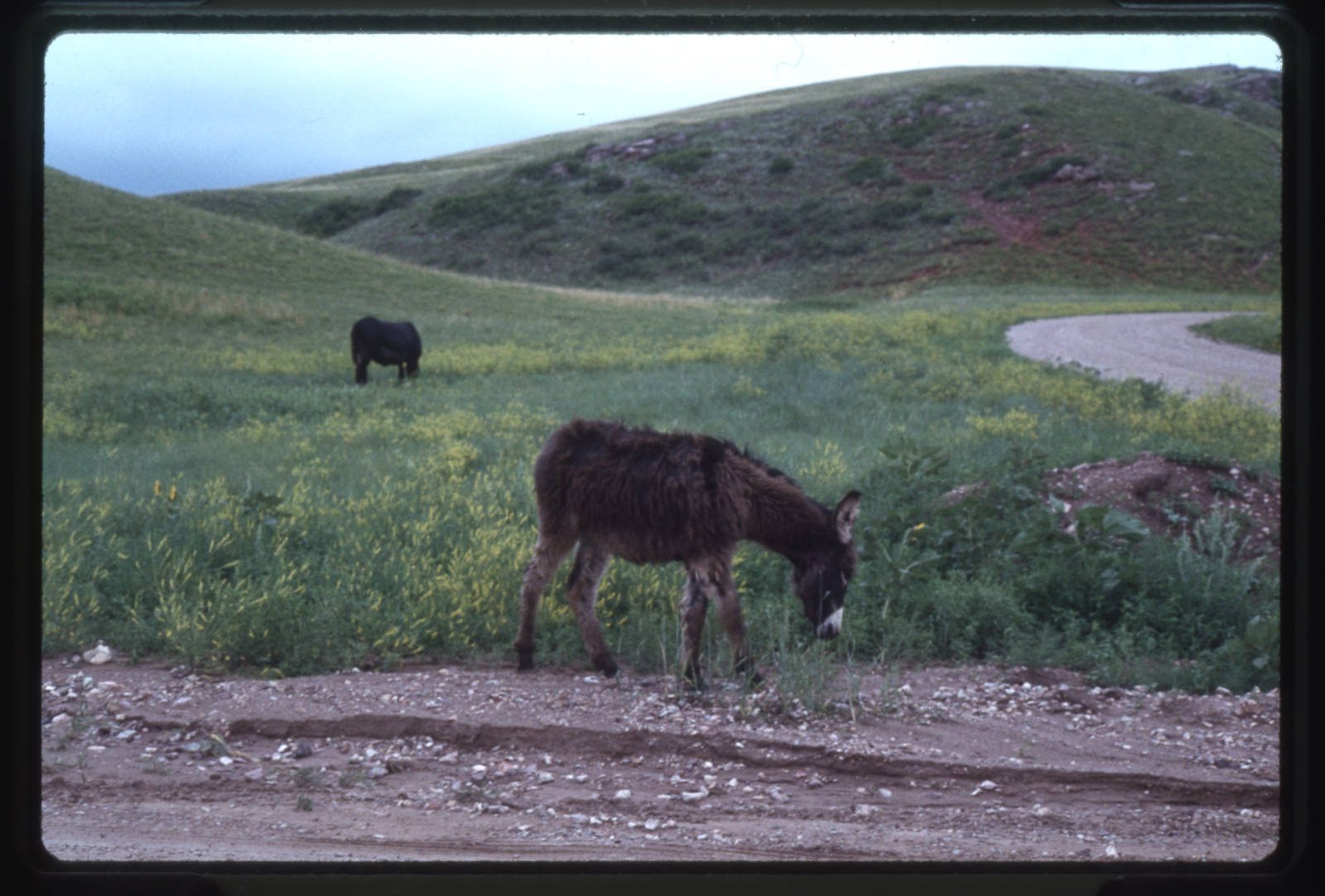
Where Did the Custer State Park Burros Come From?
By the park’s own account, the burros come from a herd that used to carry visitors up Black Elk Peak (called Harney Peak until 2016). In its 2026 visitor guide, South Dakota Game, Fish and Parks (GFP), the state agency that runs the park, says the rides ended years ago and that the burros were then turned loose in the park. The guide gives no year for either.
Others have put dates to the story, and the dates disagree. Stalder told KOTA in 2022 that burro rides up the peak go back to the 1920s and that the animals stayed in the park after the rides ended. An Associated Press report in December 2017 dated the band’s lineage to the 1930s, when burros took pack tours to the top of a peak in the park. A 2019 SDPB feature reached back further still, to the pack animals that miners and other workers relied on in the Hills after the mid-1870s. None of the three cites a record, and none names who ran the rides.
The busiest way up the peak now is Trail 9, which starts at Sylvan Lake inside the park (see Hiking Black Elk Peak). None of the accounts above says which way the burro rides went.
Feral, Not Wild
A burro is a donkey, Equus asinus. The federal Integrated Taxonomic Information System lists “burro,” “feral burro” and “donkey” among the species’ common names, and its notes say the domestic donkey is thought to descend from the African wild ass. The Custer State Park burros are domestic animals, or the offspring of domestic animals, that people turned out to fend for themselves, and that is what makes them feral rather than wild. GFP’s page on the park’s scenic drives calls them “the park’s feral burros.” They live on grass, KOTA reported.
Elsewhere the same animal can be a problem. Death Valley National Park lists its burros as invasive, a species brought to North America rather than native to it. Burros there keep other animals away from springs, overgraze the plants around them and compete with bighorn sheep and desert tortoises for limited resources, the Park Service says. Custer State Park, by contrast, keeps a small band on purpose, sized, KOTA reported in 2022, to the park’s land and the needs of its other wildlife.
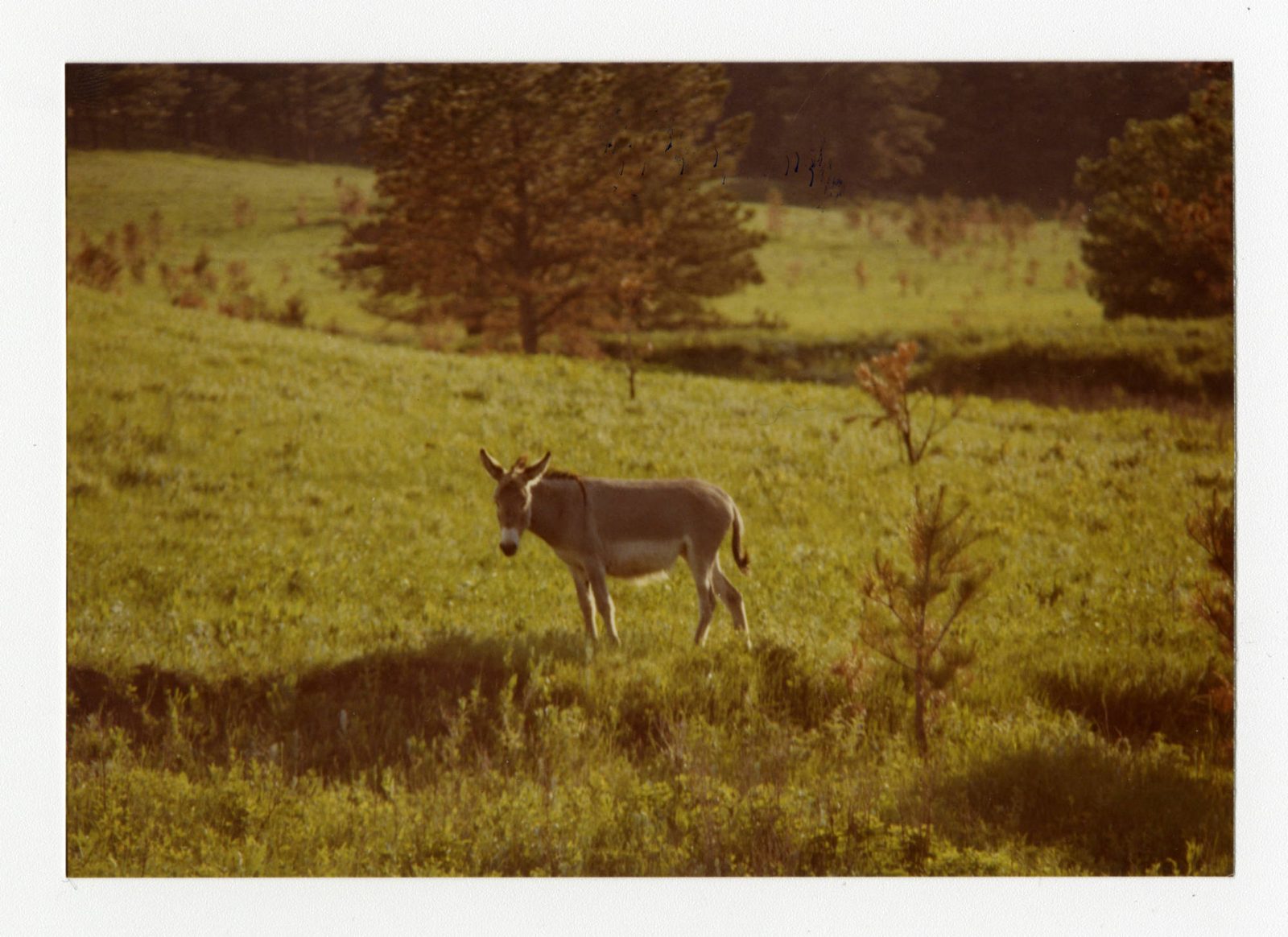
How Many Burros Live in Custer State Park?
About 11 was the park’s limit in March 2022, KOTA reported, and Stalder said the park was comfortable managing that many. The burros breed, and the park sells the young. That month it was auctioning six born the summer before, two jacks (males) and four jennies (females), with the money going to the park’s land, environmental and other needs. Stalder called the burros “a very sentimental piece of the park” and said bidders liked the idea of taking one home.
How many leave varies. The Associated Press reported in 2017 that the band’s numbers change from year to year and that some burros go to auction every November. That November about a dozen were sold, South Dakota News Watch reported later, which left nine in the park. More recent sales have been by sealed bid: eight yearlings in 2025, with bids due March 19, and seven in 2026, with bids due February 20, GFP’s sale notices show. The park pays for the health tests and certificate if a buyer needs them. GFP’s 2026 guide says some bison and burros are sold at the park’s yearly auction, to shrink the herds and prevent overcrowding.
The Burros and the Legion Lake Fire
The Legion Lake Fire started on December 11, 2017, and burned 84 square miles before it was contained on December 19. Only two recorded Black Hills wildfires have been larger, by the state’s account.
Nine burros were living in the park when it swept through. On December 15, SDPB reported that officials could not find half the band and believed those animals had died when the fire grew explosively on the night of Tuesday, December 12. By December 17 the Associated Press was reporting that all nine had been found. Every one was burned, some worse than others, and a veterinarian was treating them with antibiotics and pain medication, Stalder said. No other herd in the park had been hit as hard.
Not all of them recovered. Three were put down in early January 2018 because their burns would not heal, South Dakota News Watch reported that February; a KSFY report, as relayed by the radio station KKRC that month, said two. “They (the burros) took the brunt of the fire,” Rochelle Plocek, a GFP fire forester who works in the park, told News Watch. The bison came through better. Four were euthanized, and about 800 of the herd’s 860 were being kept in corrals inside the Wildlife Loop, where staff could feed them and watch their health, after the fire took most of their grazing ground.
Can Visitors Feed the Burros?
No. GFP’s 2026 guide to the park is plain: “Feeding the park’s wildlife is prohibited.” It warns that handing food to any wild animal puts both the animal and the person at risk, and its list of park rules repeats the point. The guide prints that warning right beside its note on the bison and burro sales.
The nickname points the other way. One photo in SDPB’s 2019 feature carries a caption about a begging burro eating a snack a visitor gave it, and the feature says children are especially taken with the animals.
The burros share the 18-mile Wildlife Loop Road, which GFP keeps open all year, with prairie dogs, deer, elk and the park’s free-roaming bison. The bison have their own page, Bison, and the drive is described on Scenic Drives: Needles Highway, Iron Mountain Road and More.
Connected
- Custer State ParkThe park the burros live in, with its lakes, trails, drives and bison herd.
- Hiking Black Elk PeakThe peak the burros’ forebears once carried visitors up, by the park’s account.
- BisonThe park’s free-roaming bison, which share the Wildlife Loop with the burros and are also thinned by sale.
- Scenic Drives: Needles Highway, Iron Mountain Road and MoreThe Wildlife Loop Road, where the burros meet cars.
- Elk, Bighorn Sheep and Mountain GoatsThe mountain goats, another animal brought to the park that is not native to South Dakota.
- The Ponderosa Forest, Fire and the Pine BeetleHow fire has shaped the pine forest of the Hills.
Sources
- Burros up for grabs, taking a piece of Custer State Park home, by Jeffrey Lindblom. KOTA, 2022.
- The Animals of Custer State Park, by Brian Gevik. SDPB, 2023 (first published 2019).
- Tatanka: 2026 Guide to Custer State Park (volume 47). South Dakota Department of Game, Fish and Parks, 2026.
- Custer State Park Wildfire 90 Percent Contained, 9 Burros Burned, by Amy Forliti. Associated Press, via Patch, 2017.
- Equus asinus (TSN 180690). Integrated Taxonomic Information System, viewed 2026.
- Scenic Drives Through Custer State Park. South Dakota Department of Game, Fish and Parks, 2026.
- Invasive Burros. National Park Service, Death Valley National Park, 2023.
- 2025 Sealed Bid: One Year Old Burros (sale notice and bid form). South Dakota Department of Game, Fish and Parks, 2025.
- 2026 Sealed Bid: One Year Old Burros (sale notice and bid form). South Dakota Department of Game, Fish and Parks, 2026.
- Custer Fire: Park recovery and rebirth, by Bart Pfankuch. South Dakota News Watch, 2018.
- 2018 Legion Lake Fire: Custer State Park (archive). South Dakota Response, State of South Dakota, 2018.
- Custer State Park Officials Check In On Wildlife, by Lee Strubinger. SDPB, 2017.
- Burros Injured in Legion Lake Fire Get Good News, by Marc Elliott. KKRC, 2018 (relaying KSFY).
Last reviewed: