Section
The Tribes and Hé Sápa
- Who Lived in the Hills FirstArchaeology reaching back at least 11,000 years, the nations tied to the Hills, and where Lakota and scholarly accounts part ways.
- Hé Sápa: Why the Hills MatterLakota writers and scholars on the Hills as center, winter refuge, storehouse and mirror of the stars.
- The Sun DanceOnly what tribes have shared publicly: its purpose, the federal ban of 1883 to 1934, its return, and Sundance Mountain’s name.
- Sacred Sites: Bear Butte, Devils Tower and Wind CaveWhat each place means to tribes, what prayer cloths are, and why climbers are asked to stay off Devils Tower in June.
- The Fort Laramie Treaties of 1851 and 1868Horse Creek in 1851, Red Cloud’s War over the Bozeman Trail forts, and what the tribes understood the 1868 treaty secured.
- The 1876 War and the Taking of the HillsMiners on treaty land, the 1876 war, the Little Bighorn (Greasy Grass), and the pressure behind the 1877 Act.
- Wounded KneeLakota survivors’ accounts of the 1890 massacre, the Ghost Dance behind it, the differing death counts, the medals and the grave.
- The 1980 Ruling and Land BackThe Supreme Court’s 1980 decision and its limits, why the tribes refuse the money, and what Land Back asks for today.
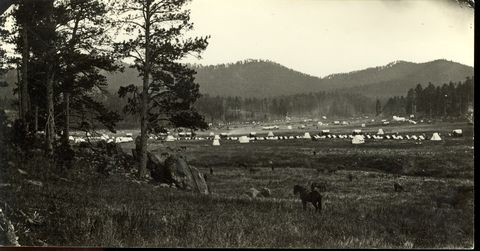
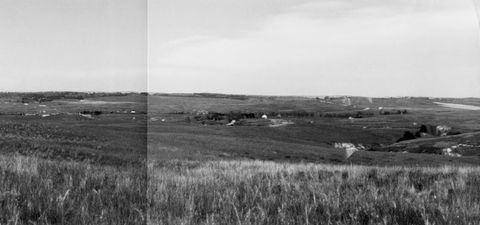
About 16 tribes work closely with the Black Hills National Forest, by the forest’s own count. Most are Lakota, Dakota and Nakota nations of the Očhéthi Šakówiŋ, the Seven Council Fires; the rest are Cheyenne, Arapaho and Shoshone tribes and the Mandan, Hidatsa and Arikara Nation. This section covers the Black Hills, Hé Sápa, from the tribes’ side: what the land means, who lived there first, the places and ceremonies held sacred, the treaties, the taking of the Hills, Wounded Knee, and the land dispute that goes on now.
For the Lakota, the beginning is underground. In the Oglala account of the historian and spiritual leader Wilmer Mesteth, the people came up to the surface through the passage now called Wind Cave. Hé Sápa: Why the Hills Matter gathers what Lakota writers and scholars have said about the Hills as a center, a shelter and a holy place. Who Lived in the Hills First sets those accounts beside the archaeological record and the other nations tied to the Hills, and shows where they differ.
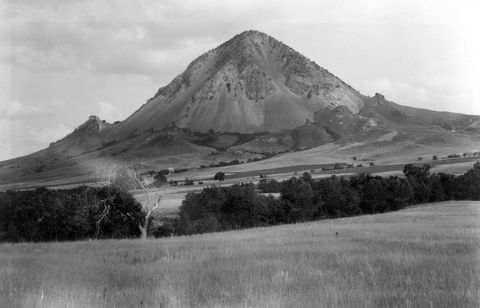
Some places hold that meaning for many nations at once. Sacred Sites covers Bear Butte, which the Lakota call Mahto Paha (or Paha Mahto), along with Devils Tower and Wind Cave. More than two dozen tribes are affiliated with Devils Tower, the Park Service says, and sweat lodges and Sun Dances are still held there. The Sun Dance, one of seven Lakota ceremonies in a 2013 account by Ivan F. Starr of Oglala, South Dakota, asks dancers to fast and offer sacrifice for their relatives and their people.
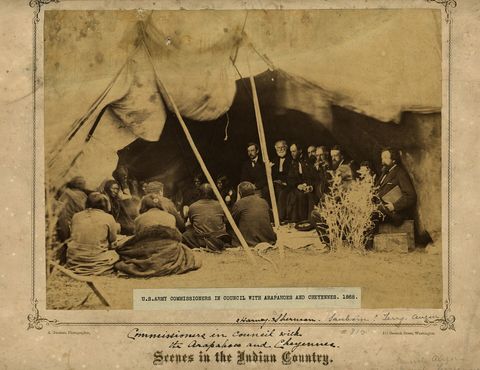
The Fort Laramie treaty of April 29, 1868, drew the lines of the Great Sioux Reservation, which held the Black Hills, and set that land apart “for the absolute and undisturbed use and occupation” of the nations it named. The United States did not keep the treaty, the Rosebud Sioux Tribe’s history says, and in the 1870s miners rushed in after gold. The Fort Laramie Treaties of 1851 and 1868 explains what the tribes understood they had won. The 1876 War and the Taking of the Hills tells how the Hills were taken from the tribes in 1877, without the consent the treaty required.
On December 29, 1890, U.S. cavalry killed Lakota men, women and children near Wounded Knee Creek in South Dakota. Wounded Knee tells the massacre as Lakota survivors described it.
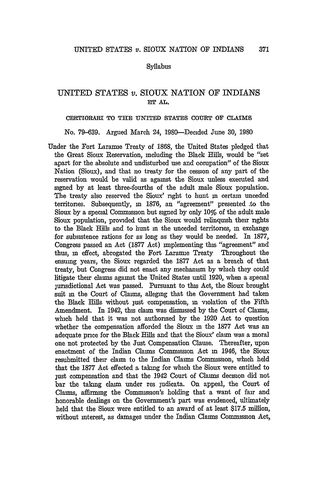
In 1980 the Supreme Court ruled that the 1877 Act had taken tribal property and that the tribes had to be paid for it, with interest. The Court ordered no land returned, and the tribes have never taken the money. Accepting it, Theresa Two Bulls, a former president of the Oglala Sioux Tribe, told PBS NewsHour in 2011, would end the government’s treaty obligations to them. By then the award, held in a federal account, had grown to more than $1 billion. The 1980 Ruling and Land Back follows the tribes’ claim from that decision to the Land Back movement of today.
Sources
- Wakpamni Lake Community. Wakpamni Lake Community Government, Oglala Sioux Tribe, accessed 2026.
- History. Cheyenne River Sioux Tribe, accessed 2026.
- History and Culture. Rosebud Sioux Tribe, accessed 2026.
- The Lakota Emergence Story, told by Wilmer Mesteth and retold by Sina Bear Eagle. National Park Service, Wind Cave National Park, 2024.
- A Place of Reverence for Native Americans. National Park Service, Devils Tower National Monument, 2025.
- Ivan F. Starr: Sharing what I have learned about the Sundance. Native Sun News, republished by Indianz.com, 2013.
- Tribal Relations. USDA Forest Service, Black Hills National Forest, 2025.
- Treaty of Fort Laramie (1868). National Archives, Milestone Documents, accessed 2026.
- United States v. Sioux Nation of Indians, 448 U.S. 371. Supreme Court of the United States, 1980 (Legal Information Institute, Cornell Law School).
- 1890: U.S. Cavalry massacres Lakota at Wounded Knee. Native Voices, National Library of Medicine, accessed 2026.
- For Great Sioux Nation, Black Hills Can’t Be Bought for $1.3 Billion, by Mike Fritz and Hari Sreenivasan. PBS NewsHour, 2011.
Last reviewed: