The Tribes and Hé Sápa
Hé Sápa: Why the Hills Matter
Luther Standing Bear was born in December 1868, by his own reckoning, and in a book published in 1928 the Lakota author remembered winters inside the Black Hills. Like the game animals, his people came in by the narrow way called Buffalo Gap and rode out the cold there, with springs and firewood close at hand. “Nature seemed to hold us in her arms,” he wrote. For the Lakota, the Black Hills, Hé Sápa, have been a shelter, a storehouse, a center, a mirror of the stars and a holy place, as Lakota elders, scholars and leaders have described in their own words.
The Center They Came Back To
Severt Young Bear, an Oglala Lakota singer who led the Porcupine Singers and taught courses for Oglala Lakota College, said some older men, since gone, spoke of the Black Hills as the center of the universe. In Standing in the Light (1994), made with Ronald Theisz, he described warriors who traveled from one high point to the next into strange country and always came home: “There was always a center of the universe for them to return to.” Camps stayed within sight of the Hills where they could, he added, so people could find their way back.
Karen Lone Hill of Oglala Lakota College wrote in a 1996 encyclopedia entry, quoted in The Home of the Bison, a 2003 study written for the National Park Service by a University of Minnesota team, that the Seven Council Fires (Očhéthi Šakówiŋ) have always known the whole Black Hills region as “the heart of everything that is.” Her reason was healing: the Hills hold what keeps the people well in body and mind. Tim Giago, the Oglala Lakota journalist who founded the Lakota Times in 1981, compared the place of the Hills in Lakota life to the Holy Land for Jews and Mecca for Muslims.
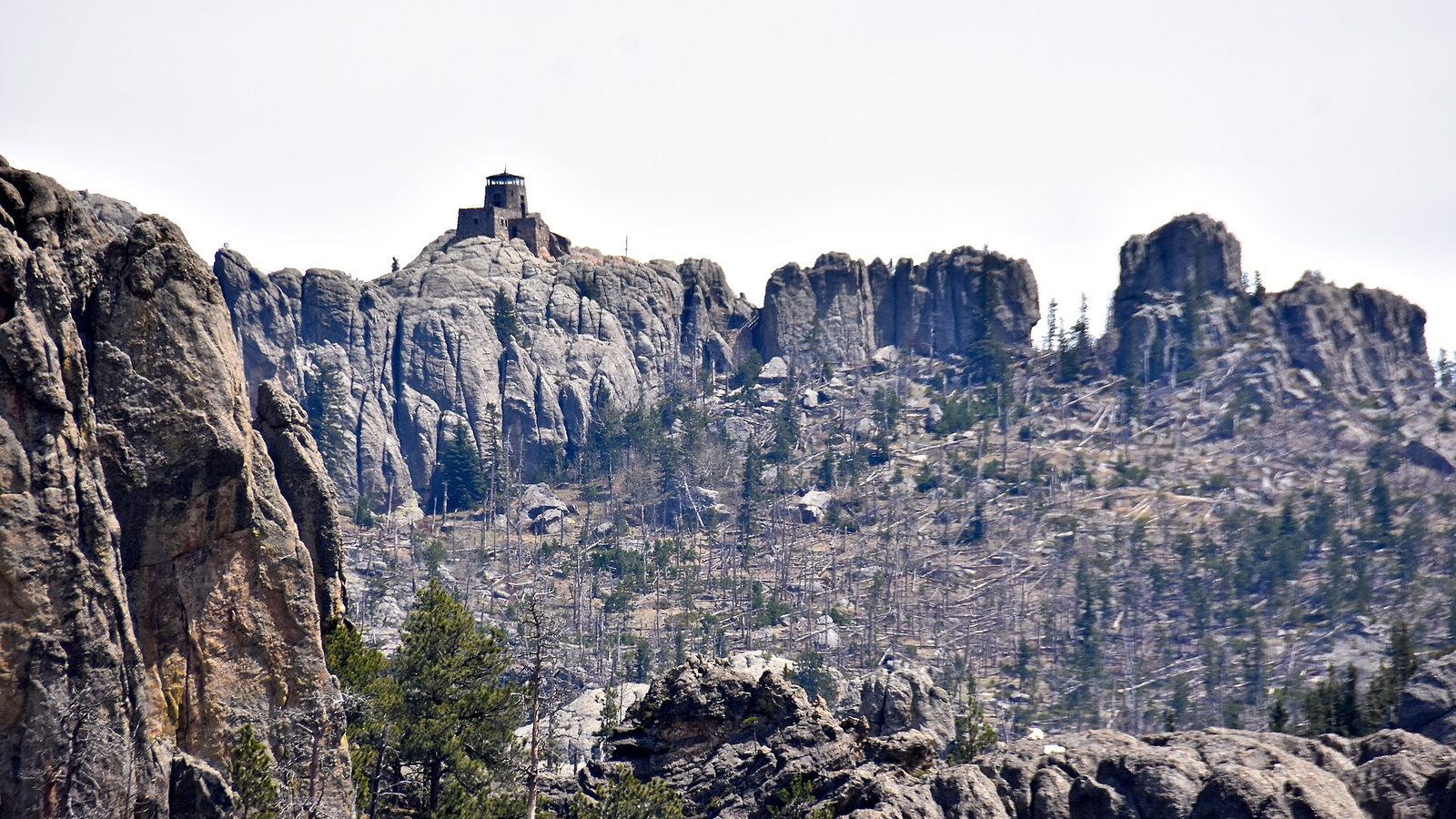
“Our Creation Story begins in the Black Hills,” Lori Lea Pourier, an Oglala Lakota and president of First Peoples Fund, wrote in a 2019 essay. In an Oglala account told by the tribal historian Wilmer Mesteth, people came up onto the earth through Wind Cave, a story told on the sacred sites page.
A Year Lived Around the Hills
Lakota have long called the Hills a meat pack or a safe, the 2003 study reports, and in 1875 Spotted Bear told a federal commission that the Hills were his people’s safe. Bands that wintered in the Hills, from November to April in the ethnographer Royal Hassrick’s account, kept mostly to the low ground near the edges, in the Red Valley and the sheltered pockets along the Hogback. Game wintered there too; in a story Young Bear retold, buffalo herds head into the Hills when the fast, dark clouds of late fall warn that winter is near.
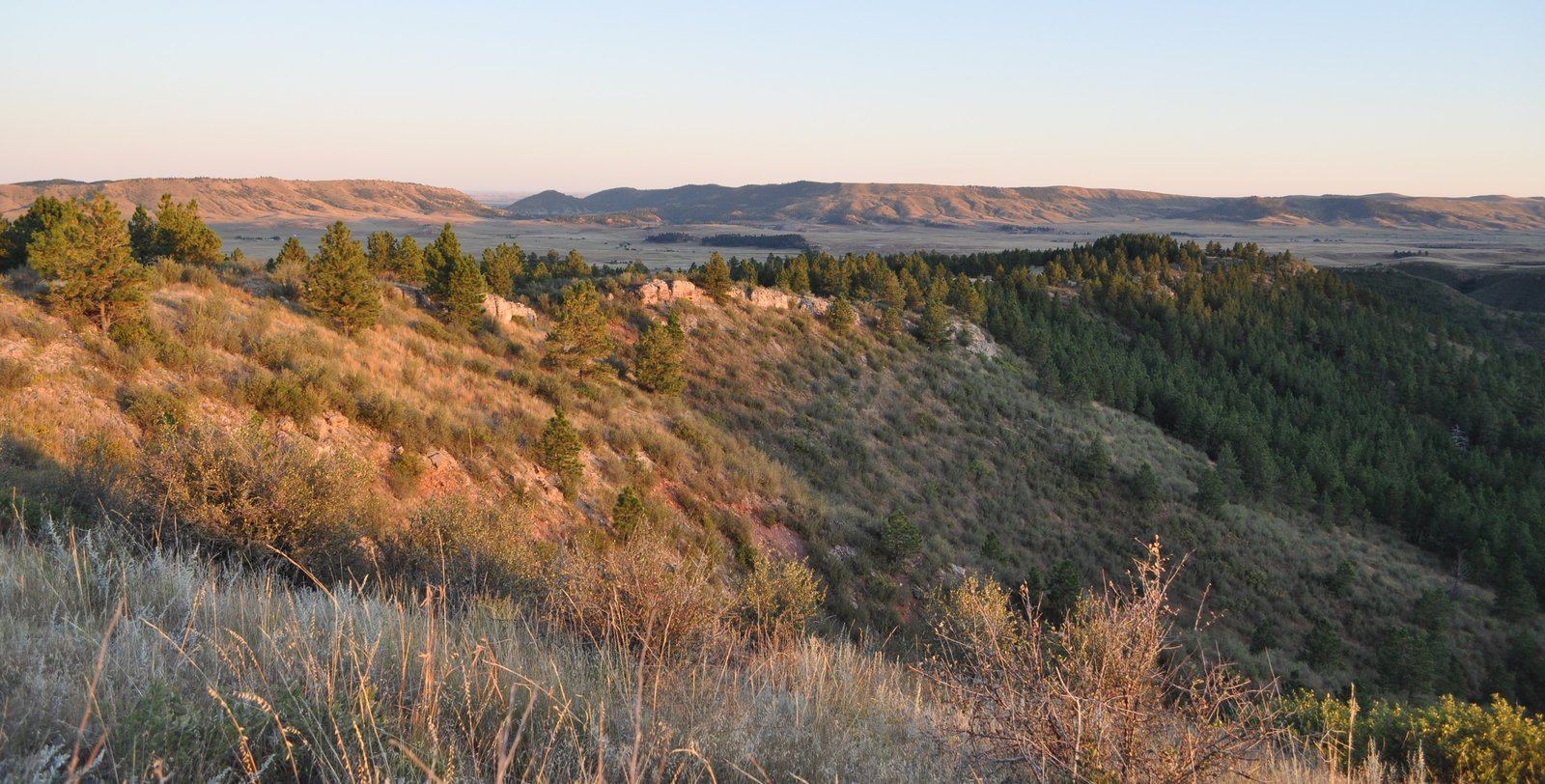
Spring drew camps up into the high interior. In late spring, Hassrick wrote, people went into the Hills for lodgepoles, berries, medicine plants and flint, and Standing Bear remembered the men felling the straightest trees for new tipi poles.
Bands whose winter camps lay far off, on the Missouri, the Platte or the Powder, came less often, and some seldom came at all. Karen Lone Hill wrote that the Seven Council Fires as a whole never lived in the Hills for long stretches, but came back every year for religious and social gatherings.
The Black Hills National Forest’s 2023 assessment says the whole of the Hills is sacred to the tribes tied to them, and that tribal people return to some ceremony and gathering places every year as the seasons turn. “Every year, in all seasons, Lakota people go to Bear Butte to pray,” Charmaine White Face, coordinator of Defenders of the Black Hills, wrote to a Senate committee in 2003.
What Do the Stars Have to Do With the Hills?
In Lakota star knowledge, the earth and the sky mirror each other. “What we do down here impacts above,” Victor Douville, a Brulé Lakota elder who began teaching Lakota studies at Sinte Gleska University in 1971, said in 2016. Douville worked with Ronald Goodman there, gathering the teachings of elders and medicine people. Goodman’s Lakota Star Knowledge, first written as teaching material for Lakota students, is back in print from Sinte Gleska University.
In Goodman’s account, the sun crosses four Lakota constellations between the spring equinox and the summer solstice, and each one answers to a place in the Hills. Charlotte Black Elk, a Lakota scholar who wrote chapters for the book, described in passages the 2003 study quotes how a few devoted people from several Lakota bands kept pace with the sun each spring, reaching each place as the sun reached its stars, for ceremonies there. At Black Elk Peak (called Harney Peak until 2016), which Goodman links to the Pleiades, they went to “welcome the thunders back for another season of renewal,” she wrote. Next came the high prairies at the center of the Hills and a ceremony of peace and renewal. At midsummer the round reached Devils Tower, where the wider western Lakota camps came together for the Sun Dance, and in Goodman’s account councils followed at Bear Butte.
The thunders are still welcomed in spring. Alex White Plume, an Oglala, told a reporter in 2016 of a ceremony held in the Hills some time back “to cry the thunders back.” The Forest Service reported in 2026 that tribal members gather at Sylvan Lake on the spring equinox for the annual Welcome Back the Thunders ceremony, and that hundreds hike Black Elk Peak to leave prayer offerings.
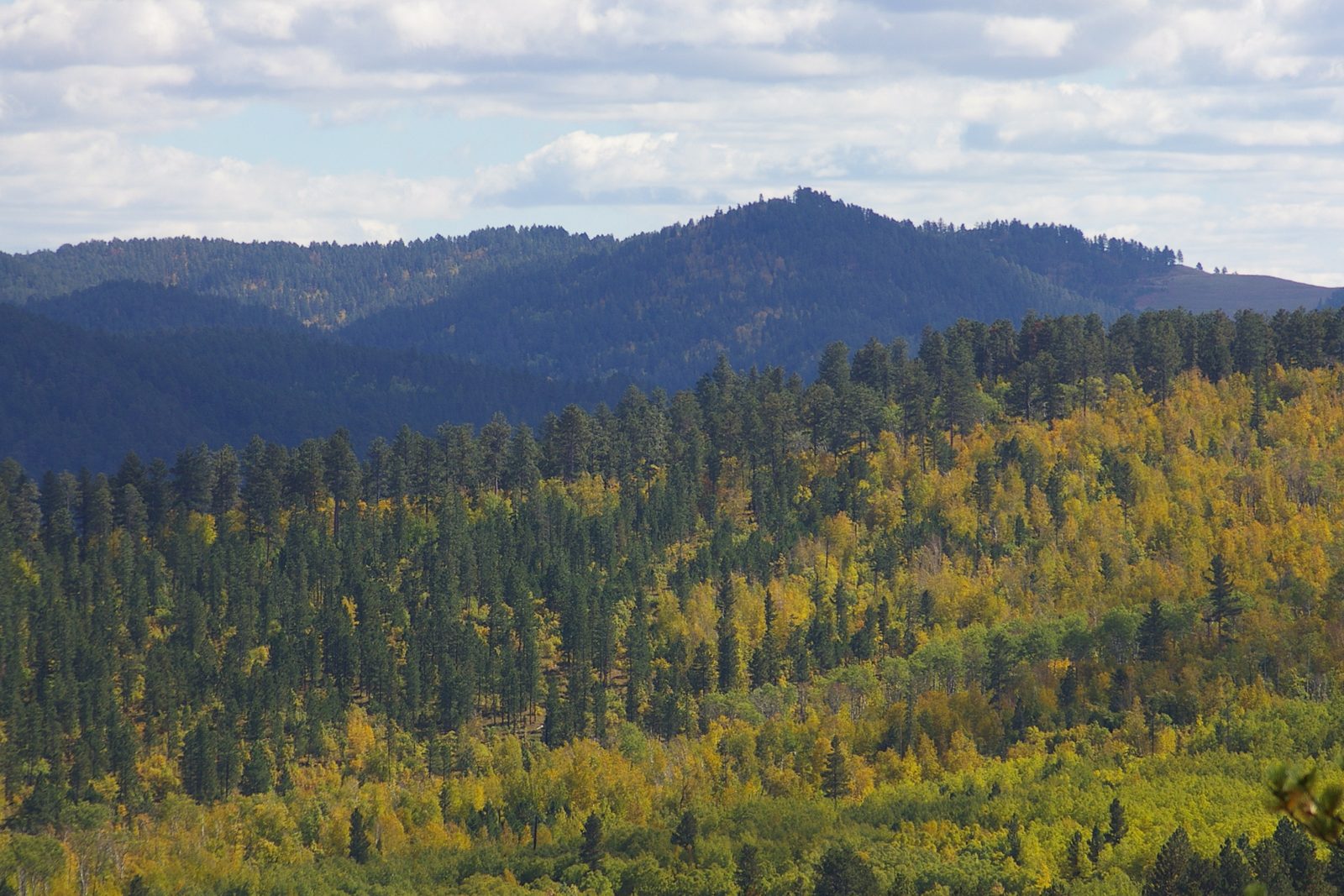
Goodman’s book also ties the Red Valley that circles the Hills, the Racetrack, to a ring of stars of the same name, also called the sacred hoop; in Oglala accounts by James LaPointe and Severt Young Bear, the valley is the track worn by a great race, told on the Red Valley page.
Old Knowledge or New?
Lakota teachers present this knowledge as old. In 1986 Charlotte Black Elk told a Senate committee of two buffalo robes, kept hidden until then, one mapping places in the Hills and the other the stars tied to them. Douville has said skeptics called Lakota star knowledge recently made up, and some writers, among them the historians Watson Parker and Donald Worster, argued in the 1980s and 1990s that the sacredness of the Hills was a modern invention serving political aims, chiefly getting the Hills back.
The 2003 study largely sides with the Lakota teachers. It ties Goodman’s book to the research behind that Senate testimony, and says some might even call the book a direct result of it. But it answers the skeptics with older records. In late September 1875, at a council with a federal commission sent to negotiate for the Hills, Red Cloud said his people looked on them as “the head chief of the land,” the commission’s report records. Crow Feather called them the heart of the land where he was born and raised. The chiefs bargained in the commissioners’ terms, asking support for their people seven generations ahead; the study reads “head chief” and “heart” as figures of speech with sacred weight, offered to listeners who would probably have shrugged at talk of holiness.
It also points to the scholar Linea Sundstrom, whose research traces the sacred standing of the Hills among many tribes back for centuries, long before the legal and political fights of the 1970s and 1980s. On Goodman’s book its verdict is mixed. The book draws new connections between sites, adds some new details and puts old ideas in modern language, yet the study found nothing in it that clashes, in principle, with stories written down earlier, and no sign that it was made up for a political goal.
Sacred to Other Nations Too
The Lakota are not the only people who hold the Hills sacred. For the Northern Cheyenne, Bear Butte is where the prophet Sweet Medicine received the Sacred Arrows. “Bear Butte is our Mount Sinai,” the tribe’s president told a House committee in 2014. The Arapaho, the 2003 study reports, look to Bear Butte as where their sacred pipe came to them, and the Kiowa, after a century in Oklahoma, kept traditions tying Devils Tower to how some of their holiest ceremonies began. Their history in the Hills is in Who Lived in the Hills First.
Not for Sale
The tribes have refused payment for the Hills, for reasons tied to their meaning. Oglala Sioux Tribe President Frank Star Comes Out told Buffalo’s Fire in 2025 that his people would never sell their holy lands for money, and that the tribes have told the United States since 1980: “The Black Hills Are Not For Sale.” The Hills were taken from the tribes in 1877 without the consent the 1868 treaty required; Gold, a Broken Treaty and Land Back traces how, and The 1980 Ruling and Land Back covers the 1980 award and what the tribes ask for instead.
Connected
- Sacred Sites: Bear Butte, Devils Tower and Wind CaveThe holy places of the Hills, and the emergence story at Wind Cave.
- Who Lived in the Hills FirstThe other nations of the Hills, and how the Lakota came to them.
- The Red ValleyThe Racetrack and the story of the great race.
- The Sun DanceThe ceremony at the end of the spring round, as tribes share it publicly.
- The 1980 Ruling and Land BackThe award the tribes refuse, and what they ask for now.
- Gold, a Broken Treaty and Land BackHow the Hills were taken, step by step.
- Granite, Rushmore and Crazy HorseTwo mountains of the Hills carved into giant figures, and what that has meant to the Lakota.
Further reading
- Lakota Star Knowledge: Studies in Lakota Stellar Theology (updated and expanded edition), Sinte Gleska University
- He Sapa Woihanble: Black Hills Dream, edited by Craig Howe, Lydia Whirlwind Soldier and Lanniko L. Lee, Living Justice Press
- Standing in the Light: A Lakota Way of Seeing, Severt Young Bear and R. D. Theisz (free online edition)
- “The Black Hills are not for sale”, Tim Giago, Indianz.com
- The Lakota Emergence Story, as told by Wilmer Mesteth, National Park Service
Sources
- My People, the Sioux. Luther Standing Bear, Houghton Mifflin, 1928 (Internet Archive copy).
- Standing in the Light: A Lakota Way of Seeing. Severt Young Bear and R. D. Theisz, University of Nebraska Press, 1994 (open-access edition, Fulcrum).
- The Home of the Bison: An Ethnographic and Ethnohistorical Study of Traditional Cultural Affiliations to Wind Cave National Park, Volume 1. Patricia C. Albers and others, University of Minnesota for the National Park Service, 2003 (online edition, NPS History).
- “Sioux.” Karen D. Lone Hill, in Encyclopedia of North American Indians, ed. Frederick E. Hoxie, Houghton Mifflin, 1996; as quoted in The Home of the Bison, vol. 1, p. 512.
- Wakpamni Lake Community. Wakpamni Lake Community Government, Oglala Sioux Tribe.
- “The Black Hills are not for sale”. Tim Giago, Indianz.com, 2020.
- Tim Giago, NF ’91, trailblazing journalist and champion for Native American news coverage, dies at 88. Nieman Foundation for Journalism at Harvard, 2022.
- He Sapa Tanyan Yahi / WELCOME TO HE SAPA. Lori Lea Pourier, Intercultural Leadership Institute, 2019.
- The Lakota Emergence Story. National Park Service, Wind Cave National Park.
- Report of the Commission Appointed to Treat with the Sioux Indians for the Relinquishment of the Black Hills, in Annual Report of the Commissioner of Indian Affairs for the Year 1875. Office of Indian Affairs, 1875 (University of Wisconsin Digital Collections).
- Black Hills National Forest Revised Forest Assessment: Cultural Resources. USDA Forest Service, Black Hills National Forest, 2023.
- Testimony regarding the protection of Bear Butte, a sacred place. Charmaine White Face, Coordinator, Defenders of the Black Hills, to the U.S. Senate Committee on Indian Affairs, 2003.
- For Lakota, Traditional Astronomy is Key to Their Culture’s Past and Future. Binesikwe Means, Global Press Journal, 2016.
- SGU Publishing. Sinte Gleska University.
- Lakota Star Knowledge: Studies in Lakota Stellar Theology. Ronald Goodman, Sinte Gleska University, 1992 edition as cited; as quoted and summarized in The Home of the Bison, vol. 1, pp. 505–507.
- “Black Hills Sacred Ceremonies of Spring.” Charlotte Black Elk, in Ronald Goodman, Lakota Star Knowledge: Studies in Lakota Stellar Theology, Sinte Gleska University, 1992 edition as cited; as quoted in The Home of the Bison, vol. 1, p. 507.
- Written statements of Charlotte Black Elk, in Sioux Nation Black Hills Act (S. 1453): Hearing Before the Select Committee on Indian Affairs, United States Senate, 1986, pp. 189–190; as summarized in The Home of the Bison, vol. 1, p. 505.
- Breaking: Black Elk Peak Soars Above The He Sapa, No Longer Harney Peak. David Rooks, ICT, 2016.
- Caring for the heart of everything that is. Preston Keres, USDA Forest Service, 2026.
- Statement of Llevando “Cowboy” Fisher, President, Northern Cheyenne Tribe, on H.R. 4350. House Committee on Natural Resources, Subcommittee on Indian and Alaska Native Affairs, 2014.
- Black Hills still not for sale, Oglala Sioux Tribe rejects FOIA request to unseal value. Talli Nauman, Buffalo’s Fire, published by ICT, 2025.
- United States v. Sioux Nation of Indians, 448 U.S. 371. Supreme Court of the United States, 1980 (Legal Information Institute, Cornell Law School).
Last reviewed: