Connections
Granite, Rushmore and Crazy Horse
In 2020, Julian Bear Runner, who was president of the Oglala Sioux Tribe at the time, told the Argus Leader that the carvings should come off Mount Rushmore, though not by blasting, which he said would hurt the land further, Voice of America reported. The mountain has been blasted before: more than 400,000 tons of rock came off it while the faces were carved, a National Park Service geology report says. Two mountains in the Black Hills, Hé Sápa, have been cut into giant figures, Mount Rushmore and Thunderhead Mountain, where Crazy Horse Memorial is still being carved. One thread runs between them: why sculptors came to these mountains, what the stone allowed, and what carving them has meant to the Lakota.
A Mountain That Already Had a Name
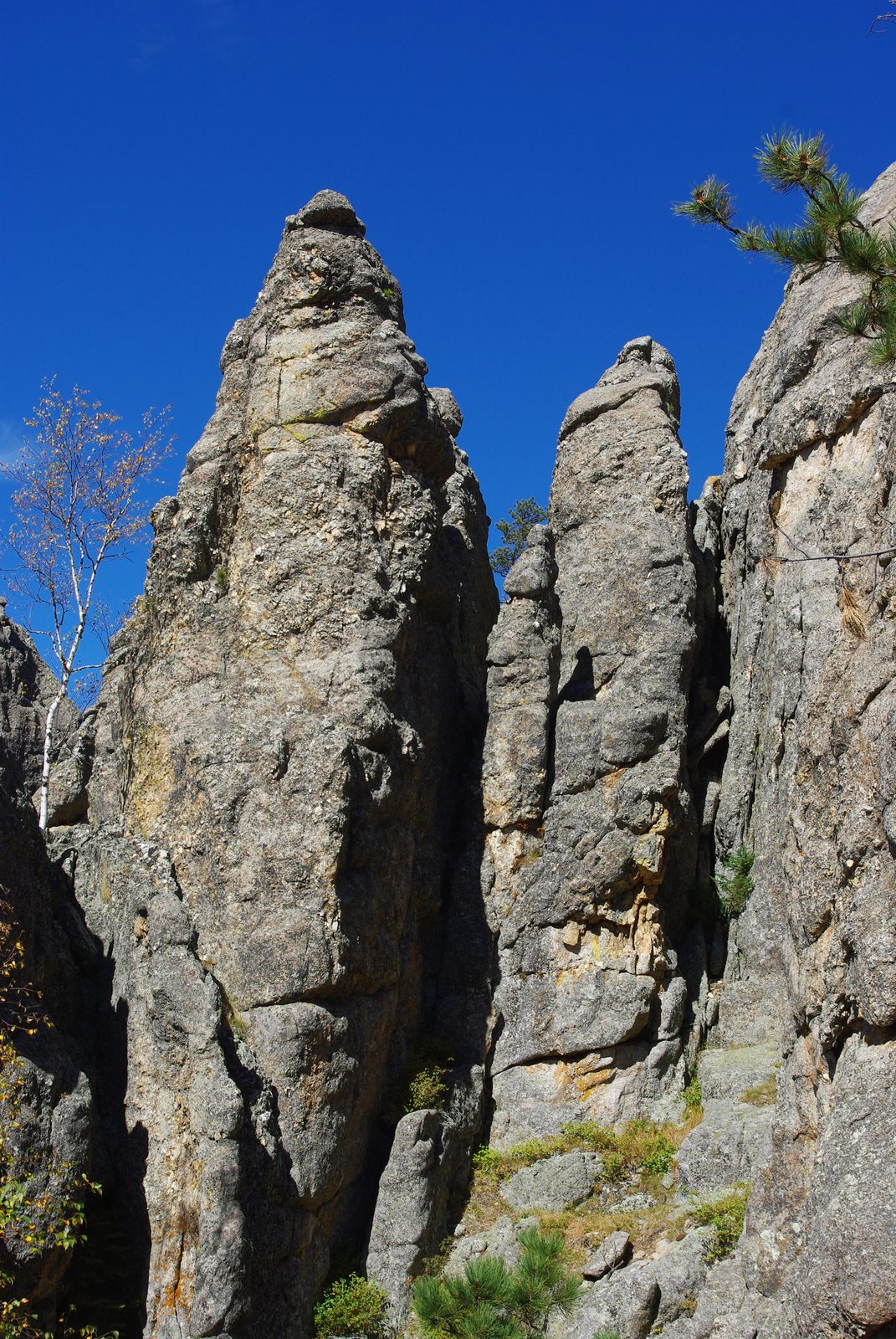
Mount Rushmore had a Lakota name before it had faces: the Six Grandfathers, as ICT and the Society of Architectural Historians’ encyclopedia of American buildings both record it in English. Christina Rose’s 2013 account for ICT places the Lakota objection in the act of cutting the mountain, not only in the faces that resulted. Mount Rushmore lies in the Hills, which Lakota elders and writers call a center and a holy place (see Hé Sápa: Why the Hills Matter), on land the 1868 treaty set apart for the tribes; the 1877 Act took the Hills without the consent the treaty required.
Harold Frazier, chairman of the Cheyenne River Sioux Tribe, described Mount Rushmore as a “brand on our flesh” in 2020. That same summer Philimon Two Eagle, head of the Sicangu Treaty Council and a Brulé Lakota, likened the Black Hills to an altar, a place of prayer for his people over thousands of years. In the Park Service’s National Register files, a 1984 photograph of the carving is titled “Shrine of Democracy at Mount Rushmore, South Dakota.” The name speaks to what the faces honor. It says nothing of the mountain they were cut from.
Tribal members do not all agree. In 2020 Voice of America found that most of the tribal people it interviewed favored keeping the carving as a way to educate; the views on both sides are followed on Mount Rushmore and Crazy Horse Memorial.
Why Was Rushmore’s Granite Chosen?
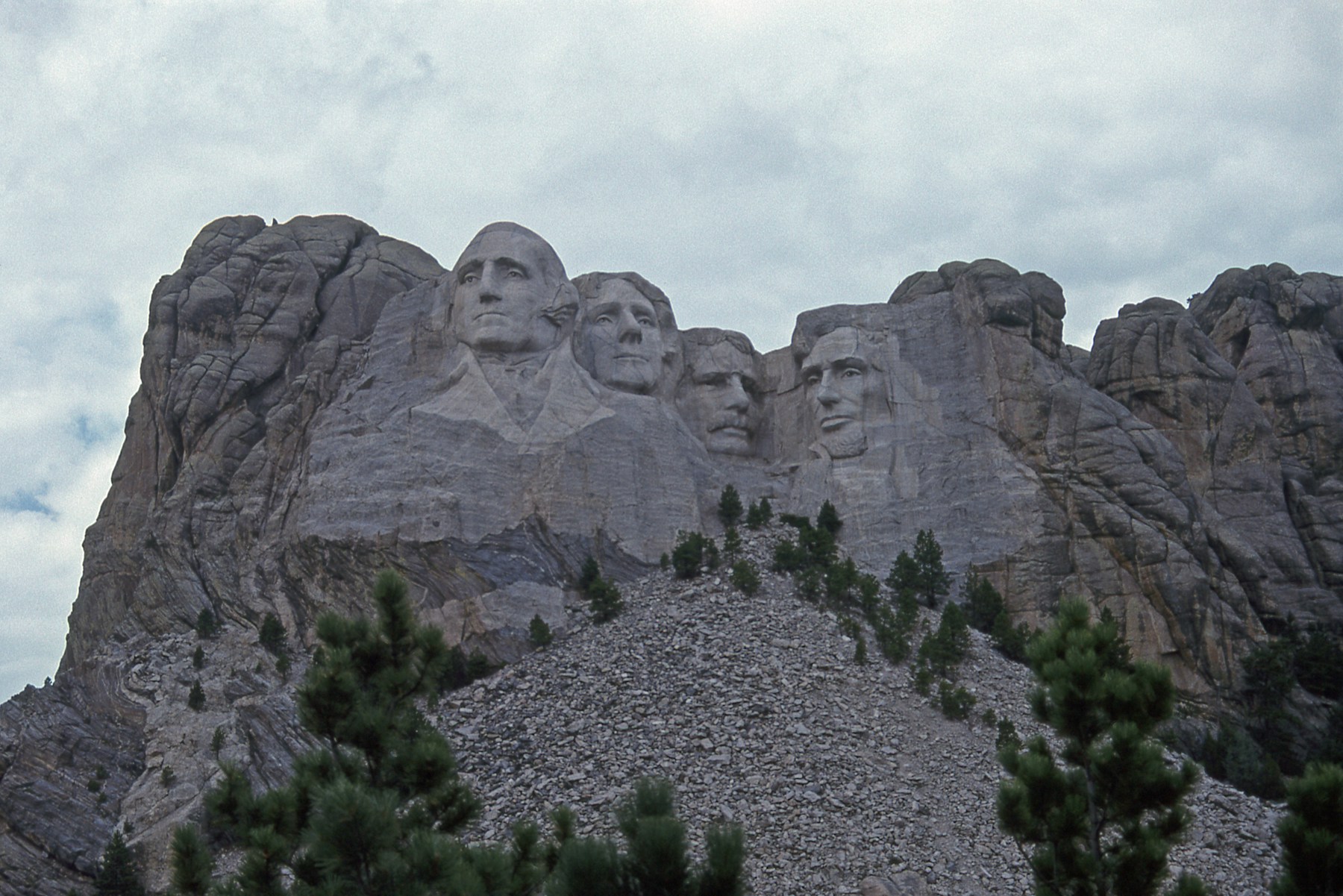
Rushmore’s granite was chosen because it was sound. Two things counted in its favor, in the Park Service’s account: the cliff looks southeast, into good light, and the rock is a single body of fine, even-grained granite with few cracks, big enough for the whole sculpture. Erosion takes about 1 inch off that granite every 10,000 years, by the Park Service’s estimate. The rock is the Harney Peak Granite, about 1.7 billion years old by the dates the U.S. Geological Survey lists. Older figures put it nearer 1.6 billion, in a USGS study of 1973 and on a Park Service web page. Black Elk Peak (called Harney Peak until 2016) has a new name, but the rock keeps the old one, as The Granite Core explains.
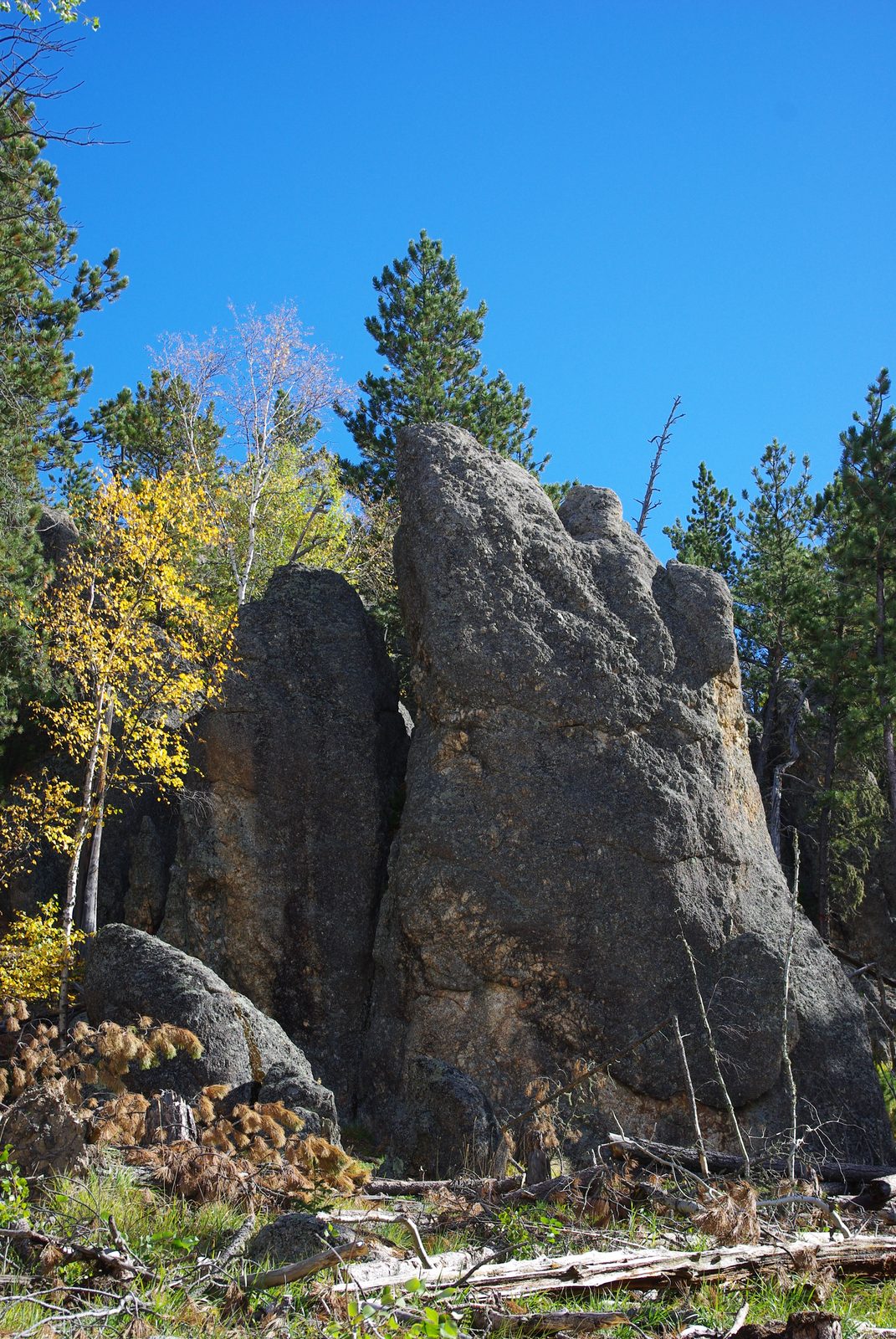
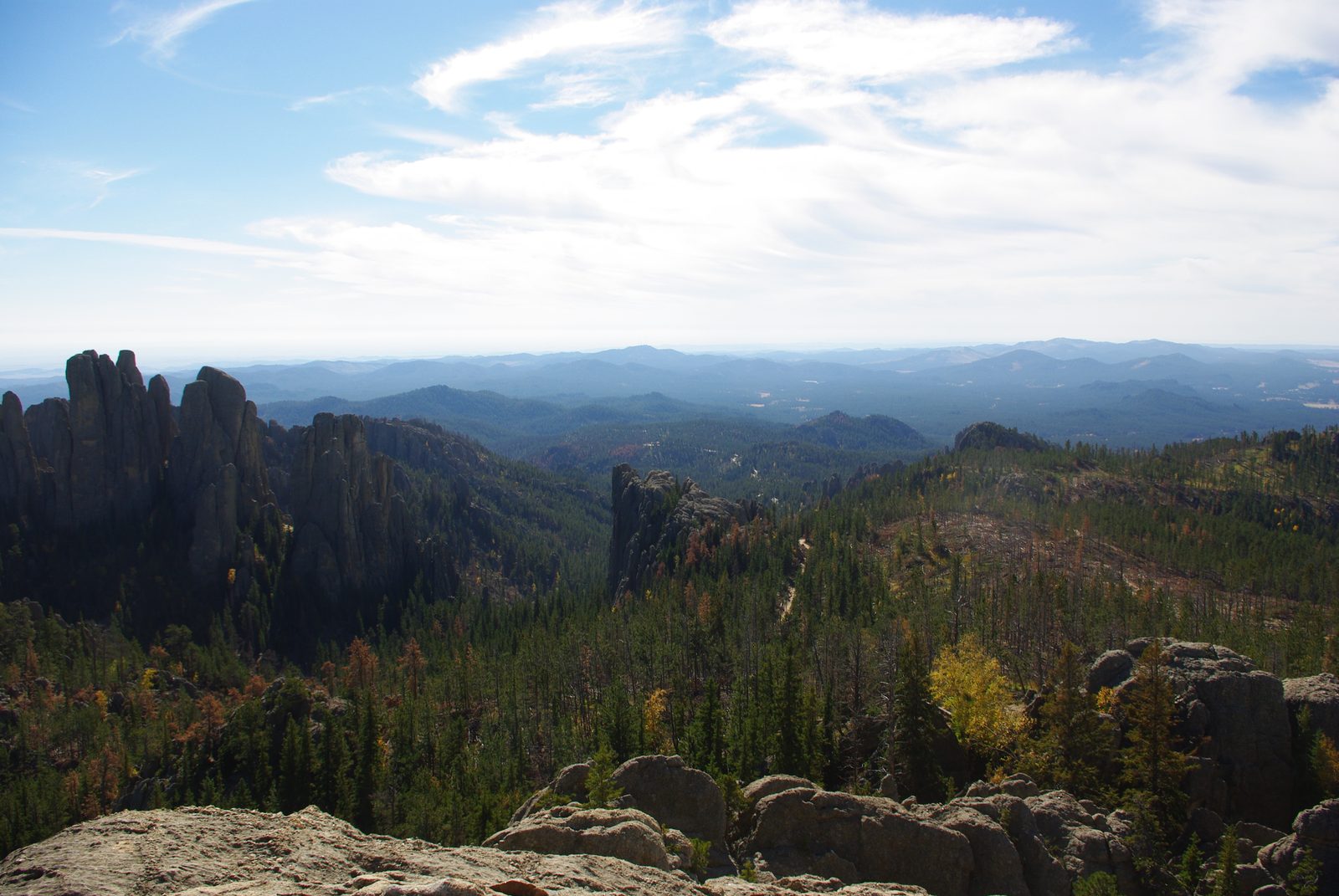
The first plan pointed somewhere else. Doane Robinson, South Dakota’s state historian, first hoped for figures on the Needles, a cluster of granite spires. Gutzon Borglum turned them down over “the fragility of the pillars,” Michelle L. Dennis writes for the Society of Architectural Historians. At the Needles, steep cracks that geologists call joints cut the granite into columns, the opposite of the nearly unbroken block found at Rushmore.
Even that block is not seamless. Veins of pale pegmatite run through the carving, and the Park Service says those veins crack more easily than the granite that holds them. Its geology report divides the faces into 21 blocks, outlined by pegmatite and by fractures, and instruments on the rock check them for any shift. Dynamite cleared much of the rock, Dennis notes, until only 3 to 6 inches stood between the blasting and the finished surface. Carving began on October 4, 1927, weeks after the dedication on August 10. The original plan showed the presidents to the waist, a design never carried out; work ended in October 1941, months after Borglum died on March 6.
Thunderhead Mountain and Henry Standing Bear
Crazy Horse Memorial began as a Lakota answer to Rushmore. On November 7, 1939, by the Memorial’s timeline, Henry Standing Bear, a Brulé Lakota, wrote to enlist the sculptor Korczak Ziolkowski. The point, in a line from his 1939 letter that ICT quotes, was that “the red man has great heroes, too.” In 1946, the Memorial says, the two men found their mountain, Thunderhead, 600 feet high, between Hill City and Custer, and the first blast, on June 3, 1948, removed 10 tons of rock. The figure is Crazy Horse (Tȟašúŋke Witkó), the Oglala Lakota leader.
The mountain’s rock is less well known. The Memorial calls it pegmatite granite, but no federal or state geologic source naming the rock of Thunderhead Mountain could be found, so it cannot be assumed to be Rushmore’s granite. Whatever it is, the rock has shaped the sculpture. Dennis writes that seams and cracks have made the carvers stray from the figure Ziolkowski first modeled, and in 2019, by the Memorial’s account, its crew set stainless steel dowels where the carving needed bracing.
Tribal members disagree about this carving too, as Mount Rushmore and Crazy Horse Memorial sets out. Standing Bear asked for it, and Whitney Rencountre, a Dakota who leads the Memorial’s foundation, said in 2026 that it aims to carry many tribes’ histories. Some of Crazy Horse’s relatives object to the cutting itself. Elaine Quiver, a descendant, told Voice of America in 2003 that the Hills were for enjoying and for prayer, and “it wasn’t meant to be carved into images,” as Smithsonian Magazine quotes her. The Encyclopedia of the Great Plains gives the view of Virginia Driving Hawk Sneve, a Rosebud Sioux Tribe writer, that Lakota people would prefer Crazy Horse’s likeness “cloaked in faceless anonymity”; the entry is undated, and the work of hers it lists is They Led a Nation (1975). Tim Giago, an Oglala journalist, faulted the Memorial in 2018 for having no traditional Lakota elder as an adviser.
Size and Finish Dates: The Claims and the Record
Claims for Crazy Horse Memorial run ahead of the record. The Memorial calls its work “the world’s largest sculptural undertaking,” and the Encyclopedia of the Great Plains says it will be the largest sculpture carved in the round, ten times the size of Rushmore. Those describe a plan. As of September 2026, Cowboy State Daily reported, Crazy Horse’s face had been finished in 1998 and his left hand in 2024, while the horse’s head was still emerging. The face is 87 feet 6 inches high, the Memorial says; Rushmore’s faces are about 60 feet high, by the Park Service’s figures.
Forecasts are softer still. In September 2026 Rencountre put the right third of the mountain about 10 years away, provided the money lasts and the work keeps up its speed, and the same report gave the center another 15 or 16 years; the mountain, he added, “will be completed.” In 2012 ICT, going by the Memorial’s own website, reported no target date for finishing the carving, and Ziolkowski once guessed it might take 100 years. Seventy-eight years after the first blast, the parts reported finished are the face and one hand.
At Rushmore the work now is keeping, not carving. Ice is one of the main forces wearing the faces down: water that freezes inside a crack takes up more room and, over the years, pushes the crack open. The Park Service’s geology report describes a yearly check of the faces, in which the crew patches the cracks it finds and seals them against water, now with silicone, in granite the sculptors chose because it had so few.
Connected
- The Granite Core: Black Elk Peak and the NeedlesThe Harney Peak Granite, its age, and why the Needles break into spires.
- Mount Rushmore and Crazy Horse MemorialThe history of both monuments and the full range of tribal views.
- Hé Sápa: Why the Hills MatterWhat the Hills that hold both carvings mean to the Lakota.
- The 1876 War and the Taking of the HillsHow the land under both carvings was taken in 1877.
- Custer, South DakotaThe town at the south end of the granite, near Thunderhead Mountain.
Further reading
- Native History: Construction of Mount Rushmore Begins, Christina Rose, ICT
- What’s Going on With the Crazy Horse Memorial?, ICT Staff, ICT
- Native Americans Angry Over Trump Visit to Mount Rushmore, Cecily Hilleary, Voice of America
- Mount Rushmore National Memorial, Michelle L. Dennis, SAH Archipedia
- Mount Rushmore National Memorial Geologic Resource Evaluation Report, National Park Service
Sources
- Native Americans Angry Over Trump Visit to Mount Rushmore. Cecily Hilleary, Voice of America, 2020.
- Native History: Construction of Mount Rushmore Begins. Christina Rose, ICT, 2013.
- Mount Rushmore National Memorial. Michelle L. Dennis, SAH Archipedia, ed. Gabrielle Esperdy and Karen Kingsley, University of Virginia Press, 2012–.
- Crazy Horse Memorial. Michelle L. Dennis, SAH Archipedia, ed. Gabrielle Esperdy and Karen Kingsley, University of Virginia Press, 2012–.
- Mount Rushmore National Memorial Geologic Resource Evaluation Report. National Park Service, 2008.
- Geologic Activity. National Park Service, Mount Rushmore National Memorial.
- Preservation. National Park Service, Mount Rushmore National Memorial, 2023.
- How Big Are The Heads? National Park Service, Mount Rushmore National Memorial, 2023.
- Geolex: Harney Peak Granite, significant publications. U.S. Geological Survey, National Geologic Map Database.
- Water Resources and Geology of Mount Rushmore National Memorial, South Dakota (Water-Supply Paper 1865). J.E. Powell, J.J. Norton and D.G. Adolphson, U.S. Geological Survey, 1973 (NPS History copy).
- Precambrian Formations. South Dakota Geological Survey.
- Shrine of Democracy at Mount Rushmore, South Dakota. National Park Service records (Record Group 79), National Archives, DocsTeach.
- Pictorial Timeline. Crazy Horse Memorial (the Memorial’s own account).
- The Mountain. Crazy Horse Memorial (the Memorial’s own account).
- The Memorial to Crazy Horse Has Been Under Construction for Almost 70 Years. Smithsonian Magazine.
- Crazy Horse Memorial. Amy Scherer, Encyclopedia of the Great Plains, ed. David J. Wishart, University of Nebraska–Lincoln.
- What’s Going on With the Crazy Horse Memorial? ICT Staff, ICT, 2012.
- Visiting Crazy Horse Memorial: Larger Than Mount Rushmore and Still Under Construction. Kate Meadows, Cowboy State Daily, 2026.
- Not all Lakota people are happy with the ‘memorial’ to Crazy Horse. Tim Giago, Indianz, 2018.
Last reviewed: