Connections
Giant Crystals, Wartime Minerals and Keystone
At the Etta Mine, about 1 mile south of Keystone, miners sorted lithium ore from waste rock by hand. The ore was spodumene, a lithium mineral, and its crystals there were coarse enough to sort by hand, a 1964 U.S. Geological Survey report says. Crystal size decided what counted as ore. Until World War II, a 1955 USGS report explains, spodumene was mined only where miners could pick it out by hand, and that usually took crystals at least 1 foot long. This thread runs from the slow-cooling melt that grew such crystals under the southern Black Hills, through the minerals two world wars wanted from them, to Keystone and the Etta.
How Did Crystals Grow Big Enough to Mine?
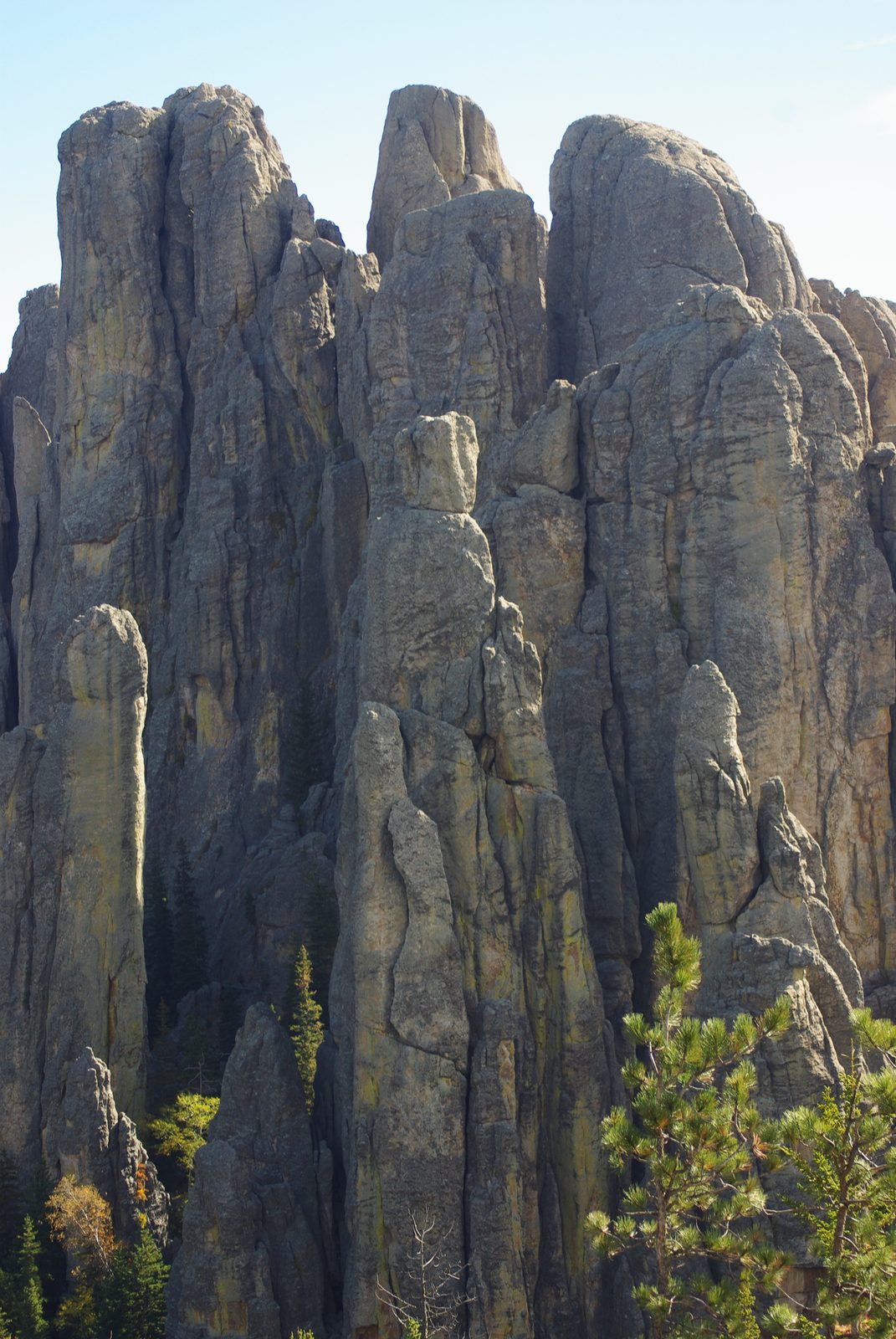
They grew slowly, far below the surface. Pegmatite, granite-like rock with outsized crystals, is coarse because it cooled slowly while deep underground, the National Park Service explains, and a 1982 USGS study finds that the southern Hills' pegmatites and the Harney Peak Granite share a single magma system. That granite, about 1.7 billion years old and the rock of Black Elk Peak (called Harney Peak until 2016), is described on The Granite Core.
Water, lithium, beryllium and boron set the melt apart: earlier Survey work, as the 1964 report sums it up, favors a melt that carried unusual amounts of all four. Each pegmatite hardened from its edges inward, and as it did, its minerals sorted into zones, from a finer-grained outer wall to a core that, in many of them, is solid quartz.
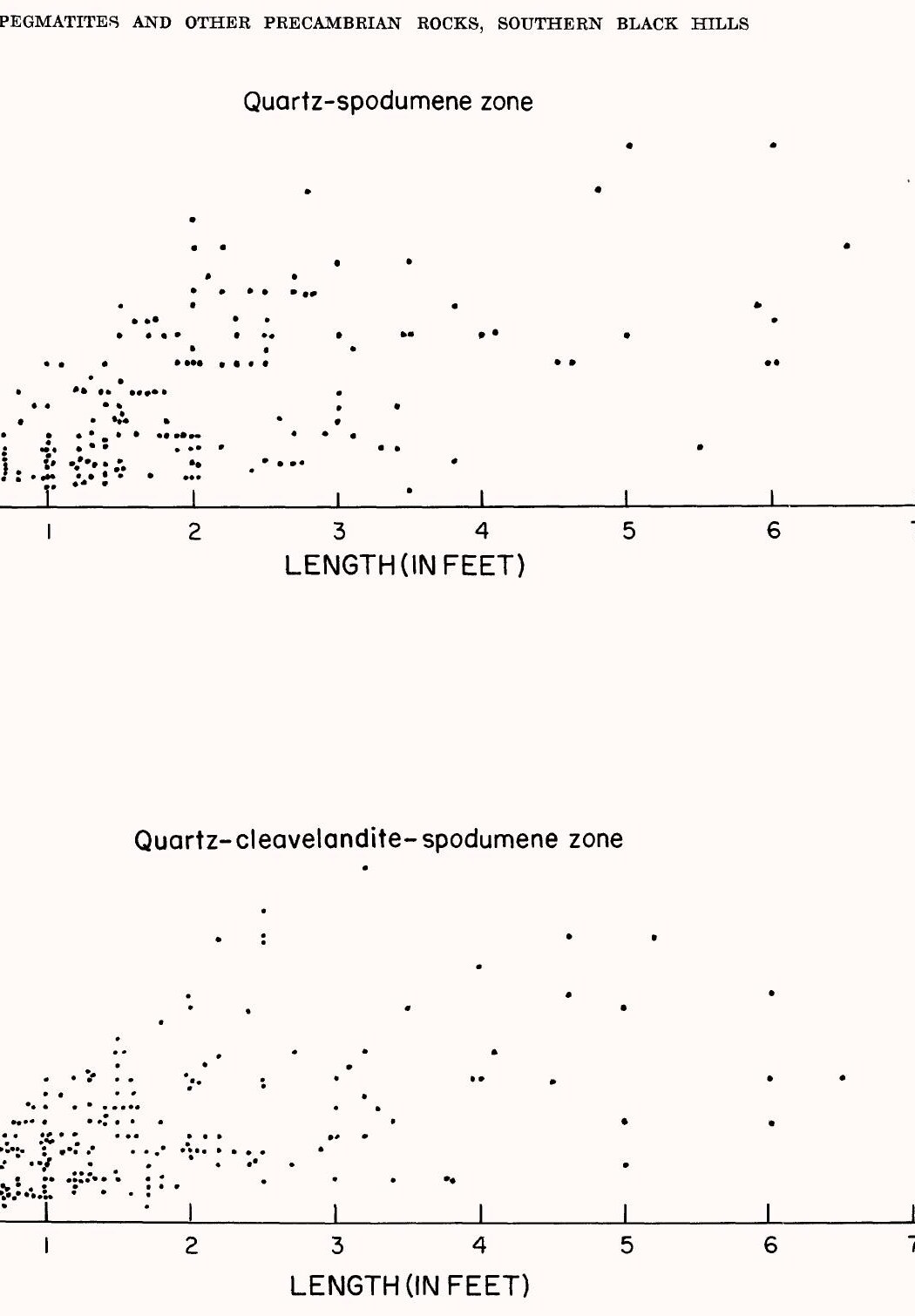
Miners followed the zones. Only about 1 percent of the roughly 22,000 pegmatites in the southern Hills are zoned, the 1982 study estimates, yet nearly all the mining has gone to them, and one cluster of them lies near Keystone. At the Etta, three zones rich in spodumene made up most of the pegmatite, and the biggest crystal on record there had an exposed length of 47 feet.
Which Minerals Did the Wars Want?
A 1953 USGS report names four: sheet mica, lithium, beryllium and tantalum. To help the country get more of them, 17 members of the Survey spent stretches of time between 1939 and 1945 studying the Black Hills pegmatites, partly with the Bureau of Mines and federal agencies charged with raising wartime output. The report ranks the Keystone district, along the northeast and east sides of Black Elk Peak, among the country's biggest lithium producers since 1898; the Hills' earlier mica and tin finds are traced on Gold and the Other Minerals.
"In modern warfare mica is truly indispensable," the Bureau of Mines wrote in 1942, because military communications equipment needed high-grade sheet mica. From December 1942 until April 1, 1945, a federal buyer paid a subsidy price for Black Hills mica of "strategic" quality. Many sheet mica deposits in the southern Hills had not been found before the war began, the 1982 study adds. When the wartime buying stopped, mica mining fell off steeply, the 1964 report says, and sheet mica stayed a minor product until the government started buying it again in 1952.
Wartime demand sent prospectors and geologists looking for beryl, the ore of beryllium, a USGS geologist wrote in 1950. He gave one of its uses in general terms, not as a war use: a little beryllium, 2 percent, turns copper into a metal tough enough for special springs and for tools that strike no sparks. Black Hills beryl production reached its wartime high, 306 tons, in 1944. Keystone supplied part of the wartime beryl: at the Bob Ingersoll mine, one mass mined in 1943 and 1944 gave more than 100 tons. One crystal from a second dike there reportedly gave 33 tons of beryl on its own.
Tantalum's tie is clear for the nation and thin for Keystone. During World War II, the demand for tantalum parts in electronic tubes rose steeply because the armed forces needed communications equipment, a 1962 Bureau of Mines survey says. The 1953 report lists the Etta, Bob Ingersoll, Hugo and Peerless mines among the Hills' largest sources of tantalum ore, but it does not say what their tantalum was made into.
Lithium, From One War to the Next
Lithium's wartime record goes back to the first world war. The country's lithium production rose during World War I, the 1955 report says, and those years were among the Etta's more productive ones; alkaline storage batteries were probably a large part of the reason. Rescue gear drove most of the extra demand in World War II: some of the Navy's and the air forces' inflatable rescue equipment was filled with hydrogen carried in lithium hydride. The report does not trace the Etta's spodumene into those uses. The 1964 report puts the Black Hills' best wartime year for spodumene at 1943, with 4,303 tons.
The second war also loosened the grip crystal size had on lithium mining. Output rose sharply in the war and peaked in 1944, and the 1955 report gives most of the credit to new ways of treating ore, which could concentrate lithium minerals too fine-grained to pick out by hand. Once mills could do that, a deposit no longer needed coarse crystals to be worked. Even so, the same report still counted a significant share of the Etta's remaining lithium as ore that hand sorting could recover. For many years, the 1964 report says, the Etta was "the chief source of the world's lithium." Bigger deposits elsewhere overtook it, mostly in the 1950s.
Two minerals fit the wartime story less well. The 1964 report counts feldspar among the Hills' wartime minerals, but the 1953 report leaves it off its four, and feldspar's biggest years came just after the war, in 1945 and 1946. Near Hill City, the war's call for tin brought some of the district's old mines back to work in 1942, but they had little to show when they shut in 1944. At the Etta, tin belonged to the 1880s.
Keystone and the Etta
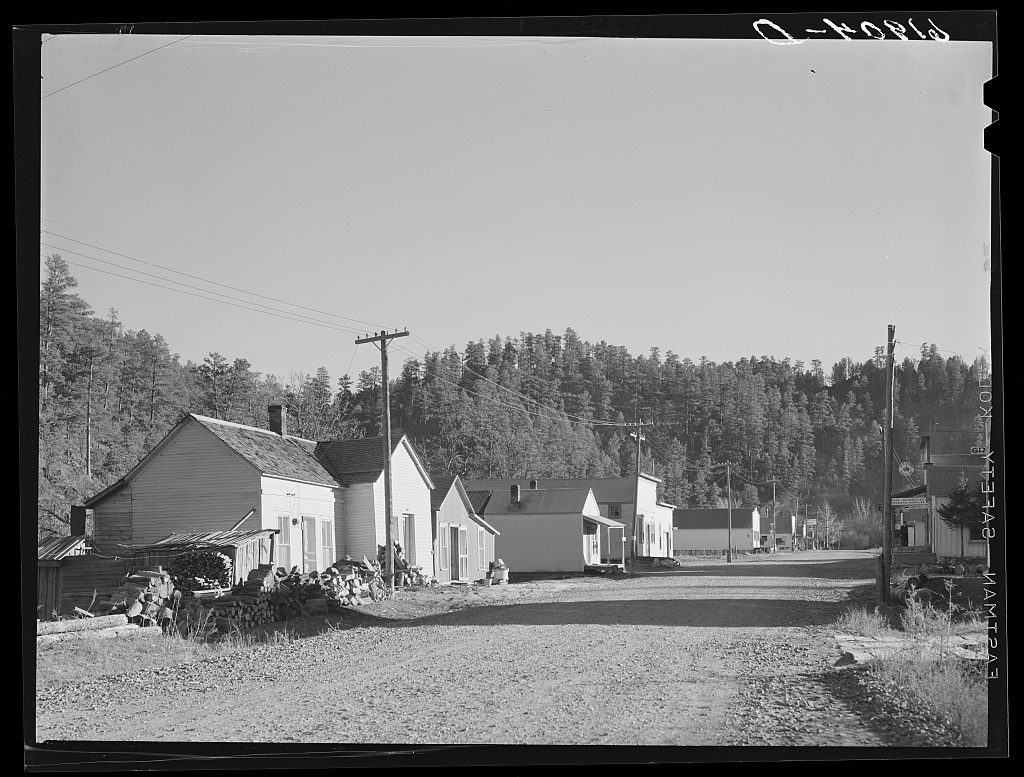
Keystone's name comes from a gold mine, not from crystals. William Franklin, called Rocky Mountain Frank, and two partners located the Keystone Mine in 1891, and the town was named for it, says a 2005 marker of the Keystone Area Historical Society; a 1974 USGS review of Black Hills gold lists the Keystone, with the Holy Terror, in its table of gold production. The pegmatites reach the town through the Etta, where mica and tin came first. Spodumene mining began there in 1898, the year from which American lithium mining is usually dated, the 1964 report says, and it went on until the mine closed on April 29, 1960. Among its workers was a teenage Nick Clifford, whose move from the Etta to Mount Rushmore is told on Keystone, South Dakota.
The 1964 report's account of the Etta rests on fieldwork that USGS geologists L. R. Page and J. B. Hanley did there in 1945, the last year of the war, and on brief visits from 1939 to 1960.
Connected
- The Granite Core: Black Elk Peak and the NeedlesThe Harney Peak Granite and the pegmatites of the same magma system.
- Gold and the Other MineralsMica, feldspar, lithium and tin among the Hills' other minerals.
- Keystone, South DakotaThe gold town named for the Keystone mine, 1 mile north of the Etta.
- Custer, South DakotaThe mica, feldspar and beryl mines at the south end of the granite.
- Hill City, South DakotaThe tin district whose old mines reopened briefly for the war.
- Tinton, South DakotaThe northern Hills pegmatite camp of tin, tantalum and lithium.
Sources
- Geology and Mineral Deposits of Some Pegmatites in the Southern Black Hills, South Dakota (Professional Paper 297-E, James J. Norton and others). U.S. Geological Survey, 1964.
- Pegmatite Investigations 1942–1945, Black Hills, South Dakota (Professional Paper 247, Lincoln R. Page and others). U.S. Geological Survey, 1953.
- Lithium Resources of North America (Bulletin 1027-G, James J. Norton and Dorothy McKenney Schlegel). U.S. Geological Survey, 1955.
- Geology of the Harney Peak Granite, Black Hills, South Dakota (Open-File Report 82-481, J. A. Redden, J. J. Norton and R. J. McLaughlin). U.S. Geological Survey, 1982.
- Beryllium in Colorado (Trace Elements Investigations Report 88, Lincoln R. Page). U.S. Geological Survey, 1950.
- Marketing Strategic Mica (Information Circular 7219, Lawrence G. Houk; abstract as archived on OneMine). U.S. Bureau of Mines, 1942.
- Columbium and Tantalum: A Materials Survey (Information Circular 8120, William R. Barton; copy held by the Alaska Division of Geological and Geophysical Surveys). U.S. Bureau of Mines, 1962.
- Geologic Activity (Mount Rushmore National Memorial). National Park Service, updated 2024.
- Gold in the Black Hills, South Dakota, and How New Deposits Might Be Found (Circular 699, James J. Norton). U.S. Geological Survey, 1974.
- William and Jennie Franklin (Keystone Area Historical Society marker 6, 2005). Transcription and photographs on the Historical Marker Database.
Last reviewed: