Connections
From the Sun Dance to the Sundance Kid
In 1887, when a young man named Harry Longabaugh began his time in the jail at Sundance, Wyoming, for horse theft, the ceremony that Wyoming accounts place behind the town’s name had been an offense under federal rules for four years. The word had traveled. It began as the English name for a ceremony the Lakota share with other Plains nations, passed to a mountain, then to the town at the mountain’s foot, and at last, by way of the jail, to Longabaugh, who came out of it as the Sundance Kid. Each step can be traced, though not all equally well. The weakest, from the ceremony to the mountain, rests on Wyoming state accounts, not tribal ones.
A Ceremony, and an English Name for It
Ivan F. Starr’s 2013 column, signed from Oglala, South Dakota, lists the Sun Dance as one of the seven ceremonies of the Lakota. Dancers give up food and water, he explained, so they can call on help from beyond this life, which they then hand on to relatives still living. The words “Sun Dance” are English for a Lakota name, and a 2003 proclamation by Arvol Looking Horse, the 19th-generation Keeper of the Sacred White Buffalo Calf Pipe, writes the two side by side. In the Encyclopedia of the Great Plains, Dale Stover of the University of Nebraska at Omaha traces the English term to the Lakota one, which he translates as “sun gazing dance.” Not every nation names it for the sun: Stover writes that the Arapaho, Cheyenne and Blackfoot names point to the medicine lodge where the dancing takes place.
The Office of Indian Affairs drew up rules in 1883 that made the ceremony an offense; the Commissioner of Indian Affairs’ report for that year lists the sun-dance among the practices they forbade. The rules held until January 1934, when an order on religious liberty set them aside. On Pine Ridge, Starr wrote, the rules were put into force, and many Lakota answered by holding as many of their ceremonies as they could in hiding. The Sun Dance tells that history from tribal accounts, along with the 1934 order itself.
Was Sundance Mountain Named for the Sun Dance?
One Wyoming state source says so; no tribal source found explains the mountain’s name. That the ceremony was once held near the mountain has more support. Nicholas Black Elk, the Oglala holy man, described the area as an old Lakota Sun Dance ground, according to a 2003 study written for the National Park Service by a University of Minnesota team, which cites his interviews with the writer John G. Neihardt, published in 1984 as The Sixth Grandfather. A Wyoming State Library place-name entry also calls the mountain a Lakota sacred site, known from sources it does not name, and passes on an 1886 account of summers there, when people came to hunt, pick berries and hold the Sun Dance. The entry does not name that account’s author.
The naming is a separate question, and there the record is thinner. WyoHistory, the Wyoming State Historical Society’s online encyclopedia, traces the mountain’s name to “the ritual ceremonies” held on a site it calls sacred, without saying which ceremonies. The State Library entry, citing a Works Progress Administration source, names them: the mountain was “named from the sun dances and tribal ceremonies that were held there.” Neither source says who first called it Sundance Mountain, or when, and neither points to a tribal source for it. Amos Bad Heart Bull’s map, which records Lakota names for places in the Hills, gives the mountain no label of its own, the entry adds.
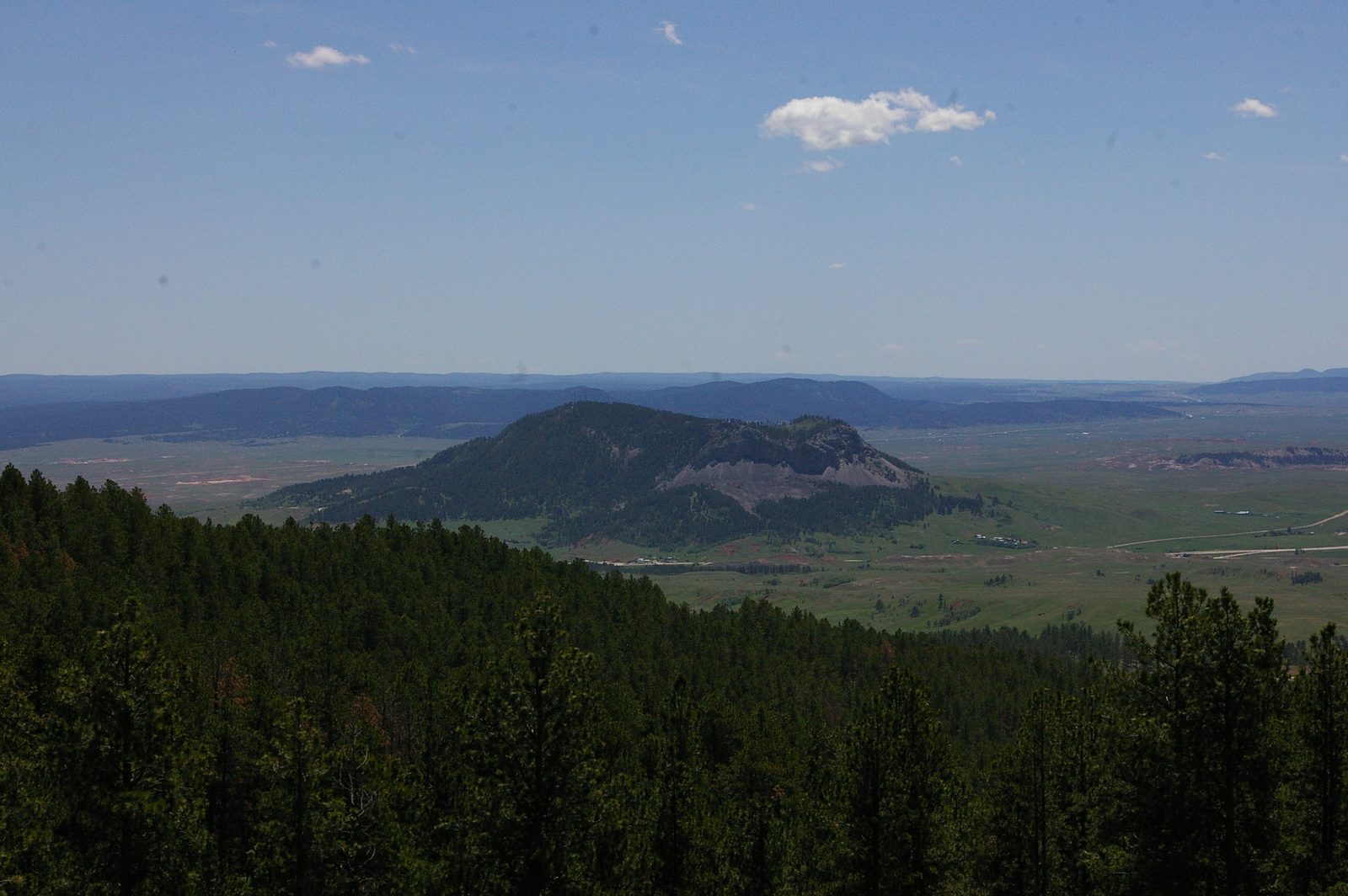
So the ceremony’s presence near the mountain has a tribal witness in Black Elk, as the 2003 study reports him, but the step from ceremony to name does not. That rests on state accounts alone.
From Mountain to Town to Outlaw
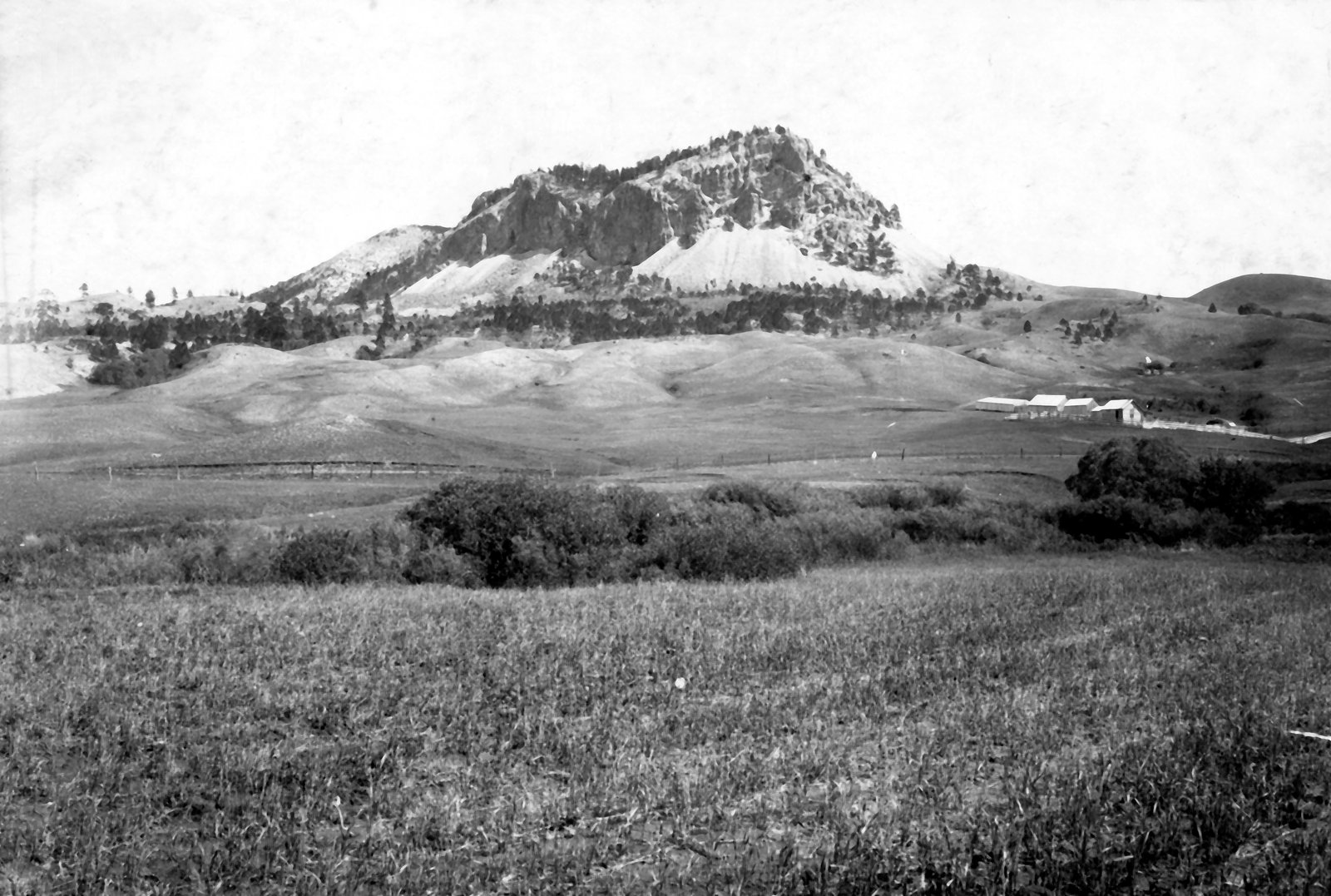
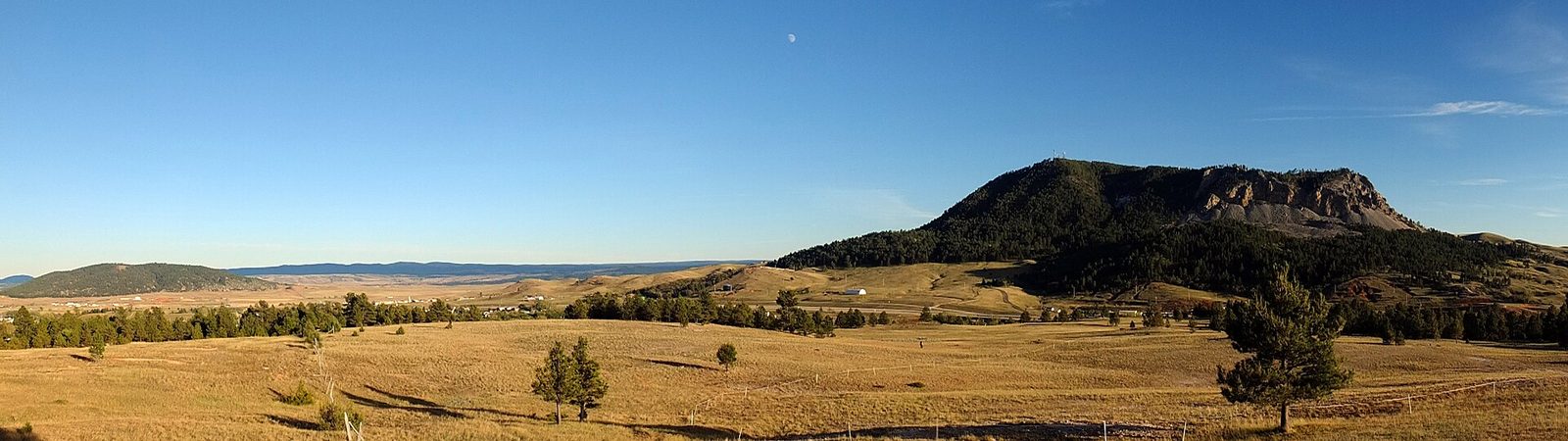
The next step is firmer. WyoHistory and the State Library entry agree that the town of Sundance took its name from the mountain. WyoHistory dates the town to 1879, and its choice as the seat of Crook County to 1885, the year the county was organized. N.H. Darton’s 1905 folio for the Geological Survey places the mountain immediately south of town, its summit clearing the nearby valley floors by more than 1,000 feet. Its rock was once molten; whether it cooled underground or erupted as a small volcano is still argued (see Devils Tower, Bear Butte and the Igneous Rocks of the Hills). The town grew on ground the 1868 treaty had left outside the reservation as “unceded Indian Territory”; the 1876 agreement, which the 1877 Act made law, took that territory from the tribes, along with their right to hunt there (see The 1876 War and the Taking of the Hills).
The last step is the best known. Stealing a horse, a saddle and a gun kept Harry Alonzo Longabaugh in the Crook County jail at Sundance from about 1887 to 1889. He was about 20 at the time, and his term in Sundance ran 18 months, by WyoHistory’s account. According to the City of Sundance’s police history, he served the sentence at hard labor, the territorial governor pardoned him when it ended, and some people began calling him the Sundance Kid afterward. The same history says his crimes and exploits made the town’s name known around the world. What became of him, from the Wild Bunch to Bolivia, is on Outlaws and the Sundance Kid. Through all of those years, the ceremony at the far end of his nickname was still an offense under federal rules.
What Those Who Hold the Ceremony Have Said
The one-word spelling is not only the outlaw’s: Starr’s 2013 column and Looking Horse’s proclamation both write the ceremony’s name as Sundance. But no tribal government, tribal college or tribal writer is on record, in any source found, about a mountain, a town or an outlaw carrying the name, and their view of it is not guessed at here.
What they have said in public concerns the ceremony itself and how it is kept. By Starr’s account, in the 1950s and 1960s the ceremony was run as a show for tourists, who paid at the gate to watch while the dancers drew pay, before it made “a significant come back” in the mid-1970s. By 2013, he wrote, almost every extended family community held it each year. In that proclamation, dated March 13, 2003, Looking Horse set the center of the Sun Dance aside for tribal participants alone, and wrote that there should be “no price tag allowed to participate in any of our Sacred Ceremonies.” Tribal members split over it in public, some backing it and others rejecting parts of it, as The Sun Dance describes. These are statements about the ceremony, not about the names that came from it.
One name in this story does come with a tribal source attached. To the Lakota, the Park Service says, the Belle Fourche River was the Sun Dance River. The State Library entry credits Nicholas Black Elk, the Oglala holy man, with saying the river had that name long ago because it passed near where the Sun Dance used to be held; it gives no date or source for his words and does not say where that was. Of the names in this story built on the ceremony’s English name, the river’s is the only one that any source found traces to Lakota use.
Connected
- The Sun DanceThe ceremony, the 1883 rules against it and its return, from tribal accounts.
- Devils Tower, Bear Butte and the Igneous Rocks of the HillsThe rock of Sundance Mountain, and why its origin is still argued.
- Sundance, WyomingThe Crook County seat that took its name from the mountain.
- Outlaws and the Sundance KidHarry Longabaugh’s term in the Sundance jail and the rest of his story.
- The 1876 War and the Taking of the HillsHow the unceded territory around Sundance was taken in 1876 and 1877.
- Belle Fourche, South DakotaThe town on the Belle Fourche River, which the Lakota called the Sun Dance River.
Further reading
- Looking Horse Proclamation on the Protection of Ceremonies, Arvol Looking Horse, ICT
- Mitakuye Oyasin: A response to the Looking Horse Proclamation, Tom Kanatakeniate Cook, for the elders of the Afraid of Bear/American Horse Sun Dance, ICT
- Ivan F. Starr: Sharing what I have learned about the Sundance, Native Sun News, republished by Indianz.com
- Sun Dance, Dale Stover, Encyclopedia of the Great Plains
Sources
- Ivan F. Starr: Sharing what I have learned about the Sundance. Ivan F. Starr, Native Sun News, republished by Indianz.com, 2013.
- Looking Horse Proclamation on the Protection of Ceremonies. Arvol Looking Horse, ICT (Indian Country Today), 2003.
- Sun Dance. Dale Stover, Encyclopedia of the Great Plains, University of Nebraska–Lincoln.
- Report of the Commissioner of Indian Affairs, 1883 (excerpt). Office of Indian Affairs, 1883; University of Idaho Library.
- Crook County, Wyoming. Nicole Lebsack, WyoHistory.org, Wyoming State Historical Society, 2014.
- Sundance (Wyoming place names). Wyoming State Library, Digital Collection Suite.
- Sundance Folio, Wyoming-South Dakota (Geologic Atlas of the United States, Folio 127). N.H. Darton, U.S. Geological Survey, 1905.
- Treaty of Fort Laramie (1868), transcript. National Archives.
- United States v. Sioux Nation of Indians, 448 U.S. 371. Supreme Court of the United States, 1980 (Legal Information Institute, Cornell Law School).
- Police Department: History. City of Sundance, Wyoming.
- A Place of Reverence for Native Americans. National Park Service, Devils Tower National Monument, updated 2025.
- The Home of the Bison: An Ethnographic and Ethnohistorical Study of Traditional Cultural Affiliations to Wind Cave National Park, Volume 1, by Patricia C. Albers and others. University of Minnesota for the National Park Service, 2003 (online edition, NPS History), pp. 468, 494; citing Black Elk in The Sixth Grandfather, ed. Raymond J. DeMallie, 1984, p. 366.
Last reviewed: