Connections
Black Hills Gold: The Jewelry and Its Legend
South Dakota’s law naming an official state jewelry opens by pointing to a court. Because it had been “judicially determined” that only jewelry manufactured in the Black Hills of South Dakota may be called Black Hills gold, the 1988 statute says, Black Hills gold is the state’s jewelry. The name tells where a piece was made, not where its gold was mined. That gap runs from the gold rush, through the grape leaves and their three colors, to a legend about a lost French goldsmith and the lawsuits that settled what the name means.
What the Name Means in Law
As the courts defined it, Black Hills Gold is jewelry manufactured in the Black Hills of South Dakota, wherever the metal came from. The rule comes from a 1980 federal court decision, in a suit three manufacturers in the Hills brought against three sellers from North Dakota and Minnesota that had been offering jewelry in a similar style, made outside the Hills, under the Black Hills name.
Judge Andrew W. Bogue of the federal district court in South Dakota would not hand the name to the three makers as their property. Three separate companies, he reasoned, could not be the single source a trademark needs. He treated the words instead as a statement of where the jewelry came from, which buyers understood to mean the Hills, and protected them under the federal law against false designations of origin. His order of May 1, 1980, barred the sellers from offering as Black Hills Gold “any item which is not manufactured in the Black Hills of South Dakota.” The order does not mention the Wyoming side of the range.
The Eighth Circuit Court of Appeals upheld the order on November 13, 1980, under the same federal law. In a footnote it observed, “Neither appellants nor appellees obtain all their gold in the Black Hills,” and it said the makers’ complaint concerned only where the jewelry was made. In 1983 the South Dakota Supreme Court turned away the makers’ follow-up suits in state court, holding them barred by the federal judgment. Five years later the legislature wrote the court’s definition into the state jewelry law.
The name had been fought over before. In 1947 one Hills maker registered Black Hills Gold as its own federal trademark, swearing that, as far as the registrant knew, no one else had a right to the words; in 1949 the Commissioner of Patents canceled the registration, finding that statement “false and fraudulent.” A rival maker won $25,000 from a jury, but the Eighth Circuit reversed the judgment in 1951. Paul Higbee’s 2006 account in South Dakota Magazine has a canceled patent and $25,000 paid. The court record shows a trademark on the name, canceled by the Commissioner, not a jury, and a reversed verdict; the opinion doesn’t say how the case ended.
From Placer Gold to Grape Leaves
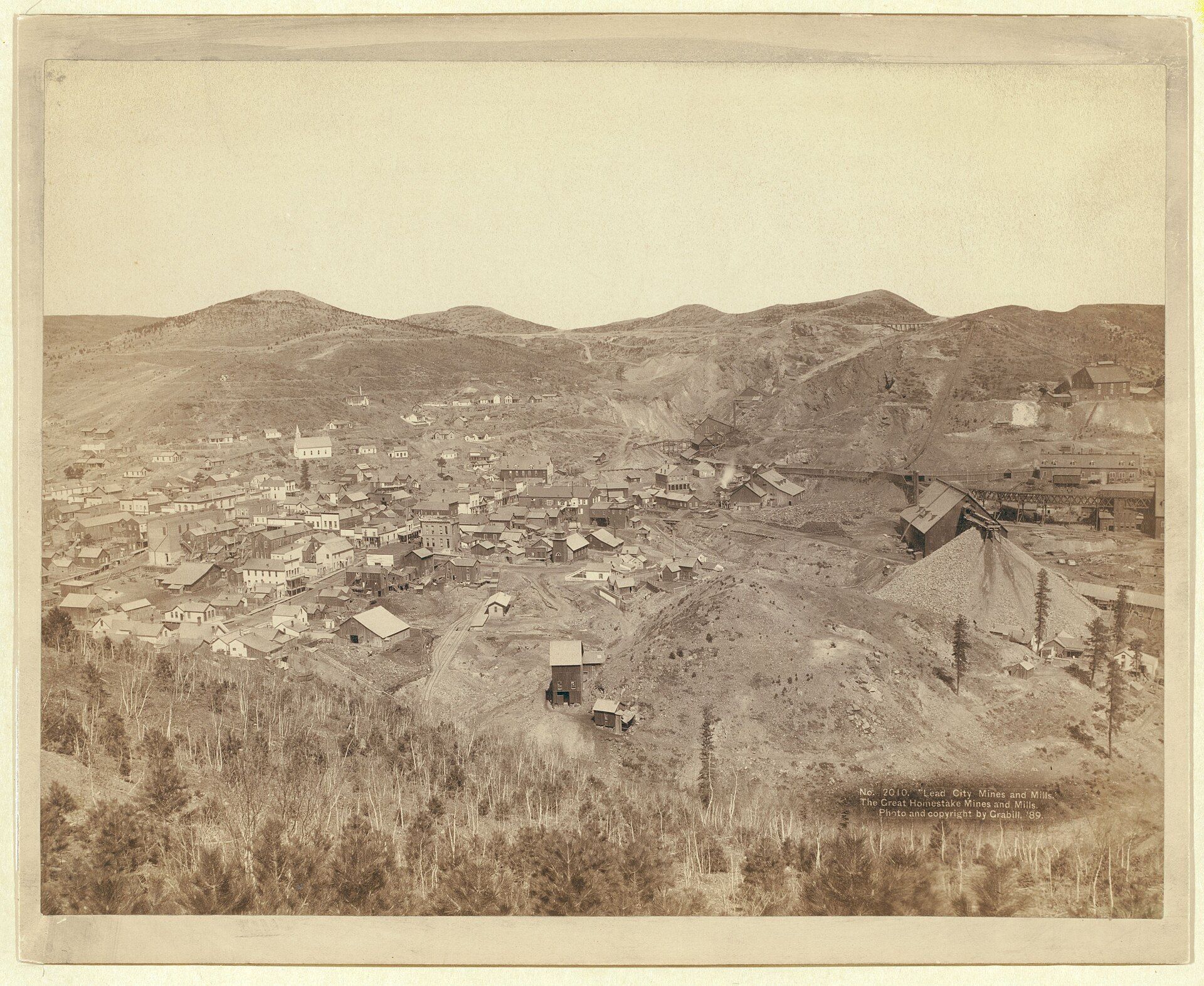
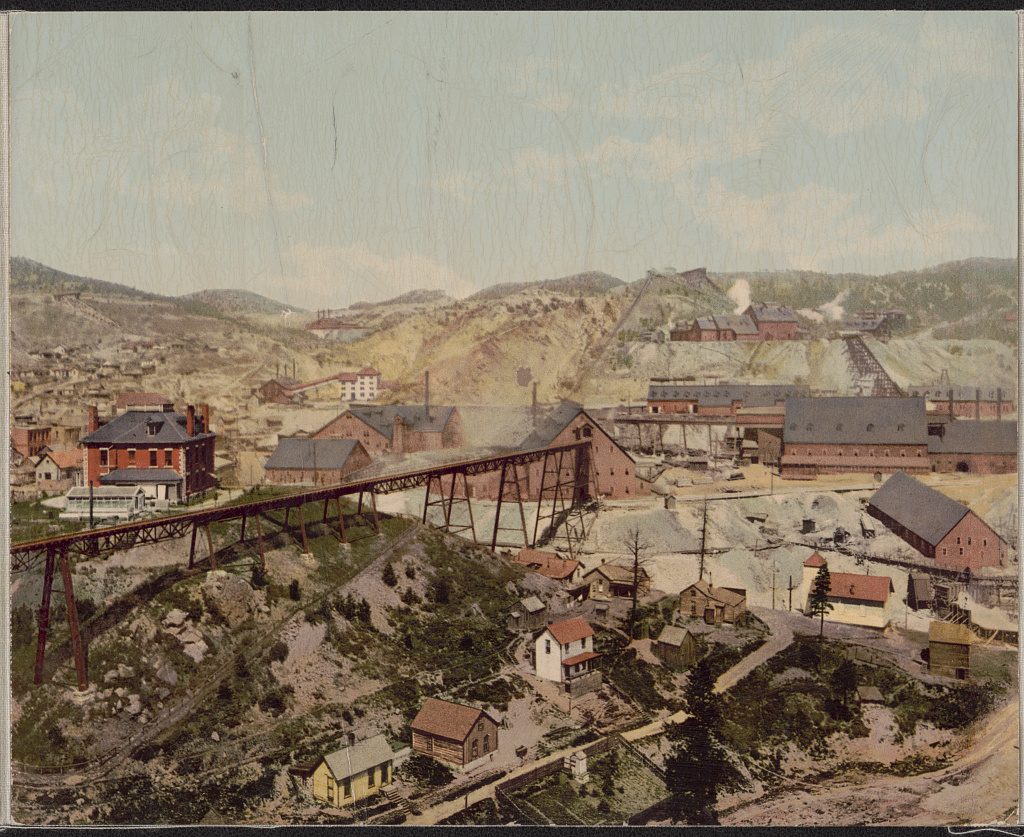
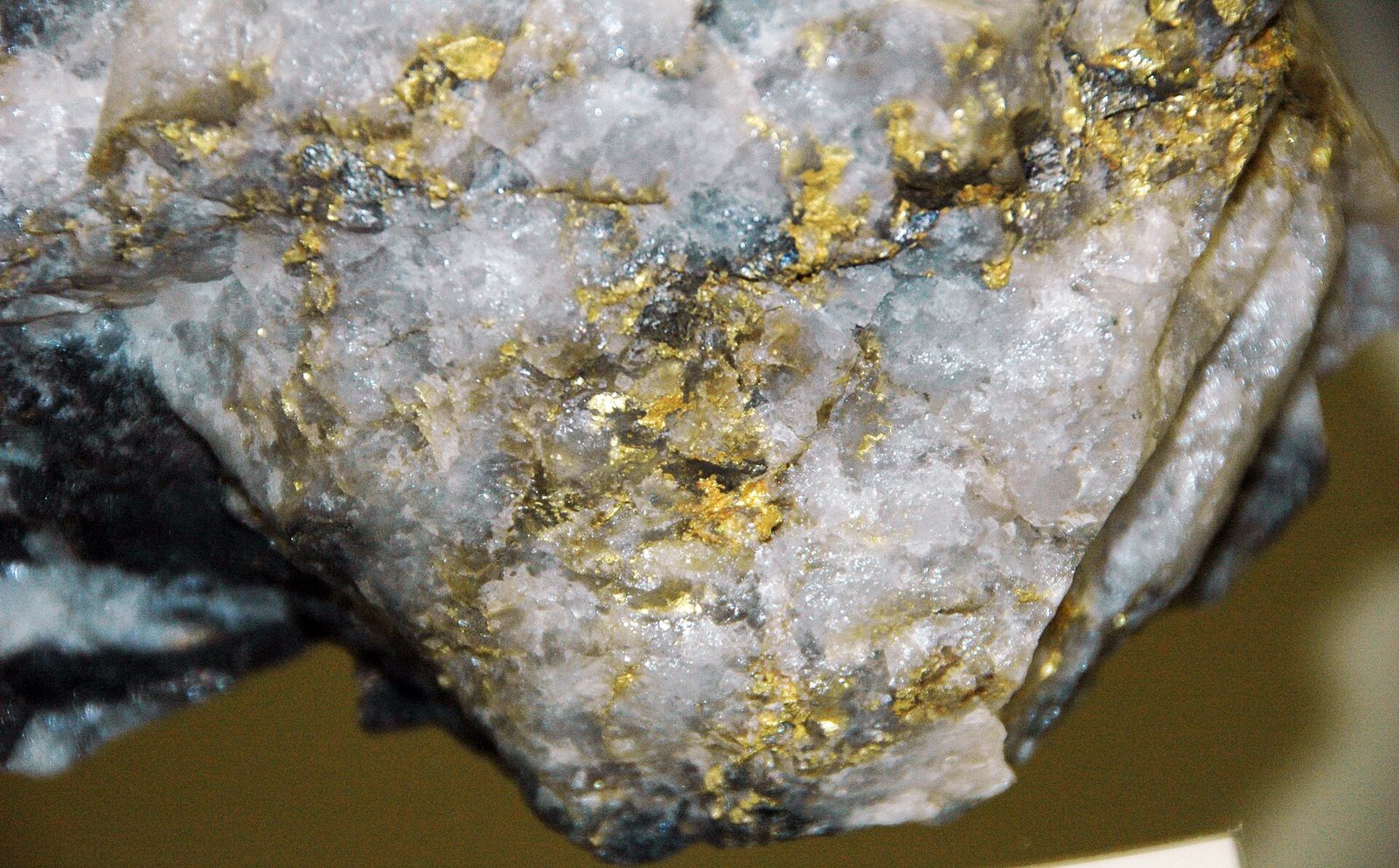
The metal came first. Gold reported by prospectors with the Army’s 1874 Custer Expedition, at French Creek near present-day Custer, set off the rush told on The Black Hills Gold Rush. Those miners were on land the 1868 Fort Laramie Treaty had set apart for the tribes, and the 1877 Act took the Hills without the consent the treaty required (see The 1876 War and the Taking of the Hills). Loose placer gold from stream gravel gave way to lode gold dug from rock, most of it from one layer at Lead, as Gold and the Other Minerals explains.
In Higbee’s account, a goldsmith named Henri LeBeau passed his designs to a father and son, and the designs and molds that later makers split between themselves went back to that pair. The courts dated the trade loosely: almost 100 years old, Judge Bogue wrote in 1980; more than 100, the appeals court said the same year. Neither named a first maker.
The courts called the product three-color grape-and-leaf jewelry: grape clusters and vines, with leaves of green and pink gold. All three colors are karat gold, gold mixed with other metals. Gold, silver and copper, with zinc often added, make up most colored karat golds, a 2005 U.S. Geological Survey profile explains, and the balance between the copper and the silver does most to set the shade. More silver pushes the alloy toward green and more copper toward pink and red, a 1999 review of colored gold alloys in the journal Gold Bulletin says.
Recipes vary from maker to maker; the survey notes that the industry has never settled on standard formulas for karat gold. A 2019 television report on one maker quoted figures from its outlet store: pink leaves of half gold and half copper, and green leaves of half gold, 40 percent silver and 10 percent zinc. Half gold is 12 karat.
Is the LeBeau Story True?
The LeBeau story is a legend; no source offers a document for it, and in Higbee’s account the jewelry’s makers tell it in several versions. “Legend has it that in 1876, there was a French goldsmith named Henri LeBeau,” the outlet manager began in 2019. In his version LeBeau came seeking gold, got badly lost and survived on wild grapes, then, safe in camp, made jewelry in their honor as a charm for luck. In the manufacturers’ story as Higbee gives it, LeBeau falls asleep hungry and dreams of the vineyards of France. One telling has real grapes, the other dreamed ones.
The grapes, at least, are possible. Riverbank grape grows wild in ravines and beside creeks across South Dakota, according to a South Dakota State University plant guide, and its fruit ripens from July into September. That proves nothing about LeBeau. Higbee’s verdict on the legend is one word: “Unlikely.” He does write that LeBeau was real: probably a goldsmith and prospector from France, who opened a shop in Central City and did fine work there. Higbee cites no source for him. The vineyard pattern, in his view, probably came from California’s gold rush by way of the Idaho and Montana mining country.
The legal record is silent on him: none of the four court opinions on the jewelry, from 1951 to 1983, names LeBeau or a founding year. What stands is one writer’s word that LeBeau existed, a date of 1876 in one telling and the 1870s rush in another, and a grape that could have grown there. The record does show the makers conceding, in the state suits decided in 1983, that the tri-color grape-and-leaf style “is in the public domain.” The courts protected the name and the place, not the pattern.
Where Does the Gold Come From Now?
The public record doesn’t say where today’s makers buy their gold, and the rules on the name don’t ask. Neither the 1980 ruling nor the 1988 law says where the gold must be mined, and makers have long used outside gold: for several years up to 1951 they worked in gold from the Hills and from elsewhere, the 1951 opinion says, and in 1980 no company in the case got all of its gold in the Hills. The 2019 television report said all of its maker’s gold was found in the Black Hills, without saying how that was known.
Gold is still mined in the Hills, though no longer at the Homestake, which mined its last ore on December 14, 2001, after producing nearly 40 million ounces over 125 years (its history is on The Homestake Mine and Sanford Lab). That year the state’s mining regulators reported only one other company producing gold in South Dakota. In June 2026 South Dakota Searchlight called a mine near Lead “South Dakota’s only active, large-scale gold mine,” and reported that it had produced 97,327 ounces in 2025.
Connected
- Gold and the Other MineralsPlacer gold, lode gold, and the layer of rock at Lead that held most of it.
- The Black Hills Gold RushThe rush of 1874 to 1877 that filled the gold camps.
- The Homestake Mine and Sanford LabThe mine that produced most of the Hills’ gold until 2001.
- The 1876 War and the Taking of the HillsHow the treaty land the miners entered was taken from the tribes.
Sources
- South Dakota Codified Laws 1-6-16.2, State Jewelry (SL 1988, ch 7). South Dakota Legislature, 1988.
- Black Hills Jewelry Manufacturing Co. v. LaBelle’s, 489 F. Supp. 754. U.S. District Court for the District of South Dakota, 1980 (CourtListener, Free Law Project).
- Bogue, Andrew Wendell. Federal Judicial Center, Biographical Directory of Article III Federal Judges.
- Black Hills Jewelry Manufacturing Co. v. Gold Rush, Inc., 633 F.2d 746. U.S. Court of Appeals for the Eighth Circuit, 1980 (CourtListener, Free Law Project).
- Black Hills Jewelry Mfg. Co. v. Gold Rush, Inc., No. 80-1426 (case header: decided November 13, 1980). Leagle, 1980.
- Black Hills Jewelry Manufacturing Co. v. Felco Jewel Industries, Inc., 336 N.W.2d 153. Supreme Court of South Dakota, 1983 (CourtListener, Free Law Project).
- Landstrom v. Thorpe, 189 F.2d 46. U.S. Court of Appeals for the Eighth Circuit, 1951 (CourtListener, Free Law Project).
- Making Yellow Magic (Paul Higbee). South Dakota Magazine, November/December 2006, revised for the web 2012.
- Mineral Commodity Profiles: Gold (Open-File Report 02-303, W. C. Butterman and Earle B. Amey III). U.S. Geological Survey, 2005.
- Coloured Gold Alloys (Cristian Cretu and Elma van der Lingen, Mintek). Gold Bulletin 32, 1999.
- The History of Black Hills Gold Jewelry (Kayleigh Schmidt). KOTA TV, 2019.
- Vitaceae: Vitis riparia (R. Neil Reese). South Dakota State University, Open PRAIRIE, 2015.
- Summary of the Mining Industry in South Dakota, 2001. South Dakota Department of Environment and Natural Resources, 2002.
- Production Decreases, Revenue Increases at Gold Mine in South Dakota’s Black Hills. South Dakota Searchlight, republished by KOTA TV, 2026.
Last reviewed: