Connections
How Gambling Saved Old Deadwood
Before the 2026 session, town leaders in Hot Springs wrote to every South Dakota legislator about Deadwood’s cut of the state’s gaming taxes. “The original legislative objective, saving Deadwood’s historic core, has largely been achieved,” their letter said, as South Dakota News Watch reported it in March 2026. They wanted the money spread wider, yet the sentence grants the boosters their word: gambling saved old Deadwood. Against the record, the claim holds for the buildings, and much less well for the everyday town that used them.
Which Old Deadwood?
The old Deadwood that gaming money keeps up is mostly the town built after 1879, not the gold camp of 1876. That camp is Wild Bill Hickok’s Deadwood, where he was shot during a card game on August 2, 1876, as told on Deadwood’s Wild Years, 1876 to 1879. It stood on land the 1868 Fort Laramie Treaty had set apart for the tribes, and the 1877 Act took the Hills without the consent the treaty required.
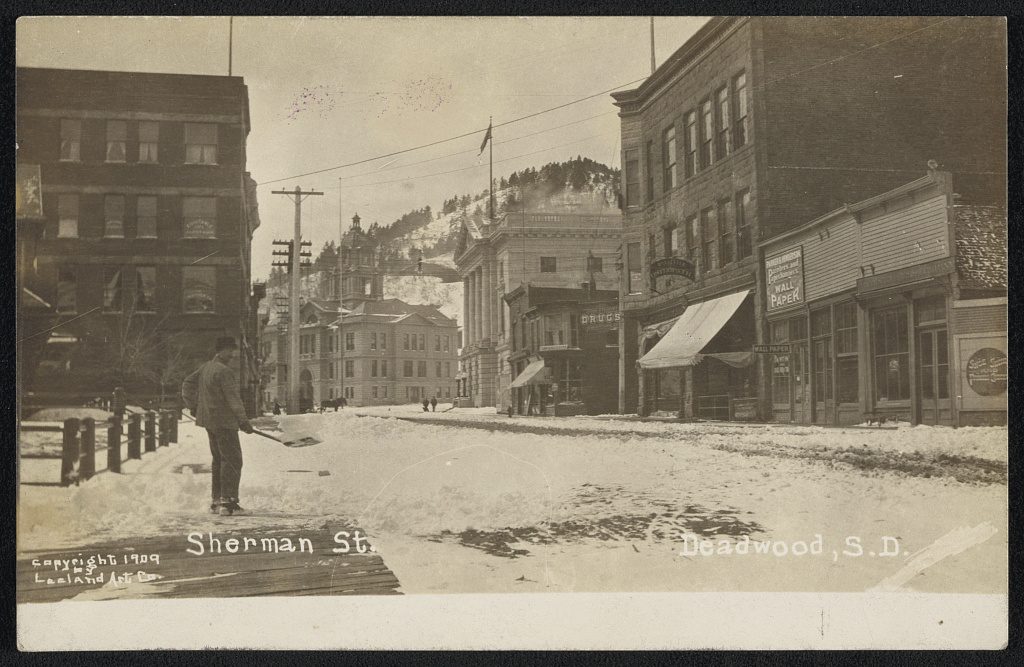
On September 26, 1879, a fire destroyed the business district at the camp’s heart. Masonry replaced it, and most of the brick and stone blocks downtown date from the 14 years before the financial panic of 1893. That rebuilt town, along with Mount Moriah Cemetery, where Hickok was reburied in 1879, is what became a National Historic Landmark in 1961.
How a Landmark Came to Need Saving
The mines had mostly closed, gambling had officially stopped in 1947, and by the mid-1980s the downtown’s commercial blocks had fallen into poor repair, as Deadwood, South Dakota tells. Deadwood’s stores were already losing ground to a Rapid City mall and newer discount stores in Spearfish before any casino opened, the geographer William V. Ackerman wrote.
The city set up its Historic Preservation Commission in 1987. On December 15 of that year, fire took three buildings on Main Street, and in the city’s timeline the blaze became “the rallying cry for legalized gaming.” Two votes followed, statewide in November 1988 and in Deadwood in April 1989, and legal gaming began on November 1, 1989. The state constitution earmarks all of the city’s net gaming proceeds for historic restoration and preservation in Deadwood, and the city created its Historic Preservation Office that same year because gaming had been authorized.
The Money, and What It Bought
From November 1989 through June 30, 2025, bettors put $32.6 billion into play in Deadwood and won most of it back; the casinos’ gross revenue came to about $3.05 billion, and $237.4 million went to the City of Deadwood, the South Dakota Commission on Gaming reports. In the year ending June 30, 2025, about $1.59 billion was wagered and the city’s share was $7.3 million.
A two-year restoration of Main Street was finished on June 6, 1992. The $4.8 million restoration of Mount Moriah, begun in 1998, ended on August 2, 2002, 126 years to the day after Hickok was shot, with the unveiling of his bronze cemetery marker, the city’s timeline records. Nearly $1 million paid for a dig in the old Chinatown that turned up more than 400,000 artifacts, and the city has given owners grants for work such as windows and paint, News Watch reported in 2019. Its 2024 program summary also offers loans of up to $250,000 to fit out the upper floors of commercial buildings for homes or businesses.
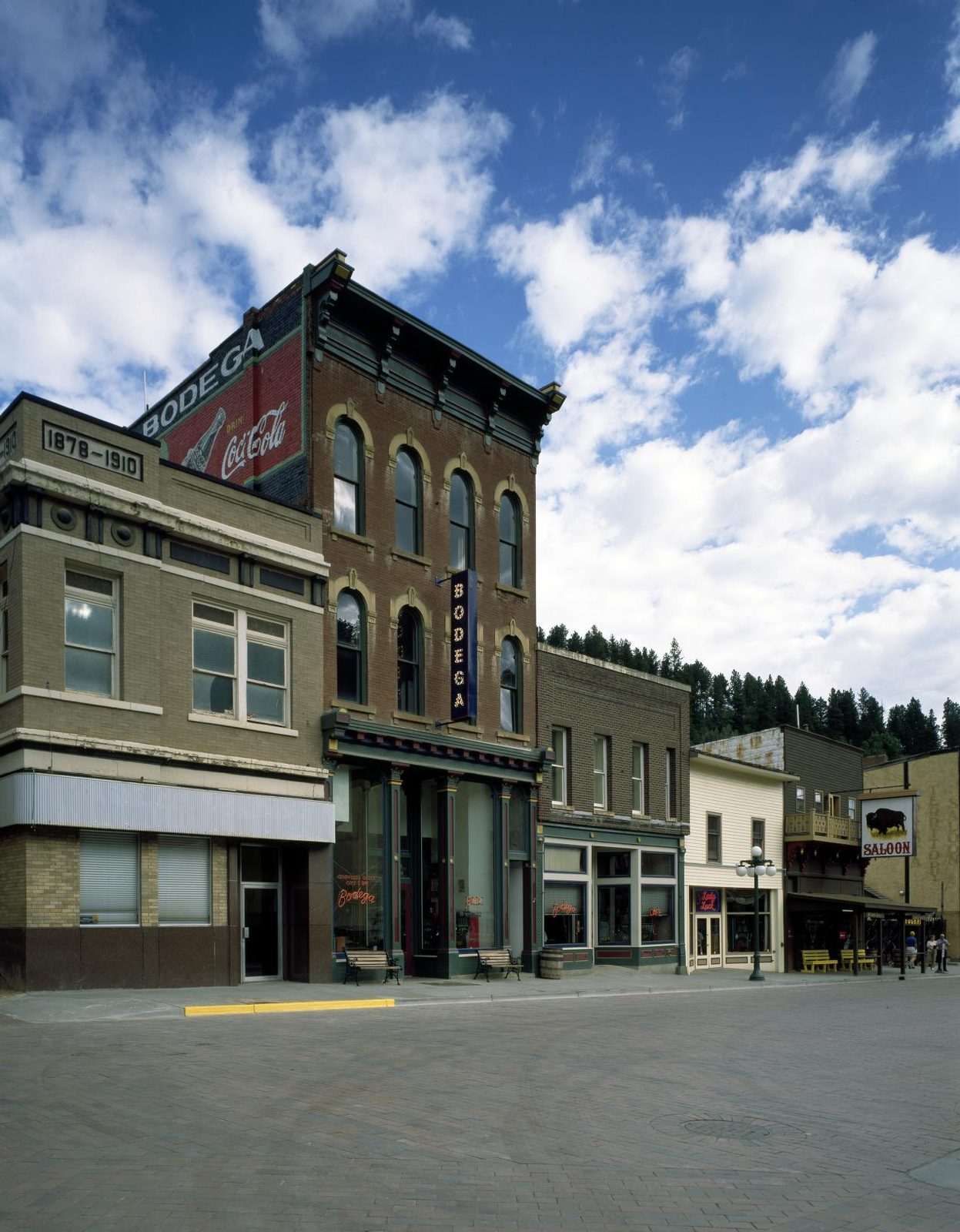
The city reads “preservation” broadly: its share has also paid for water, sewer and street work, a recreation center, part of the rebuilding of U.S. 85 and the trolley, by News Watch’s accounts. Kevin Kuchenbecker, the city’s historic preservation officer, told News Watch in 2019 that about $350 million had gone back into the community through preservation and development work. None of these sources counts the buildings restored.
A thin stream reaches the rest of the state: since 1995 the State Historical Society’s Deadwood Fund, set aside by state law from Deadwood gaming revenue, has made matching grants from $100,000 a year, and the commission counts $3.1 million paid to state preservation through June 2025. In the mid-1990s Ackerman weighed some lost retail, too little parking and traffic jams against the gains and judged that gaming had, overall, “helped to preserve an important historical landmark and to revitalize the local economy.” For the buildings, the record since largely supports the word “saved.”
What the Town Gave Up
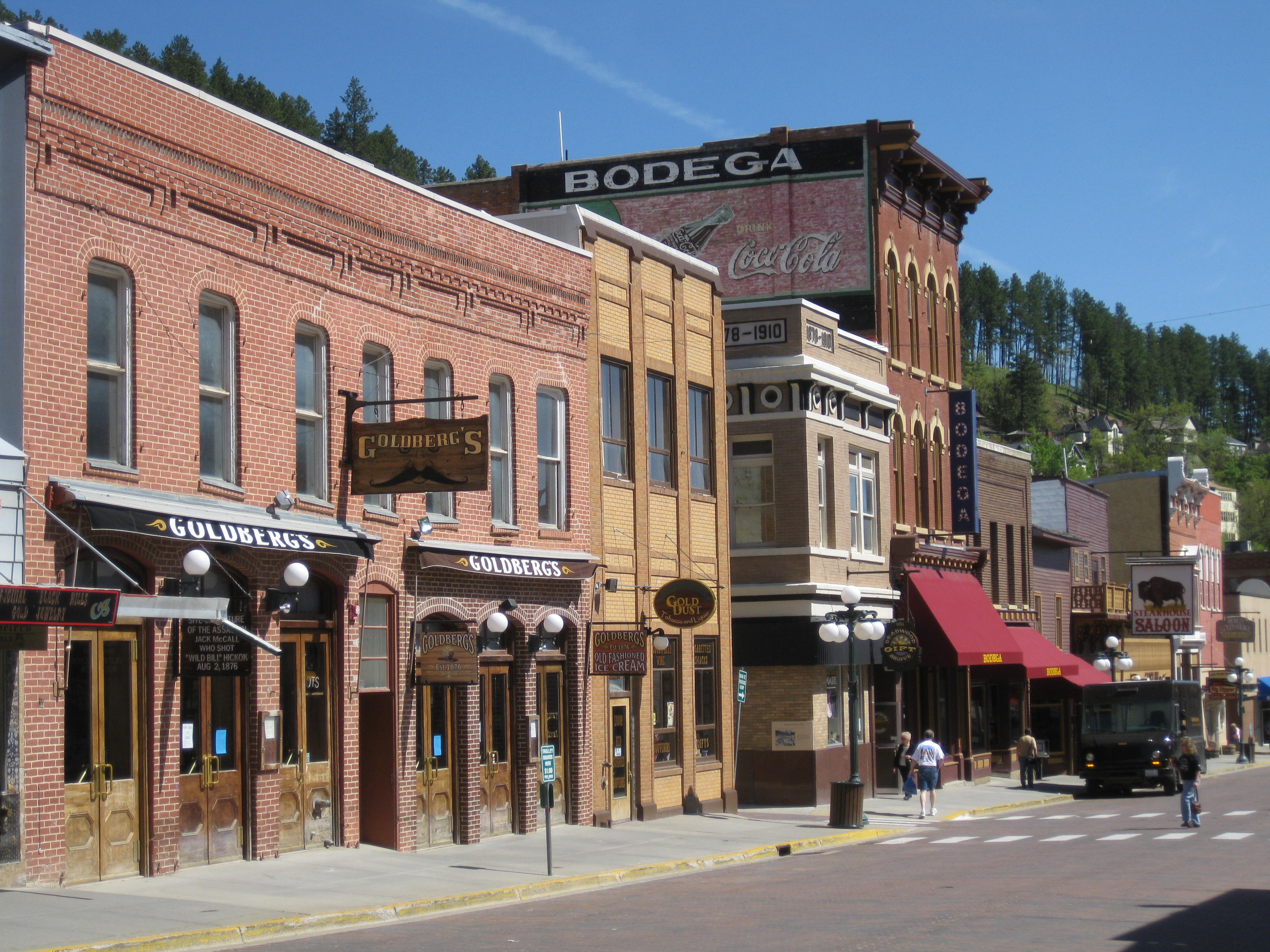
The everyday town is another matter. News Watch’s 2019 count for gaming’s first year: close to 80 casinos in, about 40 retail shops out. Counts differ. A former chamber of commerce worker counted nine downtown stores before gambling, High Country News reported in 1996, and none lasted out the first year. Ackerman’s list of losses ran from new-car sales and appliances to women’s clothes and shoes, and took in the town’s one department store and one furniture store. Many were already struggling before gaming, he wrote, and many probably would have closed anyway. Between two-thirds and three-fourths of historic Main Street’s businesses had turned into casinos, by the figures in his article. “We certainly lost some retail – car dealerships, shops and a grocery store,” Mike Trucano, a businessman who had campaigned for gaming, told News Watch in 2019.
The average assessed value of a Main Street business went from $37,442 in 1990 to $451,772 in 1994, Ackerman found, and one hardware store with little tourist trade saw its property taxes climb by $10,114 a year. Answering Ackerman in a 1996 letter to the National Park Service journal CRM, the architectural historian Richard J. Ewald wrote that gambling had pushed out of downtown “virtually everything people regularly rely on,” from the barbershop to the pharmacy, and called the business district over-restored, a stage set.
Only about a third of the 1,796 casino workers Ackerman surveyed in August 1994 lived in Deadwood, and in 1997 the Federal Reserve Bank of Minneapolis reported casino workers struggling to afford decent housing as land and property values climbed. In 1996 Mayor Barbara Allen held that the town had needed gaming to survive, High Country News reported; a few residents had left in disgust.
Deadwood had 3,045 people in 1960 and 1,830 in 1990, by Ackerman’s figures, and the 2020 census counted 1,156. The decline began long before the casinos, and News Watch has tied later population declines in the area to the closing of the Homestake Mine at Lead, where the last ore was mined on December 14, 2001. In 2026 Kuchenbecker told News Watch that more than 3.5 million visitors come each year.
A Building Lost and a Share Disputed
Preservation has failed even inside the landmark. By the city’s own account, its preservation ordinance was broken on December 24, 2005, when a historic building on lower Main Street, the Wing Tsue building, was torn down. Wing Tsue was another name of Fee Lee Wong, the Chinatown merchant who arrived in December 1876; the Encyclopedia of the Great Plains puts his shop at 566 Main Street. The timeline gives no address for the building lost in 2005 and doesn’t say whether it was his shop.
The money itself has been argued over. News Watch found that gaming taxes grew from $14.7 million in 2014 to $18.9 million in 2024, yet the city’s yearly allocation stayed close to $7.1 million. In March 2026 the Legislature passed Senate Bill 102, which raises Deadwood’s share of the remaining balance, roughly $3 million by News Watch’s count, from 10 to 71 percent. Gov. Larry Rhoden signed it later that month, to take effect on July 1, 2026, South Dakota Searchlight reported. The law leaves the Deadwood Fund for the rest of South Dakota at $100,000 a year.
Connected
- Deadwood, South DakotaThe town’s decline, the 1987 fire and the 1988 and 1989 votes.
- Deadwood’s Wild Years, 1876 to 1879The camp of 1876, its Chinatown and the 1879 fire that cleared the way for the brick town.
- The 1876 War and the Taking of the HillsHow the land under the 1876 camp was taken from the tribes.
- The Homestake Mine and Sanford LabThe mine at Lead whose last ore came out in 2001; its closing cost the area jobs and people.
- Hot Springs, South DakotaThe town whose leaders wrote to legislators before the 2026 session that saving Deadwood’s core was largely done.
Sources
- Commission on Gaming Annual Report, Fiscal Year 2025. South Dakota Commission on Gaming, South Dakota Department of Revenue, 2025.
- South Dakota Constitution, Article III, Section 25. South Dakota Legislature.
- Timeline of Deadwood, South Dakota. City of Deadwood.
- Historic Preservation Office. City of Deadwood.
- Historic Preservation Programs Summary (revised January 10, 2024). City of Deadwood Historic Preservation Office, 2024.
- In 30 Years, Gaming Has Revitalized and Challenged Deadwood, by Tom Griffith. South Dakota News Watch, 2019.
- After $237 Million Spent, Deadwood Seeks More Gaming Proceeds, by Bart Pfankuch. South Dakota News Watch, 2026.
- Gaming Grants: Millions for Deadwood, Thousands for Rest of State, by Bart Pfankuch. South Dakota News Watch, 2026.
- “A Win-Win”: Rhoden Signs Bill to Give More Gaming Tax Revenue to Deadwood in the Future, by Blake Troli. KOTA-TV, 2026.
- Governor Approves Extra City Sales Tax, Cigar Bars, More Gambling Tax Revenue for Deadwood. South Dakota Searchlight, 2026.
- State Historical Society Awards Six Historic Preservation Grants, by Kevin Larsen. South Dakota State Historical Society, posted by the South Dakota Historical Society Foundation, 2024.
- Deadwood, South Dakota: Gambling, Historic Preservation, and Economic Revitalization, by William V. Ackerman. Rural Development Perspectives 11, no. 2, mid-1990s; copy held by AgEcon Search, University of Minnesota.
- CRM 19, no. 7: Point of View (letters from Barry Mackintosh and Richard J. Ewald). National Park Service, 1996.
- Deadwood Pays Dearly for Gambling Riches, by Elizabeth Manning. High Country News, 1996.
- Small Town Addresses Big Housing Shortage. Community Dividend, Federal Reserve Bank of Minneapolis, 1997.
- Wong, Fee Lee (Wing Tsue), by Rena Webb. Encyclopedia of the Great Plains, University of Nebraska–Lincoln.
Last reviewed: