History
Deadwood's Wild Years, 1876 to 1879
On November 8, 1875, Frank Bryant and two partners staked a discovery claim in a gulch of the northern Black Hills. A day later a party of eight staked another farther up the same gulch. Two miles of gulch, clogged with fallen timber, lay between them, and each party worked unaware of the other. No placer ground in the Hills paid better. Deadwood’s first years, through the fire of 1879, brought Wild Bill Hickok, Calamity Jane, Seth Bullock, a Chinese community the famous stories skip, and legends that outgrew the record.
A Town on Treaty Land
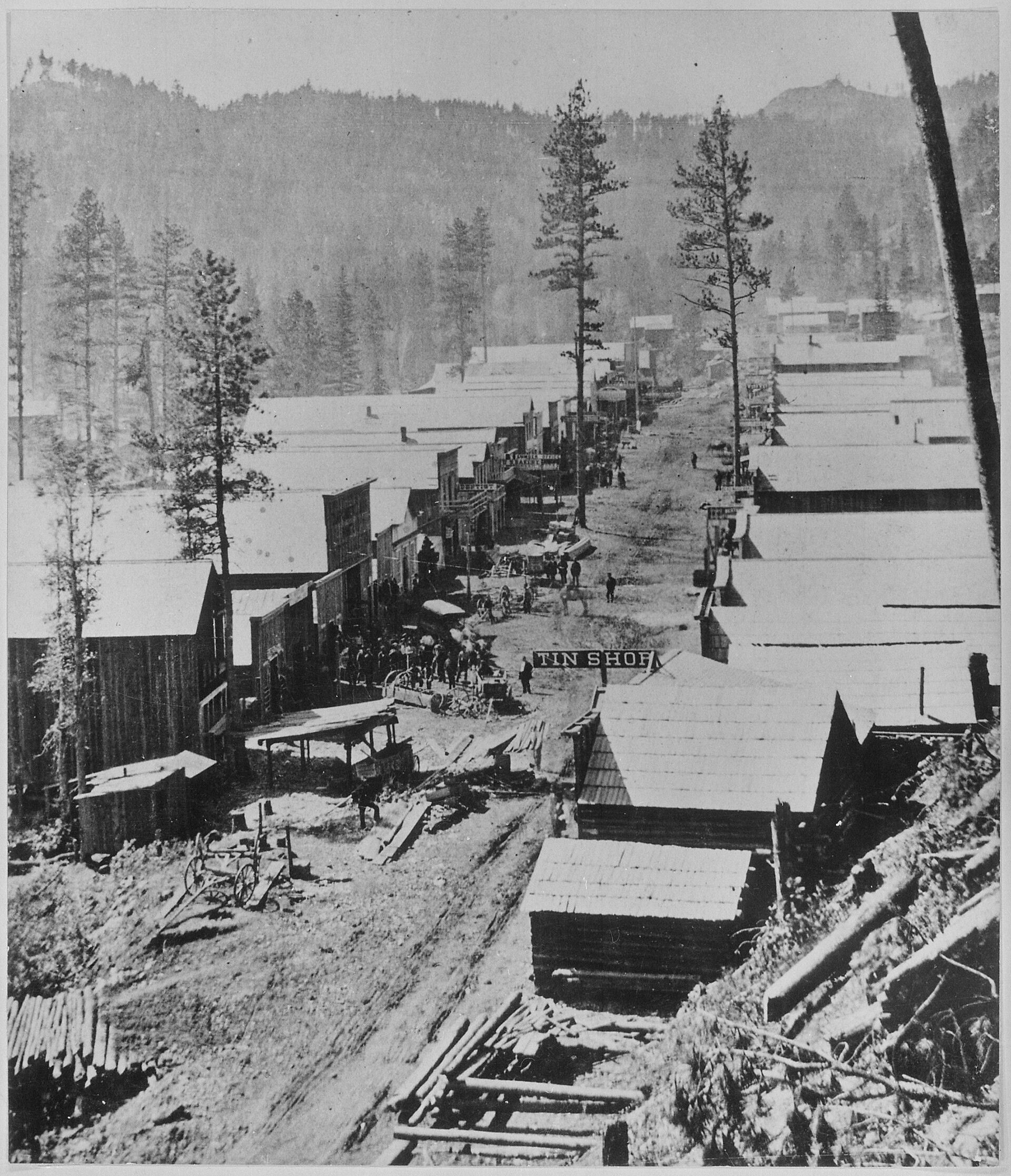
Deadwood grew up on treaty land. By the spring of 1876 seven mining camps were strung along the gulch; they did not join as one town until 1881. J. J. Williams and others laid out the townsite in 1876, during the Black Hills gold rush.
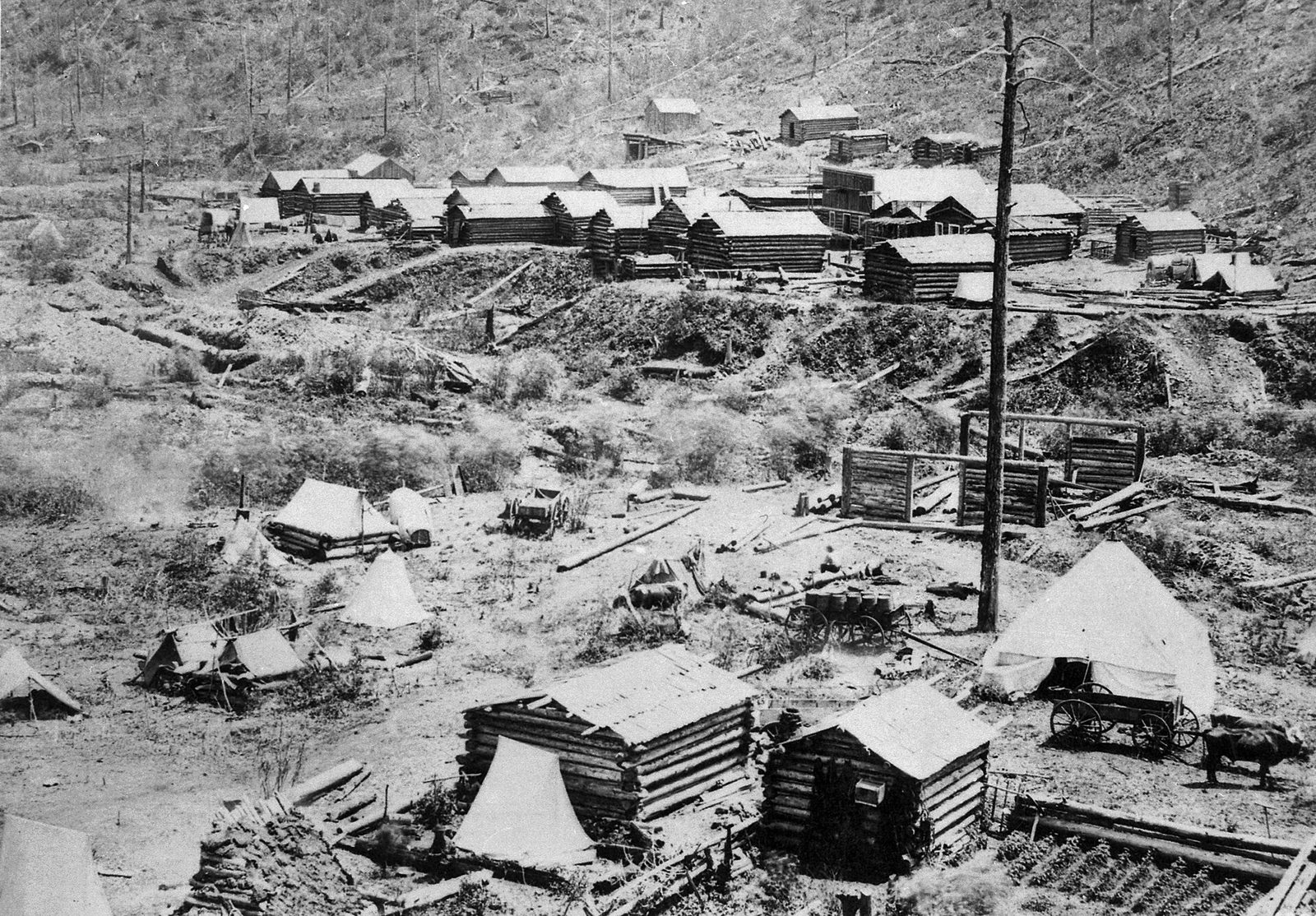
The Standing Rock Sioux Tribe’s history describes the Great Sioux Reservation of the 1868 Fort Laramie Treaty as everything in present-day South Dakota west of the Missouri River, the Black Hills, Hé Sápa, included. Under Article 2, no outsiders but authorized officials were ever to “pass over, settle upon or reside in” it. Deadwood was laid out during the 1876 war, and in 1877 Congress took the Hills without the consent the treaty required, as told on The 1876 War and the Taking of the Hills.
The Killing of Wild Bill Hickok
On August 2, 1876, Jack McCall came up behind James Butler “Wild Bill” Hickok during a card game in Deadwood’s No. 10 Saloon and shot him in the back of the head. Hickok, already famous as a gunman, had reached the Black Hills that summer. His prospecting in Deadwood turned up little, and he filled his days with drinking and cards.
With no court system in the camp, a hastily formed miners’ court tried McCall and let him go after he claimed Hickok had killed his brother. When McCall later boasted of the killing in Laramie City, a federal marshal arrested him. Under federal law the shooting, on the Great Sioux Reservation, was a federal crime, and the miners’ verdict had no legal force. McCall was tried at Yankton, the territorial capital, in December 1876, found guilty, and hanged on March 1, 1877. In August 1879 Hickok’s remains were moved to Mount Moriah Cemetery.
Was Hickok Holding Aces and Eights?
Nobody knows. The story that he died holding black aces and eights, the “dead man’s hand,” first appeared in print in Frank J. Wilstach’s 1926 biography, a 2015 True West column notes, and Hickok biographer Joseph G. Rosa said even the game they were playing is unknown. The City of Deadwood’s preservation office calls the hand an unresolved mystery. Yet the state marker placed at Yankton in 1960 says the aces and eights showed as Hickok fell, and the Encyclopedia of the Great Plains has him still holding them.
Calamity Jane, Born Martha Canary
Calamity Jane rode into Deadwood with Hickok in 1876. Her name was Martha Canary; the autobiographical pamphlet published for her 1896 tour with a dime-museum company spells it “Cannary.” It says she scouted for Custer and Gen. George Crook, carried the mail between Deadwood and Custer as a pony express rider, cornered McCall with a meat cleaver and saved a stagecoach on the Cheyenne road. It puts Hickok’s killing in the Bell Union saloon, not the No. 10, and leaves out that the miners’ court freed McCall.
The historian James D. McLaird found that she never scouted, rode for a pony express or served as a lawman, and saved no stagecoach; the cleaver tale is unproven. The record does keep one kindness: she tended some sick miners, which McLaird sees as the seed of tales that she saved many in epidemics. McLaird’s later work cites a certificate of her marriage to William Steers, dated May 30, 1888, in Bingham County, Idaho Territory. She died at Terry on August 1, 1903, and Deadwood buried her beside Hickok. Later accounts moved her death to August 2, 1906, 30 years to the day after his, a date McLaird calls fiction.
Seth Bullock and the Sheriff’s Office
Seth Bullock, a former Montana sheriff, came to Deadwood in August 1876 with his partner Sol Star and a load of hardware. The City of Deadwood dates his arrival to the day before Hickok was shot; a 2019 True West account says the day after.
“Deadwood’s first sheriff” fits only an informal role. A sheriff is a county officer, and in 1876 the Hills had no organized county; the miners picked Bullock to act as one. In 1877 territorial Governor John L. Pennington appointed him sheriff of Lawrence County, which includes Deadwood. That November, by the City of Deadwood’s account, he ended a miners’ wage standoff without a shot, lowering burning sulphur bought in Chinatown into the workings. Anger among working men was one reason he lost his re-election bid that month, True West reports.
Deadwood’s Chinese Community
Chinese merchants and workers came with the rush itself: by late 1875 freighters on the Cheyenne road were hauling imported goods for Chinese customers. From 1876 or 1877 they gathered on lower Main Street, at the north end of town toward Elizabethtown. Into the 1910s that Chinatown was the social center for Chinese people across the Black Hills, historian Liping Zhu writes.
The 1880 census counted about 220 Chinese in Lawrence County. Zhu puts the number in the Hills at nearly 300, and local estimates ran to 400 or 500. Some residents avoided the census, archaeologist Rose Estep Fosha writes, for fear of the laws and hostility aimed at them.
The picture of Chinese laundrymen is incomplete. They ran laundries, restaurants and stores selling goods from China; others reworked old placer claims, cooked, sawed wood, worked cattle or practiced medicine, and some kept opium dens or worked in prostitution. Most were men. Chinese owners held the bulk of Chinatown’s houses and stores; territorial law put no bar on immigrants buying property. Fee Lee Wong, also called Wing Tsue, reached the gulch in December 1876 and became a leading merchant who raised money for Chinese New Year and paid to bury the poor. When Yung Set, a poor member of the Chinese Masons, died in 1878, the Masons paid for his burial, the Hills’ first public Chinese funeral, and many followed.
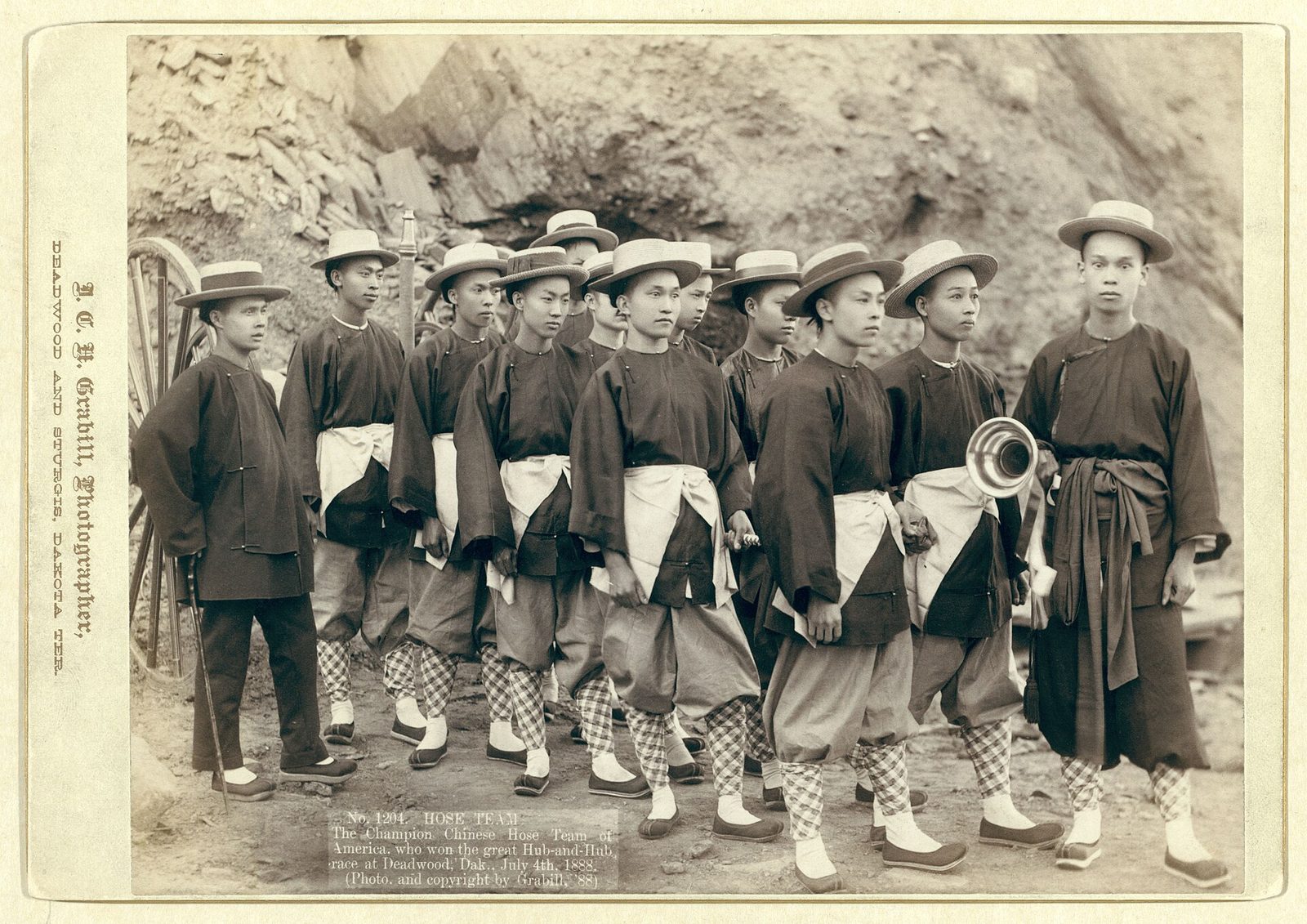
Hostility was real. Newspapers mocked the Chinese, and some miners ambushed Chinese men to cut off their braided queues. In March 1878, amid rumors that mine owners would bring in Chinese labor, miners in Lead City formed a Caucasian League, and Deadwood’s league, backed by the miners’ union, opposed letting any more Chinese into the Hills. Kuong Wing, speaking for Deadwood’s Chinese, promised in the local press that newcomers would keep to washing, cooking and house service. In August, committees gave Chinese placer miners and their employers until August 7 to quit; around Montana City, they did.
Historians weigh this differently. Zhu calls the prejudice relatively mild and argues that Deadwood was unusual because its Chinese residents could get ahead, while the 1989 federal landmark documentation calls them “often a distrusted and oppressed group.” That document also noted a local belief in tunnels under the streets used for secret rituals and opium, and said archaeology was needed to separate myth from fact. Excavations the City of Deadwood funded from 2001, led by the State Archaeological Research Center, found stone foundations, privies, a burned boardinghouse with opium-smoking gear, and Chinese gaming pieces.
The Fire of 1879
Fire destroyed Deadwood’s downtown business district on September 26, 1879. Prairie Public’s account has it starting in a bakery before dawn, spreading when gunpowder stored in a hardware store exploded, and destroying more than 300 buildings.
The placer gold that drew the first rush was giving out, and many buildings already stood empty, the federal landmark documentation notes. The merchants rebuilt anyway, in brick and stone wherever they could, to serve the hardrock mines replacing the placer diggings. Most of the old downtown standing today went up between the fire and the panic of 1893.
Dime Novels, Television and the Town Behind Them
Deadwood’s fame outran its gold. On October 15, 1877, Edward L. Wheeler’s first Deadwood Dick story opened Beadle and Adams’s Half-Dime Library, set in a Black Hills he got wrong in places, with Cheyenne east of the Hills. The novels paired Calamity Jane with Deadwood Dick. In 1976 a National Park Service historian judged that Deadwood’s mines likely yielded no more than many western camps, and that the town owed much of its renown to the legends of Hickok, Calamity Jane and Deadwood Dick. HBO’s series Deadwood (2004 to 2006) and its 2019 film carried the names to a new audience.
Legal gaming opened in Deadwood on November 1, 1989, to pay for preserving the historic town, a story told on How Gambling Saved Old Deadwood; the town as it is now is on Deadwood, South Dakota.
Connected
- Deadwood, South DakotaThe town today, and the placer gravels it grew on.
- The Black Hills Gold RushThe rush of 1875 to 1877 that filled Deadwood Gulch.
- Stagecoaches and RailroadsThe Cheyenne road and the other routes that supplied the camp.
- How Gambling Saved Old DeadwoodHow gaming money has paid to preserve the town rebuilt after 1879.
- The 1876 War and the Taking of the HillsHow the land Deadwood stands on was taken from the tribes.
- Gold and the Other MineralsWhy Deadwood Gulch held such rich placer gold.
Sources
- About. Standing Rock Sioux Tribe.
- Treaty of Fort Laramie (1868), transcript. National Archives.
- Deadwood Historic District, National Historic Landmark nomination. National Park Service, 1976, amended 1989.
- Timeline of Deadwood, South Dakota. City of Deadwood.
- South Dakota State Historical Society Markers (markers 301, 302, 465 and 470). South Dakota State Historical Society, revised 2020.
- Wild Bill: James Butler Hickok. City of Deadwood Historic Preservation Office, 2013.
- Hickok, Wild Bill. Roger D. McGrath, Encyclopedia of the Great Plains, University of Nebraska–Lincoln.
- John “Jack” McCall Trials: 1876. Mark Thorburn, Great American Trials (Gale), via Encyclopedia.com.
- Jack McCall’s Execution. Prairie Public, 2018.
- Did Wild Bill Hickok really have the Dead Man’s Hand of aces and eights when he was killed? Marshall Trimble, True West, 2015.
- Calamity Jane: The Life and the Legend. James D. McLaird, South Dakota History 24, no. 1, South Dakota State Historical Society, 1994.
- Calamity Jane (1856–1903). James D. McLaird, Encyclopedia of the Great Plains, University of Nebraska–Lincoln.
- Calamity Jane: Heroine of the West or Ordinary Woman? (Rebecca Hein). Wyoming State Historical Society, 2014.
- Life and Adventures of Calamity Jane, by Herself. Project Gutenberg (pamphlet first issued about 1896).
- Dakota Images: Seth Bullock. South Dakota History 20, no. 1, South Dakota State Historical Society, 1990.
- Seth Bullock: Black Hills Lawman. City of Deadwood Historic Preservation Office, 2013.
- Seth Bullock’s Arrival. Dakota Datebook, Prairie Public, 2022.
- Bullock: No Bull. Mark Boardman, True West, 2019.
- The Archaeology of Deadwood’s Chinatown: A Prologue. Rose Estep Fosha, South Dakota History 33, no. 4, South Dakota State Historical Society, 2003.
- Deadwood’s Chinatown. Grant K. Anderson, South Dakota History 5, no. 3, South Dakota State Historical Society, 1975.
- Deadwood Chinatown. Liping Zhu, Encyclopedia of the Great Plains, University of Nebraska–Lincoln.
- Where East Met Wild West. Smithsonian Magazine.
- Fee Lee Wong. City of Deadwood Historic Preservation Commission.
- Dakota Images: Fee Lee Wong. Christopher Leatherman, South Dakota History 31, nos. 3 and 4, South Dakota State Historical Society, 2001.
- Deadwood Fire. Jayme L. Job, Dakota Datebook, Prairie Public, 2022.
- Deadwood. SAH Archipedia, Society of Architectural Historians.
- Wheeler, Edward L. Beadle and Adams Dime Novel Digitization Project, Northern Illinois University Libraries.
Last reviewed: