History
The National Forest and the CCC
On November 5, 1899, a ranger at Englewood, in the northern Black Hills, was ordered to start marking pines for the Homestake Mining Company. Only trees eight inches or more across were to be marked, no log could be hauled before it was measured, and the treetops had to be piled for burning. Rules like these made the sale, known as Case No. 1, the first regulated federal timber sale. The story of the Black Hills National Forest runs from the 1897 reserve and that sale to the Civilian Conservation Corps (CCC), the work program whose camps spread across the Hills from 1933 to 1942 and whose dams, lakes and stone buildings are still there.
Why Did the Black Hills Become a Forest Reserve?
President Grover Cleveland proclaimed the Black Hills Forest Reserve on February 22, 1897 (Proclamation 392), one of 13 reserves he created that day, covering about 967,680 acres. The Forest Service names three threats the reserve was meant to stop: fire, wasteful logging and timber fraud. Homestake and other companies had cut heavily under the Free Timber Act of 1878, and historian Richmond Clow counts about a billion and a half board feet taken from the Hills between 1876 and 1898. Gold mining ran on wood: cordwood to burn, lumber to build with and heavy timbers to brace the tunnels. A National Academy of Sciences commission found the forest "nearly overwhelmed by fires and illegal cutting," in historian David Wolff's words.
Cleveland's order set no rules for logging, which left the new reserves all but closed to use. Black Hills residents and Homestake opposed it, Clow writes, and protests rose across the West. Congress answered with the Organic Act of June 4, 1897, which let the government sell dead or mature trees from the reserves and named what reserves were for: protecting the forest, keeping conditions favorable for the flow of water, and furnishing a steady supply of timber. The Black Hills reserve took effect officially on March 1, 1898, according to Wolff.
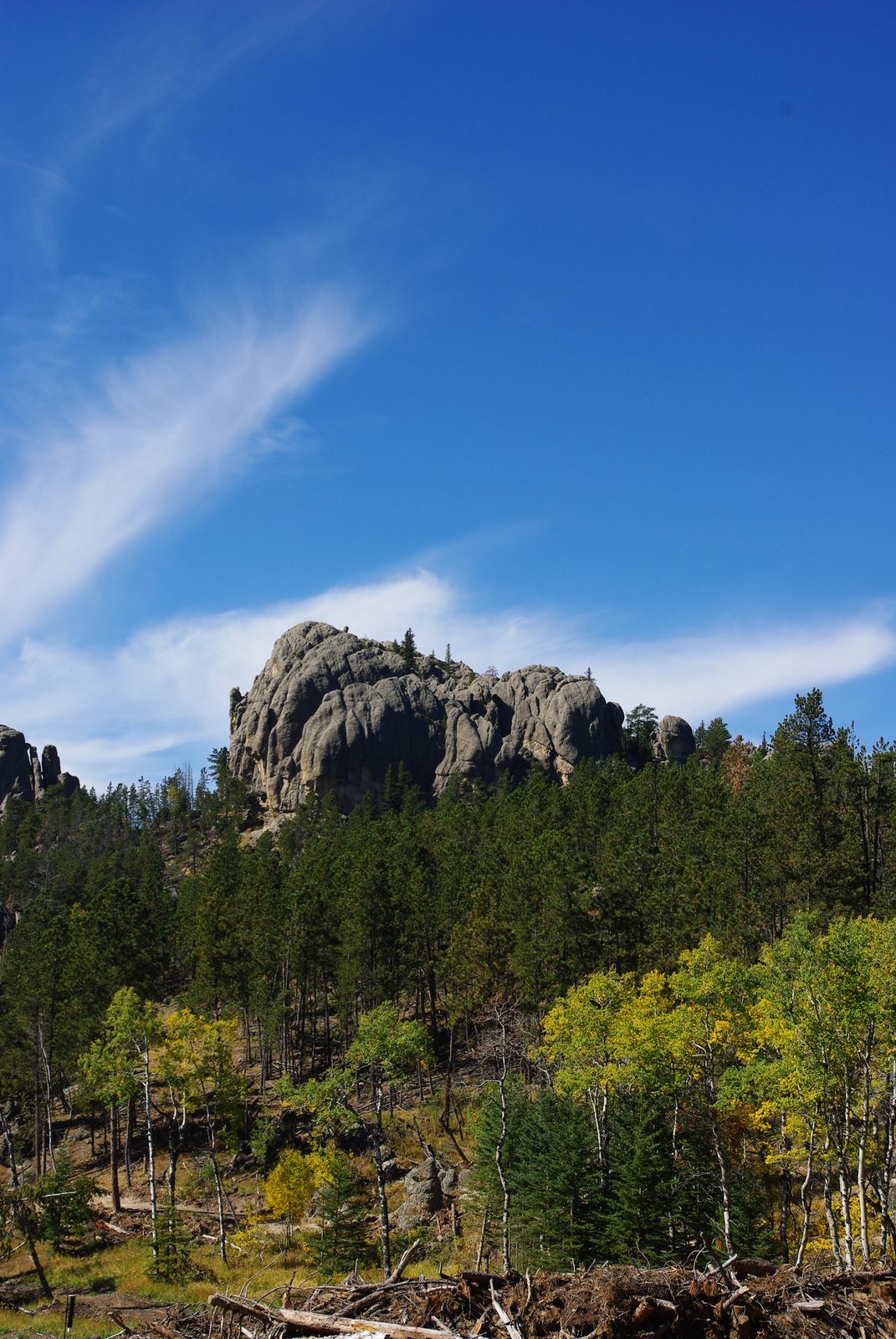
The land had come under federal control through the 1877 Act, which took the Hills from the tribes without the consent the 1868 treaty required, as told on The 1876 War and the Taking of the Hills.
Case No. 1: The First Regulated Timber Sale
Case No. 1 grew out of a meeting. Gifford Pinchot, then a special forest agent for the Interior Department, came through in the fall of 1897 and found the woods between Deadwood and Englewood logged off and burned. On November 3, 1897, he gave Homestake's superintendent, Thomas J. Grier, a plan for regulated cutting, and the company agreed to apply for government timber and to help fight fires. Grier applied on April 8, 1898, for eight sections along the company railroad, about four miles southwest of Nemo.
Progress was slow, since the General Land Office, the Interior agency in charge, had never managed a timber sale. In October 1899 Homestake bid the minimum price, $1 per thousand board feet of green pine, and won the sale that fall. Cutting went on until 1908 and took about 15 million board feet, for which Homestake paid $14,967.32. Clow calls it "the first government-regulated timber cut on a public forest reserve." The timber program that grew from it, and the industry today, are the subject of Logging the Ponderosa.
In 1905 the reserves passed from the Interior Department to the Forest Service, in the Department of Agriculture. On February 1, 1905, Pinchot, now the Agriculture Department's Forester, wrote to tell the forest supervisor at Deadwood that he would answer to Pinchot's office from then on. That supervisor was Seth Bullock, who held the post in the early 1900s; his earlier years are on Deadwood's Wild Years, 1876 to 1879. In 1907 the reserve was renamed the Black Hills National Forest.
The CCC Comes to the Hills
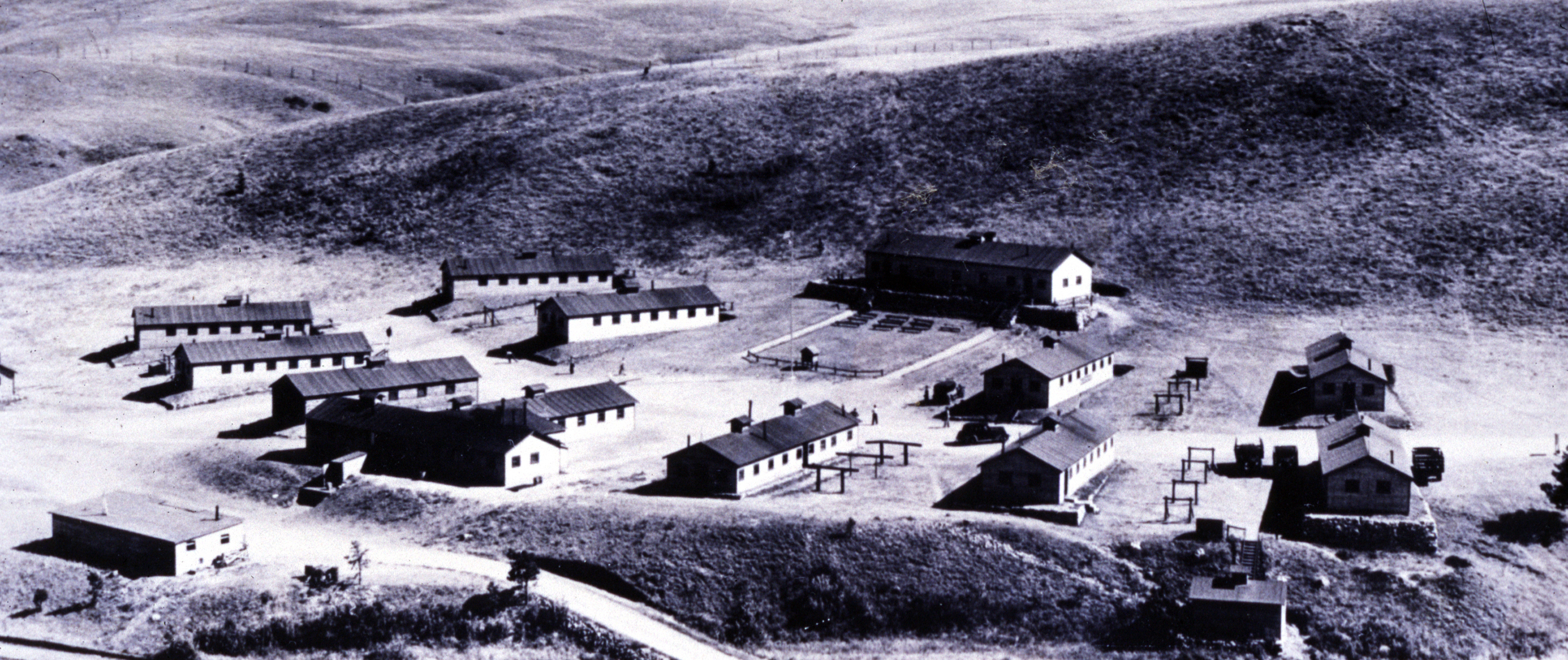
Franklin D. Roosevelt signed the law that started the Civilian Conservation Corps on March 31, 1933, a New Deal answer to joblessness that sent young men out to plant trees, fight fires and slow erosion. The Army built and ran the camps, each for 200 men. The Forest Service, the National Park Service and Custer State Park directed the work.
The first CCC camp in South Dakota to open, and one of the last to close, was F-3, on Estes Creek, according to the state's historical marker for it. Its crews built the ranger station at Nemo and a picnic area at Steamboat Rock, in the country where Case No. 1 had been cut. South Dakota had about 50 camps, plus smaller side camps, most of them in the Black Hills, from Hot Springs north to Belle Fourche. Historian Kenneth Hendrickson found that three in five of the state's enrollees worked in the forests and parks of the Hills.
Who Joined the CCC?
Enrollees had to be single men from families on relief, at first 18 to 25 years old, later as young as 17. They earned $30 a month, and $25 of it went home, a share later cut to $22 and then $15. Hendrickson's sample of case files after 1937 shows a typical South Dakota enrollee younger than 20, from a town of 2,500 people or fewer, without a high school diploma, who had never held a job. New men spent two weeks of "reconditioning" at Fort Meade, near Sturgis.
About 20 percent of those who served in South Dakota came from other states, Hendrickson found. At Lightning Creek, in Custer County, the first company was made up of veterans from North Dakota and Iowa. Separate units on the reservations, run by the Office of Indian Affairs, enrolled tribal members.
Counts of the whole vary. The State Historical Society's markers give 31,097 men from 1933 to 1942 and break out about 1,700 war veterans, 4,554 tribal members and 2,834 supervisors. Hendrickson counted more than 26,500 by the end of 1941, and SDPB has given about 30,000.
Thinning, Fire Crews and New Lakes
Crews in the national forest thinned crowded pine, turning the dead and sickly trees into posts, poles and firewood and leaving the healthiest to grow into saw logs. They planted trees, fought rodents and insects, built fire trails, roads and telephone lines, and developed springs and stock dams for livestock. In Custer State Park, the French Creek camp's marker credits its crews with ridding the southern half of the park of bark beetles; the beetle's later outbreaks are covered on The Ponderosa Forest, Fire and the Pine Beetle.
Dry summers kept the crews busy with fire. Every camp held back a crew of 25 or more men to answer fire calls. The Custer camp staffed lookouts on Black Elk Peak (called Harney Peak until 2016), Cicero Peak, Bear Mountain, Moon and Signal Hill.
CCC crews built the dams behind Horsethief, Center, Stockade and Bismarck lakes and Lake Roubaix. At Sheridan Lake, CCC men raised the earthen dam across Spring Creek and the Works Progress Administration built the concrete parts; work began in August 1938 and was finished in 1940. Crews there worked out a way of forcing bentonite clay into cracks in the rock under an earthen dam to stop leaks. The lakes are on Lakes of the Black Hills.
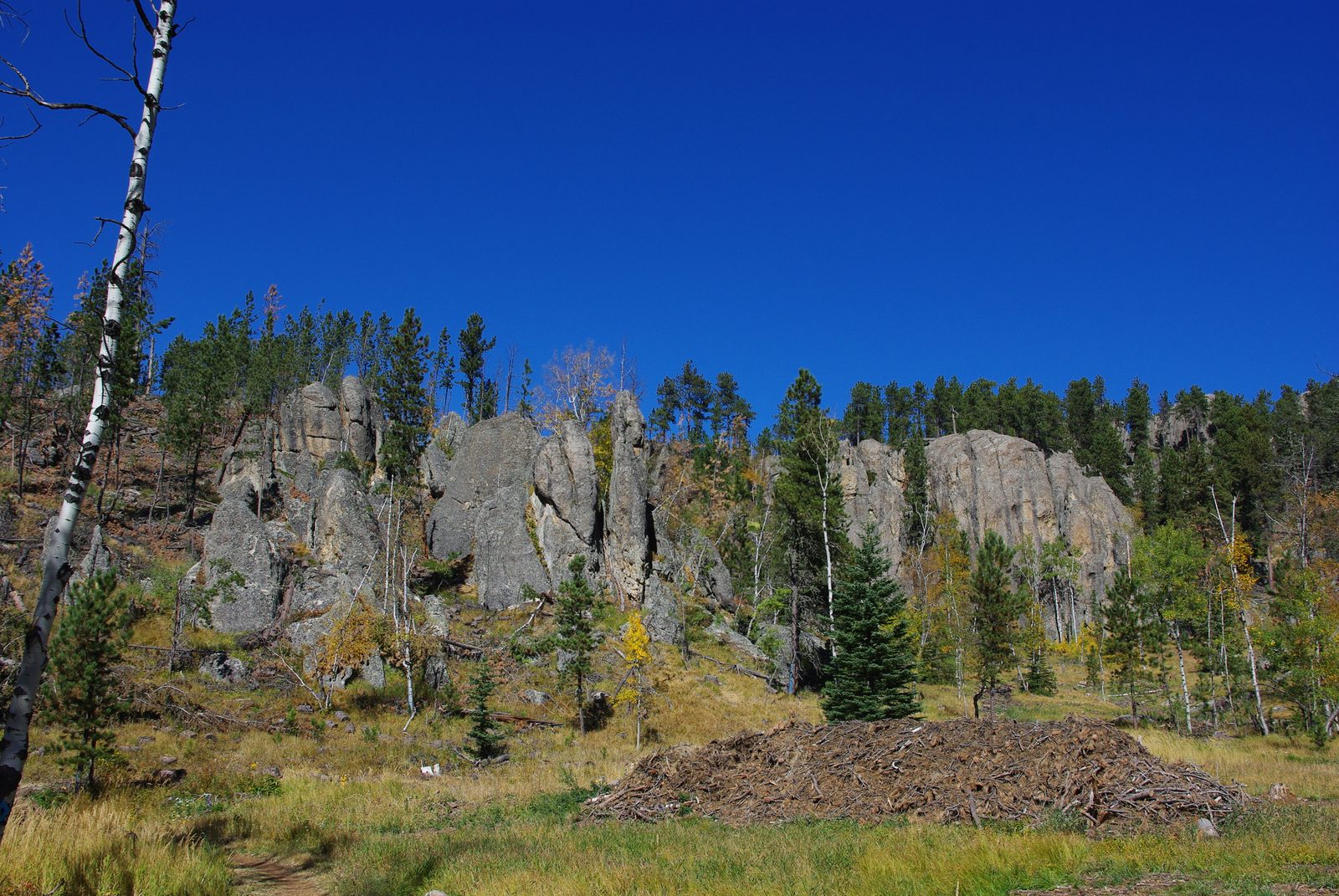
In Custer State Park, the CCC built roads and bridges on the Needles Highway, cabins at Sylvan Lake, the Blue Bell lodge and a stone lookout on Mount Coolidge. Its crews built the spiral "pigtail" bridges that C.C. Gideon designed for Iron Mountain Road; both roads are on Scenic Drives. At Wind Cave National Park, enrollees helped dig the 208-foot shaft for the cave's elevator.
The CCC ended with the war. After Pearl Harbor, federal programs turned to the war effort; in 1942 the House voted 158 to 151 against more money, and operations ended on June 30, 1942.
What CCC Work Still Stands?
The plainest survivor is the stone fire lookout on the summit of Black Elk Peak, which the South Dakota Historical Society Foundation calls the largest and hardest CCC project in the Black Hills National Forest. Men from Camp Doran, about five miles east of Custer, began it in April 1938, and the Forest Service dates its completion to 1940. Horse carts and pack trains hauled the materials, and the men hand-carried planks and other light pieces. The state's marker counts 7,000 stones, 15,000 tiles, 200 tons of sand and 16 tons of cement; the Foundation puts the stones at about 7,500, picked by hand from French Creek and nearby.
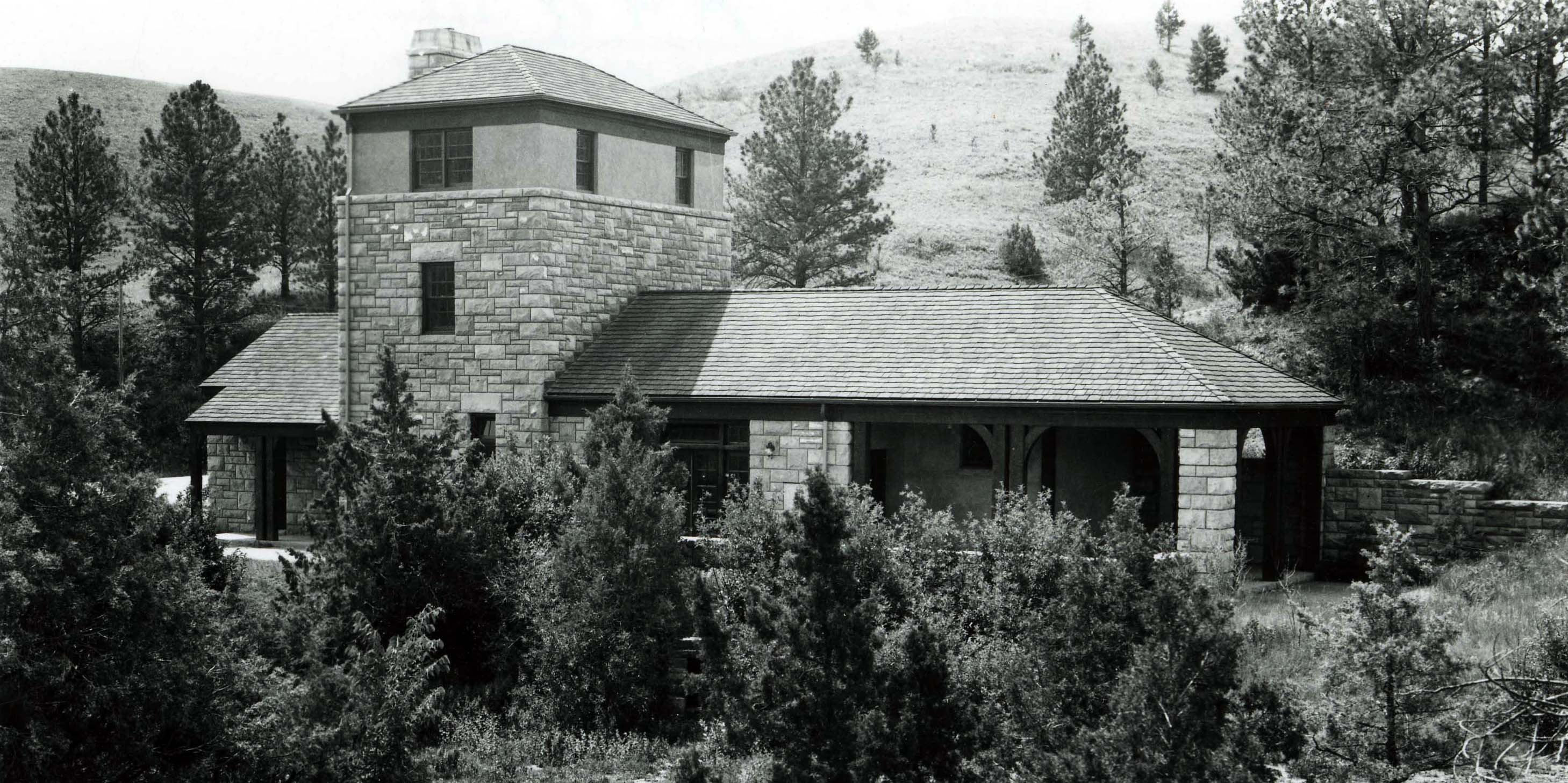
The Park Service traces many of Wind Cave's buildings, walls, trails and roads to CCC crews, the elevator building among them. The Black Hills Playhouse, a summer theater in Custer State Park, stands on the site of an old CCC camp, SDPB reported in 2013. The lookout was last staffed in 1967 and joined the National Register of Historic Places in 1983. The trail to it is on Hiking Black Elk Peak.
Connected
- Logging the PonderosaThe timber program that grew out of Case No. 1, and the industry today.
- The Ponderosa Forest, Fire and the Pine BeetleThe forest the CCC thinned and guarded from fire, and its beetle outbreaks.
- Lakes of the Black HillsSheridan, Center, Horsethief and the other lakes behind CCC dams.
- Scenic Drives: Needles Highway, Iron Mountain Road and MoreRoads where CCC crews built bridges, including the pigtails.
- Hiking Black Elk PeakThe trail to the stone lookout the CCC finished in 1940.
- Custer State ParkThe park where CCC camps built lakes, cabins, a lodge and roads.
- Wind Cave National ParkHome of Camp Wind Cave and the CCC's elevator building.
- The Homestake Mine and Sanford LabThe mine whose need for timber led to Case No. 1.
Sources
- Frequently Asked Questions. USDA Forest Service, Black Hills National Forest, 2025.
- Timber Users, Timber Savers: Homestake Mining Company and the First Regulated Timber Harvest, by Richmond L. Clow. Forest History Today, Forest History Society, 1998.
- Book excerpt: Black Hills Case No. 1 inaugurated era of government timber regulation, by David A. Wolff, from a South Dakota Historical Society Press book. South Dakota Searchlight, 2026.
- Case No. 1: Forest Reserves. National Museum of Forest Service History.
- Organic Act of 1897, as printed in Rules and Regulations Governing Forest Reserves. Government Printing Office, 1897 (Wilderness.net).
- Letter from Forest Service Chief Gifford Pinchot to Forest Supervisor Seth Bullock. Forest History Society; letter of 1905.
- Dakota Images: Seth Bullock. South Dakota History 20, no. 1, South Dakota State Historical Society, 1990.
- United States v. Sioux Nation of Indians, 448 U.S. 371. Supreme Court of the United States, 1980 (Legal Information Institute, Cornell Law School).
- The Civilian Conservation Corps in South Dakota, by Kenneth E. Hendrickson Jr. South Dakota History 11, no. 1, South Dakota State Historical Society, 1980.
- Historical Markers, Master List (Numerical), markers 506 to 536. South Dakota State Historical Society.
- Dakota Images: Cecil C. ("C. C.") Gideon, by Stephen S. Witte. South Dakota History 44, no. 4, South Dakota State Historical Society, 2014.
- The Work of the Civilian Conservation Corps in South Dakota. South Dakota Historical Society Foundation, 2019.
- The Civilian Conservation Corps in the Black Hills, by Brian Gevik. SDPB, 2018.
- Civilian Conservation Corps at Wind Cave. National Park Service, Wind Cave National Park, 2023.
- Harney Fire Lookout. USDA Forest Service, Black Hills National Forest, 2025.
- Harney Peak Lookout Tower, Dam, Pumphouse and Stairway: National Register of Historic Places nomination. National Park Service (prepared by the USDA Forest Service), 1982.
- 2013 Summer Season for Black Hills Playhouse Begins, by Nathan Puhl. SDPB, 2013.
Last reviewed: