History
Ellsworth and the Minuteman Missiles
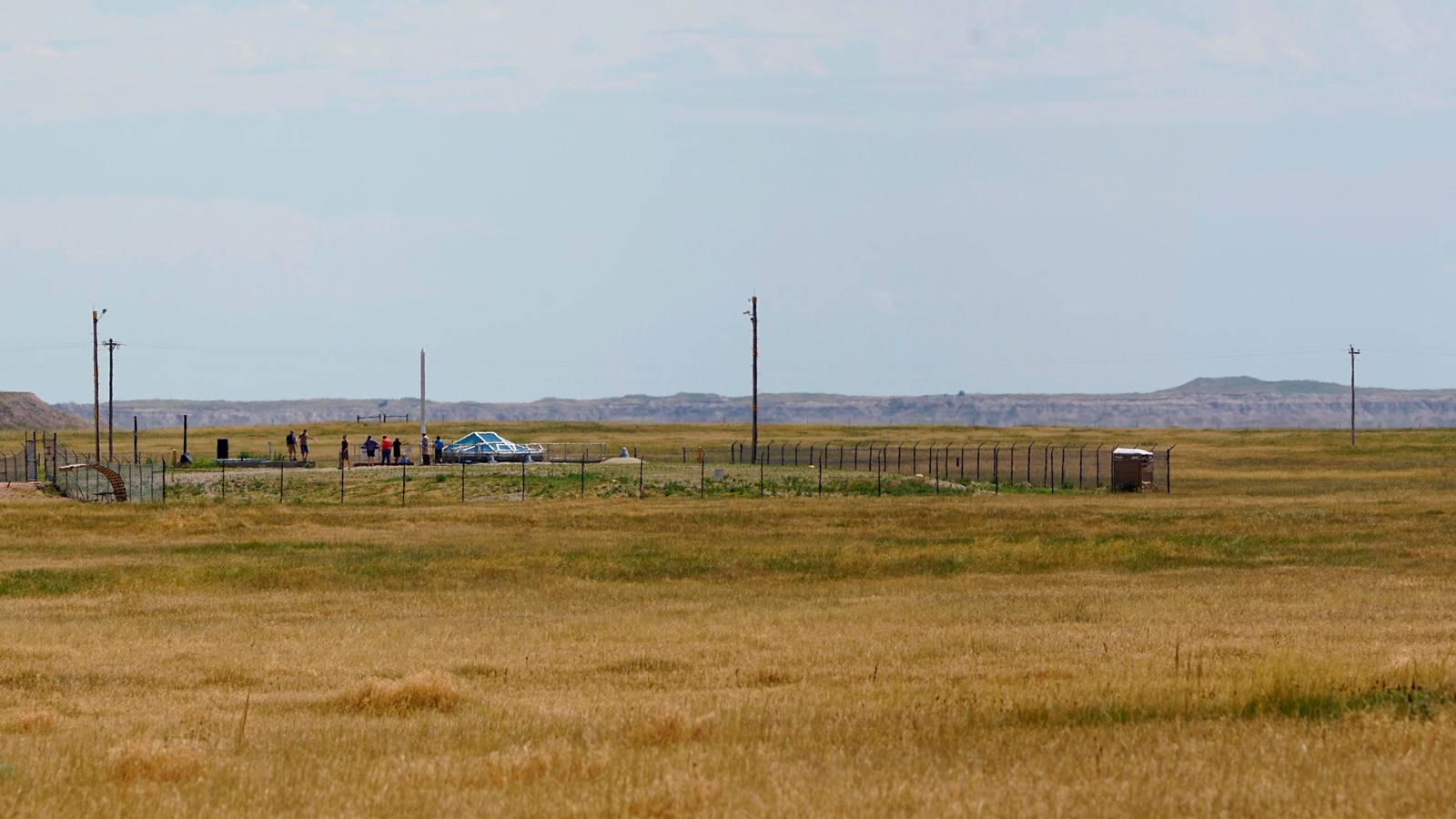
Six miles east of Wall, just south of Interstate 90, visitors at the Delta-09 launch facility look down through glass into a launch tube 12 feet wide, where an unarmed Minuteman II display missile rests. From 1963 to 1991, 150 armed missiles waited in silos like it across western South Dakota, run by crews from Ellsworth Air Force Base, which began in 1942 as a wartime training field east of Rapid City. Its story runs from World War II bomber crews to the B-21 now on its way, and two pieces of its missile field are kept as a national historic site.
A Wartime Field Outside Box Elder
Rapid City Army Air Base was established in January 1942, just after the United States entered World War II, as a school for B-17 Flying Fortress crews. Its runways lie on open prairie next to Box Elder, about 10 miles east of Rapid City. Over the war its instructors turned out gunners, pilots, radio operators and navigators in the thousands. The work changed in early 1944: rather than whole units, the field now trained single airmen to be sent abroad as replacements. As the Army Air Forces began cutting back, the base was put on standby on July 15, 1945.
For Oglala Lakota families, that training came at a cost: in 1942 the War Department took 341,726 acres of the Pine Ridge Reservation for an aerial gunnery range used by the base's crews, and 125 families were moved off. Most of the Lakota people who lived there had 10 days' notice, by the account of Emma Featherman-Sam; Frank Marshall, a Marine veteran training with the project, put it at 30 days when Voice of America interviewed both in 2002. Featherman-Sam, first director of the Badlands Bombing Range Project, which the Oglala Sioux Tribe set up in 1993 to locate and map unexploded ordnance on the old range, has said that the people who lost land there feel the government "came in and took the lands without their permission."
Why Is It Called Ellsworth?
The base is named for Brig. Gen. Richard E. Ellsworth, commander of the 28th Strategic Reconnaissance Wing, who was killed in March 1953 when his RB-36 crashed in Newfoundland. His wing had come to Rapid City in 1947 with B-29 Superfortresses, after the field had sat idle for several months, and it has been based there ever since. The base went through several names before his. In January 1948 the Air Force renamed it Weaver Air Force Base; local people wanted Rapid City in the name again, and by late June 1948 they had it.
On June 13, 1953, President Dwight D. Eisenhower came to the base and dedicated it in Ellsworth's memory.
Bombers From the B-29 to the B-21
The wing's aircraft follow the Cold War. B-36s joined the B-29s in 1949. From 1950 to 1955 the wing's main job was strategic reconnaissance, flown in RB-36s, before it went back to bombing. B-52s arrived in 1957 and stayed, with gaps, until 1986, and most of the wing went to Southeast Asia for B-52 bombing operations three times: in 1966, in 1968, and from late 1969 into 1970. KC-135 tankers flew from the base from 1959 to 1992, and EC-135 airborne command posts from 1965 to 1992.
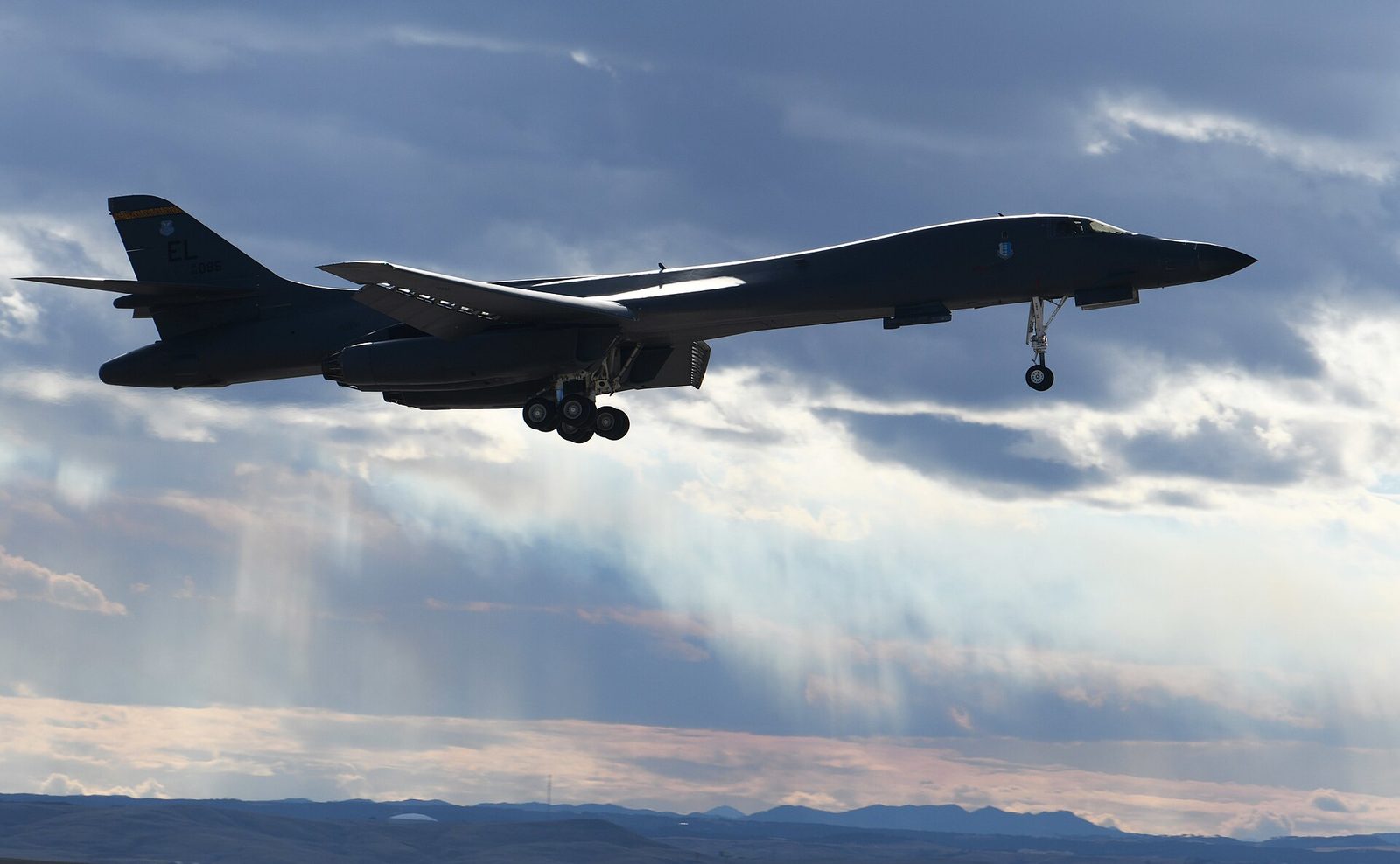
The B-1B Lancer replaced the B-52 at Ellsworth in 1987. The Air Force's history of the wing records that three of its B-1s, sent to Southwest Asia in November 1998, made the B-1's first combat attacks, on Iraqi targets. Its B-1s later flew bombing missions over Afghanistan from Diego Garcia, and attacked military targets in Libya in March 2011.
Ellsworth nearly closed in 2005. The Pentagon proposed shutting it and moving its B-1s, half the country's fleet, to Dyess Air Force Base in Texas, but on August 26, 2005, the Base Realignment and Closure Commission voted 8 to 1 to keep it open. In June 2021 the Air Force chose Ellsworth as the first main operating base for the B-21 Raider, a new stealth bomber, and as the home of its training unit. Air Force leaders said in 2026 that the first B-21s would reach Ellsworth in 2027. Its B-1Bs, at one of only two B-1B bases in the world, are to keep flying alongside the B-21s until the new bombers are fully operational.
150 Missiles Under the Prairie
Ellsworth's 150 Minuteman missiles were not its first: the Air Force accepted the base's Titan I complex in December 1961. Soon after the Minuteman squadrons were declared combat ready in late 1963, the Titans were ordered retired; all nine were out of their silos by February 1965, and the squadron was inactivated that March.
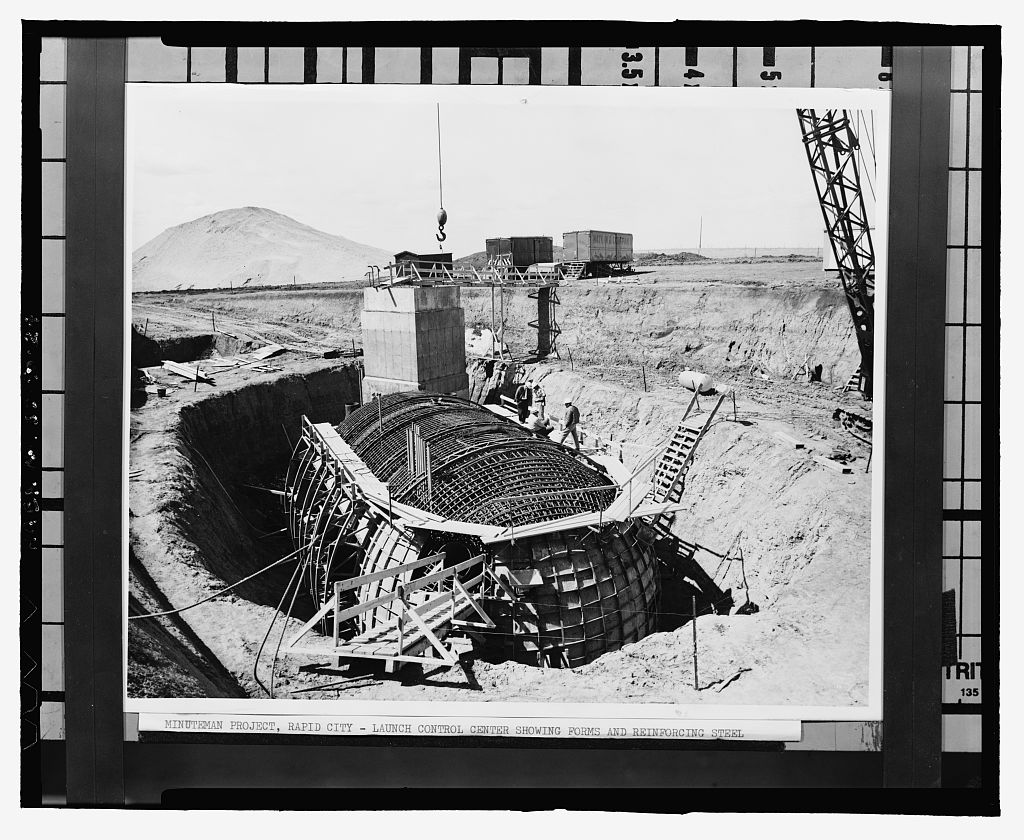
The Minuteman field was a far bigger job. Contractors working under the Army Corps of Engineers began building in the fall of 1961, and in less than two years they built 150 launch facilities, or silos, and 15 launch control facilities, spread over about 13,500 square miles of western South Dakota, according to the Park Service's historic resource study. Each flight joined one underground launch control center to 10 silos. The 44th Strategic Missile Wing, activated at Ellsworth on January 1, 1962, ran three squadrons: the 66th around Wall, the 67th around Union Center, and the 68th in the country northwest of Rapid City. Boeing began lowering missiles into the silos in February 1963, and the Strategic Air Command declared all three squadrons combat ready on November 1, 1963.
The missiles were converted to Minuteman II in the early 1970s, with the work in South Dakota finished in 1973. A Minuteman II carried a 1.2-megaton warhead, against the 15 kilotons of the bomb dropped on Hiroshima, and could reach a target in the Soviet Union in less than 30 minutes, the National Park Service says.
How Did the Missiles Come Out?
The missiles came out as the Cold War ended. The United States and the Soviet Union signed the START treaty, which reduced strategic nuclear arms, in July 1991, and on September 27, 1991, President George H. W. Bush ordered every Minuteman II taken off alert. According to the Park Service's history, the nation's Minuteman II disarmament began here: Ellsworth's was the first wing to see its missiles pulled under the treaty. Crews lifted the first missile from silo Golf-02, near Red Owl, on December 3, 1991, and the last left its silo in April 1994. The 44th wing was inactivated in a ceremony at the base on July 4, 1994.
Then the silos were destroyed. Each empty silo was imploded, filled with rubble and capped with concrete, and the last, Kilo-06, was imploded in September 1996. Ranchers feared the blasts would damage their wells, and the Missile Area Landowners Association pushed for digging the silos out instead. The Air Force kept to implosion. When a silo came down, the Air Force often offered the button to the rancher whose land lay beside it. The association did win landowners the right of first refusal, the first chance to buy back the old site on their land at fair market value, and the Park Service's history says South Dakota's purchase rules became the model for missile sites in other states. Landowners along the buried cable that had tied the sites together were freed of more than 2,800 Air Force easements.
Delta-01, Delta-09 and the Historic Site Near Wall
Two pieces of the field were spared. In 1993 the Park Service and the Air Force chose launch control facility Delta-01 and launch facility Delta-09, about 10 miles apart along Interstate 90 east of Wall, because they were well preserved and close to the highway, federal land and other historic sites. Both were finished in November 1962. Both took the newer Minuteman II in the early 1970s without being rebuilt, so they still show the field as it was first designed.
Congress established Minuteman Missile National Historic Site on November 29, 1999, in Public Law 106-115, finding that "the National Park System does not contain a unit that specifically commemorates or interprets the Cold War." On June 12, 2001, the Air Force lowered an unarmed display missile into Delta-09. To meet the treaty's rules for a display, crews welded the silo door in place a little more than halfway open, and by mid-August a viewing shelter of glass and aluminum over the shaft was largely done. At Delta-01, the Park Service has run ranger-led tours since 2004, taking visitors 31 feet down in the original elevator to the launch control center.
The site's visitor center sits off Exit 131 of Interstate 90, about 4 miles from the Northeast entrance of Badlands National Park. Its doors first opened in November 2014, before the permanent exhibits were ready. Those went in during the spring of 2016, and the formal grand opening came on September 24, 2016. The country around it is covered on The Badlands and Wall.
Uranium has its own story in the southern Hills, where Edgemont's uranium mill ran from 1956 to 1972. That story is told on Uranium, the Cold War and the Missiles.
Connected
- Box Elder, South DakotaThe town at the base's edge, on the prairie east of Rapid City.
- Wall, South DakotaThe town nearest Delta-09, in the old 66th squadron's missile country.
- The Badlands and WallThe region around the historic site, including the old gunnery range.
- Uranium, the Cold War and the MissilesEdgemont's uranium and the missile field, each part of the region's Cold War years.
- Rapid City, South DakotaThe city the base was first named for.
- Badlands National ParkThe park next to the historic site, whose South Unit was part of the old range.
Sources
- The Missile Plains: Frontline of America's Cold War, Historic Resource Study, Minuteman Missile National Historic Site (Christina Slattery and others, Mead & Hunt). National Park Service, 2003.
- Early History of Ellsworth Air Force Base (Brian Gevik). South Dakota Public Broadcasting, 2016.
- A History of the Ellsworth Air Force Base. South Dakota Public Broadcasting, 2023.
- Remarks at the Dedication of the Ellsworth Air Force Base, Rapid City, South Dakota (Dwight D. Eisenhower, June 13, 1953). The American Presidency Project, University of California, Santa Barbara.
- Ellsworth AFB: The Man Behind the Base (Nicolas Z. Erwin). 28th Bomb Wing Public Affairs, U.S. Air Force, undated.
- Namesakes: Richard Ellsworth (Robert S. Dudney). Air & Space Forces Magazine, 2020.
- 28 Bomb Wing (ACC), lineage and history fact sheet. Department of the Air Force Historical Support Division, current through 2018.
- 28th Bomb Wing and Ellsworth Air Force Base Fact Sheet. U.S. Air Force, 2022.
- 28th Bomb Wing Fact Sheet. U.S. Air Force, 2025.
- Ellsworth Officially Selected as First Base to Receive B-21s. Air Force Global Strike Command Public Affairs, 2021.
- B-21 Bombers Are Coming to Ellsworth Air Force Base. South Dakota Public Broadcasting, 2021.
- Panel Votes to Keep South Dakota Air Base Open (Daniel Pulliam). Government Executive, 2005.
- BRAC Commission Votes to Keep Ellsworth Open (Bob Reha). Minnesota Public Radio, 2005.
- Air Force Accelerates Sending B-21s to Ellsworth (Stephen Losey and Courtney Albon). Air & Space Forces Magazine, 2026.
- B-21 Raiders Set to Be on the Ramp at Ellsworth Air Force Base in 2027 (Cristina Stassis). Military Times, 2026.
- On Dangerous Ground: Oglala Lakota Land Used as a Bombing Range in World War II Is Still Perilous (William C. Meadows). American Indian Magazine, Smithsonian National Museum of the American Indian, 2023.
- Cleaning Up the Badlands Bombing Range. Voice of America, 2002.
- Aerial Gunnery Range. National Park Service, Badlands National Park.
- Minuteman Missile Visitor Center Opens in Philip, S.D. (Denise Jenson). Air Force Global Strike Command, 2016.
- Public Law 106-115, Minuteman Missile National Historic Site Establishment Act of 1999. U.S. Government Publishing Office, 1999.
- Delta-09. National Park Service, Minuteman Missile National Historic Site.
- Delta-01 Launch Control Facility (cultural landscape). National Park Service.
- Frequently Asked Questions. National Park Service, Minuteman Missile National Historic Site.
- Visitor Center Exhibits. National Park Service, Minuteman Missile National Historic Site.
- Minuteman Missile National Historic Site to Reopen Visitor Center. National Parks Traveler, 2016.
- Ribbon cutting at the Minuteman Missile National Historic Site visitor center (photo and caption) (Christian Sullivan). U.S. Air Force, 2016.
- Edgemont, South Dakota, Disposal Site: Fact Sheet. U.S. Department of Energy, Office of Legacy Management.
Last reviewed: