History
Mount Rushmore and Crazy Horse Memorial
A group of 23 young activists made camp on top of Mount Rushmore around dusk on August 29, 1970. Their protest was over the ground under the carving, land the 1868 Fort Laramie Treaty had set apart for the tribes. Mount Rushmore was finished in 1941, and Crazy Horse Memorial, begun in 1948, is still in progress; tribes and tribal members see both monuments in different ways, and sometimes disagree with one another.
Why Was Mount Rushmore Carved?
Mount Rushmore was carved to draw visitors to South Dakota. By 1924 Doane Robinson, the state historian, was promoting giant sculptures in the Black Hills, which he believed could bring tourists and widen the state’s economy, the Encyclopedia of the Great Plains says. He first pictured “notable western figures” cut into the Needles, a group of granite pinnacles. The sculptor Gutzon Borglum later made the case for presidents instead, and the mountain got four: George Washington, Thomas Jefferson, Theodore Roosevelt and Abraham Lincoln.
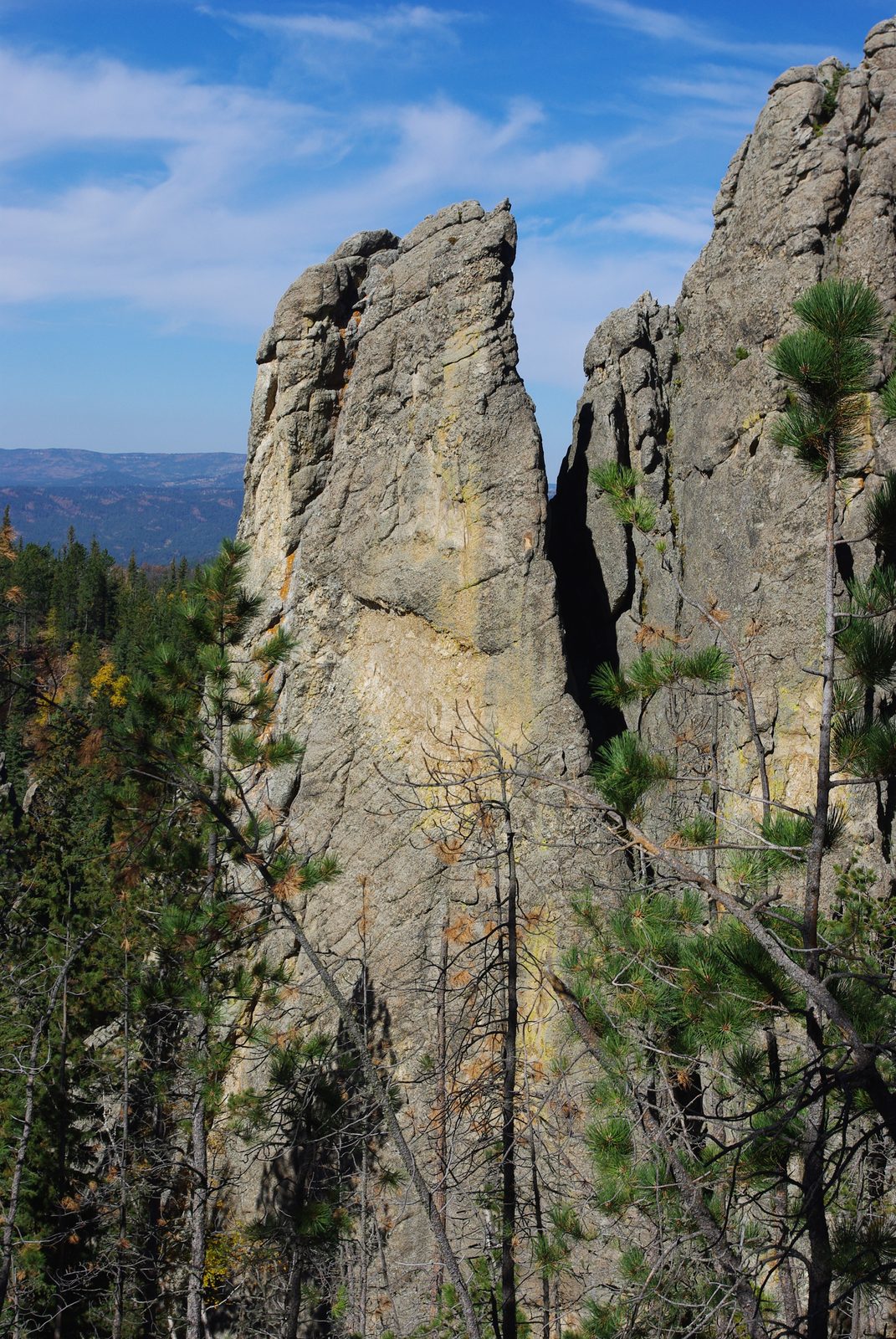
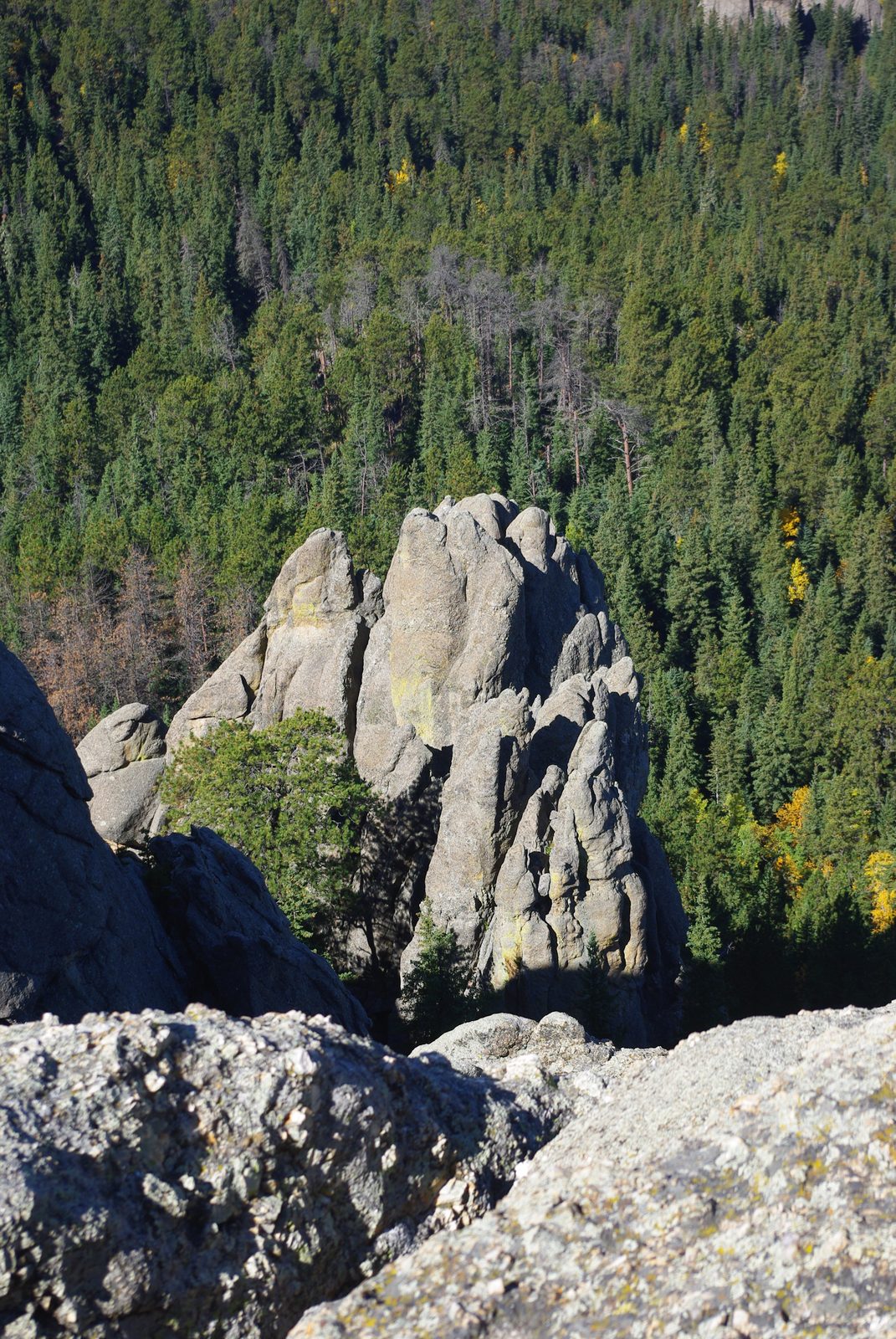
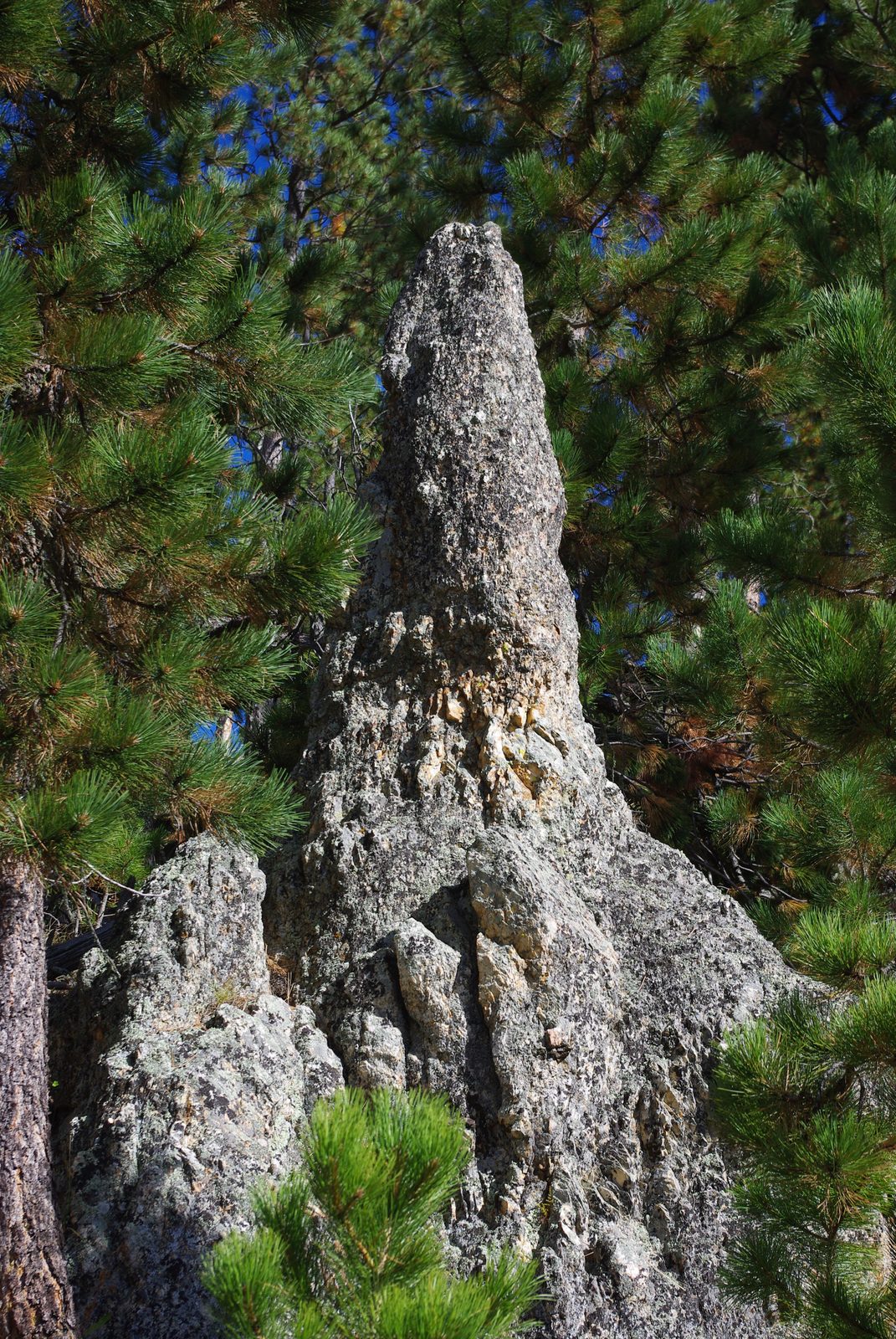
The site chosen was a granite peak near Keystone, a mining town. The National Park Service calls the mountain’s upper granite an excellent carving medium and says it wears away very slowly compared with the rocks around it; the rock itself is the subject of The Granite Core and Granite, Rushmore and Crazy Horse.
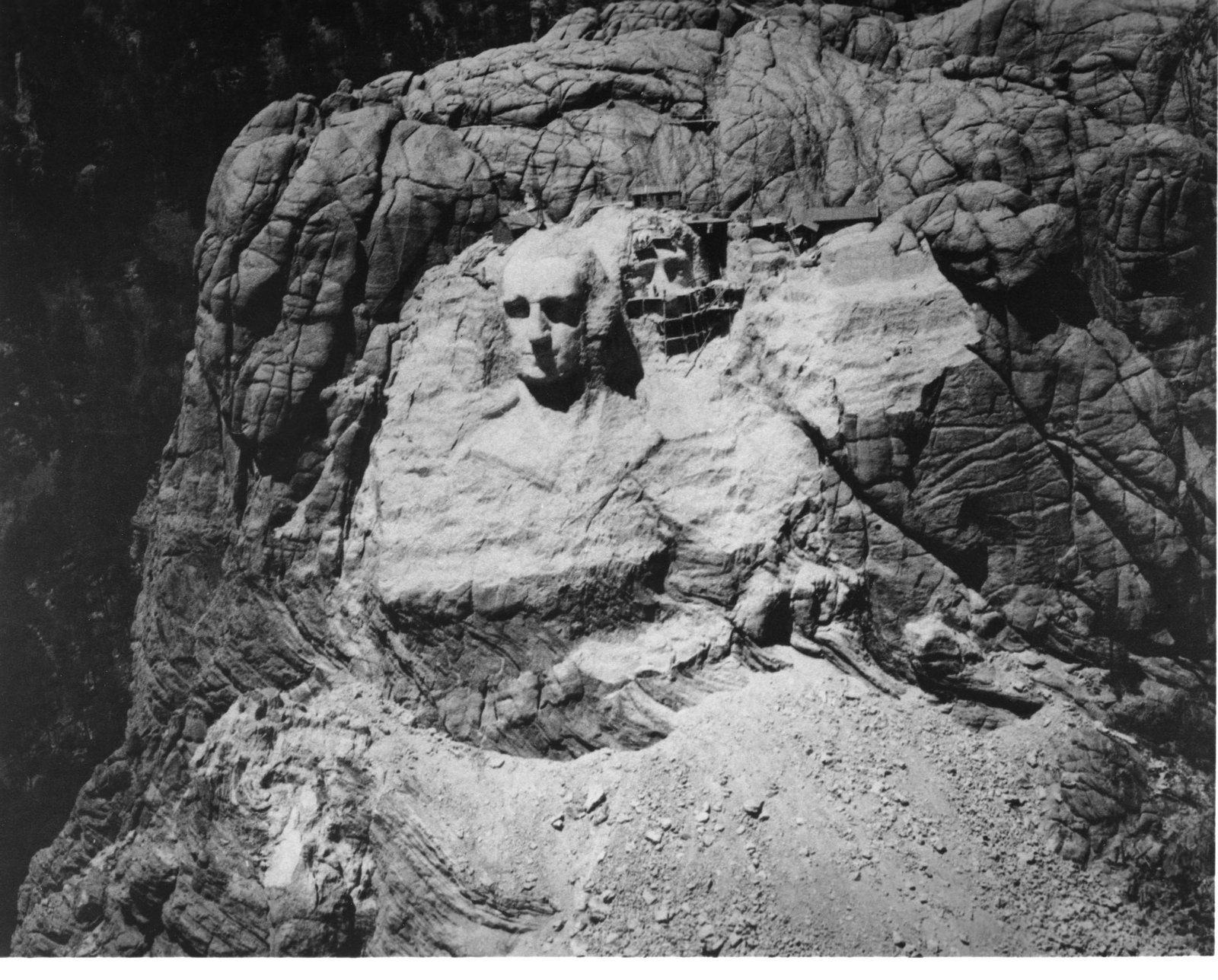
President Calvin Coolidge spoke at the dedication on August 10, 1927, and carving began on October 4, 1927. Gutzon Borglum died in Chicago on March 6, 1941, and his son Lincoln Borglum, who had supervised the work while his father raised money, took over as sculptor. The last drilling was on October 31, 1941, the day the memorial was declared a completed project, and Lincoln Borglum became its first National Park Service superintendent.
Before Rushmore, Borglum worked on a Confederate memorial at Stone Mountain, Georgia, until its sponsors fired him in 1925. In the 1920s he was also involved with the Ku Klux Klan. Whether he formally joined is disputed: a 2016 study written for the National Park Service says he joined briefly, to win backing for the Stone Mountain carving from the Klan’s prominent members, while Smithsonian Magazine says there is no proof he did. The historian John Taliaferro wrote that he became “deeply involved in Klan politics.” A 2017 history of the Stone Mountain carving by the Atlanta History Center goes further, citing significant evidence that he was “an active participant in the Klan” and embraced its ideology.
The Six Grandfathers on Treaty Land
Tribal objections to Mount Rushmore begin with where it is. The carving is in Hé Sápa, on land the 1868 treaty set apart for the tribes, and the 1877 Act took the Hills without the consent that treaty required; the tribes’ claim to them is followed on The 1980 Ruling and Land Back. Before the carving, Lakota people called the mountain the Six Grandfathers, according to the news organization ICT. Christina Rose wrote for ICT in 2013 that the Lakota saw any cutting of the mountain as disrespect.
Before President Donald Trump’s visit in July 2020, tribal leaders spoke plainly. Harold Frazier, chairman of the Cheyenne River Sioux Tribe, wanted the carving, a “brand on our flesh,” taken down and offered to do it himself for free. Philimon Two Eagle, a Brulé Lakota who heads the Sicangu Treaty Council, told Voice of America that to him it is “a symbol of ethnic cleansing, forced assimilation and the theft of our territory.” Julian Bear Runner, then president of the Oglala Sioux Tribe, wrote to Trump that he was not welcome, citing a “lack of consultation” with Lakota leaders.
Others would keep or accept the carving. Of the tribal members VOA interviewed in 2020, most would rather keep the monument and teach from it, and Terry FastHorse, a Brulé Lakota, asked why a museum honoring his people could not be built below it. Donovin Sprague, a Lakota historian, told ICT he had always known that the presidents’ faces on treaty land were “here and not going away.” Gerard Baker, a Mandan-Hidatsa man who was superintendent at Mount Rushmore from 2004 to 2010, has said the four presidents “did something good for the country,” while also having a hand in federal policies that suppressed tribal cultures.
Occupations and Protests at the Mountain
The 1970 climbers were led by United Native Americans, a group based in San Francisco. Its president, Lehman Brightman, helped organize the occupation “at the behest of local Sioux people,” Alysa Landry wrote for ICT in 2017. The protesters renamed the peak Crazy Horse Mountain and held prayer vigils asking for the land back. The camp held out into November 1970, until hard winter weather drove the last of them down.
On June 6, 1971, the American Indian Movement led a second occupation, demanding that the United States honor the 1868 treaty. It lasted 12 hours, and 20 people, nine men and 11 women, were arrested.
On July 3, 2020, the day of Trump’s visit, protesters blocked the road to Mount Rushmore, and 21 people were arrested, among them Nick Tilsen, president of NDN Collective, by that group’s account. That October, NDN launched its LANDBACK campaign with a call to close Mount Rushmore, and Tilsen asked that “all public lands in the Black Hills be returned to Indigenous people.” The campaign is covered on The 1980 Ruling and Land Back.
Henry Standing Bear’s Invitation
Crazy Horse Memorial began with a Lakota request. Henry Standing Bear, a Brulé Lakota born near Pierre, wanted a memorial to his people in the Black Hills, on the same grand scale as Mount Rushmore, the Memorial’s own history says. With other Lakota leaders he set up an association to push for a carving of Crazy Horse (Tȟašúŋke Witkó), the Oglala Lakota leader, and in time Standing Bear found his sculptor in Korczak Ziolkowski, who was born in Boston. In a 1939 letter, Standing Bear wrote that he and his fellow chiefs wanted white people to know that “the red man has great heroes,” too.
The Memorial’s own account dates the dedication to June 3, 1948, when Standing Bear pointed to Thunderhead Mountain and told the crowd the carving would help tribal and non-tribal people understand one another and repair relations. The Memorial gives the day, and Time reported the same date in 1957; the Encyclopedia of the Great Plains confirms the year of the first blast.
The Crazy Horse Memorial Foundation, formed in 1948, is a nonprofit. In its own words, its mission is to “protect and preserve the cultures, traditions, and living heritage” of the continent’s tribes. Besides the mountain, it runs the Indian Museum of North America and the Indian University of North America, created in 2010. The Memorial calls the sculpture the world’s largest mountain carving in progress. On June 3, 1998, the Memorial dedicated the face of Crazy Horse, and the carvers turned next to the horse’s head.
Do Lakota People Support Crazy Horse Memorial?
Some do and some don’t, and the split runs through Crazy Horse’s own relatives. Supporters begin with Standing Bear’s invitation, and tribal members work at the Memorial today. Whitney Rencountre, a Dakota of the Crow Creek Sioux Tribe, became head of the foundation in 2022, when Dianne Amiotte-Seidel, an Oglala Lakota, was its enrollment manager, Native America Calling reported. Rencountre told KOTA in 2024 that tribal people can turn to the Memorial to keep their history alive.
The Clown family, Minneconjou Lakota from the Cheyenne River Reservation who trace their descent to Crazy Horse’s family, told The Forum that three of their men posed as models for Ziolkowski, and that a photograph of a fourth went into the sketch the carving follows. Floyd Clown, who describes himself as a grandnephew of Crazy Horse, said the sculptor “kept his promise to our family.”
Other relatives object. In 2003 Elaine Quiver, a descendant of Crazy Horse, told Voice of America that “we didn’t give permission for someone to carve the sacred Black Hills,” where, she said, their burial grounds are. Virginia Driving Hawk Sneve, a Rosebud Sioux Tribe writer, has said that Lakota people would rather his image “be cloaked in faceless anonymity,” as a lasting reminder of defeat and of the need for new leaders, according to the Encyclopedia of the Great Plains. Tim Giago, an Oglala journalist, faulted the Memorial in 2018 for having no traditional Lakota elder as an adviser.
The Forum’s report says Crazy Horse refused to be photographed. One source is the government agent Valentine McGillycuddy, who recalled that Crazy Horse asked why he should let anyone shorten his life by taking his shadow. Charles E. Trimble, an Oglala Lakota writer, weighed the story for ICT in 2005 and sided with Tom Buecker, curator of the Fort Robinson Museum, who judged the remark likely a tall tale and thought Crazy Horse was simply seldom near a photographer. Trimble had never seen a credible source for a Lakota rule against being photographed. The firm fact is narrower: no photograph said to show him “has ever been authenticated,” Trimble wrote.
Why sculptors turned to this granite at all, and what cutting it has meant, is the thread of Granite, Rushmore and Crazy Horse.
Connected
- The Granite Core: Black Elk Peak and the NeedlesThe granite Mount Rushmore is carved from, and why it suits carving.
- Granite, Rushmore and Crazy HorseWhy sculptors chose this rock, and what carving it meant.
- Keystone, South DakotaThe mining town nearest Mount Rushmore.
- Hé Sápa: Why the Hills MatterWhat the Hills under both carvings mean to the Lakota.
- The 1980 Ruling and Land BackThe tribes’ claim to the Hills, and the 2020 LANDBACK campaign.
- The Fort Laramie Treaties of 1851 and 1868The treaty the 1970 and 1971 occupiers wanted honored.
- The 1876 War and the Taking of the HillsHow the Hills were taken, and how Crazy Horse died in 1877.
Further reading
- What did Crazy Horse look like?, Charles E. Trimble, ICT
- NDN Collective LANDBACK Campaign Launching on Indigenous Peoples’ Day 2020, NDN Collective
- The future of the Crazy Horse Memorial, Native America Calling
- This Date in Native History: Natives Occupy Mount Rushmore, Alysa Landry, ICT
- Memorial History, National Park Service, Mount Rushmore National Memorial
Sources
- Art: The Mountain Carver. Time, July 8, 1957.
- Memorial History. National Park Service, Mount Rushmore National Memorial.
- Timeline. National Park Service, Mount Rushmore National Memorial.
- Lincoln Borglum. National Park Service, Mount Rushmore National Memorial.
- Geologic Activity. National Park Service, Mount Rushmore National Memorial.
- Mount Rushmore National Memorial. Sheila R. Aaker, Encyclopedia of the Great Plains, ed. David J. Wishart, University of Nebraska–Lincoln.
- Stone Mountain. New Georgia Encyclopedia, Georgia Humanities.
- The Sordid History of Mount Rushmore. Smithsonian Magazine.
- Shrine of Democracy and Sacred Stone: Historic Resource Study, Mount Rushmore National Memorial (Paula S. Reed and Edith B. Wallace). Prepared for the National Park Service, 2016.
- Gutzon Borglum. American Experience, PBS (WGBH).
- A Condensed History of the Stone Mountain Carving. Atlanta History Center, 2017.
- Native History: Construction of Mount Rushmore Begins. Christina Rose, ICT, 2013.
- Tribal leader says Mount Rushmore needs to be removed. InForum (Forum Communications), 2020.
- Native Americans Angry Over Trump Visit to Mount Rushmore. Cecily Hilleary, Voice of America, 2020.
- Trump ‘not welcome’ at Mt Rushmore: Native American leader. Al Jazeera, 2020.
- Why Native Americans Have Protested Mount Rushmore. Jodi Rave, History.com (A&E Networks), 2020.
- This Date in Native History: Natives Occupy Mount Rushmore. Alysa Landry, ICT, 2017.
- NDN Collective LANDBACK Campaign Launching on Indigenous Peoples’ Day 2020. NDN Collective, 2020.
- Chief Henry Standing Bear. Crazy Horse Memorial (the Memorial’s own account).
- The History. Crazy Horse Memorial (the Memorial’s own account).
- Information Kit, January 2025. Crazy Horse Memorial Foundation (the Memorial’s own account), 2025.
- Crazy Horse Memorial. Amy Scherer, Encyclopedia of the Great Plains, ed. David J. Wishart, University of Nebraska–Lincoln.
- Crazy Horse Progress Includes More Than Mountain Carving. The Carolina Indian Voice, December 27, 2001, p. 2 (DigitalNC).
- Crazy Horse Memorial to celebrate 75 years of construction. Zadya Abbott, SDPB, 2023.
- The future of the Crazy Horse Memorial. Native America Calling, 2022.
- Building bridges with Crazy Horse Memorial to Native American cultures. KOTA Territory News, 2024.
- Descendants of Lakota warrior Crazy Horse aim to set the record straight. Patrick Springer, The Forum (Forum News Service).
- What’s Going on With the Crazy Horse Memorial? ICT Staff, ICT, 2012.
- Virginia Driving Hawk Sneve. South Dakota State Historical Society Press, journal contributors.
- What did Crazy Horse look like? Charles E. Trimble, ICT, 2005.
- Not all Lakota people are happy with the ‘memorial’ to Crazy Horse. Tim Giago, Indianz, 2018.
Last reviewed: