The Tribes and Hé Sápa
The Fort Laramie Treaties of 1851 and 1868
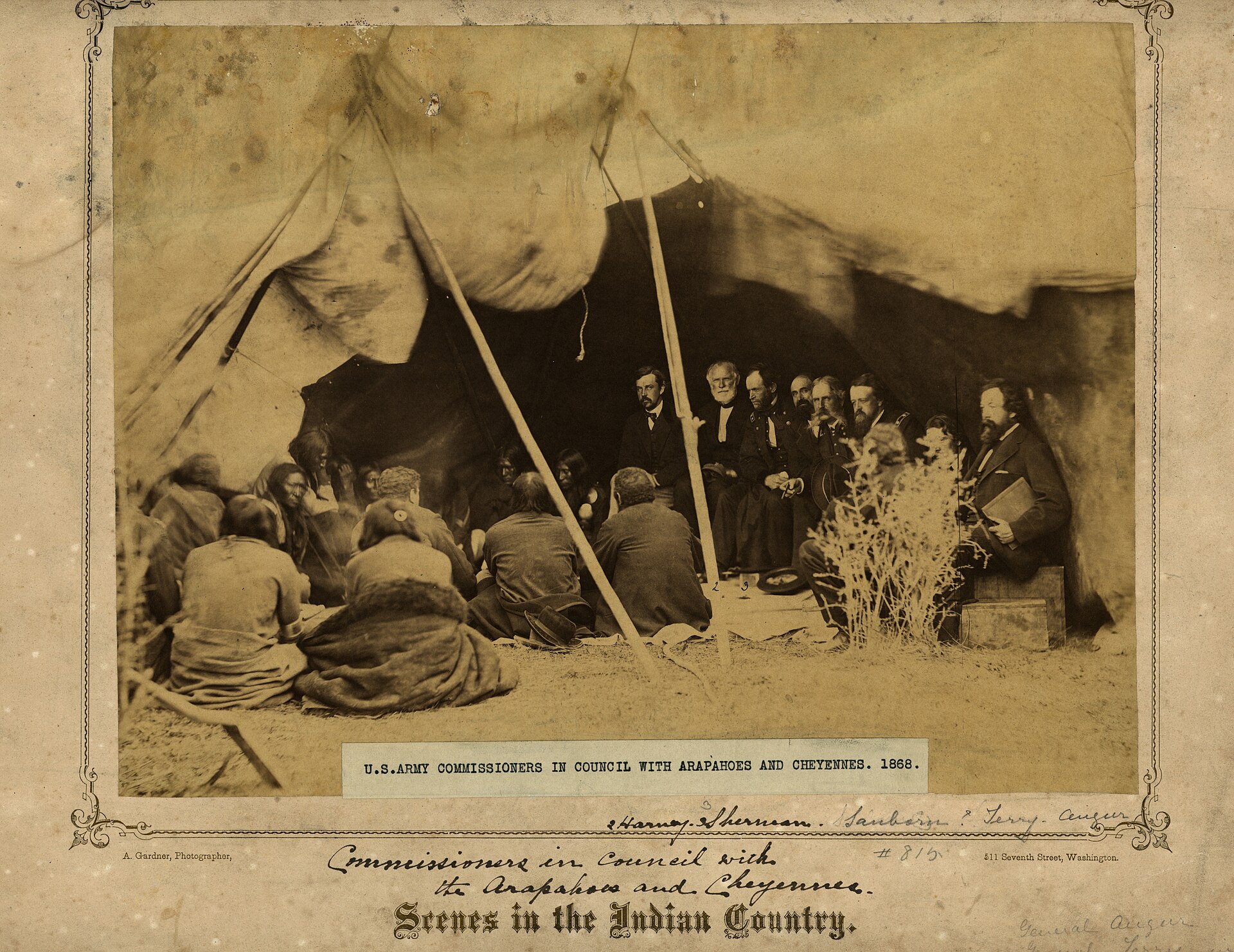
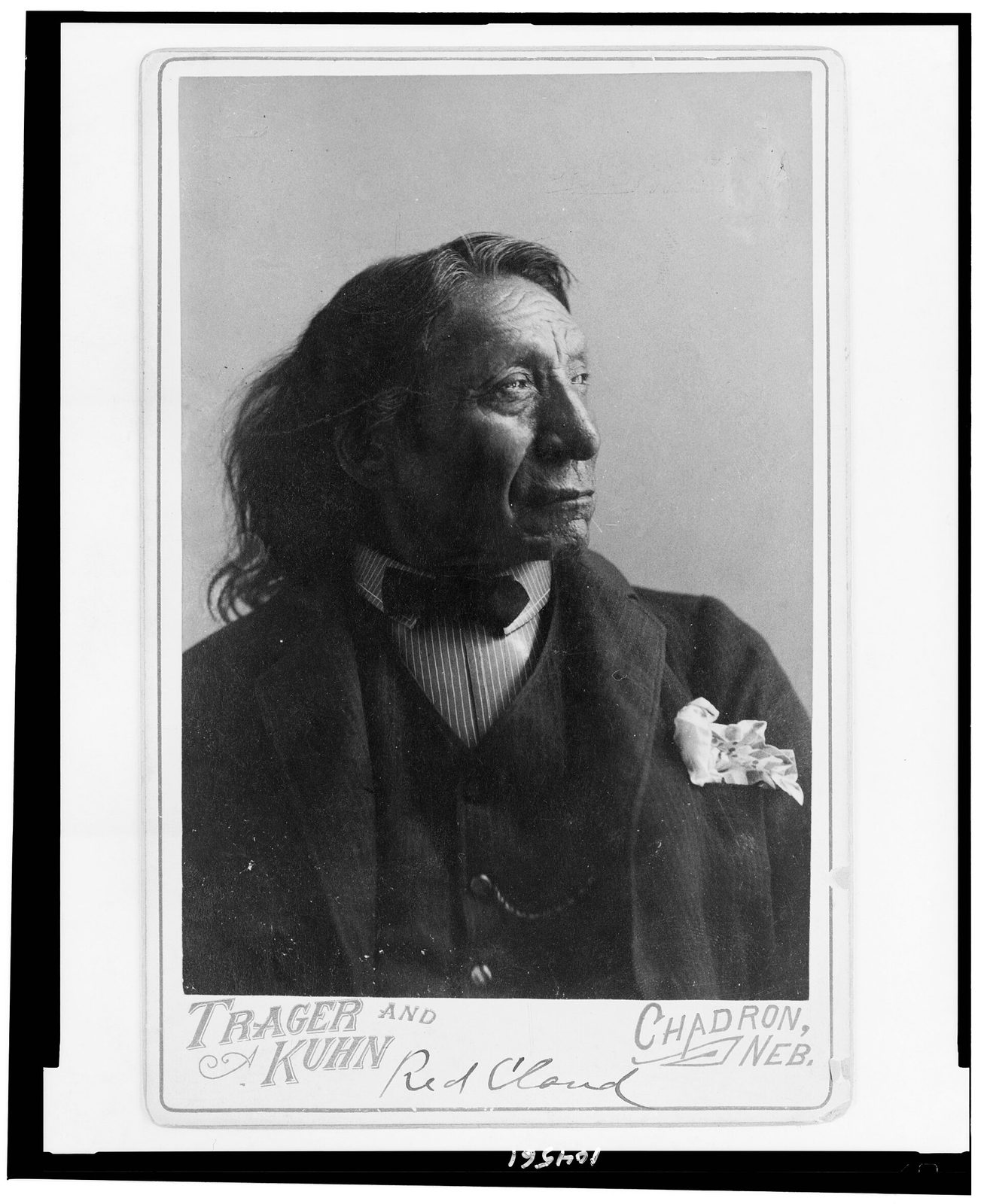
Red Cloud (Maȟpíya Lúta) would not sign until the soldiers left. Other Lakota leaders signed a new treaty at Fort Laramie, in present-day Wyoming, in the spring of 1868, but the Oglala leader of the war over the Bozeman Trail waited until the Army had pulled out of its forts along that road, as the treaty required. He signed on November 6, 1868. That treaty set apart the Great Sioux Reservation, with the Black Hills (Hé Sápa) inside it. It followed an earlier Fort Laramie treaty, of 1851, and Red Cloud’s War came between the two. What the treaties said on paper and what the tribes understood they had secured did not always match.
1851: The Council at Horse Creek
The first Fort Laramie Treaty, also called the Horse Creek Treaty, was signed on September 17, 1851. Fort Laramie lacked the space and grazing for the crowd and its horses, so the council shifted about 30 miles east, to where Horse Creek joins the North Platte. About 10,000 people came. Twenty-one chiefs signed for the Lakota, Cheyenne, Arapaho, Crow, Assiniboine, Mandan, Hidatsa and Arikara.
In the Cheyenne River Sioux Tribe’s telling, the United States came asking permission: Ryman LeBeau, the tribe’s chairman, told Congress in 2023 that the government wanted settlers to cross Lakota land on their way to Oregon and the California gold fields. In the treaty, the nations accepted the government’s right to build roads and military posts in their territories and agreed to keep peace among themselves. The United States promised to protect them from harm by its citizens and to pay $50,000 a year in food, goods, livestock and farm tools.
Article 5 was a first attempt to fix in writing the country each nation claimed. The Lakota line ran from the Missouri River to the North Platte and along what the treaty called “the range of mountains known as the Black Hills,” and the Cheyenne River Sioux Tribe reads the treaty as recognizing Lakota territory that included the Hills. No nation gave up its claims to other lands, or its right to hunt and travel across the others’ territories. Commissioner David D. Mitchell told the council the lines were “not intended to take any of your lands away,” according to the Wyoming State Historical Society’s account.
Mitchell wanted one head chief for each nation. Terra Blue, a Brulé, told him the Lakota had no way to set one man over all their bands, so Mitchell picked a Brulé warrior, Conquering Bear. After the signing, the Senate cut the payments from 50 years to 10 and put the change to the tribes only afterward.
Red Cloud’s War and the Bozeman Trail Forts
Red Cloud’s War, from 1866 to 1867, was fought over a road and its forts; the Supreme Court and the Cheyenne River Sioux Tribe’s chairman have called it the Powder River War. In 1863 John Bozeman marked out a wagon road north from the Oregon Trail to the Montana gold camps. Tribes had used the route for centuries, and it cut across the Powder River country, where the Lakota, Arapaho and others hunted. In 1866, while government agents at Fort Laramie asked Lakota leaders to allow travel on the road, the Army marched in to build three forts along it: Fort Reno, Fort Phil Kearny and Fort C.F. Smith. Red Cloud refused to sign and went to war, with Cheyenne and Arapaho allies.
In December 1866, a decoy drew Captain William Fetterman’s command away from Fort Phil Kearny, and Lakota fighters under Red Cloud, Crazy Horse (Tȟašúŋke Witkó) and High-Back-Bone killed Fetterman and all of his men. Washington decided to negotiate: the raids showed no sign of ending, and emigrants had all but stopped using the road. The 1868 treaty promised that the posts would be abandoned and the road to Montana closed. Once the troops were gone, warriors burned Fort Phil Kearny. The National Park Service says it plainly: “For the first time, the United States government had lost a war.”
What Did the 1868 Treaty Say?
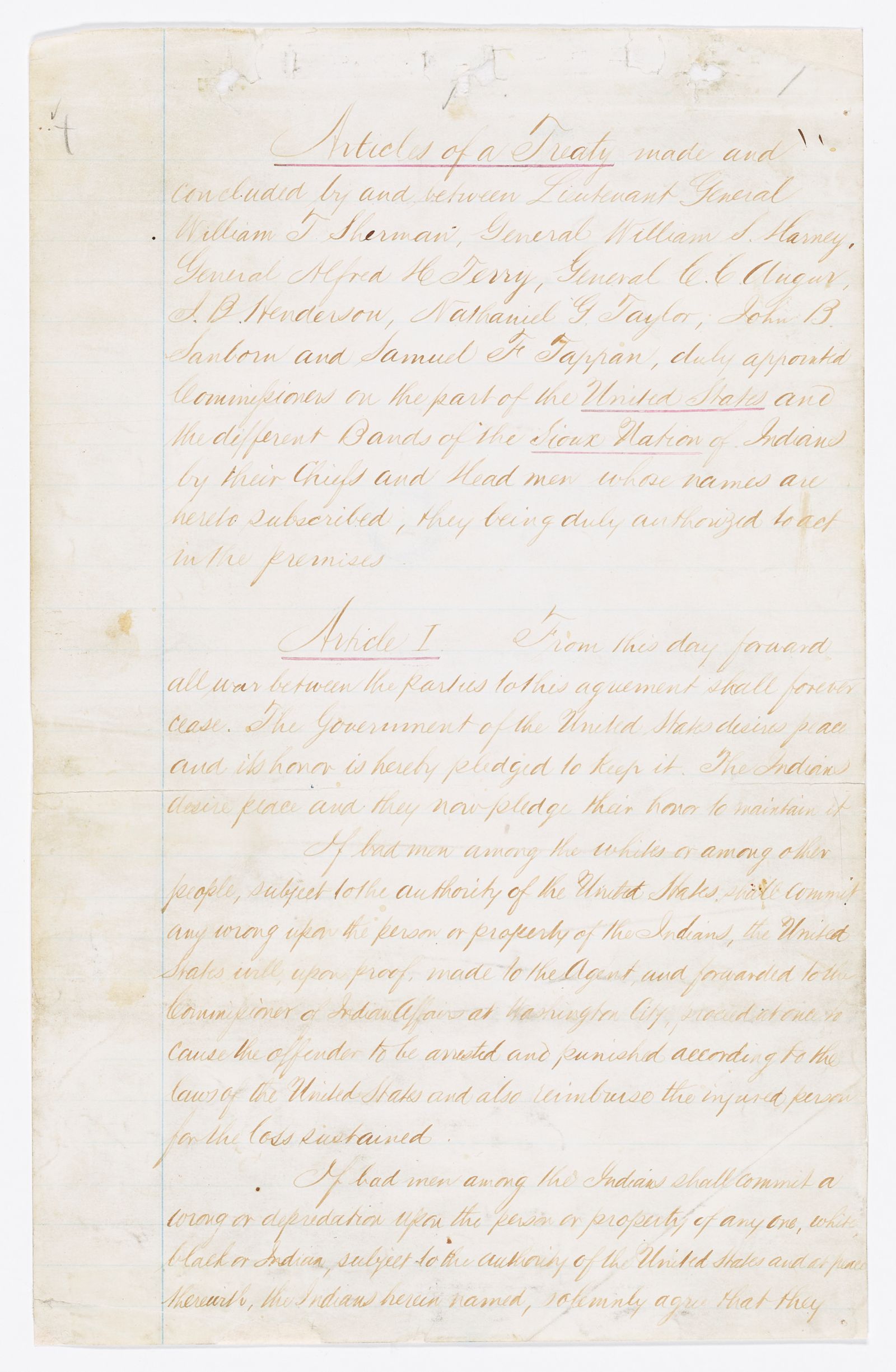
The Fort Laramie Treaty of 1868 ended the war, created the Great Sioux Reservation and set rules for the tribes’ country beyond it. It is dated April 29, 1868, the day Brulé leaders signed; other bands followed over the next months, and it was proclaimed on February 24, 1869. Its parties were the Brulé, Oglala, Minneconjou, Yanktonai, Hunkpapa, Blackfoot, Cuthead, Two Kettle, Sans Arc and Santee bands, and the Arapaho.
Article 2 created the Great Sioux Reservation, bounded by the Missouri River, the northern line of Nebraska, the 104th meridian and the 46th parallel. The land inside, which included the Black Hills, was “set apart for the absolute and undisturbed use and occupation of the Indians herein named,” and the United States “solemnly” agreed that no one without authority would “ever be permitted to pass over, settle upon or reside in” it. The reservation took in about half of present-day South Dakota, the Supreme Court later noted.
The Wyoming side of the Hills, with Devils Tower, Inyan Kara Mountain and the Bear Lodge Mountains, lay west of the 104th meridian, outside the reservation. It fell instead under Article 16, which made the country north of the North Platte River and east of the summits of the Bighorn Mountains “unceded Indian Territory,” where no white person could settle, or even pass through without the tribes’ consent. Under Article 11, the tribes gave up living permanently outside the reservation but kept the right to hunt north of the North Platte and on the Republican Fork “so long as the buffalo may range thereon in such numbers as to justify the chase.”
Article 12 guarded the reservation itself. No treaty ceding any part of it would be valid “unless executed and signed by at least three fourths of all the adult male Indians occupying or interested in the same.” The rest set out the government’s plans: an agency on the Missouri River, farms, schools, and four years of meat and flour for those who settled on the reservation, which the tribes agreed to regard as their “permanent home.”
What the Tribes Understood They Had Secured
To Red Cloud, the treaty was about the forts and the end of the war. Speaking at Cooper Union in New York in June 1870, as the New York Times reported his words, he said his people could not read the papers brought to them in 1868 and were not told honestly what they said. “We thought the treaty was to remove the forts,” he said, and that the fighting would stop. Told that they had agreed to trade on the Missouri River, his people said no. In Washington, he said, the president showed him what the treaty actually said, and that the interpreters had deceived him.
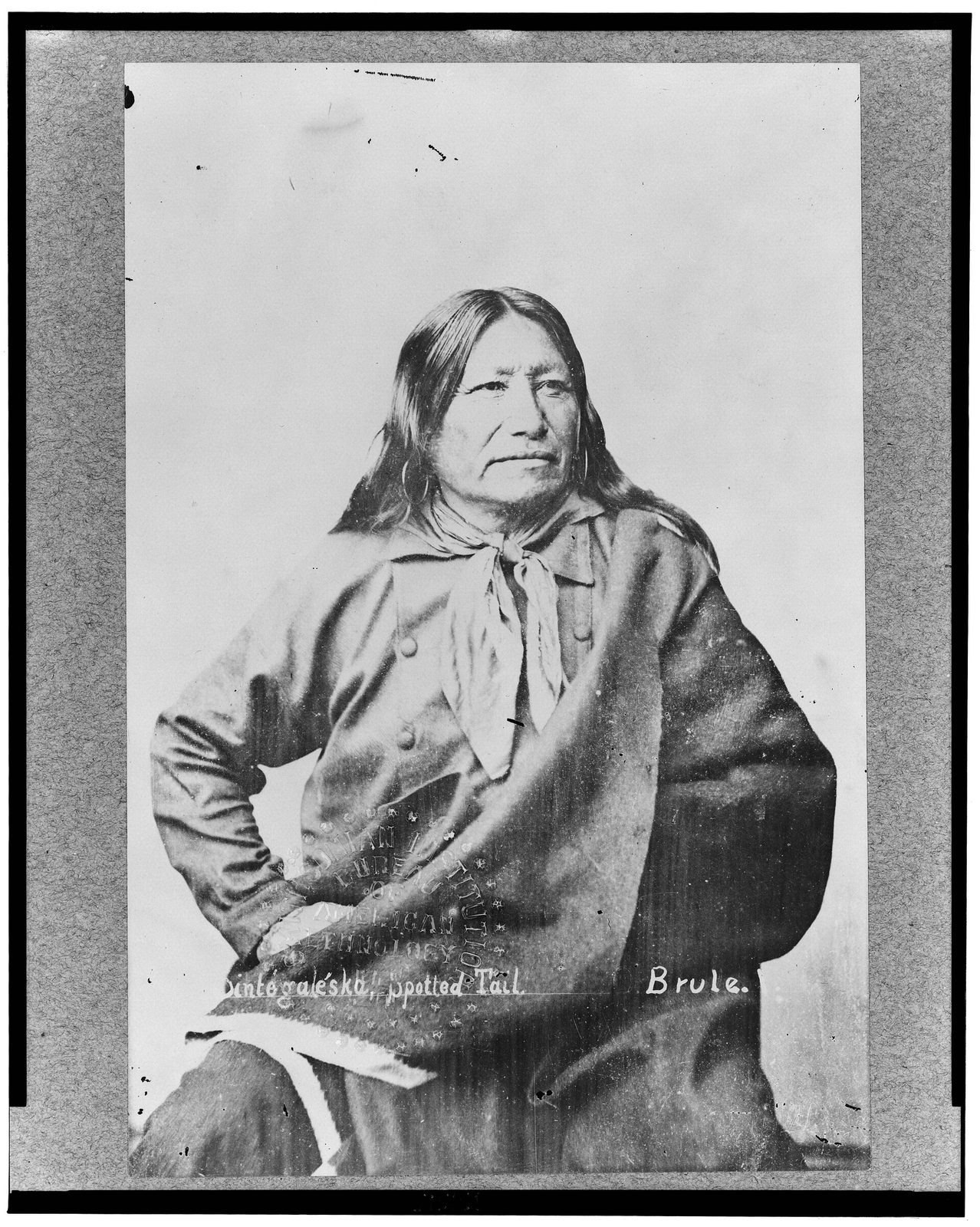
In the Rosebud Sioux Tribe’s history, the war ended with the Black Hills promised to the Lakota forever, a promise the United States did not keep. The same history says Spotted Tail, a Brulé signer, was “tricked” in 1868 into a treaty that cost the Lakota their land on the Republican and Platte rivers. The Cheyenne River Sioux Tribe stresses what the nation kept: Chairman LeBeau told Congress that under the treaty the Great Sioux Nation reserved western South Dakota as its permanent home, with unceded territory and hunting lands reaching into six present-day states. Not every leader signed: Sitting Bull and his Hunkpapa band did not, the State Historical Society of North Dakota notes.
At the treaty’s 150th-anniversary showing at the National Museum of the American Indian in 2018, Chief John Spotted Tail of the Rosebud Sioux Tribe, great-great-grandson of the Brulé signer, said the United States does not honor the treaty, “but as Lakota people we honor it every day.” He said he would like the land returned. To Devin Oldman of the Northern Arapaho Tribe, the treaty pledged a way of life and stood for freedom.
The government saw it differently. By the National Archives’ own account, federal treaty-making in those years aimed to move tribes off their land and onto reservations. In the National Park Service’s telling, the United States would keep settlers out of tribal country, the Black Hills above all, and in return the tribes would settle at agencies and give up a life on the move.
How Was the 1868 Treaty Broken?
Gold seekers came onto treaty land after the Custer Expedition of 1874 reported gold. A law of August 15, 1876 then provided that no more money would be appropriated for the tribes’ food unless they first gave up the Hills and their land outside the reservation. The “agreement” that followed gave up the Hills, the unceded territory and the hunting rights; it was signed by only 10 percent of the adult men, as the Supreme Court found, where Article 12 required three-fourths, and Congress made it law in the 1877 Act. The land was stolen, and The 1876 War and the Taking of the Hills tells that story in full.
Connected
- The 1876 War and the Taking of the HillsHow the 1868 treaty was broken, from the gold rush to the 1877 Act.
- The 1980 Ruling and Land BackThe Supreme Court case built on the 1868 treaty, and what the tribes ask for now.
- The Custer Expedition of 1874The Army expedition that reported gold inside the Great Sioux Reservation.
- Gold, a Broken Treaty and Land BackThe chain from French Creek gold to the treaty’s breaking and the claim today.
- Hé Sápa: Why the Hills MatterWhat the land inside the treaty lines means to the Lakota.
- Sacred Sites: Bear Butte, Devils Tower and Wind CaveDevils Tower lay in the treaty’s unceded territory.
- The Wyoming Side of the HillsThe part of the Hills west of the 1868 reservation line.
Further reading
- History and Culture, Rosebud Sioux Tribe (with links to the 1851 and 1868 treaty documents)
- The 1868 Treaty of Fort Laramie, Never Honored by the United States, Goes on Public View, Dennis Zotigh, National Museum of the American Indian
- The Fort Laramie Treaty of 1868, every page of the original, National Archives Catalog
- Tribal Treaties Database, Oklahoma State University Libraries (the treaty texts as printed in Kappler’s Indian Affairs: Laws and Treaties)
Sources
- Treaty of Fort Laramie (1868), with transcript. National Archives, Milestone Documents (original in Record Group 11).
- Treaty with the Sioux—Brulé, Oglala, Miniconjou, Yanktonai, Hunkpapa, Blackfeet, Cuthead, Two Kettle, Sans Arcs, and Santee—and Arapaho, 1868. Charles J. Kappler, ed., Indian Affairs: Laws and Treaties, vol. 2, 1904; Oklahoma State University Libraries.
- Treaty of Fort Laramie with Sioux, Etc., 1851. Charles J. Kappler, ed., Indian Affairs: Laws and Treaties, vol. 2, 1904; Oklahoma State University Libraries.
- Agreement with the Sioux, Arapaho, and Northern Cheyenne, 1876, as ratified by the Act of February 28, 1877. Charles J. Kappler, ed., Indian Affairs: Laws and Treaties, vol. 1, 1904; Oklahoma State University Libraries.
- United States v. Sioux Nation of Indians, 448 U.S. 371. Supreme Court of the United States, 1980 (Legal Information Institute, Cornell Law School).
- Act of August 15, 1876, ch. 289, 19 Stat. 176 (Sioux subsistence provision at page 192). U.S. Statutes at Large, via GovInfo, 1876.
- Horse Creek Treaty. National Park Service, Fort Laramie National Historic Site, updated 2025.
- Horse Creek Treaty. Lesley Wischmann, Wyoming State Historical Society, 2014.
- Red Cloud’s War. Emilene Ostlind, Wyoming State Historical Society, 2014.
- Bozeman Trail. National Park Service, Bighorn Canyon National Recreation Area, 2015.
- 1868 Fort Laramie Treaty Grounds. National Park Service, Fort Laramie National Historic Site, updated 2026.
- Section 3: The Treaties of Fort Laramie, 1851 & 1868. State Historical Society of North Dakota, North Dakota Studies.
- Address at Cooper Union. Red Cloud, as printed in the New York Times, June 17, 1870; Teaching American History, Ashbrook Center, Ashland University.
- History and Culture. Rosebud Sioux Tribe.
- Testimony of Chairman Ryman LeBeau, Cheyenne River Sioux Tribe, on H.R. 3371. U.S. House Committee on Natural Resources, 2023.
- In 1868, Two Nations Made a Treaty, the U.S. Broke It and Plains Indian Tribes Are Still Seeking Justice. Kimbra Cutlip, Smithsonian Magazine, 2018.
- The 1868 Treaty of Fort Laramie, Never Honored by the United States, Goes on Public View. Dennis Zotigh, National Museum of the American Indian, Smithsonian Institution, 2018.
- Devils Tower and Sacred Land Disputes. National Park Service, Devils Tower National Monument, teacher background materials.
Last reviewed: