History
The Custer Expedition of 1874
Word of gold reached the outside world in a scout’s mailbag. Charley Reynolds carried it out alone late on August 3, 1874, from an Army camp near the South Fork of the Cheyenne River, bound for Fort Laramie, about 75 miles off in a straight line. The day before, Lt. Col. George Armstrong Custer had written in a dispatch that gold had been found in the Black Hills at several places. Reynolds was part of the Custer Expedition of 1874, an Army column that marched from Fort Abraham Lincoln through the Black Hills and back between July 2 and August 30, 1874. The Hills lay inside the Great Sioux Reservation, set apart for the tribes by the 1868 treaty, and the expedition’s gold reports drew miners onto that land the same year.
Why Did the Army Send Custer into the Black Hills?
Officially, the expedition was a reconnaissance. Orders of June 8, 1874, sent it from Fort Abraham Lincoln toward Bear Butte to explore the country and its possible routes, and gave Custer 60 days. Lt. Gen. Philip Sheridan wrote that a large post in the Hills had been recommended for two or three years, so troops could threaten the villages of raiding bands, and that the president and his secretaries of War and the Interior had approved.
Gold appeared nowhere in the orders. Rumors of it had run for years. Ryman LeBeau, chairman of the Cheyenne River Sioux Tribe, told a Senate committee in 2023 that Custer went on a “secret” expedition and brought newspaper reporters along, starting a gold rush. The South Dakota State Historical Society now describes the march as made “in search of gold and possible fort sites.”
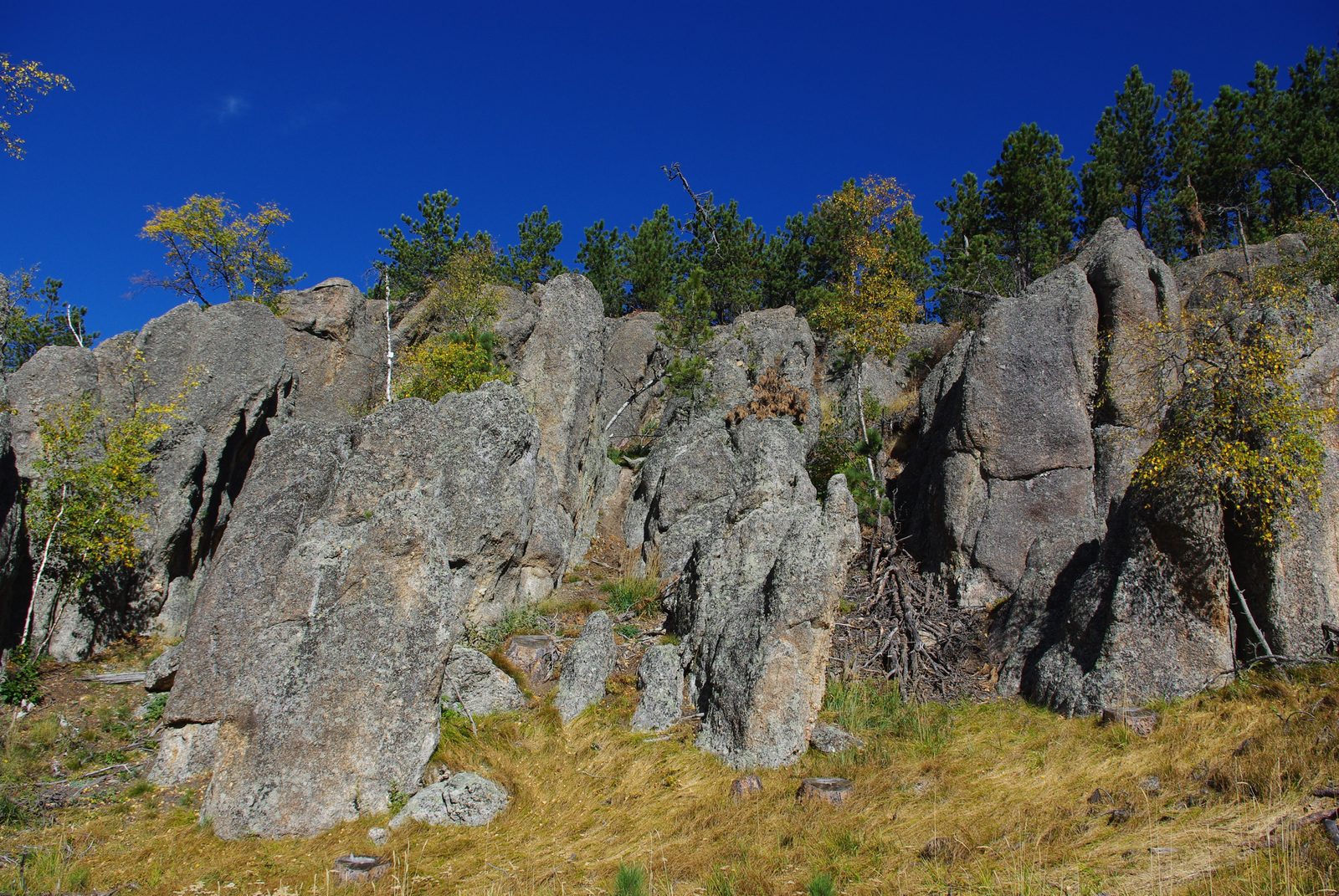
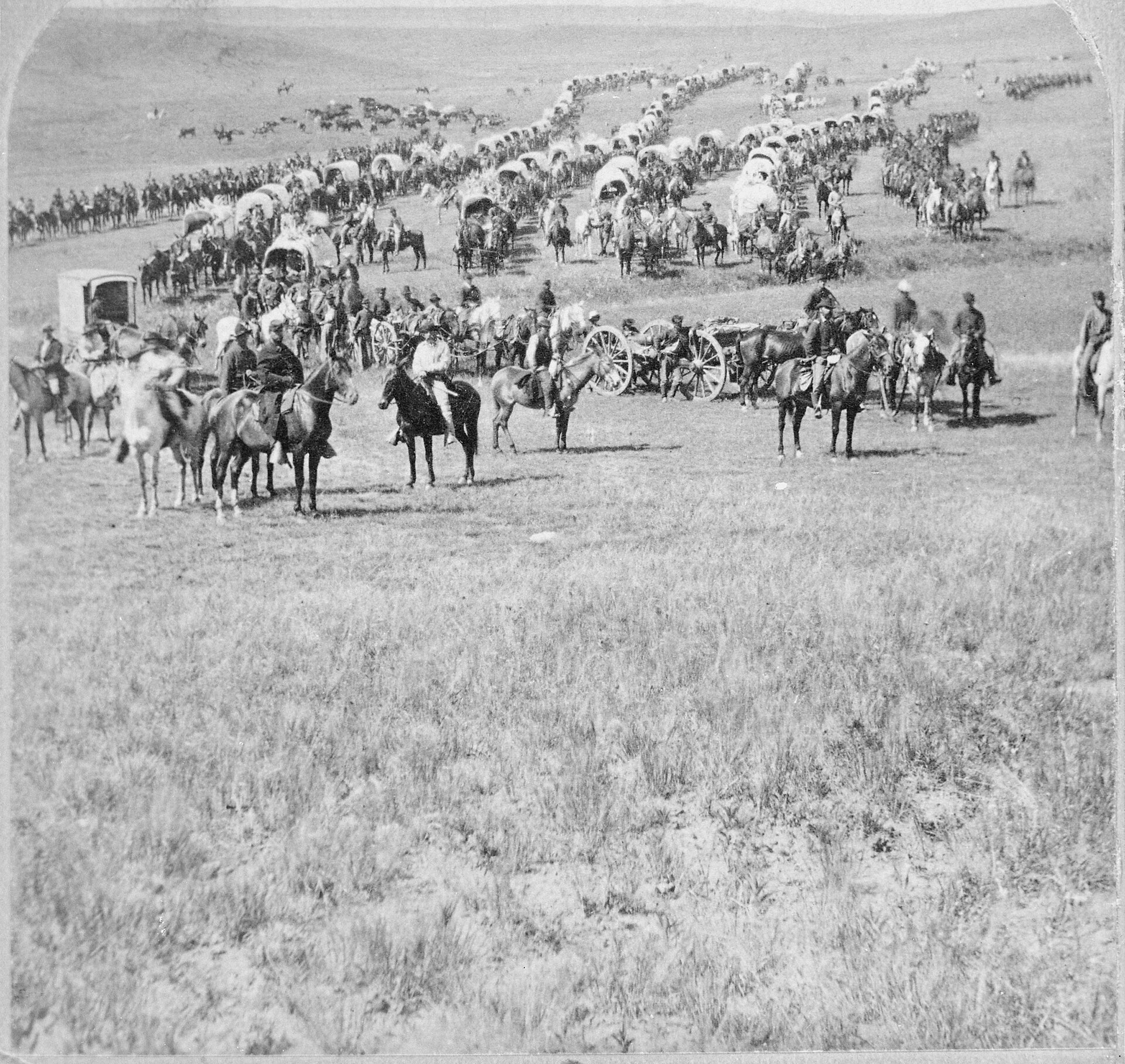
William Ludlow, the Army engineer, counted about 1,000 men: 10 companies of the 7th Cavalry, two infantry companies, scouts, guides and teamsters, with about 110 wagons and ambulances, three Gatling guns and a cannon. Custer was a lieutenant colonel; his engineer’s report calls him General, an honorary rank from the Civil War. The scouts included Arikara men under Bloody Knife.
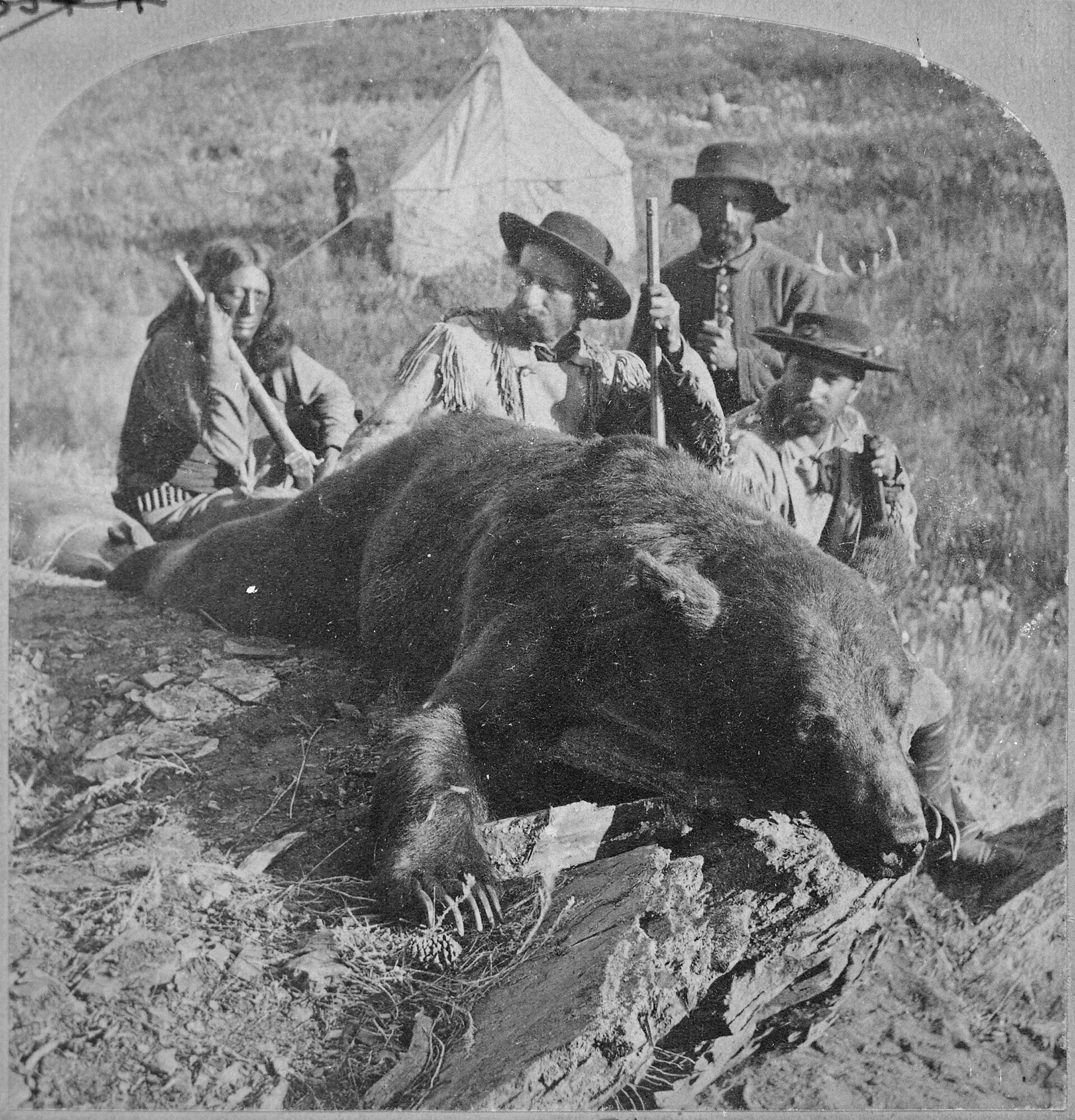
Ludlow brought Newton H. Winchell, Minnesota’s state geologist, and George Bird Grinnell came in place of the Yale paleontologist O. C. Marsh. William H. Illingworth of St. Paul took the photographs, about 60 views by Ludlow’s count and close to 70 by later ones. At least three newspaper correspondents rode along, among them William Eleroy Curtis of the Chicago Inter-Ocean. So did two miners, Horatio N. Ross and William McKay, who are not named in the expedition’s orders; Custer paid their way, according to Smithsonian Magazine.
The Route: 60 Days Out and Back
The column left Fort Abraham Lincoln at 8 a.m. on July 2, 1874, marched southwest across the prairie, and entered the Hills on July 20.
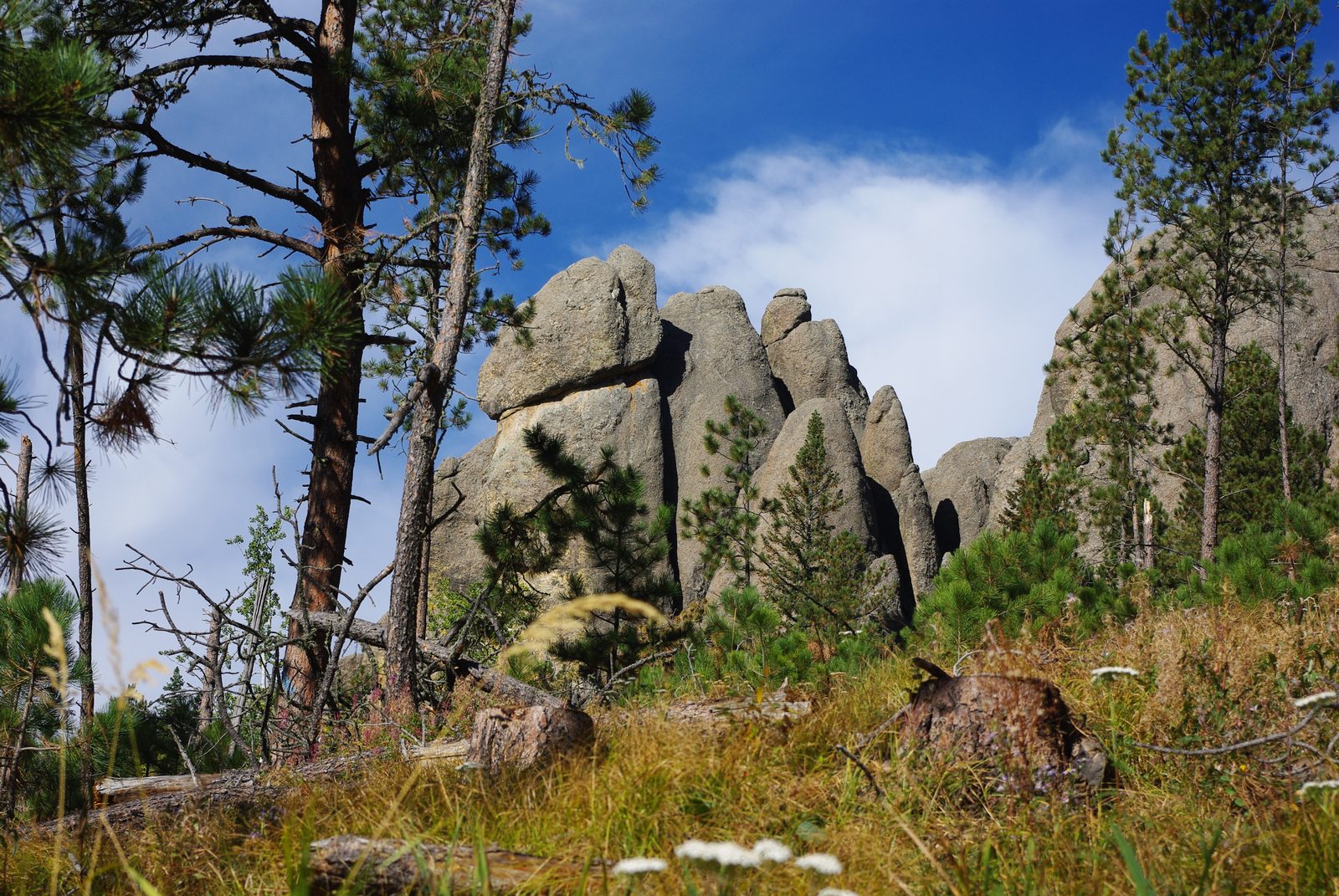
On July 30 the expedition reached an open, grassy stretch of French Creek, later named Custer Park, near present-day Custer. On July 31 Custer, Ludlow and Winchell climbed nearly to the top of what is now Black Elk Peak (called Harney Peak until 2016). The column turned north, left the Hills on August 14, camped near Bear Butte, and was back at Fort Lincoln on August 30, the 60th day, after 883 miles.
Gold at French Creek
Gold was reported in late July and early August 1874, and the record names no single day of discovery. On July 27 Ludlow noted prospectors digging and panning all day. Winchell’s notes for July 30, the day the column reached French Creek, record miners reporting gold in the valley’s sand and gravel. On August 2 a miner laid out what he said was his day’s take in Custer’s tent, and Ludlow, using a magnifier, counted perhaps 30 flecks and scales. Custer wrote that day of 40 or 50 particles on his table and passed on the prospectors’ belief that the gold would pay.
Who found it first depends on the account. The South Dakota State Historical Society credits Ross; Ludlow named no one. Two Arikara scouts, Strikes Two and Bear’s Belly, telling the story 38 years later, said a man named Red Angry Bear found gold in a spring and called the others to come and get some. Expedition members staked claims for a Custer Park Mining Company, to be worked once the government had peaceful possession.
How Much Gold Did the Expedition Find?
Very little, by the expedition’s own record. Ludlow concluded that the evidence was “on the whole discouraging” to hopes of large deposits of precious metal. Winchell said he had seen none of the gold, which Custer blamed on professional pique. Lt. Col. Fred Grant, the president’s son, wrote that the miners showed him the same pieces every day and that he did not believe any gold had been found at all.
The reports that reached the public were bigger. Curtis wrote in the Inter-Ocean that “from the grass roots down it was ‘pay dirt.’” Newspapers across the country carried the news, the Supreme Court later recounted, and Custer’s glowing descriptions stirred a public demand to open the Hills. E. P. Smith, the Commissioner of Indian Affairs, wrote that overblown reports from Custer, his explorers and the correspondents had whetted the border’s appetite for the Hills, and that little could hurt the Lakota more than an effort to push them off their land.
A later tale has a blacksmith shoeing Reynolds’s horse backward to fool trackers; South Dakota History calls it a popular myth, and men on the expedition recalled leather coverings on the hoofs.
The Expedition, the Lakota and the 1868 Treaty
In the Lakota view, the Supreme Court wrote in 1980, the expedition was itself a violation of the 1868 treaty. The Court added, citing the historian Donald Jackson, that in later talks over the Hills a chief known as Fast Bear called Custer’s trail “that thieves’ road.” Tim Giago, an Oglala Lakota journalist, wrote in 2009 that Custer’s party found gold and violated the treaty only six years after it was signed. Article 2 of the Fort Laramie Treaty of 1868 promised that no one would ever pass over, settle on or live in the reservation, which took in the Black Hills (Hé Sápa), except people the treaty named and the “officers, agents, and employees of the government” authorized to enter on duties required by law.
The Army defended the march. When Bishop Hare protested to the secretary of the interior, Brig. Gen. Alfred H. Terry, Custer’s department commander, answered that the column sought routes between Army posts: “It seeks neither gold, timber nor arable land.” His letter left out the miners. Smithsonian Magazine draws the line there: the treaty allowed scouting for a post site, it says, but not a search for gold. Custer himself, in September 1874, granted that nearly all the discoveries lay inside the reservation, and urged that the tribes’ title be extinguished as soon as practicable. Ludlow called the Lakota the Hills’ owners and thought the Hills would probably serve best, for the next 50 years, as their permanent reservation, though he expected settlers to fill them in time.
On July 26, deep in the Hills, Bloody Knife’s scouts came on an Oglala camp of seven lodges by Ludlow’s count, five by Custer’s, while its men were out hunting. The headman, One Stab, was married to a daughter of Red Cloud (Maȟpíya Lúta), Ludlow wrote. Uneasy at the Arikara scouts, their enemies, the families slipped away. Ludlow recorded that One Stab was held as guide and hostage; Strikes Two and Bear’s Belly remembered him staked to an iron picket pin with his feet hobbled, before Custer let him go.
What the Expedition Set in Motion
Miners followed within months, though the Army had orders to keep them out. Twenty-eight people set out from Sioux City that fall as the Gordon Party, and 26 reached Custer’s old French Creek camp on December 23, 1874, having followed his wagon trail back into the Hills. Soldiers led them out in April 1875. The Black Hills Gold Rush tells what came after them.
War came in 1876, and on June 25 of that year Lakota and Cheyenne warriors killed Custer at the Battle of the Little Bighorn, which the Lakota call the Battle of the Greasy Grass. The Fort Laramie Treaty of 1868 had set the Hills apart for the tribes’ “absolute and undisturbed use and occupation,” and the miners who followed Custer’s trail came in violation of it. Article 12 of the treaty barred any cession unless three-fourths of the adult men signed it. Only 10 percent signed the 1876 agreement that gave up the Hills, as the Supreme Court found in 1980, and Congress made it law in the Act of February 28, 1877. The Standing Rock Sioux Tribe’s history says Congress acted on its own, without the consent the treaty required. The land was stolen. The 1876 War and the Taking of the Hills follows the taking from French Creek to the 1877 Act.
Connected
- The Fort Laramie Treaties of 1851 and 1868The treaty that reserved the Hills and said who could enter them.
- The 1876 War and the Taking of the HillsHow the Hills were taken, from the miners of 1874 to the 1877 Act.
- The Black Hills Gold RushThe miners who followed Custer’s trail, and the rush that grew from them.
- Custer, South DakotaThe town near the expedition’s camp in Custer Park on French Creek.
- Gold and the Other MineralsWhere the Hills’ gold came from, in placers and in hard rock.
- Gold, a Broken Treaty and Land BackThe chain from French Creek gold to the land claim today.
- Hé Sápa: Why the Hills MatterWhat the land the expedition crossed means to the Lakota.
Further reading
- Testimony of Chairman Ryman LeBeau, Cheyenne River Sioux Tribe, before the U.S. Senate Committee on Indian Affairs, 2023
- About, Standing Rock Sioux Tribe
- Illingworth’s Custer photo collection now part of South Dakota Digital Archives, South Dakota State Historical Society Foundation (where to see the expedition photographs online)
- Report of a Reconnaissance of the Black Hills of Dakota, Made in the Summer of 1874, William Ludlow’s full report, with Winchell’s and Grinnell’s, Internet Archive
Sources
- Testimony of Ryman LeBeau, Chairman, Cheyenne River Sioux Tribe, on S. 2088, the Wounded Knee Memorial and Sacred Site Act. U.S. Senate Committee on Indian Affairs, 2023.
- Tim Giago: A day of tribal victory at Little Bighorn. Tim Giago, Indianz.com, 2009.
- About. Standing Rock Sioux Tribe.
- The Arikara Narrative of the Campaign Against the Hostile Dakotas, June, 1876 (Appendix, “Story told by Strikes Two and Bear’s Belly,” pp. 161–170). Edited by O. G. Libby, State Historical Society of North Dakota, 1920; scan at Internet Archive.
- Report of a Reconnaissance of the Black Hills of Dakota, Made in the Summer of 1874. William Ludlow, with the geological report of N. H. Winchell, Engineer Department, U.S. Army, 1875 (Internet Archive).
- Exploring the Black Hills, 1855–1875: Reports of the Government Expeditions (Colonel William Ludlow and the Custer Expedition, 1874). James D. McLaird and Lesta V. Turchen, South Dakota History 4, no. 3, South Dakota State Historical Society, 1974.
- United States v. Sioux Nation of Indians, 448 U.S. 371. Supreme Court of the United States, 1980 (Legal Information Institute, Cornell Law School).
- Treaty of Fort Laramie (1868), transcript. National Archives.
- Mining in South Dakota (education kit). South Dakota State Historical Society.
- Custer’s Map (North Dakota History Primary Sources, Unit 1). State Historical Society of North Dakota.
- Lieutenant Colonel George A. Custer (1839–1876). National Park Service, Washita Battlefield National Historic Site, 2020.
- Ulysses S. Grant Launched an Illegal War Against the Plains Indians, Then Lied About It. Smithsonian Magazine.
- 1874 Black Hills Expedition. Kirkby Teaching Resources, University of Minnesota.
- Illingworth’s Custer photo collection now part of South Dakota Digital Archives. South Dakota State Historical Society Foundation, 2014.
- W.H. Illingworth photos of the Black Hills turn 150 years old. SDPB, 2024.
- The Report of Captain John Mix of a Scout to the Black Hills, March–April 1875. Watson Parker, editor, South Dakota History 7, no. 4, South Dakota State Historical Society, 1977.
- Gordon Stockade (The Wi-Iyohi 15, no. 11). South Dakota State Historical Society, 1962.
Last reviewed: