People
Valentine McGillycuddy, Surveyor, Doctor and Agent
At the foot of the highest rock in the Black Hills, the government survey party of 1875 found cartridges left by Custer’s men the summer before, and no sign that anyone had stood on top. Later accounts name Valentine T. McGillycuddy (1849 to 1939), the survey’s topographer, as the first of its men to the top of Black Elk Peak (called Harney Peak until 2016). He went on to attend the dying Crazy Horse (Tȟašúŋke Witkó) at Camp Robinson in 1877, to run Pine Ridge Agency for seven years against Red Cloud’s opposition, and to serve as mayor of Rapid City. His ashes rest on the peak.
A Topographer on Treaty Land
Born on February 14, 1849, in Racine, Wisconsin, by a 1940 newspaper account, McGillycuddy trained as a physician and came to the Hills from the Lake and Northern Boundary surveys. In 1875 the Interior Department sent Walter P. Jenney and Henry Newton to learn the truth about the gold, as a basis for later bargaining with the tribes for the land, and added McGillycuddy to map the interior.
The 1868 treaty had reserved the Hills for the tribes, and Elizabeth Cook-Lynn, writing in Native Sun News Today in 2019, counted his mapping of the region as illegal. Even the survey’s report called the Hills “the most cherished spot of their reservation.” Within two years they were taken without the consent the treaty required (The 1876 War and the Taking of the Hills). The report’s editor credited McGillycuddy with drawing the survey’s large map, though the sheet itself names Emil Mahlo, as Old Maps of the Black Hills notes.
Who First Climbed Black Elk Peak?
No one can say; the first recorded climb is the survey’s. Newton’s chapter of the report tells of the party cutting its way along a ridge, finding the cartridges at the foot of a summit rock that seemed never climbed, and scrambling up. The astronomer Horace P. Tuttle’s barometer readings there are dated July 25, 1875. The report names no one as first up. Only later accounts name McGillycuddy: a 1940 newspaper story, the School of Mines’ history, and his own story, told in a 1941 biography by his wife Julia B. McGillycuddy, which has him felling a tree into a crevice of the last rock wall and climbing it to become “the first white man to stand on the top.”
People knew the mountain long before. Alex White Plume, an Oglala, told ICT in 2016 that it has its own name in Oglala origin stories; its renaming for Black Elk is told on Hiking Black Elk Peak.
Surgeon in the 1876 War
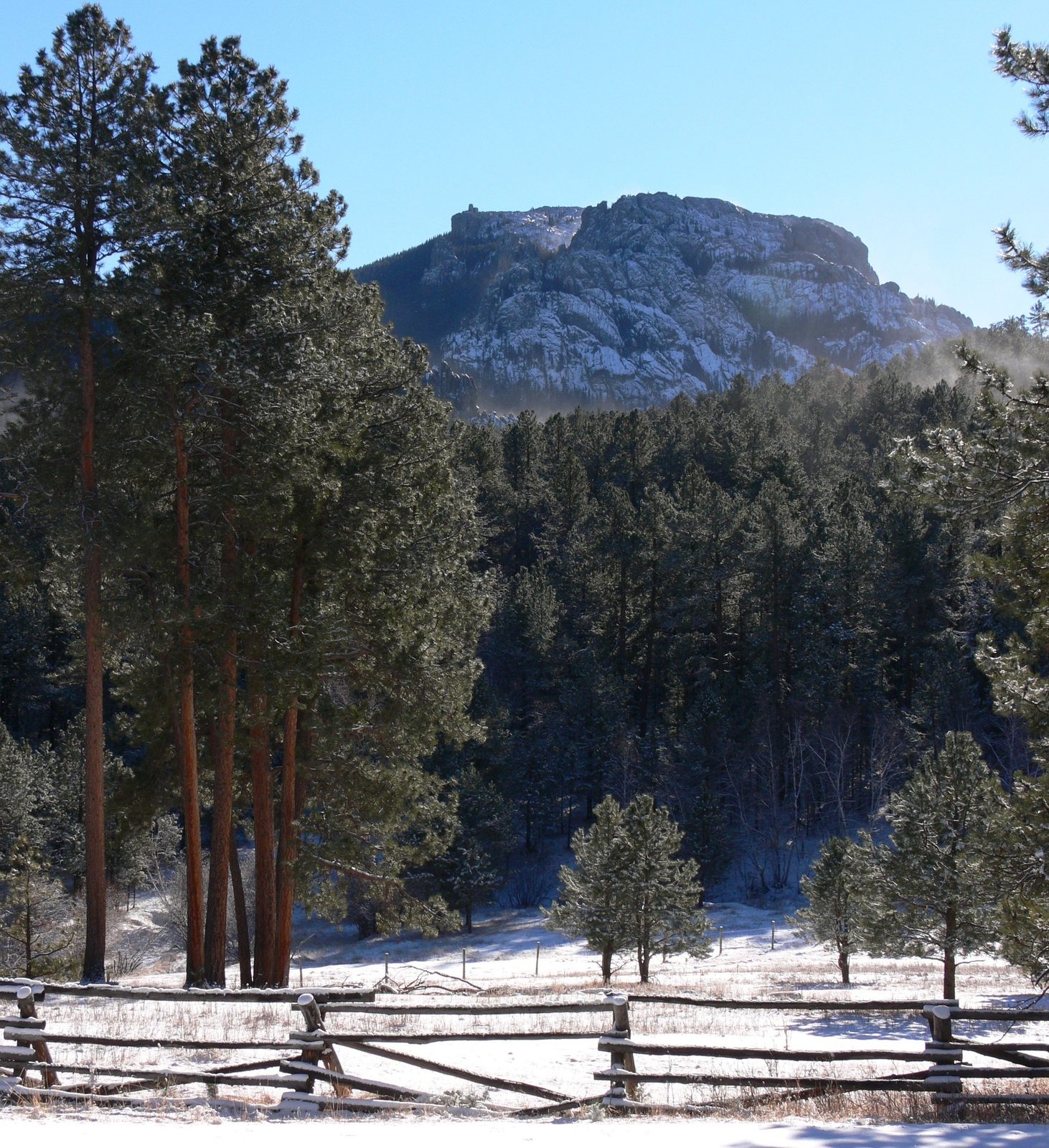
He spent most of 1876 as a surgeon on Gen. George Crook’s campaign and, by his own later account, was at the fights at Rosebud Creek and Slim Buttes. In February 1877 he went as medical officer with cavalry sent from Camp Robinson to the northern Hills after raids around Deadwood, his wife, Fanny, with him.
The Night Crazy Horse Died
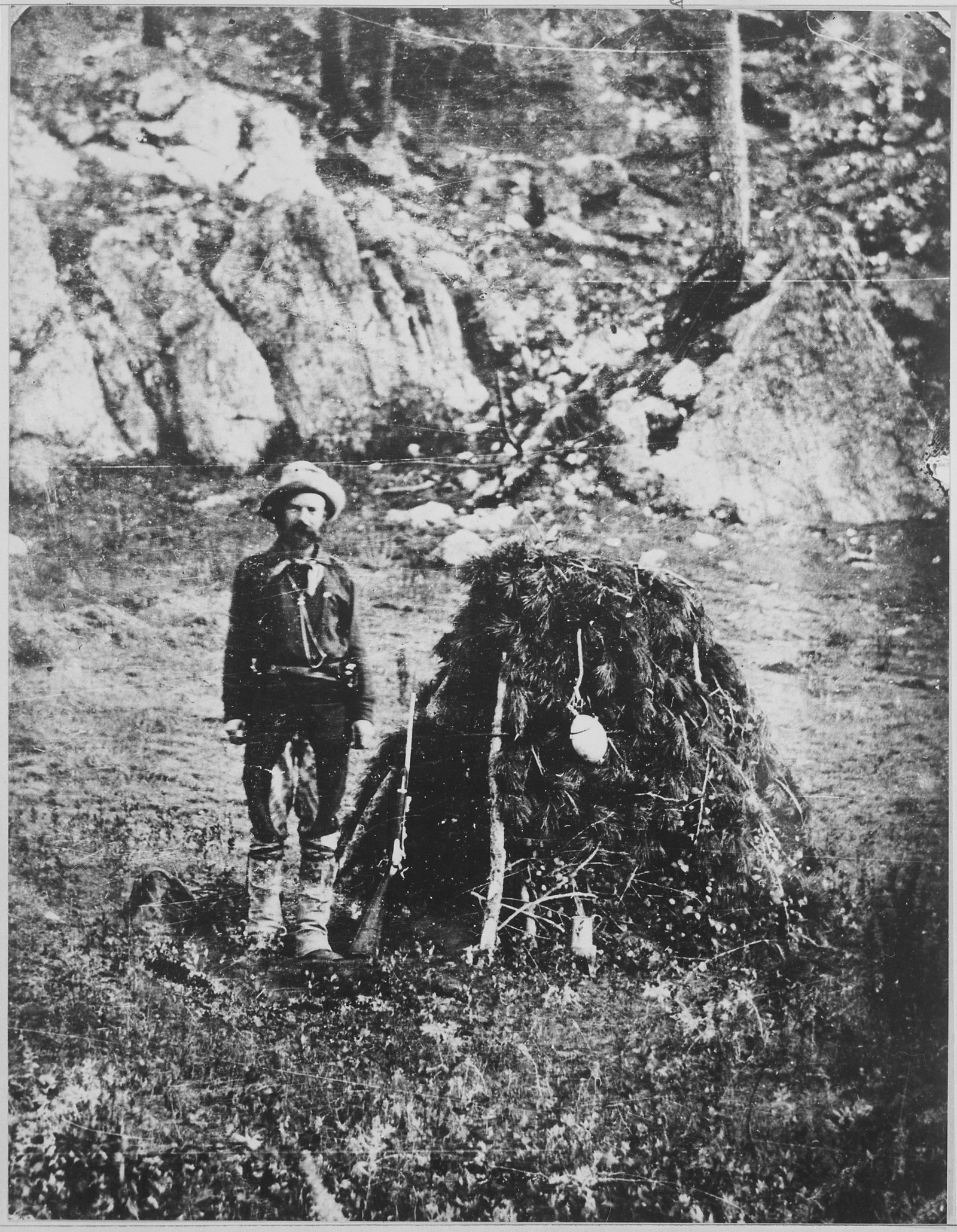
Back at Camp Robinson that summer, McGillycuddy treated Crazy Horse’s wife, who had tuberculosis. On September 5, 1877, Crazy Horse was brought to the post as a prisoner, and a soldier bayoneted him at the guardhouse; he died that night, as told on Crazy Horse and the Black Hills.
Oglala accounts place the doctor at his side. He Dog, who had grown up with Crazy Horse, told the interviewer Eleanor Hinman in 1930 that McGillycuddy came up after the stabbing. Red Feather, the younger brother of Crazy Horse’s first wife, said Crazy Horse’s father believed the doctor had poisoned him: “The doctor gave him some medicine and he died awful quick after that.” Hinman took the medicine for an opiate. McGillycuddy, writing to her that year, praised Crazy Horse as the greatest of his people’s modern leaders. He also said Crazy Horse had refused to be photographed, a story the historian Thomas R. Buecker has called “probably another piece of McGillycuddy folklore.”
Seven Years at Pine Ridge
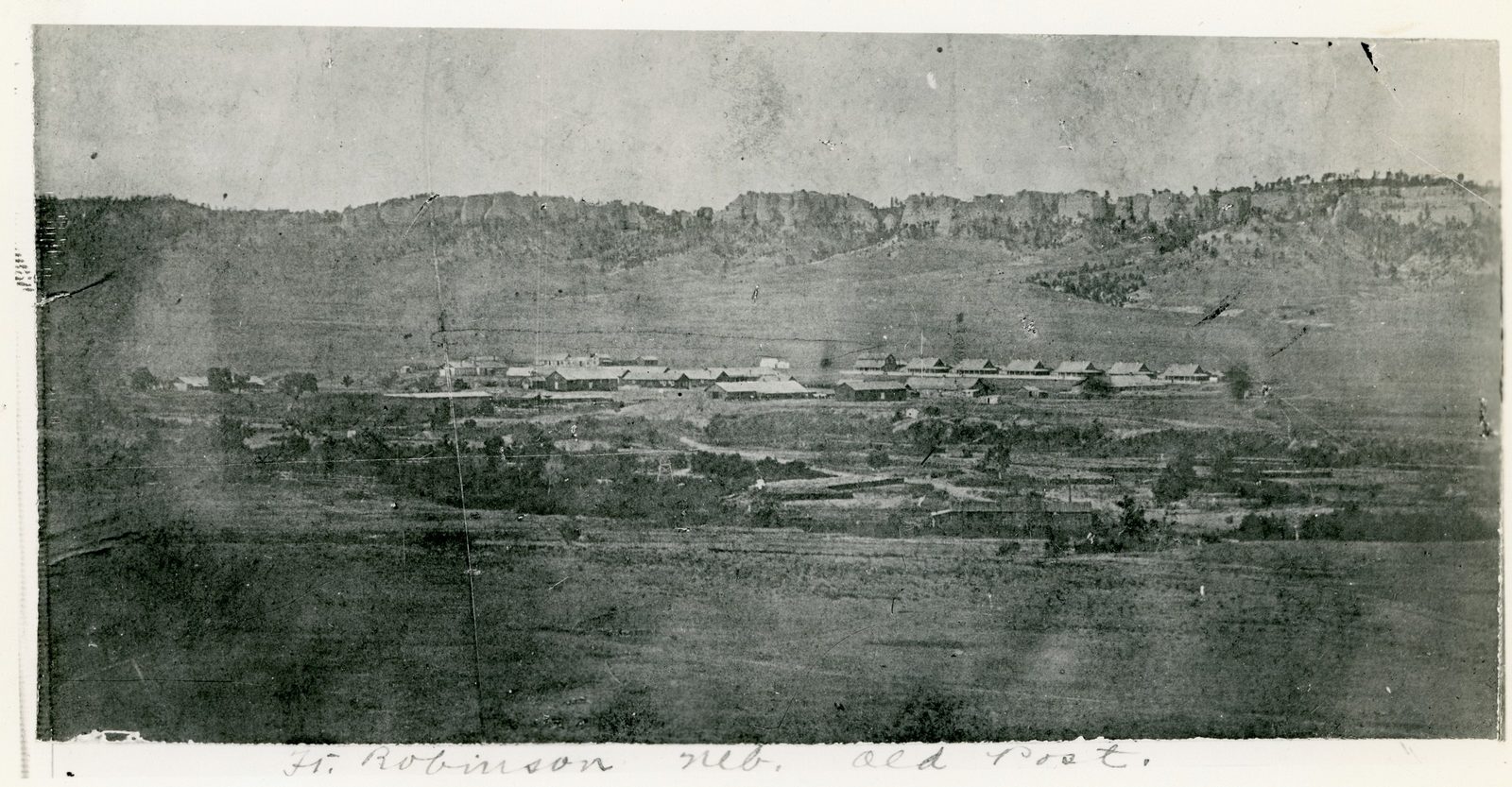
Red Cloud (Maȟpíya Lúta) let Washington know his dislike of the new agent as soon as McGillycuddy arrived, in March 1879. Amanda Takes War Bonnet, writing in the Lakota Times from research into her ancestor Conquering Bear, says that in 1881 he, Little Wound, Red Cloud and other head chiefs signed a letter asking for the agent’s removal, and that it failed. In 1885 Red Cloud told a visiting House committee to take its agent away with it.
The agent’s own letters and reports, as the historians Nancy J. Hulston and Joseph Agonito trace them, show what he pressed on the Oglala. He declared Red Cloud deposed again and again, though the Oglala would not accept it, and wrote in 1880 that trying to teach adults the white man’s ways was a waste of time. To fill his schools he withheld rations; his March 1886 report counted 420 children struck from the ration lists. He told Washington that in 1884 the threat of lost rations kept the Sun Dance from being held, under the ban told on The Sun Dance.
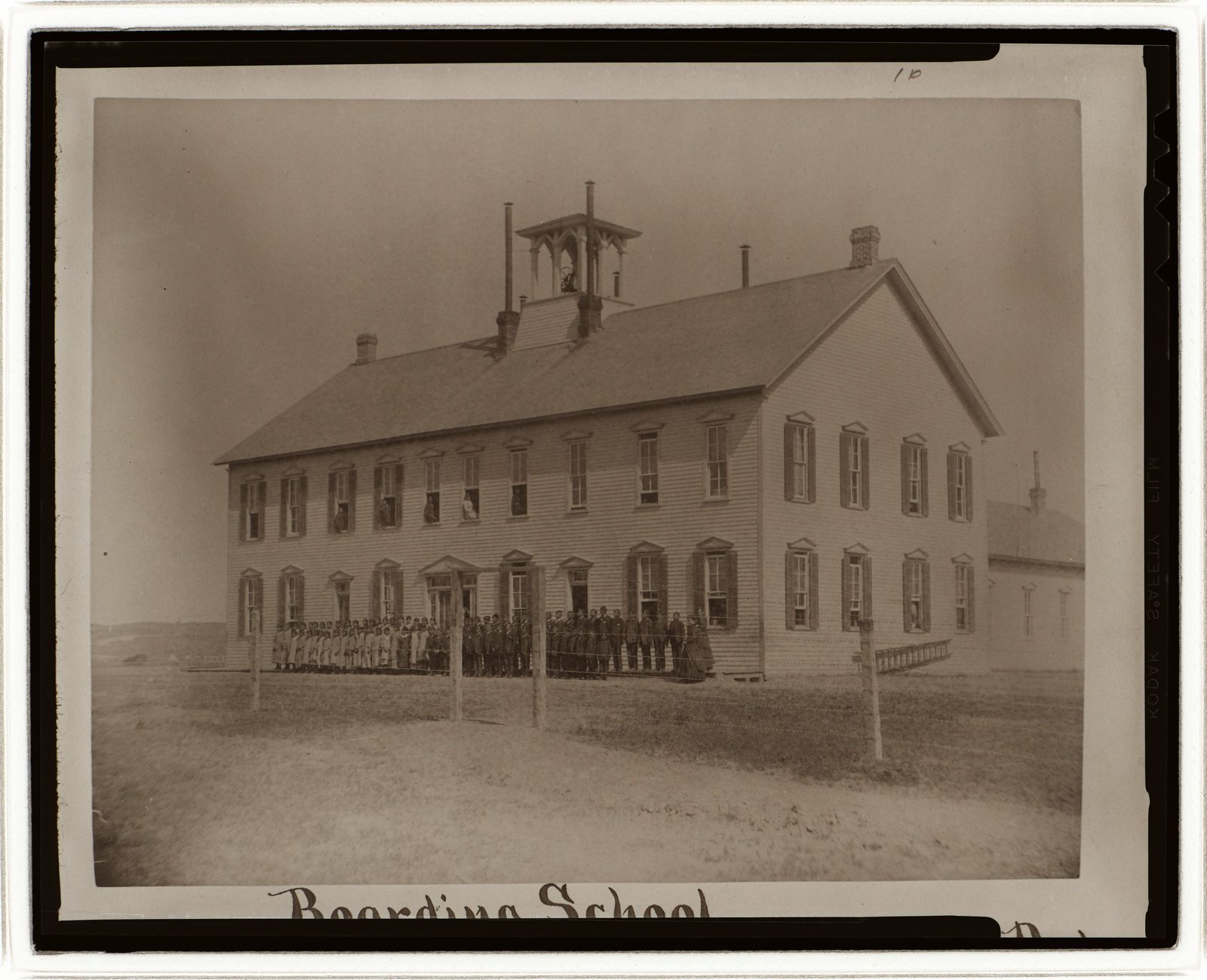
The Oglala were not of one mind about him; Young Man Afraid of His Horses came more and more to his side. Cook-Lynn wrote that Lakota people feared him as agent and as surgeon, and that historians of the tribes today often call him “the commander of a concentration camp.” In May 1886 a federal inspector fired him. Red Cloud then wrote to a friend that “the long fight is over at last and the victory is ours,” as told on Red Cloud, Oglala Lakota Leader.
Rapid City and the Peak
McGillycuddy built a house in Rapid City in 1887 that still stands. He led the South Dakota School of Mines from 1894 to 1897 and was elected mayor in 1896, the school’s history says. He later returned to medicine in California and Alaska, and died at Berkeley, California, on June 6, 1939, at 90.
Much of his fame rests on his own telling late in life and on Julia McGillycuddy’s book: the tree on the peak, the friendship with Crazy Horse, the refused photograph. Reviewing a 2012 study of federal policy, the historian Eric S. Zimmer found the usual account of his years among the Lakota too often romanticized. A 2018 SDPB feature says Red Cloud, years after the agent left, called him by a Lakota name meaning holy white man. Cook-Lynn writes that traditional speakers wonder what Red Cloud meant by it, if he said it at all; his letter of 1886 is what he wrote at the time.
On October 16, 1940, a brass box holding his ashes was sealed into a crypt the Forest Service built on the last bend of the stone stairway to the summit lookout. That name is engraved on the box, the Rapid City Journal reported, and on a bronze plate later set on the stairway. When the Forest Service nominated the lookout to the National Register of Historic Places in 1982, it listed the crypt among the summit’s ties to history, beside the spiritual beliefs of the Plains tribes.
Connected
- Old Maps of the Black HillsThe 1875 survey’s map, credited to McGillycuddy and signed by Emil Mahlo.
- Hiking Black Elk PeakThe peak he climbed in 1875, its lookout, and why it now carries Black Elk’s name.
- Crazy Horse and the Black HillsThe Oglala leader he attended at Camp Robinson on the night he was killed.
- Red Cloud, Oglala Lakota LeaderThe Oglala leader who fought the agent for seven years and won his removal in 1886.
- Rapid City, South DakotaThe town where he built his house, led the School of Mines and served as mayor.
- The 1876 War and the Taking of the HillsHow the land his survey mapped was taken from the tribes.
- The Sun DanceThe federal ban he enforced at Pine Ridge, and the ceremony’s return.
Further reading
- Ancestral coping strategies should not be forgotten, Amanda Takes War Bonnet, Lakota Times, 2022 (the chiefs’ 1881 letter against the agent)
- Changes comes reluctantly on the Northern Plains, Elizabeth Cook-Lynn, Native Sun News Today, 2019 (Indianz)
- Oglala Sources on the Life of Crazy Horse: Interviews Given to Eleanor H. Hinman, Nebraska History, 1976 (He Dog, Red Feather and other Oglala witnesses)
- Federal Children: Indian Education and the Red Cloud-McGillycuddy Conflict, Nancy J. Hulston, South Dakota History, 1995
Sources
- Report on the Geology and Resources of the Black Hills of Dakota, with Atlas (Henry Newton and Walter P. Jenney; edited by G. K. Gilbert). U.S. Geographical and Geological Survey of the Rocky Mountain Region, 1880 (Internet Archive).
- Exploring the Black Hills, 1855–1875: Reports of the Government Expeditions; The Scientists’ Search for Gold, 1875: Walter P. Jenney and Henry Newton. James D. McLaird and Lesta V. Turchen, South Dakota History 4, no. 4, South Dakota State Historical Society, 1974.
- Changes comes reluctantly on the Northern Plains. Elizabeth Cook-Lynn, Native Sun News Today, 2019, via Indianz.
- Breaking: Black Elk Peak Soars Above The He Sapa, No Longer Harney Peak. David Rooks, ICT, 2016.
- “Can You Send Us Immediate Relief”? Army Expeditions to the Northern Black Hills, 1876–1878. Thomas R. Buecker, South Dakota History 25, no. 2, South Dakota State Historical Society, 1995.
- 19th Century Army Doctors on the Frontier and in Nebraska. James A. Wier, Nebraska History 61, 1980.
- Oglala Sources on the Life of Crazy Horse: Interviews Given to Eleanor H. Hinman, with portions of a letter from V. T. McGillycuddy. Nebraska History 57, 1976.
- What Did Crazy Horse Look Like? Randy Kane, Nebraska History, Winter 2018.
- Ancestral coping strategies should not be forgotten. Amanda Takes War Bonnet, Lakota Times, 2022.
- Federal Children: Indian Education and the Red Cloud-McGillycuddy Conflict. Nancy J. Hulston, South Dakota History 25, no. 2, South Dakota State Historical Society, 1995.
- Young Man Afraid of His Horses: The Reservation Years. Joseph Agonito, Nebraska History 79, 1998.
- Review of Crooked Paths to Allotment, by C. Joseph Genetin-Pilawa. Eric S. Zimmer, South Dakota History 44, no. 2, South Dakota State Historical Society, 2014.
- Volunteers Seek To Restore McGillycuddy House To 1887 State. Victoria Wicks, SDPB, 2014.
- Journey Through Time: History and Traditions Explored. South Dakota School of Mines and Technology.
- Holy White Man. Brian Gevik, Images of the Past, SDPB, 2018.
- Harney Peak Lookout Tower, Dam, Pumphouse and Stairway, National Register nomination. Terrell W. Reetz, USDA Forest Service, Black Hills National Forest, 1982 (National Park Service).
- McGillycuddy Urn Sealed in Crypt on Harney Peak. Rapid City Daily Journal, October 17, 1940, typed copy in the Black Hills National Forest Historical Collection, Leland D. Case Library, Black Hills State University (Digital Library of South Dakota).
- Julia Blanchard McGillycuddy and daughter, Valentine (photograph record). California State Library, via Calisphere.
Last reviewed: