People
Preacher Smith
About thirty men and five women came to hear Henry Weston Smith preach in Custer on Sunday, May 7, 1876, and they listened closely, George V. Ayres wrote in his diary, except when a dogfight broke out outside. Smith, a Methodist preacher, had left his wife and children in Kentucky to go with the gold rush. Later that month he moved on to Deadwood, where the miners knew him as Preacher Smith, and on August 20, 1876, he was shot dead on the road to Crook City. The camp blamed the tribes. Who killed him was never established.
Preacher, Sergeant and Doctor
Smith was born in Ellington, Connecticut, in 1827, by his granddaughter’s account to the South Dakota State Historical Society and by the United Methodist Church’s archives; the state’s 1975 roadside marker says January 10, 1828. Ordained in 1852, he preached in the Connecticut River valley, served as a sergeant in the 52nd Massachusetts Infantry in the Civil War, and later took up medicine. His first wife, Ruth Yeoman, died in childbirth. With his second, Lydia Ann Joslin, he had four children, and in 1875 the family moved to Louisville, Kentucky. Early in 1876 he left them there and set out for the Black Hills by way of Cheyenne.
A Box on Main Street
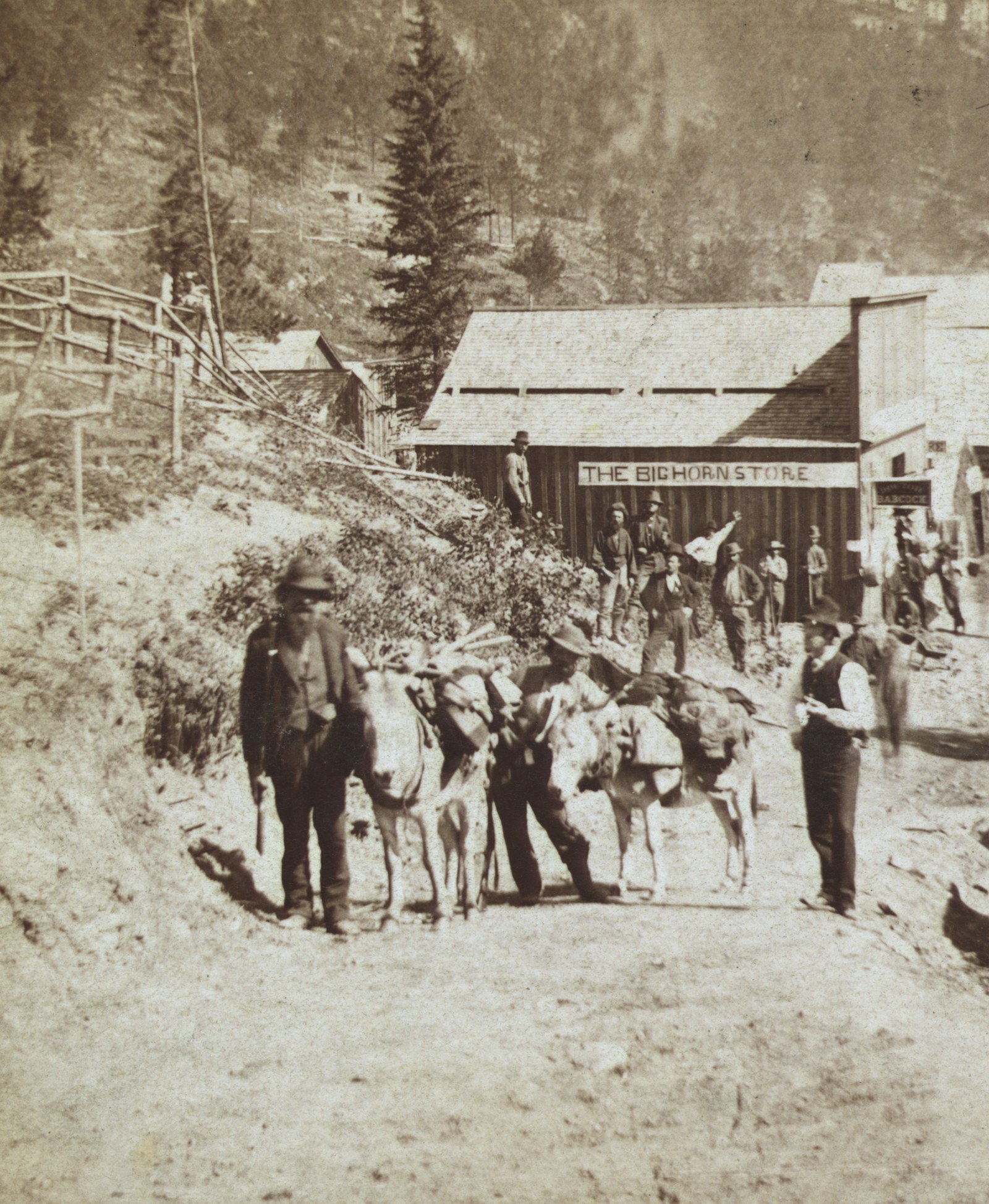
Smith reached Deadwood on or about May 25, 1876, Annie D. Tallent wrote in her 1899 history. He preached at the corner of Main and Gold streets from a dry-goods box, and no one in the crowds ever tried to disturb him, she recorded; some Sundays he went out to preach at other camps. During the week he cut timber, built cabins and fired a sawmill boiler, the Methodist archives say, and the state marker adds that he sent his savings home to his family. The Methodist Episcopal Church had not sent him; it sent a missionary, James Williams, to Deadwood in 1878, its archives commission says.
A poem he dated at Deadwood on June 1, 1876, describes snow falling on the camp that evening. The State Archives hold photographs of a marriage certificate he signed in Deadwood that year.
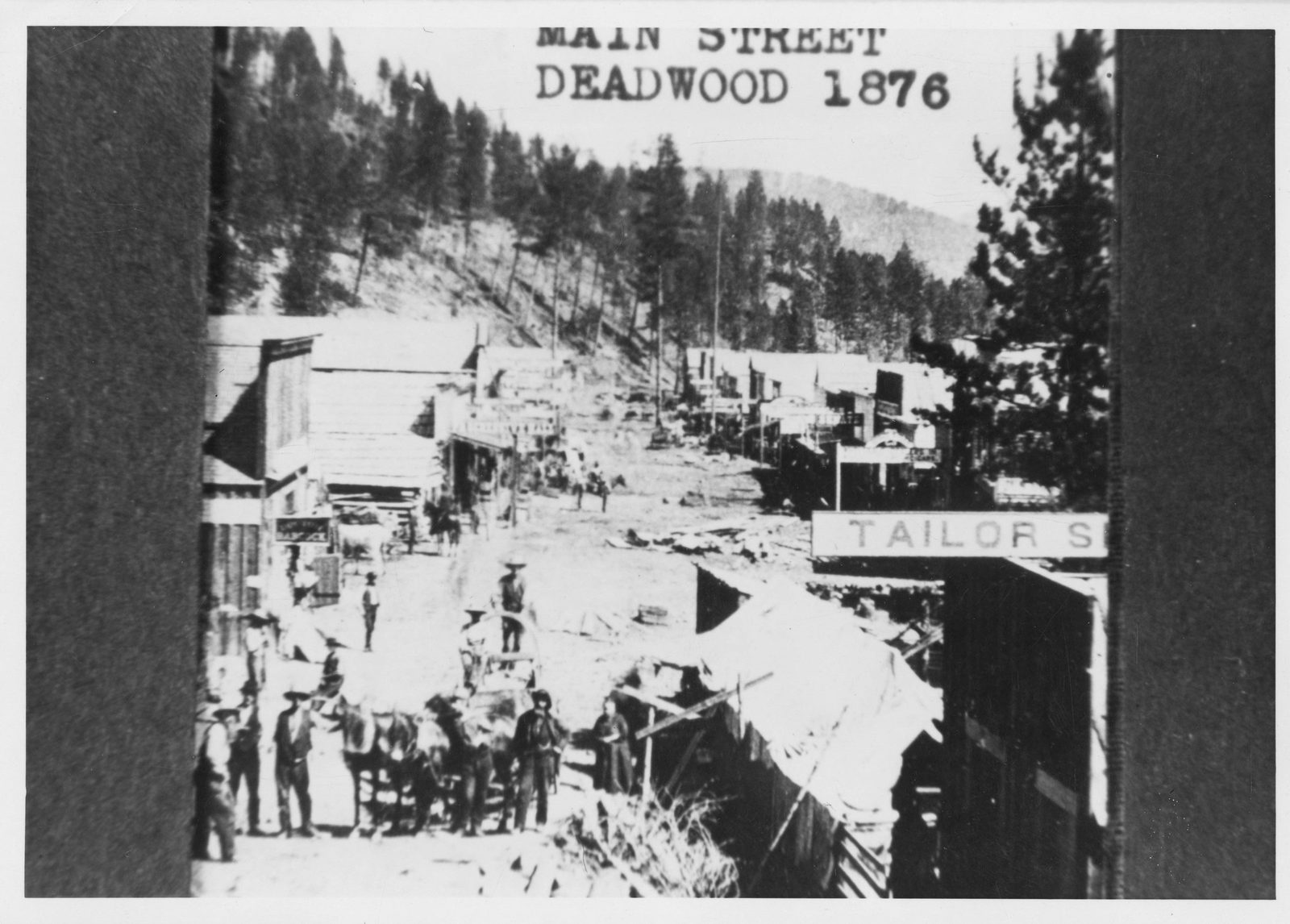
The street where he preached was treaty land. The Standing Rock Sioux Tribe describes the Great Sioux Reservation of the 1868 Fort Laramie Treaty as all of present-day South Dakota west of the Missouri River, the Black Hills included, and the treaty barred anyone not authorized from passing through it or settling there. That summer fell in the middle of the 1876 war, which President Grant began to take the Hills without the tribes’ consent or payment, Ryman LeBeau, chairman of the Cheyenne River Sioux Tribe, told a Senate committee in 2023. Congress made the taking law in 1877, in violation of the treaty, as The 1876 War and the Taking of the Hills tells.
Sunday, August 20, 1876
On August 20, after preaching in Deadwood, Smith set out alone and on foot for Crook City, about ten miles off, to hold a service he had promised. Later accounts, the state marker among them, say he tacked a note to his cabin door telling where he had gone. Friends warned him the road was dangerous, Tallent wrote, and he carried only his Bible and prayer book.
A few miles out, near a spot the early miners called the Rest, he was shot. Charles Pfrunder, who kept a milk ranch nearby, saw the body beside the road and gave the alarm, Jesse Brown and A. M. Willard wrote in 1924, and it came back to Deadwood on Joe Armstrong’s hay wagon. The Deadwood historian Arlette Hansen told NPR in 2011 that a man with a hay wagon found him, shot twice in the chest.
Accounts of the body disagree. Tallent wrote that he lay where he fell, arms folded, his Bible and prayer book on his chest, and had not been scalped; the marker says his blood-stained sermon notes were in his pocket. None of these accounts says anything was missing. Yet on September 29, 1876, William B. Lull, a young prospector and a Methodist minister’s son, wrote to his mother in New York that Smith had been “shot down and scalped by Indians.” Smith was buried in Deadwood’s first cemetery, at the Ingleside camp, in a double grave with Charles Mason, killed the same day.
Who Killed Preacher Smith?
No one knows. Nobody was ever brought to justice, SDPB notes, and no account names a witness to the shooting. Lull wrote at the time, but he does not say how he knew; the finding of the body, the note on the door and the folded arms come from accounts written 23 years and more later.
The camp decided quickly. That day a horse herd grazing on Centennial Prairie, treaty land in wartime, was run off by a band of warriors, as a herder told it, and Brown and Willard count four Deadwood men killed, Smith among them, and one man from the tribes. One of two hunters fired on that man on sight, Tallent wrote, believing it his duty to shoot anyone who looked to be from the tribes; wounded, the man killed Charles Mason before a party from town shot him dead. Brown and Willard also printed, in 1924, John S. McClintock’s memory of a man who rode into Deadwood that day with the head of a man from the tribes tied to his saddle, said he had killed him, and put it up for auction.
The blame stuck. Tallent wrote in 1899 that a warrior from the raid shot Smith, and Brown and Willard said the same in 1924. Leland D. Case’s 1961 biography says so in its subtitle, the State Historical Society’s bulletin blamed the tribes again in 1964, and the 1976 National Park Service nomination for Deadwood’s landmark district says he was “killed by the Indians in 1876.” The evidence under it is weak. Lull’s report of a scalping and Tallent’s of a body not scalped cannot both be true, and the early blame rested on the raid and the war, not on a witness. The state’s marker says only that he was shot. The United Methodist Church’s archives commission writes that he may have been murdered by “one of the many lawless whites in the area or by a Sioux Indian,” in the aftermath of the Battle of the Little Bighorn, which the Lakota call the Battle of the Greasy Grass, a few weeks before.
A Statue, a Monument and a Marker
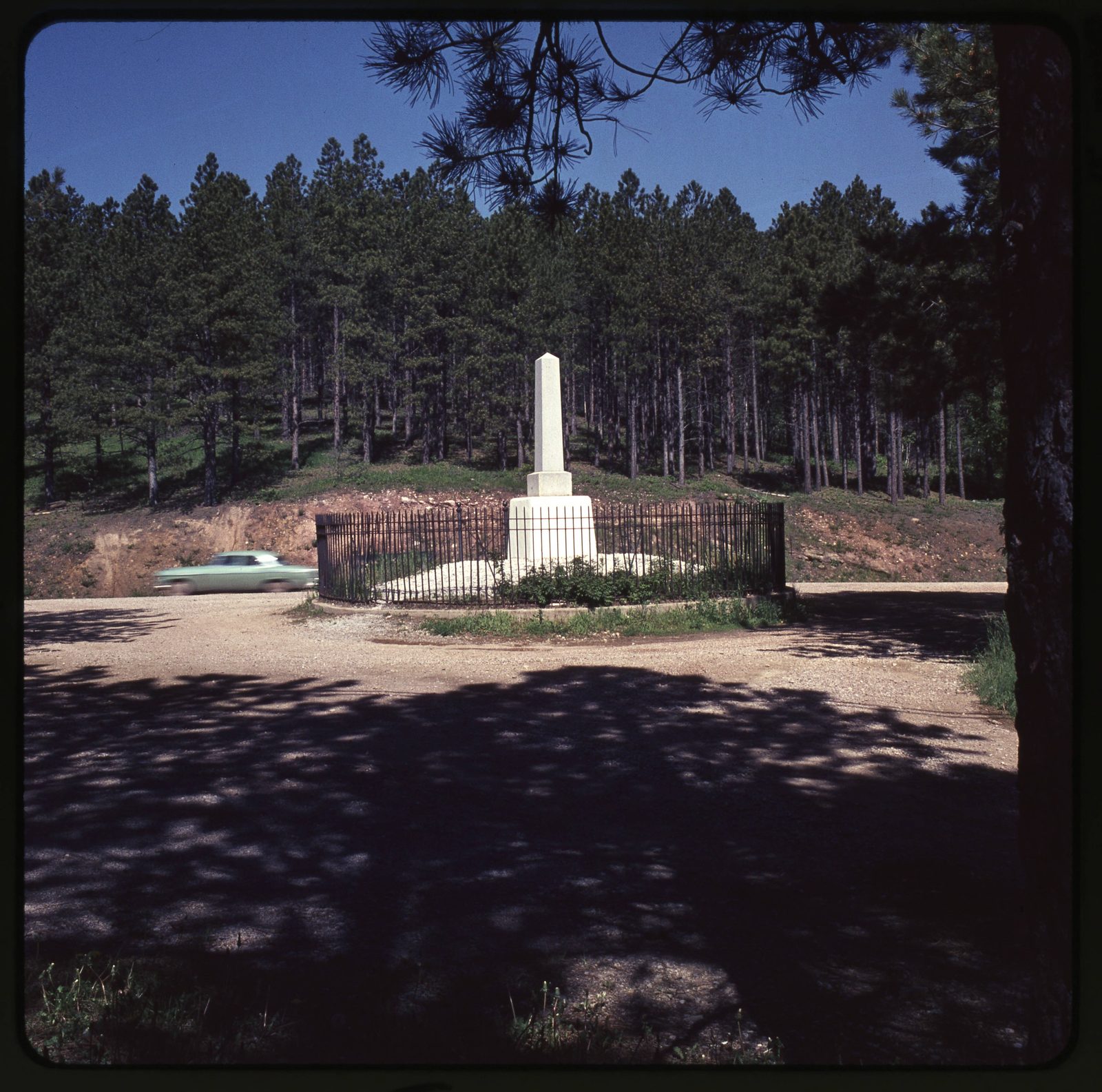
Lawrence County bought land for Mount Moriah Cemetery, above Deadwood, in 1878, and remains from the first cemetery were moved there, Smith’s among them, the City of Deadwood says. In October 1891, Tallent recorded, friends put a life-sized red sandstone figure over his grave. In 1914 the Society of Black Hills Pioneers raised a monument beside what is now U.S. 85, about 2 miles north of Deadwood, where the state’s 1975 marker says he was killed. Brown and Willard put the killing about five miles out.
Mount Moriah also holds Wild Bill Hickok, moved up from the same first cemetery. Jack McCall shot him in a Deadwood saloon on August 2, 1876, 18 days before Smith died on the Crook City road; the camp they both knew is on Deadwood’s Wild Years, 1876 to 1879.
Connected
- Deadwood’s Wild Years, 1876 to 1879The gold camp where Smith preached from a dry-goods box in 1876.
- Deadwood, South DakotaDeadwood now, and the Mount Moriah Cemetery where Smith was reburied.
- Wild Bill HickokShot in Deadwood 18 days before Smith, and buried on the same hill.
- The 1876 War and the Taking of the HillsThe war Smith was killed in, and how the land under Deadwood was taken from the tribes.
- The Fort Laramie Treaties of 1851 and 1868The treaty that set the Black Hills apart for the tribes.
- Seth BullockHe reached Deadwood in August 1876, the month Smith was killed.
- Annie TallentHer 1899 history is an early source for Smith’s preaching in Deadwood and his death.
- The Black Hills Gold RushThe rush that brought Smith from Kentucky to Custer and Deadwood.
Further reading
- Testimony of Ryman LeBeau, Chairman, Cheyenne River Sioux Tribe, U.S. Senate Committee on Indian Affairs, 2023
- About, Standing Rock Sioux Tribe
- Calamity Jane and the Black Hills Gold Rush in the Writings of William B. Lull, South Dakota State Historical Society
- Deadwood Cluster, General Commission on Archives and History, The United Methodist Church
Sources
- Calamity Jane and the Black Hills Gold Rush in the Writings of William B. Lull. Edited by James D. McLaird, South Dakota History 28, nos. 1 and 2, South Dakota State Historical Society, 1998.
- Dakota Resources: Women’s History Resources in the State Archives at the South Dakota State Historical Society. LaVera Rose, South Dakota History 28, nos. 1 and 2, South Dakota State Historical Society, 1998.
- Henry Weston “Preacher” Smith. The Wi-Iyohi 18, no. 4, South Dakota State Historical Society, July 1, 1964.
- South Dakota State Historical Society Markers (marker 464, “Preacher Smith of Deadwood Gulch”). South Dakota State Historical Society, revised 2020.
- The Black Hills; or, The Last Hunting Ground of the Dakotahs. Annie D. Tallent, 1899; Internet Archive.
- The Black Hills Trails. Jesse Brown and A. M. Willard, 1924; Internet Archive.
- Timeline of Deadwood, South Dakota. City of Deadwood.
- Mt. Moriah Cemetery: Black Hills Boothill. City of Deadwood Archives, 2015.
- Deadwood Cluster. General Commission on Archives and History, The United Methodist Church.
- The 1932 Charles Nolin Monument and Film. Brian Gevik, Images of the Past, SDPB, 2015.
- Pioneer Preacher Remembered in Deadwood, S.D. Jim Kent, NPR, via Wyoming Public Media, 2011.
- Deadwood Historic District, National Historic Landmark nomination. National Park Service, 1976, amended 1989.
- Preacher Smith, Martyr (catalog record). Leland D. Case, Friends of the Middle Border, 1961; Internet Archive.
- Testimony of Ryman LeBeau, Chairman, Cheyenne River Sioux Tribe. U.S. Senate Committee on Indian Affairs, 2023.
- About. Standing Rock Sioux Tribe.
- Treaty of Fort Laramie (1868), transcript. National Archives.
- City of Deadwood, from south. S. J. Morrow, 1876; Library of Congress Prints and Photographs Division.
Last reviewed: