People
Scotty Philip
Five wild calves, caught in 1882 some 100 miles west of Fort Bennett in Dakota Territory, began the bison herd that later stocked Custer State Park, by the earliest written account. By November 1888 Frederick Dupree’s herd near the fort, grown from them, held nine purebred bison and seven that were part cattle. Its cows, a federal employee at the fort told the Smithsonian’s William Hornaday, “are not for sale at any price.” A decade later Dupree was dead, and his family’s herd went to James “Scotty” Philip (1858 to 1911), a Scottish-born rancher who had come west for Black Hills gold and ranched near Fort Pierre, on the Missouri River east of the Hills. The Dupree family, his wife Sarah’s family and the 36 bison that carried the herd into Custer State Park all belong to his story.
Five Calves and the Dupree Family
Frederick Dupree came from Longueuil, Quebec, into the fur trade; the name began as Dupuis, and his descendants write it Dupris. Donovin Sprague, a historian who counts the family among his relatives, writes that Fred was among the first white men to spend time in the Black Hills country, staying with Cheyenne people near present-day Hot Springs, and that he reached Fort Pierre in 1838. He married Good Elk Woman, a Minneconjou Lakota, and they raised 10 children on the Cheyenne River near Cherry Creek. Fred and his son Pete were among the first stockmen west of the Missouri, ranching on tribal land through the family’s Lakota ties, the historian John Burkholder writes.
Sprague writes that the idea of saving the buffalo was Good Elk Woman’s, that she helped round up the calves, and that the family brought calves home from hunts at Slim Buttes and on the Grand River. In the family’s telling, published in Native Sun News Today in 2026 by her descendant Ernestine Anunkasan Hopa, she urged them on: “Bring back what is left.” Hornaday’s 1889 report, the written account nearest the time, credits Fred with the capture; two of the calves died within two months, and a third was killed in 1885. A 2007 Wild West article credits Pete with keeping five calves from an 1881 hunt on the Grand River.
Accounts put the herd at 57 to 74 head when it was sold. Fred has been honored for saving the buffalo, Sprague notes, while Good Elk Woman was left out of the state’s Hall of Fame.
Turned Out of the Hills
Philip was born in 1858 in Dallas, Morayshire, Scotland, and came to the United States in 1874, at 15, joining an older brother in Kansas. In 1875 he took ranch work outside Cheyenne, in Wyoming Territory, and there became Scotty, Wild West says. Gold drew him to the Black Hills, where he was placer mining when cavalry put him out. The Hills then lay within the Great Sioux Reservation, and soldiers were under orders to clear miners out, as told on The Black Hills Gold Rush; The 1876 War and the Taking of the Hills tells how the Hills were taken from the tribes in violation of the 1868 treaty. He prospected near Deadwood without success, and hauled freight, guided, scouted and carried dispatches out of Fort Laramie and Camp Robinson, Nebraska.
Sarah Larribee and a Ranch on Tribal Land
In 1879, at Fort Robinson, Philip married Sarah Larribee, also written Laribee and Larabee. Her father, a French trader (Joe Larvie in Sprague’s spelling), had been one of Fred Dupree’s partners near Hot Springs in the 1830s; Wild West describes her mother as Cheyenne, adopted by the Lakota. One of Sarah’s sisters married the Oglala leader Crazy Horse (Tȟašúŋke Witkó), both Sprague and Wild West record.
Sarah’s heritage let the couple ranch on the Great Sioux Reservation, the National Cowboy and Western Heritage Museum says, and Burkholder counts Philip among the white men married into tribal families who ran stock there before it was opened to settlers. In 1881 they moved to the mouth of Grindstone Creek on the Bad River, near the town later named for Philip. The winter of 1886 to 1887 killed 80 percent of his cattle, Wild West says. After the reservation was broken up in 1889, Philip bought land north of Fort Pierre.
South Dakota Magazine says Sarah shaped his view of the bison, and the Dupris family’s account says she urged him to act.
How Large Was Philip’s Herd?
About 300 head when he died in 1911, by the counts of the time; later accounts say up to 1,000. In 1899 Philip bought the Dupree herd from Fred Dupree’s estate and fenced it into a pasture along the Missouri north of Fort Pierre; Wild West instead gives 1901 and Pete Dupree’s estate. In 1906, that magazine and Sprague report, Congress allowed about 3,500 acres of public land beside the pasture to be rented to him for $50 a year, for buffalo only.
The American Bison Society’s secretary, reporting for 1908 to 1909, found 188 bison and nine cattalo, part cattle, on about 7,000 acres some six miles from Fort Pierre. Only the Pablo herd in Montana was larger, he wrote. In July 1911 J. Alden Loring, surveying for the Society, found Philip recovering from a severe illness; Philip put his herd at about 315.
Philip died later that month, of a cerebral hemorrhage, Wild West says. His grave is in a family plot near the pasture, and two 1955 state markers point to it. The story that his bison came down from the hills as the funeral passed rests on what newspapers reported.
Later accounts give almost 900 or about 1,000 bison at his death, the State Historical Society’s figure. The counts of the time were smaller: the Bison Society’s census published in 1912 listed the herd at “between 275 & 300,” and its 1913 report gave 290. The herd’s place in the bison’s survival is told on Bison.
Where Did Custer State Park’s First Bison Come From?
From the herd Philip left. In 1913 it was offered to the American Bison Society at $850 a head. In 1914 a North Dakota paper reported that Philip’s sons were selling it; no buyer took it whole. South Dakota bought 36 bison that year for its new game preserve in Custer County, which became Custer State Park in 1919; in 1951 the park added 60 bison bought from the Pine Ridge Reservation herd. About 1,300 were gathered at the roundup on September 25, 2026, as told on Bison Herds, Bison Ranching and the Buffalo Roundup.
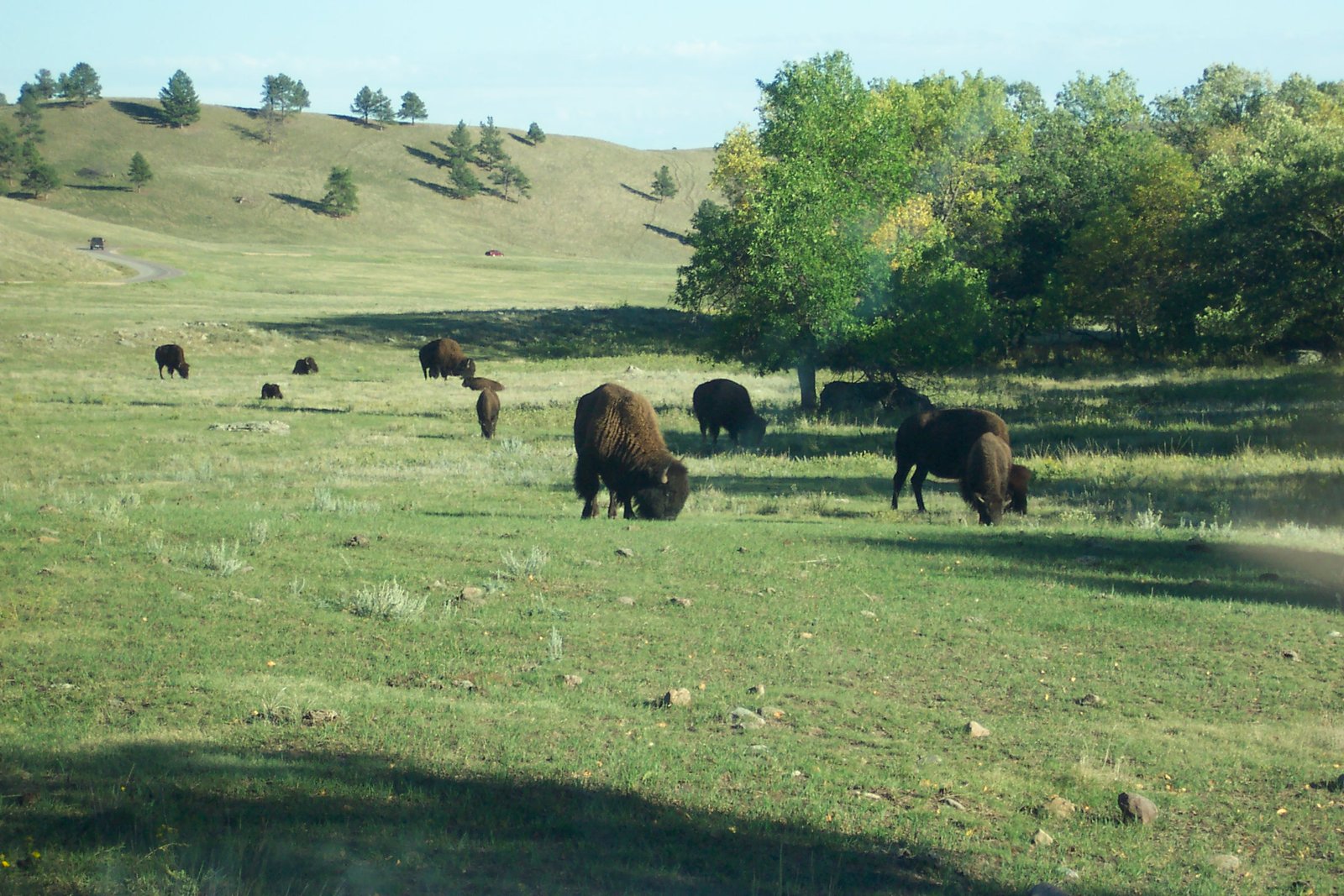
Sprague writes that the park’s roundups go on without the story or the presence of “the two families that saved the buffalo,” the Dupris and Philip families, and that the idea of saving them began a generation before Philip, with the Lakota and the Dupris family. On the Cheyenne River, where the Dupree family kept its first calves, the Cheyenne River Sioux Tribe founded its own corporation in 1991 to manage a tribal herd that grew from fewer than 100 bison to more than 1,000 by 1996. The tribes’ restoration of their own herds is told on The Return of the Bison.
Connected
- BisonHow the plains bison nearly died out, and the few herds, Philip’s among them, that carried it through.
- Bison Herds, Bison Ranching and the Buffalo RoundupThe Custer State Park herd that began with 36 bison from his herd, and its yearly roundup.
- Custer State ParkThe park whose herd began in 1914 with bison from the herd Philip left.
- The Return of the BisonThe tribes’ restoration of their own herds, the Cheyenne River Sioux Tribe’s among them.
- The Black Hills Gold RushThe rush that drew Philip to the Hills, and the Army’s orders to remove miners.
- The 1876 War and the Taking of the HillsHow the Hills, treaty land when cavalry put Philip out, were taken from the tribes.
- Crazy Horse and the Black HillsThe Oglala leader who married one of Sarah Philip’s sisters.
- The Winter of 1886–87 on the Cattle RangeThe hard winter that killed most of Philip’s cattle on the Bad River.
Sources
- The Extermination of the American Bison, by William T. Hornaday. From the Report of the National Museum, 1886–87, Smithsonian Institution; Government Printing Office, 1889; Project Gutenberg edition.
- Annual Report of the American Bison Society, 1908–1909 (bound with the society’s earlier reports). American Bison Society, 1909; copy from the American Museum of Natural History Library, Internet Archive.
- Report of the American Bison Society, 1912 (fifth annual report, with the census of American bison and J. Alden Loring’s 1911 report). American Bison Society, 1912; copy from Smithsonian Libraries, Internet Archive.
- Report of the American Bison Society, 1913 (sixth annual report). American Bison Society, 1913; copy from Smithsonian Libraries, Internet Archive.
- French Fur Trade and Life Around Mni’sose, by Donovin Sprague (excerpts from his book on the Hump and Crazy Horse families). West River History Conference, 2018; Digital Library of South Dakota.
- The Last Hunt, Saving the Pte Oyáte, by Ernestine Anunkasan Hopa. Native Sun News Today, April 30, 2026.
- Poised to Profit: Fort Pierre and the Development of the Open Range in South Dakota, by John H. Burkholder. South Dakota History 41, no. 3, South Dakota State Historical Society, 2011.
- “Scotty Philip’s Buffalo Herd” photo display at Cultural Heritage Center (press release). South Dakota State Historical Society, May 26, 2017.
- Cattleman Philip Was a Bison King, by Bill Markley and Pat Decker Nipper. Wild West, April 2007; HistoryNet.
- James “Scotty” Philip (Hall of Great Westerners). National Cowboy & Western Heritage Museum.
- The Man Who Saved the Buffalo, by Steve Nelson (revised from the January/February 2007 issue). South Dakota Magazine, 2018.
- The Man Who Saved the Bison, by Carole Butcher. Dakota Datebook, Prairie Public, January 29, 2021.
- Custer State Park History. South Dakota Game, Fish and Parks, 2026.
- South Dakota State Historical Society Markers (markers 43, “History Unfolds,” and 51, “Scotty Philip Graveyard”; revised June 2020). South Dakota State Historical Society.
- Honoring Nations 1999 Honoree: Pte Hca Ka, Inc., Cheyenne River Sioux Tribe. Harvard Project on American Indian Economic Development, Harvard University (hosted by the Native Nations Institute, University of Arizona), 1999.
- Peter Norbeck Scenic Byway: Buffalo at Custer State Park. Rick Plant, Federal Highway Administration; Records of the Federal Highway Administration, National Archives.
Last reviewed: