People
Spotted Tail, Brulé Lakota Leader
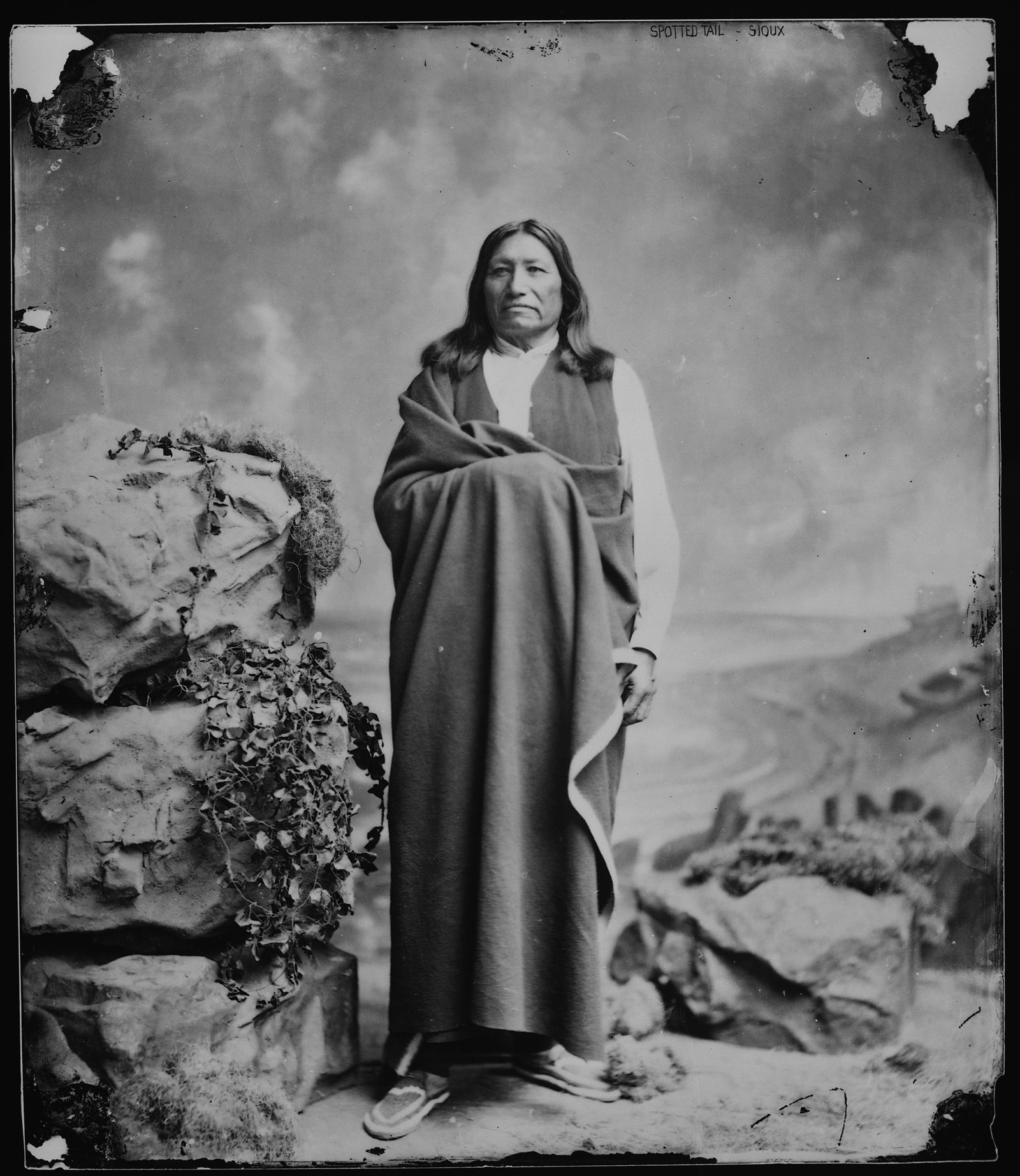
At the council of September 1875, Spotted Tail did not put a number on the Black Hills. He asked instead for a sum the government would hold at interest, large enough for his people to live on for as long as any of them remained. Spotted Tail (about 1823 to 1881) signed the Fort Laramie Treaty of 1868 and the 1876 agreement that gave up the Hills, helped bring holdout bands in as the 1876 war ended, and was shot dead near the Rosebud Agency in 1881.
Fort Leavenworth to Fort Laramie
He was born about 1823 in the White River country of present-day South Dakota, the Rosebud Sioux Tribe’s history says, and made his name as a warrior. After the Army attacked Little Thunder’s Brulé camp in 1855, he was held prisoner at Fort Leavenworth, Kansas, until 1856, his family with him.
Unlike Sitting Bull, who never signed, and Red Cloud, who held out until November, Spotted Tail signed the 1868 treaty with the first Brulé signers, at Fort Laramie on April 29, 1868. Its Great Sioux Reservation took in the Black Hills. Tribal accounts differ on his part. The Rosebud Sioux Tribe’s history says he was deceived into signing, and that the treaty cost the Lakota their lands on the Platte and Republican rivers. To Victor Douville, a Brulé Lakota elder who wrote Sinte Gleska University’s history, the treaty, with its reservation, schooling and peace, was a personal triumph: since 1865 Spotted Tail and three other Brulé leaders had worked to win back land south of the Platte lost under the 1851 treaty, and to win schooling.
What Did Spotted Tail Ask for the Black Hills?
He asked for enough to live on forever. A month before the talks, in August 1875, the agent at Spotted Tail Agency, E. A. Howard, took him and several headmen into the Black Hills and reported that he seemed much interested and understood the situation. The commission later complained that Howard and other officials had told the tribes the government ought to pay $30 million to $50 million.
When the chiefs gave their terms in late September, Spotted Tail asked that the payment be held by the president at interest, to buy food, cattle, horses, guns and clothing every year. “I want to live on the interest of my money,” he said. Spotted Bear put the price at $70 million, and the Supreme Court later wrote that the leaders refused to sell for less. On September 28 he asked the commissioners to put their offer in writing. The next day they offered $400,000 a year to mine the Hills or $6 million over 15 years to buy them, and the chiefs laughed, the commission reported. That evening Spotted Tail and other chiefs asked for further talks in Washington.
The 1876 Agreement, Signed at His Agency
Spotted Tail kept his people out of the 1876 fighting, the Rosebud Sioux Tribe’s history says. A law of August 15, 1876, had made future money for food depend on the tribes giving up the Hills. At Spotted Tail Agency in northwestern Nebraska the cession agreement was signed on September 23, 1876, and his mark heads the Brulé names. In the tribe’s words, he was “forced to sign.” The 1868 treaty required three-fourths of the adult men; only 10 percent signed, the Supreme Court found. The 1877 Act then took the Hills without the consent the treaty demanded, as The 1876 War and the Taking of the Hills tells in full.
In October Gen. George Crook removed Red Cloud as Oglala chief and named Spotted Tail chief at both agencies, a title that rewarded him for keeping the Brulé out of the war, historian Richmond L. Clow writes; most of the people never recognized it.
How Did Spotted Tail Help End the 1876 War?
He went north and talked holdout bands into coming in. In February 1877, at Camp Sheridan, he bargained with Crook for three days, historian Oliver Knight writes. He wanted a large escort, ammunition and supplies, and Crook’s help in getting the northern bands an agency in their own country. Crook agreed and promised amnesty but still required them to give up their guns and horses.
He set out about February 10 with some 200 warriors. On the way he talked about 1,000 Sans Arc and Minneconjou into surrendering, and in early April word came that he was on the Belle Fourche River with 1,600 people. At a council on the Powder River, Knight writes, Crazy Horse (Tȟašúŋke Witkó) stayed away, and his father told Spotted Tail the band would take Crook’s terms. When the Minneconjou and Sans Arc reached Spotted Tail Agency in mid-April, he pressed Crook to give them “a country they could call their own.” Crazy Horse surrendered at Camp Robinson in May. On September 5 he was taken from Spotted Tail Agency under arrest; at the post a soldier bayoneted him, and he died that night.
Rosebud, Carlisle and a University
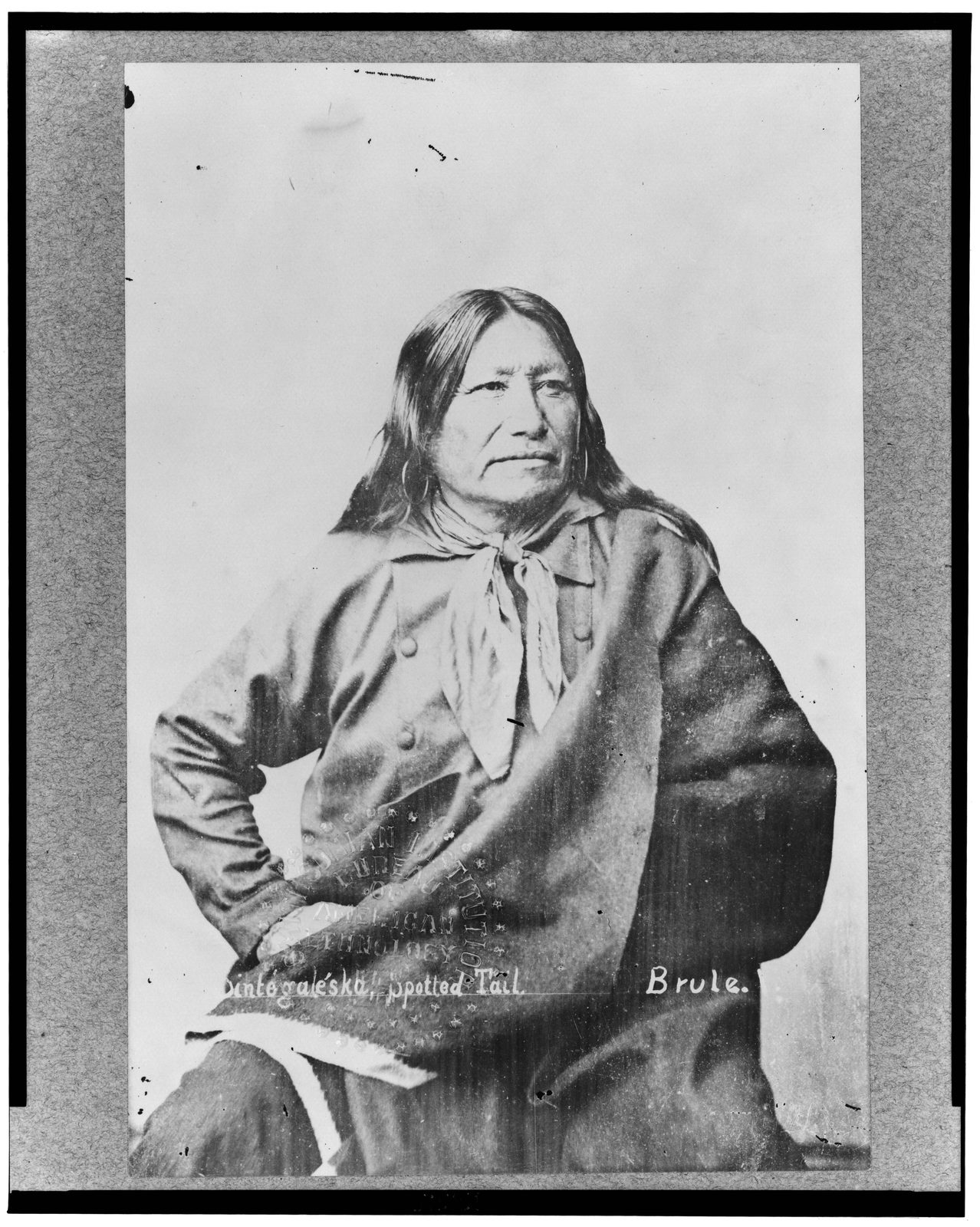
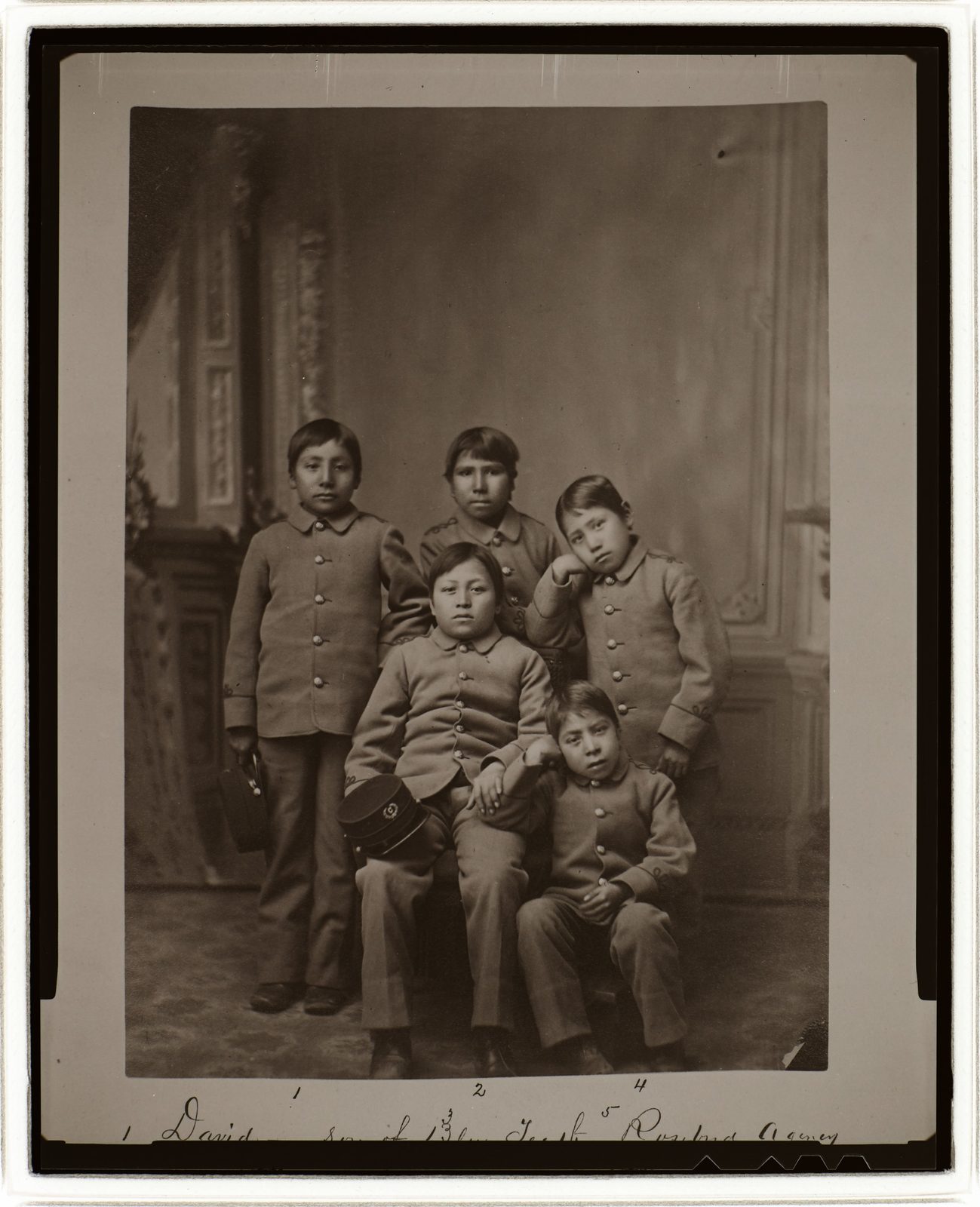
The promised northern agency never came. The Brulé agency was moved to the Missouri River, which Spotted Tail had long refused, then in 1878 to Rosebud Creek, as the Rosebud Agency. In 1877, Douville writes, Spotted Tail had asked the Jesuits to teach his people. In 1879 he sent children and grandchildren to the Carlisle Indian Industrial School, and other families followed. Visiting, he found the boys’ hair cut and the children drilling and farming rather than learning to read, and in 1880 he withdrew his own children and grandchildren.
In 1971 the tribe’s new college took his Lakota name as Sinte Gleska College, a university since 1992. It chose him, the university says, not for his fame as a warrior or diplomat but “because of what he did” to bring education to his nation.
Who Killed Spotted Tail, and Why?
On August 5, 1881, after a council near the Rosebud Agency, Crow Dog, whom Spotted Tail had twice had removed from the agency police, shot him dead on the road. The Rosebud Sioux Tribe’s history calls it murder. Sinte Gleska University’s history says he was assassinated, perhaps for pressing for schools and for partly centralizing how the bands governed themselves. Clow reads the record differently: Spotted Tail had broken Lakota rules of leadership by acting without the council over Carlisle, apparently keeping grazing money paid by ranchers, and, days before the shooting, taking another man’s wife, a relative of Crow Dog’s. At his trial Crow Dog said Spotted Tail pointed a revolver at him first. Whether it was assassination or self-defense is still disputed. Spotted Tail was buried at Rosebud.
Under Lakota law a council settled the killing, and Crow Dog paid Spotted Tail’s family in horses, money and a blanket. The agency clerk had him arrested anyway, and in March 1882 a jury in Deadwood convicted him of murder. On December 17, 1883, in Ex parte Crow Dog, the Supreme Court ruled that the territorial court had no power to try one tribal member for killing another on the reservation, and freed him. Congress answered in 1885 with the Major Crimes Act, putting seven serious crimes between tribal members under federal courts.
Connected
- The Fort Laramie Treaties of 1851 and 1868The 1868 treaty Spotted Tail signed with the first Brulé leaders in April.
- The 1876 War and the Taking of the HillsThe 1876 agreement signed at his agency, and the 1877 Act that took the Hills.
- Red Cloud, Oglala Lakota LeaderThe Oglala leader Crook set aside in 1876 in favor of Spotted Tail.
- Crazy Horse and the Black HillsThe Oglala war leader who came in after Spotted Tail’s mission and was taken from his agency in 1877.
- Sitting Bull and the Fight for the Black HillsThe Hunkpapa leader who refused the 1868 treaty that Spotted Tail signed.
- The 1980 Ruling and Land BackThe Supreme Court ruling on the 1877 Act, and the tribes’ claim to the Hills today.
Further reading
- History and Culture, Rosebud Sioux Tribe
- History of Sinte Gleska University, Victor Douville, Sinte Gleska University
- Spotted Tail, Fort Laramie National Historic Site, National Park Service
- The Anatomy of a Lakota Shooting: Crow Dog and Spotted Tail, 1879-1881, Richmond L. Clow, South Dakota History, 1998
- War or Peace: The Anxious Wait for Crazy Horse, Oliver Knight, Nebraska History, 1973
Sources
- History and Culture. Rosebud Sioux Tribe.
- Discover SGU: Our History. Sinte Gleska University.
- History of Sinte Gleska University. Victor Douville, Sinte Gleska University (dated 1996 to 2009).
- Spotted Tail. National Park Service, Fort Laramie National Historic Site.
- Spotted Tail (1823-1881). Bruce E. Johansen, Encyclopedia of the Great Plains, University of Nebraska–Lincoln, 2011.
- Peace, War, Land and a Funeral: The Fort Laramie Treaty of 1868. Tom Rea, WyoHistory.org, Wyoming State Historical Society, 2014.
- Treaty of Fort Laramie (1868), with transcript. National Archives, Milestone Documents.
- Annual report of E. A. Howard, agent, Spotted Tail Agency, September 20, 1875. In Annual Report of the Commissioner of Indian Affairs, 1875, pp. 253 to 255; University of Wisconsin Digital Collections.
- Report of the Commission Appointed to Treat with the Sioux Indians for the Relinquishment of the Black Hills. In Annual Report of the Commissioner of Indian Affairs, 1875, pp. 184 to 201; University of Wisconsin Digital Collections.
- Act of February 28, 1877, ch. 72, 19 Stat. 254, with the 1876 agreement and its signatures. U.S. Statutes at Large, via GovInfo.
- United States v. Sioux Nation of Indians, 448 U.S. 371. Supreme Court of the United States, 1980 (Legal Information Institute, Cornell Law School).
- War or Peace: The Anxious Wait for Crazy Horse. Oliver Knight, Nebraska History 54, 1973.
- Crazy Horse. Army Heritage Center Foundation (with the journal of Lt. Col. Luther Bradley).
- Rosebud Agency. South Dakota State Archives, Indian Archives Project.
- The Anatomy of a Lakota Shooting: Crow Dog and Spotted Tail, 1879-1881. Richmond L. Clow, South Dakota History 28, no. 4, South Dakota State Historical Society, 1998.
- Ex Parte Crow Dog. John Rockwell Snowden, Encyclopedia of the Great Plains, University of Nebraska–Lincoln.
- Ex parte Crow Dog, 109 U.S. 556. Supreme Court of the United States, 1883 (Legal Information Institute, Cornell Law School).
Last reviewed: