People
George Hearst
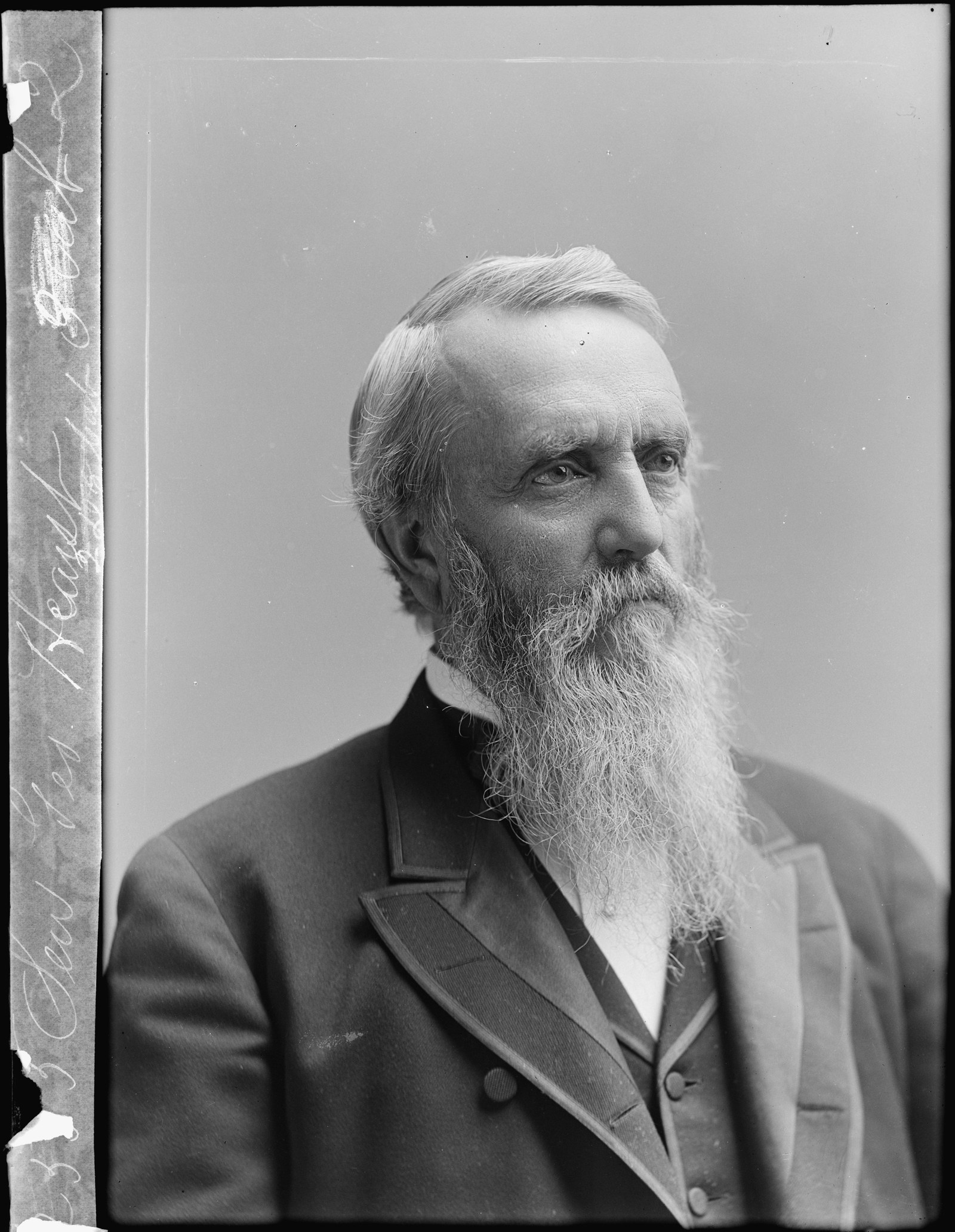
For 23 days from July 31, 1885, George Hearst looked over his Black Hills interests and took the measure of Thomas J. Grier, a former bookkeeper whom the Homestake Mining Company’s directors had named superintendent that month. Hearst went away satisfied, the historians Susan Richards and Rex Myers write. George Hearst (1820 to 1891) led the group that bought the Homestake claim near Lead in 1877, but he lived in San Francisco and later Washington, and hired men ran the mine. His part in the Hills was the purchase, the fights over claims and water, and the company town; his widow, Phoebe Apperson Hearst, added her gifts to Lead.
Hearst was born in 1820 in Franklin County, Missouri. He made a fortune in gold and silver mining in California and Nevada before he bought into the Hills. A 1969 state marker in Lawrence County credits him with three famous mines: the Ophir, the Anaconda in Montana and the Homestake. Phoebe Apperson, a Missouri schoolteacher, married him and went with him to San Francisco in 1862; their only child was the publisher William Randolph Hearst. George Hearst died on February 28, 1891, a United States senator from California.
How Did Hearst Get the Homestake?
He and two partners bought it from its finders in 1877. Moses and Fred Manuel, Hank Harney and Alex Engh had staked the Homestake claim near present-day Lead on April 9, 1876. The ground was treaty land, set apart for the tribes by the 1868 Fort Laramie Treaty, and the 1877 Act took the Hills in violation of that treaty.
Hearst came out in 1877 to see the mine and arranged the purchase for himself and the San Francisco investors James B. Haggin and Lloyd Tevis. In November 1877 the Homestake Mining Company was incorporated under his direction. The mine went on to produce nearly 40 million ounces of gold before its last ore came out on December 14, 2001. Its full story is on The Homestake Mine and Sanford Lab, and the rock that held the gold is on Gold and the Other Minerals.
Neighbors, Lawsuits and a Water Fight
Hearst believed, rightly, that the ore ran far past the claim’s lines, and he went after the claims around it. He got them by purchase, by lawsuit and by political pressure, says the State Historical Society’s teaching kit on South Dakota mining, which draws on a history the company published about itself in 2001. It names the Golden Star, the Giant, the Highland, the Old Abe and the Deadwood-Terra. The buying went on after Hearst died, and by 1901 the company owned the whole mountain.
Hearst tried to buy the DeSmet, the largest mine at Central City, as early as 1877, the historian Kenneth Stewart writes in the society’s journal, but its owners refused $700,000, and a rival, Archie Borland, outbid him. In 1879 the feud turned to water. The Homestake bought the Foster Gulch ditch, which crossed DeSmet ground, though it had no use for it; the DeSmet’s manager, Gus Bowie, answered by buying the Boulder Gulch ditch, which the Homestake needed. The Homestake went to court, claiming the DeSmet had no use for that ditch and no right to hold it. The DeSmet offered Deadwood a year of free water, and the town’s voters said no. The Homestake got the Boulder Gulch water, paying the DeSmet $30,000 and handing back the Foster ditch, and by 1881 it held a controlling share of DeSmet stock.
Hearst’s group began gathering rights to creeks, streams and ditches soon after the purchase, a Deadwood archive’s guide to the company’s water records says, and that control gave the mine great sway in Lead and Deadwood.
The Brick Store and a Town on Company Ground
Oxen hauled the mill’s 80 ore-crushing stamps nearly 300 miles from the nearest railhead, at Sidney, Nebraska (see Stagecoaches and Railroads), and Lead had hardly a store. In April 1879 a brick store Hearst had ordered built opened there, 50 by 100 feet and bigger than anything like it nearby; the town called it the Brick Store. In 1881, the historian Steven R. Kinsella writes, Hearst approved a company railroad.
The store shows him managing from afar. When it faltered in the mid-1880s under Thomas James, his representative, Superintendent Samuel McMaster wrote to Hearst, who sent investigators from San Francisco. In a story Kinsella passes on in his history of the store, James plied each one with drinks until Hearst sent a man who did not drink; James was put out, and the store became the Hearst Mercantile.
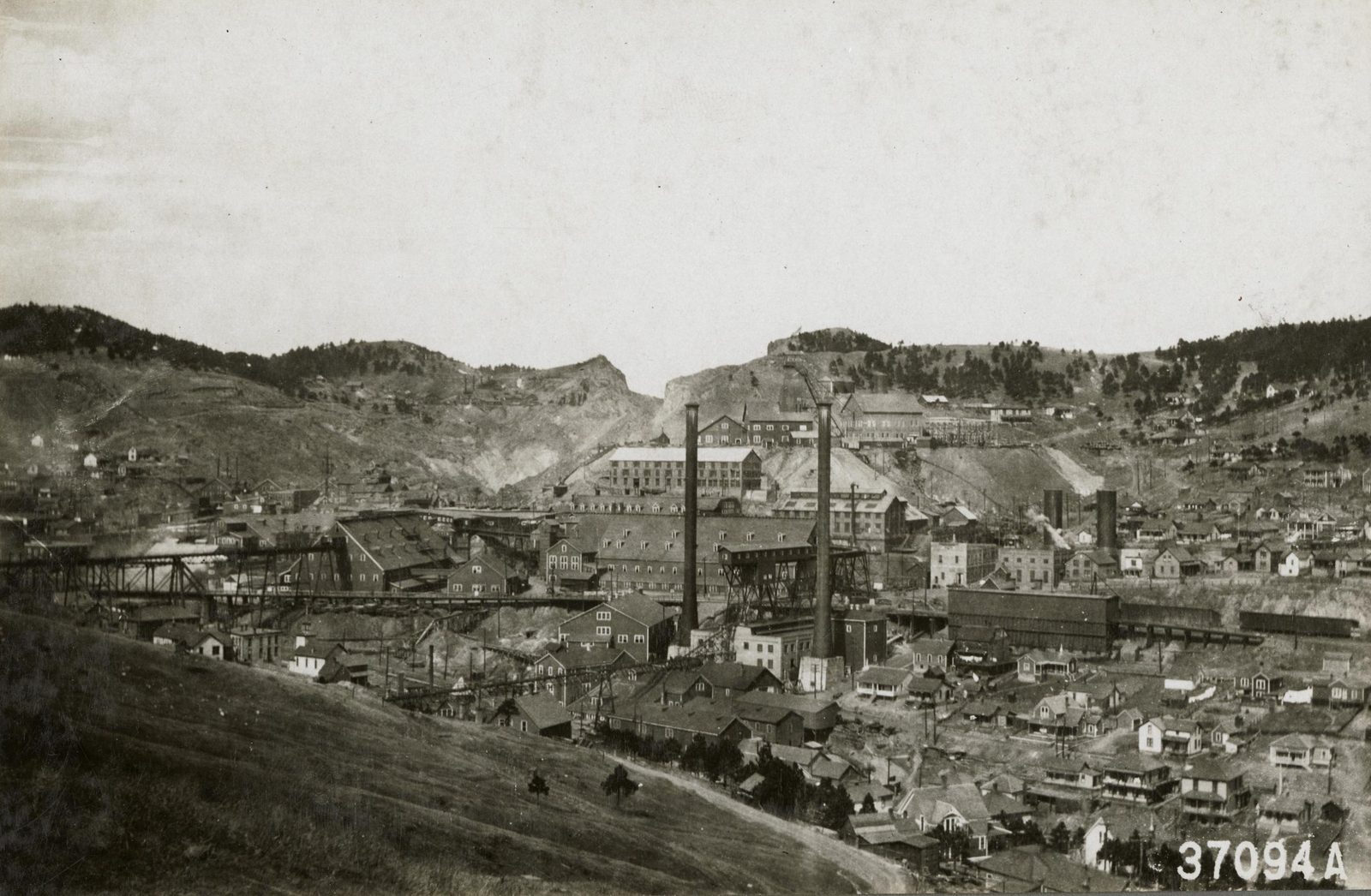
The town itself sat on company ground. An agreement of March 18, 1892, a year after Hearst’s death, left title to Lead’s land with the Homestake, and residents could be put out on 90 days’ notice; Lead, South Dakota follows the town from there.
Superintendents on the Ground
Superintendents ran the mine day to day: McMaster, who carried out Hearst’s wishes until he died in December 1884, and then Grier, for 29 years. Kinsella dates Hearst’s first visit to 1877 but gives no length for it, and Richards and Myers record the 23 days of 1885; from 1887 Hearst was a senator in Washington. At the end of February 1891, Grier wrote in the pocket notebook he kept on mine business: “Geo. Hearst died.”
The 1969 marker reads as a tribute, and two longer Homestake histories, of 1977 and 2001, were published by the company. Records of his own time survive in the company’s files, Grier’s notebook and the family papers at the University of California’s Bancroft Library.
Phoebe Hearst’s Gifts to Lead
Phoebe Apperson Hearst (1842 to 1919) inherited her husband’s estate, including 36 percent of the Homestake’s stock; Haggin held 31 percent and Tevis 21. She first visited Lead on August 18, 1894.
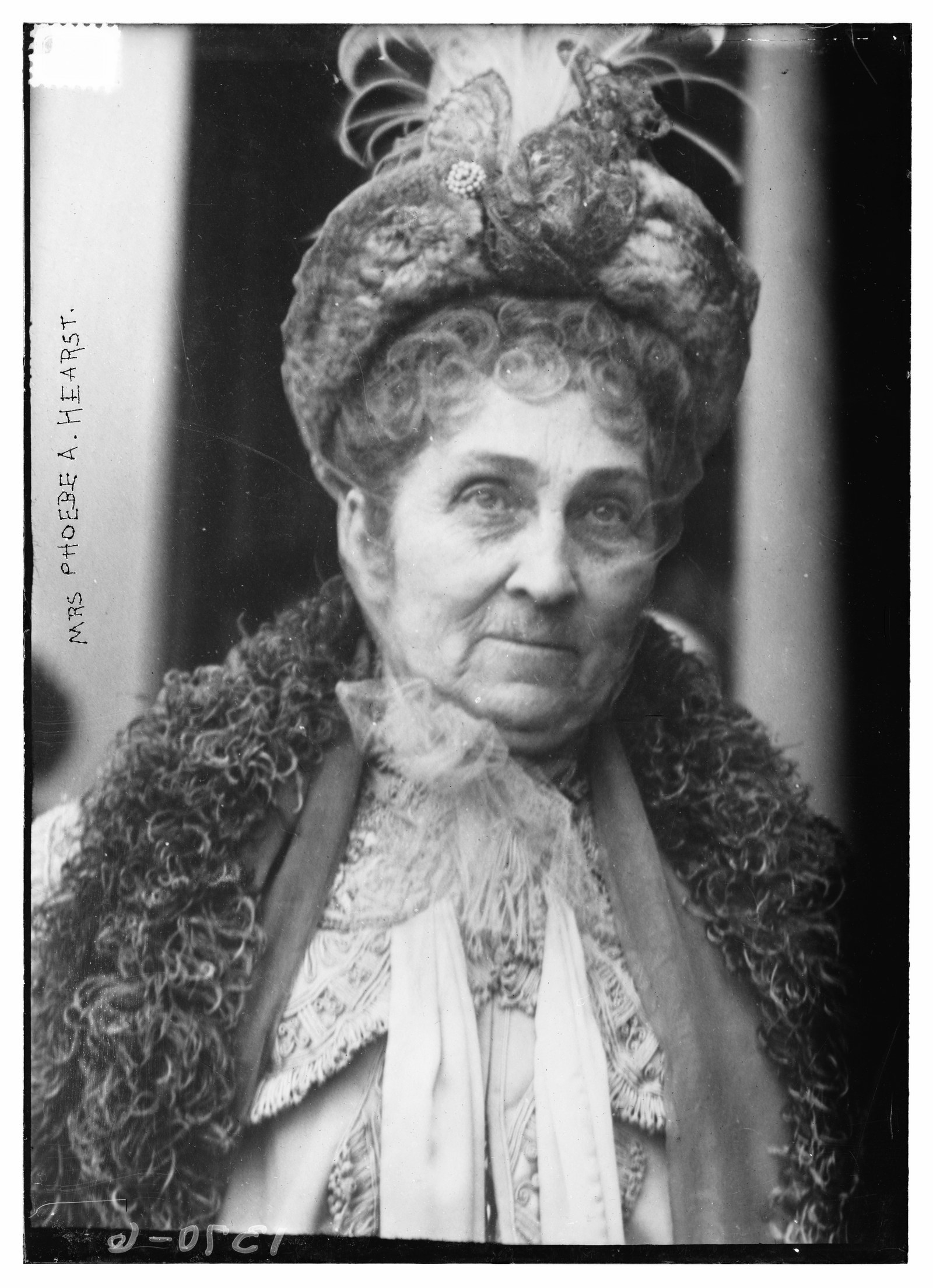
After that visit she let Grier open a free library in three rented rooms on the top floor of the miners’ union hall. The town dedicated it on Christmas Day 1894 as her gift, with some 2,000 books and, from February, a Steinway grand piano she had shipped from the East for the recitals she wanted held there. She also gave $200 a year to every church in Lead and bought $31,000 in bonds toward a new schoolhouse, Richards and Myers write.
The Hearst Free Kindergarten, in Lead’s Episcopal church, was dedicated in the spring of 1901. At a reception on May 27, she shook hands with 2,000 to 3,000 people.
In November 1911 the company, speaking for her, promised Lead a new building as a gift. She and her cousin and business manager, Edward Clark, expected it to cost $50,000 to $75,000; it cost $250,000. The Homestake Opera House and Recreation Building opened on August 31, 1914, after the lockout of 1909 and 1910. Donald Toms, a former director of the Black Hills Mining Museum, told the historian Leta Miller he sees it as a kind of “peace offering” from the company.
Phoebe Hearst died of influenza in April 1919 at her country home southeast of San Francisco, and the town, the store and the mine all shut in mourning. Lead’s public library still carries her name.
Connected
- The Homestake Mine and Sanford LabThe mine Hearst’s group bought, from the 1876 claim to the laboratory in its tunnels.
- Lead, South DakotaThe company town that grew up around the Homestake.
- Gold and the Other MineralsThe ancient rock that held the Homestake’s gold.
- The Black Hills Gold RushThe rush in which the Manuels and their partners staked the Homestake.
- The 1876 War and the Taking of the HillsHow the treaty land under the claim was taken from the tribes.
- Deadwood, South DakotaThe town down the gulch whose voters turned down the DeSmet’s free water.
- Stagecoaches and RailroadsThe freight roads from Sidney, the railhead for the Homestake’s ore-crushing stamps.
Sources
- An Iron Hand in a Velvet Glove: Thomas J. Grier’s Management of the Homestake Mine, 1885–1914, by Susan L. Richards and Rex C. Myers. South Dakota History 38, no. 2, South Dakota State Historical Society, 2008.
- Company Store: The Hearst Mercantile, 1879–1942, by Steven R. Kinsella. South Dakota History 20, no. 2, South Dakota State Historical Society, 1990.
- Philanthropy as Cultural Outreach: Phoebe Hearst and Music in Lead, South Dakota, by Leta E. Miller. South Dakota History 47, no. 3, South Dakota State Historical Society, 2017.
- The Boom and Bust of Central City, by Kenneth Stewart. South Dakota History 2, no. 3, 1972; republished by South Dakota Public Broadcasting, 2023.
- Mining in South Dakota (education kit). South Dakota State Historical Society, undated.
- South Dakota Historical Markers, numerical master list (marker 444, The Hearst Highway). South Dakota State Historical Society, 2020.
- Homestake Vested Water Rights, finding aid. Homestake Adams Research and Cultural Center (Deadwood History), undated.
- Homestake Annual Reports, finding aid. Homestake Adams Research and Cultural Center (Deadwood History), undated.
- A Brief History of Black Hills Gold Mining, by L. Michael Kaas. Mining History Association, 2018.
- Hearst (George and Phoebe Apperson) Papers, 1849–1926, finding aid. The Bancroft Library, University of California, Berkeley; Online Archive of California.
- Senators Who Died in Office. United States Senate.
- Summary of the Mining Industry in South Dakota, 2001. South Dakota Department of Environment and Natural Resources, 2002.
- Treaty of Fort Laramie (1868), transcript. National Archives.
- Hearst, Sen. Geo. C. M. Bell Studio, between 1873 and 1890; C. M. Bell Studio Collection, Library of Congress Prints and Photographs Division.
- Mrs. Phoebe A. Hearst. Bain News Service, undated; George Grantham Bain Collection, Library of Congress Prints and Photographs Division.
Last reviewed: