People
Calamity Jane
In the early summer of 1875, two correspondents with the government’s survey of Black Hills gold wrote about a young woman who had followed its Army escort from Fort Laramie dressed much like a soldier. The Chicago Inter-Ocean’s writer called her “a strange creature” who went by Calamity. She was Martha Canary, about 19, and the historian James D. McLaird counts the survey as the first time her nickname reached print. She kept coming back to the Black Hills until her death at Terry in 1903, and the stories about her, told by dime novelists, old-timers and Calamity Jane herself, grew far past what the record shows.
Born Martha Canary, About 1856
Martha Canary was most likely born in 1856. Her pamphlet says May 1, 1852, at Princeton, Missouri, but McLaird found her, aged four, in the 1860 census of Mercer County, where Princeton lies. The family joined the Montana gold rush in the mid-1860s. Her mother died there in 1866 and her father in Utah in 1867, and by 1869 a census found her alone at Piedmont, a Union Pacific railroad town in Wyoming. She drifted among rail camps and Army posts, working, by the City of Deadwood’s account, as a dance-hall girl, waitress, laundress and prostitute, often in men’s clothes.
Where her nickname came from is unknown. Her pamphlet says Capt. James Egan named her “the heroine of the plains” after she caught him, wounded, as he fell from his saddle in an ambush at Goose Creek, Wyoming. After her death a critic in the Deadwood paper cited a letter from Egan’s wife saying it never happened, and John W. “Captain Jack” Crawford, who said he had served with Egan, agreed.
Was Calamity Jane an Army Scout?
No. She went with the Army twice as a camp follower, and both times, by the surviving accounts, she was ordered out of camp. The 1875 survey of the geologists Walter P. Jenney and Henry Newton left Fort Laramie on May 25 with an escort under Lt. Col. Richard I. Dodge. Recollections of the teamster Harry Young and the topographer Valentine McGillycuddy, published decades later, say a cavalry tailor had fitted her out as a private; when she was found out, Dodge ordered her away, and she went on with the teamsters.
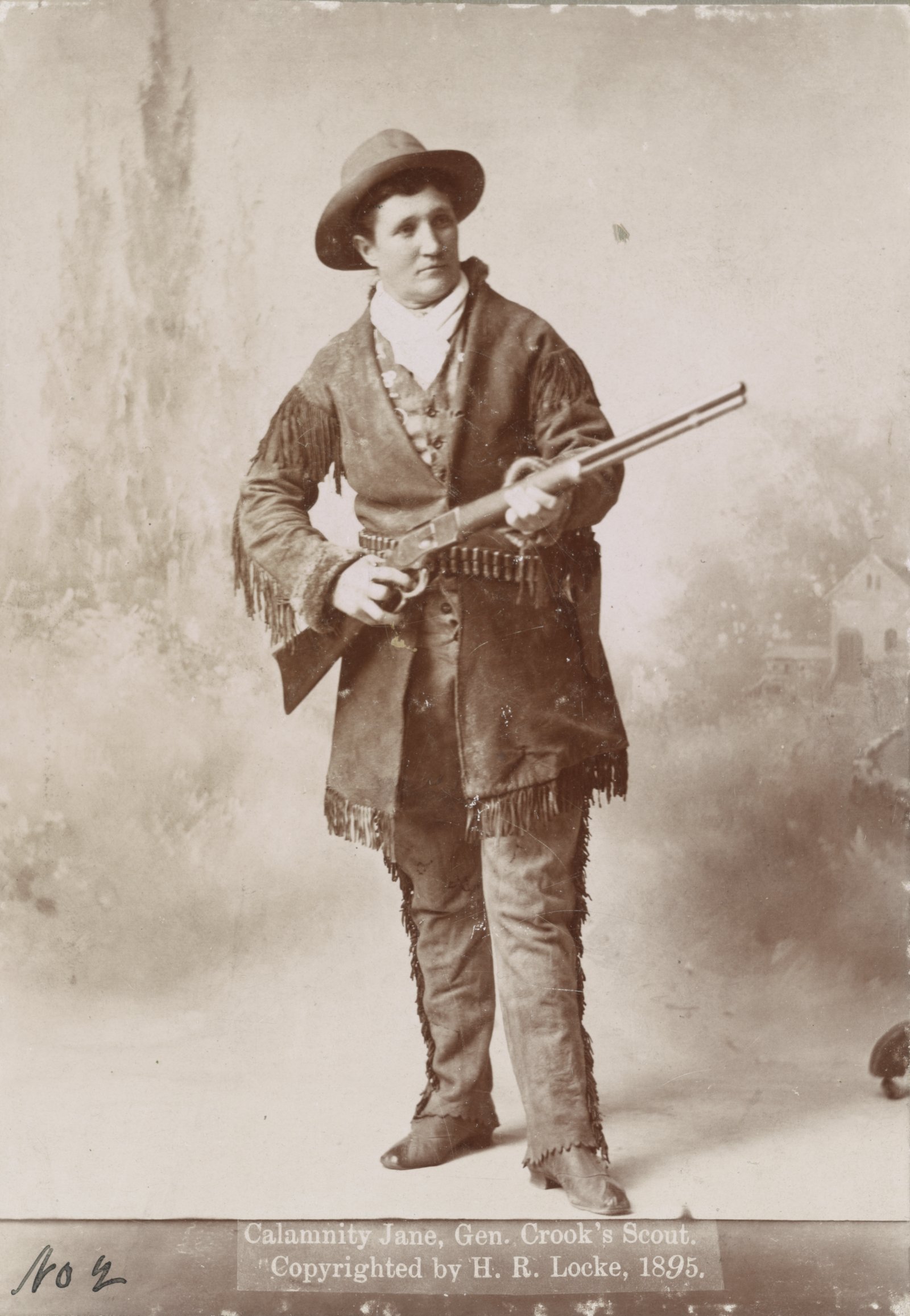
In 1876 she followed Gen. George Crook’s command during the 1876 war. Her pamphlet makes her a dispatch rider who swam the Platte River, and claims she had joined Custer as a scout in 1870. Crawford wrote that Crook “gave her no recognition whatever, except to order her out of camp” when he found she was a camp follower. McLaird’s finding is plain: she was never a scout, a pony express rider or a lawman.
Deadwood, 1876 and 1877
At Fort Laramie she joined the wagon train of Wild Bill Hickok and Charlie Utter, and that summer the party rode into Deadwood Gulch. The gulch was then part of the Great Sioux Reservation, which the 1868 Fort Laramie Treaty had set apart for the tribes; Congress took the Hills in 1877 in violation of that treaty (The 1876 War and the Taking of the Hills). She had known Hickok only a few weeks when Jack McCall shot him in the No. 10 Saloon on August 2, 1876; his story is on Wild Bill Hickok. Her pamphlet moves the killing to the Bell Union saloon and has her cornering McCall with a meat cleaver, a story never proven.
People who knew her remembered her kindness. Late in 1876, by a story McLaird thought may be true, she raised money for a miner with a broken leg and nursed him in his cabin, and the city’s preservation office credits her with nursing smallpox patients in 1878. McLaird sees her care for some sick prospectors as the real core of the later legend that she saved great numbers in epidemics. In August 1877 the Deadwood Champion called her a fraud.
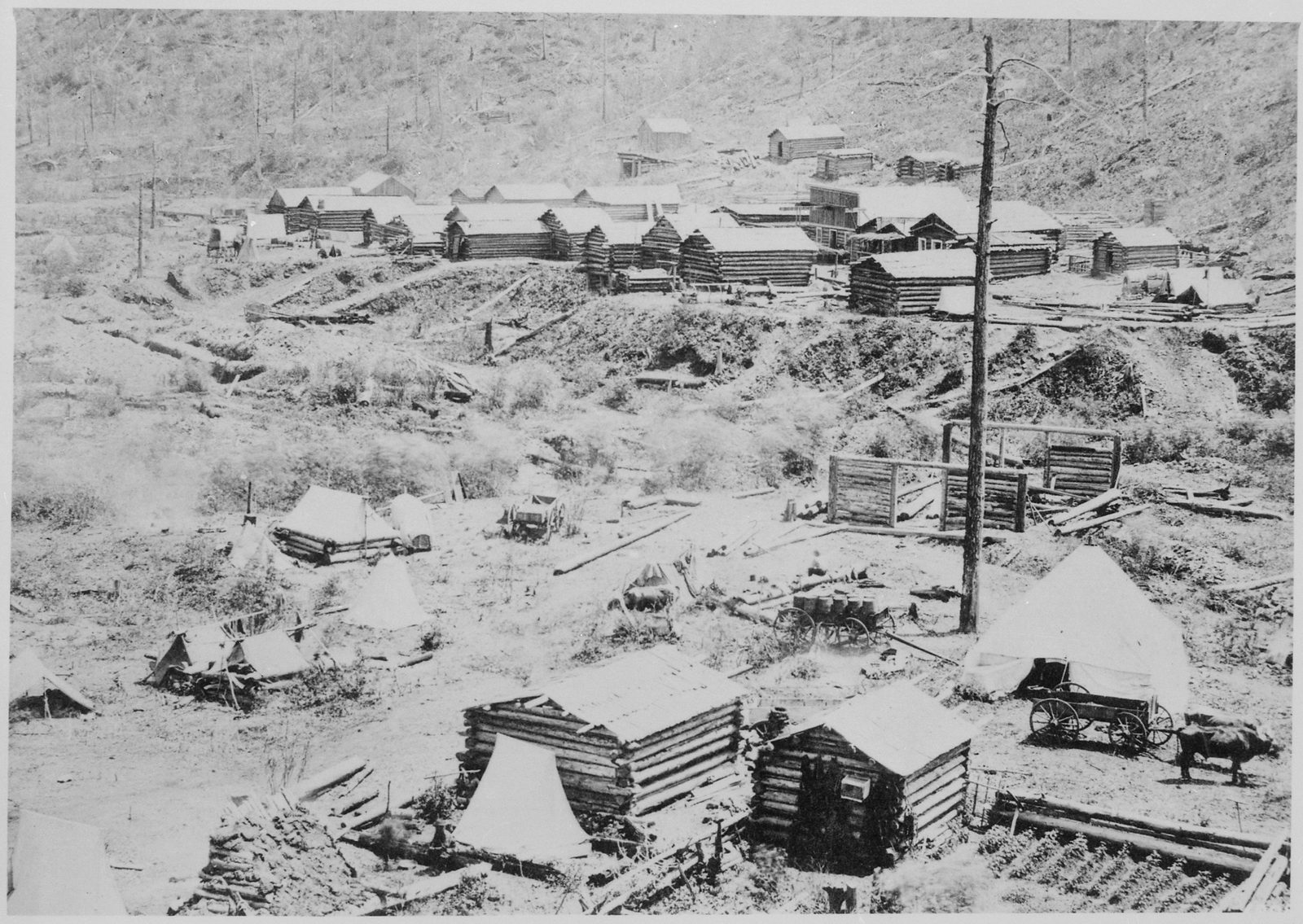
Two months later, on October 15, 1877, Edward L. Wheeler’s Deadwood Dick, the Prince of the Road opened Beadle and Adams’s Half-Dime Library, with Calamity Jane among its heroines. Wheeler drew on a promotional booklet about the Hills by Horatio N. Maguire, McLaird writes, and the series made her famous nationwide.
On Show as Herself
By her own count she stayed away from Deadwood for about 17 years, following the railroad towns of Montana and Wyoming with a series of men she called her husbands. Her pamphlet has her marrying Clinton Burk in 1885 and bearing a daughter in Texas. The daughter, Jessie, was born in 1887, possibly at Lander, Wyoming, to William Steers, a railroad brakeman McLaird calls abusive.
Deadwood welcomed her as a celebrity in October 1895, and she sold photographs of herself. In 1896 she toured dime museums with Kohl & Middleton, selling Life and Adventures of Calamity Jane, By Herself. She could not read or write, but McLaird judged that most, if not all, of it came from her. In 1901 she appeared at the Pan-American Exposition in Buffalo, New York.
Her Last Year
She came back for the last time in December 1902, lately out of a Billings, Montana, jail, where she had been sentenced to 60 days for going after store clerks with a hatchet. Early in 1903 she cooked in Belle Fourche for Dora DuFran, who kept a brothel, then drifted to Hot Springs, Rapid City and Sundance, Wyoming, where the saloons kept her in whiskey. In July, newspaper editors riding her train into Deadwood filed through the smoking car to look at her.
The best-known picture from that summer shows her by Hickok’s grave on Mount Moriah, holding a flower and her hat brim. McLaird credits the graveside photographs to John B. Mayo, an amateur photographer; the Library of Congress print names J. A. Kumpf. Soon afterward she took the train to Terry, near Deadwood, and died there on August 1, 1903, at about 47, of what was called inflammation of the bowels. McLaird adds that years of heavy drinking surely contributed.
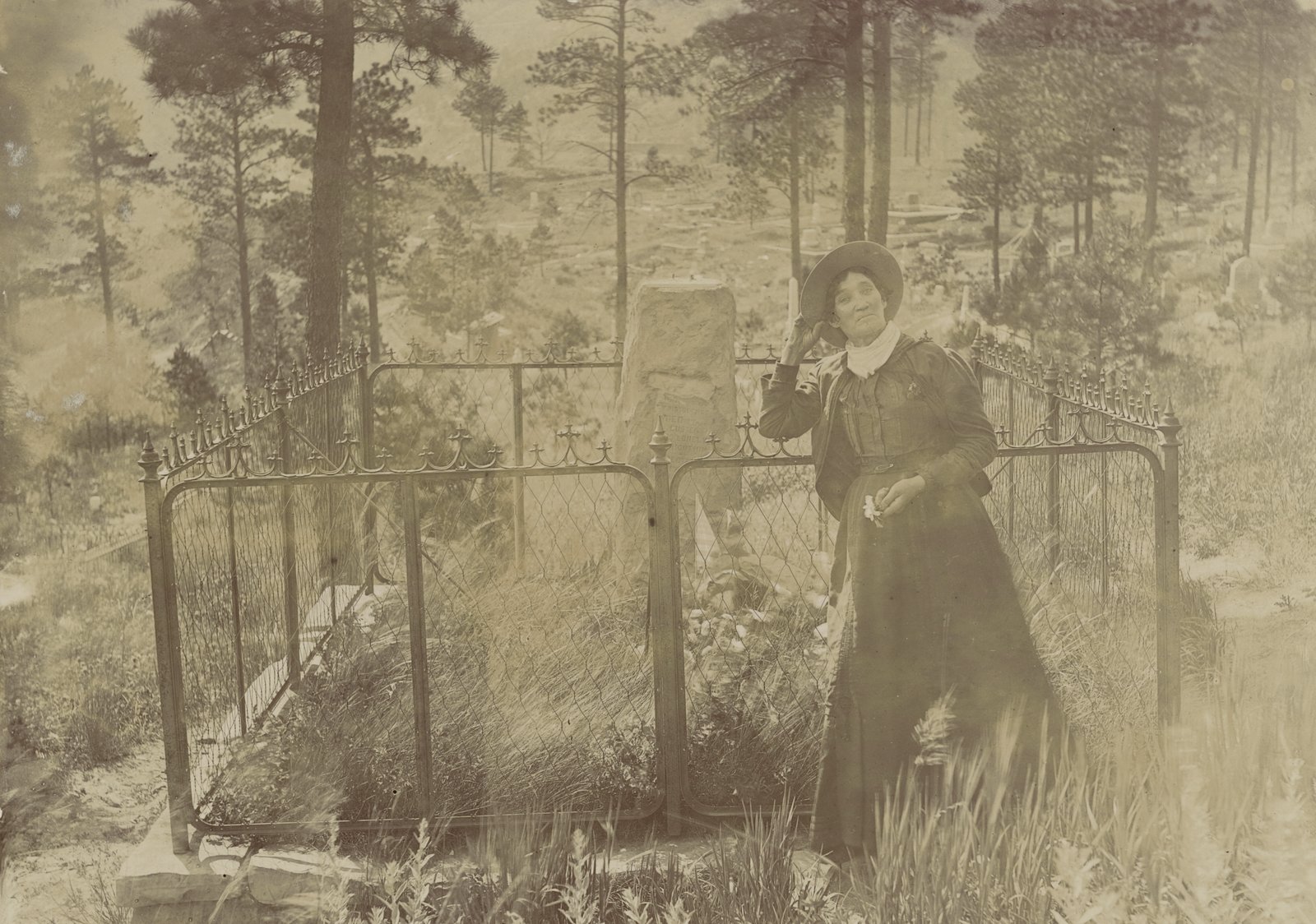
The Society of Black Hills Pioneers took charge of the funeral. On August 4 the Methodist church in Deadwood was packed. The Rev. Charles B. Clark spoke of her charity and passed over the rest, and a procession followed the band to Mount Moriah, where she was buried next to Hickok, reportedly at her own wish, the city’s account says.
Legends That Outlived Her
Her death set the legend loose. Buffalo Bill Cody told newspapers she had scouted under him and had saved a stage driven by Jack McCall, then led McCall’s lynching. None of it was true: she saved no stage, McCall drove none, and he was tried and hanged by law. Within weeks the Deadwood Daily Pioneer-Times asked readers to let her and Hickok “rest in their graves.” Within ten years retellings had moved her death to August 2, 1906, 30 years to the day after Hickok’s; McLaird calls the date fiction.
Her name was on the map before she died. In 1890 the photographer John C. H. Grabill captioned a view of Calamity Peak, near Custer, as named for “the most noted character in the Black Hills.”
Connected
- Deadwood’s Wild Years, 1876 to 1879The gold camp she rode into in 1876, through the fire of 1879.
- Deadwood, South DakotaThe town today, and her grave beside Hickok’s on Mount Moriah.
- Wild Bill HickokShe rode into Deadwood with his party weeks before he was shot, and lies beside him.
- The Black Hills Gold RushThe rush, and the 1875 Jenney survey she followed into the Hills.
- The 1876 War and the Taking of the HillsHow the land under the gold camps was taken from the tribes in 1877.
- Stagecoaches and RailroadsThe Cheyenne road, and the stagecoach she claimed to have saved.
- Belle Fourche, South DakotaThe cattle town where she worked as a cook early in 1903.
- Sundance, WyomingWhere she spent part of her last summer.
Sources
- Calamity Jane: The Life and the Legend. James D. McLaird, South Dakota History 24, no. 1, South Dakota State Historical Society, 1994.
- Exploring the Black Hills, 1855–1875: Reports of the Government Expeditions; The Scientists’ Search for Gold, 1875: Walter P. Jenney and Henry Newton. James D. McLaird and Lesta V. Turchen, South Dakota History 4, no. 4, South Dakota State Historical Society, 1974.
- Calamity Jane (1856–1903). James D. McLaird, Encyclopedia of the Great Plains, University of Nebraska–Lincoln.
- Calamity Jane: Heroine of the West or Ordinary Woman? (Rebecca Hein). Wyoming State Historical Society, 2014.
- Martha “Calamity Jane” Canary. City of Deadwood Historic Preservation Office, 2013.
- Life and Adventures of Calamity Jane, by Herself. Project Gutenberg (pamphlet first issued about 1896).
- Wheeler, Edward L. Beadle and Adams Dime Novel Digitization Project, Northern Illinois University Libraries.
- Calamity Peak. Near Custer, named after “Calamity Jane,” the most noted character in the Black Hills. John C. H. Grabill, 1890. Library of Congress.
Last reviewed: