People
Black Elk, Oglala Lakota Holy Man
Twice a day each summer from 1934, an eight-sided pavilion on the highway from Rapid City to Mount Rushmore staged Lakota dances and ceremonies, and the Oglala holy man who had created the show played its medicine man. He was Nicholas Black Elk (1863 to 1950). He lived through the 1876 war and the Wounded Knee Massacre, served for decades as a Catholic catechist, and told his life to the poet John G. Neihardt. South Dakota’s highest point now bears his name.
A Vision in His Ninth Summer
The National Park Service and the State Historical Society’s journal put his birth in December 1863 on the Little Powder River, in what became Wyoming; his grandchildren’s 2016 petition to the Catholic diocese gives 1866. His father was an Oglala medicine man of Big Road’s band, and the Park Service counts him a second cousin of Crazy Horse (Tȟašúŋke Witkó).
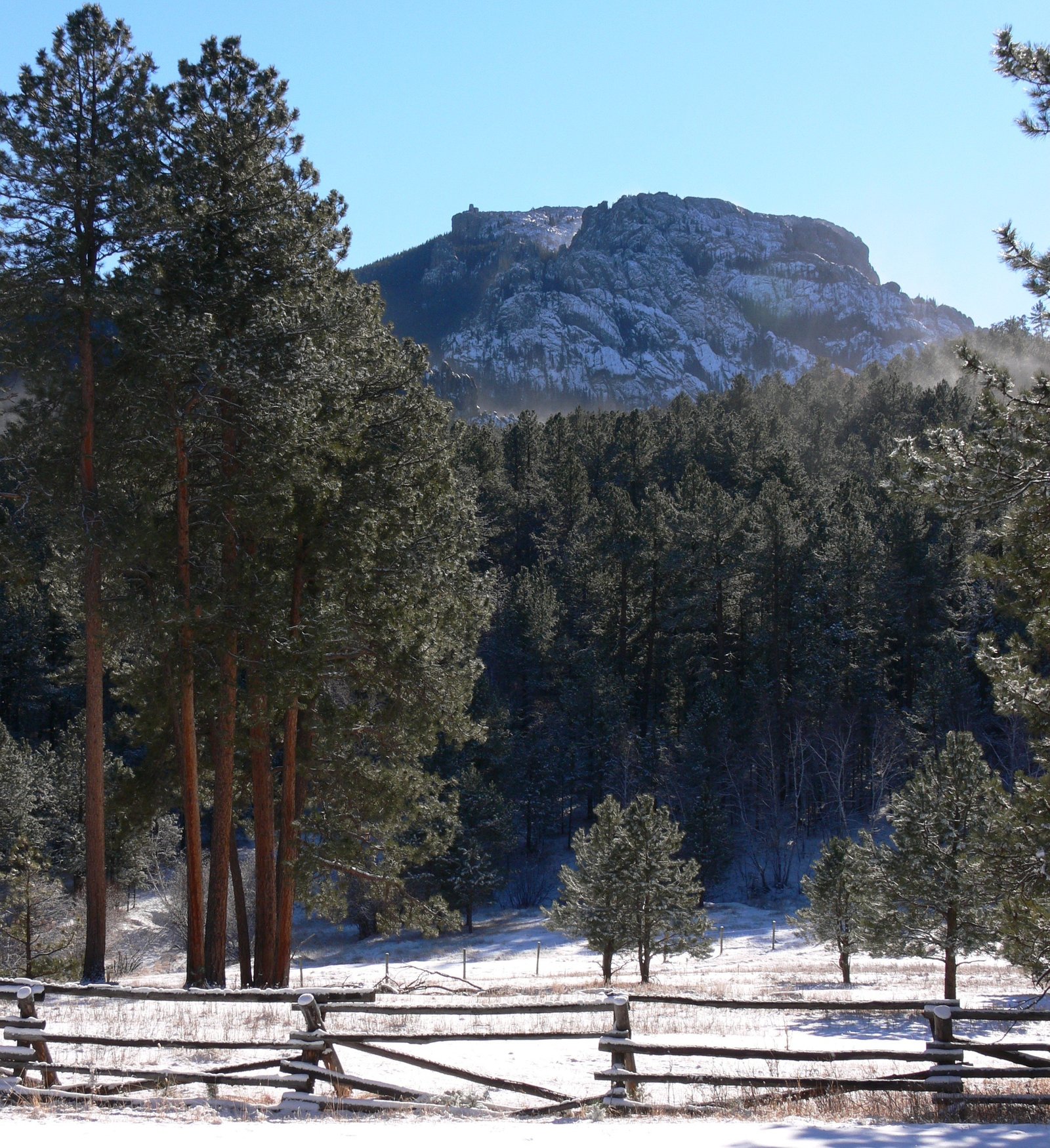
In the summer of his ninth year he had the vision that set him on the road to becoming a holy man. As the Park Service sums up his telling, a council of six grandfathers, standing for the four directions, the earth and the sky, gave him gifts of power and, he believed, the ability to heal. Neihardt wrote in June 1931 that it carried the boy to “the center of the world,” which he identified as Black Elk Peak (called Harney Peak until 2016); the grandchildren’s petition says the vision came to him on the mountain. In 1881 Black Elk announced his calling with the Horse Dance, Clyde Holler writes in the Encyclopedia of the Great Plains, and after federal rules of 1883 made the Sun Dance and the healers’ practices offenses, he healed in secret.
From the Little Bighorn to Pine Ridge
Black Elk was 12, by the Park Service’s count, at the Battle of the Little Bighorn, which the Lakota call the Battle of the Greasy Grass, on June 25, 1876, too young and small to do much fighting, though he took his first scalp and gathered guns and ammunition from fallen soldiers. Afterward his band went north to join Sitting Bull in Canada, the Society’s journal says. In February 1877, with the war not yet over, Congress took the Black Hills without the consent the 1868 treaty required. In 1882 Black Elk settled at the Pine Ridge Agency.
Europe, the Ghost Dance and Wounded Knee
He joined Buffalo Bill Cody’s Wild West show, which played London in 1887, Queen Victoria’s jubilee year. He missed the ship home, toured Europe with a rival show, rejoined Cody and came back to Pine Ridge in 1889.
He joined the Ghost Dance. Its sacred tree, with the hoop of the people around it, recalled his boyhood vision, Joan Anderson wrote in the State Historical Society’s journal; Holler calls him one of its leaders. Black Elk danced at Wounded Knee Creek, near his home. On December 29, 1890, hearing the shooting there, he came to the massacre, helped survivors and mourned the dead, then fought in later skirmishes and surrendered on the advice of Red Cloud, the Park Service says.
Nicholas Black Elk, Catechist
In 1892 Black Elk married Katie War Bonnet, a Catholic convert, and their three sons were baptized. After her death he was baptized himself, on December 6, 1904, the feast of St. Nicholas, his grandchildren wrote, and they date his appointment as a catechist to 1907. Anderson counts more than 30 years in which he held Sunday services and carried the faith to the Pine Ridge, Yankton and Sisseton reservations; his family credits him with bringing more than 400 people to baptism. He later married Anna Brings White.
Lakota people, his family among them, disagree about what the conversion meant. His grandchildren, asking the Diocese of Rapid City in 2016 to open a cause for his sainthood, wrote that he was at ease praying with “his pipe and his rosary.” His great-granddaughter Charlotte Black Elk, a Lakota activist, told Voice of America in 2017 that she believes he converted for political reasons, since a catechist could travel freely when other Lakota needed permission; she does not support the cause, though she respects those who do. The diocese opened the cause at Holy Rosary Church in Pine Ridge on October 21, 2017, giving Black Elk the title Servant of God, and it was still open in August 2026, reported Maȟpíya Lúta, the Lakota-led school on Pine Ridge.
Neihardt and Black Elk Speaks
Neihardt first visited Black Elk in August 1930 and returned in May 1931. Near Manderson, with Black Elk’s son Ben interpreting and Neihardt’s daughter Enid taking shorthand, Black Elk and other Oglala elders told their stories. Then, Neihardt wrote, the party climbed Harney Peak, and Black Elk prayed there and wept for his people.
Black Elk Speaks (1932) is Neihardt’s telling. He said openly that he wrote its beginning and ending himself, putting in what he believed Black Elk would have said. The 1931 and 1944 interview transcripts, published by Raymond DeMallie in 1984 as The Sixth Grandfather, show how much he shaped the rest, and how well the book carries Black Elk’s own words is still argued. The book ends his story at Wounded Knee, with a people’s dream dying there. Yet in the transcripts Black Elk hoped “that my people will get back into the sacred hoop,” a line Neihardt left out; for Black Elk, Holler concludes, “the dream never died.” The book strained his ties with the Jesuits, Holler adds.
A Pageant on the Rushmore Road
The pageant grew from Black Elk’s friendship with the Duhamels, Rapid City merchants who traded with Pine Ridge people for crafts; Bud Duhamel recalled that Black Elk proposed it perhaps as early as 1927. The Duhamel Sioux Indian Pageant played in Rapid City until 1934, when it moved to its new pavilion at the Sitting Bull Crystal Cavern, nine miles south of town on U.S. 16 near Rockerville. Pine Ridge families camped beside it each summer, and between dances, the Ghost Dance and the Sun Dance among them, Black Elk enacted pipe and healing ceremonies.
He meant it to teach visitors respect for Lakota ways, the pavilion’s National Register nomination says. “Nick really wanted people to understand his people,” Bud Duhamel told the historian David Born. Black Elk performed until a few years before his death, and the pageant closed in 1957. His son Ben later posed for tourists at Mount Rushmore for 20 summers, the Society’s journal records, known as its “Fifth Face.”
Death, and a Peak Renamed
Black Elk died at Ben’s home in Manderson in August 1950: on the 19th, Anderson wrote, or the 17th, by Holler’s entry, the day his memorial Mass is now held each year on Pine Ridge. He is buried in St. Agnes Catholic Cemetery in Manderson.
On August 11, 2016, the U.S. Board on Geographic Names renamed Harney Peak for him, at the request of the Lakota elder Basil Brave Heart; the Park Service says the new name honors the mountain’s part in his vision. The renaming, and the spring ceremonies on the summit, are told on Hiking Black Elk Peak.
Connected
- Hiking Black Elk PeakThe peak of his vision, renamed for him in 2016, and the trail to its summit.
- Hé Sápa: Why the Hills MatterThe Black Hills in Lakota understanding, from the spring ceremonies to the stars.
- Wounded KneeThe 1890 massacre Black Elk came upon, told from survivors’ accounts.
- Sacred Sites: Bear Butte, Devils Tower and Wind CaveOther places in and around the Hills that the tribes hold sacred.
- Crazy Horse and the Black HillsBlack Elk’s cousin, the Oglala war leader killed at Camp Robinson in 1877.
- Red Cloud, Oglala Lakota LeaderThe Oglala leader on whose advice Black Elk surrendered after Wounded Knee.
- The 1876 War and the Taking of the HillsThe war of Black Elk’s boyhood, and how the Hills were taken from the tribes.
- Mount Rushmore and Crazy Horse MemorialThe memorial on whose road his pageant played and where his son Ben posed for visitors.
Further reading
- Remembering Black Elk: Faith, Culture & Community, Maȟpíya Lúta
- Petition to open the cause for Black Elk canonization, the petition of Black Elk’s grandchildren, presented by George Looks Twice, Diocese of Rapid City
- US Catholics Pursuing Sainthood for Native American Visionary Nicholas Black Elk, Cecily Hilleary, Voice of America
- A Tale of Two Visionaries, Gus Mitchell, JSTOR Daily
- Letter from John G. Neihardt to Julius T. House, June 3, 1931, University of Nebraska–Lincoln
Sources
- Remembering Black Elk: Faith, Culture & Community. Maȟpíya Lúta, 2026.
- Community Gathers for Black Elk Memorial Mass. Maȟpíya Lúta, 2025.
- Petition to open the cause for Black Elk canonization. Laurie Hallstrom, Diocese of Rapid City, 2016; with the petition of Black Elk’s grandchildren, presented by George Looks Twice.
- Black Elk. National Park Service, 2025.
- Dakota Images: Nicholas Black Elk. Joan Anderson, South Dakota History 25, no. 2, South Dakota State Historical Society, 1995.
- Dakota Images: Benjamin Black Elk. Jeanne Kilen Ode, South Dakota History 14, no. 1, South Dakota State Historical Society, 1984.
- Sitting Bull Crystal Cavern Dance Pavilion, National Register of Historic Places Registration Form. Steph Ahrendt, South Dakota State Historic Preservation Office, for the National Park Service, 1995; citing David Born, “Black Elk and the Duhamel Sioux Indian Pageant,” North Dakota History, 1994.
- Black Elk, Nicholas (1866–1950). Clyde Holler, Encyclopedia of the Great Plains, University of Nebraska–Lincoln, 2011.
- Letter from John G. Neihardt to Julius T. House, June 3, 1931. University of Nebraska–Lincoln (digital edition).
- A Tale of Two Visionaries. Gus Mitchell, JSTOR Daily, 2023.
- The Sixth Grandfather: Black Elk’s Teachings Given to John G. Neihardt. Raymond J. DeMallie, University of Nebraska Press, 1984 (Project MUSE record).
- US Catholics Pursuing Sainthood for Native American Visionary Nicholas Black Elk. Cecily Hilleary, Voice of America, 2017.
- Canonization process begins for Black Elk, the Native American who merged Lakota and Catholic culture. Catholic News Service, in America, 2017.
- Long after death, Nicholas Black Elk walks good red road, now being considered for sainthood. Kevin Woster, SDPB, 2017.
- “In Sacred Motion”: Five Years Ago, a Lakota Elder Beat the Establishment and Renamed Harney Peak. Seth Tupper, SDPB, 2021.
Last reviewed: