People
Peter Norbeck
Before 1894, a deep well on the South Dakota prairie went down about 600 feet and cost several thousand dollars. That year Peter Norbeck bought a secondhand drilling rig and reworked its design until a well could reach 1,700 feet for a few hundred dollars, the State Historical Society’s journal says. He settled in Redfield, where his company grew into the largest well-drilling business in the Midwest, and the money carried him into politics. As governor and United States senator, Norbeck (1870 to 1936) was the driving force behind Custer State Park, the Needles Highway and Iron Mountain Road, the federal game preserve that carries his name, and the federal money for Mount Rushmore.
Norbeck was born on August 27, 1870, in a dugout near Vermillion, in the southeast corner of Dakota Territory, and grew up in Charles Mix County. His parents were Lutheran immigrants, from Sweden and Norway by the state journal’s 1980 account, from Norway by the Encyclopedia of the Great Plains and PBS; his father, George, farmed and was an ordained minister. He spent a few terms at the University of South Dakota but took no degree. In 1900 he married Lydia Anderson, and they had four children.
A Progressive in Pierre and Washington
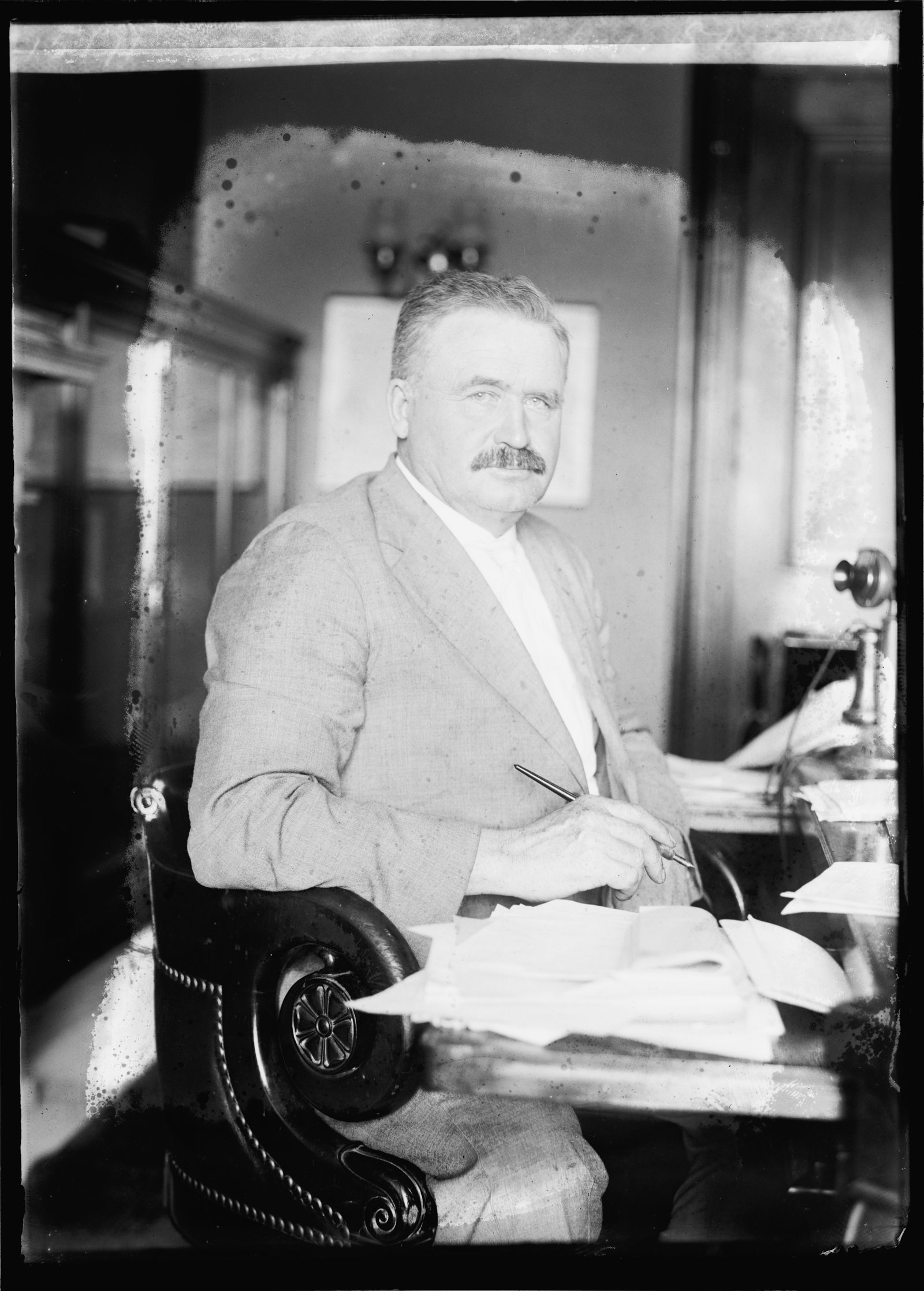
Spink County sent Norbeck to the state senate in 1908. A progressive Republican who admired Theodore Roosevelt, he served three terms there, then won election as lieutenant governor in 1914 and governor in 1916, the first governor born in South Dakota. In office from 1917 to 1921, he opposed the Nonpartisan League, the farmers’ movement then governing North Dakota, yet backed much of its program; his administration brought a state cement plant, state loans to farmers, workers’ compensation and road building. Voters sent him to the United States Senate in 1920 and returned him in 1926 and 1932. In Washington he worked mostly on farm, banking and conservation laws and helped create Grand Teton National Park in Wyoming.
A Game Preserve That Became a Park
Norbeck wanted to gather the region’s native game animals on rugged state land west of the Missouri River, and as a state senator he pressed for a preserve. In 1913 the legislature set one aside in Custer State Forest, a block of state land between the town of Custer and Wind Cave National Park. As governor he won the law that turned the preserve into Custer State Park, official on July 1, 1919.
A federal law of June 5, 1920, let the president set aside up to 30,000 acres of the neighboring Harney National Forest “for the protection of game animals and birds,” as the Custer State Park Game Sanctuary. A 1924 law raised the limit to 46,000 acres, and in 1949 Congress renamed it the Norbeck Wildlife Preserve, now part of the Black Hills National Forest. The Forest Service credits the preserve to Norbeck’s vision and places the Black Elk Wilderness at its center (see Hiking Black Elk Peak).
Roads Laid Out for the View
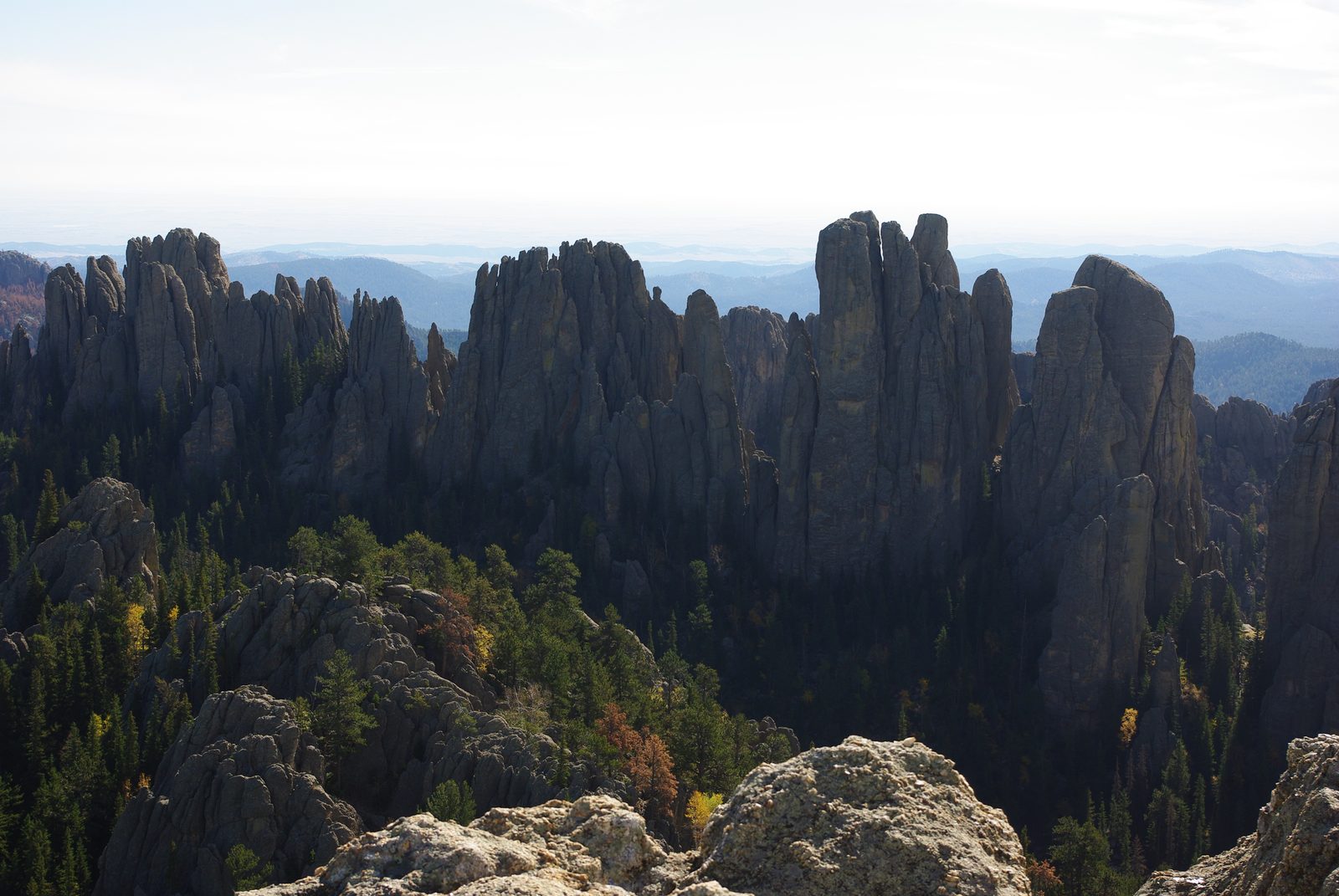
Norbeck wanted roads that showed off the granite rather than taking the easiest line through it. The Forest Service dates his route for the Needles Highway to 1919. His biographer, Gilbert Fite, has him walking it with C.C. Gideon, construction manager of the park’s State Game Lodge, and Scovel Johnson, the state engineer, on foot because horses could not cross much of the ground. The route defied the engineering rules of the day, and by the Forest Service’s count it took two years and 150,000 pounds of dynamite. The Needles Highway opened in 1922.
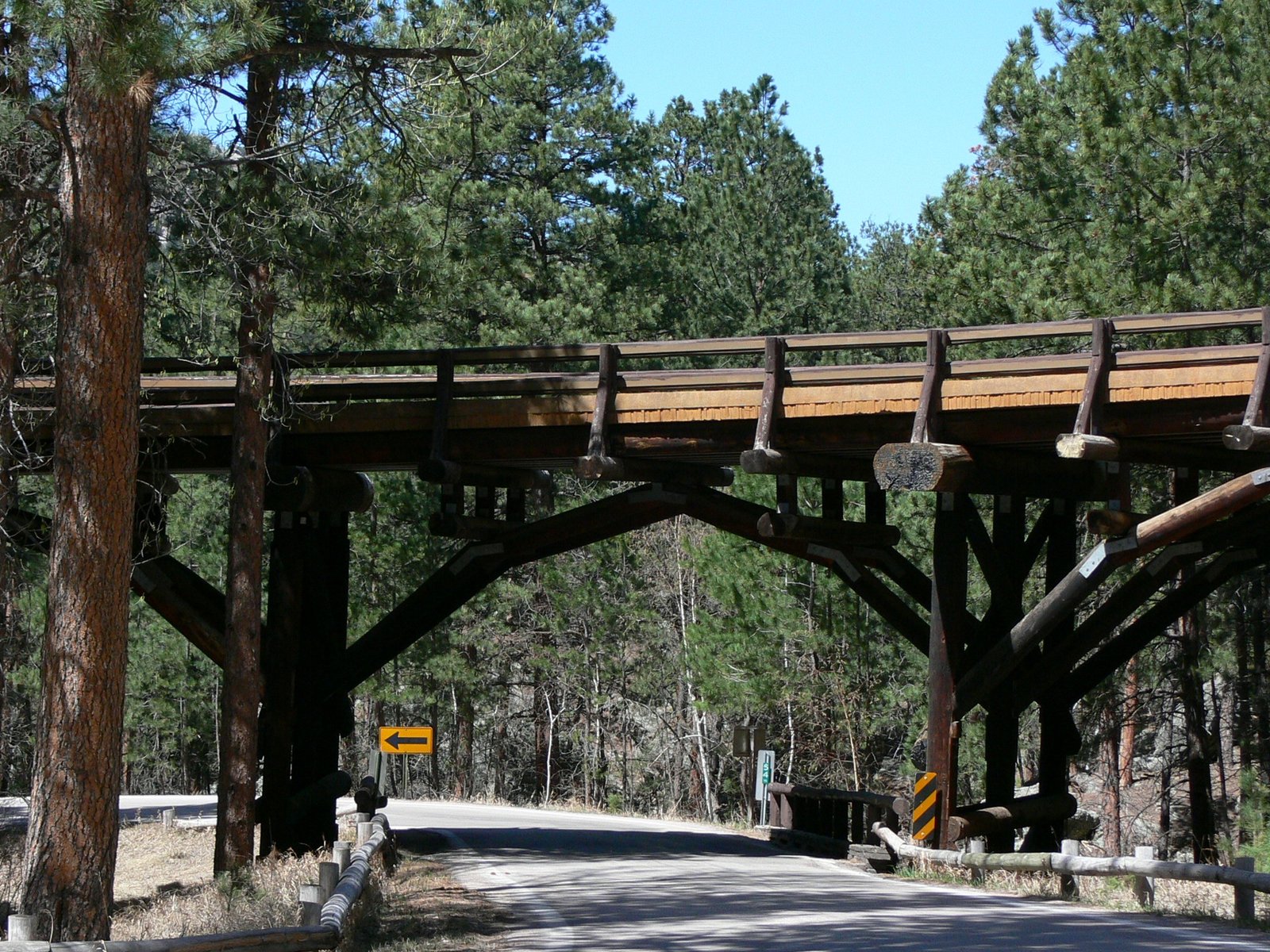
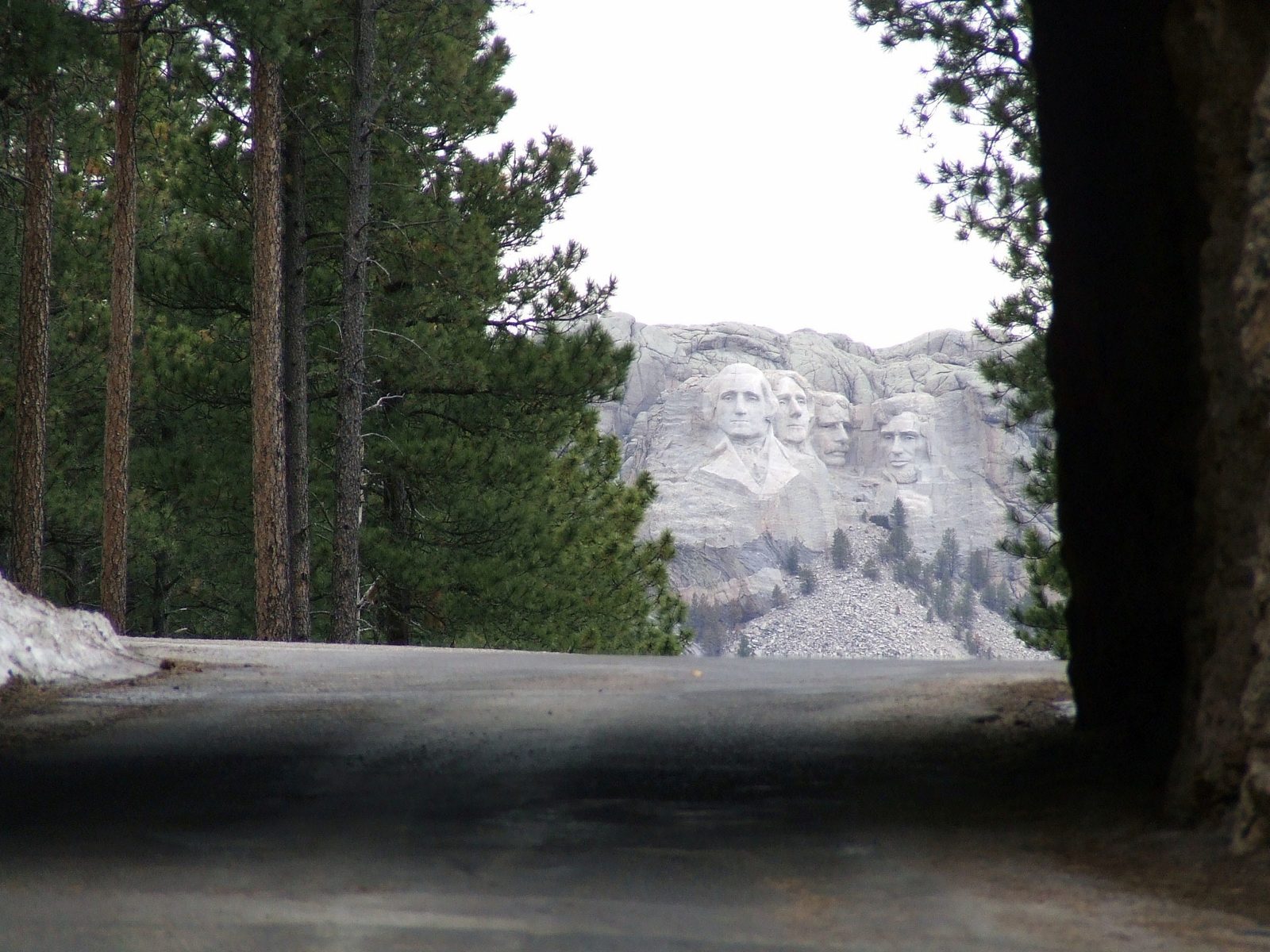
As a senator, Norbeck laid out Iron Mountain Road in the early 1930s, with three tunnels meant to frame the carving on Mount Rushmore. Gideon, a close friend who later built Norbeck’s summer home, solved its steep climbs in 1932 with wooden spiral bridges, the pigtail bridges, and the road was finished in 1933. Both roads now belong to the Peter Norbeck Scenic Byway, described on Scenic Drives.
Much of the road story rests on Fite’s 1948 biography and state park and Forest Service accounts. Both agencies also quote Norbeck, in two wordings, telling drivers to keep to 20 miles an hour or less; neither says when or where he said it. Badger Clark, the state’s first poet laureate, gave him credit in a short poem that made Norbeck the poet of the park, with the land itself as his page.
How Did Norbeck Get Federal Money for Mount Rushmore?
He steered it through Congress. Doane Robinson, the state historian, brought his idea for a giant carving to Norbeck, who had known the sculptor Gutzon Borglum since the 1916 Republican National Convention. The two wrote to coax Borglum west, and the sculptor persuaded Norbeck that the figures should be presidents, the Encyclopedia of the Great Plains says. With Representative William Williamson, Norbeck worked for the 1925 laws that allowed a carving; the federal one, on March 3, permitted it on land in the Harney National Forest.
President Calvin Coolidge spent the summer of 1927 at the State Game Lodge in Custer State Park, and at the mountain’s dedication on August 10 he promised federal funding. Treasury Secretary Andrew Mellon was ready to pay the whole cost, the Park Service says, but Borglum asked for only half, to be matched by private gifts, and Norbeck was stunned. The law Norbeck guided through Congress, approved February 25, 1929, created a 12-member Mount Rushmore National Memorial Commission and authorized federal money for no more than half the cost, up to $250,000. Norbeck declined a seat on the commission, PBS reports. Through the 1930s he kept money coming from New Deal relief programs, matched from the 1929 appropriation.
The carving stands on land the 1868 Fort Laramie Treaty reserved to the tribes; the 1877 Act took it in violation of that treaty, as told on The 1876 War and the Taking of the Hills. How tribes and tribal members see the monument is on Mount Rushmore and Crazy Horse Memorial.
The Badlands had his attention too. On May 2, 1922, he introduced a bill for a Wonderland National Park there. Congress authorized Badlands National Monument instead, on March 4, 1929, on conditions that included a road built by the state, and the monument was established in 1939, after his death (see Badlands National Park).
Silent at the Jefferson Dedication
By 1935 Norbeck had cancer of the tongue and jaw, PBS reports. On August 30, 1936, President Franklin D. Roosevelt came to Mount Rushmore for the dedication of the Jefferson figure; Roosevelt and Borglum spoke, and Norbeck, PBS says, stood by in silence. He died at his home in Redfield on December 20, 1936, during his third Senate term. The State Historical Society’s journal gave the cause as heart failure, and the Encyclopedia of the Great Plains says cancer. The Park Service records his burial at Platte, in the Bloomington Church cemetery.
In 1979 the park named its museum, a Civilian Conservation Corps building, the Peter Norbeck Visitor Center. The scenic byway named for him loops over the Needles Highway and Iron Mountain Road to the tunnels that frame Mount Rushmore.
Connected
- Custer State ParkThe game preserve he pressed for in 1913 and made a state park in 1919.
- Scenic Drives: Needles Highway, Iron Mountain Road and MoreThe two roads he laid out, their tunnels and the pigtail bridges.
- Mount Rushmore and Crazy Horse MemorialThe carving he won federal money for, and how tribes see it.
- Gutzon BorglumThe sculptor Norbeck helped bring to South Dakota and found federal money for.
- Doane RobinsonThe state historian who brought Norbeck the idea of a mountain carving.
- Badlands National ParkThe monument he sought from 1922, authorized in 1929.
- Badger ClarkThe poet who cast Norbeck as the poet of the park.
- The 1876 War and the Taking of the HillsHow the Hills were taken from the tribes, with the ground under his park, his roads and the carving.
Sources
- Dakota Resources: The Peter Norbeck Papers at the University of South Dakota, by John N. Olsgaard. South Dakota History 10, no. 2, South Dakota State Historical Society, 1980.
- Dakota Images: Peter Norbeck. South Dakota History 2, no. 2, South Dakota State Historical Society, 1971.
- Norbeck, Peter (1870–1936), by Fred M. Shelley. Encyclopedia of the Great Plains, University of Nebraska–Lincoln.
- Peter Norbeck (former governors of South Dakota). National Governors Association.
- Peter Norbeck. National Park Service, Mount Rushmore National Memorial.
- Senator Peter Norbeck. American Experience, PBS (WGBH).
- A Century of Wildlife Recovery in Custer State Park, by Cody D. Ewert. South Dakota Historical Society Press, 2019.
- Custer State Park History. South Dakota Game, Fish and Parks, 2026.
- 16 U.S.C. § 675, Norbeck Wildlife Preserve (Act of June 5, 1920, ch. 247, 41 Stat. 986, with the amendments of 1924 and 1949). Legal Information Institute, Cornell Law School.
- Black Elk Wilderness & Norbeck Wildlife Preserve. USDA Forest Service, Black Hills National Forest, 2026.
- Scenic Drives (Custer State Park). South Dakota Game, Fish and Parks, 2026.
- Welcome to the Peter Norbeck Scenic Byway (visitor brochure and map). USDA Forest Service, Black Hills National Forest, undated.
- Needles Highway in Winter, by Bernie Hunhoff (revised from the November/December 2023 issue; quotes Gilbert C. Fite’s Peter Norbeck: Prairie Statesman, 1948). South Dakota Magazine, 2025.
- Dakota Images: Cecil C. (“C. C.”) Gideon, by Stephen S. Witte. South Dakota History 44, no. 4, South Dakota State Historical Society, 2014.
- Mount Rushmore National Memorial, by Sheila R. Aaker. Encyclopedia of the Great Plains, University of Nebraska–Lincoln.
- Memorial History. National Park Service, Mount Rushmore National Memorial.
- Timeline. National Park Service, Mount Rushmore National Memorial.
- An Act To authorize the creation of a national memorial in the Harney National Forest (approved March 3, 1925, ch. 471, 43 Stat. 1214). U.S. Government Publishing Office.
- An Act Creating the Mount Rushmore National Memorial Commission (approved February 25, 1929, ch. 315, 45 Stat. 1300). U.S. Government Publishing Office.
- History of Badlands National Monument and the White River (Big) Badlands of South Dakota: Legislation for Park Establishment, by Ray H. Mattison and Robert A. Grom. Badlands Natural History Association, 1968; copy held by the NPS History Collection.
- Treaty of Fort Laramie (1868), transcript. National Archives.
- Senator Peter Norbeck, S. Dak., 7/23/21. National Photo Company, 1921; National Photo Company Collection, Library of Congress Prints and Photographs Division.
- Peter Norbeck Scenic Byway: Pigtail Bridge Underpass. Stephen Keegan, Federal Highway Administration; Records of the Federal Highway Administration, National Archives.
Last reviewed: