People
Poker Alice
In the 1925 South Dakota state census, Alice Tubbs was born in Virginia, to parents born in Ireland. Two years later, in the Saturday Evening Post, she was a schoolmaster’s daughter from Sudbury, England. That gap runs through the story of Poker Alice (about 1851 to 1930), the card dealer of Deadwood and Lead who later kept a gambling house and brothel at Sturgis, near Fort Meade, killed a soldier there in 1913 and was pardoned in 1928. Bob Lee, writing in 2005, judged that much said of her, “by herself as well as others, simply is not true.”
Her Own Story, Told in 1927
Most of what is told of her early life comes from “Easy Come, Easy Go,” printed in the Post on December 3, 1927, as told by Poker Alice Tubbs to Courtney Ryley Cooper. In it she went to Lake City, Colorado, married to a young mining engineer, named elsewhere as Frank Duffield, and when a misfired dynamite charge killed him, gambling became her living. She tells of breaking the bank at faro, a game in which players bet against a dealer drawing cards from a box, in Silver City, New Mexico, and leaving with $6,000, and of seeing Bob Ford, remembered as Jesse James’s killer, shot dead at Creede, Colorado.
Even her age is unsettled. The State Historical Society’s journal gives her birth as February 17, 1851; Lee called February 17, 1853, the date usually recorded, and Prairie Public’s Dakota Datebook also gives 1853. In 1927 she called herself 74. The Colorado years rest on her word alone.
Lead and Deadwood in the 1890s
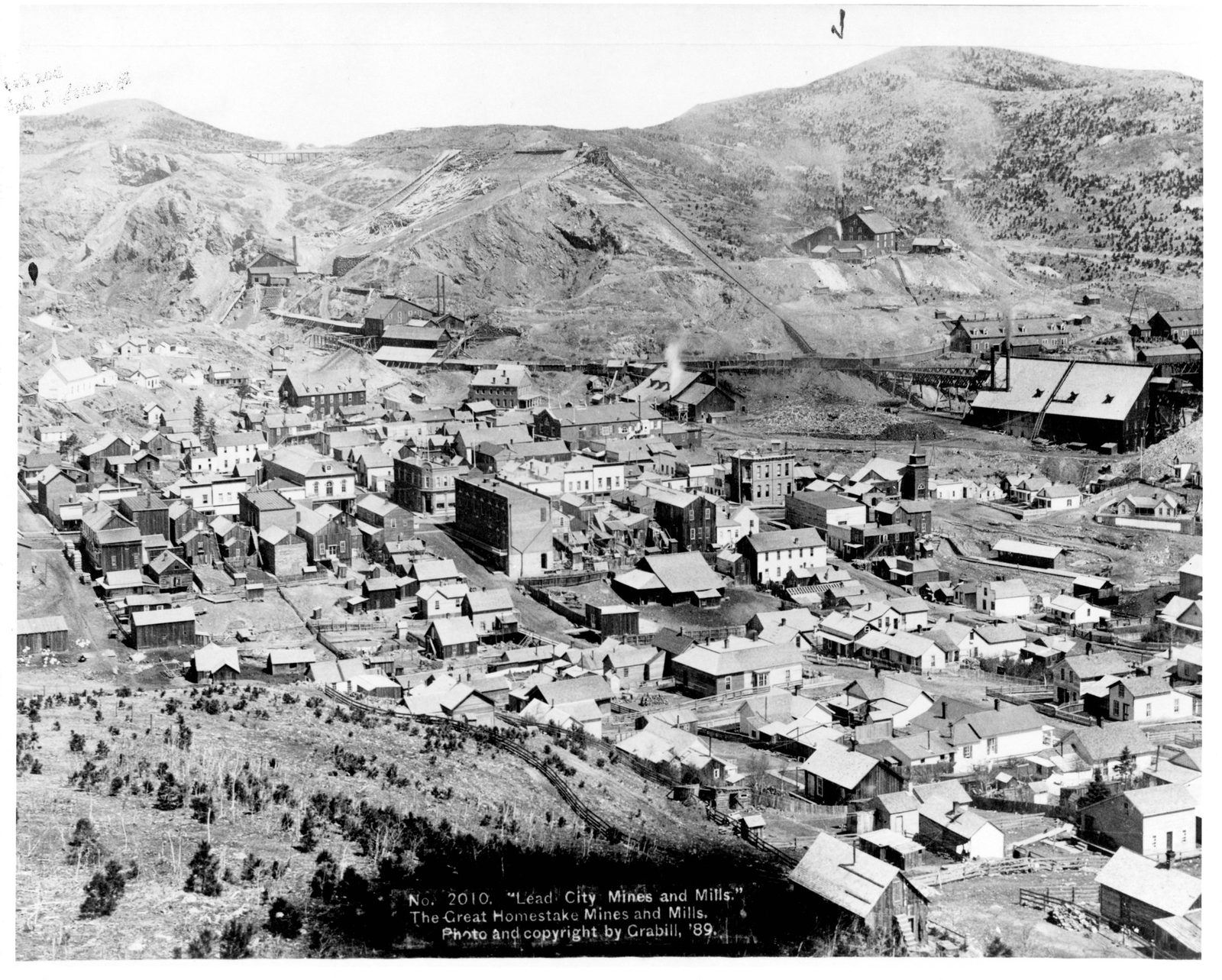
She reached the Black Hills in the early 1890s, the journal says, and her own account brings her to Deadwood and Lead after fire swept Creede. There she found Calamity Jane peddling photographs of herself from house to house. The journal has her dealing stud poker in Deadwood, where the name Poker Alice stuck and where she met another dealer, Warren G. Tubbs, and married him, though in her own story she was already going by Tubbs at Clifton, Arizona. She called her second husband “a good husband, but a rotten gambler,” and did the family’s gambling herself while Tubbs worked by day as a painter, Lee wrote.
The couple lived at Lead, where she was twice arrested for frequenting a house of ill fame; whether she worked there as a prostitute or only dealt cards is not known, Lee found. One story from those years has no witness but her. Broke, she borrowed $100 from the Deadwood saloonkeeper Mike Russell, lost it, pledged the couple’s wardrobe at a Lead secondhand store, repaid him and ran what was left up to $3,400.
Widowed on the Moreau River
When Tubbs fell ill with tuberculosis, they moved to a claim on the Moreau River, northeast of the Hills, and in 1903 contracted to run sheep on shares. A winter storm was blowing when he died on December 31, 1909, Lee wrote; the journal gives 1910. It was days before she could haul his frozen body to Sturgis, four days by open wagon, to bury him in the Bear Butte Cemetery.
Whether she had children is unsettled. Prairie Public and others give her seven. Lee found a single line in her own words, the 1927 mention of a son born on a ranch 25 miles from town with no doctor. Tubbs’s obituary listed two stepchildren among his survivors, and hers said only that children were believed to survive her, their names and whereabouts unknown.
A House Near Fort Meade
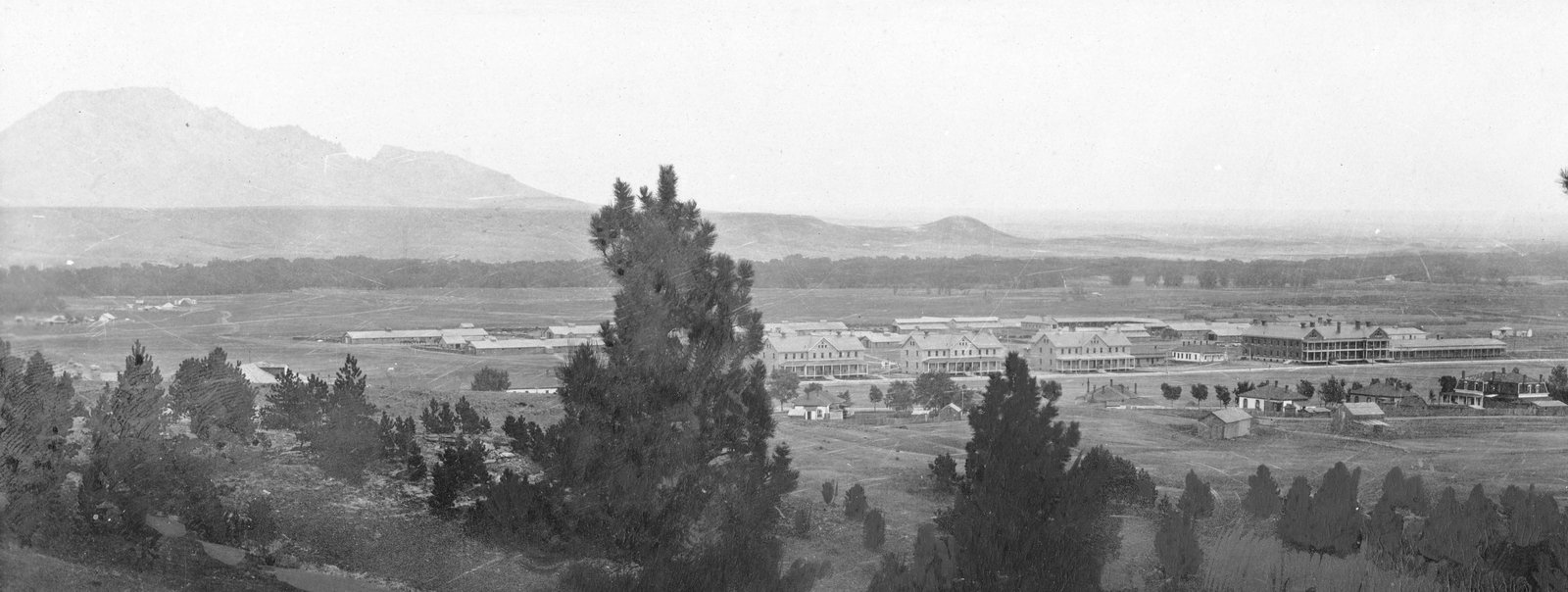
Back at the card tables after Tubbs died, she set up for herself at Sturgis, buying a small clapboard house north of Bear Butte Creek. She ran it as a gambling house and dance hall for the soldiers of Fort Meade, the nearby Army post, Lee wrote, and a bordello too, the journal says. The post often declared it off limits to its men.
What Happened at Her House in 1913?
One night in 1913, soldiers from Fort Meade who had been turned away cut the power line to her house and stoned it, breaking the windows. Lee puts it in July; Prairie Public’s Dakota Datebook cites a Bismarck paper of June 16. She opened fire on them with a .22 rifle, the Deadwood Pioneer-Times reported, as quoted in South Dakota Magazine. A private died of a head wound at the post hospital, Fred Koetzle by the magazine’s account, Bennie Kotzell in the Bismarck paper, and a second soldier recovered from a chest wound. An Army inquiry found both men absent without leave, Lee wrote.
She was never tried for the killing. Two days later the Deadwood paper reported that the state’s attorney would file no charge for the shooting, though she would be charged with “keeping a house of ill fame.” Lee wrote that the killing was held justifiable and that she was fined on the other count, not for the last time. Her 1927 story seems to touch the night once, recalling that after her gambling days she used a repeating rifle with deadly effect.
Prohibition and the Governor’s Pardon
On December 23, 1918, she married George Huckert, a German-born laborer, by Lee’s account. The journal says he tended her livestock and that she accepted him once she could no longer pay his wages. He died on October 12, 1924, and she went back to the name Tubbs.
Prohibition brought her worst trouble. Found guilty of selling whiskey and of running a house of prostitution, she drew six months in the state penitentiary. Friends in Sturgis passed petitions, and Governor William J. Bulow pardoned her late in 1928. Bulow would not send a woman of 75 to prison, Lee wrote; South Dakota Magazine makes her 78. Katherine Soldat, her friend and the first woman mayor of Sturgis, told of the pardon in a 1975 interview held by the South Dakota Oral History Center.
Days of ’76 and the Last Years
By then she was part of Deadwood’s show. Local businessmen started the Days of ’76 celebration in 1924 to trade on the town’s Wild West name, Kevin Britz writes, and the 1927 Post article ran a photograph of Poker Alice in an Army shirt and hat, dealing faro at the celebration. A khaki shirt and campaign hat were her costume in the early parades, the journal says.
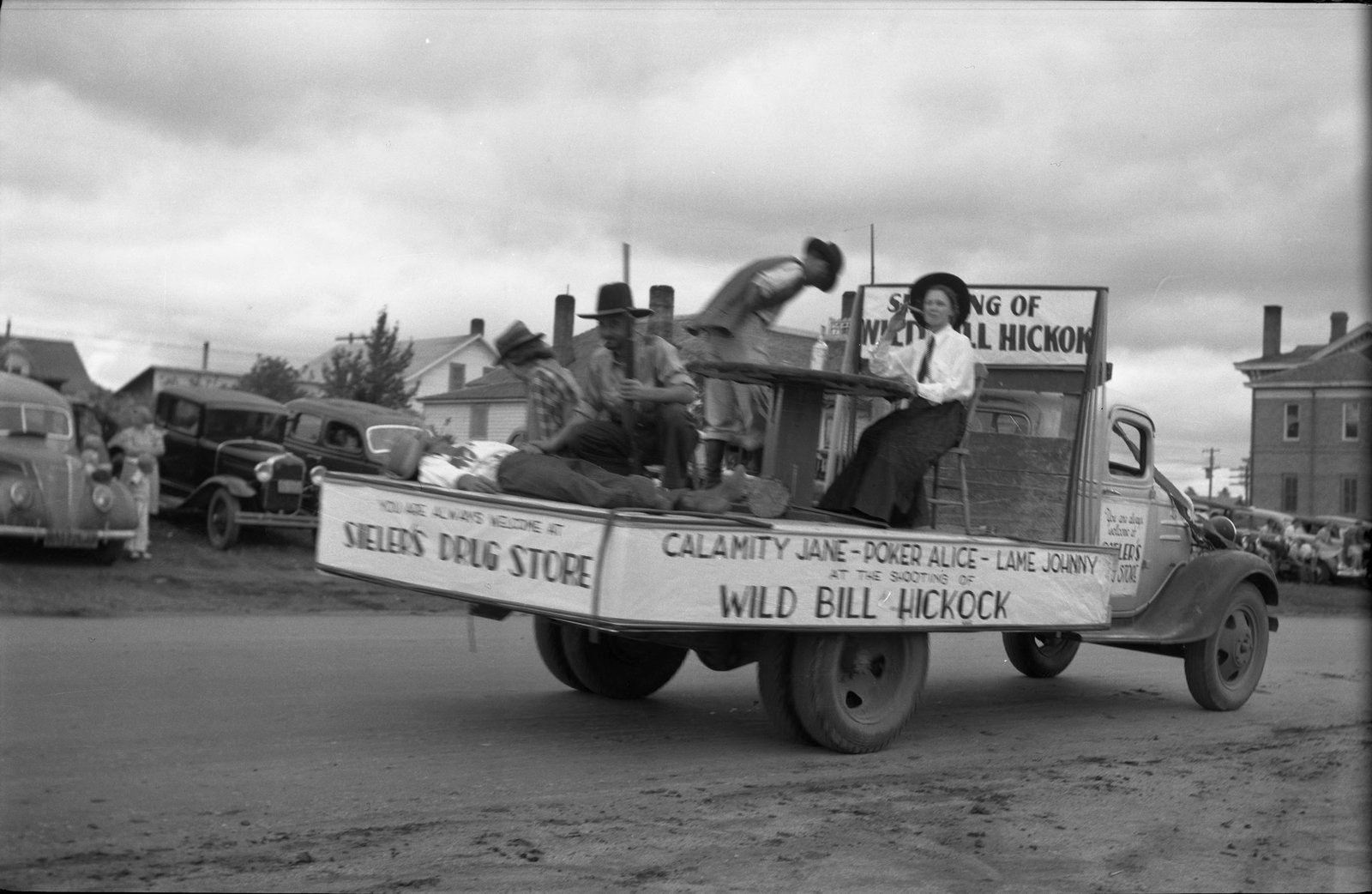
The float put her at Hickok’s killing in Deadwood’s first summer, 1876, and no record of the time backs it. Lee wrote that she told of reaching Deadwood from Cheyenne in June 1876, a line not found in her 1927 story, and the journal dates her arrival to the early 1890s. His story is on Wild Bill Hickok.
Poker Alice died on February 27, 1930, at St. John’s Hospital in Rapid City, weeks after a gallbladder operation. She was buried in St. Aloysius, the Catholic cemetery at Sturgis, though the 1925 census had listed her as a Baptist, a couple of miles from her husbands’ graves in the Bear Butte Cemetery.
Her house outlived her. The city acquired it under urban renewal and declared it unfit to live in, as it stood in the creek’s flood plain, and in 1990 sold it for a dollar to a buyer who moved it to Junction Avenue. Moved and remodeled, it lost its place on the National Register of Historic Places, Lee wrote.
Connected
- Sturgis, South DakotaThe town beside Fort Meade where she kept her house and is buried.
- Deadwood, South DakotaWhere she dealt stud poker in the 1890s and dealt faro at the early Days of ’76.
- Deadwood’s Wild Years, 1876 to 1879The camp of Hickok and Calamity Jane, where a later parade float placed her.
- Calamity JanePoker Alice remembered finding her in Deadwood, peddling photographs of herself.
- Wild Bill HickokA parade float put her at his killing in 1876, a claim no record of the time supports.
- Lead, South DakotaWhere she and Warren Tubbs lived, and where she pledged their wardrobe for a new stake.
- Rapid City, South DakotaWhere she died in 1930.
Sources
- Paper presented by Bob Lee at Festival of the Book in Deadwood, SD, on Saturday, September 24, 2005: [Poker Alice]. Bob Lee, West River History Conference proceedings, 2010, pp. 53–59; Leland D. Case Library, Black Hills State University.
- Dakota Images: Alice Ivers Tubbs. Joan Anderson, South Dakota History 40, no. 1, South Dakota State Historical Society, 2010.
- Easy Come, Easy Go. As told by Poker Alice Tubbs to Courtney Ryley Cooper, The Saturday Evening Post, December 3, 1927, pp. 20–21 and following; Internet Archive.
- Poker Alice. Merry Helm, Dakota Datebook, Prairie Public, 2005 (posted 2022).
- Art, Violence and Poker Alice. Michael Zimny, South Dakota Magazine, 2017.
- Pardoning Poker Alice. Jessica Neal, South Dakota Oral History Center, University of South Dakota, 2012.
- Deadwood’s Days of ’76: The Wild West Show as Community Celebration. Kevin Britz, South Dakota History 40, no. 1, South Dakota State Historical Society, 2010.
Last reviewed: