People
Crazy Horse and the Black Hills
A likeness of Crazy Horse (Tȟašúŋke Witkó) has been coming out of a Black Hills mountain since 1948, yet no photograph is accepted as showing him, and no one knows where his parents buried him. The Oglala Lakota leader was born at the edge of the Hills about 1840, fought in Red Cloud’s War and the 1876 war over Lakota country, the Hills among it, and was killed by a soldier at Camp Robinson, Nebraska, in 1877.
When and Where Was Crazy Horse Born?
In a 2004 interview, the Lakota writer Joseph M. Marshall III said his biography of Crazy Horse drew on what he had grown up hearing: “bits and pieces of things about Crazy Horse from many different people.” Crazy Horse left no letters or memoirs, the historian Joseph C. Porter points out. What is known of him comes mainly from Lakota people who knew him and later spoke with interviewers, from his relatives and from oral tradition, and, for his last months, from Army papers.
Those accounts put his birth about 1840. Porter places it near Bear Butte, at the northeastern edge of the Hills, while a South Dakota historical marker put up near Custer in 1956 says Rapid Valley. In Porter’s account his father, also named Crazy Horse, was an Oglala warrior and medicine man, and his mother, Rattle Blanket Woman, was Minneconjou. By 1861 the son had his father’s name; the father, by the Army Heritage Center Foundation’s account, later went by Worm. The Clown family, Minneconjou Lakota descended from Crazy Horse’s youngest sister, Iron Cedar, hold that he was Minneconjou on both sides, though father and son lived among the Oglala.
Another state marker, by Bear Butte, tells of a council of many bands held there in 1857 that resolved to resist white advance, above all into the Black Hills, and says the young Crazy Horse promised to give his life to it. The marker names no source for the vow.
Red Cloud’s War and a Treaty He Never Signed
Crazy Horse was one of the Lakota leaders in Red Cloud’s War of 1866 to 1867, fought over the Army’s forts on the Bozeman Trail. In December 1866, warriors led by Red Cloud, Crazy Horse and High-Back-Bone drew Capt. William Fetterman’s command into an ambush near Fort Phil Kearny and killed them all. Crazy Horse fought again in the Hayfield and Wagon Box fights of early August 1867. The government agreed to give up the forts, and the troops marched out in 1868.
Red Cloud signed the Fort Laramie Treaty of 1868 that November. Crazy Horse rejected it, as other Lakota leaders did, and he never signed a treaty. In 1868 the Oglala also gave him their highest formal honor, Porter writes, making him a shirt wearer, a place he held until 1870 or 1871.
Fighting for the Hills, 1876
Gold reports from the Custer Expedition of 1874 drew miners onto treaty land in the Hills, and in 1875 the Lakota refused a government offer to lease them. By 1876 the Lakota bands of the Powder River country, gathered around Sitting Bull and Crazy Horse, were resisting two intrusions at once: miners in the Black Hills and the Northern Pacific Railroad. The war’s causes are told on The 1876 War and the Taking of the Hills.
On June 17, 1876, on Rosebud Creek in Montana, Crazy Horse helped lead the Lakota and Cheyenne warriors who turned back Gen. George Crook’s column. On June 25 and 26 he fought at the Battle of the Little Bighorn, which the Lakota call the Battle of the Greasy Grass. The Clown family’s account has him charging through a line of dismounted soldiers, then wheeling to charge again. The tale that he led the charge that killed Lt. Col. George Armstrong Custer is a legend without evidence behind it, the Army Heritage Center Foundation notes.
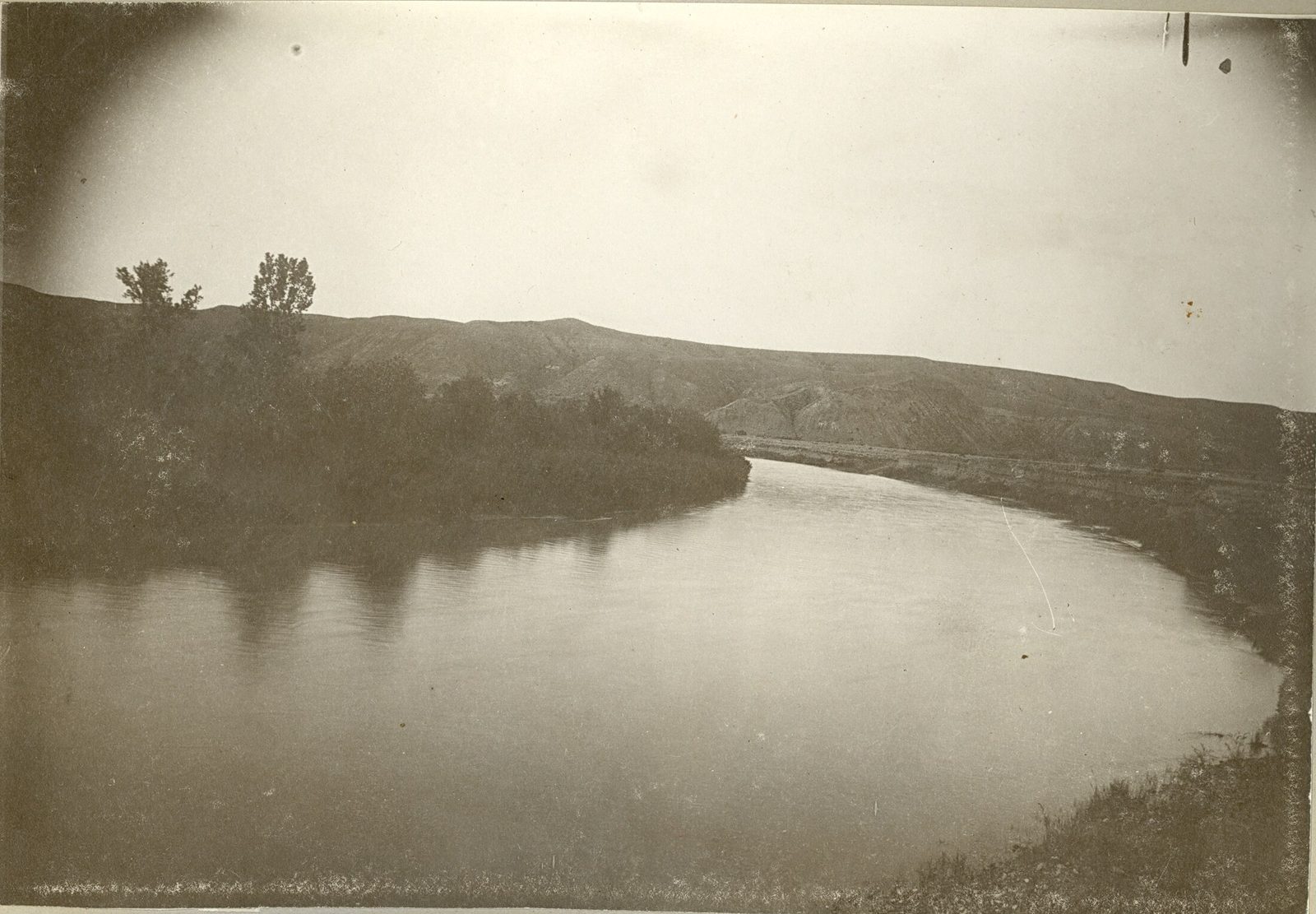
That fall the war came back toward the Hills. On September 9, Crook’s troops attacked a Lakota village at Slim Buttes, in what is now northwestern South Dakota. That afternoon Crazy Horse made a show of force, and the next day the hungry column marched on to Deadwood, a state marker records. Through the winter the Army kept after the bands in the Yellowstone country. On February 28, 1877, while Crazy Horse was still out, Congress passed the 1877 Act, which took the Black Hills from the tribes without the consent the 1868 treaty required.
Surrender and Death at Camp Robinson
Hungry and still pursued, Crazy Horse and his people came in to Camp Robinson, near Red Cloud Agency in northwestern Nebraska, and surrendered in early May 1877. His relatives in the Clown family say he agreed to come in because he was promised that his people could hunt in the Black Hills. He hoped to live quietly at the agency, Porter writes. Instead, rumors spread in the months that followed that he meant to escape or start a new war, and officers ordered his arrest. Porter traces the rumors to jealous Oglala and Brulé chiefs, and the 1956 marker near Custer likewise blames rivals’ false accusations.
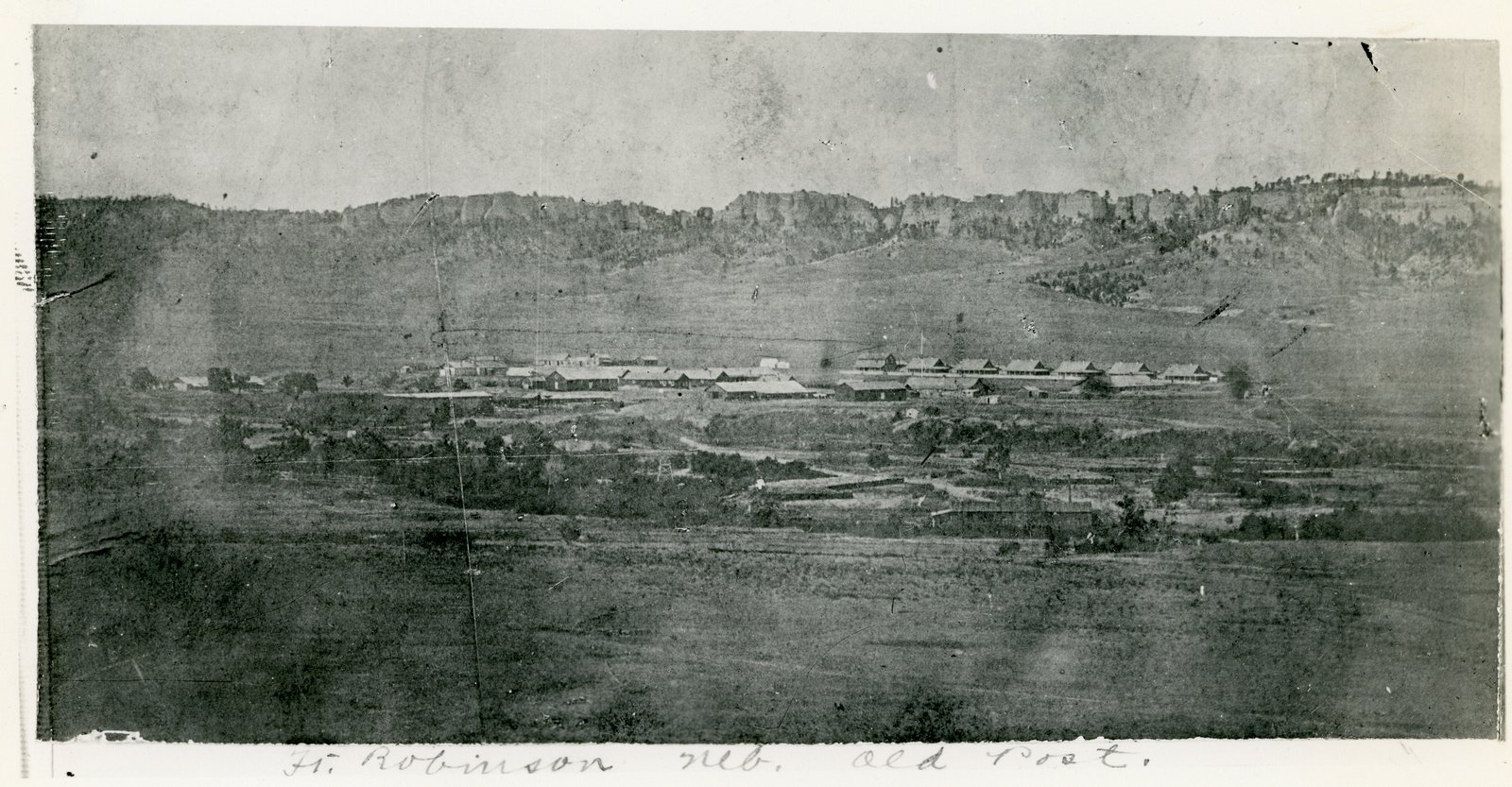
On September 5, 1877, he was brought to the post from Spotted Tail Agency as a prisoner. At the guardhouse he resisted. George Kills in Sight, whose father’s mother was Crazy Horse’s cousin, told Joseph Cash of the University of South Dakota in a 1967 interview that a white soldier simply ran a bayonet through him. The 1956 marker says Crazy Horse was struggling with a friend, Little Big Man, when the guard stabbed him. He had surrendered and was in the Army’s custody when a soldier killed him.
The Army’s version is in the journal of the post commander, Lt. Col. Luther Bradley: Crazy Horse was “mortally wounded in trying to escape.” He died about midnight, Bradley wrote, with his father and the Lakota leader Touch the Clouds beside him.
No Grave, No Photograph
His body was given to his aged parents, and where they buried him is not known. In 1934 a stone monument to Crazy Horse was set up at the post, which had been renamed Fort Robinson in January 1878, and the guardhouse where he was stabbed has been rebuilt on its original site.
No portrait of him appears here, because no photograph said to show Crazy Horse has been authenticated, as the Oglala Lakota writer Charles E. Trimble noted in 2005. The face on the mountain at Crazy Horse Memorial is not a likeness from life either: the Clown family says the sculptor, Korczak Ziolkowski, worked from three of its men as models and from a photograph of a fourth. Lakota people, his relatives among them, disagree about the carving, as Mount Rushmore and Crazy Horse Memorial tells.
Each year elementary students from Maȟpíya Lúta, the Lakota-led school on Pine Ridge, travel to Fort Robinson, now a Nebraska state park, to the place where his life ended. There they pray and sing his song, and in 2025 elders joined them to share stories of his life.
Connected
- The 1876 War and the Taking of the HillsThe war Crazy Horse fought in, and how the Hills were taken while he held out.
- The Fort Laramie Treaties of 1851 and 1868The treaty that ended Red Cloud’s War, which Crazy Horse never signed.
- Red CloudThe Oglala leader who led the war of 1866 to 1867 and signed the 1868 treaty.
- Sitting Bull and the Fight for the Black HillsThe Hunkpapa leader around whom, with Crazy Horse, the Powder River bands gathered in 1876.
- Spotted Tail, Brulé Lakota LeaderThe Brulé leader who carried Crook’s terms north to the holdout bands in 1877.
- Mount Rushmore and Crazy Horse MemorialThe carving of his figure in the Hills, and how Lakota people view it.
- Granite, Rushmore and Crazy HorseThe granite his memorial is cut from, and what carving it has meant.
- Bear Butte and the Plains EdgeThe butte near which one account places his birth.
Further reading
- Mahpiya Luta Students Honor Tȟašúŋke Witkó (Crazy Horse), Maȟpíya Lúta
- A conversation with Joseph M. Marshall III, Wilhelm Murg, ICT
- Descendants of Lakota warrior Crazy Horse aim to set the record straight, Patrick Springer, The Forum
- What did Crazy Horse look like?, Charles E. Trimble, ICT
- Oglala, Little Bighorn Battlefield National Monument, National Park Service
Sources
- Native History: Crazy Horse Killed by US Soldier While in Custody. ICT Staff, ICT, 2013 (updated 2025).
- Descendants of Lakota warrior Crazy Horse aim to set the record straight. Patrick Springer, The Forum (Forum News Service), 2018.
- What did Crazy Horse look like? Charles E. Trimble, ICT, 2005.
- A conversation with Joseph M. Marshall III. Wilhelm Murg, ICT, 2004.
- Mahpiya Luta Students Honor Tȟašúŋke Witkó (Crazy Horse). Maȟpíya Lúta, 2025.
- Oglala. National Park Service, Little Bighorn Battlefield National Monument.
- Fort Robinson and Red Cloud Agency, National Register nomination. National Park Service (form updated 1983).
- Bozeman Trail. National Park Service, Bighorn Canyon National Recreation Area.
- Crazy Horse. Army Heritage Center Foundation.
- Crazy Horse (ca. 1840–1877). Joseph C. Porter, Encyclopedia of the Great Plains, University of Nebraska–Lincoln, 2011.
- The Death of Crazy Horse. Joseph C. Porter, from the American National Biography, OUPblog, Oxford University Press, 2006.
- Red Cloud’s War. Emilene Ostlind, WyoHistory.org, Wyoming State Historical Society, 2014.
- South Dakota State Historical Society Markers (markers 124, 174 and 239). South Dakota State Historical Society, revised 2020.
- Act of February 28, 1877, ch. 72, 19 Stat. 254. U.S. Statutes at Large, U.S. Government Publishing Office, 1877.
Last reviewed: