People
Wild Bill Hickok
Visitors were copying the inscription off a wooden headboard in Deadwood’s first cemetery by September 1877, when the Black Hills Daily Times called it “a great curiosity among people outside of the hills.” The grave was barely a year old. It held James Butler Hickok, “Wild Bill,” who spent a few weeks in the gold camp before Jack McCall shot him at a card table on August 2, 1876. Those weeks, the killing, McCall’s two trials and the grave on Mount Moriah make up Hickok’s whole Black Hills story, and legend has grown over almost every part of it.
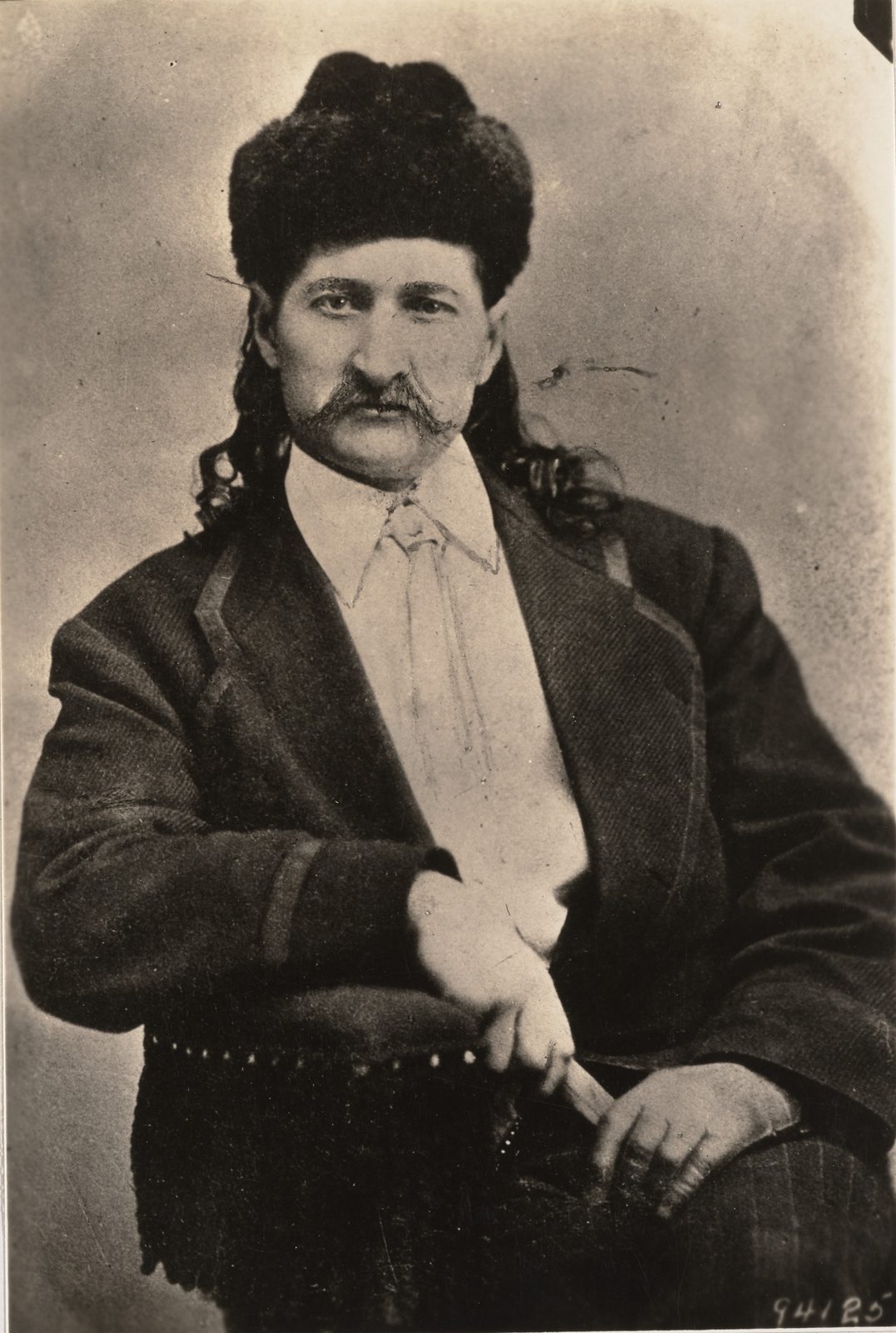
A Reputation Made in Print
Hickok was born on May 27, 1837, in Troy Grove, Illinois, and by 1858 was a constable at Monticello, Kansas. At Rock Creek Station in southeastern Nebraska, on July 12, 1861, he shot David McCanles and had a hand in the deaths of two other men; a justice of the peace freed him and the others charged. The historian James D. McLaird found that the evidence weighs heavily against Hickok there. During the Civil War he worked for the Union Army as a scout and wagon master, a civilian rather than an enlisted soldier. In 1865, after a gambling dispute, he killed Davis Tutt on the public square in Springfield, Missouri, and a jury acquitted him of manslaughter.
Fame arrived by magazine. George Ward Nichols’s article “Wild Bill,” in Harper’s New Monthly Magazine for February 1867, made him a national figure, and McLaird concluded that writers did more than his deeds to make his name. His stints as a lawman in Hays City from 1869 and as town marshal of Abilene, Kansas, in 1871 each lasted less than a year; in Abilene, during a shooting at the Alamo saloon, he killed a city policeman by mistake. He toured on stage with William F. “Buffalo Bill” Cody in 1873 and 1874. Hickok once told the reporter Henry Morton Stanley he had killed more than a hundred men. His biographer Joseph G. Rosa could document seven.
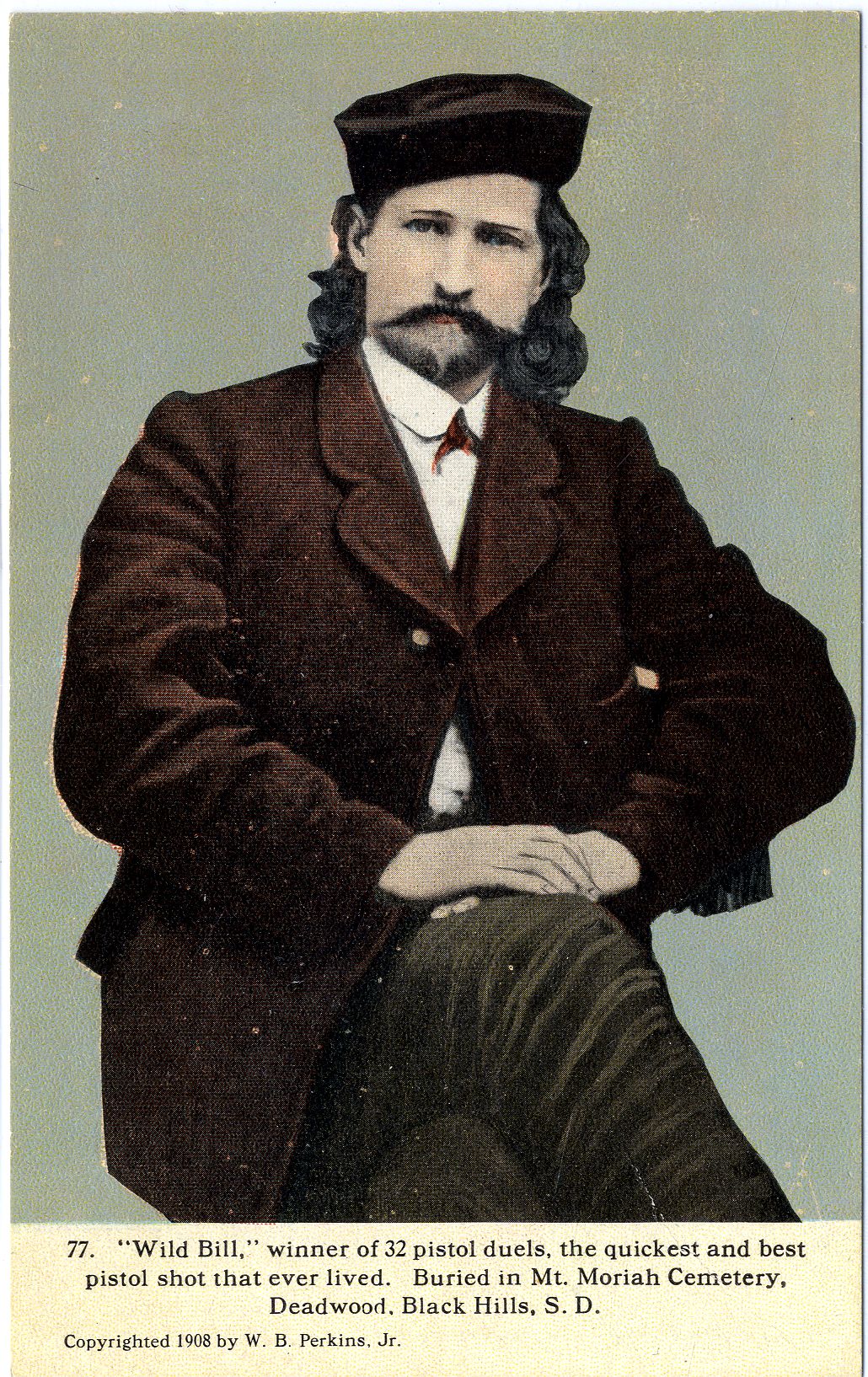
In the summer of 1875 Hickok stopped Annie D. Tallent on a street in Cheyenne, Wyoming Territory, she later wrote, to ask about the Black Hills, from which the Army had just removed her and the rest of the Gordon Party; he expected to go there soon. In Cheyenne, five months before his death, he married Agnes Lake, a circus owner.
A Few Weeks in Deadwood
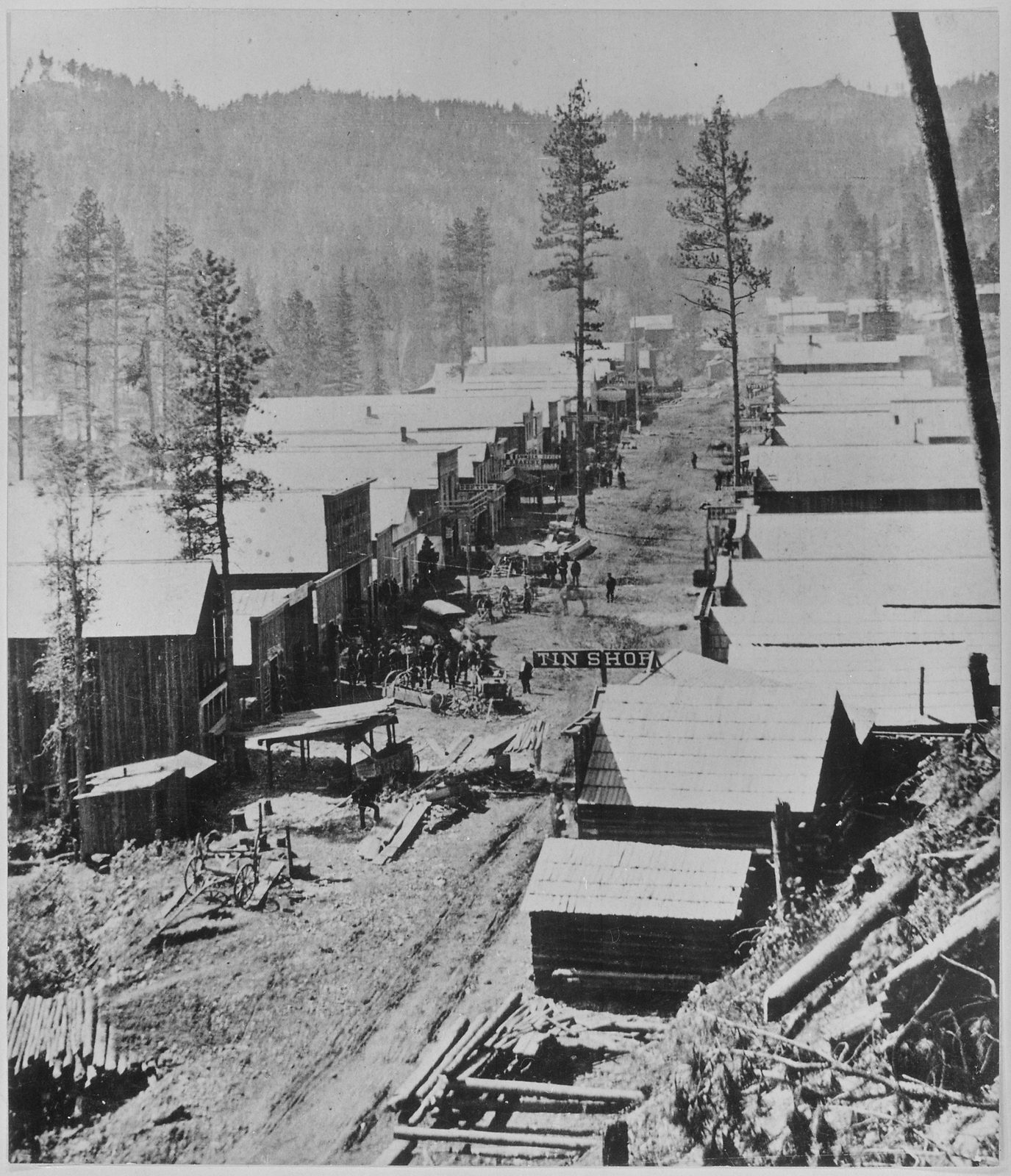
Hickok reached Deadwood Gulch in the summer of 1876, around July 12 by McLaird’s count; the City of Deadwood’s timeline says June. Calamity Jane arrived at the same time, though McLaird thought it unlikely the two spent much time together before Hickok died. He found no gold and went back to the card tables and the bottle.
On August 2, 1876, Hickok was playing cards in the No. 10 Saloon when Jack McCall stepped behind him and shot him in the back of the head. He died at once, at 39. McCall made for a horse outside and fell off it, the cinch loose; a crowd caught him in a store nearby.
Why Was Jack McCall Tried Twice?
McCall faced two trials because the first one had no standing in law. On August 3, 1876, an improvised court tried him in McDaniel’s Theater; local businessmen had chosen its judge and lawyers, Mark Thorburn’s account of the trials says. McCall said Hickok had killed his brother, and he was acquitted. But the camp stood inside the Great Sioux Reservation, set apart for the tribes by the 1868 Fort Laramie Treaty, so the killing was a federal crime and the camp’s verdict could not bar a second trial. Congress took the Hills from the tribes the next year without the consent the treaty required, as told on The 1876 War and the Taking of the Hills.
McCall moved on to Wyoming and bragged of the killing in Laramie City, where a federal marshal arrested him on August 29, 1876. In Yankton, the territorial capital, a grand jury indicted him in October. His trial ran from December 4 to 6 before Judge Peter C. Shannon, and the jury took about three hours to find him guilty. On January 3, 1877, Shannon sentenced him to hang. An appeal to the territory’s supreme court and a petition to President Ulysses S. Grant both failed. McCall was hanged two miles north of Yankton on March 1, 1877.
His motive was never settled, Thorburn concludes. In Deadwood he claimed revenge for a brother. In Laramie he said Hickok had cheated him at cards. After a failed jailbreak in Yankton he said a man named John Varnes had hired him. The night before the hanging, he destroyed the written account he had promised a Yankton newspaper.
Aces and Eights, Fifty Years Late
The story that Hickok died holding black aces and eights first reached print fifty years after the shooting. The bartender that day, Harry “Sam” Young, never mentioned the cards: not in his testimony at McCall’s Deadwood trial, and not in his 1915 memoir, Hard Knocks. As Young told it, Hickok had just lost a hand, a king full beaten by Capt. William R. Massie’s four sevens, and had asked for fifty dollars in checks, or chips. Young never says a new hand was dealt.
The hand first appears in Frank J. Wilstach’s 1926 biography, in a letter from a man called Doc Peirce, who said he had taken charge of Hickok’s body and burial. After that book, the name dead man’s hand stuck to aces and eights, and Deadwood’s promoters made the hand a favorite image. Later memoirs repeated it. The freighter Zack T. Sutley claimed in 1930 that he saw the cards fall, but his name is in no official record of McCall’s trial or hanging, and McLaird judged his Hickok stories fiction.
From Ingleside to Mount Moriah
Friends buried Hickok in Deadwood’s first cemetery, in the Ingleside camp, and Charles “Colorado Charlie” Utter wrote the inscription on the headboard.
The growing town needed the ground. Lawrence County bought land for Mount Moriah Cemetery, on the hill above Deadwood, in the spring of 1878, and in August 1879 Utter moved Hickok there with help from John S. McClintock and Lewis Shoenfield. When they opened the coffin, the body looked and felt like stone. Utter decided his friend had petrified, McClintock suspected lime from the embalming, and the petrified-Hickok story spread anyway.
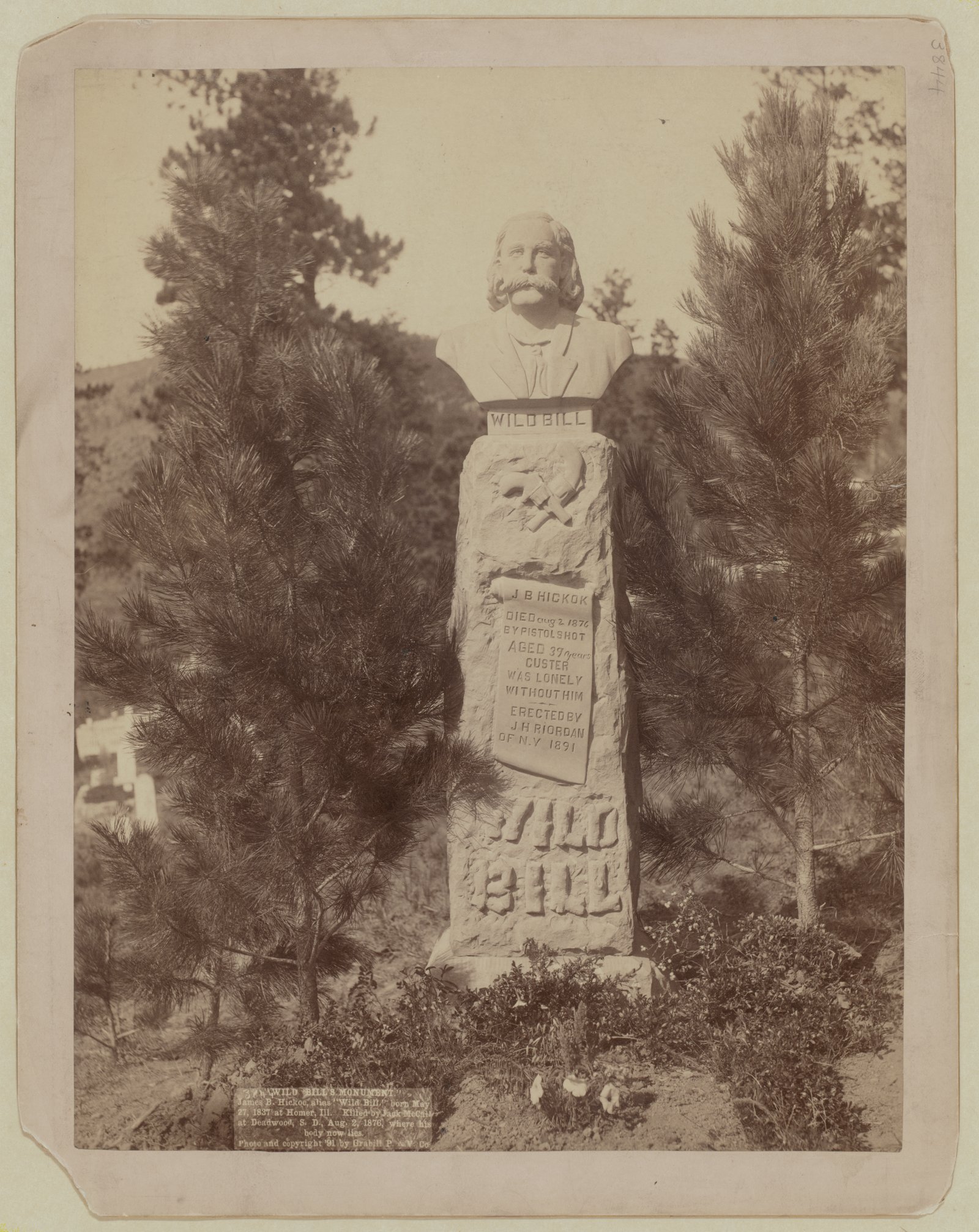
Souvenir hunters whittled the headboard nearly away. In 1891 the New York sculptor J. H. Riordan put up a stone monument crowned with a bust of Hickok, and within about eleven years visitors had carried it off in pieces as well. Since August 2, 2002, a bronze by the Nebraska artist David Young, modeled on Riordan’s monument, has marked the grave.
Calamity Jane was buried beside Hickok in 1903, and McLaird credits that burial with binding their names together in popular memory; her story is on Calamity Jane. Above the cemetery, at White Rocks, lies Seth Bullock, who had reached Deadwood with a wagonload of hardware in the same August that Hickok died.
Connected
- Deadwood’s Wild Years, 1876 to 1879The camp Hickok died in, from the first claims to the fire of 1879.
- Deadwood, South DakotaThe town today, and the two famous graves on Mount Moriah.
- Calamity JaneShe reached Deadwood when Hickok did and was buried beside him in 1903.
- Seth BullockHe came to Deadwood in August 1876 and was appointed sheriff of Lawrence County in 1877.
- The 1876 War and the Taking of the HillsHow the reservation land under Deadwood was taken from the tribes.
- The Black Hills Gold RushThe rush that brought Hickok, and the camp that killed him, to the Hills.
- How Gambling Saved Old DeadwoodThe restoration of Mount Moriah, finished on the anniversary of Hickok’s death in 2002.
Sources
- Wild Bill Hickok, Man and Myth. James D. McLaird, South Dakota History 49, nos. 2 and 3, South Dakota State Historical Society, 2019.
- Origins of a Legend: Wild Bill’s Gunfight at Rock Creek Station. James D. McLaird, South Dakota History 49, nos. 2 and 3, South Dakota State Historical Society, 2019.
- John “Jack” McCall Trials: 1876. Mark Thorburn, Great American Trials (Gale), via Encyclopedia.com.
- South Dakota State Historical Society Markers (markers 301, 302 and 307). South Dakota State Historical Society, revised 2020.
- Jack McCall’s Execution. Jack Dura, Dakota Datebook, Prairie Public, 2018.
- Wild Bill: James Butler Hickok. City of Deadwood Historic Preservation Office, 2013.
- Timeline of Deadwood, South Dakota. City of Deadwood.
- Hickok, Wild Bill. Roger D. McGrath, Encyclopedia of the Great Plains, University of Nebraska–Lincoln.
- James B. “Wild Bill” Hickok. Kansapedia, Kansas Historical Society, 2011.
- Wild Bill Hickok. Illinois State Historic Preservation Office, Illinois Department of Natural Resources.
- Dakota Images: Seth Bullock. South Dakota History 20, no. 1, South Dakota State Historical Society, 1990.
Last reviewed: