People
Gutzon Borglum
“A group of empire makers,” Gutzon Borglum wrote in his day book in August 1925, after riding with his son, Lincoln, to a granite peak called Mount Rushmore and climbing it. The stone, he judged, would hold three, four or five figures. To the Lakota, ICT has reported, the mountain was the Six Grandfathers, on land the 1868 treaty had set apart for the tribes. Borglum carved Mount Rushmore from 1927 until his death in 1941. He came from Stone Mountain, Georgia, where his Confederate memorial ended in his firing and his ties to the Ku Klux Klan began.
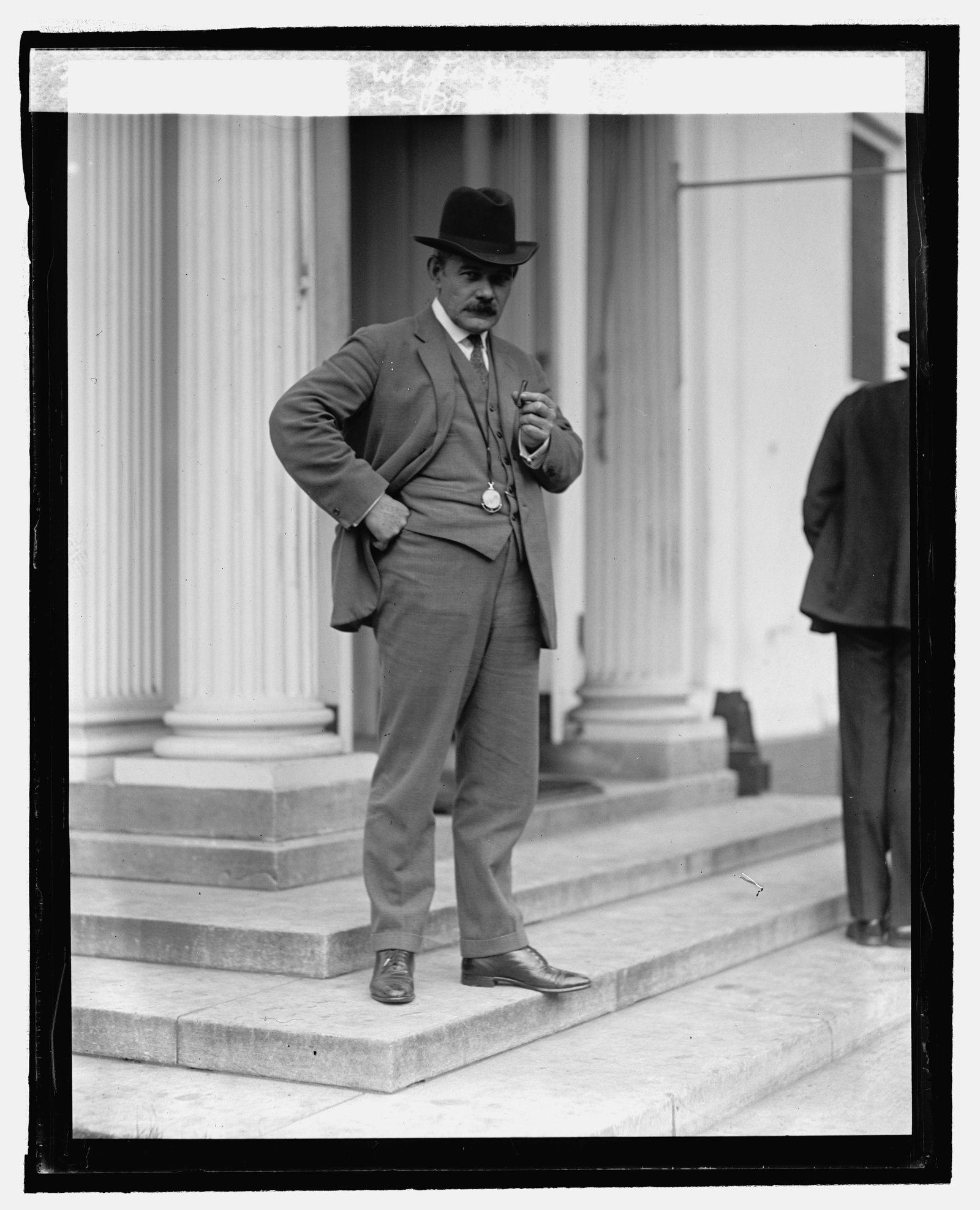
Borglum was born on March 25, 1867, near Bear Lake, Idaho, to Danish Mormon immigrants. His father had married two sisters; Gutzon’s mother, Christina, left when he was about five, and her sister Ida raised him, a 2016 study for the National Park Service says. His own versions of his age and family varied, PBS’s American Experience notes. Raised mostly in Fremont, Nebraska, he trained in California and Paris, worked in England and came home in 1901, making his name with a bronze of General Philip Sheridan and a marble head of Abraham Lincoln later placed in the Capitol.
Stone Mountain and the Klan
Helen Plane of the United Daughters of the Confederacy approached Borglum about a Confederate memorial on Stone Mountain, Georgia, and in 1915 he proposed Robert E. Lee, Stonewall Jackson and Jefferson Davis on horseback with an army behind them. That Thanksgiving a cross burned on the mountaintop to launch the second Ku Klux Klan, the New Georgia Encyclopedia records. Sam Venable, whose family owned the mountain, was a Klansman, and Plane asked Borglum to add Klan members to the carving; the final design left them out.
Sources differ on how deep Borglum’s own Klan ties went. The Park Service study says he joined for a while, hoping its powerful members would fund the carving; Smithsonian Magazine says there is no proof he formally joined. The Atlanta History Center’s 2017 history finds significant evidence that he was “an active participant in the Klan and eagerly subscribed to its ideology,” and that D. C. Stephenson, a Klan leader in the Midwest, relied on his advice. It prints a passage, from the historian James W. Loewen, in which Borglum likens mixing races to crossing a purebred dog with a mongrel and singles out Black people and Jews. American Experience is more cautious: he “became associated with” the revived Klan, it says, and his motive, racism or courting patrons, is unclear.
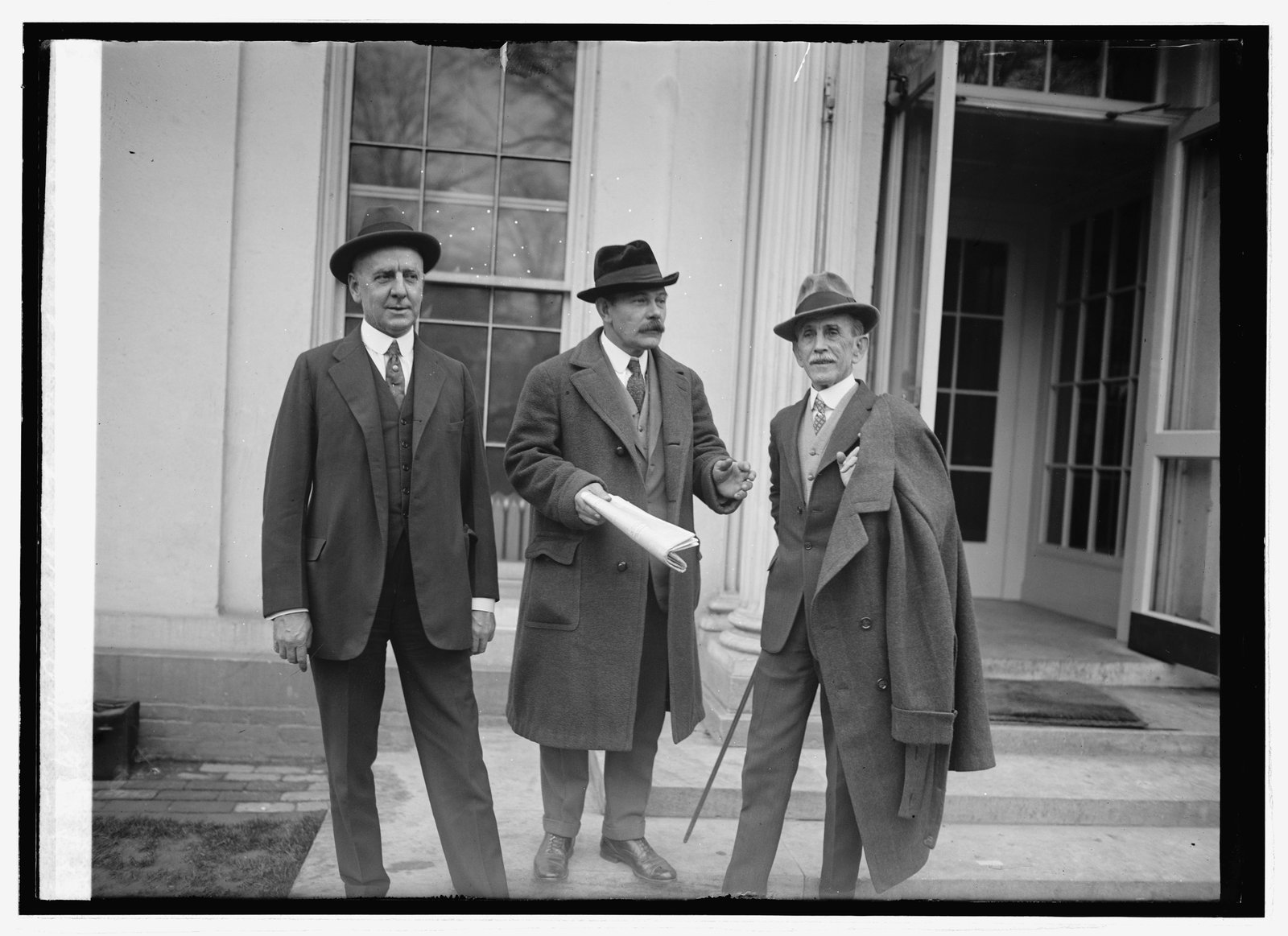
Carving began in 1923, and Lee’s head was unveiled in January 1924. Then Borglum fell out with the Stone Mountain Confederate Monumental Association. The New Georgia Encyclopedia names a rift over artistic control; the Park Service study adds pay, his absences, coin money and rival Klan factions; the Atlanta History Center says a quarrel over Klan politics with the association’s president, Hollins Randolph, helped bring on his firing. Fired in 1925, he destroyed his models and left Georgia once a warrant went out for his arrest, the Park Service says. In 1928 his work was blasted off the mountain.
How Did Borglum Come to the Black Hills?
Doane Robinson, South Dakota’s state historian, invited him, hoping a giant carving would draw visitors. Robinson had first pictured western heroes, a Lakota leader such as Red Cloud among them, and wrote to Borglum on August 20, 1924, as his papers and the Park Service study show; his first letter about a carving, in December 1923, went to the sculptor Lorado Taft.
Borglum reached Rapid City on September 24, 1924, and told Robinson he wanted national figures, starting with George Washington. Stone Mountain followed him: in February 1925, with that quarrel in the national press, South Dakota’s legislature rejected a bill for the carving; the one passed in March spent no state money. That August he chose Rushmore, one of three sites the state forester suggested. No road reached it, so people from Keystone cut a rough one.
Carving on Treaty Land
For the tribes, the first fact about the carving is its place: Hé Sápa, on land the 1868 Fort Laramie Treaty set apart for them, which the 1877 Act took without the consent the treaty required (The 1876 War and the Taking of the Hills). Christina Rose wrote for ICT in 2013 that the Lakota saw cutting the mountain itself as disrespect. In 2020 Harold Frazier, chairman of the Cheyenne River Sioux Tribe, called the carving a “brand on our flesh,” while most tribal members Voice of America spoke with would keep it to teach from. The range of views is on Mount Rushmore and Crazy Horse Memorial.
Borglum wanted the mountain for its fine-grained granite, which the Park Service says wears away about an inch in 10,000 years; about 90 percent of the carving was done with dynamite. The rock’s story is on Granite, Rushmore and Crazy Horse.
President Calvin Coolidge spoke at the formal dedication on August 10, 1927, and carving began on October 4. Nearly 400 men and women worked on the mountain over 14 years, and none was killed, the Park Service says.
In October 1931 Borglum toured the drought-stricken Pine Ridge Reservation, wrote to President Herbert Hoover that three-quarters of the tribe was starving, and arranged for cattle, five of them his own. He went on helping the Oglala through the decade, the Park Service study notes, while cutting into a mountain they held sacred.
Fights Over Money and Control
Borglum had promised that rich easterners would pay, and when federal money came within reach he asked for only half of what was needed, which stunned Senator Peter Norbeck, the Park Service’s memorial history says. The law that followed matched other money with up to $250,000 under a 12-member federal commission. Work stopped whenever the money did.
Borglum fought whoever held the purse: first John Boland, the Rapid City businessman who chaired the commission’s executive committee, then, from 1936, Julian Spotts, a Park Service engineer who required plans and reports and took over hiring and firing. Borglum saw that as meddling with his art, though Congressman Francis Case later reported the general view that Spotts’s two years were the most productive. In 1938 Borglum won a law giving him a commission he chose, freedom from civil service hiring rules and $300,000 more. In 1939 the Park Service took charge again. His temper cost him good workers, whom Lincoln hired back, American Experience says.
Death in Chicago
Borglum kept a ranch near Hermosa from the start of the Rushmore work. Bound for Washington early in 1941, he had surgery in Chicago and died there of a blood clot on March 6, 1941, days before his 74th birthday. He was buried at Forest Lawn in Glendale, California.
Lincoln Borglum finished what the money allowed. The last drilling was on October 31, 1941, and he became the memorial’s first superintendent. At his father’s death, the Park Service study says, none of the four heads had been definitively finished. Gutzon’s Hall of Records, a chamber cut into the canyon wall behind the heads, had been halted in 1939, and his planned inscription panel and grand stairway were never begun.
Connected
- Mount Rushmore and Crazy Horse MemorialThe carving’s history and the full range of tribal views of it.
- Granite, Rushmore and Crazy HorseThe rock he chose, and what carving it has meant.
- Keystone, South DakotaThe mining town whose people cut the first rough road to the mountain.
- Peter NorbeckThe senator who found the federal money and was stunned when Borglum asked for only half.
- Doane RobinsonThe state historian who wrote to him in 1924 and started the project.
- Hé Sápa: Why the Hills MatterWhat the Hills under the carving mean to the Lakota.
- The 1876 War and the Taking of the HillsThe war and the 1877 Act that took Mount Rushmore’s mountain, with the rest of the Hills, from the tribes.
- Red CloudThe Oglala leader Doane Robinson first pictured among his carved western heroes.
Further reading
- Native History: Construction of Mount Rushmore Begins, Christina Rose, ICT
- Native Americans Angry Over Trump Visit to Mount Rushmore, Cecily Hilleary, Voice of America
- Shrine of Democracy and Sacred Stone: Historic Resource Study, Paula S. Reed and Edith B. Wallace, National Park Service
- A Condensed History of the Stone Mountain Carving, Atlanta History Center
Sources
- Sculptor Gutzon Borglum. National Park Service, Mount Rushmore National Memorial, 2023.
- Shrine of Democracy and Sacred Stone: Historic Resource Study, Mount Rushmore National Memorial. Paula S. Reed and Edith B. Wallace, Paula S. Reed & Associates, for the National Park Service, 2016 (NPS History copy).
- Memorial History. National Park Service, Mount Rushmore National Memorial.
- Timeline. National Park Service, Mount Rushmore National Memorial.
- Carving History. National Park Service, Mount Rushmore National Memorial.
- Geologic Activity. National Park Service, Mount Rushmore National Memorial.
- Gutzon Borglum. American Experience, PBS (WGBH).
- A Condensed History of the Stone Mountain Carving. Atlanta History Center, 2017.
- The Sordid History of Mount Rushmore. Matthew Shaer, Smithsonian Magazine, October 2016.
- Stone Mountain. Bruce E. Stewart, New Georgia Encyclopedia, Georgia Humanities, 2004, last edited 2022.
- Mount Rushmore National Memorial. Sheila R. Aaker, Encyclopedia of the Great Plains, ed. David J. Wishart, University of Nebraska–Lincoln.
- Borglum, John Gutzon de la Mothe. Caroline Remy, Handbook of Texas Online, Texas State Historical Association, 1976, revised 2020.
- Native History: Construction of Mount Rushmore Begins. Christina Rose, ICT, 2013.
- Native Americans Angry Over Trump Visit to Mount Rushmore. Cecily Hilleary, Voice of America, 2020.
- Treaty of Fort Laramie (1868), transcript. National Archives.
- Gutzon Borglum, sculptor at White House, 9/22/24. National Photo Company Collection, Library of Congress, 1924; via Wikimedia Commons.
- H.N. Randolph, Guszon Bolglum, H.S. Edwards, 11/22/23. National Photo Company Collection, Library of Congress, 1923; via Wikimedia Commons.
Last reviewed: