People
Clyde Ice
The Federal Aviation Administration’s directory for pilots lists the airfield 3 nautical miles east of Spearfish, 3,933 feet above sea level, as Black Hills–Clyde Ice Field. The field took his name in 1989, a few months before Clyde W. Ice turned 100 and marked the day by flying two airplanes. Ice (1889 to 1992) barnstormed the Dakotas in the 1920s, helped found an early airline at Rapid City, flew doctors and supplies through storms, taught military cadets at Spearfish in World War II, and was still spraying crops past 80. Much of his story comes from his own later telling, and a few records of the time let parts of it be checked.
A Biplane Bought With Two Cars
Ice was born on May 28, 1889, to John W. and Josephine Ellis Ice, homesteaders in Hand County, Dakota Territory, and finished high school at St. Lawrence. In recollections that Clayton F. Smith recorded for a 1997 history paper, Ice said he first went up in the summer of 1919, paying $5 to one of two Army pilots who had landed in a pasture outside St. Lawrence. He then heard of a biplane that a North Dakota farmer had won selling newspaper subscriptions and the wind had blown over, and he talked the farmer into taking two used cars, worth about $400 apiece, in trade. The State Historical Society’s journal tells it the same way: a damaged biplane, two cars, and a pilot who taught himself to fly.
The dates do not all agree. A 1929 Associated Press story from Rapid City called Ice a former World War flier with eight years of flying since the war, and the pilot and historian Norma Kraemer, in a 2015 Rapid City Journal story, has him teaching himself in 1921. The later accounts, his own among them, put his first time aloft in 1919, after the fighting had ended, and none describes any war service. Smith gives his federal pilot’s license as number 1598, issued February 1, 1928.
Rapid Air Lines and the 1927 Blizzard
In November 1926, by the 1929 AP story, Ice ended a barnstorming season by tying his much-patched biplane to a pasture fence near Rapid City. He went to work for an electrician, Bert Gilbaugh, and the two won over their banker, Walter Halley, a former Army flier. Their company, Rapid Air Lines, was incorporated early in 1927, and its first plane arrived on March 1. That month a blizzard and then a flood closed roads and washed out rail lines, and the AP credits Ice with flying stranded travelers, food for cut-off farms and doctors to emergency cases. He also began hunting coyotes from the air, it adds, and the first winter’s take came to more than the price of a new plane.
In 1928 the company bought a Ford Tri-Motor. Ice went to the Ford factory to help assemble it, the state journal says, and barnstormed it from Buffalo, New York, to Mexico. A 2025 South Dakota Magazine article calls him an adviser to Henry Ford’s aircraft production, a larger claim than the journal makes. The company set May 1, 1929, for the start of what the AP called the state’s first daily air transport line, from Rapid City to Watertown by way of Huron. It lasted about six months: too few passengers flew, the historian Steven J. Bucklin writes, and the journal adds that no government airmail contract came to carry it. Ice left the company within months, by the journal’s account; Smith writes that the other owners forced him out in 1934.
A Home Field at Spearfish
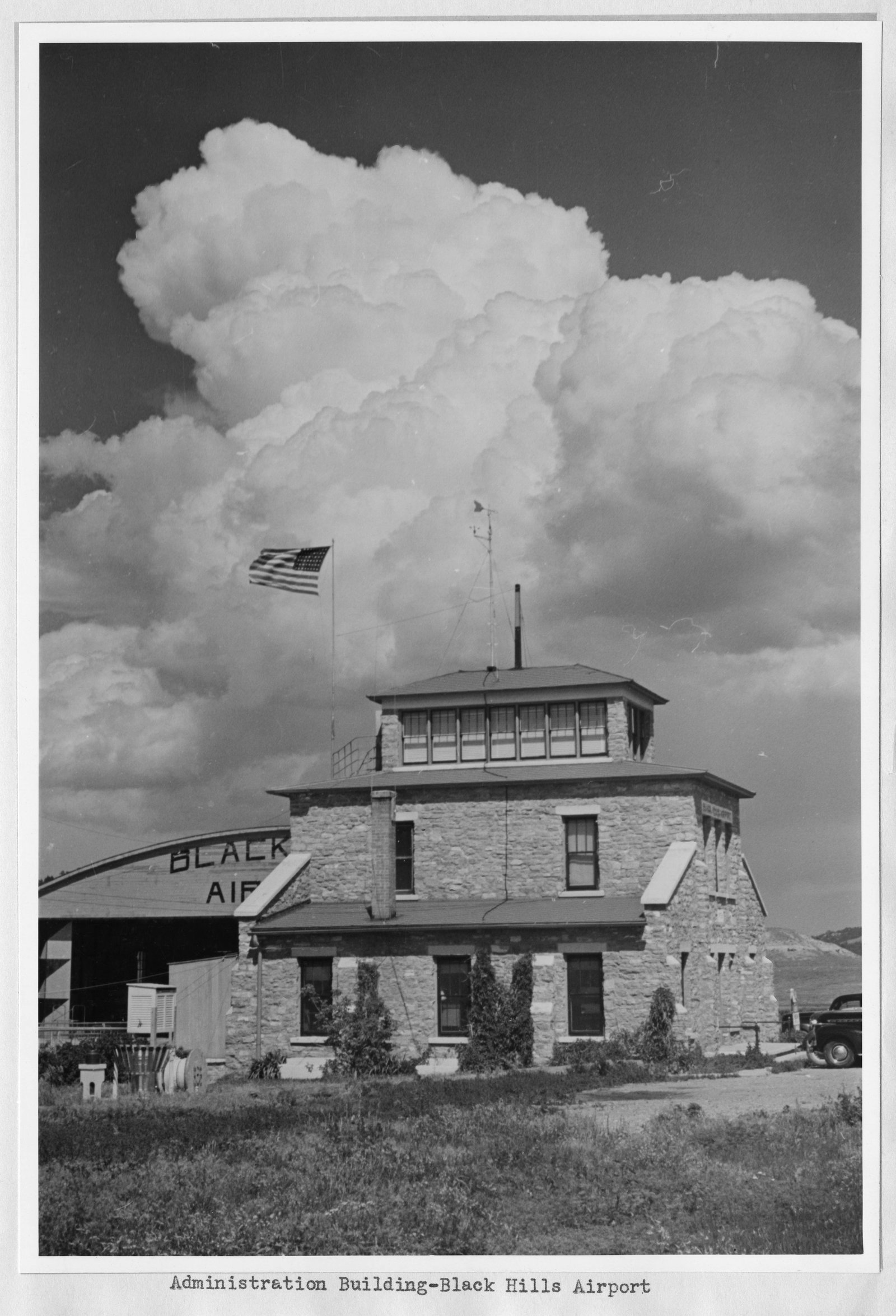
Ice next started his own flying service at Spearfish, in the Northern Hills; none of the accounts gives the year. The city says its airport was dedicated at its present site in 1934. The Work Projects Administration built an administration building there around 1940, Bucklin notes, and Kraemer, in the 2015 story, says the field was built in the first place as an airmail hub; at one point its mail volume topped Rapid City’s, SDPB’s Brian Gevik wrote. Ice built a sprayer for his Piper Cub and took up crop dusting in 1938, the state journal says; Smith dates his crop-dusting business to 1946.
Steak for the Man on Devils Tower
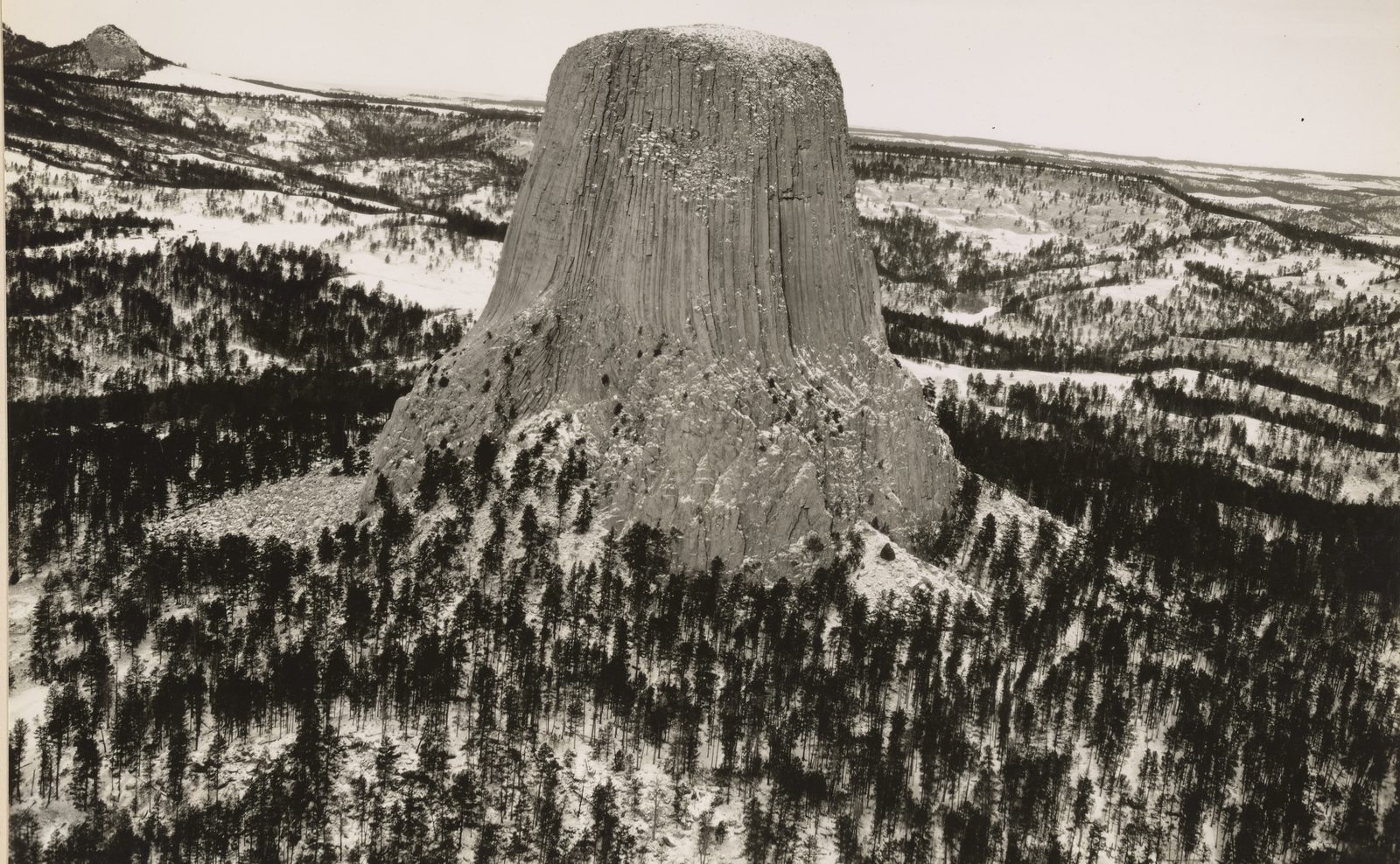
On October 1, 1941, the parachutist George Hopkins landed on top of Devils Tower, the Wyoming butte that more than 20 tribes hold sacred, to win a $50 bet. An hour later another pilot dropped him a rope, but the bundle bounced off and snagged in brush 50 feet below him; the second rope, brought by Ice, came too tangled to use, the Wyoming State Historical Society records. For six days Ice flew close to the summit to drop supplies; a Park Service history by Jeanne Rogers, quoted by Bucklin, lists a bearskin-lined flying suit, a megaphone and a T-bone steak. Climbers brought Hopkins down on October 6. The Rapid City Daily Journal reported the stunt and the rescue that week.
Ice was prouder of a flight in March 1947. By a magazine account Bucklin quotes, he flew a Spearfish doctor through a blizzard to a ranch near Camp Crook, in Harding County, 80 miles to the north, where a baby was coming three months early; the state journal says he carried the premature baby to a Spearfish hospital. He later called it his “proudest moment in 62 years of flying.” Neither account cites a report from 1947.
Cadets on Skis
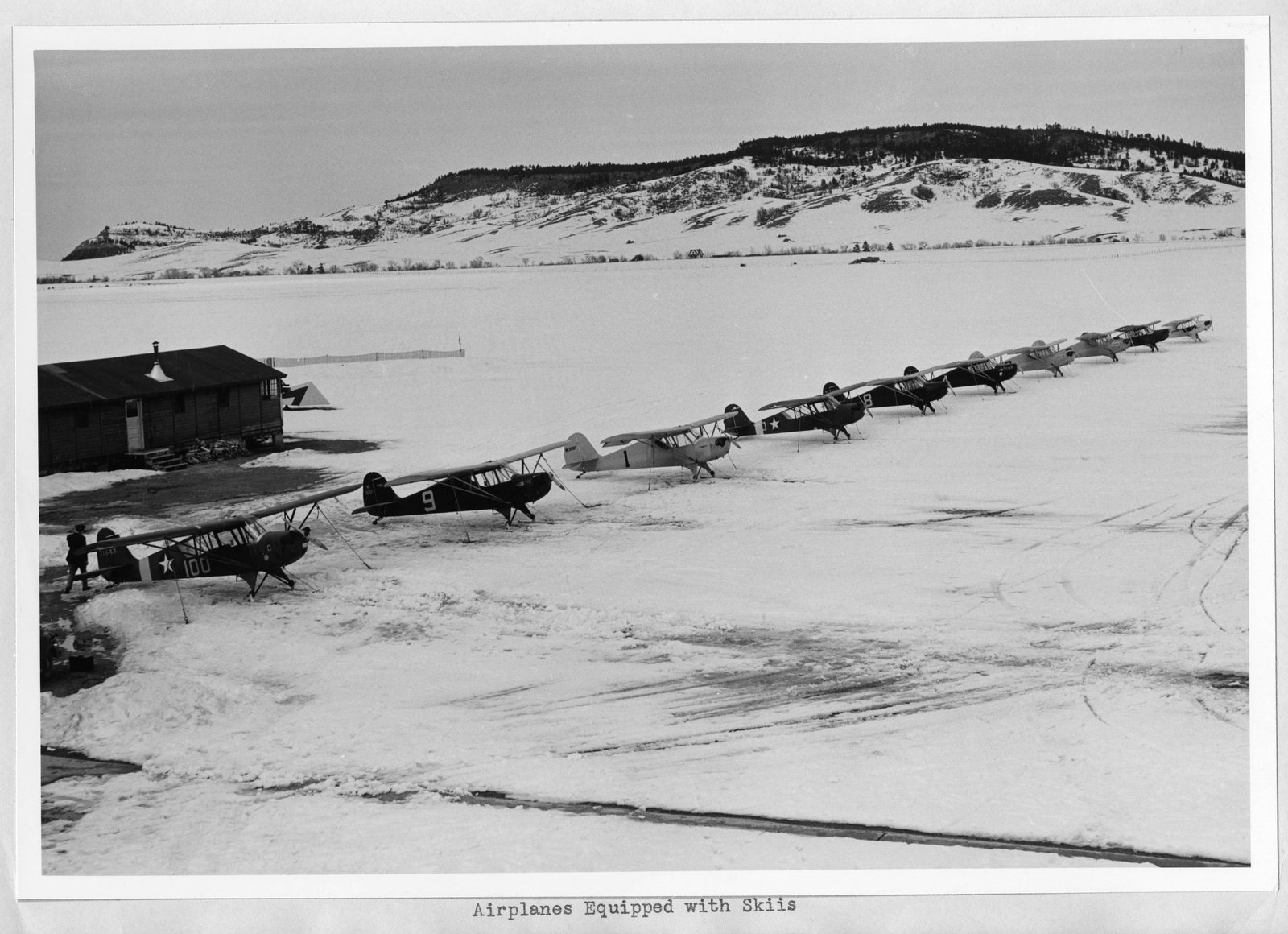
In 1942 the Army opened a school for B-17 bomber crews east of Rapid City, the field that became Ellsworth Air Force Base. Spearfish trained fliers too. The Army Air Forces’ 93rd College Training Detachment (Air Crew) was posted to Black Hills Teachers College; its cadets marched down Main Street on Memorial Day 1943. The detachment’s own history, now in Black Hills State University’s Case Library, pictures rows of light airplanes at Black Hills Airport, one row on skis in the snow.
Ice taught Army Air Forces cadets at the Spearfish airport, by the later accounts. Smith, who interviewed and corresponded with Ice, wrote that Ice had charge of 14 pilot trainees, each assigned 10 students, and that a trainee flew at least an hour a day until he had 10 hours of instruction. Smith called it the Civilian Pilot Training program and put the number trained at some 2,000; the state journal credits Ice himself with training more than 2,000 pilots during the war.
Why Is the Spearfish Airport Named for Clyde Ice?
Lawrence County’s airport board gave the field his name on March 1, 1989, Smith records, after decades in which Ice had flown from it. The South Dakota Aviation Hall of Fame’s own list puts him among its 1991 inductees, the earliest year it shows, with Joe Foss; the state journal gives 1990.
Clyde Ice died in Jackson, Wyoming, on July 17, 1992, at 103. His wife, Audrey, three sons and a daughter survived him. The City of Spearfish now owns the field that carries his name, and counts it the largest general aviation airport in South Dakota west of the Missouri River by the number of aircraft based there.
Connected
- Spearfish, South DakotaThe town Ice flew from, and the teachers’ college that housed the wartime cadet detachment.
- The Northern HillsThe region the Spearfish airfield serves, from the gold towns to the plains.
- Ellsworth and the Minuteman MissilesThe Army’s wartime bomber school east of Rapid City, and what it became.
- Devils Tower National MonumentThe butte where Ice dropped supplies to a stranded parachutist in 1941.
- Sacred Sites: Bear Butte, Devils Tower and Wind CaveWhat Devils Tower means to the tribes who hold it sacred.
- Rapid City, South DakotaWhere Ice and his partners started Rapid Air Lines in 1927.
Sources
- Dakota Images: Clyde W. Ice, by Stephen S. Witte. South Dakota History 45, no. 2, South Dakota State Historical Society, 2015.
- Fly-over Country?: A Glimpse of South Dakota through Its Aviation History, by Steven J. Bucklin. South Dakota History 45, no. 2, South Dakota State Historical Society, 2015.
- Clyde W. Ice: A Name Writ Large in South Dakota Aviation History, by Clayton F. Smith (quotes Ice’s taped recollections and reproduces an Associated Press story from Rapid City, April 25, 1929, “One Time Gypsy Aviator Builds Up Huge Business in Two Year Period”). West River History Conference proceedings, 1997, pp. 60–84; Leland D. Case Library, Black Hills State University.
- Chart Supplement, North Central U.S.: Spearfish, Black Hills-Clyde Ice Field (SPF), p. 389, effective October 29, 2026. Federal Aviation Administration.
- Airport. City of Spearfish, 2026.
- A Stuntman’s Jump: Parachutist Stranded for Days on Devils Tower, by Abby Dotterer. WyoHistory.org, Wyoming State Historical Society, 2019.
- Parachutist George Hopkins. National Park Service, Devils Tower National Monument.
- Devils Tower: Proposals to Change the Name. National Park Service, Devils Tower National Monument.
- Spearfish, South Dakota: Aviation Hub, by Brian Gevik. Images of the Past, South Dakota Public Broadcasting, 2014.
- Western South Dakota Takes to the Skies. Rapid City Journal, October 14, 2015 (reprinted by the Alliance for Aviation Across America).
- Fire Bomber, by Paul Higbee. South Dakota Magazine, 2025 (revised from the May/June 2024 issue).
- South Dakota Aviation Hall of Fame: inductees. South Dakota Aviation Hall of Fame, on the South Dakota Pilots Association’s site.
- 93rd Army Air Forces College Training Detachment marching down Main Street in Spearfish, South Dakota (May 30, 1943). Neil Lyon King & Joan Sunderland King Collection, Leland D. Case Library for Western Historical Studies, Black Hills State University.
- Administration building, Black Hills Airport and Airplanes equipped with skis (1943 or 1944; from the report “History of 93rd Army Air Forces College Training Detachment (Air Crew), Black Hills Teachers College, Spearfish, South Dakota”). Neil Lyon King & Joan Sunderland King Collection, Leland D. Case Library for Western Historical Studies, Black Hills State University.
Last reviewed: