People
Red Cloud, Oglala Lakota Leader
General George Crook declared in October 1876 that Red Cloud was no longer chief of the Oglala and put the Brulé leader Spotted Tail in his place. In 1880 the agent at Pine Ridge twice reported him deposed. None of it held. Red Cloud (Maȟpíya Lúta) was the Oglala Lakota leader whose war of 1866 to 1867 forced the Army to give up its Bozeman Trail forts. His life as it touched the Black Hills, from that war to his death at Pine Ridge in 1909, is told below.
A Warrior Who Was Not Born a Chief
Red Cloud was born in 1821 or 1822 near the Platte River in present-day Nebraska: in May 1821 on Blue Water Creek, says his biographer Robert W. Larson, or in 1822 at the forks of the Platte, says the South Dakota State Historical Society’s journal. Larson writes that his father was Brulé and his mother Oglala. He was not a hereditary chief. He rose through war.
His youth is known mostly from his own telling, at secondhand. In the 1890s he told stories of raids on the Crow, Pawnee and other enemies to an old friend, Sam Deon, who repeated them to the Pine Ridge postmaster, Charles Allen, who wrote them down without Red Cloud’s knowledge. One reviewer placed the text four removes from the man. Larson gives his 80 coups as reported; the claim that he fired the shot that killed Bull Bear in an 1841 brawl was his own, made later.
Red Cloud’s War and the 1868 Treaty
The war was fought over a road. In 1866, while commissioners at Fort Laramie sought Lakota consent for the Bozeman Trail to the Montana gold fields, Colonel Henry B. Carrington marched some 700 troops into the Powder River country to guard it. Red Cloud would not sign. Cheyenne and Arapaho warriors joined the Oglala in the war. On December 21, 1866, near Fort Phil Kearny, warriors under Red Cloud, Crazy Horse (Tȟašúŋke Witkó) and High-Back-Bone drew Captain William Fetterman’s command into an ambush and killed all 81 men, 79 soldiers and two civilians.
The government gave way. Under the 1868 treaty the Army gave up the road and, in August 1868, its forts, and Red Cloud signed at Fort Laramie on November 6, months after other leaders. The treaty set apart the Great Sioux Reservation with the Black Hills inside it, a grant the Rosebud Sioux Tribe’s history says was made “in perpetuity.” In 1980 the Supreme Court, ruling on the tribes’ claim to the Hills, recalled the Lakota of that war as “led by their great chief, Red Cloud,” as told on The 1980 Ruling and Land Back.
Where Did Red Cloud Stand on the Black Hills?
He would not part with them for anything the government meant to pay. In September 1875, with miners already in the Hills, a federal commission headed by William B. Allison met the tribes near Red Cloud Agency in northwestern Nebraska. It offered $400,000 a year to rent Hé Sápa for mining, or $6 million to buy it. Chief after chief asked instead that their people be fed for seven generations. In the commission’s record, Red Cloud asked for cattle, wagons, houses and food for that long, and gave his reason: “I think those hills extend clear to the sky.” On those terms he offered the land inside the Racetrack, the valley that rings the Hills. The commissioners called the demands extraordinary, and the talks broke down.
A law of August 15, 1876, barred future money for the tribes’ food unless they gave up the Hills, and in September a commission brought a written agreement to Red Cloud Agency. Red Cloud’s mark heads its Oglala names, signed there on September 20. Only 10 percent of the adult men signed, the Supreme Court found, where the 1868 treaty required three-fourths. The Hills were taken from the tribes without the consent the treaty required, as told on The 1876 War and the Taking of the Hills.
On October 22, 1876, eight cavalry companies under Colonel Ranald S. Mackenzie surrounded the camps of Red Cloud and Red Leaf about 30 miles east of the agency, took their horses and guns, and drove the people back to Camp Robinson. Crook’s naming of Spotted Tail followed; historian Oliver Knight found that it changed nothing in how the Oglala governed themselves. In April 1877 Red Cloud rode out with about 70 men to meet Crazy Horse, who came in to Camp Robinson that May.
The Pine Ridge Years
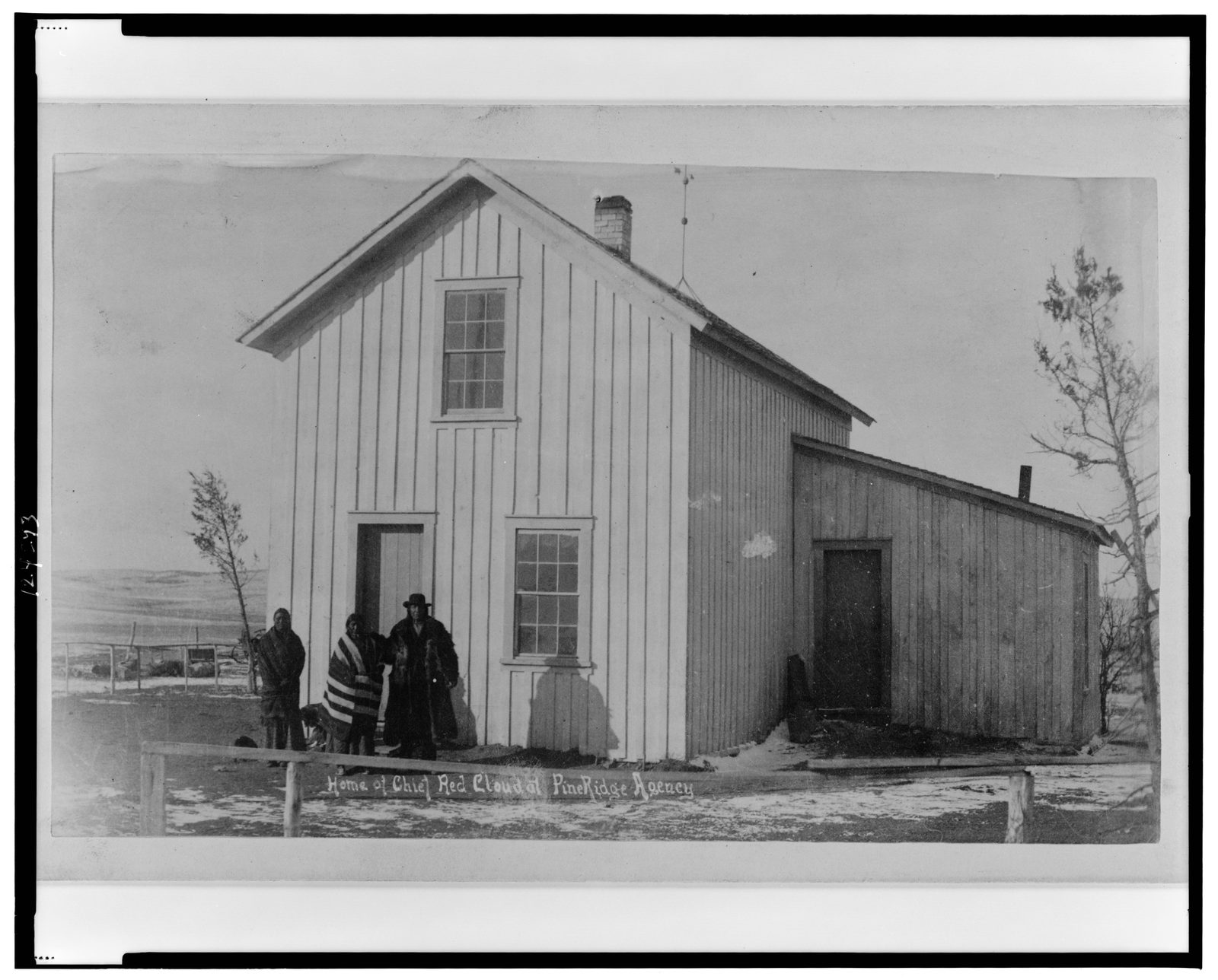
After stops on the North Platte, the White River and the Missouri, the Oglala agency settled in 1878 on White Clay Creek as Pine Ridge Agency, where Red Cloud lived the rest of his life.
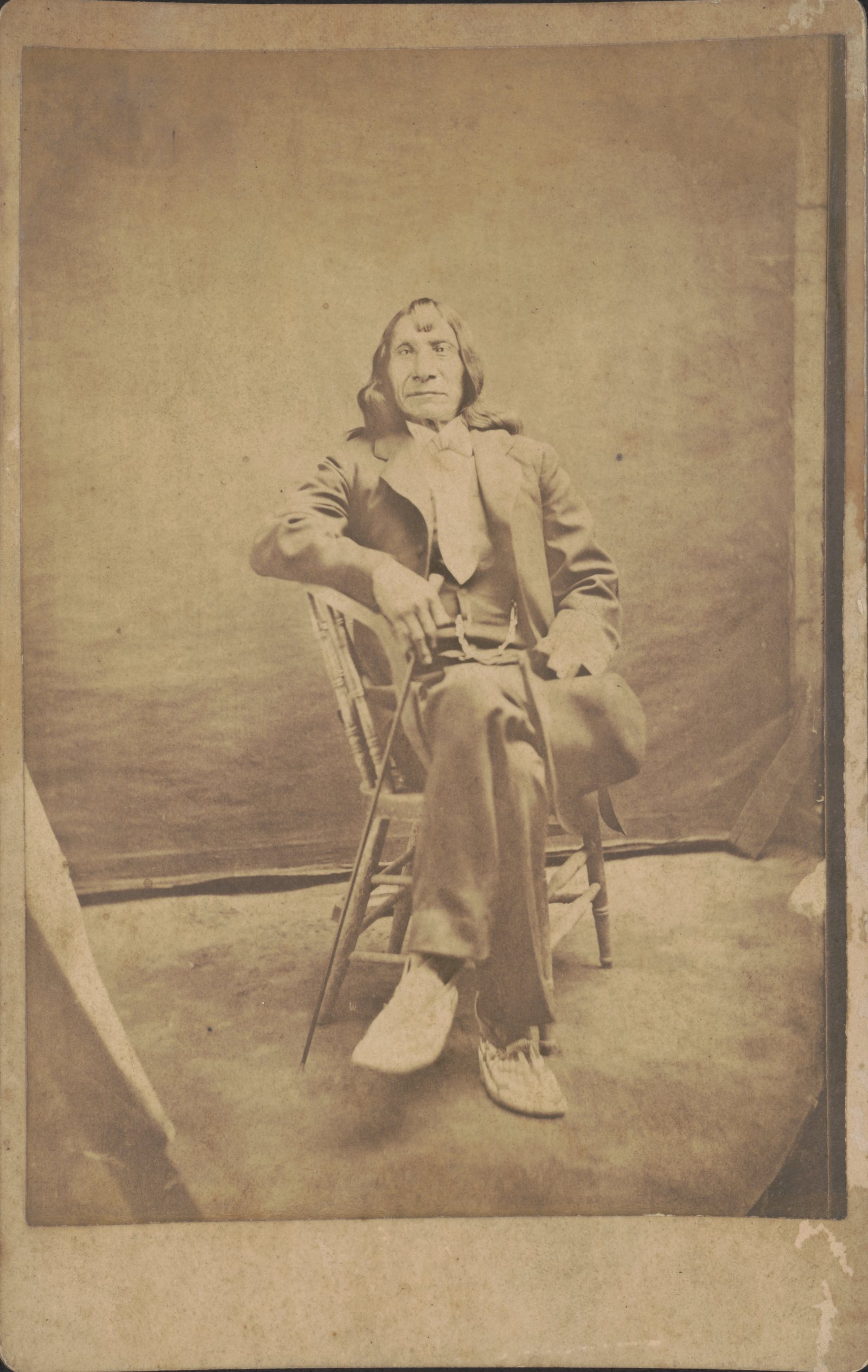
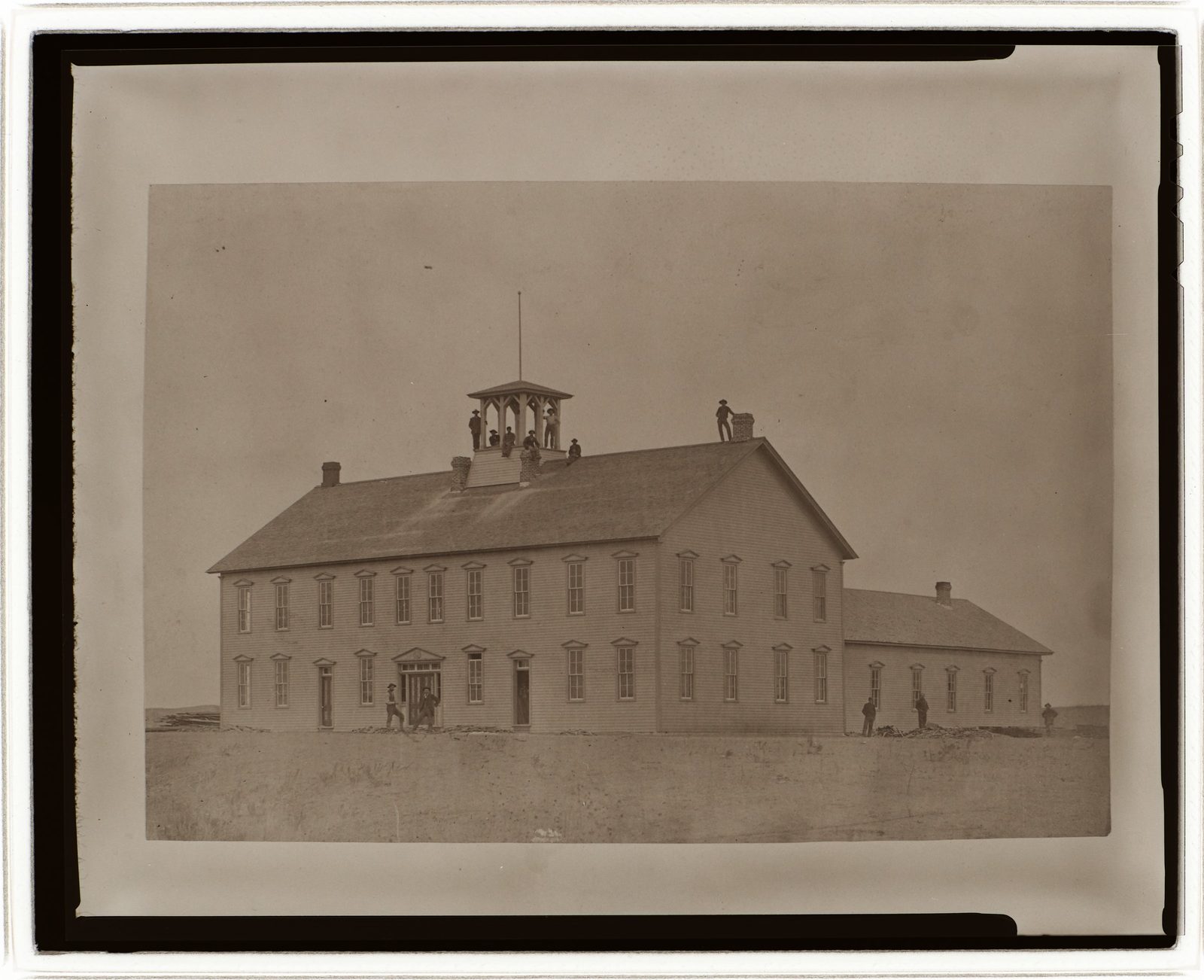
His long quarrel there was with Valentine T. McGillycuddy, the agent from 1879 to 1886. Their fight, historian Nancy J. Hulston writes, turned on schools. Red Cloud kept his band’s children out of the agent’s boarding school. McGillycuddy invoked a clause of the 1876 agreement that let him withhold rations from families whose children stayed out of school, and in March 1886 he reported striking 420 children from the ration lists. He used hunger to force children into school. In May 1886, after years of Red Cloud’s protests, a federal inspector fired the agent.
Red Cloud did want a school, one of his own choosing. The Maȟpíya Lúta school, long called Red Cloud Indian School, says he asked President Rutherford B. Hayes in 1877 to let the Jesuits teach Lakota children, and lobbied for a decade until Holy Rosary Mission opened in 1888. The historian Robert W. Galler Jr. adds a motive: allies against the mostly Protestant federal officials Red Cloud distrusted. Dusty Nelson, an Oglala Lakota descended from Red Cloud, told ICT in 2022 that he meant to help his people through great change, and would never have let the church near the children had he known how harshly the school would assimilate them.
Wounded Knee and the Last Years
Accounts of Red Cloud and the Ghost Dance of 1890 conflict: quiet support, though he was a Catholic, says the State Historical Society’s journal; opposition, says Larson. In December he and other Pine Ridge chiefs invited Spotted Elk, the Minneconjou leader Army records call Big Foot, to help make peace. Birgil Kills Straight, a grandson of a Wounded Knee survivor, told a Park Service interviewer in 1990 that Red Cloud probably saw the Army’s buildup as a threat to the Oglala, and sent for Spotted Elk because people knew him as a negotiator. Spotted Elk never reached Pine Ridge. On December 29, 1890, soldiers massacred his band at Wounded Knee.
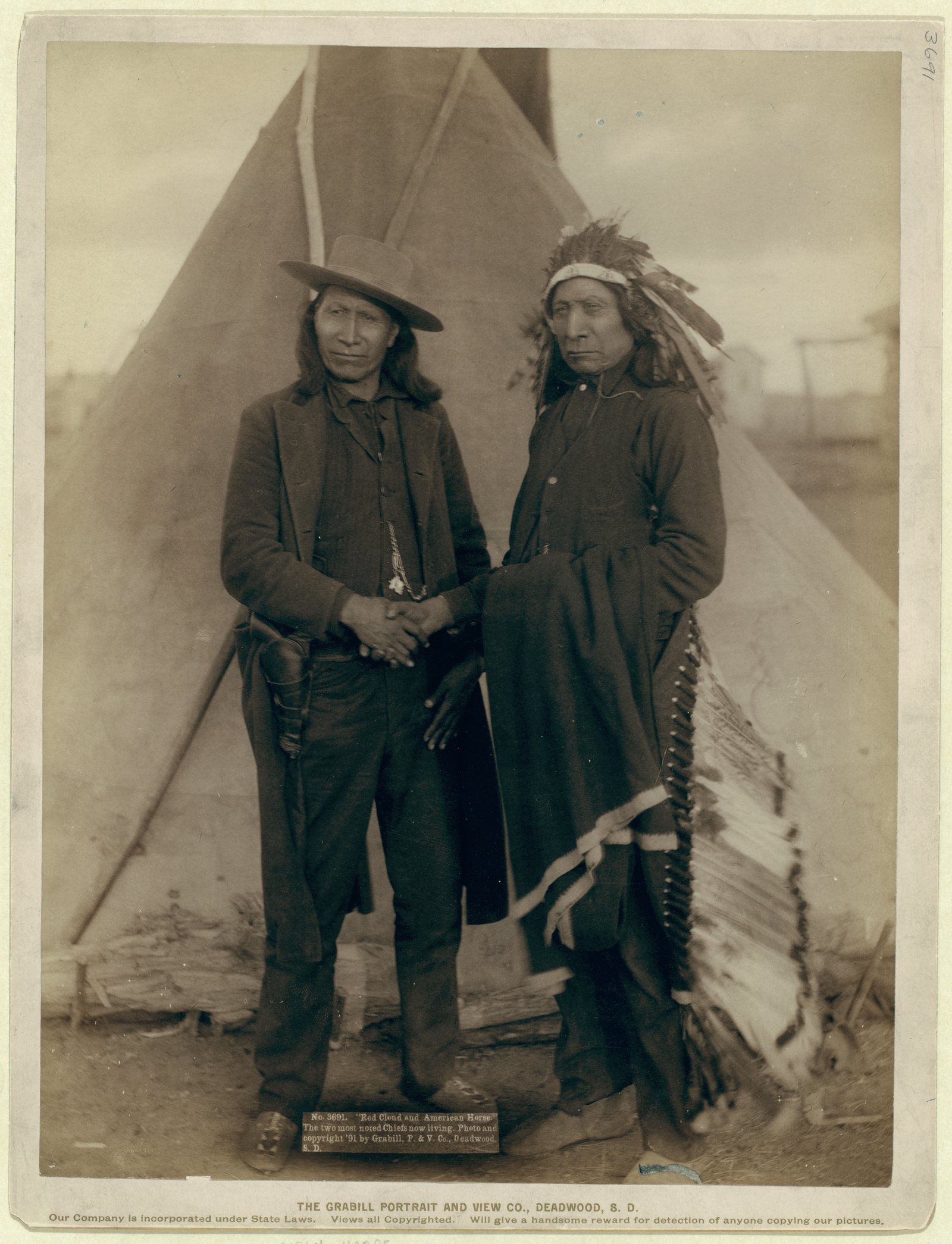
Red Cloud and other leaders who held to the old ways had refused to sign the 1889 agreement that broke up the Great Sioux Reservation, the State Historical Society’s journal notes. The same journal records his death at his home at Pine Ridge on December 10, 1909. He was about 88. His Lakota name now belongs to the school he asked for, to be spoken, the school says, “the way he would have heard it, when he was alive.”
Connected
- The Fort Laramie Treaties of 1851 and 1868The war Red Cloud led and the treaty he signed in November 1868.
- The 1876 War and the Taking of the HillsThe 1876 agreement and the 1877 Act that took the Hills.
- The 1980 Ruling and Land BackThe Supreme Court ruling that recalled Red Cloud’s war, and the tribes’ claim today.
- Crazy Horse and the Black HillsThe Oglala war leader who fought beside Red Cloud in 1866 and came in to Camp Robinson in 1877.
- Spotted Tail, Brulé Lakota LeaderThe Brulé leader Crook named chief in Red Cloud’s place in October 1876.
- Valentine McGillycuddy, Surveyor, Doctor and AgentThe Pine Ridge agent Red Cloud fought from 1879 until the agent was fired in 1886.
- Wounded KneeThe 1890 massacre of Spotted Elk’s band, which Red Cloud had invited to Pine Ridge.
- The Red ValleyThe Racetrack, the ring around the Hills that Red Cloud named in 1875.
Further reading
- Our History, Maȟpíya Lúta (formerly Red Cloud Indian School), Pine Ridge
- Buried Secrets: Red Cloud Takes the Lead in Uncovering Boarding School Past, Mary Annette Pember, ICT, 2022 (with the views of Red Cloud’s descendant Dusty Nelson)
- Address at Cooper Union, Red Cloud, 1870, as printed in the New York Times (Teaching American History)
- Federal Children: Indian Education and the Red Cloud-McGillycuddy Conflict, Nancy J. Hulston, South Dakota History, 1995
Sources
- Our History. Maȟpíya Lúta (Red Cloud Indian School).
- Buried Secrets: Red Cloud Takes the Lead in Uncovering Boarding School Past. Mary Annette Pember, ICT, 2022.
- History and Culture. Rosebud Sioux Tribe.
- Wounded Knee Battlefield, National Historic Landmark nomination, with the 1990 interview of Birgil Kills Straight. Richard E. Jensen and R. Eli Paul, Nebraska State Historical Society, for the National Park Service, 1990.
- Report of the Commission Appointed to Treat with the Sioux Indians for the Relinquishment of the Black Hills. In Annual Report of the Commissioner of Indian Affairs, 1875, pp. 184 to 201; University of Wisconsin Digital Collections.
- Treaty of Fort Laramie (1868), with transcript. National Archives, Milestone Documents.
- Act of February 28, 1877, ch. 72, 19 Stat. 254, with the 1876 agreement and its signatures. U.S. Statutes at Large, via GovInfo.
- United States v. Sioux Nation of Indians, 448 U.S. 371. Supreme Court of the United States, 1980 (Legal Information Institute, Cornell Law School).
- Red Cloud (1821-1909). Robert W. Larson, Encyclopedia of the Great Plains, University of Nebraska–Lincoln.
- Dakota Images: Red Cloud. South Dakota History 7, no. 4, South Dakota State Historical Society, 1977.
- Review of Autobiography of Red Cloud: War Leader of the Oglalas, edited by R. Eli Paul. H. David Brumble, Great Plains Quarterly 19, no. 1, 1999.
- Red Cloud’s War. Emilene Ostlind, Wyoming State Historical Society, 2014.
- Bozeman Trail. National Park Service, Bighorn Canyon National Recreation Area.
- Fort Laramie in 1876. National Park Service, Fort Laramie National Historic Site.
- The Surrounding of Red Cloud and Red Leaf, 1876: A Preemptive Maneuver of the Great Sioux War. Jerome A. Greene, Nebraska History 82, 2001.
- War or Peace: The Anxious Wait for Crazy Horse. Oliver Knight, Nebraska History 54, 1973.
- Fort Robinson and Red Cloud Agency, National Register nomination. National Park Service.
- Pine Ridge Agency. South Dakota State Archives, Indian Archives Project.
- Federal Children: Indian Education and the Red Cloud-McGillycuddy Conflict. Nancy J. Hulston, South Dakota History 25, no. 2, South Dakota State Historical Society, 1995.
- A Triad of Alliances: The Roots of Holy Rosary Indian Mission. Robert W. Galler Jr., South Dakota History 28, no. 3, South Dakota State Historical Society, 1998.
- Young Man Afraid of His Horses: The Reservation Years. Joseph Agonito, Nebraska History 79, 1998.
Last reviewed: