People
Annie Tallent
Annie D. Tallent titled her 1899 history The Black Hills; or, The Last Hunting Ground of the Dakotahs, yet one of its headings says the Hills were never the tribes’ home. Tallent (1827 to 1901) was the one woman in the Gordon Party, which entered the Black Hills in 1874 in violation of the 1868 treaty, and from 1876 she taught in the mining camps and ran Pennington County’s schools. Her book’s claims about the tribes, the record that answers them, and the honors that drew objections complete her story.
She was born Annie Fraser on April 14, 1827 (her monument says April 12), in Livingston County, New York, to Donald G. and Margaret (Ferguson) Fraser. After graduating from a seminary in Lima, New York, she taught until she married David G. Tallent, a lawyer, on July 4, 1854. By 1874 the Tallents and their son, Robert, lived in Sioux City, Iowa.
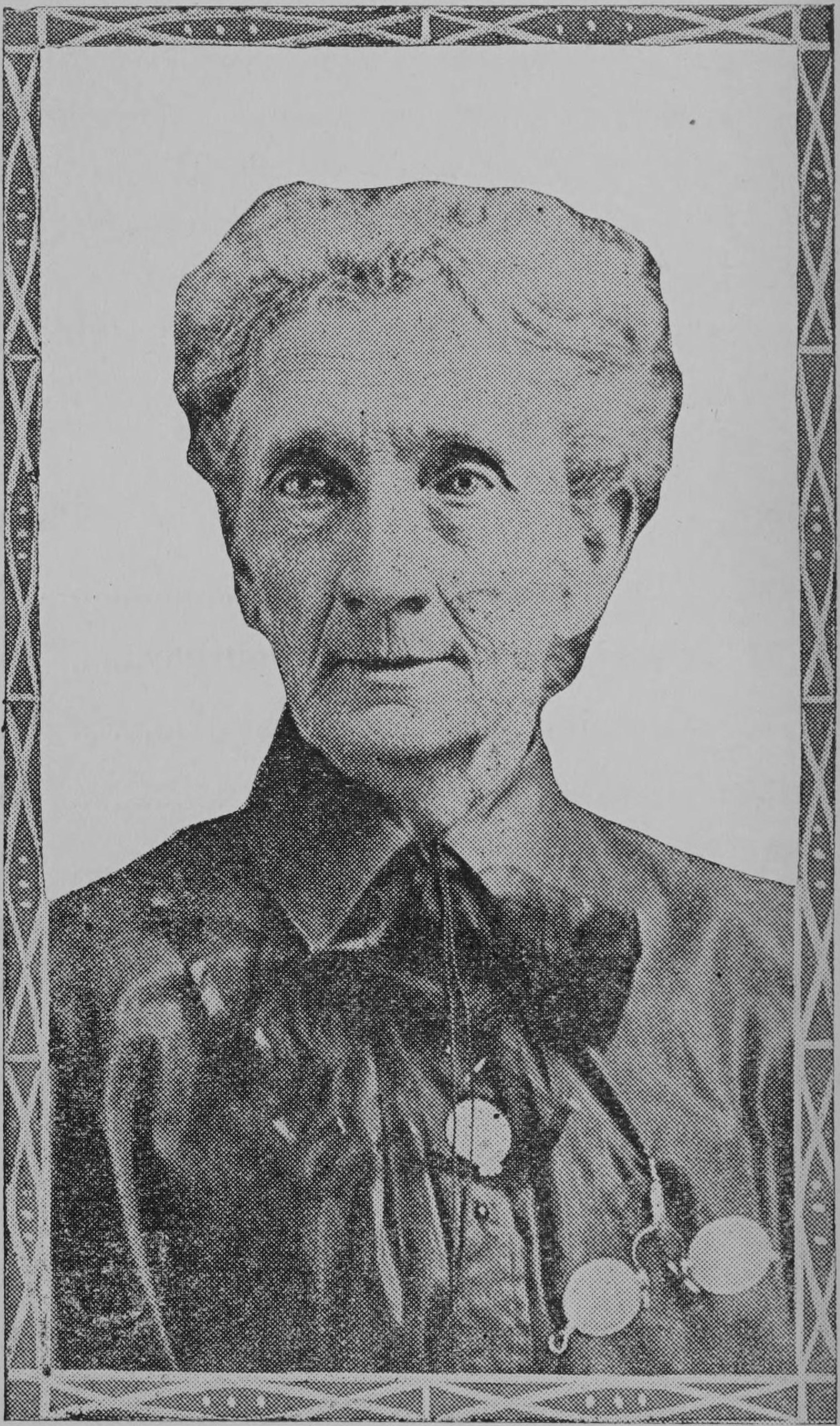
The One Woman in the Gordon Party
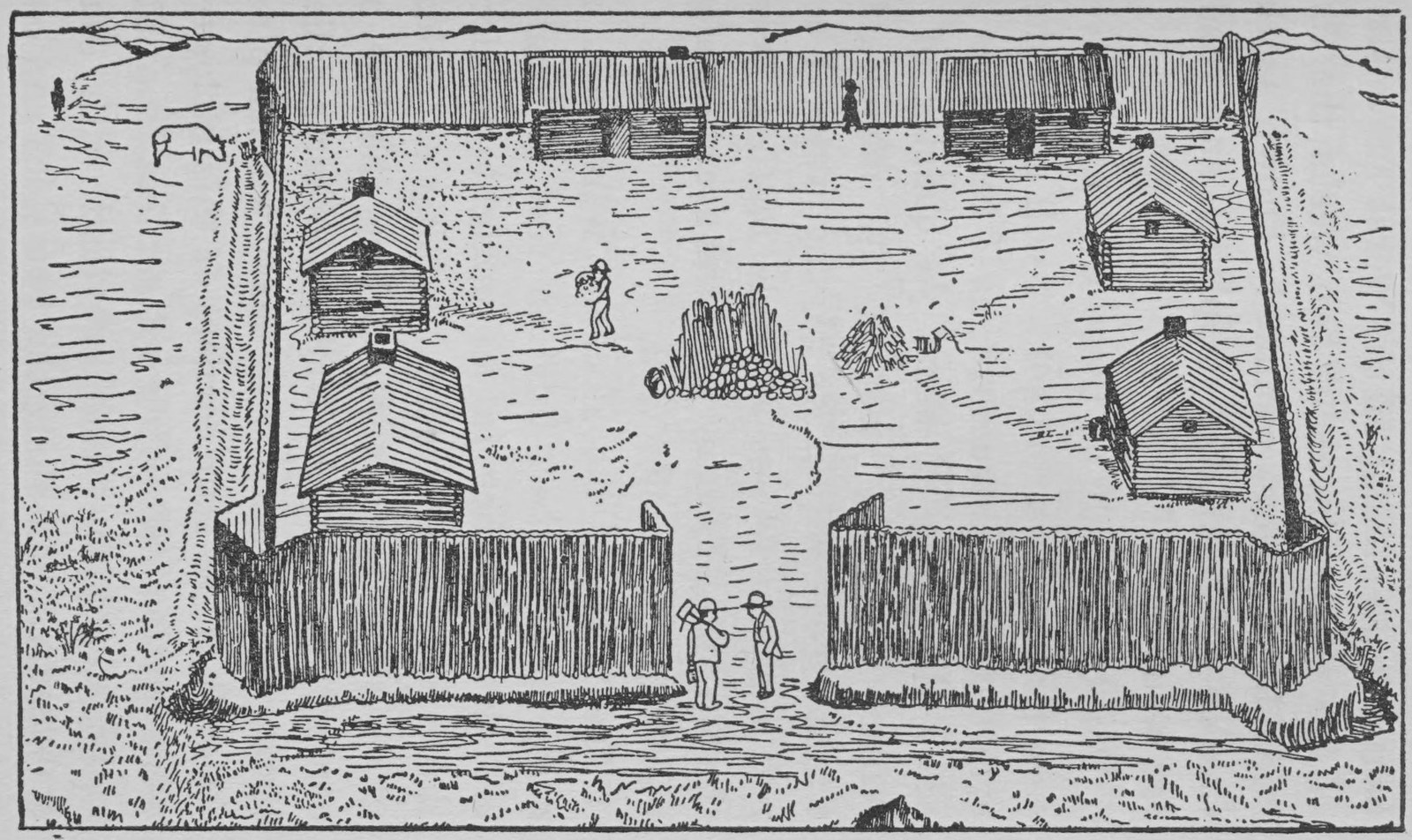
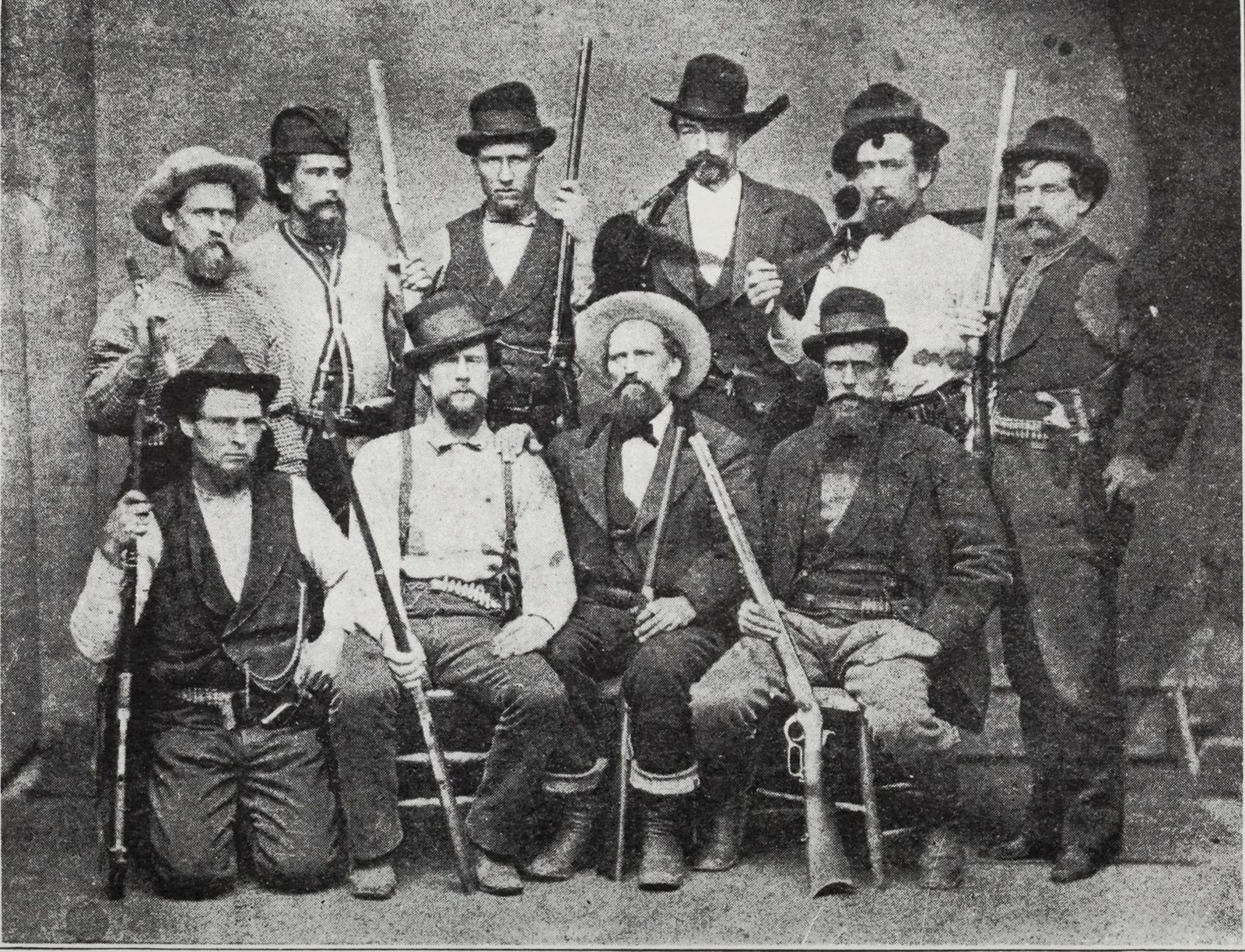
In the fall of 1874 the three joined a party of gold seekers organized in Sioux City and named for its guide, John Gordon; Robert, called Bird, was 10. The party left Sioux City on October 6, reached French Creek near present-day Custer on December 23, where prospectors with the Army’s Custer Expedition had reported gold that summer, and wintered there in a log stockade. In April 1875 Capt. John Mix’s cavalry led it out; his report counted 16 men, one woman and a boy. The full story is on The Black Hills Gold Rush.
The party was on land the 1868 treaty had set apart for the tribes and closed to outsiders, land later taken from them without the consent the treaty required (see The Fort Laramie Treaties of 1851 and 1868). Tallent knew it: the evenings on the trail were all the finer, she wrote, for knowing they would soon be “trespassers and outlaws.” Why a woman and a child went along was never explained, the State Historical Society’s bulletin said in 1962; it guessed that the Sioux City editor Charles Collins wanted her letters as news to spread gold fever.
On the march out the party passed the Red Cloud Agency, where, she learned afterward, the troops struggled to keep the people from rising in anger at what she herself called a breach of their treaty rights. Her book and a 1973 sketch in the state’s history journal call her the first white woman to enter the Black Hills; Lakota women, and women of other tribes, had lived there long before 1874.
Teacher and County Superintendent
The Tallents returned in 1876 and lived four years in Deadwood, then 14 in Rapid City, the 1973 sketch says. State markers name her among the teachers at Tigerville, northwest of Hill City, and as Hill City’s teacher by 1883; the Hill City marker misprints her middle initial as E. She was Pennington County’s superintendent of schools for four years, January 1891 to January 1895 by Peggy Sanders’s count, and served three years on a board of education: Rapid City’s, two as president, says the 1973 sketch; the county’s, says Sanders. From June 1897 she lived with her son in Sturgis.
She died on February 13, 1901, and was buried in Elgin, Illinois. Sanders says she died in Sturgis, as she reports the 1924 monument’s plaque reads; her 1923 editor wrote that she died visiting her sister in Elgin.
What Did Her Book Say About the Tribes?
It conceded that the miners broke the 1868 treaty, then argued that the tribes had made little use of the Hills and should accept their loss.
Its first chapter grants that the invasion of the reservation from 1874 to 1876 disregarded the treaty beyond dispute, then asks whether treaties that slowed settlement should ever have been made. A later section, headed with the claim that the Hills were never the tribes’ home, says the first miners found no sign anyone had lived there; the tribes, she wrote, came only to the foothills for lodge poles and feared the thunderstorms of the interior. Her account of the 1876 agreement lists the chiefs who signed at the Red Cloud Agency, admits the tribes lost much and gained little, and concludes that, with rations promised, they ought to be satisfied. She calls them savages throughout, and her last chapter calls the Wounded Knee Massacre of December 29, 1890, a battle.
What the Record Shows
The Forest Service’s 2023 assessment of the Black Hills finds people using the Hills for at least 11,000 years and many identifiable groups living in the region by the 1700s, the Lakota among them by about 1770. In an Oglala account told by Wilmer Mesteth, a tribal historian on the Pine Ridge Reservation, the Lakota people first came up into this world through Wind Cave (see Sacred Sites). The 1868 treaty placed the Hills inside the tribes’ reservation. Ryman LeBeau, chairman of the Cheyenne River Sioux Tribe, told a Senate committee in 2023 that when the government tried to buy the Hills in 1875, the Nation refused, as was its treaty right, to sell its “permanent home.”
Her account of the agreement leaves out its terms. The 1868 treaty voided any cession not signed by three-fourths of the adult men; the Supreme Court found in 1980 that only 10 percent signed, after an August 1876 law barred further money for the tribes’ food unless they gave up the Hills and their hunting grounds outside the reservation. How the Hills were taken is told on The 1876 War and the Taking of the Hills.
In a 1992 reader’s guide in the State Historical Society’s journal, the historian James D. McLaird praised the book’s first part, on the 1874 trip, which he called illegal, and wrote that Tallent was “blunt in her attitudes that Indians are inferior.”
Monuments, Reprints and a Renamed School
In 1923 O. W. Coursey of Mitchell reprinted her Gordon Party chapters as The First White Woman in the Black Hills, noting a plan to rebury her in Custer. In 1924 the Custer Commercial Club built a replica of the stockade beside U.S. 16A east of Custer, and that year a monument to Tallent went up at the stockade site; the state’s marker list records it as In Memory of Anna Donna Tallent.
Brevet Press of Sioux Falls reissued the book in 1974. Virginia Driving Hawk Sneve, a Lakota writer and historian enrolled in the Rosebud Sioux Tribe, wrote an introduction to the book; her papers at South Dakota State University hold it, dated 1974 to 1975.
Rapid City opened Annie Tallent Elementary School in 1950; about 40 years later, after objections to her writing, the school board renamed it South Park, by Sanders’s accounts in Wild West (2013) and Cowboy State Daily (2025). In a 1998 Harvard Kennedy School teaching case about the Annie Tallent School, tribes in the area ask for a new name because they find her writings about them demeaning, and the school board is split evenly. The South Dakota Education Association’s Annie D. Tallent Club, formed in 1954 to honor women educators, became Honored Women Educators in 1993, Sanders writes.
Connected
- The Black Hills Gold RushThe Gordon Party’s winter on French Creek and the rush that followed.
- The Custer Expedition of 1874The Army column whose gold reports drew her party to French Creek.
- The Fort Laramie Treaties of 1851 and 1868The treaty her party broke, and that her book admits was broken.
- The 1876 War and the Taking of the HillsHow the Hills were taken, against the account in her book.
- Custer, South DakotaThe town on French Creek near the stockade site and her monument.
- Hill City, South DakotaA mining camp where she taught school by 1883.
- Custer State ParkThe park where a replica of the Gordon Stockade stands by Stockade Lake.
- Wild Bill HickokHe stopped her on a Cheyenne street in 1875 to ask about the Hills, she wrote.
Further reading
- Testimony of Ryman LeBeau, Chairman, Cheyenne River Sioux Tribe, U.S. Senate Committee on Indian Affairs
- History and Culture, Rosebud Sioux Tribe
- The Lakota Emergence Story, as told by Wilmer Mesteth, National Park Service
- The Black Hills; or, The Last Hunting Ground of the Dakotahs (Annie D. Tallent, 1899), Internet Archive
Sources
- Dakota Images: Annie D. Tallent. South Dakota History 3, no. 2, South Dakota State Historical Society, 1973.
- The Black Hills; or, The Last Hunting Ground of the Dakotahs, by Annie D. Tallent. Nixon-Jones Printing Co., St. Louis, 1899 (University of California Libraries copy, Internet Archive).
- The First White Woman in the Black Hills, as Told by Herself, by Annie D. Tallent, collected and edited by O. W. Coursey. Educator Supply Company, Mitchell, S.D., 1923 (Library of Congress copy, Internet Archive).
- Gordon Stockade (The Wi-Iyohi 15, no. 11). South Dakota State Historical Society, 1962.
- The Report of Captain John Mix of a Scout to the Black Hills, March–April 1875 (Watson Parker, editor). South Dakota History 7, no. 4, South Dakota State Historical Society, 1977.
- Treaty of Fort Laramie (1868), transcript. National Archives.
- United States v. Sioux Nation of Indians, 448 U.S. 371. Supreme Court of the United States, 1980 (Legal Information Institute, Cornell Law School).
- Revised Forest Assessment: Cultural Resources. USDA Forest Service, Black Hills National Forest, 2023.
- The Lakota Emergence Story, as told by Wilmer Mesteth and retold by Sina Bear Eagle. National Park Service, Wind Cave National Park.
- Testimony of Ryman LeBeau, Chairman, Cheyenne River Sioux Tribe, on S. 2088, the Wounded Knee Memorial and Sacred Site Act. U.S. Senate Committee on Indian Affairs, 2023.
- Dakota Resources: A Readers Guide to the Historical Literature of South Dakota, by James D. McLaird. South Dakota History 22, no. 2, South Dakota State Historical Society, 1992.
- South Dakota State Historical Society Markers (markers 39, 362 and 588). South Dakota State Historical Society, revised 2020.
- The Black Hills; or, The Last Hunting Ground of the Dakotahs, 2d ed. (edition record). Brevet Press, Sioux Falls, 1974; Open Library, Internet Archive.
- Virginia Driving Hawk Sneve Papers, MA 19 (finding aid). South Dakota State University Archives and Special Collections.
- The First White Woman to Enter the Black Hills, Annie Tallent Wrote Her Memoirs of That Time, by Peggy Sanders. Wild West, December 2013 (HistoryNet).
- The American West: Annie Tallent, The First White Woman In The Black Hills, by Peggy Sanders. Cowboy State Daily, March 24, 2025.
- Annie Tallent (B), case 1461.0, by Stephen McCarthy. Harvard Kennedy School Case Program, 1998.
Last reviewed: