The Outdoors
Custer State Park
Peter Norbeck marked out the route of the Needles Highway on foot and on horseback, according to South Dakota Game, Fish and Parks, the state agency that runs Custer State Park. The road was finished in 1922, three years after the legislature, pressed by Norbeck as governor, turned a state forest into a park. Custer State Park now covers 71,000 acres of the southern Black Hills, from granite spires near Sylvan Lake to the grassland where riders gathered about 1,300 bison in September 2026. Below are its drives, lakes, trails and camping, then its animals and history.
The Granite Country Along the Needles Highway
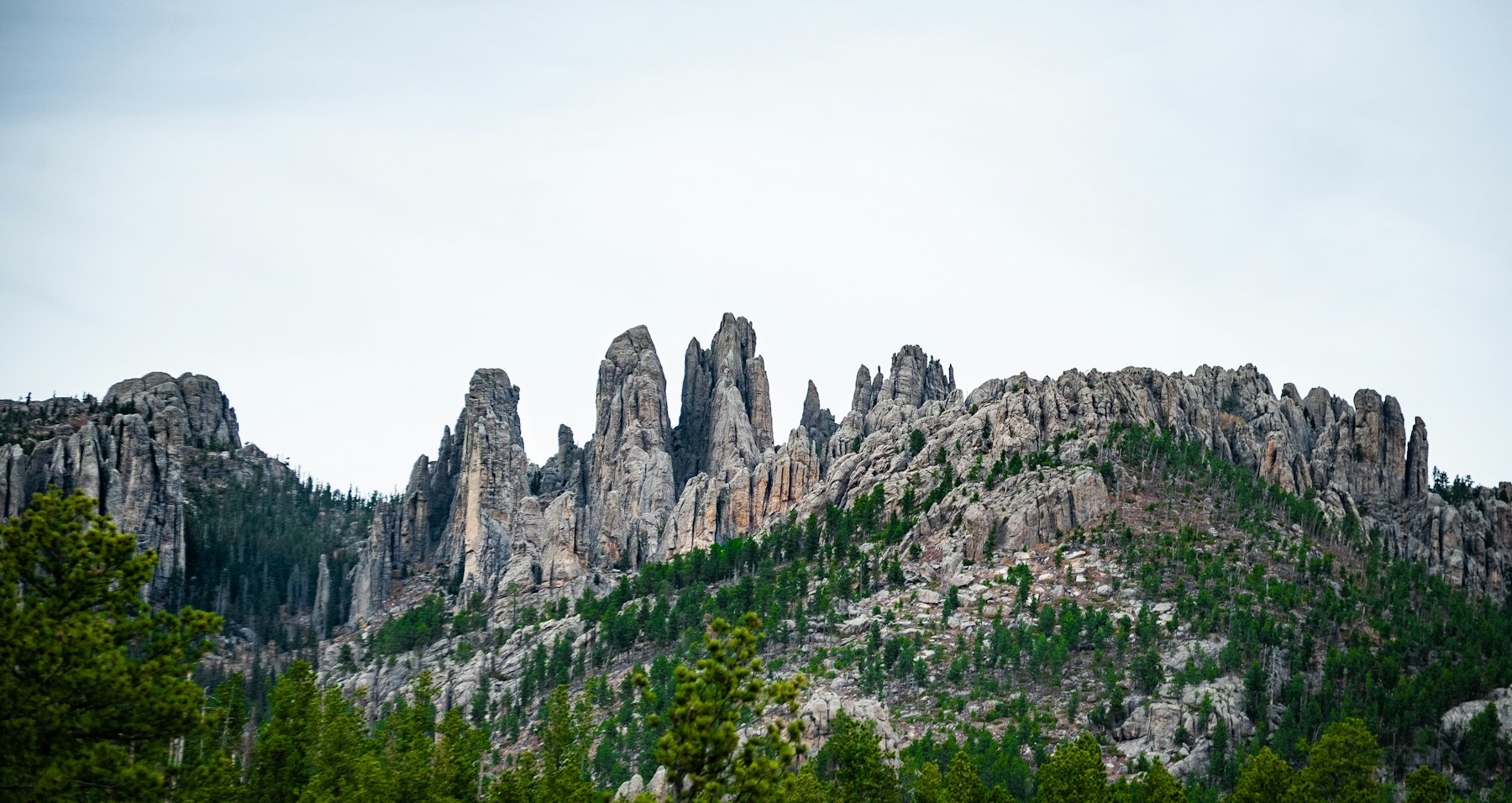
The park’s high northwest corner belongs to the granite core of the Hills, the rock that also forms Black Elk Peak (called Harney Peak until 2016). Erosion has cut it into the columns of the Needles and the Cathedral Spires, a National Natural Landmark. How the granite formed is told on The Granite Core: Black Elk Peak and the Needles.
The Needles Highway, South Dakota Highway 87, winds 14 miles through this country, past Sylvan Lake and among ponderosa pine, Black Hills spruce and the pinnacles that named it. Frost, rain and wind have opened a slot through the Needle’s Eye, a granite formation beside the road. Two of the road’s three tunnels are 8 feet and 8 feet 9 inches wide, by the park’s figures. The highway is seasonal.
Iron Mountain Road, with its spiral “pigtail” bridges, runs 17 miles between the park and Mount Rushmore National Memorial. Both roads and the Wildlife Loop are on Scenic Drives: Needles Highway, Iron Mountain Road and More.
Sylvan Lake, Black Elk Peak and the Other Lakes
Sylvan Lake began with a dam. Theodore Reder built one across Sunday Gulch Creek in 1881, and the state bought the property in 1920. After the lakeside hotel burned in 1935, the park board hired Frank Lloyd Wright, then, after his delays and demands, Harold Spitznagel, whose lodge of local stone and wood went up in 1936 and 1937, with Civilian Conservation Corps (CCC) crews doing the stonework.
A 1-mile trail circles the boulder-lined shore, rated easy to moderate by the state. The Sunday Gulch Trail, a strenuous 3-mile loop, scrambles through a boulder canyon behind the lake, past small falls; park staff say many rescues there involve unprepared hikers.
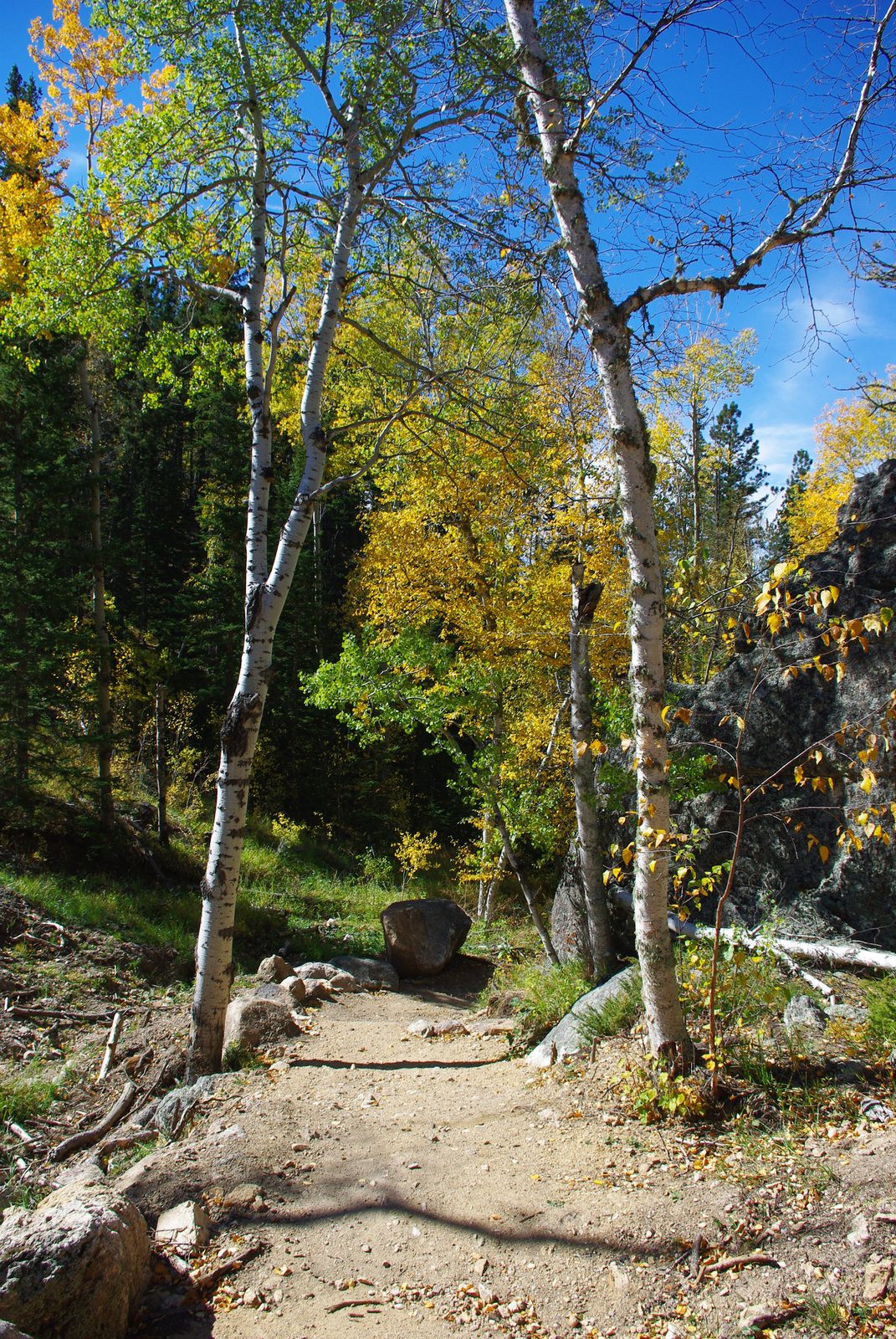
Sylvan Lake is also the usual start for Black Elk Peak. Trail 9, the shortest and most traveled route by the state’s account, leaves the park for the Black Elk Wilderness of the Black Hills National Forest and ends at the stone lookout the CCC built on the summit from 1938 to 1940. The climb to South Dakota’s highest point, 7,242 feet, is on Hiking Black Elk Peak.
The park’s other main lakes are Stockade, Center and Legion, and CCC crews built the dams at Stockade and Center lakes. Rainbow, brown and brook trout live in waters across the park, and Stockade Lake also holds northern pike, bass and panfish.
Trails, Camping and When to Go
The paved Creekside Trail runs a level 2.4 miles one way beside Grace Coolidge Creek and suits wheelchairs and strollers. The Lovers Leap Trail, a moderate 4-mile loop, climbs to a ridge with views of Black Elk Peak, then crosses Galena Creek more than 20 times. The Cathedral Spires Trail (1.2 miles round trip) and the spur up Little Devils Tower (1.5 miles one way), both reached from the Needles Highway, are strenuous scrambles on granite.
The French Creek Trail runs 10.1 miles one way through the creek’s gorge, rated moderate to strenuous. No marked path crosses the 2,200-acre French Creek Natural Area, and hikers wade the stream again and again. Camping is allowed on the canyon floor, and the state points to the gorge for birds and wildflowers (see Birds and Wildflowers). The Centennial Trail crosses the park for 22 miles, north to south, past the Badger Hole, the cabin of Badger Clark, South Dakota’s first poet laureate.
Nine campgrounds offer tent sites, RV sites with electricity, camper cabins and a horse camp, and some campground services are seasonal. Frequent summer thunderstorms bring hail, lightning and strong wind. The trails have no restrooms, and the agency advises carrying at least a quart of water per hiker.
- Distance
- Trails from a 0.2-mile loop to 10.1 miles one way (French Creek Trail); 22 miles of the Centennial Trail cross the park
- Elevation gain
- Not published by Game, Fish and Parks; the top of Little Devils Tower is about 6,962 feet
- Difficulty
- Easy to strenuous, by the state’s ratings; Sunday Gulch, Cathedral Spires and Little Devils Tower are strenuous
- Trailhead
- Sylvan Lake and the Needles Highway for the granite trails; the lakes, Grace Coolidge Creek and the Wildlife Loop Road for the lower ones
- Season
- The park is open all year; the Needles Highway and some campground services are seasonal
How Many Bison Live in Custer State Park?
About 1,300 plains bison (Bison bison bison) were in the herd riders gathered on September 25, 2026. The herd runs 1,300 to 1,500 in the warm months, and with drought thinning the grass, the park planned to cut it to about 900 for the winter (as of October 2026). Custer State Park’s herd began in 1914 with 36 bison bought from Scotty Philip’s herd; the species’ story is on Bison.
The Buffalo Roundup comes every September. Riders drive the bison about 5 miles to a set of corrals, crews test, brand and sort the animals, and the surplus is auctioned in November. That work is told on Bison Herds, Bison Ranching and the Buffalo Roundup.
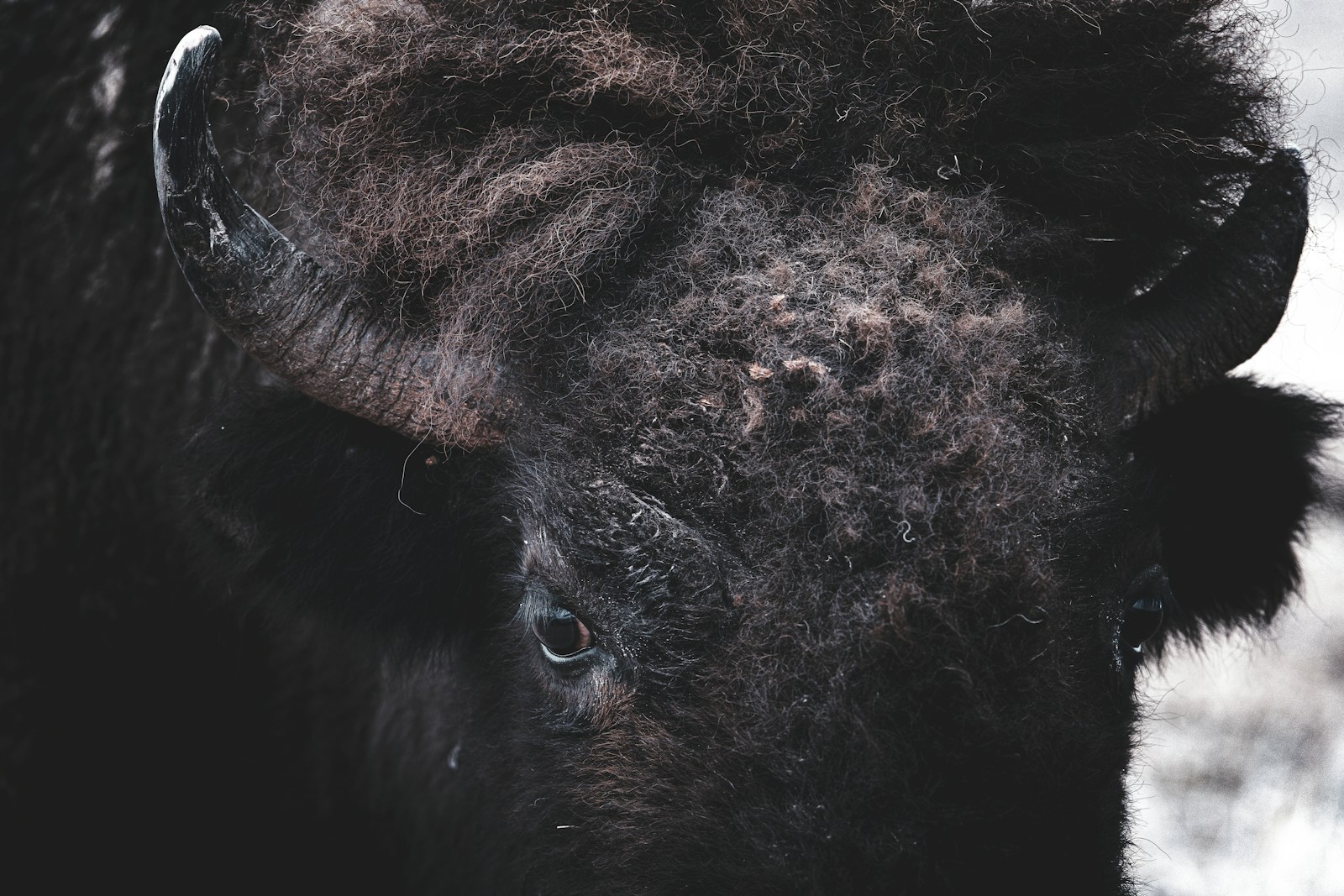
Drivers on the Wildlife Loop Road, 18 miles of grassland and pine open all year, meet bison on most days, the agency says. Prairie dogs and burros live along the route, deer and elk are likeliest early and late in the day, and bighorn sheep, coyotes and mountain lions are rare sightings. Stay in the car or at least 100 yards from bison and elk, the park asks.
Elk and bighorn sheep, both native, were shipped back in. In 1916, 50 elk (Cervus canadensis) went to the state game preserve that became the park, and in 1922 Norbeck arranged for eight Rocky Mountain bighorn sheep (Ovis canadensis) from Alberta. The bighorns were gone by the late 1950s. Mountain goats (Oreamnos americanus), which are not native to South Dakota, came in 1924, when six from Alberta were penned in the park; by 1929 all had escaped, settling in the granite around Black Elk Peak (see Elk, Bighorn Sheep and Mountain Goats).
The burros, feral donkeys (Equus asinus) that walk up to cars, have two origin stories. Kobee Stalder, the park’s visitor services manager, told KOTA in 2022 that they descend from burros used for rides up Black Elk Peak in the 1920s. A 2019 SDPB feature traces them instead to the pack animals of miners and other workers who came to the Hills from the mid-1870s. Neither cites a record. In 2022 the park kept the band to about 11.
From State Forest to State Park
Gold seekers of the Gordon Party reached French Creek on December 23, 1874, and built a log stockade on land the 1868 treaty had reserved to the tribes; a replica stands by the west shore of Stockade Lake, and the Hills were later taken without the consent that treaty required (see The 1876 War and the Taking of the Hills).
The park grew from school land. In 1910 South Dakota traded more than 60,000 acres of scattered school sections in the national forest for nearly 50,000 acres in one block in Custer County, which became Custer State Forest in 1912. Norbeck, then a state senator, pushed for a preserve for the state’s dwindling big game, and in 1913 lawmakers created one in the state forest between the town of Custer and Wind Cave National Park, the South Dakota Historical Society Press noted in 2019. As governor from 1917 to 1921, Norbeck won the law that made it Custer State Park, official on July 1, 1919.
The State Game Lodge, rebuilt in 1922 after the first lodge burned within months of opening, was President Calvin Coolidge’s summer White House from June 15 to September 9, 1927, according to its National Register nomination. That summer he spoke at the dedication of Mount Rushmore, and on August 2 he announced that he did not choose to run for president in 1928.
Besides the Stockade and Center dams and the stonework at Sylvan Lake, CCC men built the museum dedicated in 1979 as the Peter Norbeck Visitor Center; the corps’ work across the Hills is on The National Forest and the CCC. One of its camps in the park, Camp Doran, first pitched its tents on ground now under Stockade Lake, the lake its men built.
Connected
- Bison Herds, Bison Ranching and the Buffalo RoundupThe park’s fall roundup, the November auction and how the herd is sized to its grass.
- BisonThe animal behind the herd that began here in 1914 with 36 from Scotty Philip’s herd.
- Scenic Drives: Needles Highway, Iron Mountain Road and MoreThe Needles Highway, Iron Mountain Road and the Wildlife Loop, drive by drive.
- Elk, Bighorn Sheep and Mountain GoatsThe elk of 1916, the bighorns of 1922 and the goats that escaped in the 1920s.
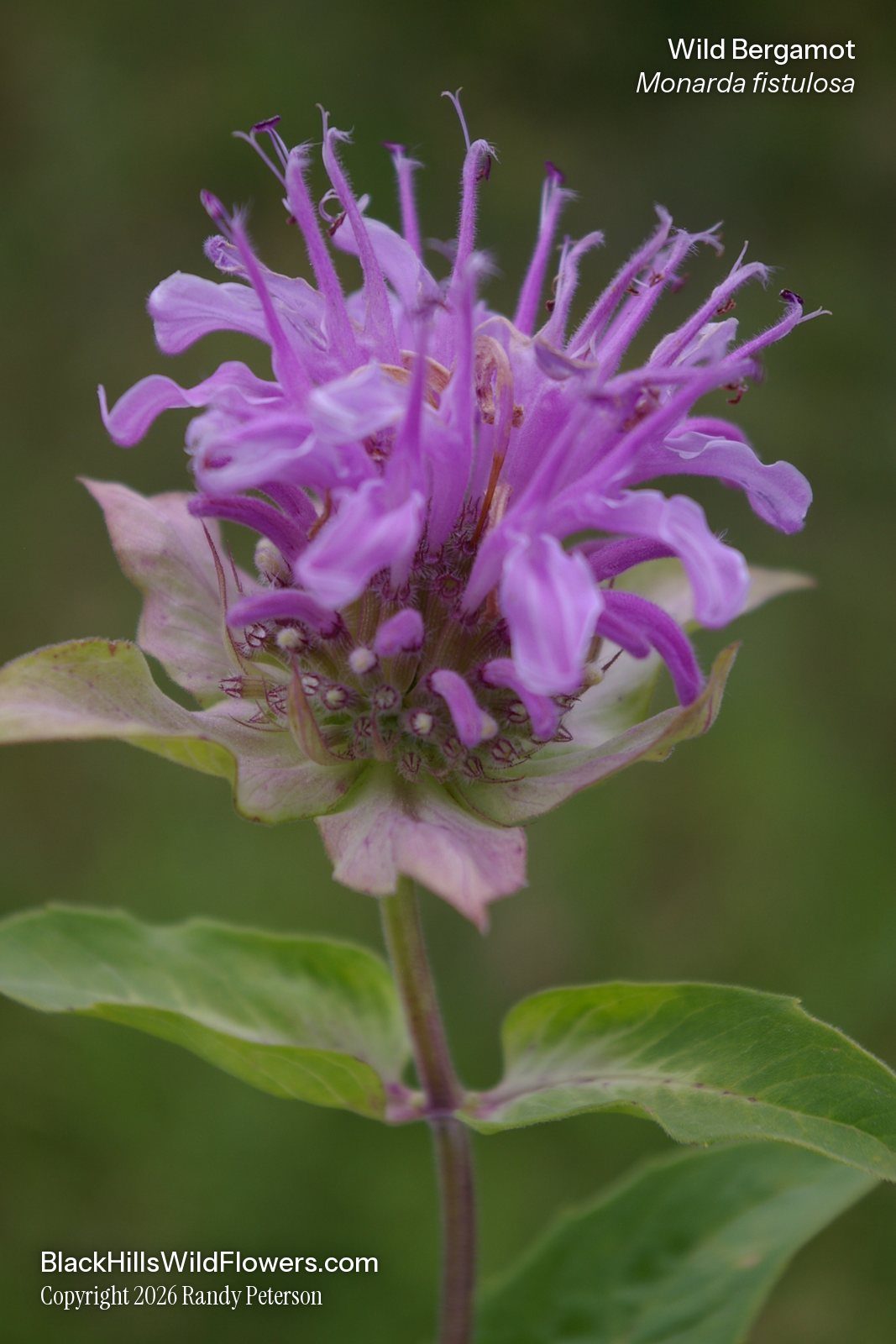
- Birds and WildflowersThe birds and flowers of places like the French Creek gorge.
- The Southern HillsThe warmer, drier end of the Hills that holds the park.
- Custer, South DakotaThe gold-rush town on French Creek, the stream that runs on through the park.
- Hermosa, South DakotaA foothills town on the plains side, one of the nearest to the park.
Sources
- Custer State Park (park overview). South Dakota Game, Fish and Parks, 2026.
- Custer State Park History. South Dakota Game, Fish and Parks, 2026.
- Scenic Drives Through Custer State Park. South Dakota Game, Fish and Parks, 2026.
- Tunnel Inspections Scheduled in the Black Hills Area (news release, September 27, 2022). South Dakota Department of Transportation, 2022.
- Hiking, Biking, and Horse Trails (Custer State Park). South Dakota Game, Fish and Parks, 2026.
- Trail Mix: A Hiker’s Guide to Custer State Park’s Trails. South Dakota Game, Fish and Parks, 2026.
- Buffalo Roundup and Arts Festival. South Dakota Game, Fish and Parks, 2026.
- Custer State Park Trails: Sylvan Lake, Needles, and Black Elk Wilderness Areas (map). South Dakota Game, Fish and Parks, 2018.
- Welcome to the Peter Norbeck Scenic Byway (visitor brochure). USDA Forest Service, Black Hills National Forest.
- Black Elk Wilderness. USDA Forest Service, Black Hills National Forest, 2026.
- Sylvan Lake Lodge, by Michelle L. Dennis. SAH Archipedia, Society of Architectural Historians and University of Virginia Press.
- Drought Forcing Custer State Park To Auction Off At Least 600 South Dakota Bison, by Kate Meadows. Cowboy State Daily, 2026.
- 15 Facts About Bison. National Park Service.
- South Dakota Elk Management Plan, 2015–2019. South Dakota Department of Game, Fish and Parks, 2015.
- South Dakota Bighorn Sheep Management Plan, 2018–2027. South Dakota Department of Game, Fish and Parks, 2018.
- South Dakota Mountain Goat Action Plan, 2024–2028. South Dakota Department of Game, Fish and Parks, 2024.
- Cervus canadensis (TSN 898259) and Equus asinus (TSN 180690). Integrated Taxonomic Information System.
- Burros up for grabs, taking a piece of Custer State Park home, by Jeffrey Lindblom. KOTA, 2022.
- The Animals of Custer State Park, by Brian Gevik. SDPB, 2023 (first published 2019).
- A Century of Wildlife Recovery in Custer State Park, by Cody D. Ewert. South Dakota Historical Society Press, 2019.
- Peter Norbeck (former governors of South Dakota). National Governors Association.
- Custer State Game Lodge (Coolidge’s Summer White House), National Register of Historic Places Inventory–Nomination Form. National Park Service, 1981.
- Calvin Coolidge’s Indelible Vacation to the Black Hills, by William Kelly. White House Historical Association, 2017.
Last reviewed: