Ranching, Farming and Work
Bison Herds, Bison Ranching and the Buffalo Roundup
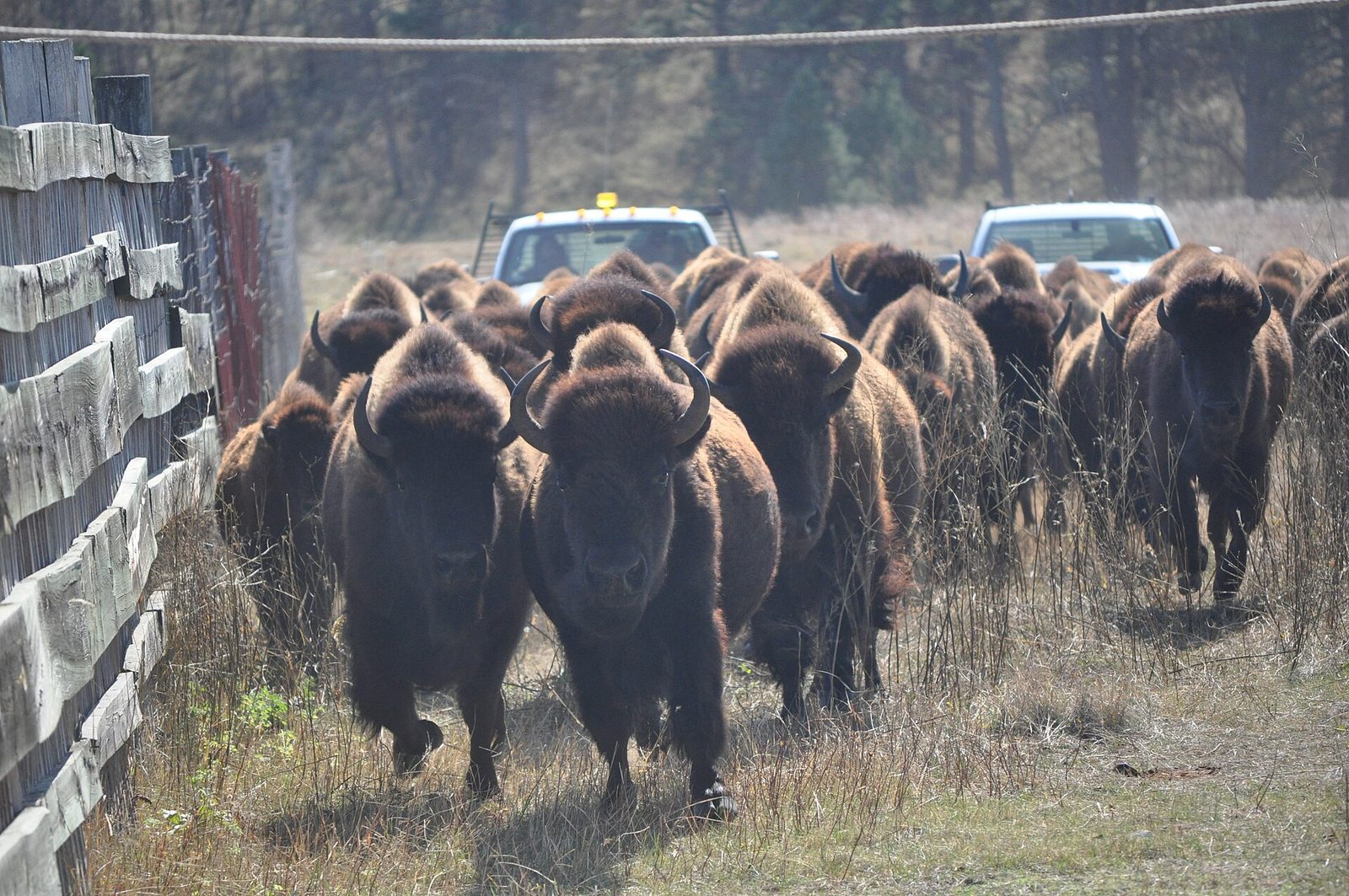
At 9:30 on the morning of September 25, 2026, riders on horseback started pushing about 1,300 bison across the grassland of Custer State Park toward a set of corrals. The state planned to sell about 600 of them before winter. The Buffalo Roundup is the public side of a stock-handling job the park has done for more than 60 years: keeping a bison herd no bigger than its grass can feed. The story runs from the herd’s origins and management through the roundup and auction to private bison ranching in South Dakota, with a short look at tribal herds.
Thirty-Six Bison From a Missouri River Pasture
The Custer State Park herd began in 1914, when the state bought 36 bison from the herd that James “Scotty” Philip, a Scottish-born rancher, had built near Fort Pierre. Philip’s herd had a borrowed start. In the 1880s, with wild bison nearly gone, Fred Dupree caught five calves; in 1899 Philip bought the small herd descended from them and kept it on a Missouri River pasture. By his death in 1911 it had grown to about 300 head, by the American Bison Society’s counts of the time; later accounts say up to 1,000. How close the species came to disappearing is told on the bison page.
Philip is commonly called “The Man Who Saved the Buffalo,” as the South Dakota State Historical Society noted in 2017. The record supports a smaller claim: his was one of the herds that helped the species survive.
The park’s land had been named Custer State Forest in 1912, and it became Custer State Park on July 1, 1919, at Governor Peter Norbeck’s urging. The herd reached 100 by 1924. In 1951 the park bought 60 more bison from a herd on the Pine Ridge Reservation.
Before long there were more bison than grass. The early answer, SDPB’s history says, was an occasional gather that brought in nearly every animal so a few could be culled, and into the 1950s it still didn’t happen every year. With the herd still outgrowing its range and new rules requiring disease tests, brucellosis among them, the gather became yearly; SDPB dates that change to 1965. In February 1966 the park held its first live bison auction, selling 100 animals.
How Many Bison Can the Park’s Grass Carry?
Roughly 900 to 1,050 through the winter, by the park’s own figures, depending on the year’s grass. That carrying capacity, the number of animals a range can feed without being grazed down, drives every other number. The herd runs 1,300 to 1,500 head in the warm months. The park’s 2025 roundup brochure put the winter limit at about 1,000, leaving about 400 bison to sell. After the 2024 sale, regional park supervisor Matt Snyder told commissioners in Pierre that ideal conditions could support about 1,050.
The bison share that grass with elk, pronghorn and prairie dogs, visitor services supervisor Lydia Austin told South Dakota News Watch in 2026. That year Custer County was in severe drought, and park forester Lilly DeLange described a spring when “there was no grass.” Officials weighed a summer sale. Rain did come, and by roundup day the range was “pretty green,” Nick Harrington, communications manager for South Dakota Game, Fish and Parks (GFP), told Cowboy State Daily. The park still planned to cut the winter herd to about 900 and sell about 600 bison, up from 435 in 2025.
Inside the Corrals and at the November Sale
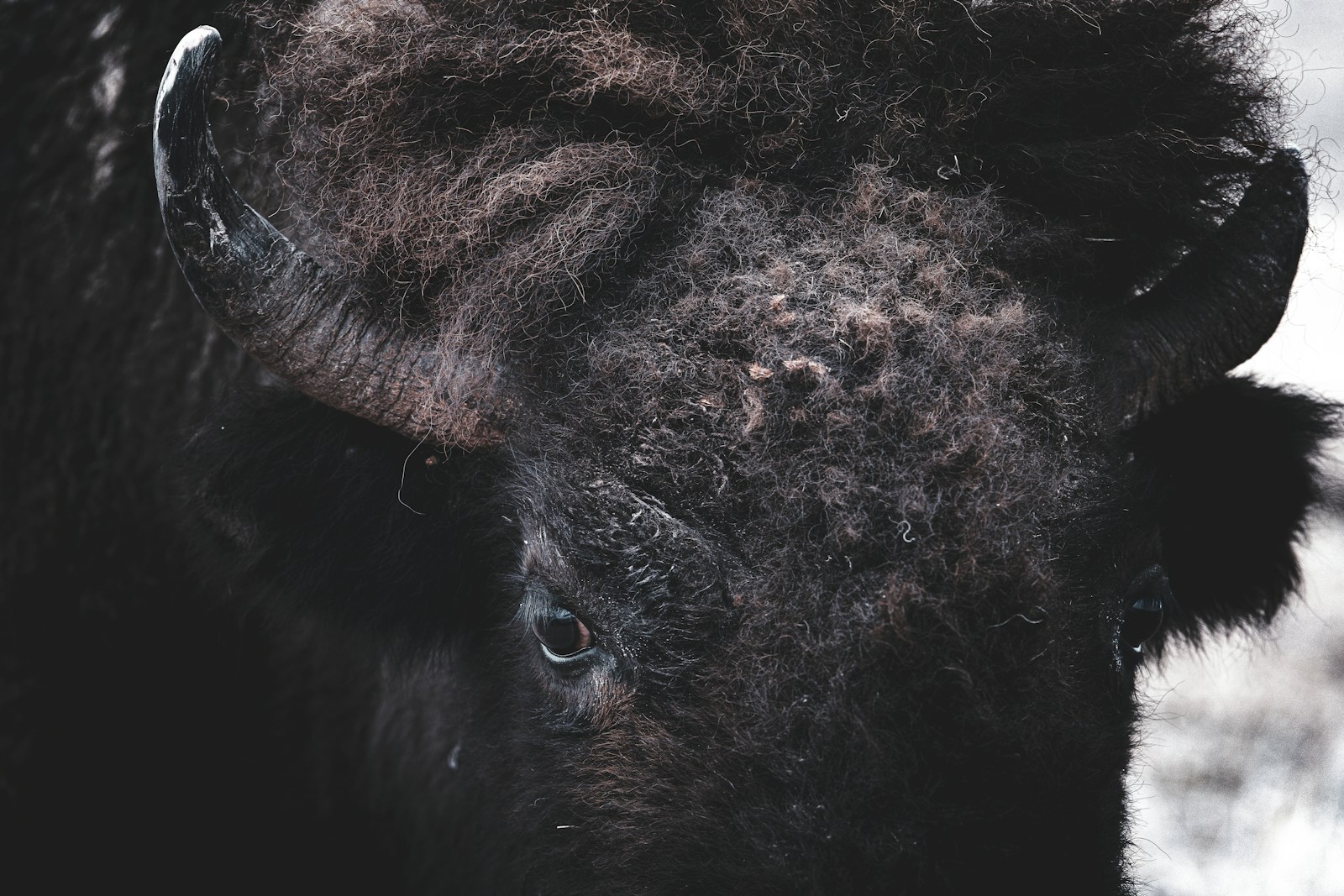
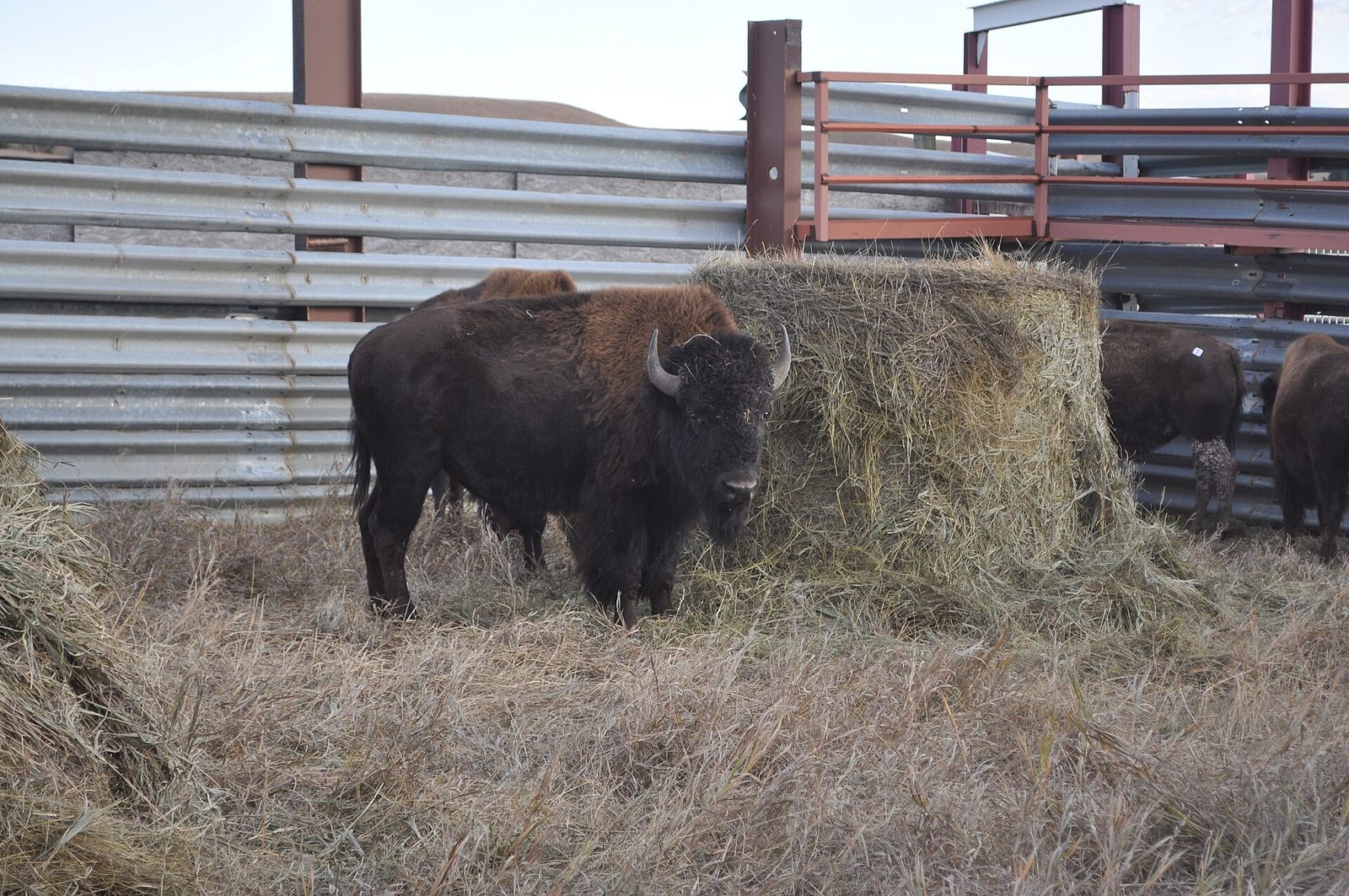
Once the bison are penned, the job is livestock work. Crews brand and test the animals, give health checks and vaccinations, and sort out the ones that will be sold. Part of the herd is worked on the afternoon of the roundup, the rest in October.
The auction comes in early November. The 2021 sale, held at the park’s visitor center, showed the animals only in photos and video, took live bids over the internet as well, and offered classes from bull calves to bred cows and breeding bulls. Every animal had been tested for brucellosis, the catalog said, and the females had been vaccinated against it as calves unless the listing noted otherwise.
The 2024 auction sold 482 bison for more than $885,000, an average of $1,836.98 a head, against $1,272.49 in 2023 and $982.21 in 2022, South Dakota Searchlight reported. Snyder credited supply and demand: drought had pushed many private South Dakota herds to sell. Eight buyers were from South Dakota and the rest from nine other states. Many go to private producers around the country, Harrington said in 2026, and processors and other state parks also buy. GFP says the money goes back into managing the herd and running the parks.
Twenty Thousand Spectators, by Whose Count?
None of the published crowd figures comes with a method. GFP’s event page says the roundup draws “as many as 20,000+ spectators” on its morning. South Dakota News Watch put the 2026 roundup crowd at 24,000, without saying who counted. Austin said the crowd a decade earlier was probably 14,000 or 15,000, and SDPB in 2014 wrote of 10,000 or more.
Spectators are kept in two viewing areas, north and south, and usually can’t leave before about noon, once the herd is in the corrals. Game, Fish and Parks staff, veteran volunteers and “draw riders,” members of the public picked from applicants by numbers drawn from a bucket, move the herd about 5 miles, by the park’s 2026 account. Volunteers rode in the 1930s too, SDPB notes, and a railroad filmed the roundup in 1938 to draw tourists.
South Dakota Leads the Nation in Ranch Bison
No state had more bison on its farms and ranches in the 2022 Census of Agriculture than South Dakota: 33,995 head on 105 operations, up from 30,035 on 99 in 2017. That was about 18 percent of the national total, according to USDA’s National Agricultural Statistics Service, and works out to more than 300 head per operation. The park’s herd is a small share of the state’s bison.
The National Bison Association, an industry group, puts the private U.S. herd at 192,477 bison on 1,986 ranches and farms and counts about 80,000 bison slaughtered in 2023. In 2017 the association set a goal of 1 million bison by 2027. With about 400,000 in North America in early 2026, by South Dakota State University’s figure, that goal is far from met.
Turner Enterprises says its Bad River Ranch in central South Dakota, about 148,000 acres, carries 1,400 breeding females and is meant to reach 2,200 head. Ted Turner, who owned the Turner ranches and died in May 2026, was the country’s largest private bison owner, with about 45,000 head, DTN reported.
Bison meat sits outside mandatory federal inspection: USDA treats bison as an “exotic” species, not one of the livestock its inspectors must cover, though the meat can still be inspected by USDA on a voluntary basis, SDSU Extension explains. In September 2026 young bull carcasses averaged $544.33 per hundredweight, or 100 pounds, at the plant, up from $501.36 a year earlier, USDA’s monthly bison report shows. Many processors pay less per pound for oversized carcasses, SDSU Extension bison specialist Jeff Martin wrote in 2023.
Ranch bison are handled little. On many ranches, South Dakota State University noted in February 2026, the herd is gathered only a few times a year, when animals are vaccinated, checked over, blood-tested or culled. The university launched its Center of Excellence for Bison Studies in Rapid City in 2020, and since the summer of 2025 the center has been home to the National Bison Association’s headquarters, which came from Denver.
Tribal Herds, in Tribal Terms
Tribes manage their own herds. The InterTribal Buffalo Council began in 1991 as the InterTribal Bison Cooperative, about 10 tribes with some 1,500 bison. By June 2024 its members were 83 federally recognized tribes in 22 states, holding more than 60 herds, its president, Ervin Carlson of the Blackfeet Nation, told a Senate committee. Tribal restoration of the animal, he said, “signifies much more than simply conservation of the National Mammal.” The longer story of tribal bison restoration is on The Return of the Bison. In October 2020, REDCO, the Rosebud Sioux Tribe’s economic development corporation, and the World Wildlife Fund turned 100 bison from Badlands and Theodore Roosevelt national parks out on nearly 28,000 acres of the Rosebud Reservation. In 2024 the Cheyenne River Sioux Tribe Buffalo Authority Corporation took in more than 70 bison from an Ohio conservation center; for the tribe, its chief executive, Jayme Murray, said, the point was “creating a sustainable healthy herd.”
Connected
- BisonThe animal itself, and how close it came to extinction.
- The Return of the BisonTribal bison restoration, told in full.
- Custer State ParkThe park where the herd ranges, as a place to visit.
- The Southern HillsThe part of the Hills that holds the park and its grassland.
- Elk, Bighorn Sheep and Mountain GoatsThe elk that share the park’s grass with the bison.
- The Open Range and the Cattle DrivesCattle roundups on the open range around the Hills.
Sources
- Report of the American Bison Society, 1911–1912 (J. Alden Loring’s report on James Philip’s herd; census of January 1, 1912). American Bison Society, 1912; Internet Archive.
- Custer State Park History. South Dakota Game, Fish and Parks, 2026.
- Buffalo Roundup and Arts Festival. South Dakota Game, Fish and Parks, 2026.
- Custer State Park Buffalo Roundup (visitor brochure). South Dakota Game, Fish and Parks, 2025.
- 57th Annual Fall Classic, Custer State Park Bison Auction (sale catalog, November 6, 2021). South Dakota Game, Fish and Parks, 2021.
- “Scotty Philip’s Buffalo Herd” photo display at Cultural Heritage Center (press release). South Dakota State Historical Society, 2017.
- James “Scotty” Philip (Hall of Great Westerners). National Cowboy & Western Heritage Museum.
- Short history of the Custer State Park Buffalo Roundup, by Brian Gevik. SDPB, 2014.
- Drought and tourists reshape Custer area landscape, by Molly Wetsch, South Dakota News Watch. Dakota News Now, 2026.
- Drought Forcing Custer State Park To Auction Off At Least 600 South Dakota Bison, by Kate Meadows. Cowboy State Daily, 2026.
- Custer State Park bison auction brings in nearly $900,000, by Joshua Haiar. South Dakota Searchlight, 2024.
- 2022 Census of Agriculture, South Dakota, Tables 32 and 33: Other Animals. USDA National Agricultural Statistics Service, 2024.
- South Dakota Rank in U.S. Agriculture. USDA National Agricultural Statistics Service, 2024.
- Bison by the Numbers. National Bison Association (industry group), 2025.
- Jackrabbits lead the charge in bison research and education, by Allie Arp. South Dakota State University, 2026.
- Are bison amenable or non-amenable?, by Jeff Martin and Amanda Blair. SDSU Extension, 2023.
- Goldilocks and Bison Carcass Size Considerations, by Jeff Martin. SDSU Extension, 2023.
- National Monthly Bison Report (September 2026). USDA Agricultural Marketing Service, 2026.
- Bad River Ranch (the company’s own description). Turner Enterprises.
- Ted Turner’s Ranches Likely Preserved, by Chris Clayton. DTN, 2026.
- Testimony of Ervin Carlson, President, InterTribal Buffalo Council. U.S. Senate Committee on Indian Affairs, 2024.
- Bison Transfer to Establish Wolakota Buffalo Range Marks Interior Commitment to Bison Conservation (news release). National Park Service, 2020.
- New bison integrating into herd at Cheyenne River Sioux Reservation, by Jackson Dircks. SDPB, 2024.
Last reviewed: