Wildlife and Plants
Elk, Bighorn Sheep and Mountain Goats
Elk and bighorn sheep lived in the Black Hills long before settlers came, and both were gone from them by 1900. The mountain goat was first brought here in 1924, when six from Alberta were put in a pen in Custer State Park. They didn’t stay in it. This page covers how the three live here, how they were lost or brought in, and the diseases shaping their herds now.
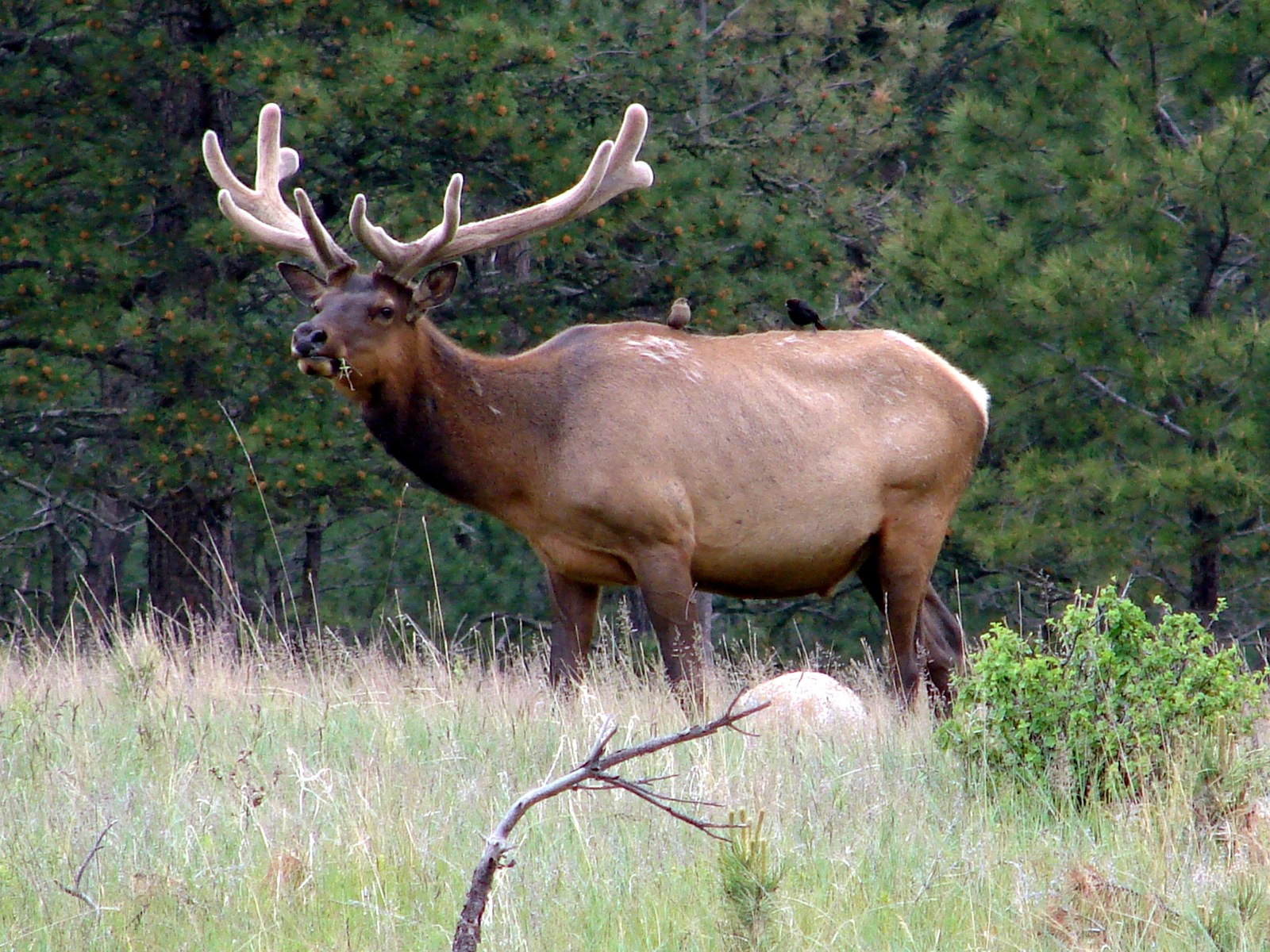
Elk Feed in the Openings
Black Hills elk (Cervus canadensis) feed in the open and keep the trees close. In a study of six collared cows, published in 1988 and summed up in the state’s 2015 elk plan, most feeding spots had almost no ponderosa pine overhead, and on spring, summer and fall days the timber was seldom more than about 300 feet away.
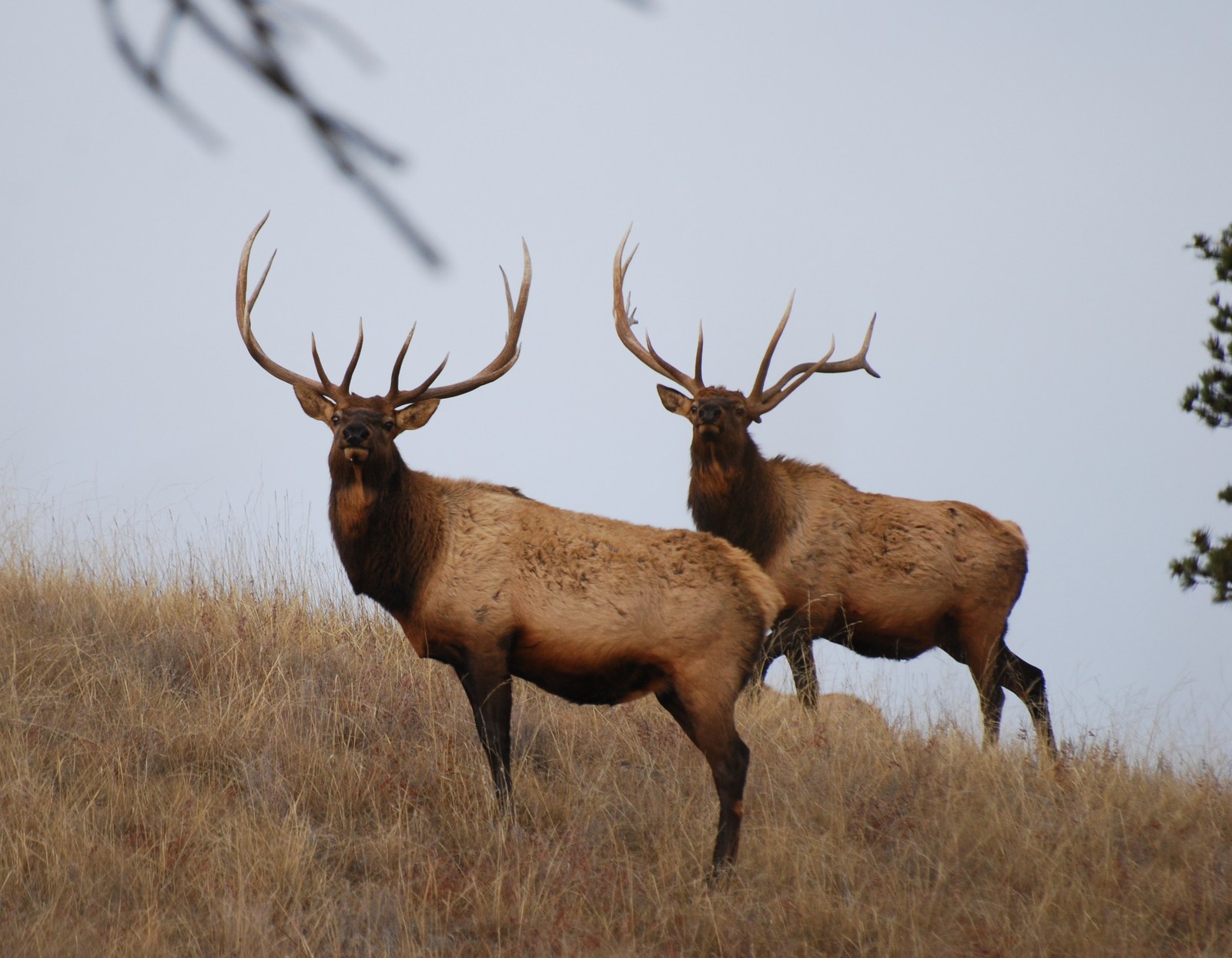
The rut fills September and October, Wind Cave National Park says, when bulls battle for mates and for a harem of cows to guard, and their loud, wailing bugle is heard most at dawn and dusk. Antlers grow on bulls alone, as much as an inch in a day. A calf stays tucked out of sight until it can follow the herd, and it carries no scent. Of 71 newborn calves collared in 2012 and 2013, about three in four lived to a year old, the state reported in 2024, and mountain lions caused 12 of the 16 deaths.
Sheep and Goats on the Rock
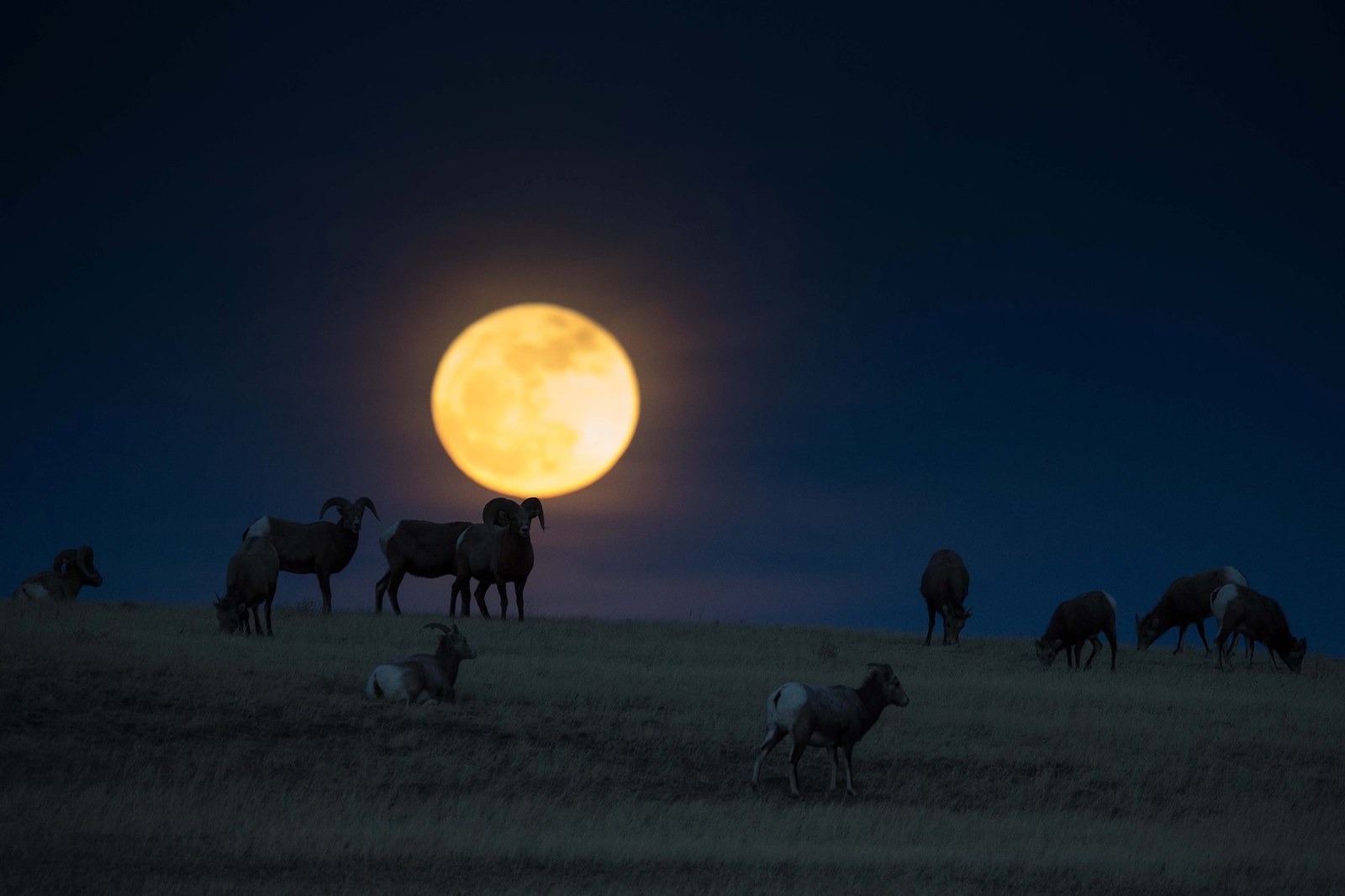
A bighorn sheep (Ovis canadensis) lives within reach of escape terrain, the steep, broken rock it can flee into. In every season, bighorns typically range no farther than about 875 yards from such ground, the South Dakota Department of Game, Fish and Parks (GFP) says in its 2018 plan, citing a 1974 study. They eat mostly grasses and forbs, broad-leaved flowering plants. Ewes spend their lives in the herd they were born into, the National Park Service says, while young rams leave at two to four years old to join bachelor groups. The rut usually peaks between mid-November and mid-December, and most lambs in the Custer State Park, Rapid City and Deadwood herds arrive in May.
In 1901 the biologist C. Hart Merriam named Audubon’s bighorn (Ovis canadensis auduboni) from skulls taken on the plains of the western Dakotas and eastern Montana, noting a massive lower jaw and molars larger than those of any other known American sheep. It had vanished from its whole range by 1924, a 2008 South Dakota State University dissertation states, and it is now classed with the Rocky Mountain bighorn (O. c. canadensis). In 1941 the US Fish and Wildlife Service called the Badlands form apparently extinct. In the Black Hills the last native bighorn was killed in 1899, by naturalist Ernest Thompson Seton’s 1929 account, quoted in the 2018 plan.
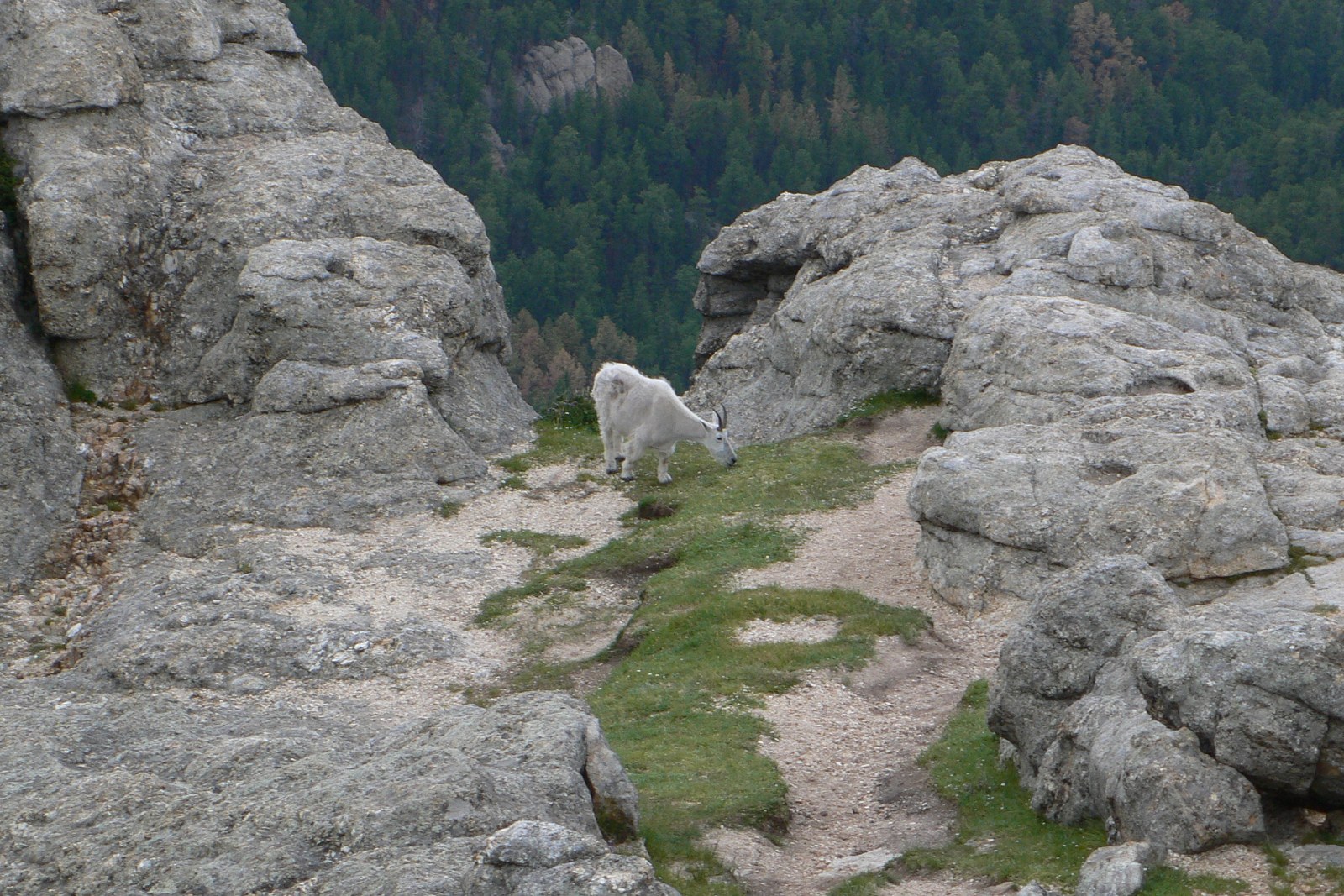
The mountain goat (Oreamnos americanus) is the outsider. The American Society of Mammalogists’ Mammal Diversity Database lists it in Canada and six US states: Alaska, Washington, Oregon, Idaho, Montana and Wyoming. South Dakota’s 2024 goat plan states that it “is not native to South Dakota.” Here the goats keep to granite outcrops rising out of ponderosa pine, and nannies give birth from about May 1 to June 15.
The forest works against them. A GFP study of collared goats from 2006 to 2018 found mountain lions the leading known cause of death and suggested that survival fell where the forest grew dense, South Dakota Searchlight reported in May 2026. When the pine beetle epidemic thinned the canopy, peaking around 2012, goat survival improved until about 2018.
Lost by 1900, Then Shipped Back
Unregulated and market hunting wiped out South Dakota’s elk by the late 1800s, GFP says, and the last native one was believed killed in 1888, its 2015 plan reports. Those were Manitoban elk. Their replacements were Rocky Mountain elk, mostly from Idaho, Montana and Wyoming. The state’s record of releases starts in 1911, with about 100 elk in the northern Hills on the Wyoming side, and ends with a 1916 shipment of 50 to the state game preserve that became Custer State Park and 25 to Wind Cave. The Park Service counts Wind Cave’s founders as 42 elk from Jackson Hole and Yellowstone, released in 1914 and 1916, the same decade the two parks began their bison herds.
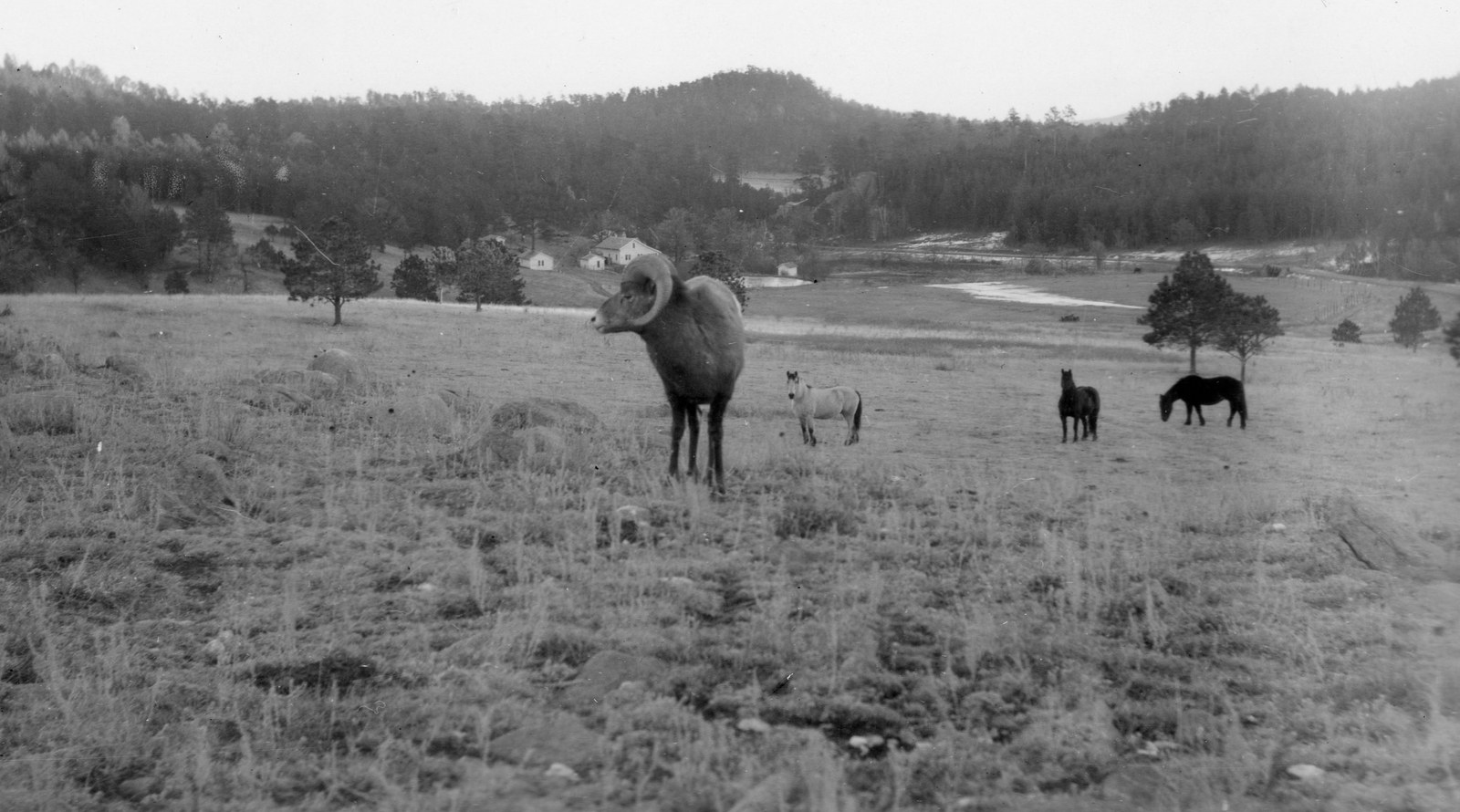
Bighorns followed. In 1922 Senator Peter Norbeck arranged for eight Rocky Mountain bighorns from Alberta to go to Custer State Park. Those sheep did well for a time but were gone by the late 1950s, and no one knows why. In 1964, 22 sheep from Pikes Peak, Colorado, went to Badlands National Monument, now Badlands National Park. In 2014, 20 sheep from Montana’s Rocky Boy Reservation went to Hell Canyon in the Hills, a project SDPB reported was shared with the Oglala Sioux Parks and Recreation Authority, and 20 more went to the Pine Ridge Reservation.
Should Introduced Goats Stay in a Wilderness?
The state still manages the goats and brought in more as recently as 2013, and biologists differ on whether it should.
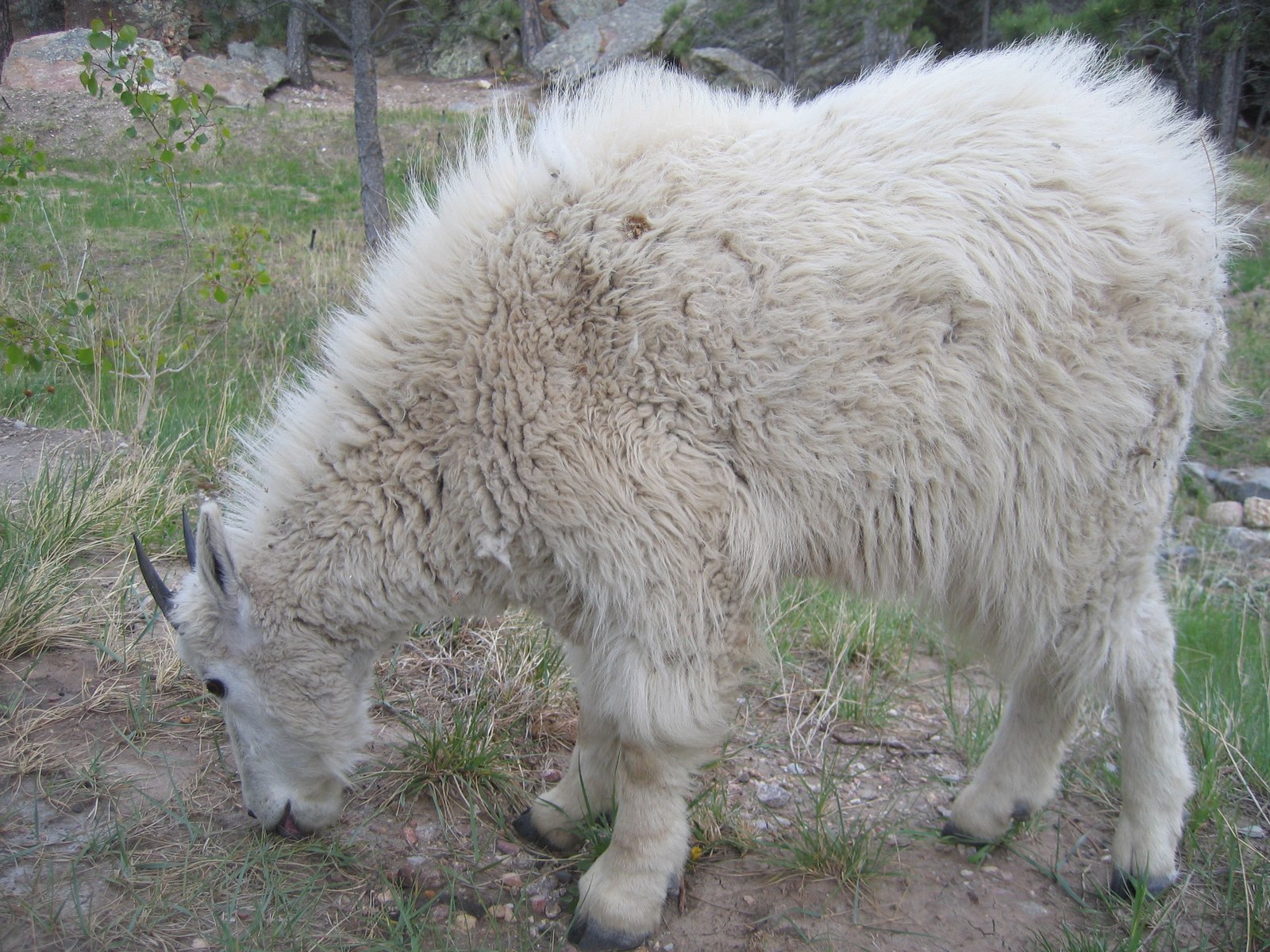
Two of the six slipped out of their enclosure on the first night, and the rest were loose by 1929, settling about 10 miles northwest in the granite around Black Elk Peak (called Harney Peak until 2016), GFP’s goat plan says. The herd reached an estimated 300 to 400 in the early 1950s, was down to about 80 by 1983, climbed to an estimate of 213 in 1995 and sank to 55 by 2011. Goats were brought in from Colorado in 2006 and Utah in 2013. Minimum counts from the air, the goats actually seen, peaked at 106 in 2016 and fell to 29 in 2024. A 2019 SDPB feature, reposted in 2023, claimed more than 400 goats in the park, above any figure in the state’s plan.
If the decline continues, senior GFP biologist Chad Lehman told the Searchlight in May 2026, he estimates goats will be gone from their core area by 2030. A second group in Spearfish Canyon, up to 25 goats in 2025 by residents’ reports, has grown since a nanny left the southern herd around 2014.
Lehman favors continuing to manage the goats: they have been here more than 100 years, he said, and the public enjoys them. William Severud, a South Dakota State University wildlife biologist, told the Searchlight that “trying to manage as close to pre-European contact would be ideal,” though he understands why people want the goats kept. Greg Van Den Berg, treasurer of the Rocky Mountain Goat Alliance, said the conservation group counts introduced herds in its work too.
Lehman would try habitat work first, before bringing in more goats. Timber management isn’t allowed in the Black Elk Wilderness, though, which takes in much of the goats’ habitat, so there, he said, opening up the forest is left to beetles and wildfire. Congress set the wilderness aside in 1980 and added to it in 2002. Now more than 13,534 acres, it is heavily used, the Forest Service says, especially Trail #9 from Sylvan Lake (see Hiking Black Elk Peak).
Pneumonia and Chronic Wasting Disease Today
Pneumonia is the main killer of Black Hills bighorns. GFP’s 2018 plan names the bacterium Mycoplasma ovipneumoniae as the suspected cause, and DNA typing of its strains may point to domestic sheep or goats as the source. An outbreak at Custer State Park in 2004 and 2005 killed an estimated 90 percent of that herd. Pneumonia has also struck the Rapid City and Deadwood herds. Biologists test sheep and remove those still shedding the bacterium, and preliminary data suggest lambs survive better afterward.
GFP’s minimum counts for 2025, given to its commission in March 2026, totaled 306 bighorns, 65 of them in the Badlands. That same month, the Black Hills Pioneer reported, Lehman put the Badlands herd, once as large as 300, at 28 after a pneumonia outbreak. Goats can carry the bacterium too, and the goat plan says the two species could pass it either way; Lehman said they rarely cross paths here.
In elk the concern is chronic wasting disease, which deer and moose can also get. A prion, an abnormal protein, causes this brain disease, and GFP calls it always fatal. South Dakota’s first infected free-roaming elk turned up in 2002 inside Wind Cave National Park, GFP reported in 2024. The Park Service puts the spread into the park’s elk and deer in 2003 and traces it to a neighboring private herd. As of GFP’s April 2024 report, 292 of 8,761 elk sampled in and around the Black Hills had tested positive in all, 179 of them at Wind Cave.
The state’s 2024 to 2025 winter aerial survey estimated 7,922 elk in the Black Hills and 765 in Custer State Park. At Wind Cave, the Park Service culls elk from time to time to reduce contact between animals, and meat that tests free of the disease goes to Feeding South Dakota or to tribal partners.
Connected
- Custer State ParkWhere the eight bighorns of 1922 and the six goats of 1924 arrived.
- Hiking Black Elk PeakThe granite country around Black Elk Peak where the escaped goats settled.
- Badlands National ParkHome of the bighorn herd started with 22 Colorado sheep in 1964.
- Wind Cave National ParkWhere chronic wasting disease reached the elk herd in the early 2000s.
- BisonThe other big grazer restocked in the Hills in the 1910s.
- The Ponderosa Forest, Fire and the Pine BeetleThe beetle epidemic that thinned the forest and, for a few years, helped the goats.
Sources
- South Dakota Elk Management Plan, 2015–2019 (Wildlife Division Report 2015-01). South Dakota Department of Game, Fish and Parks, 2015.
- South Dakota Elk Action Plan, 2026–2030 (Wildlife Division Report 2025-11). South Dakota Department of Game, Fish and Parks, 2026.
- Elk Population Status Update, 2024 Biennial Report (Wildlife Report 2024-07). South Dakota Department of Game, Fish and Parks, 2024.
- Rocky Mountain Elk (Wind Cave National Park). National Park Service, 2026.
- Cervus canadensis. Mammal Diversity Database, American Society of Mammalogists, 2026.
- South Dakota Bighorn Sheep Management Plan, 2018–2027 (Wildlife Division Report 2018-02). South Dakota Department of Game, Fish and Parks, 2018.
- Bighorn Sheep. South Dakota Department of Game, Fish and Parks, undated (viewed 2026).
- Bighorn Sheep in the Badlands. National Park Service, Badlands National Park, 2020.
- Two New Bighorns and a New Antelope from Mexico and the United States, by C. Hart Merriam. Proceedings of the Biological Society of Washington 14, 1901.
- Evaluation of an Augmentation of Rocky Mountain Bighorn Sheep at Badlands National Park, South Dakota, by Teresa J. Zimmerman (PhD dissertation). South Dakota State University, 2008.
- Bighorn Sheep Making Last Stand for Existence in U.S. (news release). US Fish and Wildlife Service, 1941.
- New Bighorn Sheep in Western South Dakota, by Steve Zwemke. SDPB, 2014.
- Commission Book, March 5–6, 2026 (bighorn sheep proposal, Table 1, minimum counts for 2024 and 2025). South Dakota Game, Fish and Parks Commission, 2026.
- BH Bighorn Sheep Herds Healthy, Badlands Herd at Historic Lows, by Wendy Pitlick. Black Hills Pioneer, 2026.
- South Dakota Mountain Goat Action Plan, 2024–2028 (Wildlife Division Report 2024-02AP, December 2024). South Dakota Department of Game, Fish and Parks, 2024.
- Oreamnos americanus. Mammal Diversity Database, American Society of Mammalogists, 2026.
- South Dakota’s Southern Black Hills Mountain Goats Face an Uncertain Future. South Dakota Searchlight, 2026.
- The Animals of Custer State Park, by Brian Gevik. SDPB, 2023 (first published 2019).
- Black Elk Wilderness. USDA Forest Service, Black Hills National Forest, 2026.
- Black Elk Wilderness (designating laws, 1980 and 2002). Wilderness Connect, University of Montana, viewed 2026.
- Chronic Wasting Disease FAQs (revised July 2023). South Dakota Department of Game, Fish and Parks, 2023.
Last reviewed: