The Outdoors
Fire Lookouts of the Black Hills
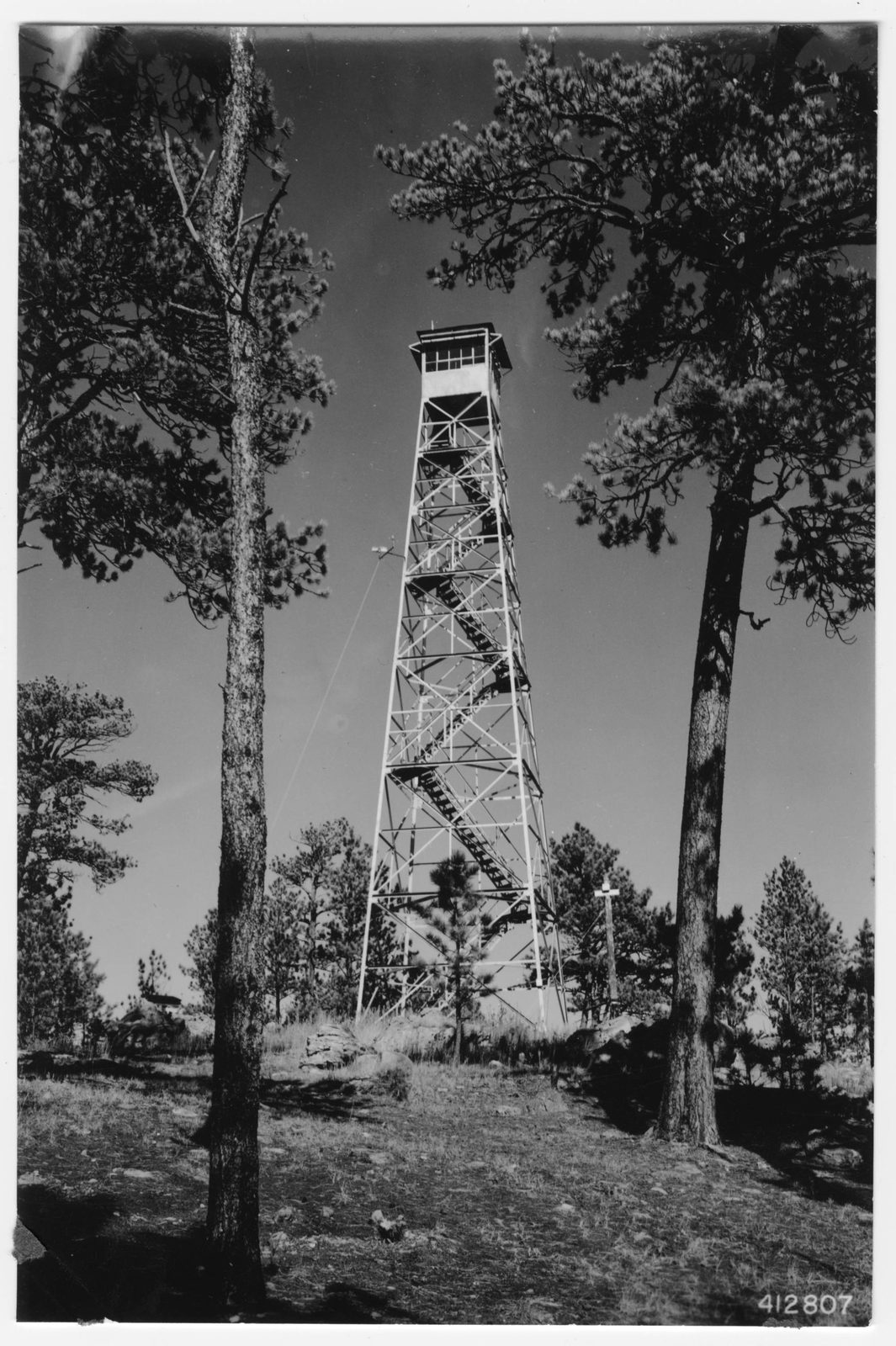
On Elk Mountain, near the southwest corner of South Dakota and about half a mile east of the Wyoming line, 90 steps in seven steep flights climb a tower to a lookout cab 7 feet square. Visitors may make the climb, and someone is on duty at the top from late spring into early fall, the Forest Service said in 2026. Elk Mountain’s tower is one of the fire lookouts that still stand on high points across the Black Hills. What follows is who built them and when, which are still staffed, which a visitor can reach, and which are on historic registers.
Crates, Cabins and a Flashing Mirror
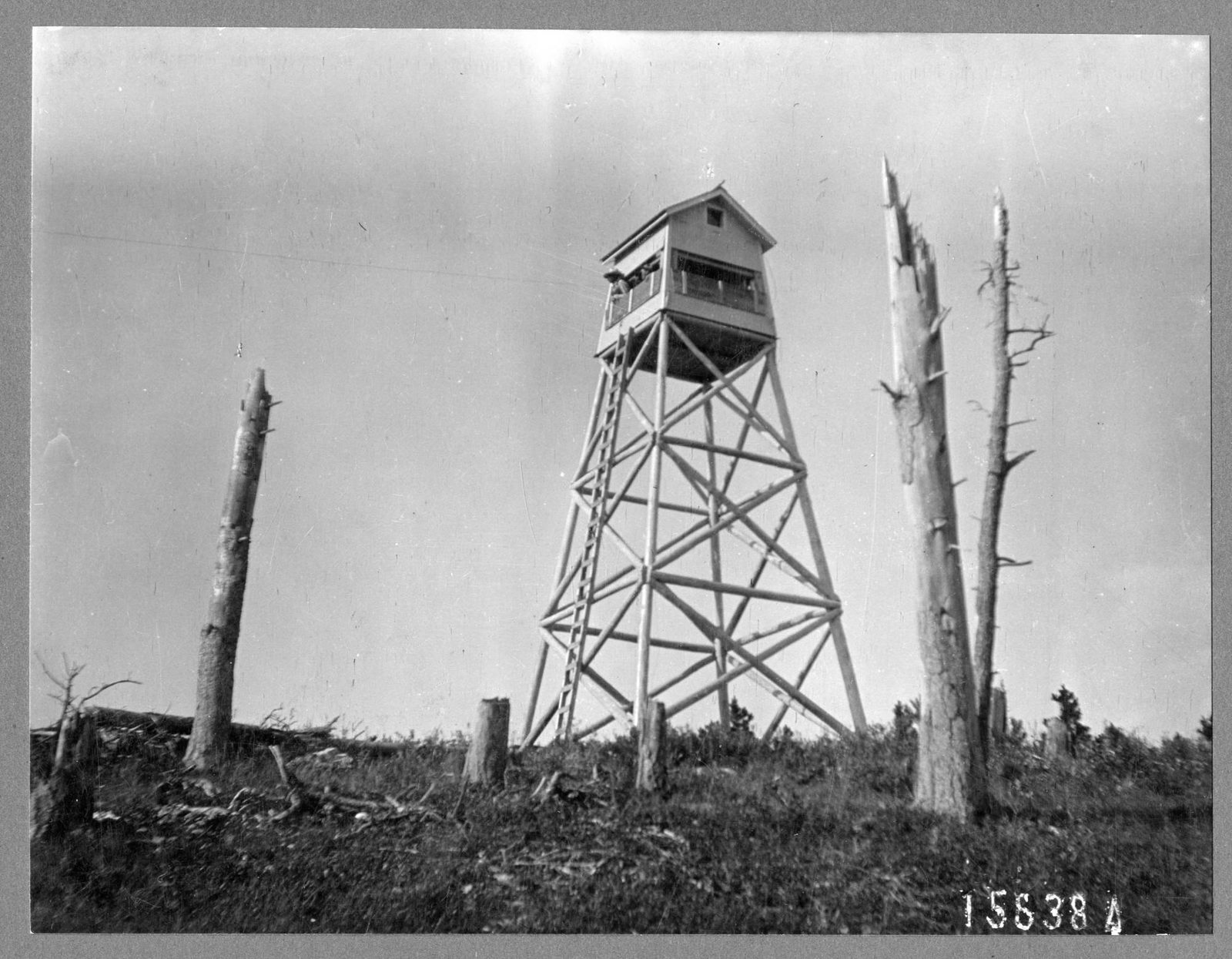
The first lookouts went up around 1910. A run of destructive fires had swept the Hills, and residents asked for protection, says the Forest Service’s 1982 nomination of the lookout on Black Elk Peak (called Harney Peak until 2016) to the National Register of Historic Places. In 1911 the Black Hills National Forest put a lookout on that summit. It was a wooden crate with a sighting instrument set on top, and no shelter. The watcher reported fires by flashing a mirror, and later by telephone.
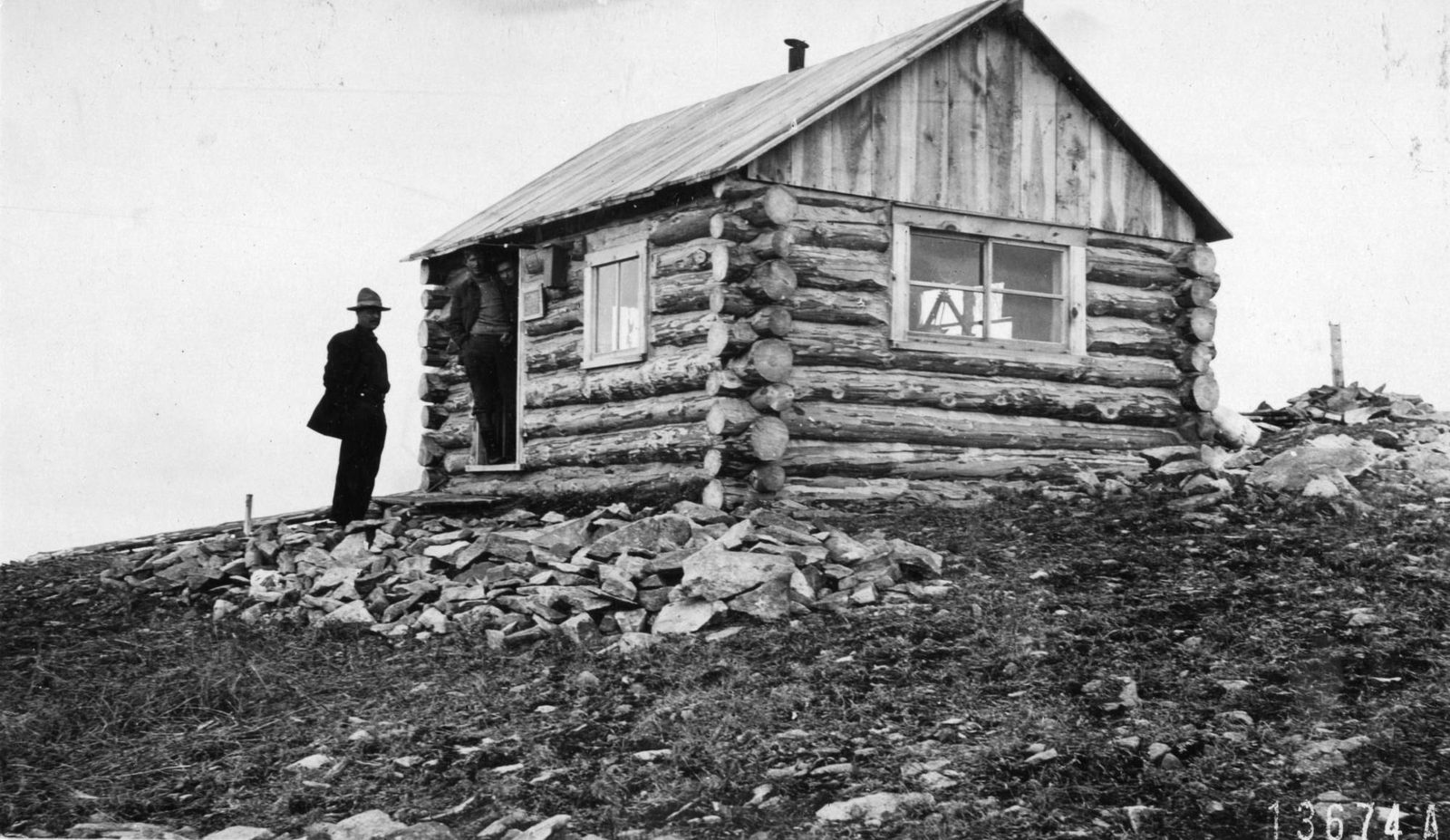
Other peaks got lookouts in the same years, the Forest Service says. Bear Mountain, northwest of Custer, had a tower in 1910 and an enclosed cab by 1914. Custer Peak had a small cabin on a platform in 1911, with a telephone line running to the Bull Dog Ranch. On Cement Ridge, run from the forest’s ranger district at Sundance, Wyoming, a one-room log cabin with a shingle roof went up between 1911 and 1913, and a crow’s nest with a glassed-in house followed in 1921.
In what is now Custer State Park, a log tower and caretaker’s quarters went up in 1923 on Sheep Mountain, which was renamed Lookout Mountain that year and Mount Coolidge in 1927, the summer President Calvin Coolidge spent at the State Game Lodge, South Dakota Game, Fish and Parks says. How often fire burned the pine forest before any of these lookouts is told on The Ponderosa Forest, Fire and the Pine Beetle.
What Did the CCC Build on the Peaks?
From 1938 into 1942, crews of the Civilian Conservation Corps (CCC), a federal work-relief program of the Depression, rebuilt the lookouts on several of the high peaks. A 1984 overview of the forest’s history, prepared for the Forest Service, ranks the towers and their telephone lines among the CCC’s important jobs. Among them was the stone tower on Black Elk Peak, which men from Camp Doran built from 1938 to 1940; the Forest Service calls it the Harney Fire Lookout. The trail to it is on Hiking Black Elk Peak, and the camps and their other work are on The National Forest and the CCC.
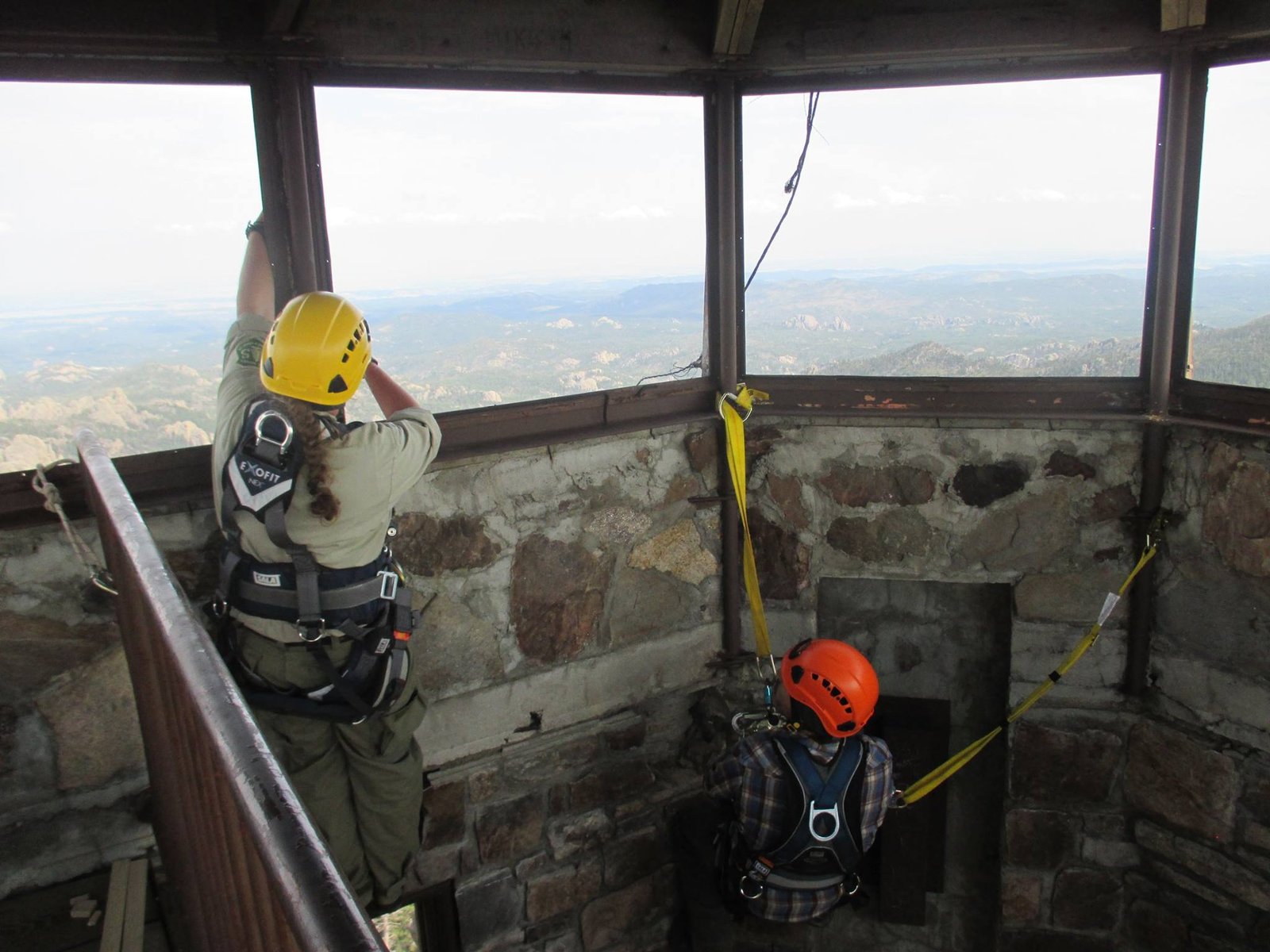
The others followed. In Custer State Park, the CCC replaced the log buildings on Mount Coolidge with a stone lookout and quarters in 1939, by Game, Fish and Parks’ account; the state’s marker for the French Creek camp lists the job too. That same year the CCC’s Custer camp swapped Bear Mountain’s wooden frame for a steel tower 30 feet tall. On Custer Peak, CCC men built the present lookout in 1941 and 1942 to a design by William Ellis Groben, the Forest Service’s office architect from 1933 to 1953. A new lookout was finished on Cement Ridge in 1941.
Enrollees staffed the towers in summer, the 1984 overview says. Camp Custer’s men kept a 25-man fire crew and staffed lookouts on Harney Peak, Cicero Peak, Bear Mountain, Moon and Signal Hill, the camp’s state marker says, and Camp Mayo’s marker credits its men with building and staffing the one on Cicero Peak. When the McVey burn spread over about 20,000 acres west of Hill City in 1939, the overview adds, almost the whole CCC force in the Black Hills was on the fire line.
The CCC also built a 10-foot tower with a live-in cab on Warren Peak, near Sundance, in 1938. Work on Sundance Air Force Station, a radar station on the same peak, began in 1959 and took the old lookout down; in 1960 a new one, a cab on a 54-foot steel tower, went up on a peak to the east, the Forest Service says. Elk Mountain’s tower was built between 1939 and 1941, with a log cabin for the lookout; in the early 2000s the Elk Mountain Fire burned 13,195 acres and destroyed the cabin.
Which Lookouts Are Still Staffed?
A few towers still hold a lookout through fire season. Bear Mountain, at 7,200 feet the third-highest point in the Black Hills by the Forest Service’s count, is staffed from late spring through early fall, and so is Elk Mountain, the agency said in 2026. Custer Peak is still in use as a fire lookout, the Forest Service said in 2025. On Mount Coolidge, Game, Fish and Parks’ page, viewed in 2026, says the tower still serves as a fire lookout and a dispatch center.
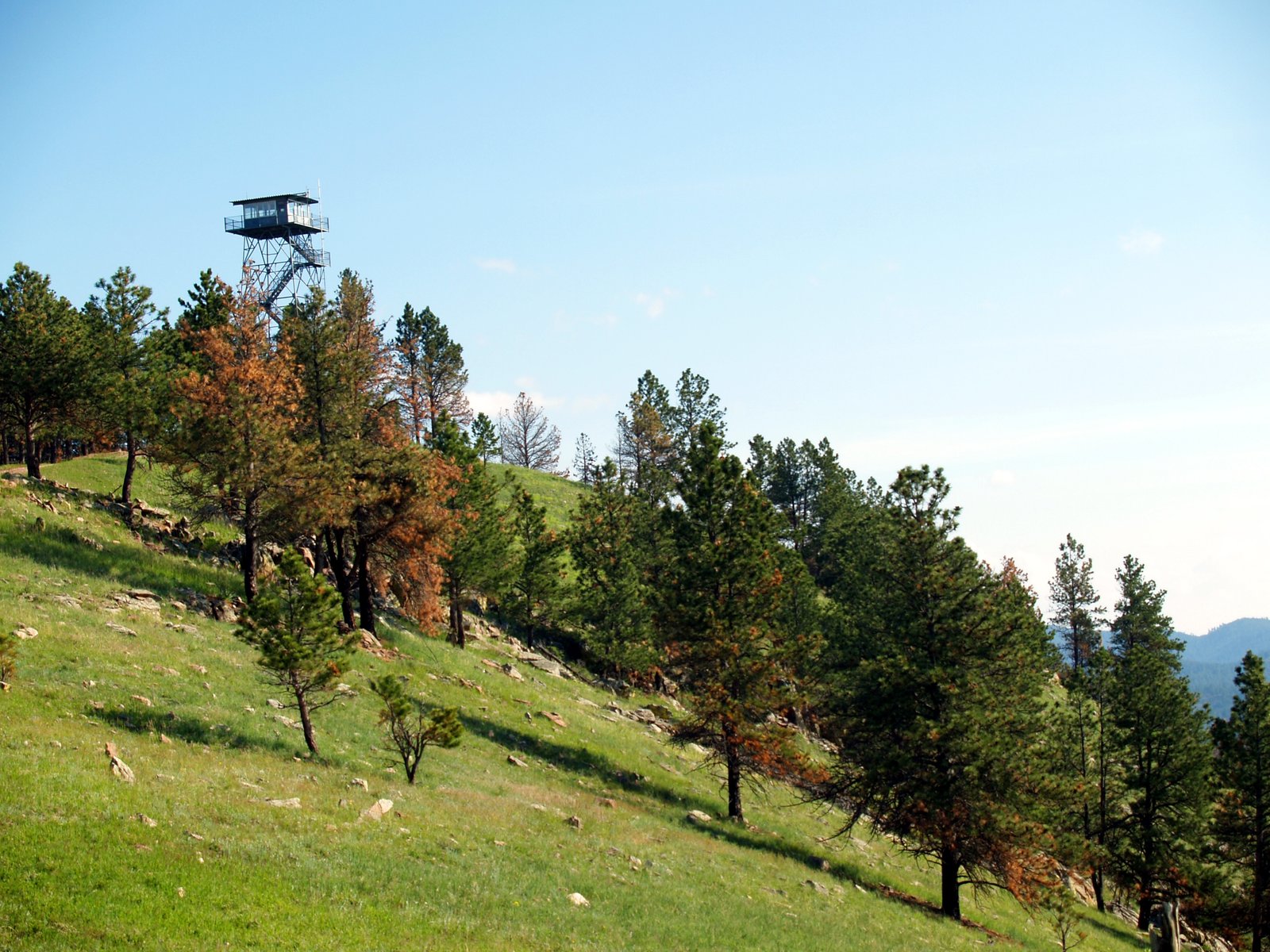
The 54-foot steel tower on Rankin Ridge, in Wind Cave National Park, went up in 1956 to guard against the spread of wildfire and was staffed full time until 1998, the National Park Service said in 2006. Since then the park has staffed it only when fire danger runs extreme or after heavy lightning storms, the Park Service said in 2024; lightning-mapping systems and satellite images now help it find fires.
Black Elk Peak’s tower has been empty since 1967. Homer Baker, in 1965, was the last Forest Service employee to staff it, and Game, Fish and Parks staffed it in 1966 and 1967, by the 1982 nomination. Summit Ridge’s cabin and tower, near twins of Elk Mountain’s first ones, are unstaffed now, the Forest Service says.
Towers a Visitor Can Reach
The agencies that run these four lookouts describe how a visitor gets to them:
- Black Elk Peak
- Trail 9 from Sylvan Lake, in Custer State Park, to the 7,242-foot summit; routes are on Hiking Black Elk Peak
- Mount Coolidge
- A narrow gravel road, 1.2 miles, to the 6,023-foot summit in Custer State Park; no oversized vehicles or campers (Game, Fish and Parks)
- Rankin Ridge
- A 1-mile loop nature trail, one of the park’s easy trails, to its highest point, signed from SD 87; no RVs or trailers at the trailhead; tower closed to the public (National Park Service, 2026)
- Elk Mountain
- 90 steps, in seven steep flights, to the cab, at 5,662 feet (Forest Service, 2026)
On a clear day, Game, Fish and Parks says, the Badlands show from Mount Coolidge, some 60 miles to the east; the Park Service says the same of the eastern edge of the Rankin Ridge trail. In SDPB’s 2020 survey of the lookouts, Mount Coolidge’s observation deck and the Black Elk Peak tower were open to visitors, and Bear Mountain’s tower was closed.
On the National Register and Off It
The stone tower on Black Elk Peak has been on the National Register of Historic Places since 1983, the Forest Service says, for its architecture, its tie to the CCC and its history of recreational use. The Forest Service considers the Custer Peak and Cement Ridge towers eligible for it, and both are on a separate list, the National Historic Lookout Register: Custer Peak since October 13, 1990, and Cement Ridge since December 30, 1993. Bear Mountain joined the lookout register in 2017, which the Forest Service calls an initial step toward the National Register itself.
As early as 1982, the nomination for Black Elk Peak’s tower said airplanes, helicopters and other lookouts had made it unneeded for spotting fires. Volunteers have finished several maintenance projects there, the Forest Service says, with materials packed up by the agency’s Region 2 mule pack string and no motorized equipment or wheeled tools on the job.
Connected
- Hiking Black Elk PeakThe trail to the stone Harney Lookout on South Dakota’s highest point.
- The National Forest and the CCCThe camps whose crews built and staffed the lookouts from 1938 on.
- Custer State ParkHome of the Mount Coolidge lookout and the trailhead at Sylvan Lake.
- Wind Cave National ParkThe park where the Rankin Ridge tower has stood since 1956.
- The Ponderosa Forest, Fire and the Pine BeetleThe fires the lookouts watched for, from tree rings to the Jasper Fire.
- The Wyoming Side of the HillsThe Bear Lodge Mountains and Warren Peak, near Sundance.
- The Southern HillsThe country around Wind Cave and Custer State Park, home of the Rankin Ridge and Mount Coolidge towers.
Sources
- Harney Fire Lookout. USDA Forest Service, Black Hills National Forest, 2025.
- Harney Peak Lookout Tower, Dam, Pumphouse and Stairway: National Register of Historic Places nomination. National Park Service (prepared by the USDA Forest Service), 1982.
- Bear Mountain Fire Lookout. USDA Forest Service, Black Hills National Forest, 2026.
- Custer Peak Fire Lookout. USDA Forest Service, Black Hills National Forest, 2025.
- Cement Ridge Fire Lookout. USDA Forest Service, Black Hills National Forest, 2025.
- Warren Peak Fire Lookout. USDA Forest Service, Black Hills National Forest, 2025.
- Elk Mountain Fire Lookout. USDA Forest Service, Black Hills National Forest, 2026.
- Paha Sapa: A Cultural Resource Overview of the Black Hills National Forest, South Dakota and Wyoming, by E. Steve Cassells, David B. Miller and Paul V. Miller (Plano Archaeological Consultants, under contract). USDA Forest Service, Black Hills National Forest, 1984 (Internet Archive).
- Historical Markers, Master List (Numerical), markers 516, 530 and 532. South Dakota State Historical Society.
- Custer State Park Sights (Mount Coolidge Fire Tower). South Dakota Game, Fish and Parks, viewed 2026.
- Silent Sentinel Marks Fiftieth Anniversary. National Park Service, Wind Cave National Park, 2006.
- Post 13: The Fire Tower, a Reminder of Days Gone By. National Park Service, Wind Cave National Park, 2024.
- Hiking (Rankin Ridge Nature Trail). National Park Service, Wind Cave National Park, 2026.
- Your Comprehensive List of Black Hills Lookout Towers (Michael Zimny). SDPB, 2020.
Last reviewed: