Connections
Limestone, Caves and the Emergence Story
In the Oglala Lakota account that Wilmer Mesteth told and Sina Bear Eagle retells, the people reached this world by climbing up through Wind Cave, and once they were out, the Creator shrank the opening behind them, which had been large enough for a person, so they would keep their beginning in mind. The Park Service ties the account to the cave’s natural entrance, an oval hole in the limestone 10 inches by 16. Air moves in and out of that hole as the weather changes. The rock around it is old seabed, made of shells, and water hollowed the cave out of it across hundreds of millions of years. The story, the rock and the moving air all meet at that opening in the southern Black Hills, and each can be followed back from there: the account to the Lakota tellers who have shared it, the limestone to an ancient sea, and the air to the barometer.
The Place Where the People Emerged
Lakota accounts shared in public name Wind Cave as that place, and not only in Mesteth’s telling. Testifying before a congressional committee at Hot Springs on August 14, 2014, Bryan Brewer, the Oglala Sioux Tribe’s president at the time, said the cave “marks the place where we emerged from Mother Earth.”
Mesteth was a spiritual leader and a historian for the tribe, and his account comes from Cheyenne Creek, a Pine Ridge Reservation community. It reached a wider public through Bear Eagle, an Oglala Lakota tribal member who learned it from Mesteth. The Park Service publishes Bear Eagle’s retelling online; the page’s latest update is dated September 11, 2024. In that telling the people’s first home is a spirit lodge deep in the earth, where they wait for the surface to be prepared. A group lured to the surface ahead of time, though the Creator had ordered them to wait, is changed into the first bison herd as a punishment. The rest come up through the cave later, find a bison’s hoofprints and are told to follow that animal, which leads them to what they need to live. The passage itself is named for breathing. The ancestors’ name for it describes a place where the earth breathes within, and the cave’s modern Lakota name means “breathing earth.”
No single telling is fixed: the Park Service points out that details change between bands and between families. Bear Eagle, speaking to SDPB in January 2022, said what counts is “not the smaller details but the larger idea,” and that the point every version shares is that the Lakota people came out of Wind Cave. The Park Service also calls the cave “a culturally significant and sacred site” to the Lakota, to the Cheyenne and to many tribes besides that traveled the country around it. The park says it consults 20 tribal governments. Mesteth’s account is told in full on Sacred Sites: Bear Butte, Devils Tower and Wind Cave, and the bison themselves on Bison.
Shells, Gypsum and Standing Water
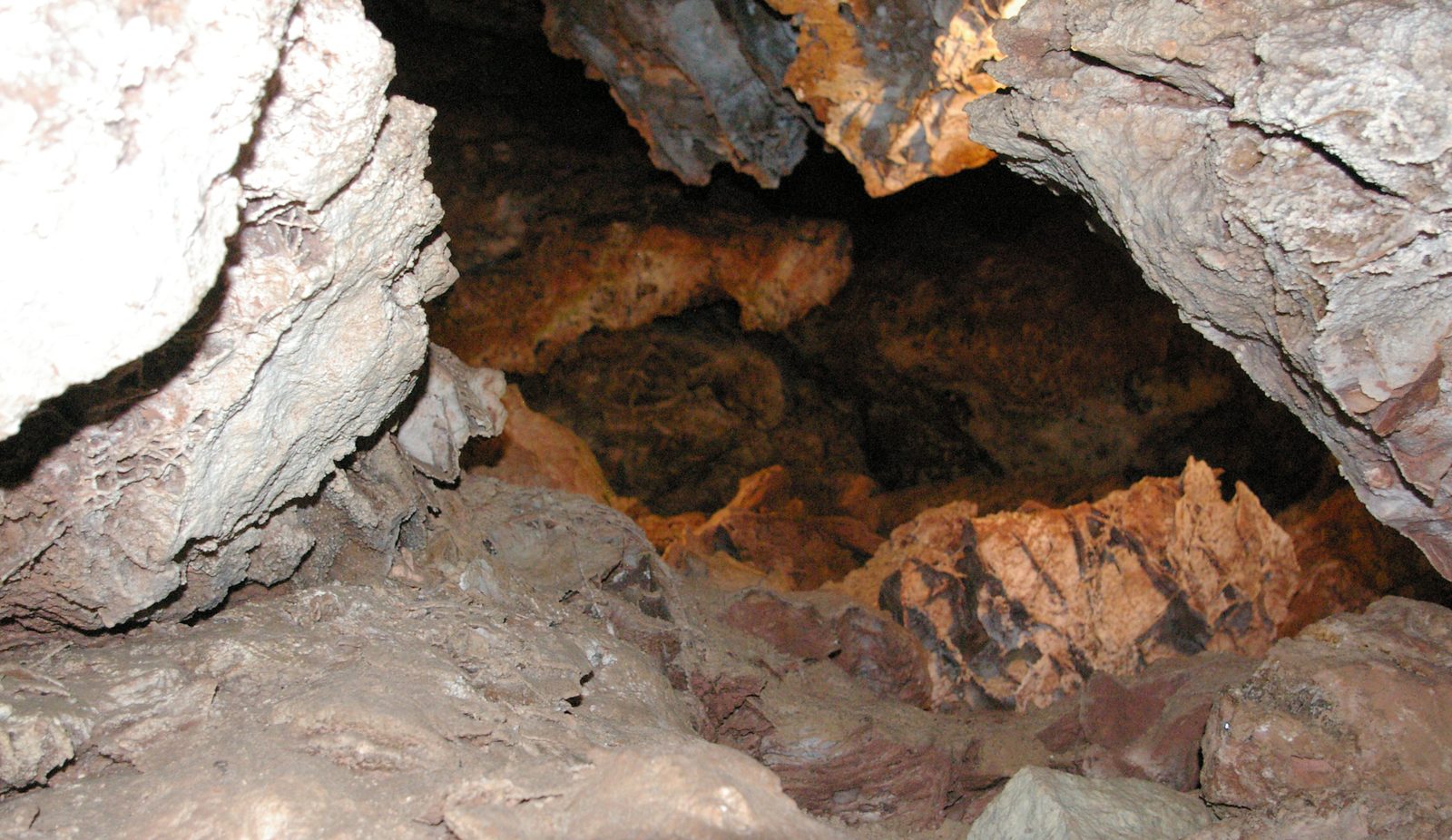
Wind Cave lies in the Madison Limestone, rock made from shell fragments that settled in a warm, shallow sea during the Mississippian period, roughly 345 to 360 million years ago. As parts of that sea dried up, gypsum formed within the limestone. When fresh water later seeped into the rock, the gypsum changed to calcite and gave off acid; the Park Service and the U.S. Geological Survey date the first passages that acid dissolved to about 320 million years ago.
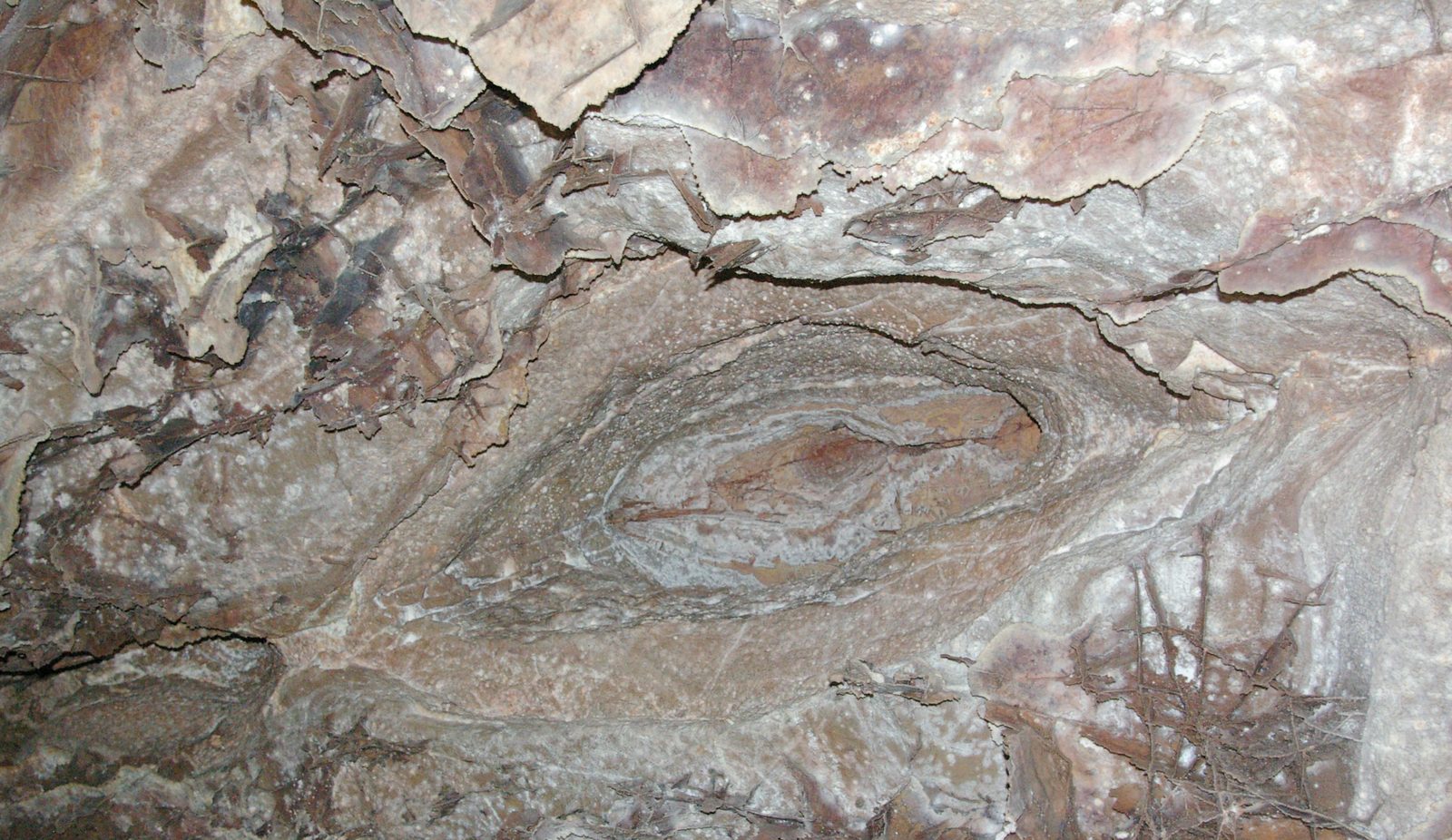
Much later, the Black Hills were pushed upward, and the limestone fractured anew. In the Park Service’s account, water then probably stood in the new fractures for ages, slowly dissolving them wider, before it began to drain away about 40 to 50 million years ago. What it left is a maze of passages. Their walls carry boxwork, thin fins of calcite standing out from the rock in a criss-cross grid, and both the Park Service and the Geological Survey say Wind Cave holds more of it than all other known caves combined. Even so, the agency says, the cave’s origin “ultimately remains a mystery.” The rock’s full story, from the plateau to the aquifer, is on The Limestone Plateau and the Caves.
Why Does Wind Cave Breathe?
Changing air pressure drives it. The air underground is always evening its pressure out with the air above, the Park Service explains, so a rising barometer outside sends air flowing in, and a falling one lets it flow back out. The flow is easy to feel at the natural entrance because the opening is so small.
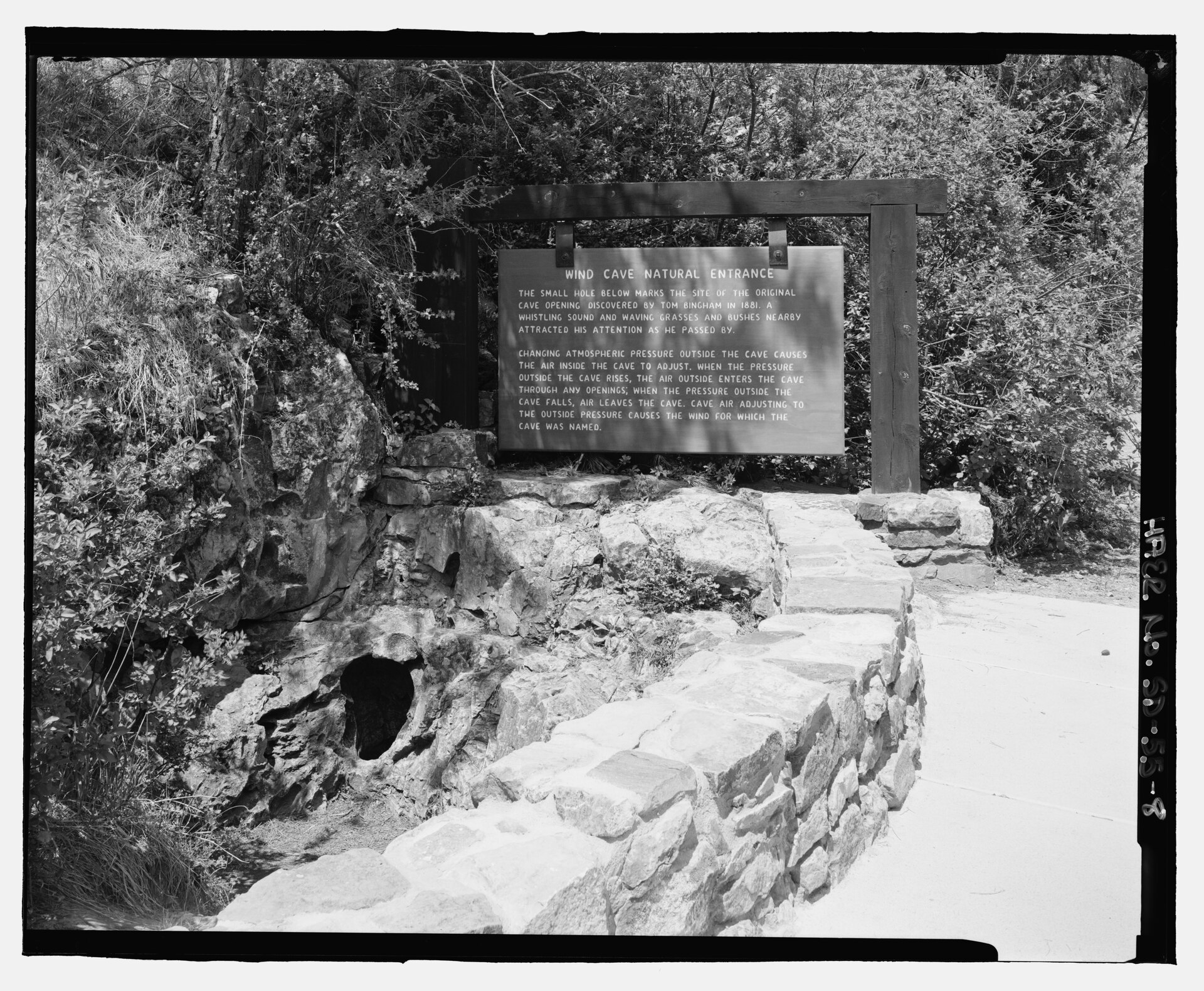
Here the two accounts share more than a place. The wind, the Park Service says, gives the cave its English name, and the agency’s own term for the airflow is “cave breathing.” In Mesteth’s account, the passage is where the earth breathes. The air also brought the first settlers on record. In the summer of 1881, by the agency’s account, the brothers Tom and Jesse Bingham heard the rushing air and followed the sound to the hole. That was four years after the 1877 Act took the Black Hills from the tribes without the consent the 1868 treaty required (see The 1876 War and the Taking of the Hills).
The agency knows of no one going into the cave before 1881, but it says the brothers were not the first to know of the entrance: the tribes already knew where it was.
One Entrance, Two Accounts
On January 9, 1903, an act of Congress set Wind Cave apart as a national park, the first national park in the world created to protect a cave. Until 2006, a sign at the natural entrance credited cowboys with finding the cave in 1881, park spokesman Tom Farrell told SDPB in June 2014. Lakota people living nearby asked for a change, and the park took the sign down that year. Starting then, representatives of tribes tied to the cave met with the park five times, chose the pictures for a new sign and wrote its words, with the agency’s help on layout; the Park Service announced in May 2014 that it was up over the entrance. Farrell said the aim was to show the 1881 visit as a rediscovery rather than a first find. The Lakota elder Basil Brave Heart, who took part, told the station, “I feel really good about it.”
The science and the story now meet at the same opening. Geology asks how the passages behind it dissolved and why air moves through them. The Lakota account tells who came up through it and what the place means to the people. They answer different questions, and neither is a measure of the other.
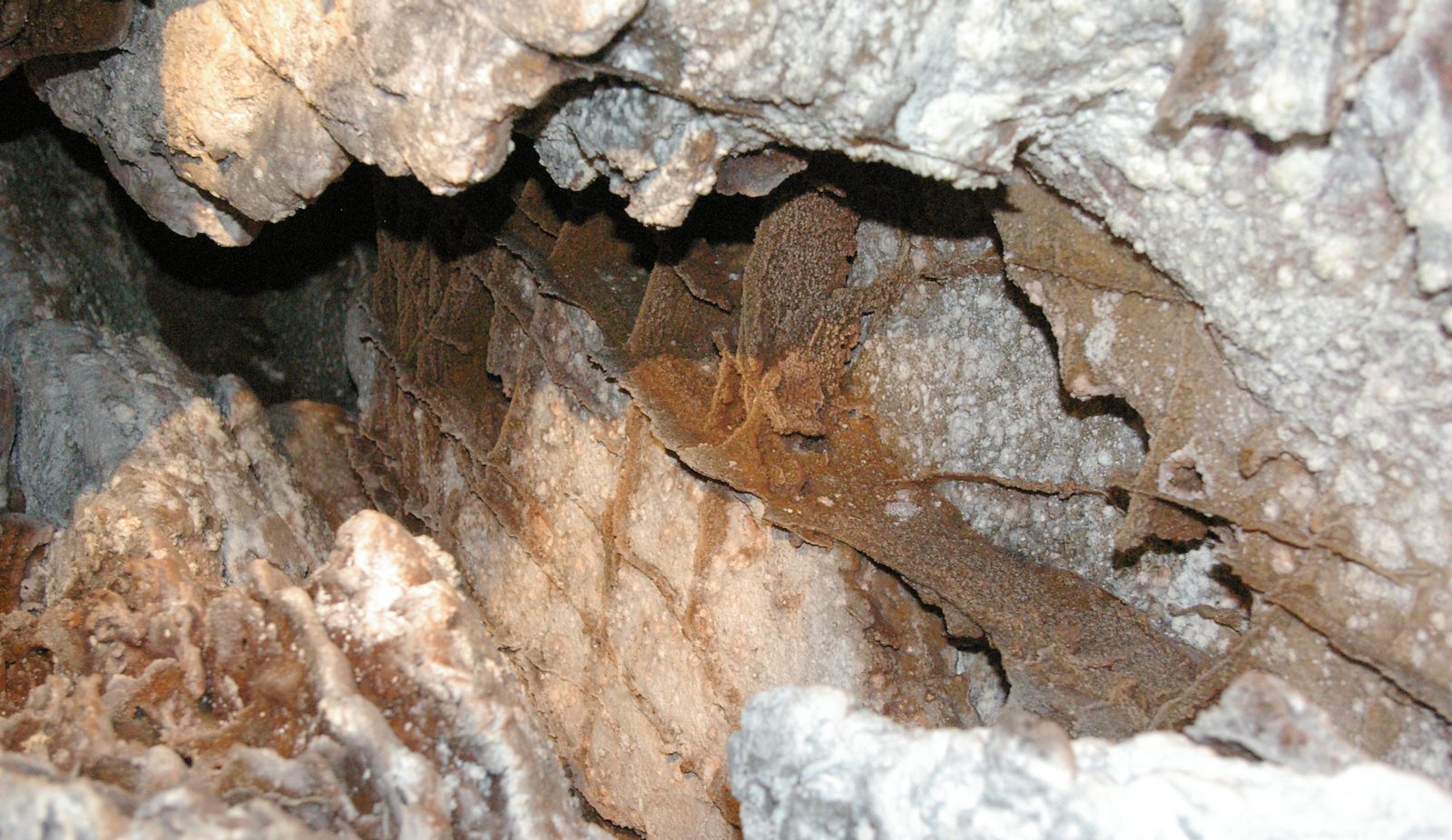
The air keeps moving, and the map keeps growing. Surveyors have mapped about 170 miles of the cave. The figure park staff sent to the National Speleological Society’s world list in September 2026, 170.34 miles, ranks Wind Cave sixth among the longest caves known anywhere. Yet from the volume of air that moves through it, the Park Service said in 2018, less than 10 percent of the cave had been found. The air gives a volume, not a mileage, so how far the unmapped passages run is still unknown.
Connected
- Sacred Sites: Bear Butte, Devils Tower and Wind CaveMesteth’s account of the emergence through Wind Cave, told in full.
- The Limestone Plateau and the CavesHow the Madison Limestone was laid down and dissolved into Wind Cave.
- Wind Cave National ParkVisiting the cave, its natural entrance and the prairie above it.
- BisonThe animal that, in the account, came from people who left the cave too soon.
- The 1876 War and the Taking of the HillsHow the Black Hills were taken from the tribes in 1877.
Further reading
- The Lakota Emergence Story, National Park Service (the Oglala account told by Wilmer Mesteth and retold by Sina Bear Eagle, to read or to watch as a recitation, last updated 2024)
- The Wind Cave Emergence Story, SDPB (Sina Bear Eagle, Oglala Lakota, on the story and what the cave means, 2022)
- Challenges in Rural America: Infrastructure Needs and Access to Care, U.S. House Committee on Veterans’ Affairs (hearing record with the testimony of Bryan Brewer, president of the Oglala Sioux Tribe, 2014)
- The Associated Tribes of Wind Cave National Park, National Park Service (the tribal governments the park consults)
Sources
- The Lakota Emergence Story, as told by Wilmer Mesteth and retold by Sina Bear Eagle. National Park Service, Wind Cave National Park, 2024.
- The Wind Cave Emergence Story (Dakota Life), by Heather Benson. SDPB, 2022.
- Challenges in Rural America: Infrastructure Needs and Access to Care (field hearing, Hot Springs, August 14, 2014; testimony of Bryan Brewer, President, Oglala Sioux Tribe). U.S. House Committee on Veterans’ Affairs, 2014.
- Wind Cave Natural Entrance. National Park Service, Wind Cave National Park, 2024.
- Early Cave Explorers (1881–1903). National Park Service, Wind Cave National Park, 2024.
- The Associated Tribes of Wind Cave National Park. National Park Service, Wind Cave National Park, 2024.
- Cave Geology. National Park Service, Wind Cave National Park, 2024.
- Geology of Jewel Cave. National Park Service, Jewel Cave National Monument, 2023.
- Geology of Wind Cave National Park. U.S. Geological Survey.
- Natural Entrance Tour for the Hearing Impaired. National Park Service, Wind Cave National Park, 2022.
- What Causes the Wind of Wind Cave. National Park Service, Wind Cave National Park, 2018.
- Birth of a National Park: A National Park Is Created. National Park Service, Wind Cave National Park, 2023.
- 16 U.S.C. § 141, Establishment; Boundaries (Act of January 9, 1903, ch. 63, 32 Stat. 765). Legal Information Institute, Cornell Law School.
- Wind Cave signage now historically accurate, by Jim Kent. SDPB, 2014.
- Sign Written by Tribes Installed at Wind Cave National Park. National Park Service, Wind Cave National Park, 2014.
- World Long Caves, compiled by Paul Burger for the National Speleological Society’s Geology and Geography Section. Cave-Exploring.com, updated October 18, 2026.
Last reviewed: