Landscape and Geology
Rockhounding in the Black Hills
South Dakota named two state stones in a single 1966 law: rose quartz, the official state mineral stone, and the Fairburn agate, the official state gemstone. Both turn up around the Black Hills, rose quartz in the coarse granite near Custer and Fairburn agates on the grassland to the east and south. Whether a rockhound may pick one up depends on who manages the ground. This page covers the stones people look for and what each land agency lets them take: the national forest, the national grassland, the state parks, the national parks and the Bureau of Land Management.
Where Are Fairburn Agates Found?
Maps often draw their range as an oval belt from near Creston, in Pennington County, to Orella in Sioux County, Nebraska, about 15 miles across at its widest, near Red Shirt, a 2018 South Dakota Magazine article reports. The banded stones share their name with Fairburn, a small Custer County town whose own name, the article says, nods to nearby French Creek: burn is a Scottish word for a stream.
On public land, the Forest Service's 2024 map of the Buffalo Gap National Grassland marks five rockhounding sites: Railroad Buttes, south of Farmingdale; the Fairburn Agate Beds, beside French Creek Campground east of the town; and Indian Creek, Baja and the Weta Beds, near Highway 44 from Scenic to east of Interior. That eastern country is described on The Badlands and Wall.
Where the agates came from was long argued. After agates like Fairburns turned up in Teepee Canyon, the rockhound and writer June Culp Zeitner suggested a Black Hills source, while other collectors refused to see a link, the magazine says. Roger Clark, a Wisconsin lawyer who set out his own account in a 1998 book, traces them to the Minnelusa Formation, part of the Limestone Plateau that rings the Hills, 250 million to 300 million years ago, with the stones carried east as the Hills rose; the magazine calls that view widely accepted. Clark said the Jasper Fire of 2000, burning off the forest north of Teepee Canyon, bared agates everywhere and pinned down the source. What causes their tight banding is still debated, the article adds.
What the Grassland Allows
The Nebraska National Forests and Grasslands, the Forest Service unit that runs the Buffalo Gap, allows rock hunting without a permit: surface collecting of rocks and agates for personal, hobby and noncommercial use. Its 2011 collecting sheet recommends that hobby collectors take no more than 25 pounds of rock a day and 250 pounds a year, and it bars selling what they take. The Forest Service's page for the Baja site adds that collecting there is from the surface only, with no digging.
The same sheet allows petrified wood, and invertebrate and plant fossils, to be collected without a permit for personal, hobby and noncommercial use, the fossils from the surface without digging. Fossils of animals with backbones, tracks and eggs included, need a permit, issued to qualified paleontologists, and no fossil from the grassland may be sold. Six paleontological research areas, on the Buffalo Gap's Fall River district and Nebraska's Oglala National Grassland, are closed to casual collecting.
Rose Quartz and the Pegmatite Crystals
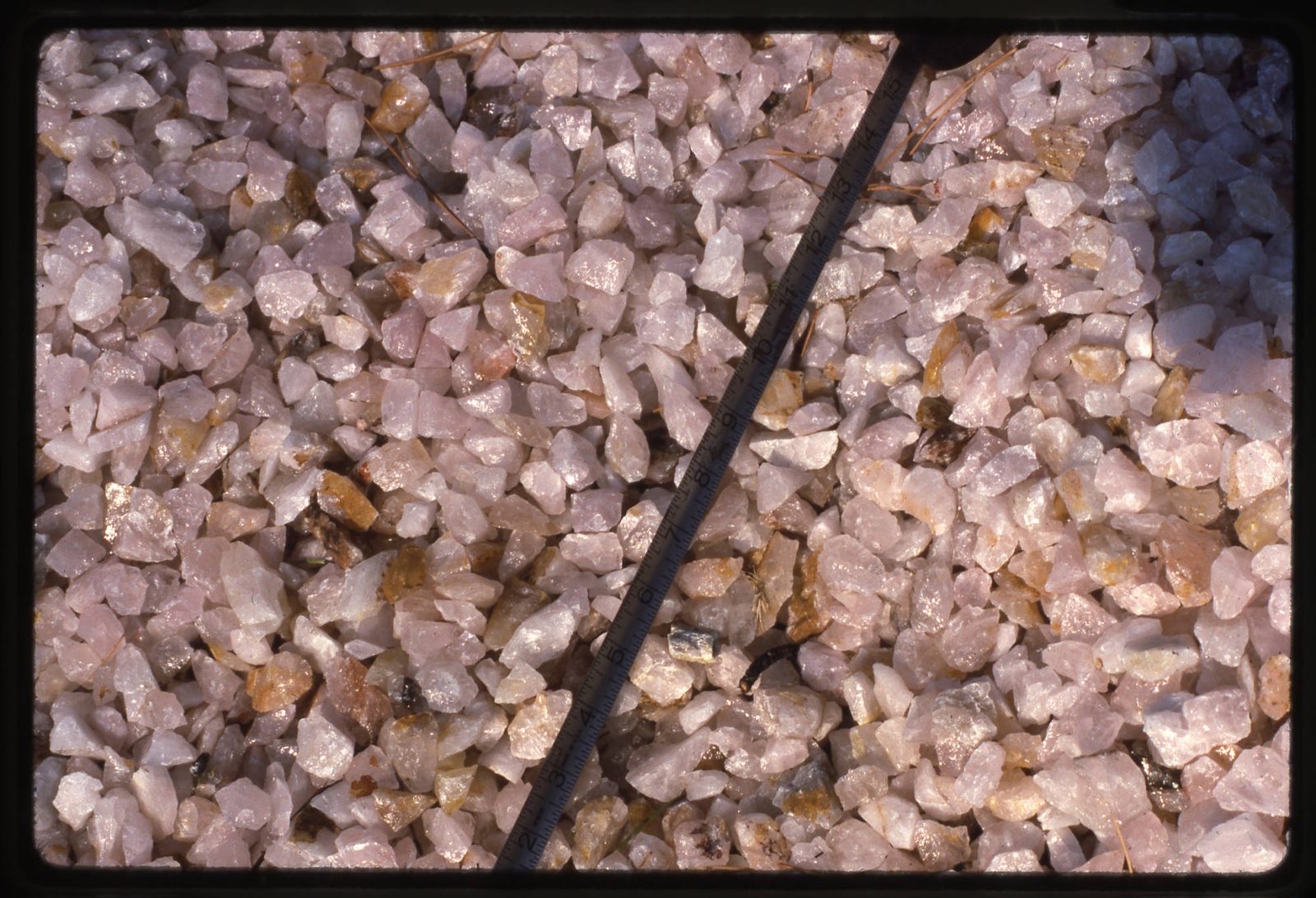
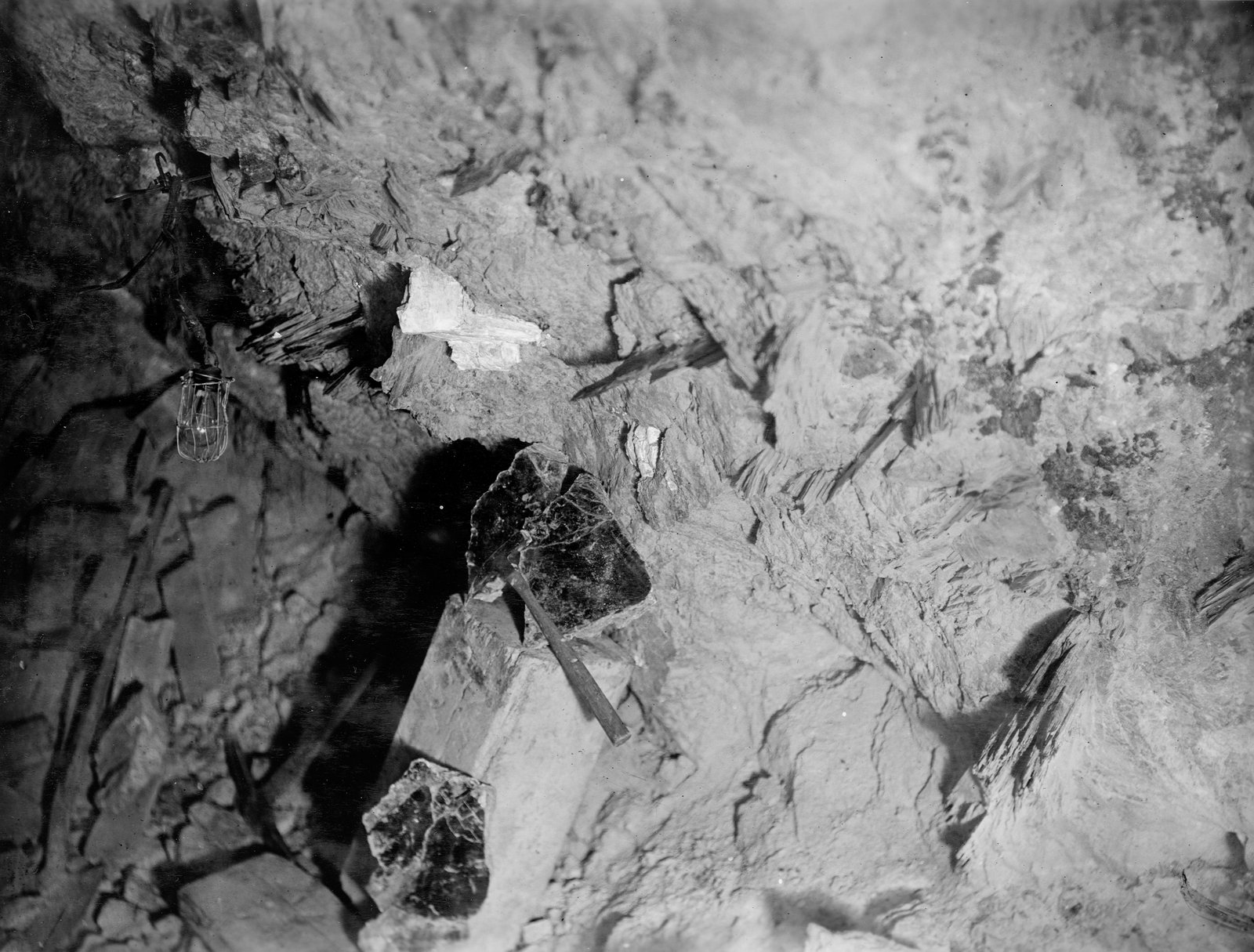
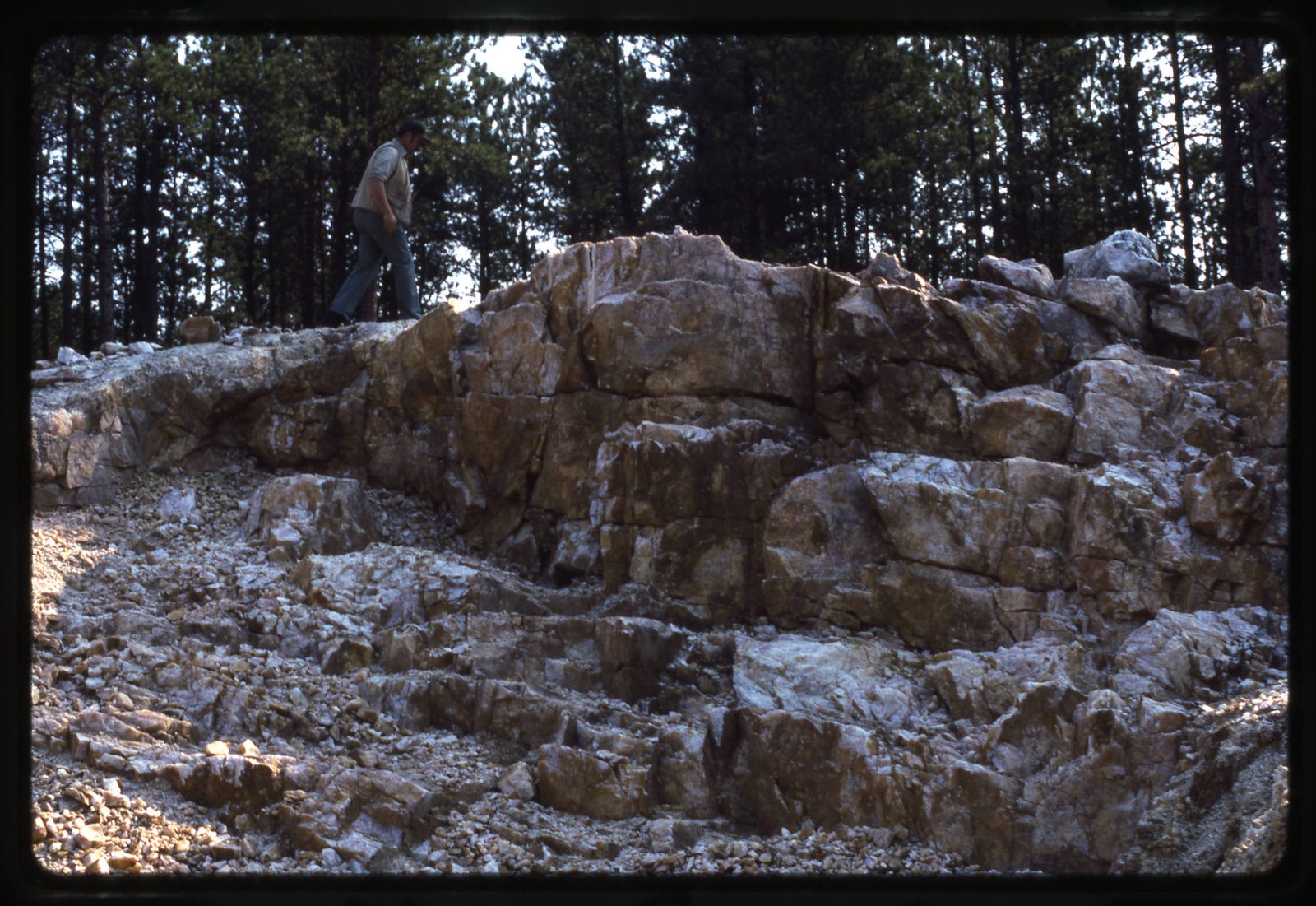
Rose quartz comes from the pegmatites of the southern Hills, the very coarse granite described on The Granite Core. A 1953 U.S. Geological Survey report lists it among the minerals the Harney Peak area had produced since 1879, with mica, feldspar, beryl and several lithium minerals. At one claim the report describes, about 2.9 miles south-southwest of Custer, a layer of rose quartz 5 to 6 feet thick forms the middle of a pegmatite. The mining of these minerals is told on Gold and the Other Minerals and Giant Crystals, Wartime Minerals and Keystone.
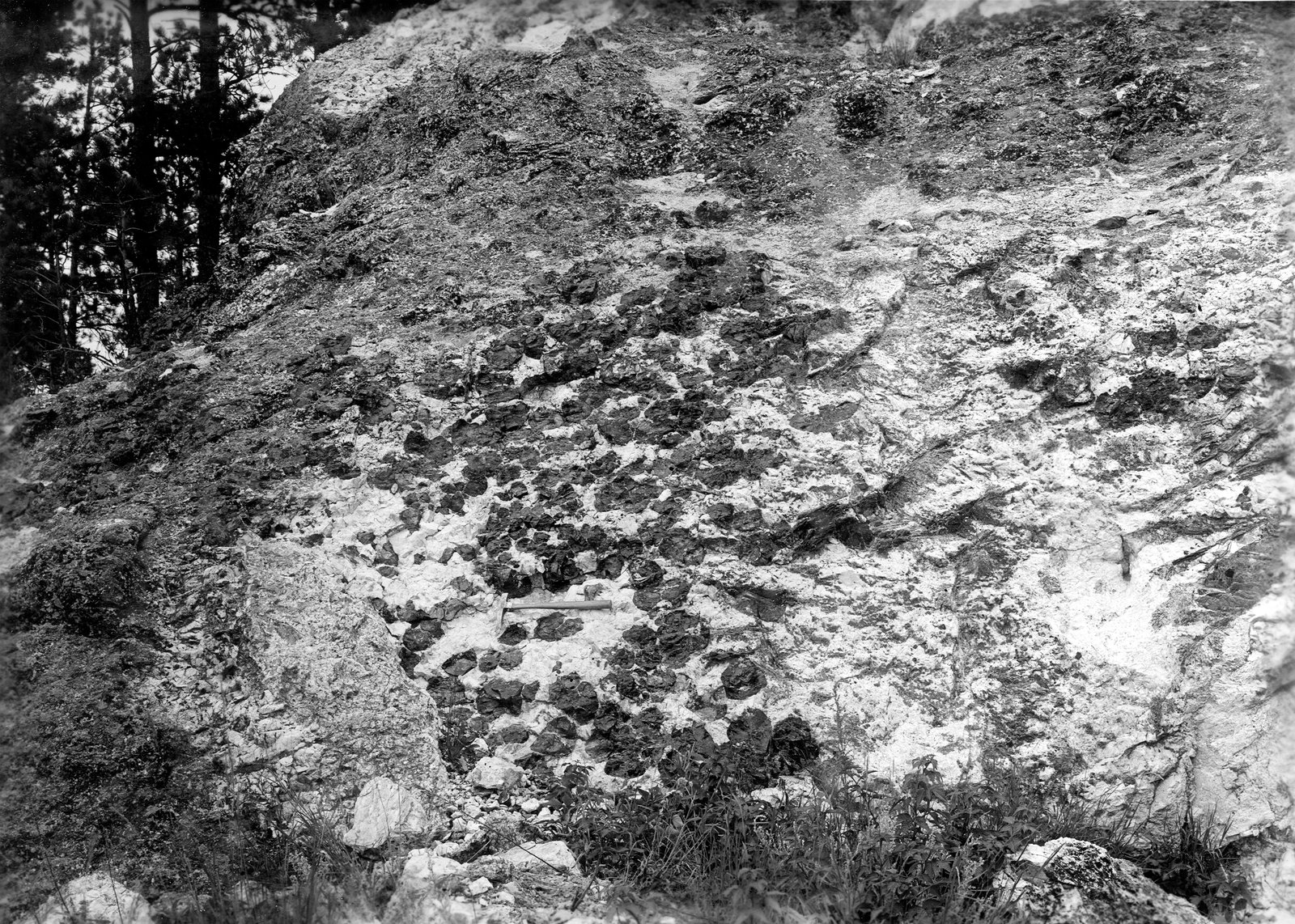
Ownership matters here. A great deal of private land lies within the Black Hills National Forest, closed to prospecting without the owner's permission, and entering someone's mining claim to take minerals is claim jumping, a forest handout warns.
Can You Collect Rocks in the Black Hills National Forest?
Yes, in small amounts and from the surface. The forest's own page, updated in June 2026, says no permit is needed to collect small rocks or minerals from the surface for personal use, and it forbids digging. Fossil collection is prohibited, and so is collecting from archaeological or historic sites. The forest, which includes the Bear Lodge Ranger District in Wyoming, has no areas set aside for rockhounding, its 2021 handout says. Wilderness and mineral withdrawal areas may be closed to it, and most developed recreation areas are withdrawn.
The Forest Service's national rockhounding guide of 2017, which the forest's page links, lists agates, quartz crystals and mineral specimens under a free use permit; the forest's newer page says small surface pieces need no permit. Panning for gold with hand tools generally needs no Forest Service permit either, though South Dakota requires a state mine permit for dredges and other mechanized equipment. Gold found that way does not make Black Hills Gold, a name that means jewelry made in the Hills, wherever its gold was mined.
The Bureau of Land Management's South Dakota office manages more than 274,000 surface acres, most of them west of the Missouri River and about 145,000 in Butte County, north of the Hills. Its rules generally allow anyone to collect reasonable amounts of rocks, mineral specimens and semiprecious gemstones for noncommercial use, though not in developed recreation sites, on active mining claims, or where the minerals are privately owned.
State and National Parks: Leave It Where It Lies
In South Dakota's state parks, Custer State Park among them, a state rule bars anyone from disturbing "any earth, rocks, minerals, natural formations, or cultural resources" without written permission from the Game, Fish and Parks secretary or an agent, and a metal detector needs written authorization too. Bear Butte, in Bear Butte State Park 6 miles northeast of Sturgis, is sacred to many tribes, the park's page says, and visitors are asked to leave prayer cloths and tobacco ties undisturbed; the mountain's meaning is told on Sacred Sites.
On National Park Service land around the Hills, from Wind Cave and Jewel Cave to Mount Rushmore, Devils Tower and the Badlands, federal rules forbid removing "a mineral resource or cave formation," fossils or archaeological resources, and the Park Service says taking rocks or minerals requires a specimen collection permit. Badlands National Park asks anyone who finds a fossil not to remove it, but to photograph it, note where it lies and report it at a visitor center, as Fossils and the Mammoth Site explains.
Collecting once cost the Park Service a monument. Fossil Cycad National Monument, proclaimed in 1922 about 11 miles west-southwest of Hot Springs, protected fossil trunks of cycad-like plants about 120 million years old. Fossils at the surface disappeared faster than erosion exposed new ones, thousands of them taken for research and museum displays, and Congress abolished the monument in 1957. The Park Service blames years of negligent management for what it calls "irreparable impacts."
Fossils, Arrowheads and Sacred Places
Under the Paleontological Resources Preservation Act of 2009, collecting any fossil from federal land takes a permit, except casual collecting of common invertebrate and plant fossils on Bureau of Land Management, Bureau of Reclamation and Forest Service land, where the laws for that land allow it. That is how the national forest can forbid fossil collecting while the grassland allows some.
Artifacts are off limits on all of this land. The grassland's sheet counts remains of human life or activity at least 50 years old as archaeological resources and bars collecting arrowheads, pottery or any other artifact without a permit. The Forest Service's national guide asks rockhounds to take no rock or mineral from a place marked as a sacred site or where artifacts lie on the ground, and warns that not all sacred sites are marked.
South of the grassland's eastern rockhounding sites lies the Pine Ridge Reservation. The 2009 law's definition of federal land leaves out "Indian land," such as land held in trust for tribes; Fossil Hunters and Tribal Stories follows that question, and the tribes' own accounts of the Badlands bones.
Connected
- Gold and the Other MineralsWhere the Hills' gold, mica, feldspar and lithium were mined.
- The Granite Core: Black Elk Peak and the NeedlesThe granite and pegmatite that hold rose quartz and tourmaline.
- Giant Crystals, Wartime Minerals and KeystoneThe pegmatite crystals at the Etta mine and the minerals two wars wanted.
- Fossils and the Mammoth SiteThe Badlands mammals and Hogback dinosaurs that collectors must leave in place.
- Fossil Hunters and Tribal StoriesWho may take a fossil, on federal land and on tribal land.
- Black Hills Gold: The Jewelry and Its LegendWhy the name tells where the jewelry was made, not where its gold was found.
- The Badlands and WallThe country around the grassland's eastern rockhounding sites.
- Sacred Sites: Bear Butte, Devils Tower and Wind CavePlaces in and around the Hills that tribes hold sacred.
Further reading
- Resolution SD-15-020: To Protect Paleontological Resources on Tribal and Ancestral Tribal Lands, National Congress of American Indians (an intertribal body of tribal governments, on fossils as tribal cultural patrimony, 2015)
- Statement of Llevando "Cowboy" Fisher, President, Northern Cheyenne Tribe, on H.R. 4350, Northern Cheyenne Tribe (on protecting land near Bear Butte, 2014)
Sources
- South Dakota Codified Laws 1-6-12, State Mineral Stone and Gemstone. South Dakota Legislature (enacted 1966, SL 1966, ch 175).
- In Search of the Fairburn Agate (John Andrews). South Dakota Magazine, May/June 2018 issue, posted online 2021.
- Rockhounding Sites: Recommended Access Routes (map). USDA Forest Service, Nebraska National Forests and Grasslands, Wall Ranger District, 2024.
- Other Recreation Opportunities: Rockhounding. USDA Forest Service, Nebraska National Forests and Grasslands.
- Collecting Rocks, Meteorites, Artifacts, and Fossils on Nebraska National Forests and Grasslands. USDA Forest Service, 2011.
- Baja OHV Travel Management Area. USDA Forest Service, Buffalo Gap National Grassland, Wall Ranger District.
- Pegmatite Investigations 1942–1945, Black Hills, South Dakota (Professional Paper 247, Lincoln R. Page and others). U.S. Geological Survey, 1953.
- Gold Panning, Rockhounding, & Metal Detecting. USDA Forest Service, Black Hills National Forest, updated 2026.
- Gold Panning and Rock Hounding in the Black Hills National Forest. USDA Forest Service, Black Hills National Forest, revised 2021.
- Rockhounding Guide (FS-1091). USDA Forest Service, Minerals and Geology Staff, 2017.
- Rockhounding. U.S. Bureau of Land Management.
- South Dakota Field Office. U.S. Bureau of Land Management.
- Administrative Rules of South Dakota, chapter 41:03:01 (rules 41:03:01:05 and 41:03:01:29). South Dakota Legislature, Game, Fish and Parks rules.
- Bear Butte State Park. South Dakota Game, Fish and Parks.
- 36 CFR 2.1, Preservation of Natural, Cultural and Archeological Resources. Code of Federal Regulations (text from Legal Information Institute, Cornell Law School).
- Laws, Regulations, & Policies: Fossils and Paleontology. National Park Service, 2024.
- Fossil Lab: How Are Fossils Found? National Park Service, Badlands National Park, 2020.
- Fossil Cycad National Monument (Vincent Santucci and Cassi Knight). National Park Service, 2022.
- Paleontological Resources Preservation (Public Law 111-11, Title VI, Subtitle D). 2009.
Last reviewed: