Land and Water
Gold, Lithium and the New Mining Rush
The Wharf mine, an open pit about four miles west of Lead, produced 97,327 ounces of gold in 2025, and in February 2026 its owner, Coeur Mining, said it had reserves for about 12 more years. Custer, Hill City and Deadwood grew out of the gold rush that began in 1874, Lead grew up around the Homestake claim, and the towns of the Black Hills were built on mining. This page covers what is mined in the Hills now, the exploration wave since about 2020, the 1872 law behind it, the Pactola withdrawal, the case each side makes, and where this site stands.
What Is Mined in the Hills Now?
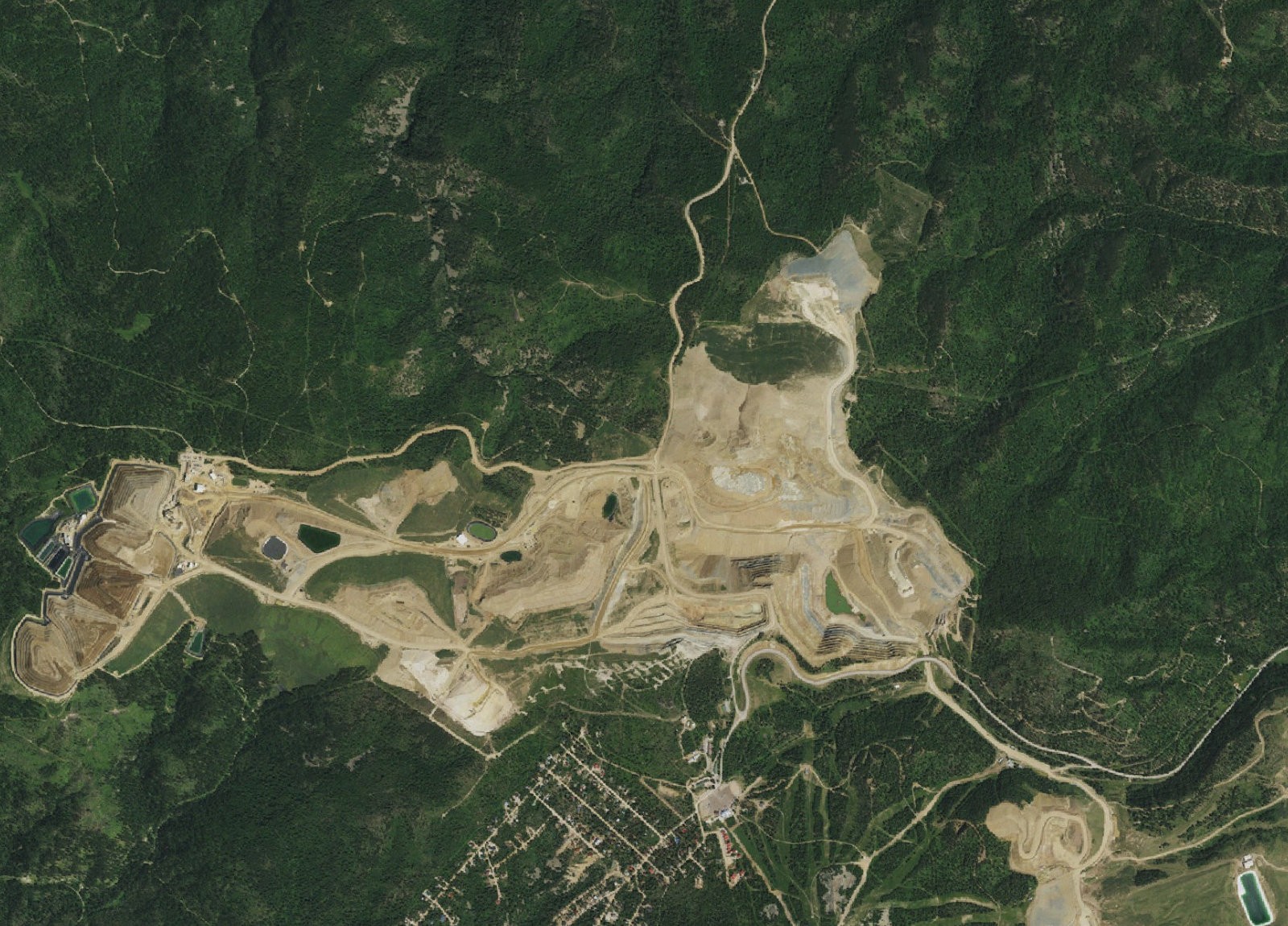
Since the Homestake closed in 2001, Wharf has been the only large gold mine working in the Hills. Its ore is dug from open pits and treated by cyanide heap leaching: crushed rock is piled on lined pads, and a cyanide solution draws out the gold. Coeur, based in Chicago, bought Wharf in 2015, and in 2021 SDPB counted about 200 workers there. In July 2023 the state Board of Minerals and Environment unanimously approved Wharf’s Boston expansion, about 48 acres of new ground, and in 2025 Coeur explored two more deposits “with the aim of extending mine life.”
The rest of the Hills’ mining digs rock and clay, which this site describes without opposing. By its own history, Pete Lien & Sons has quarried limestone in Rapid City since 1944 and mined gypsum since 1975. GCC says it bought the Rapid City cement plant in 2001. The state’s mines produced 114,888 tons of bentonite clay in 2011, and in September 2026 Bentonite Performance Minerals applied for a large-scale mine permit for its Larsen Project in Butte County. Sand and gravel pits are licensed under a separate state law.
The Exploration Wave Since 2020
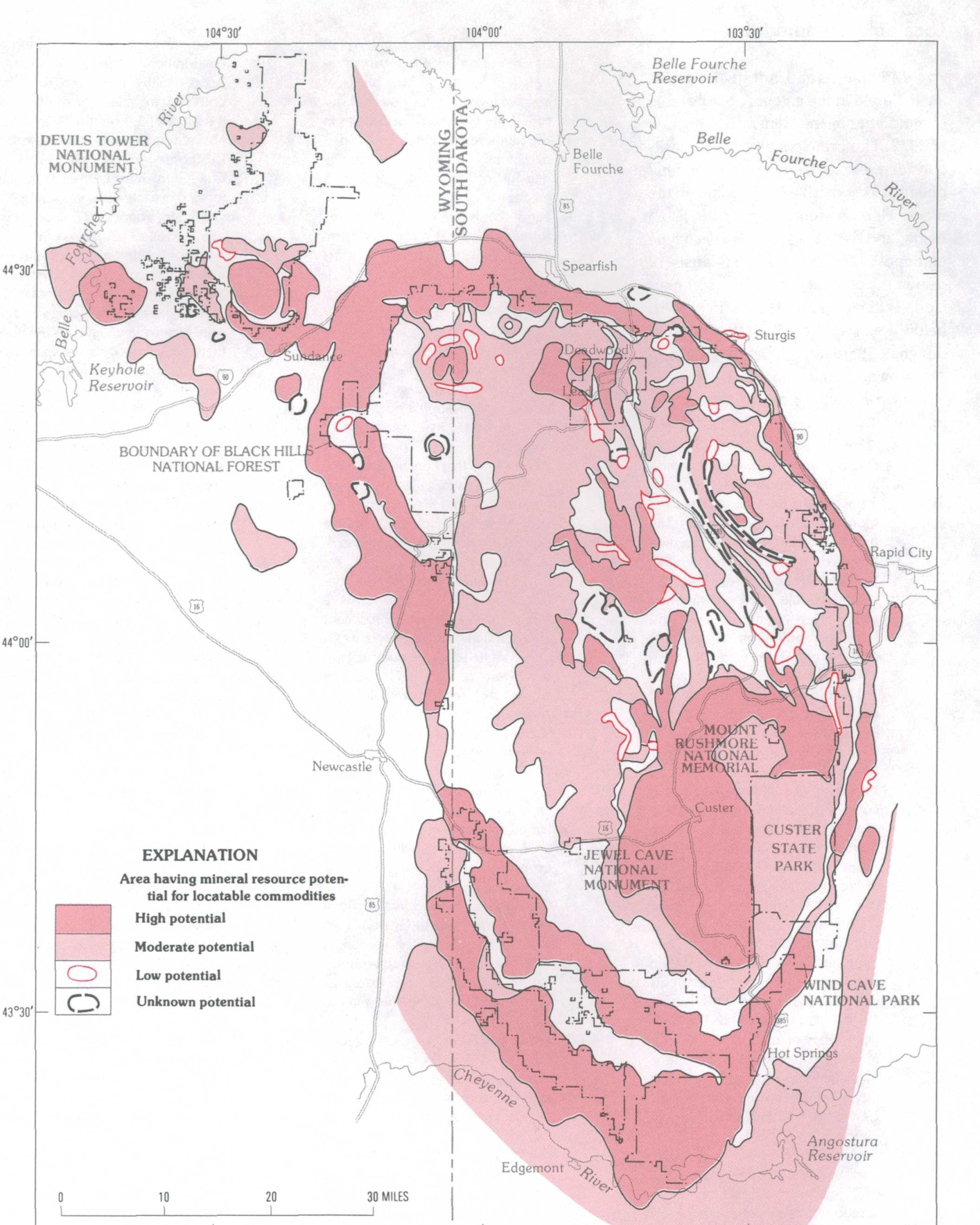
The largest new effort is near Lead. Dakota Gold Corp. reported in March 2026 that it holds 2,147 unpatented mining claims plus leased or owned land, more than 49,500 acres in all, in the old Homestake district. Its most advanced project, Richmond Hill, lies northwest of Lead, about half a mile north of Wharf, where a heap-leach mine worked from 1988 to 1993. A company study in July 2025 outlined an open pit lasting 17 years and averaging about 153,000 ounces a year, and the company targets production as soon as 2029. Richmond Hill is mostly private land, under state and county permits, and the company expects its first permit to allow 580 acres of disturbance, against the 260 allowed now. The old mine developed acid drainage in the early 1990s; by 2011, state regulators reported its capped pit and leach pads working as designed.
On February 25, 2026, the Black Hills National Forest approved Solitario Resources’ plan for up to 49 exploration drill sites on the Limestone Plateau east of Spearfish Canyon. F3 Gold, of Minneapolis, proposed up to 42 sites at Jenny Gulch, within a mile of Pactola Reservoir; the Forest Service now lists that project as cancelled. In Wyoming’s Bear Lodge Mountains, part of the Hills, Rare Element Resources filed a plan on March 20, 2026, for an open-pit mine for two rare earths, neodymium and praseodymium. The Forest Service expects to finish its environmental impact statement in late 2027. Uranium plans near Edgemont are on Uranium Mining Around the Black Hills.
Lithium drew explorers back to the old pegmatite districts around Keystone, Hill City and Custer. In September 2023, South Dakota Searchlight reported plans by SDO Services, a subsidiary of Swiss-based Midwest Lithium, for up to 80 holes just south of Hill City. None of the mineral projects the Black Hills National Forest listed in 2026 named lithium.
Graphite Drilling Near Pe’ Sla
Reynolds Prairie, which the Lakota call Pe’ Sla, is a high meadow in the central Hills. The Rosebud Sioux Tribe and three other tribes bought land there in 2012, and when the federal government took it into trust in 2016, Rosebud’s leader, William Kindle, called it sacred to the Lakota and their allies. On February 27, 2026, the Forest Service approved a plan by Pete Lien & Sons to drill up to 18 holes about 3 miles southwest of Rochford, in search of graphite. It used a categorical exclusion, which skips a detailed environmental review, and the sites lay within a two-mile buffer the agency had drawn around the tribes’ land.
Nine tribal governments of the Očhéthi Šakówiŋ, led by the Cheyenne River Sioux Tribe, sued under the National Historic Preservation Act and the National Environmental Policy Act. NDN Collective, the Black Hills Clean Water Alliance and Earthworks filed a separate suit, and protesters occupied two drill sites from April 30. Over the Forest Service’s argument that the plan was properly approved, U.S. District Judge Camela C. Theeler temporarily halted the drilling on May 4, and that week the company withdrew its plan and said it would not file another for the project.
Why Drilling Can Start on Federal Land
The Mining Law of 1872 still governs hardrock minerals such as gold on federal land. A claimant may stake any number of claims and hold them indefinitely, an unpatented claim needs no federal approval, and the law charges no federal royalty, the Congressional Research Service wrote in 2024. Forest Service rules start from the “statutory right” to enter public land and search for minerals, and aim to minimize harm to the forest’s surface.
In South Dakota, a company exploring for gold files a notice of intent with the Department of Agriculture and Natural Resources, and since July 1, 2024, it must post a bond for plugging the holes before work starts. Large mine permits go before the Board of Minerals and Environment, whose chairman, Rex Hagg, said in 2023 that state law essentially requires approval once an application meets its conditions. Counties add permits of their own, as Who Decides, and How to Be Heard explains.
What the Pactola Withdrawal Does
Public Land Order No. 7956, in effect since December 27, 2024, closes about 20,510 acres of national forest around Pactola Reservoir and upper Rapid Creek to new mining claims and mineral leasing for 20 years, the federal maximum. Its stated purposes include the water supply of Rapid City and Ellsworth Air Force Base. Valid existing rights are not cancelled. Interior Secretary Deb Haaland cited drinking water and the area’s sacred status for many Great Plains tribes; the South Dakota Mineral Industries Association called the order “federal overreach.” It can be renewed; only Congress could make it permanent. No notice changing it had appeared in the Federal Register by November 2026.
The Case for Mining
Backers start with wages and taxes. In 2021 SDPB reported that South Dakota’s tax on precious-metal mining brought in about $6 million in fiscal 2020, and that the state held $95 million in bonds from Coeur. Dakota Gold describes its work as “expanding the legacy of the 145-year-old Homestake Gold Mining District.” Rare Element’s plan, as the Forest Service summarized it, means more than $500 million in investment, about 240 direct and indirect construction jobs and 120 operating workers. Backers argue from national supply too: the federal list of critical minerals issued in November 2025 includes lithium, graphite, uranium, neodymium and praseodymium, though not gold. Defenders of the 1872 law hold that its lack of royalties has encouraged exploration. And they point to reclamation that has held, as at Richmond Hill, and to Wharf’s practice of backfilling mined pits with waste rock.
The Case Against
Opponents start with what earlier mines left. Gilt Edge, one of the open-pit mines of the 1980s gold boom, about 4.5 miles southeast of Lead, became a Superfund site, and in 2011 the Environmental Protection Agency treated 125.4 million gallons of acid water there. Richmond Hill made acid drainage while it ran. Both are covered on What the Old Mines Left Behind.
Wharf has its own record: before the 2023 vote, testing in False Bottom Creek found selenium above levels the EPA allows, and the board decided that should not hold up the permit. Opponents point to a law under which claims cost little to hold and the public collects no federal royalty, and to the Pactola watershed that supplies Rapid City. Two more facts bear on the tribes. The 1877 Act took the Hills from them without the consent the 1868 treaty required (see The 1876 War and the Taking of the Hills), and in 2026 nine tribal governments went to court over drilling near Pe’ Sla.
Connected
- Gold and the Other MineralsWhere the Hills’ gold, lithium, gypsum and bentonite lie, and why.
- The Homestake Mine and Sanford LabThe mine that worked the district Dakota Gold now explores.
- Lead, South DakotaThe company town nearest Wharf and Richmond Hill.
- Rochford, South DakotaThe old hardrock camp near the 2026 graphite drilling.
- What the Old Mines Left BehindGilt Edge, Whitewood Creek and the cost of cleanup.
- Where the Hills’ Water Comes FromPactola, Rapid Creek and the aquifers under the mines.
- Who Decides, and How to Be HeardThe agencies, boards and comment periods behind each permit.
- Where This Site StandsThe site’s four positions in one place.
Local organizations
- Honor the Earth, an Indigenous-led organization that describes itself as “committed to protecting the lifeways and sovereignty of our Indigenous Relatives across Mother Earth.”
- NDN Collective, which describes itself as “an Indigenous-led organization dedicated to building Indigenous power.”
- South Dakota Mineral Industries Association, the mineral industry’s membership association in South Dakota, which describes itself as “incorporated in the State of South Dakota as a Domestic Non-Profit Corporation.”
Sources
- Coeur Reports Fourth Quarter and Full-Year 2025 Results. Coeur Mining (the company’s own account), 2026.
- Coeur Reports Year-End 2025 Mineral Reserves and Resources. Coeur Mining (the company’s own account), 2026.
- A Brief History of Black Hills Gold Mining (L. Michael Kaas). Mining History Association, 2018.
- Black Hills Gold Mine Reports Record Financial Year (Seth Tupper). SDPB, 2021.
- Board Approves Expansion of Wharf Mine (Lee Strubinger). SDPB, 2023.
- Recommendation: Wharf Resources (USA) Inc. Large Scale Mine Permit Application (Boston expansion). South Dakota Department of Agriculture and Natural Resources, 2023.
- Summary of the Mining Industry in South Dakota, 2011. South Dakota Department of Environment and Natural Resources, 2012.
- History. Pete Lien & Sons (the company’s own account), undated.
- Who We Are (company history timeline). GCC (the company’s own account), undated.
- Minerals and Mining Program. South Dakota Department of Agriculture and Natural Resources, 2026.
- New Mine Permit Applications. South Dakota Department of Agriculture and Natural Resources, 2026.
- Exploration Notice of Intent. South Dakota Department of Agriculture and Natural Resources, 2026.
- Annual Report on Form 10-K for 2025. Dakota Gold Corp. (the company’s own account), filed with the Securities and Exchange Commission, 2026.
- Dakota Gold Announces 2026 Plans for Richmond Hill and Maitland Gold Projects (news release 26-01). Dakota Gold Corp. (the company’s own account), 2026.
- Fact Sheet, August 2026. Dakota Gold Corp. (the company’s own account), 2026.
- Ponderosa Exploration Drilling (project 64551). USDA Forest Service, Black Hills National Forest, 2026.
- Jenny Gulch Exploration Drilling Project (project 57428). USDA Forest Service, Black Hills National Forest, 2025.
- Bear Lodge Rare Earth Project (project 291093). USDA Forest Service, Black Hills National Forest, 2026.
- Black Hills National Forest; Wyoming; Bear Lodge Rare Earth Project (notice of intent to prepare an environmental impact statement, 91 FR 47803). USDA Forest Service, Federal Register, 2026.
- Current and Proposed Projects. USDA Forest Service, Black Hills National Forest, 2026.
- Lithium Exploration Planned in South Dakota’s Black Hills (Seth Tupper, South Dakota Searchlight). Daily Montanan, 2023.
- Sacred Site Pe’ Sla Gains Indian Land Status (news release). Shakopee Mdewakanton Sioux Community, 2016.
- Pete Lien and Sons Rochford Mineral Exploratory Drilling Project (project 67838). USDA Forest Service, Black Hills National Forest, 2026.
- Federal Judge Rules in Favor of Tribes, Halting Drilling at Black Hills (Amelia Schafer). ICT, 2026.
- Mining Company Pulls Out of Controversial Pe’ Sla Drilling Project (Amelia Schafer). ICT, 2026.
- Temporary Order Granted Against Drilling Project Near Culturally Significant Black Hills Site (Seth Tupper, South Dakota Searchlight). Aberdeen Insider, 2026.
- Black Hills Drilling Project Canceled After Backlash From Tribes (Associated Press). KFYR, 2026.
- The U.S. Mining Industry and the Rosemont Decision (R48166, Emma Kaboli and Adam Vann). Congressional Research Service, 2024.
- 36 CFR 228.1, Purpose (Forest Service rules for locatable minerals). Legal Information Institute, Cornell Law School.
- Public Land Order No. 7956; Withdrawal of Pactola Reservoir–Rapid Creek Watershed; South Dakota (89 FR 105625). Bureau of Land Management, Federal Register, 2024.
- Pactola Reservoir – Rapid Creek Watershed Withdrawal (project 63876). USDA Forest Service, Black Hills National Forest, 2024.
- Federal Government Approves 20-Year Mining Ban in Part of SD’s Black Hills (Seth Tupper, South Dakota Searchlight). ICT, 2025.
- Federal Register documents matching “Pactola,” newest first. Office of the Federal Register, searched November 2026.
- Final 2025 List of Critical Minerals (90 FR 50494). U.S. Geological Survey, Federal Register, 2025.
- United States v. Sioux Nation of Indians, 448 U.S. 371. Supreme Court of the United States, 1980 (Legal Information Institute, Cornell Law School).
Last reviewed: